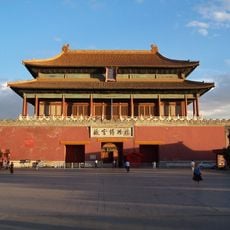
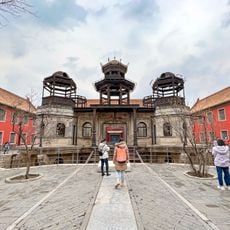
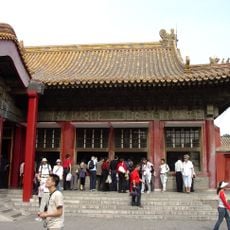
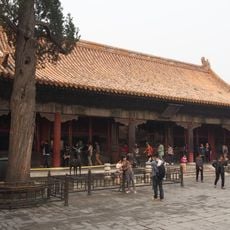
Hall of Central Harmony, Hall in the Forbidden City, Beijing, China
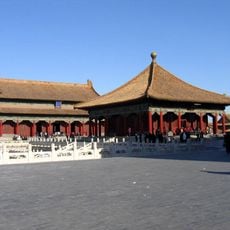
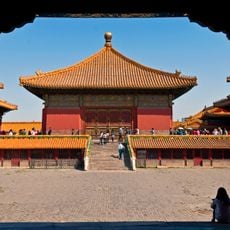
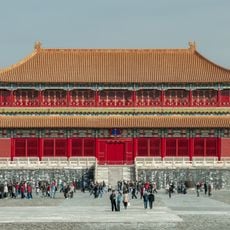
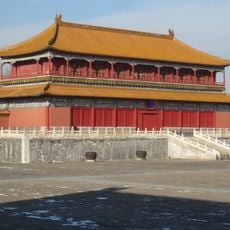
The Hall of Central Harmony (Zhonghe Dian) is a square hall in the Outer Court of the Forbidden City in Beijing, China. It sits between the Hall of Supreme Harmony and the Hall of Preserving Harmony, and it is the smallest of the three.
Built in 1420 during the Ming dynasty, the hall was first called Huagai Hall and later Jiji Hall after a fire and reconstruction. In 1645, early in the Qing dynasty, it received its current name, and it served as a place for emperors to rest and prepare before ceremonies.
The name of the hall comes from a classic text and speaks of balance and harmony as the foundation of order. Inside, you can see a throne with two sedan chairs on either side, and above the throne hangs a plaque with a motto about holding to the middle way.
The hall is easy to find as you walk north through the central axis of the Forbidden City. It can get crowded in the middle of the day, so visiting early in the morning or later in the afternoon gives you more space to look around.
The roof is a pyramid shape with a gilded ball on top, and the building is designed to match the ancient description of a 'bright hall' with nine rooms and doors on all four sides. On rainy days, water pours from dragon-shaped spouts on the terrace, creating a scene known as 'a thousand dragons spitting water'.
The community of curious travelers
AroundUs brings together thousands of curated places, local tips, and hidden gems, enriched daily by 93,650 contributors worldwide.