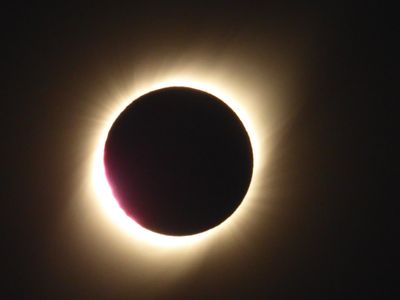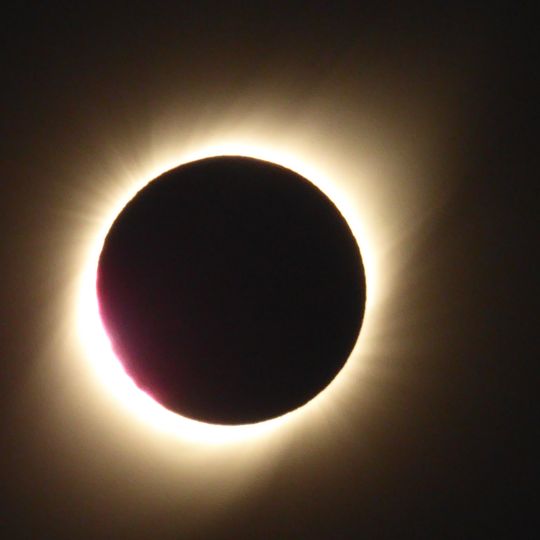
Solar eclipse of July 2, 2019, Total solar eclipse in Argentina/Chile
The solar eclipse of July 2, 2019, was an astronomical event where the Moon passed directly between Earth and the Sun, completely blocking sunlight. The path of totality crossed the southern Pacific Ocean, southern Chile, and northwestern Argentina with a maximum duration of about 3.5 minutes.
This was the first total solar eclipse to occur since the event of 2015, attracting astronomers and observers worldwide. The phenomenon provided a significant opportunity for scientific study and observation of the Sun's corona.
Solar eclipses hold deep meaning across cultures and were gathered to witness this rare natural event. People traveled to the path of totality to share in the moment together.
Observers needed specialized eclipse glasses or certified solar filters to safely view the phenomenon without eye damage. The best viewing experience occurred along the centerline of the totality path, where the eclipse lasted longest.
The event offered a rare glimpse of the Sun's corona and atmospheric phenomena visible only during totality. Research teams positioned instruments worldwide to gather data during this brief window of scientific opportunity.
The community of curious travelers
AroundUs brings together thousands of curated places, local tips, and hidden gems, enriched daily by 92,302 contributors worldwide.