Vitcos, Archaeological site in Vilcabamba District, Peru
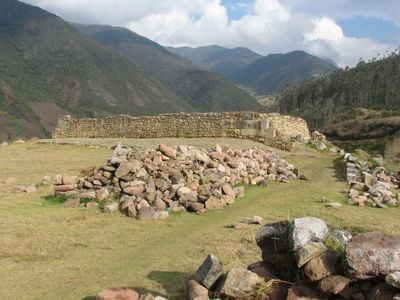
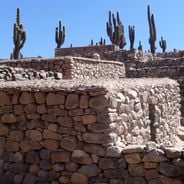
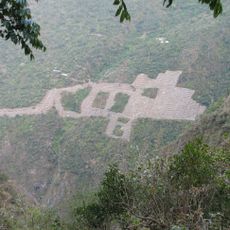
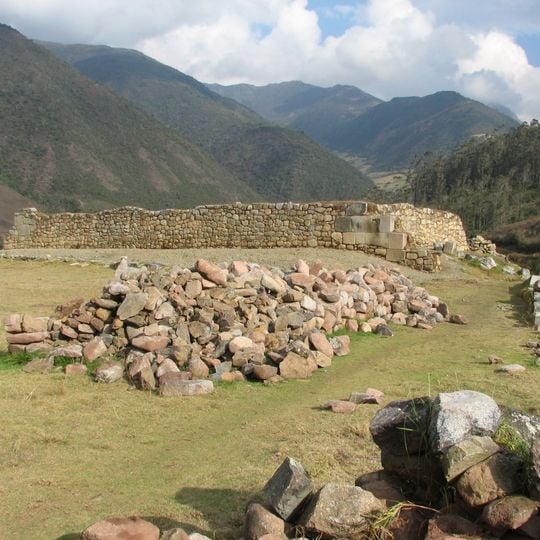
Vitcos is an archaeological site set on a mountain ridge in Cusco Department, with ruins of stone structures, agricultural terraces, and ancient canals scattered across the terrain. The site showcases the Inca construction methods and settlement patterns.
Incas occupied the Vilcabamba region from about 1450 and established Vitcos as a major centre. After his 1537 victory at Ollantaytambo, Manco Inca withdrew here, but Rodrigo Orgóñez sacked the site that July. Manco was murdered at Vitcos in 1544 by Spanish renegades. Spanish forces captured Vitcos in June 1572, ending the Neo-Inca State.
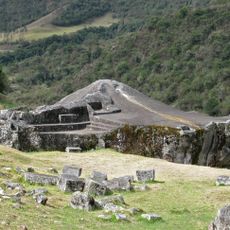
Vitcos takes its local Quechua name, Rusaspata, from the ridge it stands on, and nearby lies the shrine of Ñusta Hisp'ana, the "White Rock" (also Yurak Rumi or Chuqip'allta), about 1 km south of the Inca palace. Royal Incas lived at Vitcos and ceremonies were held at that shrine; in 1570 two Catholic friars settled near Vitcos and one led an attack that damaged the shrine.
Reaching the site requires taking a bus from Cusco to Vilcabamba, then hiking through forested terrain with a local guide. A guide is essential for navigation and interpreting the ruins.
The ruins were known locally as Rosaspata until explorer Hiram Bingham connected them to historical records in 1911. This link between local memory and archaeological research reveals how past knowledge remained embedded in the landscape.
The community of curious travelers
AroundUs brings together thousands of curated places, local tips, and hidden gems, enriched daily by 92,629 contributors worldwide.