Lumbung, Buddhist temple in Klaten, Indonesia
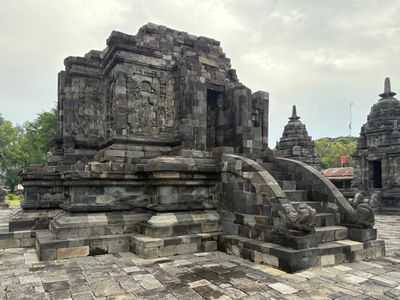
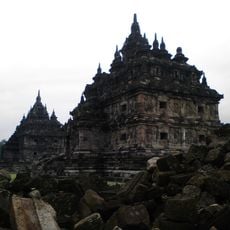
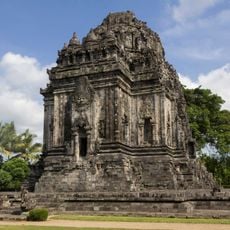
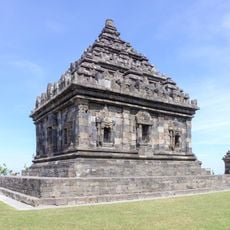
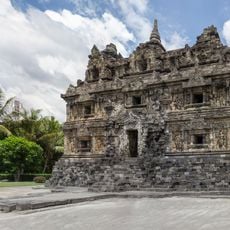
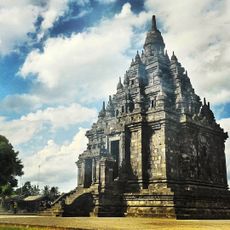
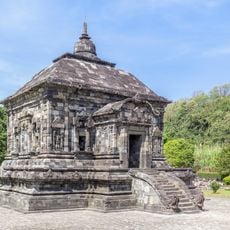
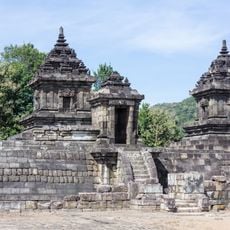
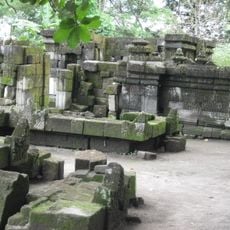
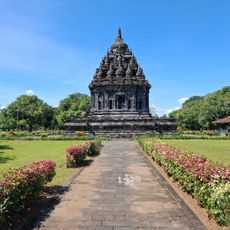
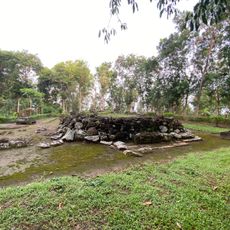
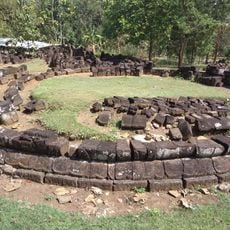
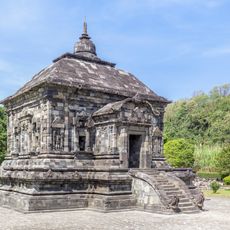
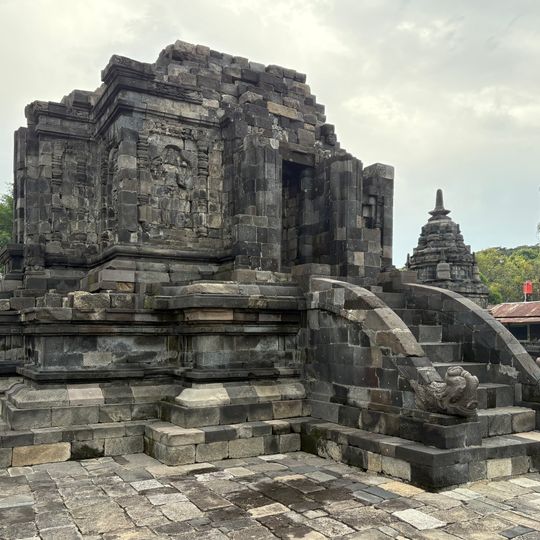
Lumbung is a 9th-century Buddhist temple compound in Klaten, Central Java, with a main shrine facing east, surrounded by sixteen smaller perwara temples in a concentric layout. The main temple has a 20-sided polygon plan covering 350 m² and is now incomplete, with many stones missing. The grey andesite structure rises in tiers from a square base, and a stone staircase with a curved railing and a carved serpent head at its foot leads up the right side.
Lumbung is a 9th-century Buddhist temple compound from the Ancient Mataram Kingdom, contemporary with Sewu and Bubrah but older than Prambanan. The Kelurak inscription of 782 CE, found nearby, records a temple for Manjusri Bodhisattva, probably Sewu rather than Lumbung. N.J. Krom first reported the site in 1923, and J. Dumarçay later documented structural changes.
The name Lumbung is not original; local Javanese called the ruin 'candi lumbung', meaning 'rice barn temple', after its original name was lost. The compound is Buddhist, built in the 9th century, and its main shrine is crowned with stupas, the bell-shaped markers of Buddhist worship that visitors can still see on the roofline.
The site sits along the main road between Yogyakarta and Solo, making it easy to stop on a journey between the two cities. The ground around the temple compound is uneven in places, so sturdy footwear helps when walking between the central shrine and the outer ring of smaller structures.
The name Lumbung means 'rice barn' in Javanese, but the temple was never used as a barn; the name was given by local people long after the original function was forgotten. The compound's main temple has a 20-sided polygon plan covering 350 m² and faces east, and many of its stones are missing.
The community of curious travelers
AroundUs brings together thousands of curated places, local tips, and hidden gems, enriched daily by 93,590 contributors worldwide.