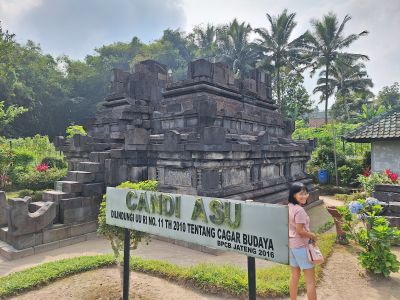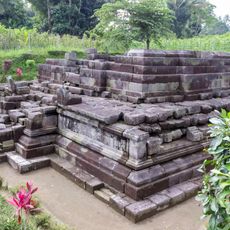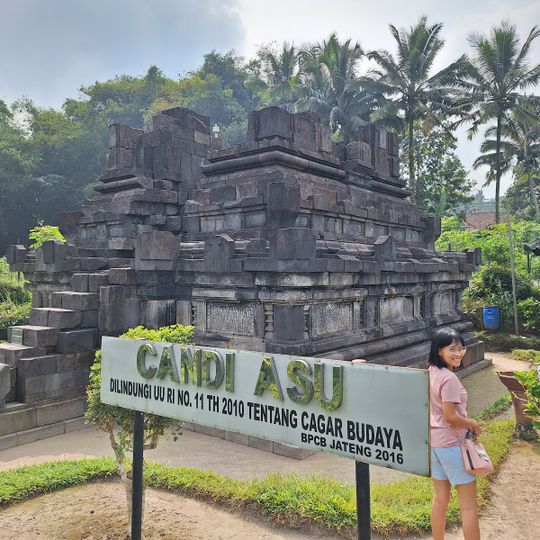
Candi Asu, Hindu temple in Sengi, Magelang, Indonesia.
Candi Asu is a Hindu temple in Sengi with base sides measuring approximately 8 meters and a foundation height of about 2.5 meters. The structure uses angular stone blocks to create a compact, geometrically ordered form.
The temple dates to a period of Hindu influence in the region, as confirmed by two stone inscriptions found nearby named Prasasti Sri Manggala I and II from the year 874 CE. These inscriptions document the spiritual importance of the site during that era.
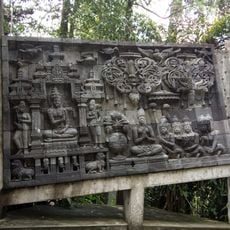
The temple's name comes from how local people saw the Nandi statue, which represents Shiva's mount, and connected it to 'asu', the local word for dog. This folk interpretation reveals how the community understood the sacred imagery.
The temple sits where the Pabelan and Tlingsing Rivers meet, and you can reach it via the road connecting Mungkid to Boyolali. Its location at this river junction shapes how you approach the site and the surroundings you will encounter.
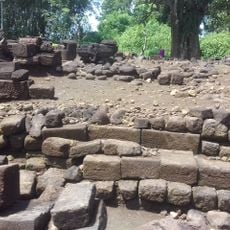
The builders used an unusual method, working from top to bottom and placing stones at specific angles. The construction appears never to have been fully completed, as larger finishing stones were never put into place.
The community of curious travelers
AroundUs brings together thousands of curated places, local tips, and hidden gems, enriched daily by 91,677 contributors worldwide.