Lambityeco, Archaeological site near Tlacolula de Matamoros, Mexico
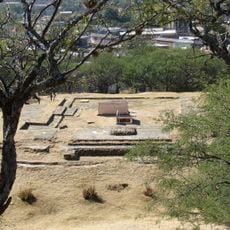
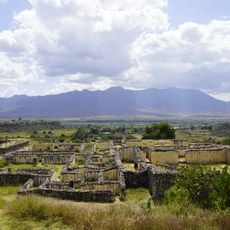
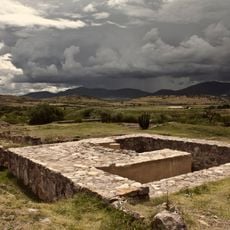
Lambityeco is an archaeological site 2 km from Tlacolula de Matamoros, Oaxaca, covering 117 hectares with 197 mounds, of which two exceed ten metres and ninety measure between one and ten metres. Two excavated palace complexes, with their tombs, were restored between 1961 and 1976 under John Paddock of the Instituto de Estudios Oaxaqueños. The site lies beside the Pan-American Highway (Route 190), about 25 km southeast of Oaxaca city.
The settlement emerged during the Classical Period and developed into a major hub for salt production and trade. This economic activity made it a crucial supply point for larger empires that controlled the surrounding region.
The name Lambityeco most likely derives from lambi, a Zapotec adaptation of the Spanish alambique (still), and pityec, meaning mound, giving "mound of the still"—a reference to the pots used to boil brine. Salt was obtained by leaching local earth and evaporating the brine, and the site supplied up to 90% of the valley's salt between 600 and 700 AD. Local people from Tlacolula de Matamoros still extracted salt here until 1945.
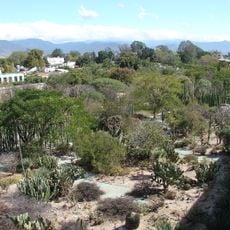
Lambityeco lies beside the Carretera Nacional 190, about 25 km southeast of Oaxaca and roughly 2 km from Tlacolula de Matamoros. Most of the 197 mounds are covered by scrub, so the two excavated palace complexes are the main areas to walk. Ground is uneven and unshaded; sturdy shoes and water help.
Salt was still being extracted from the southern part of the site in 1945, when residents of nearby Tlacolula de Matamoros washed local earth to obtain brine and boiled it in pots. At its height the city supplied up to 90% of the salt consumed in the Valley of Oaxaca.
The community of curious travelers
AroundUs brings together thousands of curated places, local tips, and hidden gems, enriched daily by 94,630 contributors worldwide.