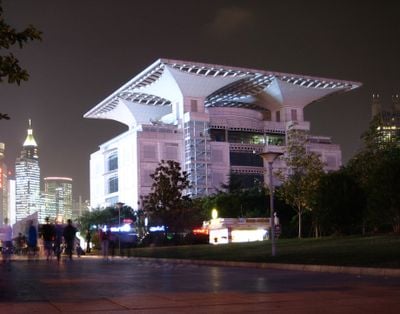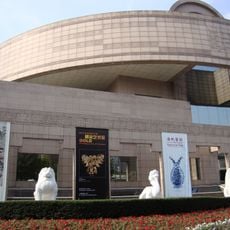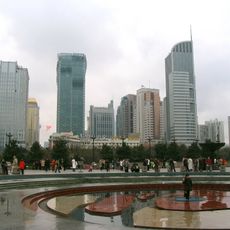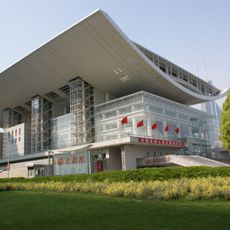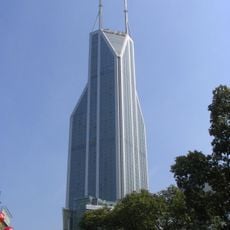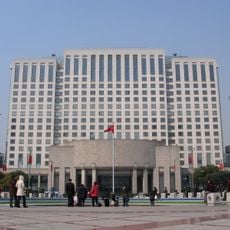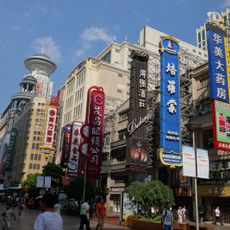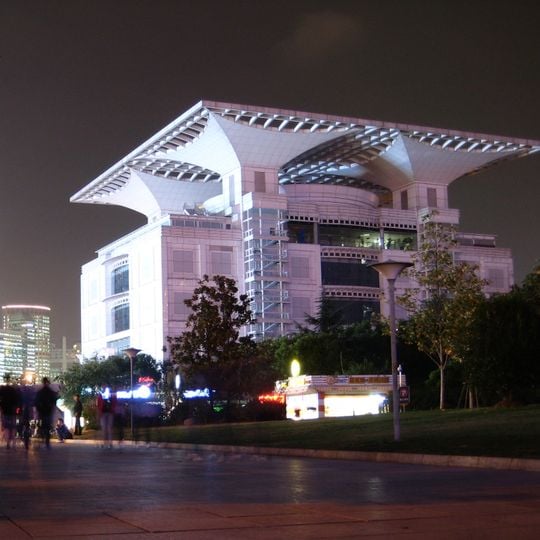
Shanghai Urban Planning Exhibition Center, Urban planning museum in Huangpu District, China
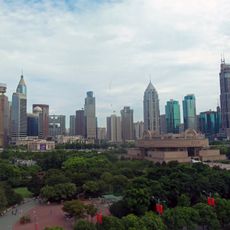
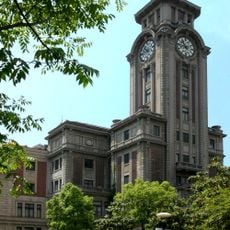
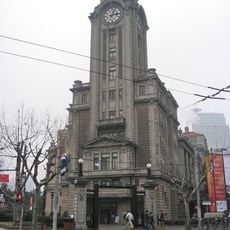
The Shanghai Urban Planning Exhibition Center is a museum in Huangpu dedicated to how the city develops and changes over time. Multiple floors display scale models, design plans, and infrastructure projects that show the layout and growth of the metropolitan area.
The museum opened in 2000 and traces Shanghai's transformation from a trading port into a global financial center. Historical photographs and objects help visitors understand how the city evolved and reshaped itself over recent decades.
The center reveals how Shanghai sees itself and wants to grow, showing the city's vision beyond its past as a trading port. You can sense the forward-looking mindset that drives daily decisions about neighborhoods, transportation, and public spaces.
The museum is located near People's Square metro station, making it easy to reach by public transport. Plan to spend a few hours walking through the different floors and taking time to understand the models and displays.
A 360-degree theater here projects virtual flights over Shanghai's skyline, including future buildings not yet constructed. This immersive experience lets you see planned changes from above in a way that ground-level maps cannot convey.
Location: Shanghai
Inception: February 25, 2000
Official opening: February 25, 2000
Opening Hours: Sunday 09:00-17:00; Tuesday-Saturday 09:00-17:00
Phone: +862163184477
Website: http://supec.org
GPS coordinates: 31.23337,121.47048
Latest update: December 6, 2025 16:04
Beyond its famous landmarks, Shanghai hosts numerous cultural spaces that operate away from major tourist routes. This collection guides visitors to artist districts, private galleries, independent theaters, and historic buildings that offer insight into the city's artistic and intellectual life. These are places where contemporary art is exhibited, experimental performances take place, and Shanghai's history is presented from different perspectives. The selection includes converted industrial buildings now housing studios and exhibition spaces, small museums with specialized collections, and bookstores and cafés that serve as meeting points for artists and culture enthusiasts. These locations provide opportunities to explore the city beyond conventional paths and experience Shanghai's active cultural scene firsthand.
Shanghai brings together the past and the present in a single city. The Bund lines up colonial facades from the 1920s and 1930s directly across from the Lujiazui skyline, where glass towers rise on the opposite bank of the river. In the narrow lanes of the French Concession, old plane trees shade historic townhouses while just a few blocks away the new city center climbs with office towers and shopping malls. This mix defines the whole cityscape. The city preserves its religious and cultural roots in active temples such as Longhua and Jing'an, which stand in the middle of modern neighborhoods. The Ming Dynasty Yu Garden remains surrounded by traditional teahouses even as contemporary shops have grown up around it. Water towns like Zhujiajiao and Qibao sit on the outskirts and show how life looked centuries ago in the region. Museums such as the Shanghai Museum and the China Art Museum collect art and history from different eras. For families there are the Ocean Aquarium, Shanghai Disneyland, and the Science and Technology Museum. Places like Tianzifang, M50 Creative Park, and Duolun Road reveal contemporary cultural life in converted old buildings. Each neighborhood has its own character, from the wide boulevards at People's Square to the small workshops along old industrial structures like 1933 Old Millfun.
Shanghai blends centuries of history into a cityscape that shifts from one district to the next. Along the Huangpu River, the Bund lines up colonial buildings from the early 20th century, while across the water in Pudong, glass and steel towers rise hundreds of feet into the air. In older neighborhoods, Buddhist temples sit near traditional gardens where pavilions and ponds follow designs from the Ming and Qing dynasties. The French Concession spreads out with tree-lined streets and low brick houses that now hold cafes and small shops. Converted factories and warehouses have become art spaces and museums. Yu Garden winds through courtyards and corridors built in the 1500s, while water towns like Zhujiajiao and Qibao keep their canals and stone bridges from centuries past. Nanjing Road connects old and new with its mix of department stores and neon signs. In Xintiandi and Tianzifang, narrow lanes of restored shikumen houses now hold restaurants and boutiques. Places like the Power Station of Art, Rockbund Art Museum, and 50 Moganshan Road turn industrial spaces into galleries. The view from Shanghai Tower or the World Financial Center stretches across the entire city, showing the scale of this metropolis.
Nanjing Road
406 m
Sihang Warehouse
1 km
Shanghai Museum
344 m
Shanghai Grand Theatre
461 m
Park Hotel
405 m
Shimao International Plaza
371 m
K11
895 m
People's Park
262 m
Shanghai Art Museum
380 m
Great World, Shanghai
542 m
Shanghai History Museum
377 m
Raffles City Shanghai
192 m
Shanghai Race Club
445 m
Tomorrow Square
543 m
Greater Shanghai Plan
448 m
Shanghai Concert Hall
552 m
Museum of Contemporary Art Shanghai
228 m
Grand Cinema
393 m
Bund Center
1.2 km
Radisson Blu Hotel Shanghai New World
444 m
Renmin Building
184 m
Pacific Hotel Shanghai
394 m
博文女校
1.1 km
Dajing Ge Pavilion
1.1 km
Ciros Plaza
569 m
上海中汇大厦
1.1 km
Yates Apartments
926 m
Shanghai Natural History Museum.
766 mReviews
Visited this place? Tap the stars to rate it and share your experience / photos with the community! Try now! You can cancel it anytime.
Discover hidden gems everywhere you go!
From secret cafés to breathtaking viewpoints, skip the crowded tourist spots and find places that match your style. Our app makes it easy with voice search, smart filtering, route optimization, and insider tips from travelers worldwide. Download now for the complete mobile experience.
A unique approach to discovering new places❞
— Le Figaro
All the places worth exploring❞
— France Info
A tailor-made excursion in just a few clicks❞
— 20 Minutes