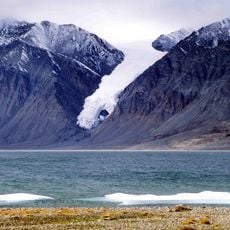
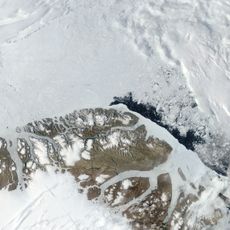
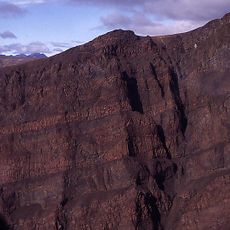
Lake Hazen, Freshwater lake in Nunavut, Canada.
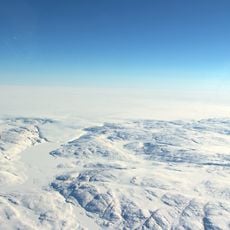
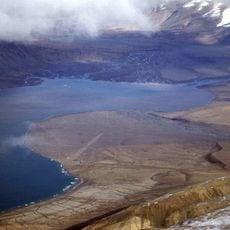
Lake Hazen lies in Quttinirpaaq National Park on northern Ellesmere Island, 118 km southwest of Alert. It is 74 km long and up to 12 km wide, with an area of 537.5 km², a maximum depth of 269 m and a shoreline 185 km long at 158 m above sea level. Johns Island, 7 km long, is the largest of several islands in the lake.
The lake was documented during an Arctic expedition between 1881 and 1883 and named after a figure from that era. This exploration and naming marked an important moment in European mapping of this remote region.
The lake's name honours General William Babcock Hazen, who organised the 1881–1883 Greely expedition. In 2004, Thule artefacts were found near the Ruggles River: a stone dwelling and discarded fish bones, evidence of an overwintering fishing camp where the current kept the water from freezing. The Thule were ancestors of the Inuit.
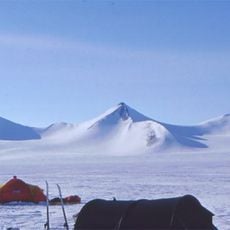
Most trips start at Tanquary Camp, the Parks Canada base at the end of Tanquary Fiord, 70 km southwest of the lake. Hikers usually take eight to twelve days to reach Lake Hazen; the return is normally by a pre-booked charter aircraft, and some parties walk the route in reverse.
Lake Hazen holds two morphotypes of Arctic char, one larger and one smaller. Studies in the 1990s found neither form is anadromous, yet Inuit traditional knowledge holds that the char migrate to the sea, a disagreement between science and local observation.
The community of curious travelers
AroundUs brings together thousands of curated places, local tips, and hidden gems, enriched daily by 93,849 contributors worldwide.