Tarim River, River system in Xinjiang, China
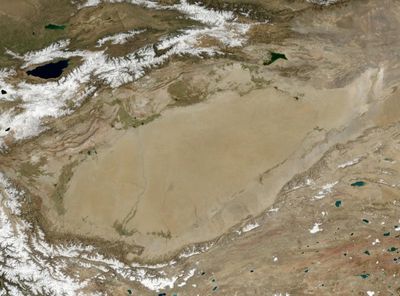
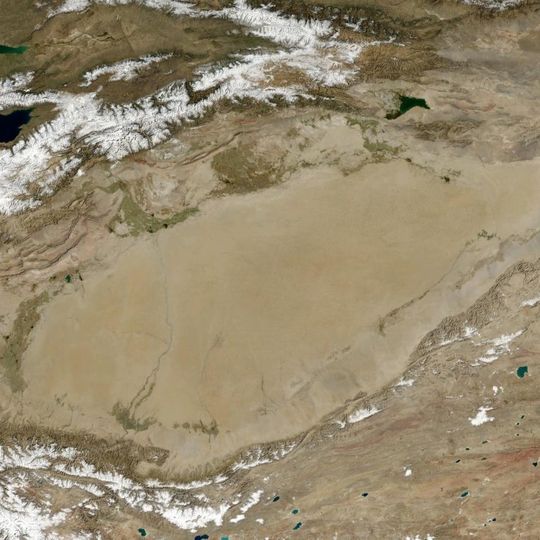
The Tarim River is a river system in the Tarim Basin that stretches 2,327 kilometers, making it China's longest inland river. It connects multiple water sources across Xinjiang province and flows through one of the country's major desert regions.
The river was documented during China's Han Dynasty, when Greek geographer Ptolemy recorded it under the name Oichardes. This early record shows the waterway was known to both Eastern and Western scholars of that time.
The river carries different names across local languages, reflecting the region's cultural diversity and its importance to communities here. In Uyghur it is called Tarim Daryasi, while Chinese speakers use Tarim He, each name holding meaning for those who depend on its waters.
Temperatures near the river can reach 40°C, while annual rainfall in the desert areas averages only 12 millimeters. Careful water management is essential for sustaining agriculture in these harsh conditions.
Tigers lived in the regions around the river until 1899, as documented in observations from Sven Hedin's expedition. These large predators have since disappeared completely from the area, reflecting how much the ecosystem has changed.
The community of curious travelers
AroundUs brings together thousands of curated places, local tips, and hidden gems, enriched daily by 92,409 contributors worldwide.