Niushoushan, Buddhist mountain complex in Nanjing, China
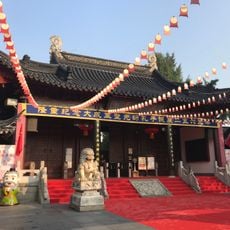
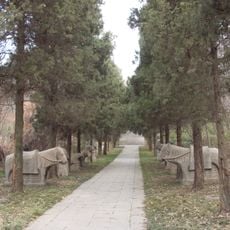
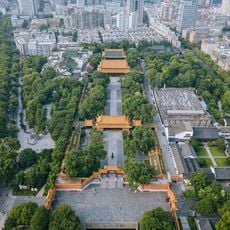
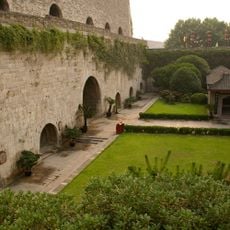
Niushoushan is a Buddhist mountain complex in Nanjing with underground palaces, grand halls, and two distinctive pagodas. The site spreads across multiple levels with extensive gardens and pathways winding through the mountainside.
During the Tang Dynasty, Master Farong established the Niutou Chan school at this location, marking a turning point in the development from Indian to Chinese Buddhism. This spiritual tradition continues to define the place today.
The name comes from the twin peaks, which resemble the horns of an ox, as described in the old text Jinling Langu: gazing from afar, the two peaks rise like ox horns. Locals also call it Niutou Mountain, and in 317 Prime Minister Wang Dao persuaded Emperor Yuan of Jin to name it Tianque, Heaven's Towers, instead of building ceremonial towers.
Transportation services connect the different attractions within the complex, so you do not need to walk everywhere. It is wise to allow plenty of time to explore all the levels and areas, as the site is large and varied.
The Buddha's parietal bone relic was found in 2008 in the underground palace of the Bao'en Temple site in Nanjing's Qinhuai District, then moved here; it was enshrined in the underground palace on 27 October 2015. The palace occupies a former iron-ore pit on the west peak, dug out between 1937 and 1958 to a depth of over 60 metres.
The community of curious travelers
AroundUs brings together thousands of curated places, local tips, and hidden gems, enriched daily by 93,086 contributors worldwide.