Franconian Jura, Low mountain range in Bavaria, Germany.
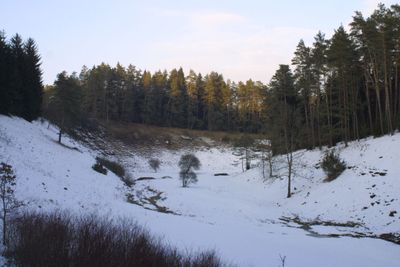
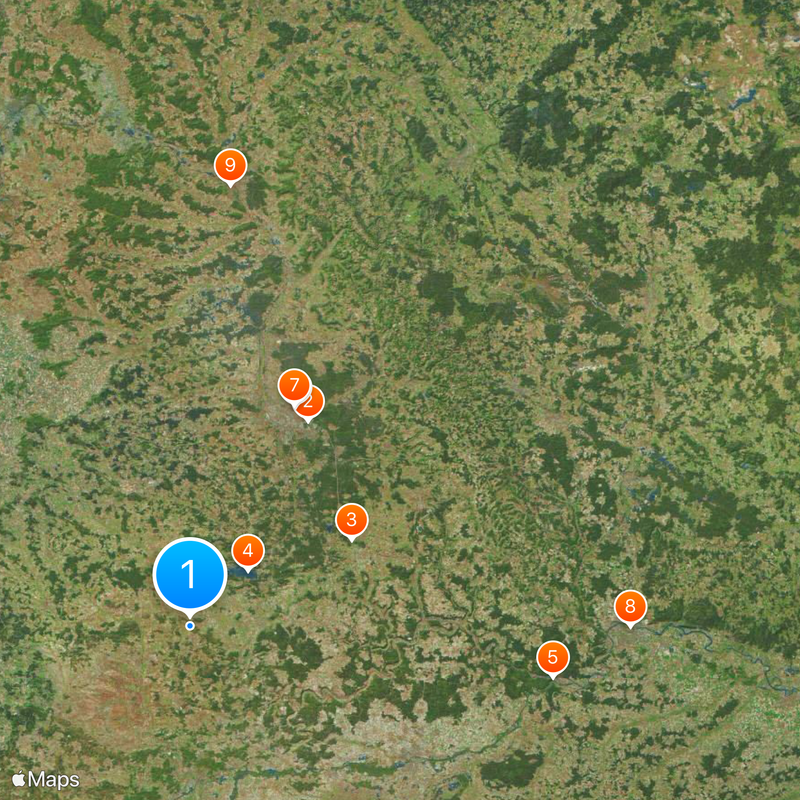
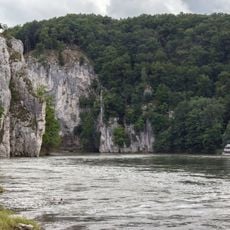
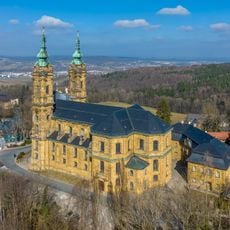
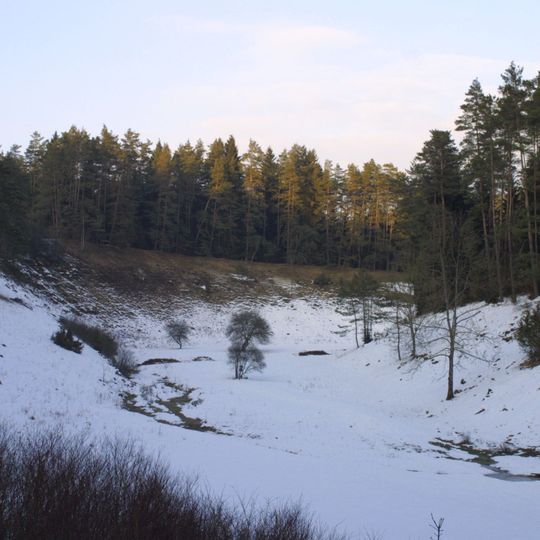
The Franconian Jura is a low limestone range running from the Main near Lichtenfels south-west past Bamberg and Nuremberg and south to the Danube near Ingolstadt, covering 7053.8 km². Its highest point is the 656 m Dürrenberg on the Hahnenkamm. The Nördlinger Ries impact crater separates it from the Swabian Jura. Pale grey rock, snow-covered slopes and a dark gully appear in the photograph.
The Franconian Jura is the eastern continuation of the Swabian Jura, from which it is separated by the Nördlinger Ries impact crater. It is built of Jurassic limestone and reaches 656.4 m at the Dürrenberg on the Hahnenkamm, with the Hesselberg outlier at 689.4 m. The name Alb probably comes from an old Celtic word for mountain pasture, not from Latin montes albi.
The name Alb probably comes from an old Celtic word for a mountain pasture, not from the Latin montes albi (white mountains) as was long assumed. The northern part is called Franconian Switzerland after its rock formations, and the 2,346 km² nature park Fränkische Schweiz - Frankenjura covers it almost entirely. Climbers use the limestone crags around the Pegnitz and Wiesent valleys.
The region has a dense network of marked hiking paths connecting small towns, medieval castles, and river routes throughout the limestone terrain. Sturdy footwear is recommended since many trails cross uneven ground and rocky sections.
Over 1000 caves are scattered throughout the region, with some preserving skeletal remains and stone tools from the Paleolithic era. These archaeological finds reveal how early humans lived in and used this landscape.
The community of curious travelers
AroundUs brings together thousands of curated places, local tips, and hidden gems, enriched daily by 95,142 contributors worldwide.