Kalka–Shimla Railway, Narrow-gauge railway in Himachal Pradesh, India
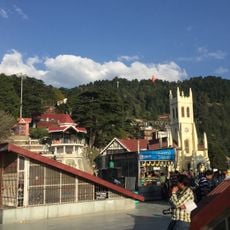
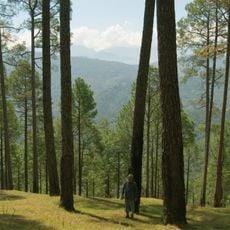
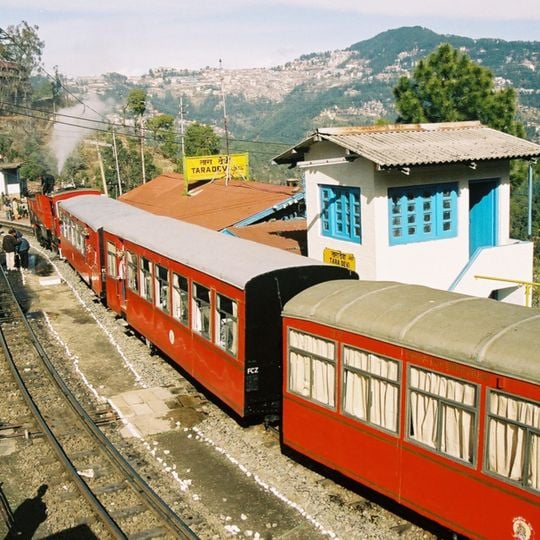
The Kalka–Shimla Railway is a narrow-gauge line in Himachal Pradesh that runs through mountainous terrain between two towns, using tunnels and bridges to cross valleys and ridges. The track passes through dense forests, past terraced fields and small stations built into hillsides that open to wide views of the surrounding mountains.
The line was built by the privately funded Delhi-Ambala-Kalka Railway Company under a contract signed on 29 June 1898, with Herbert Septimus Harington as chief engineer and Sujan Singh Hadaliwale as chief contractor. It opened on 9 November 1903, dedicated by Viceroy Lord Curzon, and was extended to Shimla Goods in 1909. The government purchased it on 1 January 1906 for 17,107,748 rupees. UNESCO added it to the mountain railways of India World Heritage Site on 8 July 2008.
The line's name comes from its two termini, Kalka in Haryana and Shimla in Himachal Pradesh. The last tunnel before Shimla gave its name to the 103 stop, a bus stop above it known since British times as 103 Station. Steam locomotives from the 1960s still run between Shimla and Kaithlighat, and the railway department marked the line's centenary on 7 November 2003.
Trains depart in the morning and early afternoon, and it is advisable to book seats in advance, especially during peak travel months from April to June and in October. The carriages have open windows, so bringing a light jacket for cooler sections and a hat for sunny stretches can be helpful.
A legend tells that the Barog Tunnel was named after an engineer who took his own life after his original calculations were wrong and two tunnel sections failed to meet. Today the Barog station, located halfway, marks one of the few places where trains pause so passengers can have tea at a small cafe.
The community of curious travelers
AroundUs brings together thousands of curated places, local tips, and hidden gems, enriched daily by 93,375 contributors worldwide.