See the monuments around you in AROpen chests in the app
Around Us is built for your phone — point your camera at the streets and discover the monuments and places around you in augmented reality.Around Us is built for your phone — chests unlock when you walk, explore and capture nearby places.
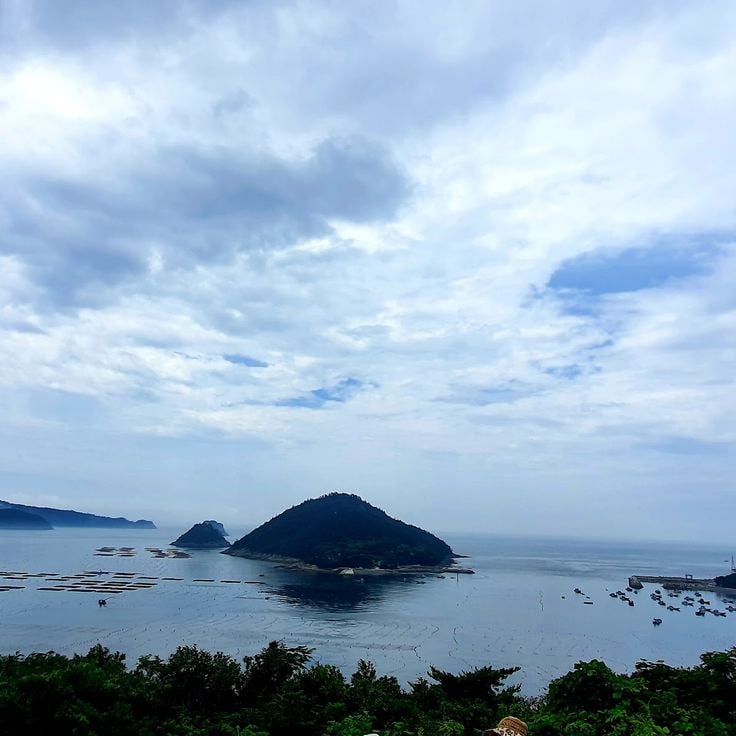
South Korea reveals its maritime soul through scattered islands, suspended villages, and landscapes that keep the mark of time.
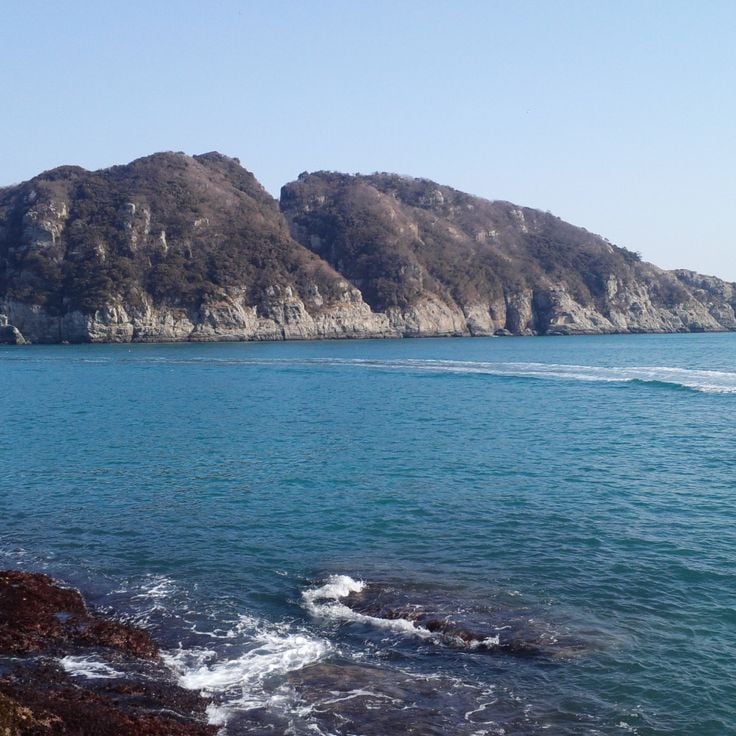
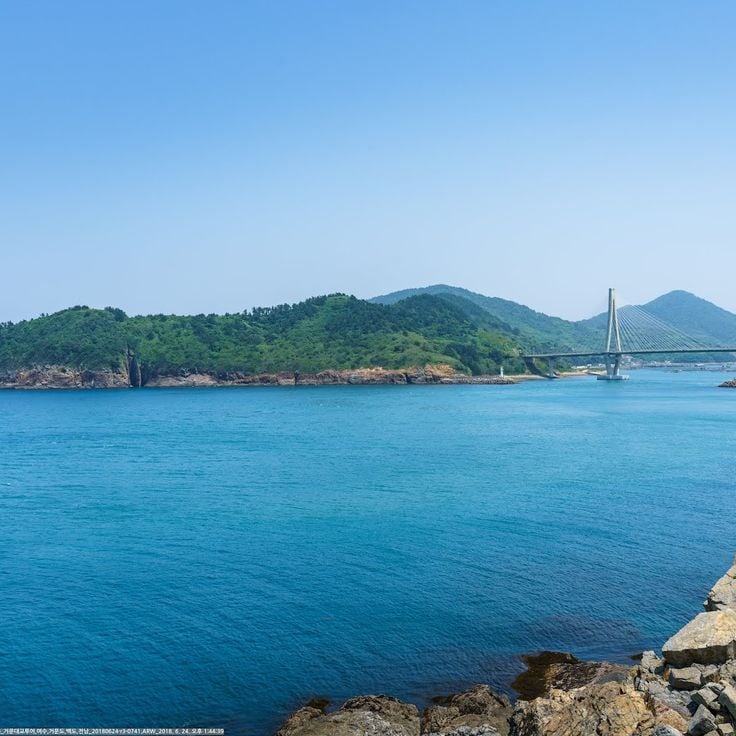
The southern coast of South Korea unfolds as a series of sea worlds. Between Yeosu and the west, dozens of islands rise from the water, each telling its own story. Hallyeohaesang National Park protects this world of islands and bays between Yeosu and Geoje. Further west, Dadohaehaesang Park extends over an even larger archipelago, with wild and remote islands. These landscapes offer cliffs plunging into the sea, fishing villages tucked into coves, and beaches covered with black pebbles or fine sand.
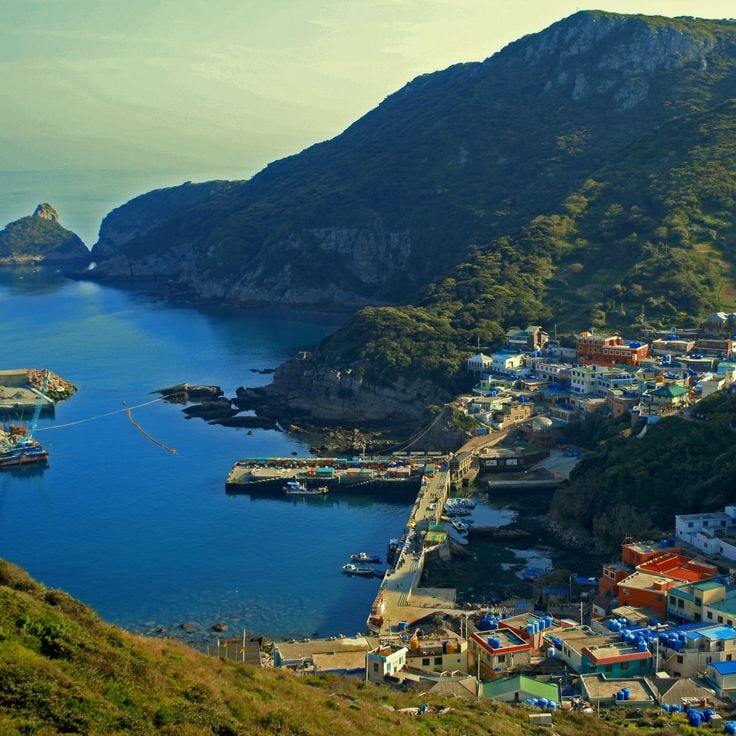
Walking along the coasts, you encounter temples perched on mountains overlooking the water, isolated lighthouses on distant islands, and trails winding between small villages. Some places retain an older rural life, with cultivation terraces descending to the sea. Other villages keep traces of ordinary lives: colorful houses, lively harbors, historical gardens. The residents live by the rhythm of tides and seasons.
This region invites you to discover how Koreans have always inhabited this coastline, how they work and live there. It is a coast where nature remains strong and present, but where men and women have found their place, creating landscapes where everything seems in place: the rocks, the trees, the houses, and the sea.
South Korea reveals its maritime soul through scattered islands, suspended villages, and landscapes that keep the mark of time.
The southern coast of South Korea unfolds as a series of sea worlds. Between Yeosu and the west, dozens of islands rise from the water, each telling its own story. Hallyeohaesang National Park protects this world of islands and bays between Yeosu and Geoje. Further west, Dadohaehaesang Park extends over an even larger archipelago, with wild and remote islands. These landscapes offer cliffs plunging into the sea, fishing villages tucked into coves, and beaches covered with black pebbles or fine sand.
Walking along the coasts, you encounter temples perched on mountains overlooking the water, isolated lighthouses on distant islands, and trails winding between small villages. Some places retain an older rural life, with cultivation terraces descending to the sea. Other villages keep traces of ordinary lives: colorful houses, lively harbors, historical gardens. The residents live by the rhythm of tides and seasons.
This region invites you to discover how Koreans have always inhabited this coastline, how they work and live there. It is a coast where nature remains strong and present, but where men and women have found their place, creating landscapes where everything seems in place: the rocks, the trees, the houses, and the sea.
Hallyeohaesang National Park covers the sea between Yeosu and Geoje, protecting a world of islands, bays, and rocky shores. Visitors can find small fishing villages tucked into coves, temples set on hills above the water, and trails winding through coastal terrain. Each island has its own character, and the sea is never far from sight.
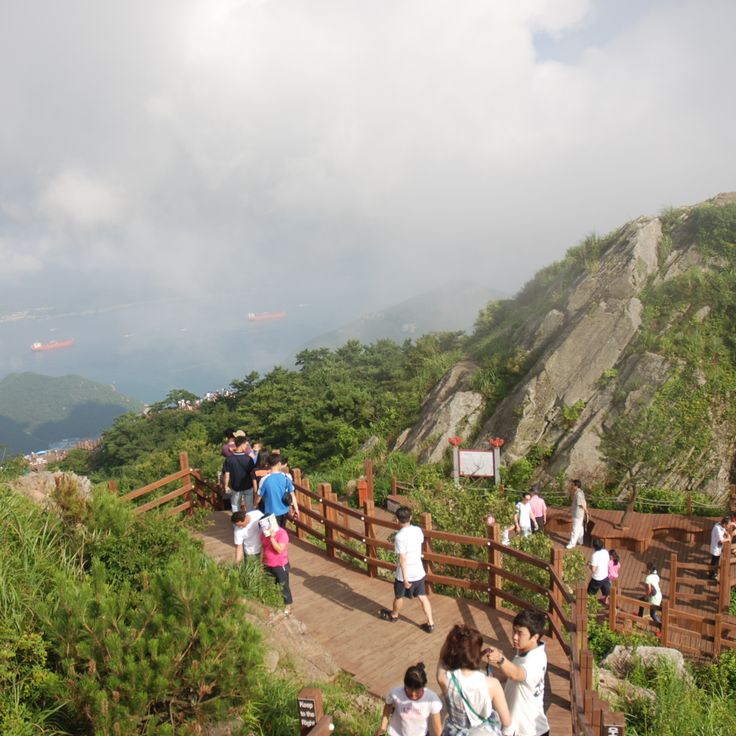
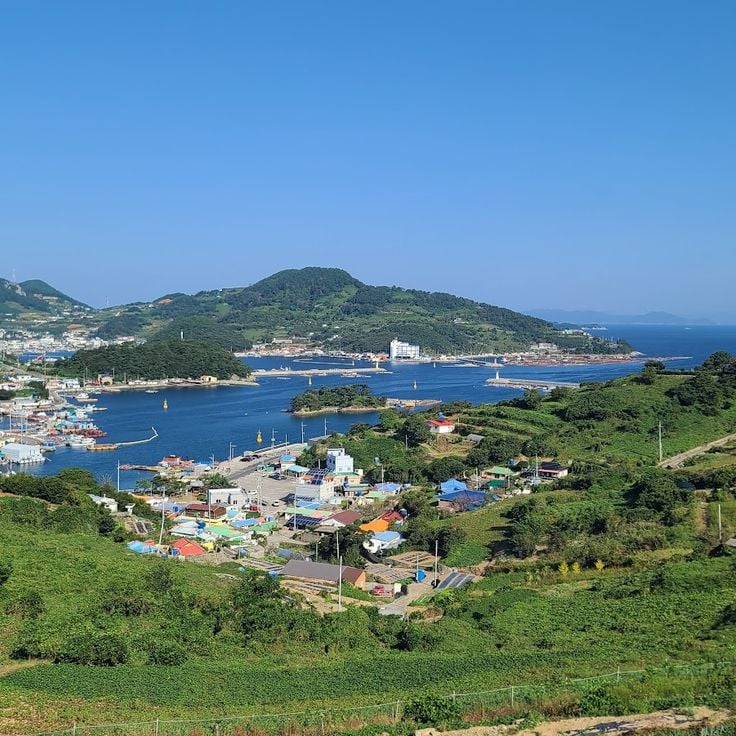
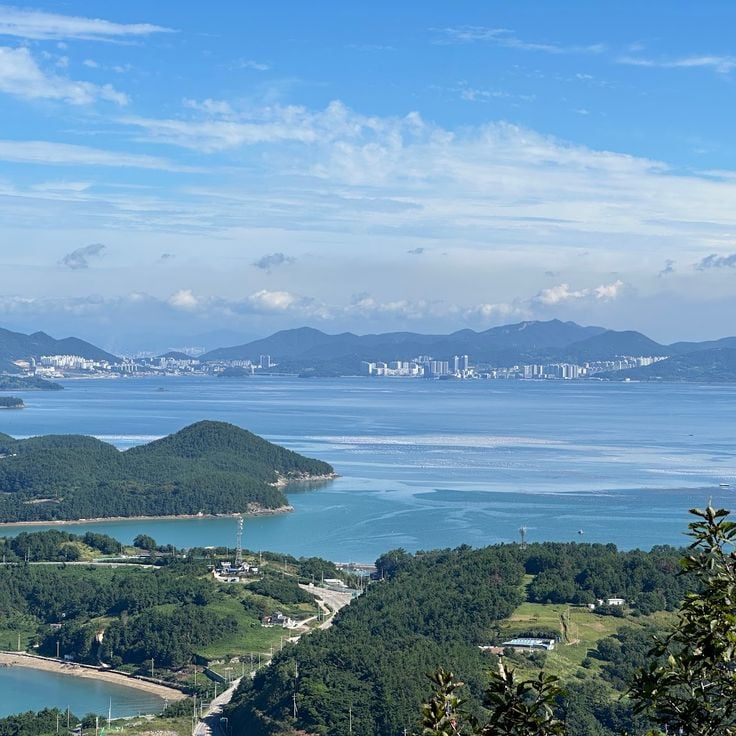
Mireuksan Mountain rises above Tongyeong and offers a view that is hard to match along the southern coast of Korea. From the top, you can see dozens of islands scattered across the sea, along with narrow channels, fishing boats, and the curved shoreline below. A cable car goes up to near the summit, but trails through forest also lead there. The view shows exactly how this coastline works: land and water woven together in every direction, with islands of all sizes sitting in the blue-green sea.
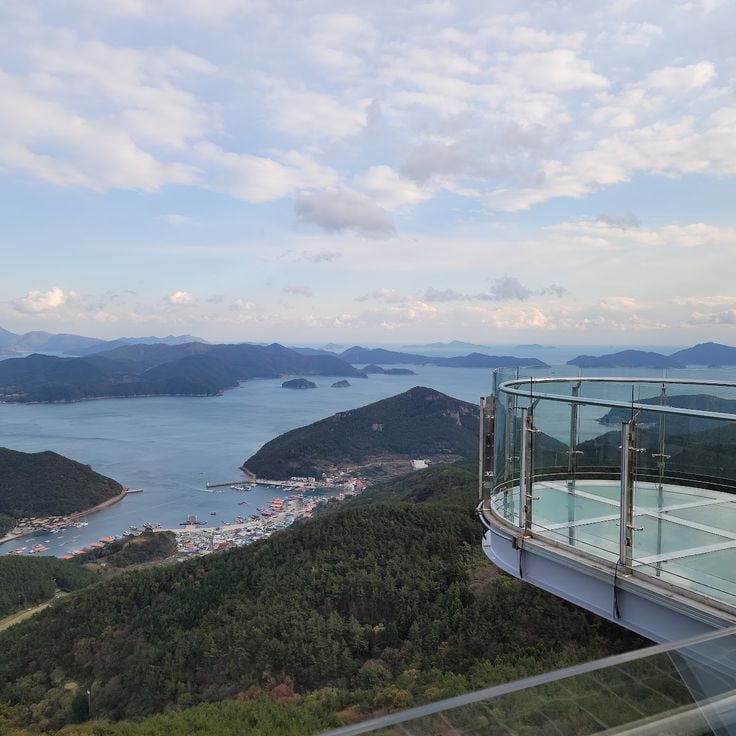
The Tongyeong Cable Car carries visitors up Mount Mireuksan and opens up a broad view over Tongyeong Bay and the islands scattered across it. From the top, you can see the water weaving between the islands, fishing boats resting in small inlets, and the town laid out below. The ride takes only a few minutes, but the view from above gives a clear sense of how this coastline is shaped by sea and land together.
Mireukdo is an island off the coast of Tongyeong and one of the most visited spots along the southern coast of Korea. From Mount Mireuksan, the view opens across the island and the surrounding sea. Visitors find coastal paths winding between rocky cliffs and small coves, giving a clear sense of how people here have long lived by the water. The island sits within Hallyeohaesang National Park, a protected area spanning dozens of islands between Yeosu and Geoje.
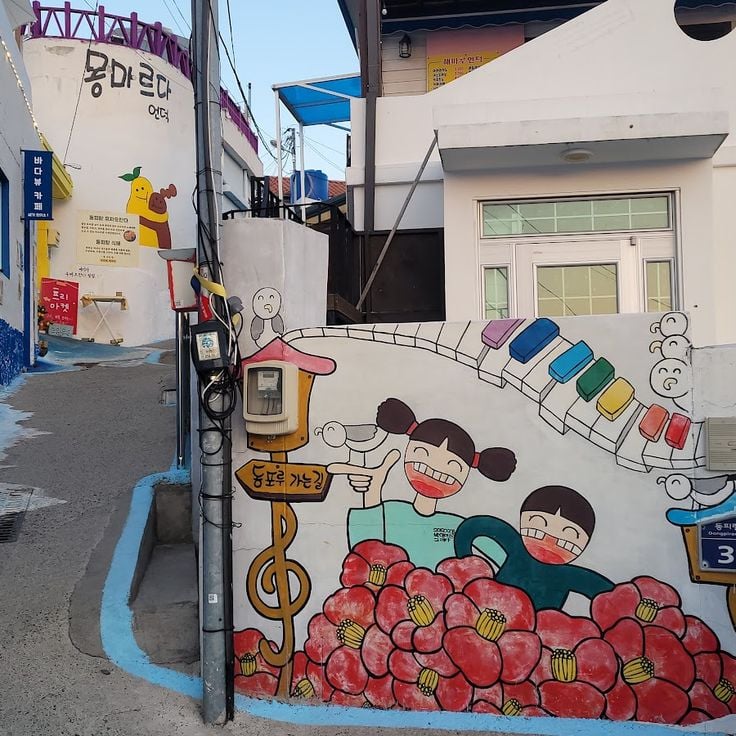
Dongpirang Mural Village sits on a hill above the port of Tongyeong, overlooking the bay and its surrounding islands. The narrow lanes are covered with paintings made by local residents and artists over the years. The village was once a modest neighborhood facing demolition, and the murals helped give it a new life. Walking through it feels natural and unhurried, with small houses on either side and open views of the water at every turn.
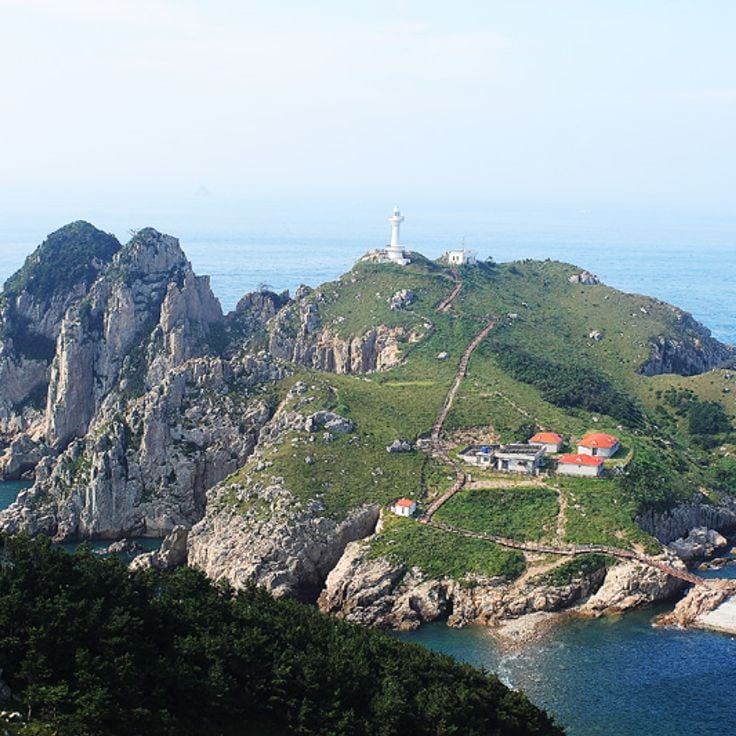
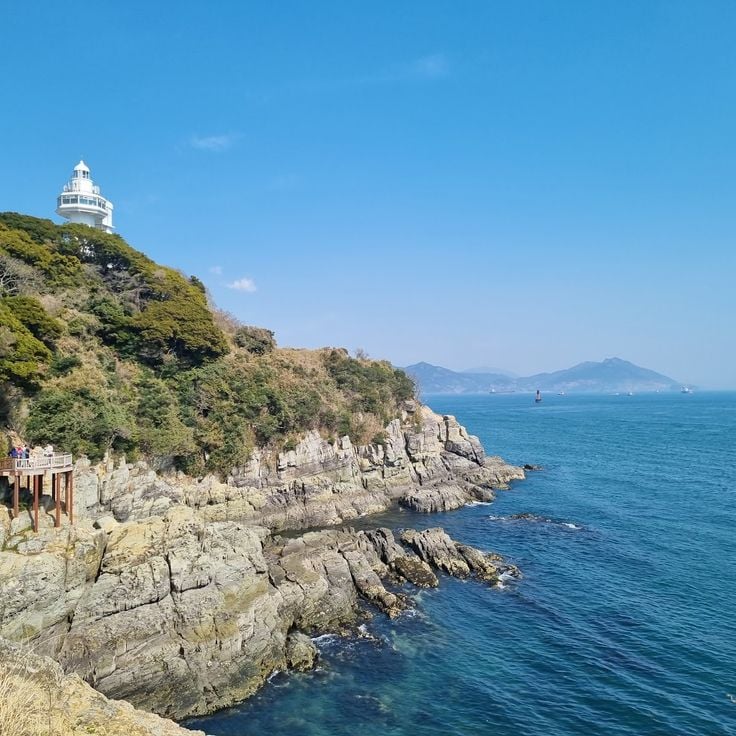
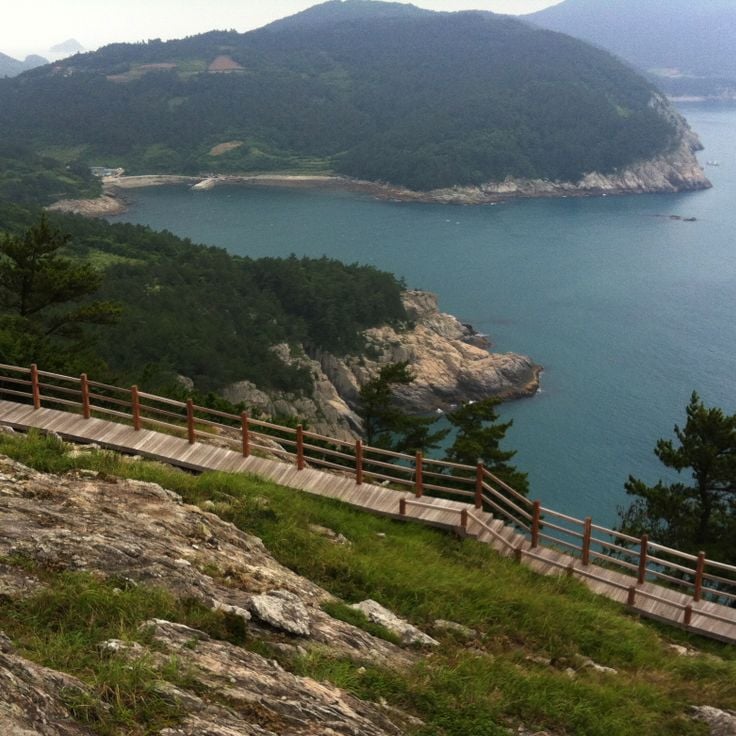
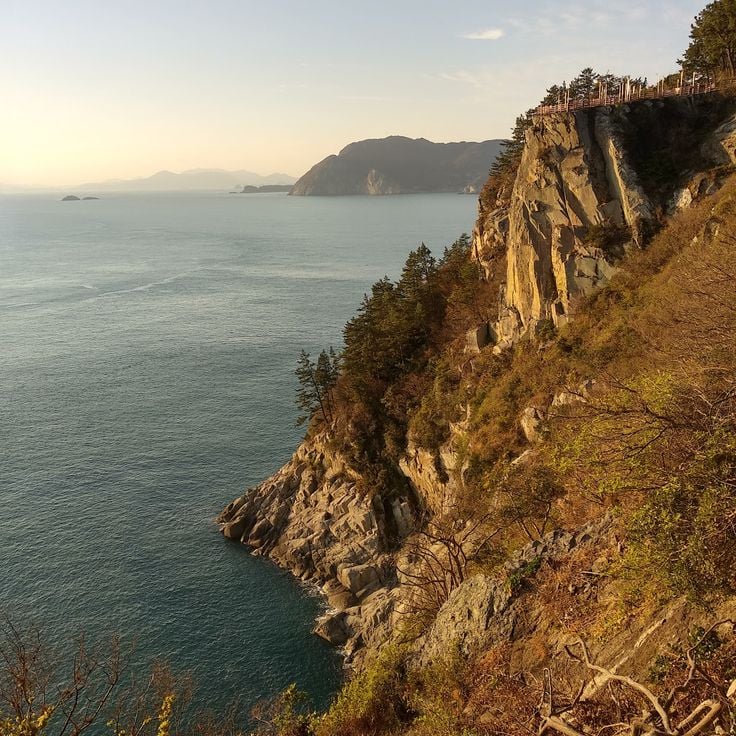
Somaemuldo is a small island off the coast of Tongyeong, reachable only by ferry. Its cliffs drop sharply into the sea, and a lighthouse stands at the far end of the island. A walking trail loops around the island, passing rocks, pine trees, and open views of the water. There is little construction here, and the island feels raw and remote, far from the mainland.
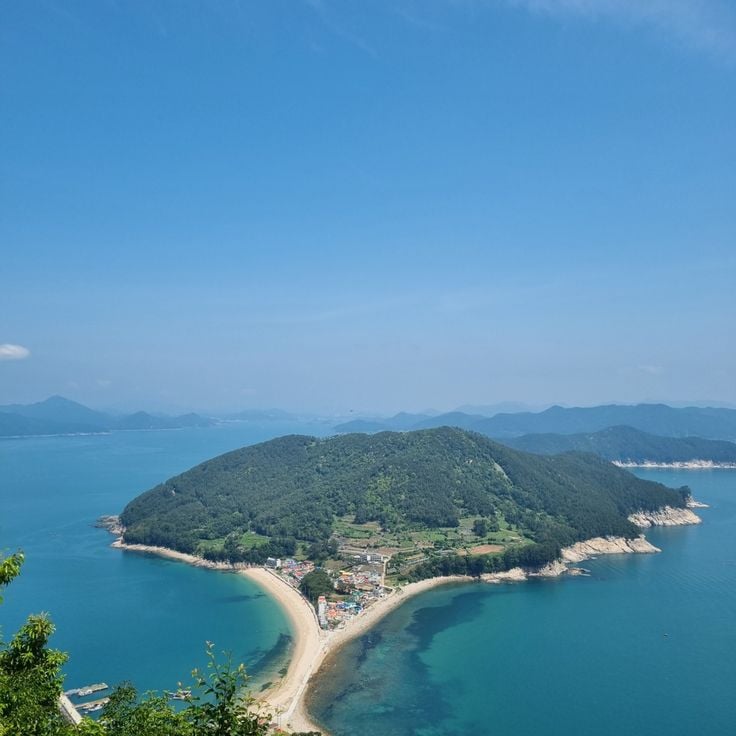
Bijindo is a small island off the coast of Tongyeong. Its most recognizable feature is a narrow sandbar that connects two hilly sections of the island. At low tide, the sand emerges and you can walk from one side to the other with water on both sides. The coastline shifts between rocky outcrops, small coves, and sandy stretches.
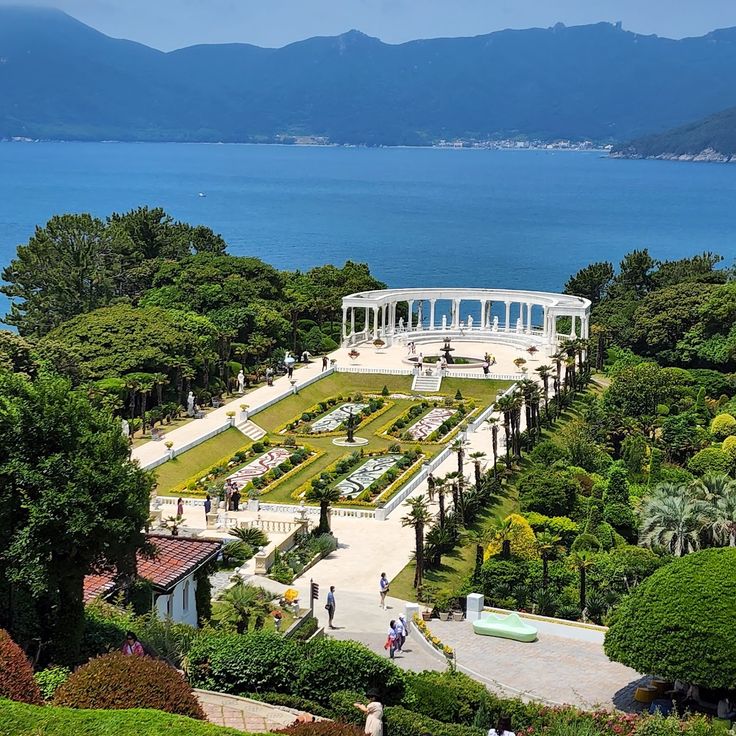
Oedo Botania is a botanical garden set on a small private island off the coast of Geoje, reachable only by boat. The crossing itself gives you a first look at the island-dotted sea of the southern Korean coast. Once there, you walk through terraced gardens where plants from many parts of the world grow side by side. Paths wind up the hillside, and the surrounding water stays in view the whole time, with other islands scattered in the distance.
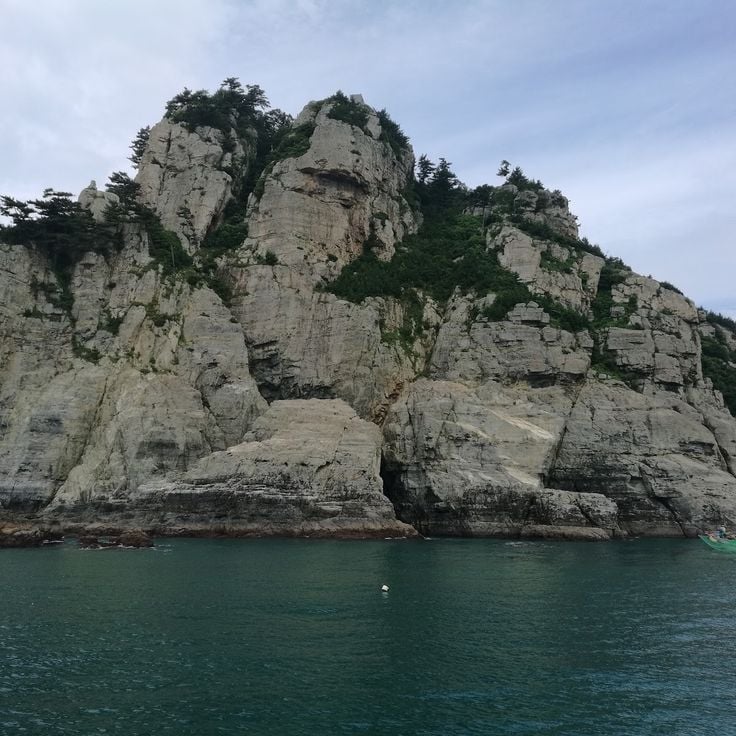
Haegeumgang Island sits off the coast of Geoje and can only be reached by boat. Rock formations rise directly from the sea, shaped over time by waves and weather into unusual silhouettes. The shoreline shifts between sheer cliffs and narrow inlets. The surrounding waters are part of Hallyeohaesang National Park, where the light changes the color of the sea throughout the day. A boat trip to Haegeumgang is one of the most popular excursions along this stretch of the southern Korean coast.
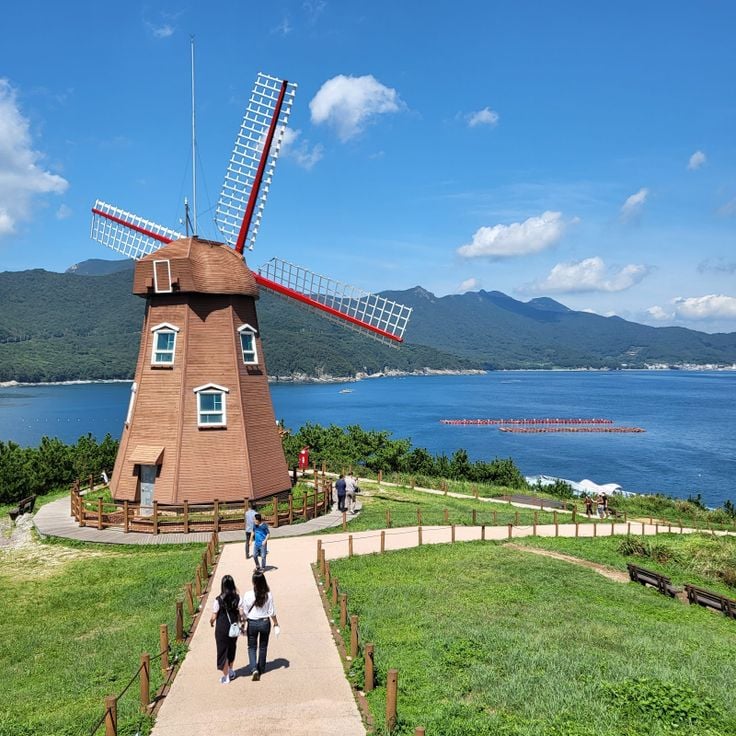
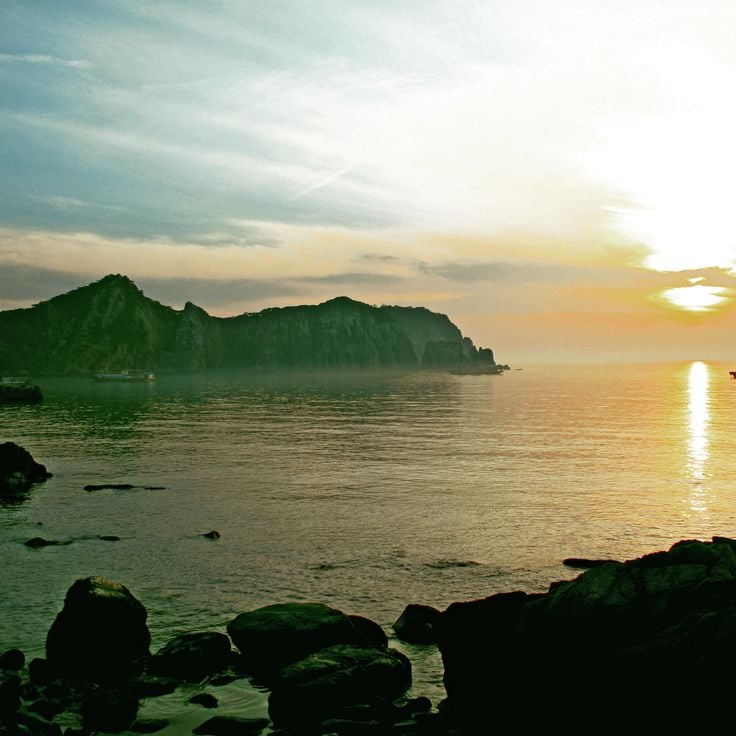
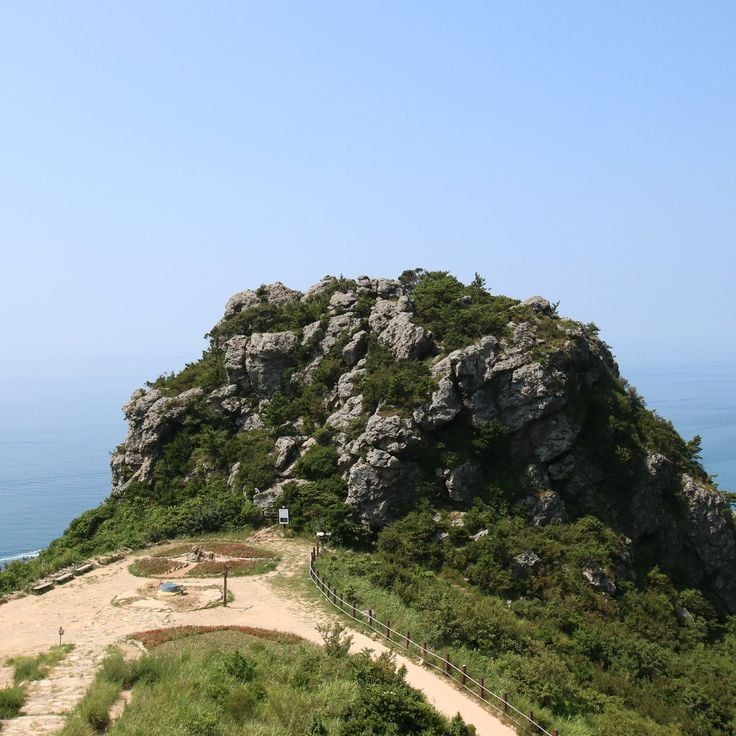
Windy Hill is a grassy hilltop on Geoje Island that rises straight above the sea. From the top, you get a wide view over the bays and islands that make up this stretch of the South Korean coast. The walk up is short, and once you arrive, you feel the wind that blows here almost constantly. Many visitors come for the view and to take photos, especially at sunset, when the light turns the water to warm tones.
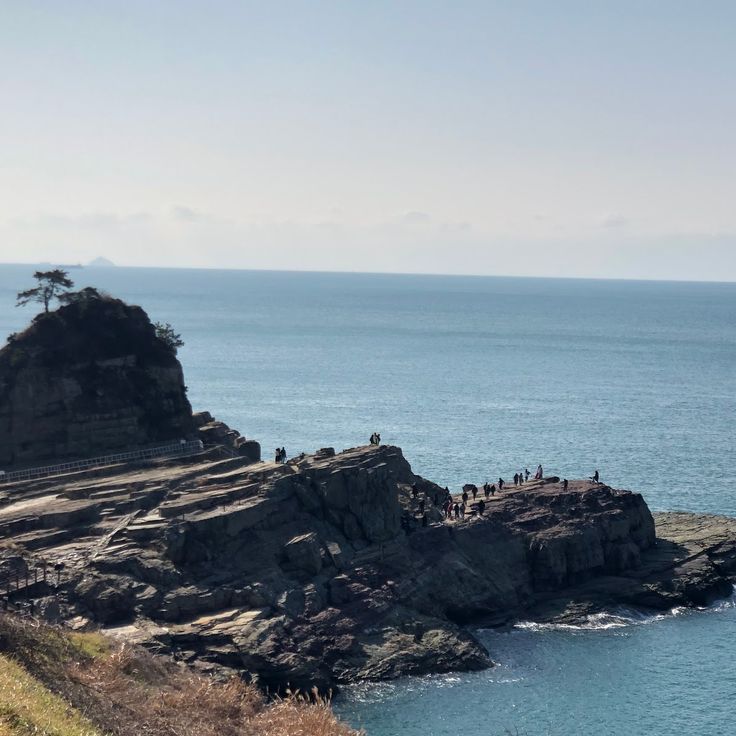
Sinseondae Cliff sits on Geoje Island, along the rocky southern coast of South Korea. The rock face drops sharply into the sea, and the wind coming off the water is constant. This spot works as a natural extension of the Windy Hill viewpoint nearby, completing the view over the bay and the smaller islands scattered around it. Walking here, you get a clear sense of how exposed and raw this coastline can feel.
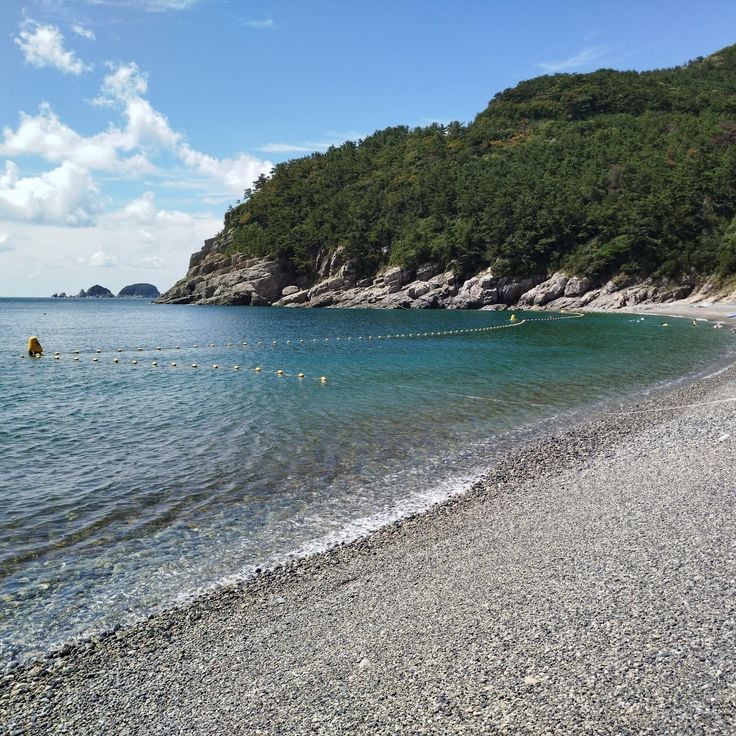
Hakdong Mongdol Beach on Geoje Island is covered entirely with black pebbles instead of sand. The dark stones shift and crunch underfoot as you walk along the shore. There is no sand here at all, which gives the beach a raw and unusual look. The surrounding hills frame the bay, and the water meets the dark shoreline in a way that feels unlike most beaches. Many visitors come simply to sit on the stones and watch the sea.
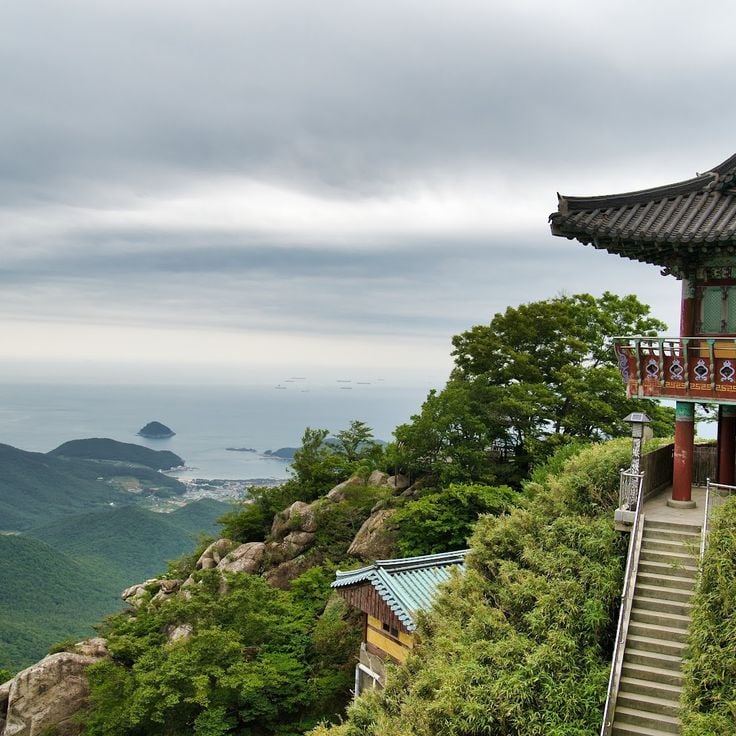
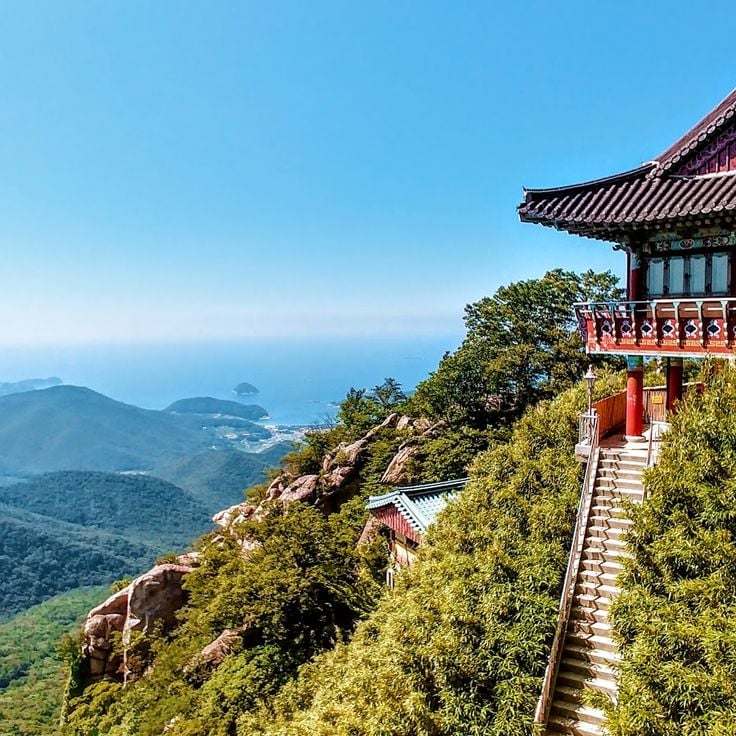
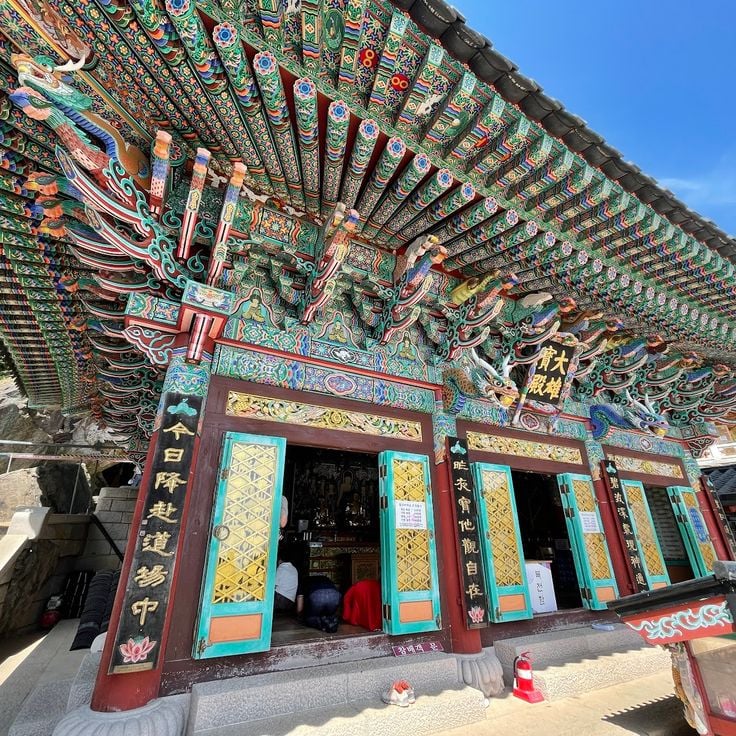
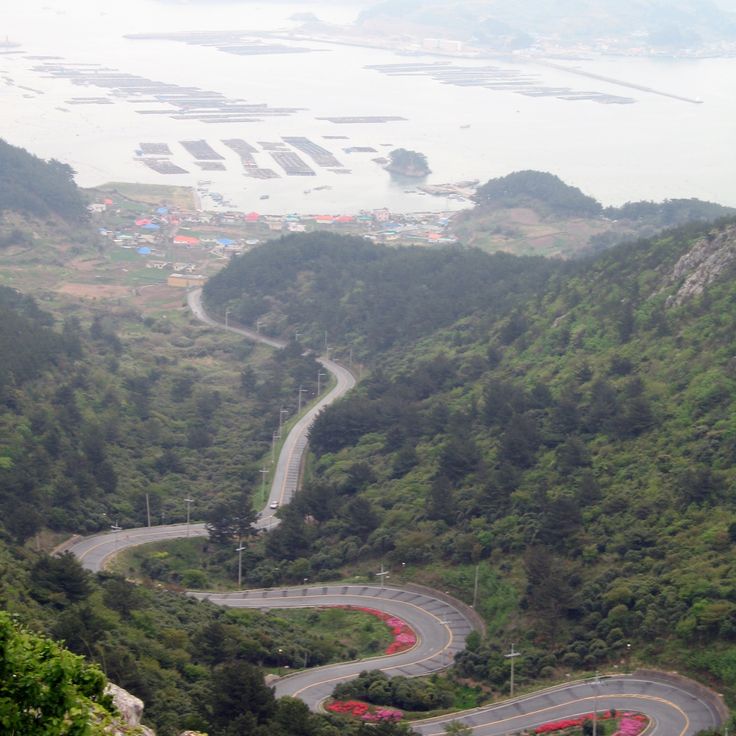
Boriam Hermitage sits on top of Geumsan Mountain in Namhae, looking out over the sea and the surrounding islands. The path up winds through forest and rock, until you suddenly find yourself in front of small temple halls built right into the hillside. From here, water is visible in every direction, and on clear days you can make out the shapes of distant islands. Monks have lived here for centuries, and the place clearly holds deep meaning for many Koreans who come to pray.
Geumsan Mountain rises above the island of Namhae along South Korea's southern coast. At its summit sits Boriam, a small Buddhist hermitage that appears to hang above the sea. From there, the view stretches across the islands and bays of Hallyeohaesang National Park. The path up passes through forests and over rocks, and those who reach the top find a place where silence and the open sea meet.
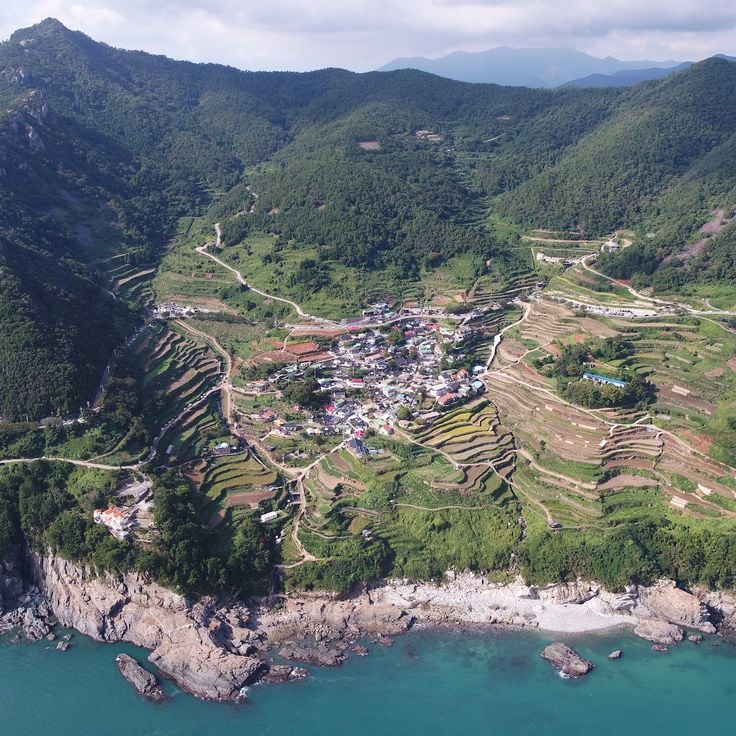
Daraengi Village sits on the island of Namhae along South Korea's southern coast. It is known for its terraced fields that step down the hillside toward the sea. These terraces were built by hand over many generations so that residents could grow rice and vegetables on steep slopes. Walking through the village, you notice old stone houses, narrow paths, and gardens clinging to the hillside. Life here follows the rhythm of the seasons and the tides.
Sangju Silver Sand Beach sits in Namhae, tucked between forested hills and mountains that drop toward the water. The sand is fine and pale, and the sea turns warm shades in summer. Even when visitors are around, the setting stays quiet, with little more than the sound of waves and birds from the trees. It is a good example of the southern Korean coast, where nature and fishing life still feel close to each other.
German Village in Namhae was founded by Koreans who had lived and worked in Germany before returning home. The houses were built in a German style, with gabled roofs, wooden fronts, and tended gardens. The neighborhood sits on a hillside overlooking the sea and nearby islands, making the European-style buildings feel out of place in the southern Korean landscape. A small museum tells the story of the Korean miners and nurses who went to Germany and brought part of that world back with them.
Odongdo Island sits just off the coast of Yeosu and is part of Hallyeohaesang National Park. A walkway connects it to the mainland. The island is known for its thick groves of camellias, which bloom in winter and cover the paths in red. A lighthouse stands among the trees, and short trails wind through the greenery. It is a simple, welcoming place that locals and visitors alike enjoy walking through at any time of year.
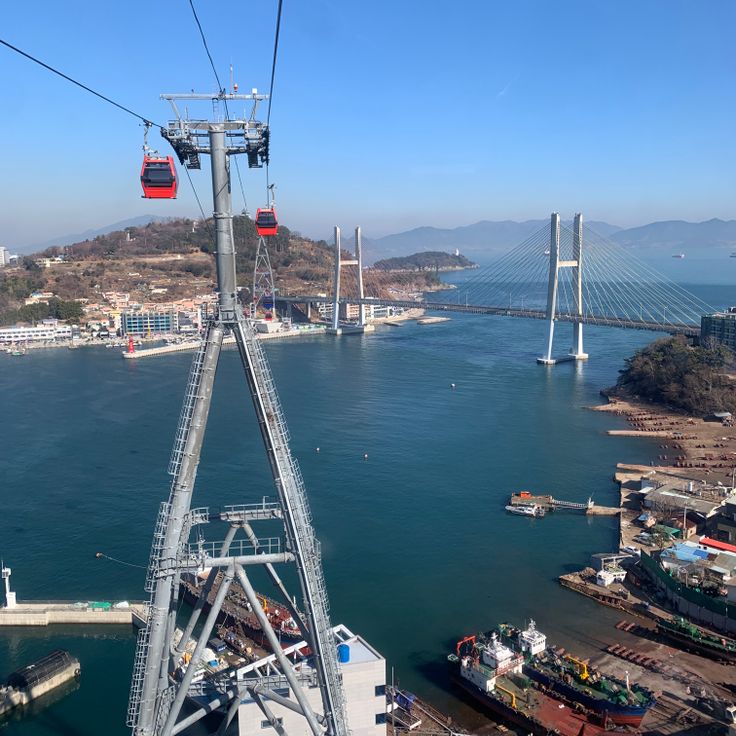
The Yeosu Maritime Cable Car runs over the sea between Dolsan Island and the mainland. The gondolas give you a clear view of Yeosu's coastline from above, with its bays, small islands, and harbor spread out below. From up here, you can see how the city sits between the hills and the water, and how closely the sea shapes everyday life in this part of South Korea.
Hyangiram Hermitage clings to the rocky face of a mountain above the sea, near Yeosu, on the southern coast of South Korea. A narrow path leads up through trees and boulders to reach it. At the top, the view opens wide over the water and the nearby islands. The hermitage is known for its sunrise, which draws visitors who climb up before dawn. The small temple buildings are set directly into the rock, giving the feeling that the monks who once lived here chose this spot for its closeness to the sky and the sea. It is listed among the ten official attractions of Yeosu.
Geomundo Island sits far off the southern coast near Yeosu, surrounded by open water on all sides. The harbor is the center of daily life, where fishing boats come and go with the tides. An old lighthouse stands at the edge of the island, facing the sea. Narrow paths wind through the island, passing small houses and gardens that lead down to the shore. This is a place where people have lived by the sea for generations, and that rhythm still shapes everything here.
The Baekdo Islands sit off the coast of Yeosu and are made up of dozens of small rocky islets and rock formations, all uninhabited. The sea around them is calm, and the rocks have taken on unusual shapes carved by wind and water over time. Visitors can explore the islands by boat, watching the cliffs rise from the water and the vegetation clinging to the rock faces. The Baekdo Islands are part of Hallyeohaesang National Park and show what this stretch of the South Korean coast looks like when left largely untouched.
Geumodo Island sits off the coast of Yeosu and is best explored on foot. A coastal trail winds past cliffs that drop into the sea, through small fishing villages, and along stretches of open water. The people here live by the tides and the seasons, and everyday life on the island feels close and real.
The Bireong-gil Trail runs along the coast of Yeosu and is one of ten trails the city has chosen to highlight. The path moves between sea cliffs, small fishing villages, and rocky shorelines shaped by years of wind and water. At times you walk right at the water's edge, and at others you gain height and look out over the islands of Hallyeohaesang National Park. It is a trail that shows how closely nature and daily life are woven together along this stretch of the Korean south coast.
Dadohaehaesang National Park stretches along the southwestern coast of South Korea, near Wando, and is the country's largest marine national park. It covers hundreds of islands scattered across the sea, some inhabited by fishing communities, others completely wild. Rocky shores, hidden coves, and sandy beaches follow one after another. In the villages that remain, life still follows the tides and the seasons, with fishing boats going out at dawn and returning by evening. Walking the trails here means moving between open water views and sheltered valleys on small islands rarely visited by outsiders.
Cheongsando is a rural island off the southern coast of South Korea, near Wando. It is part of Dadohaehaesang National Park and is known for its slow pace of life. Terraced fields run down toward the sea, and narrow paths connect small villages scattered across the hills. Cheongsando is a member of the international Cittaslow movement, which recognizes places where people live at a slower, more deliberate rhythm. In spring, barley fields turn the hillsides green, drawing visitors who come to walk through the countryside.
The Cheongsando Slow Walking Trails wind through terraced rice fields, small fishing villages, and coastal paths on the island of Cheongsando, off the southern coast of South Korea. The trails are designed to slow you down: you stop, look around, and notice things you would normally walk past. A stone wall between two fields, a boat moored in a narrow harbor, the sound of the sea at the end of a path. The island was one of the first in Korea to be officially recognized as a destination for slow travel, and these trails carry that spirit throughout. You walk not to cover distance, but to follow the rhythm of daily life here.
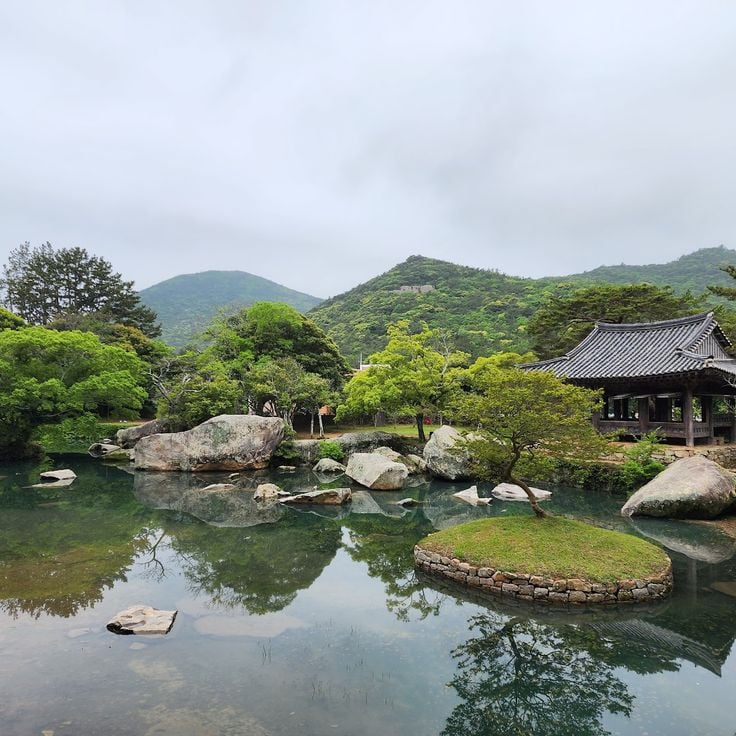
Bogildo is an island off the southern coast of South Korea, not far from Wando. Its forests are thick and its coastline rocky. Life here follows the rhythm of the tides and the seasons. In the heart of the island lies the historic garden of Yun Seondo, laid out in the 17th century among rocks, ponds, and old trees. Fishing families live in small villages along the shore, and narrow paths wind through the forest down to the water.
Yun Seondo Garden sits on Bogil-do Island, off the coast of Wando in the southwest of South Korea. It was laid out in the 17th century by the poet and scholar Yun Seondo, who spent long periods living here. Walking through the garden, you find a careful arrangement of ponds, rocks, and wooden pavilions set against the natural terrain of the island. The design follows the shape of the land rather than forcing it into a formal pattern. Trees provide shade, and water moves quietly through the different sections. The sea is close, and the salt air drifts in. This garden shows how Korean scholars once chose to live close to nature, shaping their surroundings with a light hand.
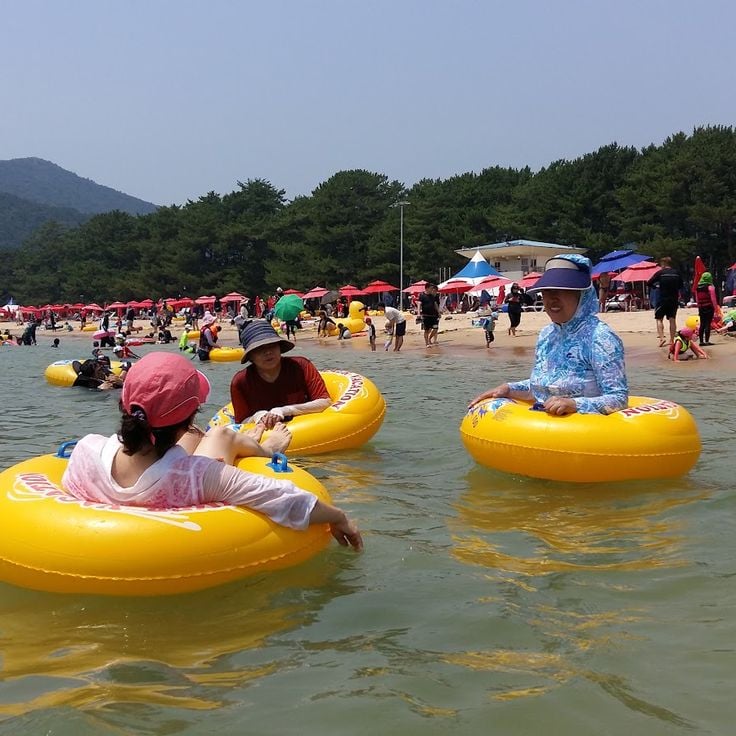
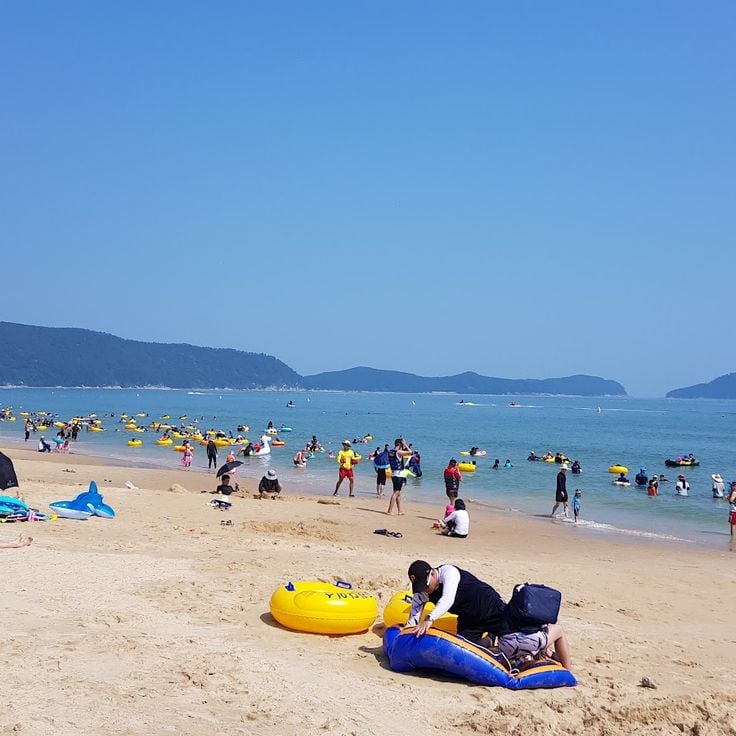
Sinji Myeongsasimni Beach sits on Sinji Island, close to Wando, along the southern coast of South Korea. It stretches for about a mile (roughly 1.5 km) and is known for its fine white sand and shallow, calm water. Families and visitors from across the region come here, especially during summer. Pine trees line the back of the beach and offer shade. The tide shifts the look of the shore several times a day, as is common along this coastline.
Hongdo is an island in the Dadohaehaesang National Park, off the coast of Sinan. Its reddish cliffs drop straight into the sea, forming arches, caves and columns of weathered rock. Boats circle the island so visitors can see the cliffs from the water. The interior is forested and barely inhabited. There is one small fishing village, where the rhythm of daily life follows the tides.
Heuksando is a mountainous island off the southwest coast of South Korea, far from the mainland. The coastline drops sharply into the sea, paths wind through small fishing villages, and views open wide across the open water. Life here follows the rhythm of the tides and the seasons, and the distance from the mainland gives the island a raw, end-of-the-world feeling that stays with you long after you leave.
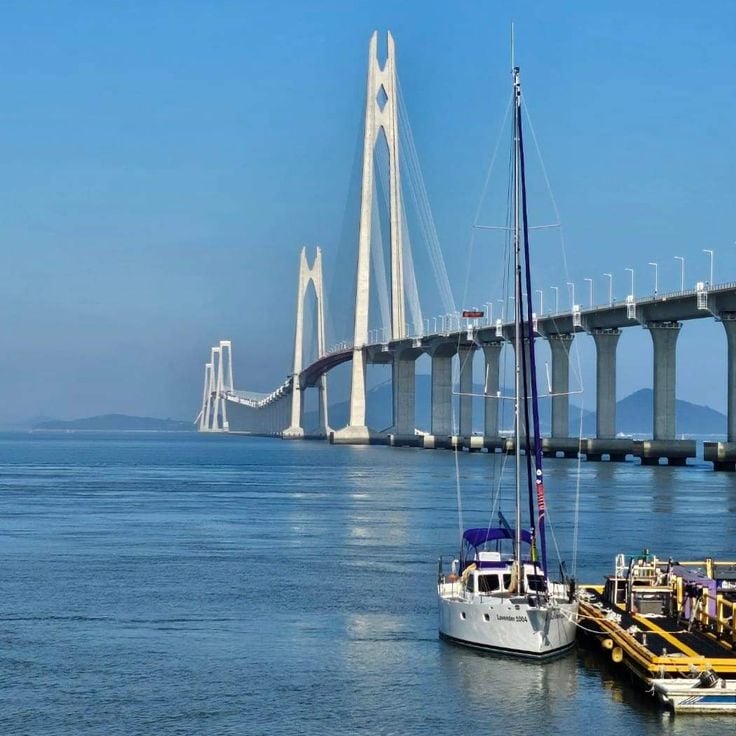
The Cheonsa Bridge connects several islands of the Sinan Archipelago along the southwestern coast of South Korea. Walking across it, you get open views of the sea, the surrounding islands, and the shoreline stretching in every direction. The bridge is part of daily life for islanders who use it to move between islands. For visitors, it offers a different way to experience this stretch of coast: from above, with wind and water below your feet.
Hallyeohaesang National Park covers the sea between Yeosu and Geoje, protecting a world of islands, bays, and rocky shores. Visitors can find small fishing villages tucked into coves, temples set on hills above the water, and trails winding through coastal terrain. Each island has its own character, and the sea is never far from sight.
Mireuksan Mountain rises above Tongyeong and offers a view that is hard to match along the southern coast of Korea. From the top, you can see dozens of islands scattered across the sea, along with narrow channels, fishing boats, and the curved shoreline below. A cable car goes up to near the summit, but trails through forest also lead there. The view shows exactly how this coastline works: land and water woven together in every direction, with islands of all sizes sitting in the blue-green sea.
The Tongyeong Cable Car carries visitors up Mount Mireuksan and opens up a broad view over Tongyeong Bay and the islands scattered across it. From the top, you can see the water weaving between the islands, fishing boats resting in small inlets, and the town laid out below. The ride takes only a few minutes, but the view from above gives a clear sense of how this coastline is shaped by sea and land together.
Mireukdo is an island off the coast of Tongyeong and one of the most visited spots along the southern coast of Korea. From Mount Mireuksan, the view opens across the island and the surrounding sea. Visitors find coastal paths winding between rocky cliffs and small coves, giving a clear sense of how people here have long lived by the water. The island sits within Hallyeohaesang National Park, a protected area spanning dozens of islands between Yeosu and Geoje.
Dongpirang Mural Village sits on a hill above the port of Tongyeong, overlooking the bay and its surrounding islands. The narrow lanes are covered with paintings made by local residents and artists over the years. The village was once a modest neighborhood facing demolition, and the murals helped give it a new life. Walking through it feels natural and unhurried, with small houses on either side and open views of the water at every turn.
Somaemuldo is a small island off the coast of Tongyeong, reachable only by ferry. Its cliffs drop sharply into the sea, and a lighthouse stands at the far end of the island. A walking trail loops around the island, passing rocks, pine trees, and open views of the water. There is little construction here, and the island feels raw and remote, far from the mainland.
Bijindo is a small island off the coast of Tongyeong. Its most recognizable feature is a narrow sandbar that connects two hilly sections of the island. At low tide, the sand emerges and you can walk from one side to the other with water on both sides. The coastline shifts between rocky outcrops, small coves, and sandy stretches.
Oedo Botania is a botanical garden set on a small private island off the coast of Geoje, reachable only by boat. The crossing itself gives you a first look at the island-dotted sea of the southern Korean coast. Once there, you walk through terraced gardens where plants from many parts of the world grow side by side. Paths wind up the hillside, and the surrounding water stays in view the whole time, with other islands scattered in the distance.
Haegeumgang Island sits off the coast of Geoje and can only be reached by boat. Rock formations rise directly from the sea, shaped over time by waves and weather into unusual silhouettes. The shoreline shifts between sheer cliffs and narrow inlets. The surrounding waters are part of Hallyeohaesang National Park, where the light changes the color of the sea throughout the day. A boat trip to Haegeumgang is one of the most popular excursions along this stretch of the southern Korean coast.
Windy Hill is a grassy hilltop on Geoje Island that rises straight above the sea. From the top, you get a wide view over the bays and islands that make up this stretch of the South Korean coast. The walk up is short, and once you arrive, you feel the wind that blows here almost constantly. Many visitors come for the view and to take photos, especially at sunset, when the light turns the water to warm tones.
Sinseondae Cliff sits on Geoje Island, along the rocky southern coast of South Korea. The rock face drops sharply into the sea, and the wind coming off the water is constant. This spot works as a natural extension of the Windy Hill viewpoint nearby, completing the view over the bay and the smaller islands scattered around it. Walking here, you get a clear sense of how exposed and raw this coastline can feel.
Hakdong Mongdol Beach on Geoje Island is covered entirely with black pebbles instead of sand. The dark stones shift and crunch underfoot as you walk along the shore. There is no sand here at all, which gives the beach a raw and unusual look. The surrounding hills frame the bay, and the water meets the dark shoreline in a way that feels unlike most beaches. Many visitors come simply to sit on the stones and watch the sea.
Boriam Hermitage sits on top of Geumsan Mountain in Namhae, looking out over the sea and the surrounding islands. The path up winds through forest and rock, until you suddenly find yourself in front of small temple halls built right into the hillside. From here, water is visible in every direction, and on clear days you can make out the shapes of distant islands. Monks have lived here for centuries, and the place clearly holds deep meaning for many Koreans who come to pray.
Geumsan Mountain rises above the island of Namhae along South Korea's southern coast. At its summit sits Boriam, a small Buddhist hermitage that appears to hang above the sea. From there, the view stretches across the islands and bays of Hallyeohaesang National Park. The path up passes through forests and over rocks, and those who reach the top find a place where silence and the open sea meet.
Daraengi Village sits on the island of Namhae along South Korea's southern coast. It is known for its terraced fields that step down the hillside toward the sea. These terraces were built by hand over many generations so that residents could grow rice and vegetables on steep slopes. Walking through the village, you notice old stone houses, narrow paths, and gardens clinging to the hillside. Life here follows the rhythm of the seasons and the tides.
Sangju Silver Sand Beach sits in Namhae, tucked between forested hills and mountains that drop toward the water. The sand is fine and pale, and the sea turns warm shades in summer. Even when visitors are around, the setting stays quiet, with little more than the sound of waves and birds from the trees. It is a good example of the southern Korean coast, where nature and fishing life still feel close to each other.
German Village in Namhae was founded by Koreans who had lived and worked in Germany before returning home. The houses were built in a German style, with gabled roofs, wooden fronts, and tended gardens. The neighborhood sits on a hillside overlooking the sea and nearby islands, making the European-style buildings feel out of place in the southern Korean landscape. A small museum tells the story of the Korean miners and nurses who went to Germany and brought part of that world back with them.
Odongdo Island sits just off the coast of Yeosu and is part of Hallyeohaesang National Park. A walkway connects it to the mainland. The island is known for its thick groves of camellias, which bloom in winter and cover the paths in red. A lighthouse stands among the trees, and short trails wind through the greenery. It is a simple, welcoming place that locals and visitors alike enjoy walking through at any time of year.
The Yeosu Maritime Cable Car runs over the sea between Dolsan Island and the mainland. The gondolas give you a clear view of Yeosu's coastline from above, with its bays, small islands, and harbor spread out below. From up here, you can see how the city sits between the hills and the water, and how closely the sea shapes everyday life in this part of South Korea.
Hyangiram Hermitage clings to the rocky face of a mountain above the sea, near Yeosu, on the southern coast of South Korea. A narrow path leads up through trees and boulders to reach it. At the top, the view opens wide over the water and the nearby islands. The hermitage is known for its sunrise, which draws visitors who climb up before dawn. The small temple buildings are set directly into the rock, giving the feeling that the monks who once lived here chose this spot for its closeness to the sky and the sea. It is listed among the ten official attractions of Yeosu.
Geomundo Island sits far off the southern coast near Yeosu, surrounded by open water on all sides. The harbor is the center of daily life, where fishing boats come and go with the tides. An old lighthouse stands at the edge of the island, facing the sea. Narrow paths wind through the island, passing small houses and gardens that lead down to the shore. This is a place where people have lived by the sea for generations, and that rhythm still shapes everything here.
The Baekdo Islands sit off the coast of Yeosu and are made up of dozens of small rocky islets and rock formations, all uninhabited. The sea around them is calm, and the rocks have taken on unusual shapes carved by wind and water over time. Visitors can explore the islands by boat, watching the cliffs rise from the water and the vegetation clinging to the rock faces. The Baekdo Islands are part of Hallyeohaesang National Park and show what this stretch of the South Korean coast looks like when left largely untouched.
Geumodo Island sits off the coast of Yeosu and is best explored on foot. A coastal trail winds past cliffs that drop into the sea, through small fishing villages, and along stretches of open water. The people here live by the tides and the seasons, and everyday life on the island feels close and real.
The Bireong-gil Trail runs along the coast of Yeosu and is one of ten trails the city has chosen to highlight. The path moves between sea cliffs, small fishing villages, and rocky shorelines shaped by years of wind and water. At times you walk right at the water's edge, and at others you gain height and look out over the islands of Hallyeohaesang National Park. It is a trail that shows how closely nature and daily life are woven together along this stretch of the Korean south coast.
Dadohaehaesang National Park stretches along the southwestern coast of South Korea, near Wando, and is the country's largest marine national park. It covers hundreds of islands scattered across the sea, some inhabited by fishing communities, others completely wild. Rocky shores, hidden coves, and sandy beaches follow one after another. In the villages that remain, life still follows the tides and the seasons, with fishing boats going out at dawn and returning by evening. Walking the trails here means moving between open water views and sheltered valleys on small islands rarely visited by outsiders.
Cheongsando is a rural island off the southern coast of South Korea, near Wando. It is part of Dadohaehaesang National Park and is known for its slow pace of life. Terraced fields run down toward the sea, and narrow paths connect small villages scattered across the hills. Cheongsando is a member of the international Cittaslow movement, which recognizes places where people live at a slower, more deliberate rhythm. In spring, barley fields turn the hillsides green, drawing visitors who come to walk through the countryside.
The Cheongsando Slow Walking Trails wind through terraced rice fields, small fishing villages, and coastal paths on the island of Cheongsando, off the southern coast of South Korea. The trails are designed to slow you down: you stop, look around, and notice things you would normally walk past. A stone wall between two fields, a boat moored in a narrow harbor, the sound of the sea at the end of a path. The island was one of the first in Korea to be officially recognized as a destination for slow travel, and these trails carry that spirit throughout. You walk not to cover distance, but to follow the rhythm of daily life here.
Bogildo is an island off the southern coast of South Korea, not far from Wando. Its forests are thick and its coastline rocky. Life here follows the rhythm of the tides and the seasons. In the heart of the island lies the historic garden of Yun Seondo, laid out in the 17th century among rocks, ponds, and old trees. Fishing families live in small villages along the shore, and narrow paths wind through the forest down to the water.
Yun Seondo Garden sits on Bogil-do Island, off the coast of Wando in the southwest of South Korea. It was laid out in the 17th century by the poet and scholar Yun Seondo, who spent long periods living here. Walking through the garden, you find a careful arrangement of ponds, rocks, and wooden pavilions set against the natural terrain of the island. The design follows the shape of the land rather than forcing it into a formal pattern. Trees provide shade, and water moves quietly through the different sections. The sea is close, and the salt air drifts in. This garden shows how Korean scholars once chose to live close to nature, shaping their surroundings with a light hand.
Sinji Myeongsasimni Beach sits on Sinji Island, close to Wando, along the southern coast of South Korea. It stretches for about a mile (roughly 1.5 km) and is known for its fine white sand and shallow, calm water. Families and visitors from across the region come here, especially during summer. Pine trees line the back of the beach and offer shade. The tide shifts the look of the shore several times a day, as is common along this coastline.
Hongdo is an island in the Dadohaehaesang National Park, off the coast of Sinan. Its reddish cliffs drop straight into the sea, forming arches, caves and columns of weathered rock. Boats circle the island so visitors can see the cliffs from the water. The interior is forested and barely inhabited. There is one small fishing village, where the rhythm of daily life follows the tides.
Heuksando is a mountainous island off the southwest coast of South Korea, far from the mainland. The coastline drops sharply into the sea, paths wind through small fishing villages, and views open wide across the open water. Life here follows the rhythm of the tides and the seasons, and the distance from the mainland gives the island a raw, end-of-the-world feeling that stays with you long after you leave.
The Cheonsa Bridge connects several islands of the Sinan Archipelago along the southwestern coast of South Korea. Walking across it, you get open views of the sea, the surrounding islands, and the shoreline stretching in every direction. The bridge is part of daily life for islanders who use it to move between islands. For visitors, it offers a different way to experience this stretch of coast: from above, with wind and water below your feet.
Hallyeohaesang National Park covers the sea between Yeosu and Geoje, protecting a world of islands, bays, and rocky shores. Visitors can find small fishing villages tucked into coves, temples set on hills above the water, and trails winding through coastal terrain. Each island has its own character, and the sea is never far from sight.
Mireuksan Mountain rises above Tongyeong and offers a view that is hard to match along the southern coast of Korea. From the top, you can see dozens of islands scattered across the sea, along with narrow channels, fishing boats, and the curved shoreline below. A cable car goes up to near the summit, but trails through forest also lead there. The view shows exactly how this coastline works: land and water woven together in every direction, with islands of all sizes sitting in the blue-green sea.
The Tongyeong Cable Car carries visitors up Mount Mireuksan and opens up a broad view over Tongyeong Bay and the islands scattered across it. From the top, you can see the water weaving between the islands, fishing boats resting in small inlets, and the town laid out below. The ride takes only a few minutes, but the view from above gives a clear sense of how this coastline is shaped by sea and land together.
Mireukdo is an island off the coast of Tongyeong and one of the most visited spots along the southern coast of Korea. From Mount Mireuksan, the view opens across the island and the surrounding sea. Visitors find coastal paths winding between rocky cliffs and small coves, giving a clear sense of how people here have long lived by the water. The island sits within Hallyeohaesang National Park, a protected area spanning dozens of islands between Yeosu and Geoje.
Dongpirang Mural Village sits on a hill above the port of Tongyeong, overlooking the bay and its surrounding islands. The narrow lanes are covered with paintings made by local residents and artists over the years. The village was once a modest neighborhood facing demolition, and the murals helped give it a new life. Walking through it feels natural and unhurried, with small houses on either side and open views of the water at every turn.
Somaemuldo is a small island off the coast of Tongyeong, reachable only by ferry. Its cliffs drop sharply into the sea, and a lighthouse stands at the far end of the island. A walking trail loops around the island, passing rocks, pine trees, and open views of the water. There is little construction here, and the island feels raw and remote, far from the mainland.
Bijindo is a small island off the coast of Tongyeong. Its most recognizable feature is a narrow sandbar that connects two hilly sections of the island. At low tide, the sand emerges and you can walk from one side to the other with water on both sides. The coastline shifts between rocky outcrops, small coves, and sandy stretches.
Oedo Botania is a botanical garden set on a small private island off the coast of Geoje, reachable only by boat. The crossing itself gives you a first look at the island-dotted sea of the southern Korean coast. Once there, you walk through terraced gardens where plants from many parts of the world grow side by side. Paths wind up the hillside, and the surrounding water stays in view the whole time, with other islands scattered in the distance.
Haegeumgang Island sits off the coast of Geoje and can only be reached by boat. Rock formations rise directly from the sea, shaped over time by waves and weather into unusual silhouettes. The shoreline shifts between sheer cliffs and narrow inlets. The surrounding waters are part of Hallyeohaesang National Park, where the light changes the color of the sea throughout the day. A boat trip to Haegeumgang is one of the most popular excursions along this stretch of the southern Korean coast.
Windy Hill is a grassy hilltop on Geoje Island that rises straight above the sea. From the top, you get a wide view over the bays and islands that make up this stretch of the South Korean coast. The walk up is short, and once you arrive, you feel the wind that blows here almost constantly. Many visitors come for the view and to take photos, especially at sunset, when the light turns the water to warm tones.
Sinseondae Cliff sits on Geoje Island, along the rocky southern coast of South Korea. The rock face drops sharply into the sea, and the wind coming off the water is constant. This spot works as a natural extension of the Windy Hill viewpoint nearby, completing the view over the bay and the smaller islands scattered around it. Walking here, you get a clear sense of how exposed and raw this coastline can feel.
Hakdong Mongdol Beach on Geoje Island is covered entirely with black pebbles instead of sand. The dark stones shift and crunch underfoot as you walk along the shore. There is no sand here at all, which gives the beach a raw and unusual look. The surrounding hills frame the bay, and the water meets the dark shoreline in a way that feels unlike most beaches. Many visitors come simply to sit on the stones and watch the sea.
Boriam Hermitage sits on top of Geumsan Mountain in Namhae, looking out over the sea and the surrounding islands. The path up winds through forest and rock, until you suddenly find yourself in front of small temple halls built right into the hillside. From here, water is visible in every direction, and on clear days you can make out the shapes of distant islands. Monks have lived here for centuries, and the place clearly holds deep meaning for many Koreans who come to pray.
Geumsan Mountain rises above the island of Namhae along South Korea's southern coast. At its summit sits Boriam, a small Buddhist hermitage that appears to hang above the sea. From there, the view stretches across the islands and bays of Hallyeohaesang National Park. The path up passes through forests and over rocks, and those who reach the top find a place where silence and the open sea meet.
Daraengi Village sits on the island of Namhae along South Korea's southern coast. It is known for its terraced fields that step down the hillside toward the sea. These terraces were built by hand over many generations so that residents could grow rice and vegetables on steep slopes. Walking through the village, you notice old stone houses, narrow paths, and gardens clinging to the hillside. Life here follows the rhythm of the seasons and the tides.
Sangju Silver Sand Beach sits in Namhae, tucked between forested hills and mountains that drop toward the water. The sand is fine and pale, and the sea turns warm shades in summer. Even when visitors are around, the setting stays quiet, with little more than the sound of waves and birds from the trees. It is a good example of the southern Korean coast, where nature and fishing life still feel close to each other.
German Village in Namhae was founded by Koreans who had lived and worked in Germany before returning home. The houses were built in a German style, with gabled roofs, wooden fronts, and tended gardens. The neighborhood sits on a hillside overlooking the sea and nearby islands, making the European-style buildings feel out of place in the southern Korean landscape. A small museum tells the story of the Korean miners and nurses who went to Germany and brought part of that world back with them.
Odongdo Island sits just off the coast of Yeosu and is part of Hallyeohaesang National Park. A walkway connects it to the mainland. The island is known for its thick groves of camellias, which bloom in winter and cover the paths in red. A lighthouse stands among the trees, and short trails wind through the greenery. It is a simple, welcoming place that locals and visitors alike enjoy walking through at any time of year.
The Yeosu Maritime Cable Car runs over the sea between Dolsan Island and the mainland. The gondolas give you a clear view of Yeosu's coastline from above, with its bays, small islands, and harbor spread out below. From up here, you can see how the city sits between the hills and the water, and how closely the sea shapes everyday life in this part of South Korea.
Hyangiram Hermitage clings to the rocky face of a mountain above the sea, near Yeosu, on the southern coast of South Korea. A narrow path leads up through trees and boulders to reach it. At the top, the view opens wide over the water and the nearby islands. The hermitage is known for its sunrise, which draws visitors who climb up before dawn. The small temple buildings are set directly into the rock, giving the feeling that the monks who once lived here chose this spot for its closeness to the sky and the sea. It is listed among the ten official attractions of Yeosu.
Geomundo Island sits far off the southern coast near Yeosu, surrounded by open water on all sides. The harbor is the center of daily life, where fishing boats come and go with the tides. An old lighthouse stands at the edge of the island, facing the sea. Narrow paths wind through the island, passing small houses and gardens that lead down to the shore. This is a place where people have lived by the sea for generations, and that rhythm still shapes everything here.
The Baekdo Islands sit off the coast of Yeosu and are made up of dozens of small rocky islets and rock formations, all uninhabited. The sea around them is calm, and the rocks have taken on unusual shapes carved by wind and water over time. Visitors can explore the islands by boat, watching the cliffs rise from the water and the vegetation clinging to the rock faces. The Baekdo Islands are part of Hallyeohaesang National Park and show what this stretch of the South Korean coast looks like when left largely untouched.
Geumodo Island sits off the coast of Yeosu and is best explored on foot. A coastal trail winds past cliffs that drop into the sea, through small fishing villages, and along stretches of open water. The people here live by the tides and the seasons, and everyday life on the island feels close and real.
The Bireong-gil Trail runs along the coast of Yeosu and is one of ten trails the city has chosen to highlight. The path moves between sea cliffs, small fishing villages, and rocky shorelines shaped by years of wind and water. At times you walk right at the water's edge, and at others you gain height and look out over the islands of Hallyeohaesang National Park. It is a trail that shows how closely nature and daily life are woven together along this stretch of the Korean south coast.
Dadohaehaesang National Park stretches along the southwestern coast of South Korea, near Wando, and is the country's largest marine national park. It covers hundreds of islands scattered across the sea, some inhabited by fishing communities, others completely wild. Rocky shores, hidden coves, and sandy beaches follow one after another. In the villages that remain, life still follows the tides and the seasons, with fishing boats going out at dawn and returning by evening. Walking the trails here means moving between open water views and sheltered valleys on small islands rarely visited by outsiders.
Cheongsando is a rural island off the southern coast of South Korea, near Wando. It is part of Dadohaehaesang National Park and is known for its slow pace of life. Terraced fields run down toward the sea, and narrow paths connect small villages scattered across the hills. Cheongsando is a member of the international Cittaslow movement, which recognizes places where people live at a slower, more deliberate rhythm. In spring, barley fields turn the hillsides green, drawing visitors who come to walk through the countryside.
The Cheongsando Slow Walking Trails wind through terraced rice fields, small fishing villages, and coastal paths on the island of Cheongsando, off the southern coast of South Korea. The trails are designed to slow you down: you stop, look around, and notice things you would normally walk past. A stone wall between two fields, a boat moored in a narrow harbor, the sound of the sea at the end of a path. The island was one of the first in Korea to be officially recognized as a destination for slow travel, and these trails carry that spirit throughout. You walk not to cover distance, but to follow the rhythm of daily life here.
Bogildo is an island off the southern coast of South Korea, not far from Wando. Its forests are thick and its coastline rocky. Life here follows the rhythm of the tides and the seasons. In the heart of the island lies the historic garden of Yun Seondo, laid out in the 17th century among rocks, ponds, and old trees. Fishing families live in small villages along the shore, and narrow paths wind through the forest down to the water.
Yun Seondo Garden sits on Bogil-do Island, off the coast of Wando in the southwest of South Korea. It was laid out in the 17th century by the poet and scholar Yun Seondo, who spent long periods living here. Walking through the garden, you find a careful arrangement of ponds, rocks, and wooden pavilions set against the natural terrain of the island. The design follows the shape of the land rather than forcing it into a formal pattern. Trees provide shade, and water moves quietly through the different sections. The sea is close, and the salt air drifts in. This garden shows how Korean scholars once chose to live close to nature, shaping their surroundings with a light hand.
Sinji Myeongsasimni Beach sits on Sinji Island, close to Wando, along the southern coast of South Korea. It stretches for about a mile (roughly 1.5 km) and is known for its fine white sand and shallow, calm water. Families and visitors from across the region come here, especially during summer. Pine trees line the back of the beach and offer shade. The tide shifts the look of the shore several times a day, as is common along this coastline.
Hongdo is an island in the Dadohaehaesang National Park, off the coast of Sinan. Its reddish cliffs drop straight into the sea, forming arches, caves and columns of weathered rock. Boats circle the island so visitors can see the cliffs from the water. The interior is forested and barely inhabited. There is one small fishing village, where the rhythm of daily life follows the tides.
Heuksando is a mountainous island off the southwest coast of South Korea, far from the mainland. The coastline drops sharply into the sea, paths wind through small fishing villages, and views open wide across the open water. Life here follows the rhythm of the tides and the seasons, and the distance from the mainland gives the island a raw, end-of-the-world feeling that stays with you long after you leave.
The Cheonsa Bridge connects several islands of the Sinan Archipelago along the southwestern coast of South Korea. Walking across it, you get open views of the sea, the surrounding islands, and the shoreline stretching in every direction. The bridge is part of daily life for islanders who use it to move between islands. For visitors, it offers a different way to experience this stretch of coast: from above, with wind and water below your feet.
Plan at least a few days for this region. A quick visit is not enough to grasp how life is organized around the sea. Take the time to wander through the small harbors, talk with locals, eat what the restaurants serve, without looking for well-known addresses in advance.