Occitanie combines medieval castles, stone villages, and landscapes shaped over thousands of years by water and time.
Occitanie encompasses an architectural and natural heritage that reflects many centuries of history. Medieval villages are nestled in valleys and on heights, while castles and monasteries tell of the era of the Cathars and religious orders. The region also features remarkable geological formations: deep gorges, waterfalls, potholes, and caves decorated with prehistoric paintings.
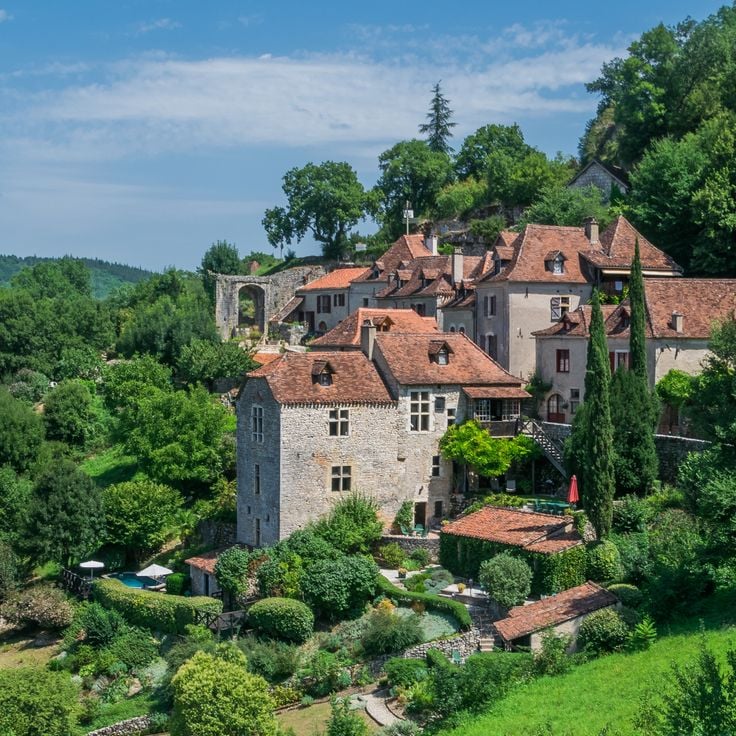
Among the sites to visit, Saint-Cirq-Lapopie overlooks the Lot Valley with its stone houses and narrow streets. The Peyrepertuse fortress stands at 800 meters above sea level on a rocky spur in the Corbières. The Navacelles cirque reveals a canyon carved by the Vis River, while the Gorges de la Jonte provide trails through a habitat for vultures. The Lagrasse Abbey maintains its medieval architecture on the banks of the Orbieu, and the Niaux Cave houses Magdalenian paintings dating back 14,000 years. Natural curiosities like the Gouffre de l'Oeil Doux and the intermittent Fountain of Fontestorbes complete this territory where history and geology meet.
Occitanie combines medieval castles, stone villages, and landscapes shaped over thousands of years by water and time.
Occitanie encompasses an architectural and natural heritage that reflects many centuries of history. Medieval villages are nestled in valleys and on heights, while castles and monasteries tell of the era of the Cathars and religious orders. The region also features remarkable geological formations: deep gorges, waterfalls, potholes, and caves decorated with prehistoric paintings.
Among the sites to visit, Saint-Cirq-Lapopie overlooks the Lot Valley with its stone houses and narrow streets. The Peyrepertuse fortress stands at 800 meters above sea level on a rocky spur in the Corbières. The Navacelles cirque reveals a canyon carved by the Vis River, while the Gorges de la Jonte provide trails through a habitat for vultures. The Lagrasse Abbey maintains its medieval architecture on the banks of the Orbieu, and the Niaux Cave houses Magdalenian paintings dating back 14,000 years. Natural curiosities like the Gouffre de l'Oeil Doux and the intermittent Fountain of Fontestorbes complete this territory where history and geology meet.
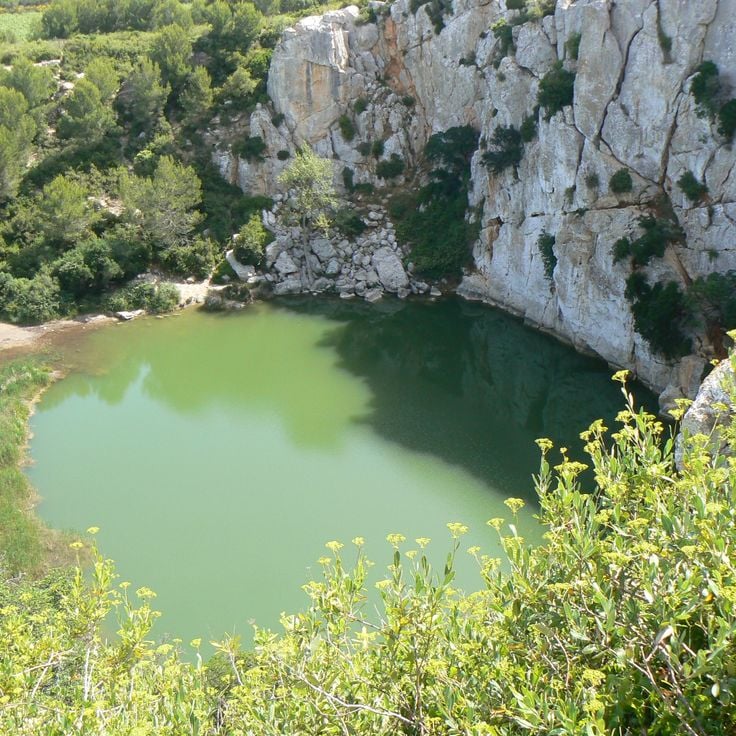
The Gouffre de l'Oeil Doux is a natural cavity in limestone rock, about 20 meters deep, located within the vineyards of the Massif de la Clape. Mediterranean vegetation grows on the surrounding rock walls, and the water takes on green hues from its mineral content and light reflection. This geological formation is part of Occitanie's landscape where history and natural wonders meet, alongside medieval villages, castles, and ancient caves that define the region's character.
The Cirque de Navacelles represents the geological diversity of Occitanie, showcasing a canyon that descends 300 meters into the limestone plateau. Carved by the Vis river over millions of years, this natural formation reveals layers of stone and a winding river course. Multiple viewpoints allow visitors to observe these geological features from different angles.
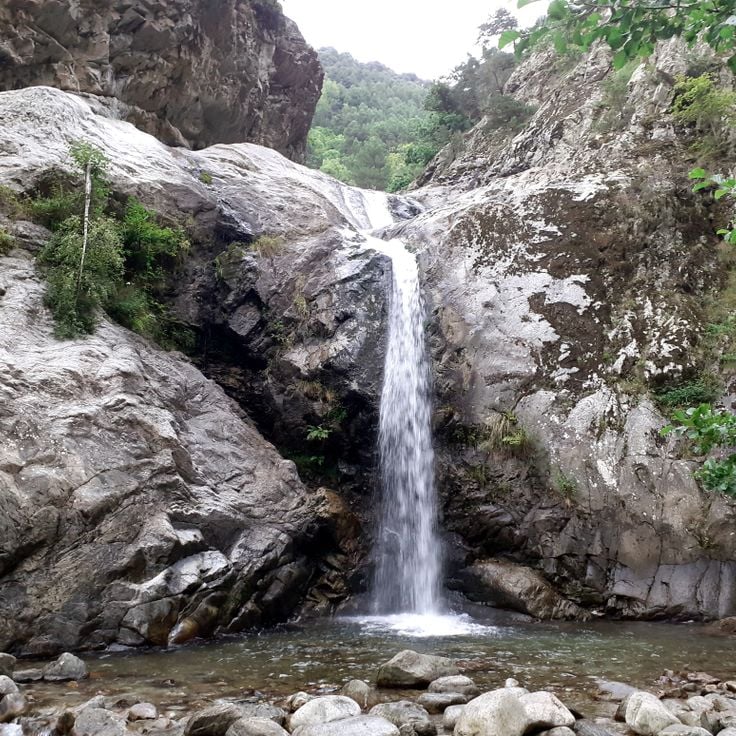
The Cascade des Anglais is part of Occitanie's heritage, where history and geology meet. This site features multiple waterfalls that flow down rock formations in the Ariège mountains. Natural pools form between the cascading levels, suitable for swimming. Marked hiking trails lead through the forested surroundings to the different waterfalls and provide access to the bathing areas.
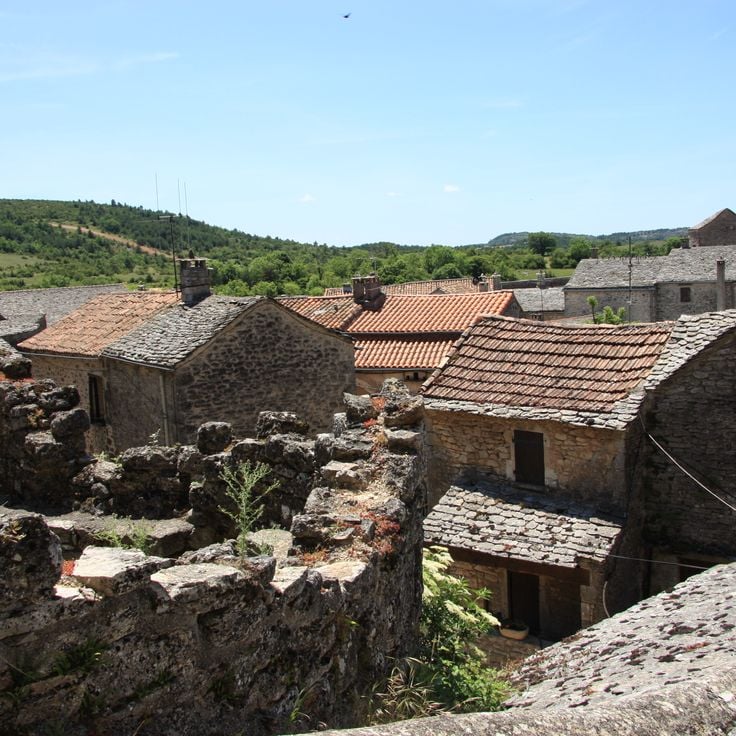
La Couvertoirade is a medieval village on the Larzac plateau, founded by the Templars in the 12th century. The village preserves its complete 15th-century defensive walls with five towers and two fortified gates. The Templars built a castle and a church here, both still visible today. Stone houses from the medieval period line the cobbled streets. La Couvertoirade is part of the medieval villages in Occitanie and showcases the architectural heritage of the Templar order in this region with its fully preserved fortifications.
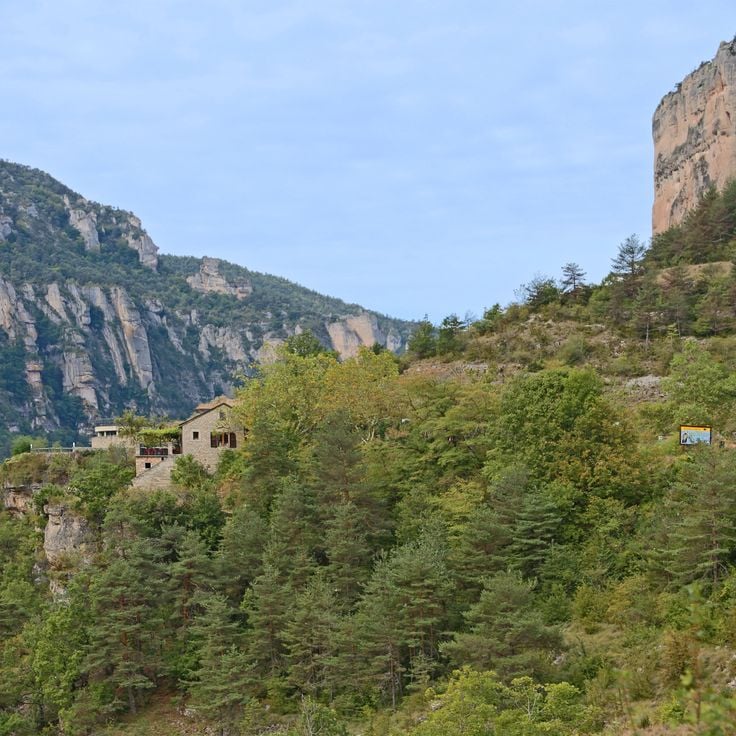
The Gorges de la Jonte is a limestone canyon that stretches for several kilometers between the Causses plateaus. Hiking trails wind along the rock walls, offering views of the tall cliffs. This gorge serves as a nesting site for griffon vultures, black vultures, and other birds of prey. It is home to one of the largest colonies of these birds in France. The site is part of the natural heritage of Occitanie and draws visitors interested in nature and wildlife.
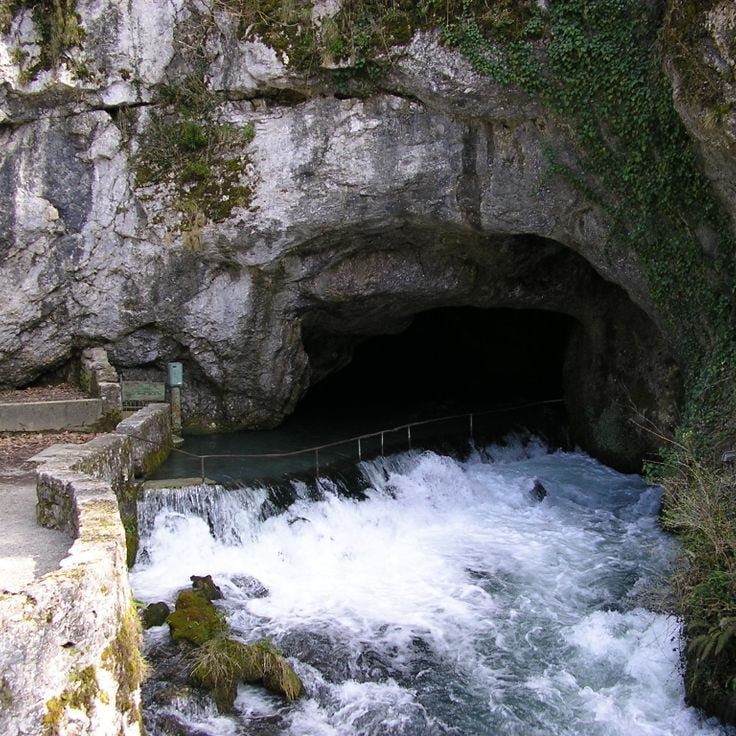
The Fontaine de Fontestorbes is a natural spring in Ariège that cycles between flowing and stopping approximately every 30 minutes. Water emerges from the rock with the flow rate periodically rising and falling. This hydrogeological phenomenon results from underground cavities that function as a natural siphon, regulating the rhythm of water discharge. This spring exemplifies the geological curiosities found throughout Occitanie, where history and natural wonders coexist.
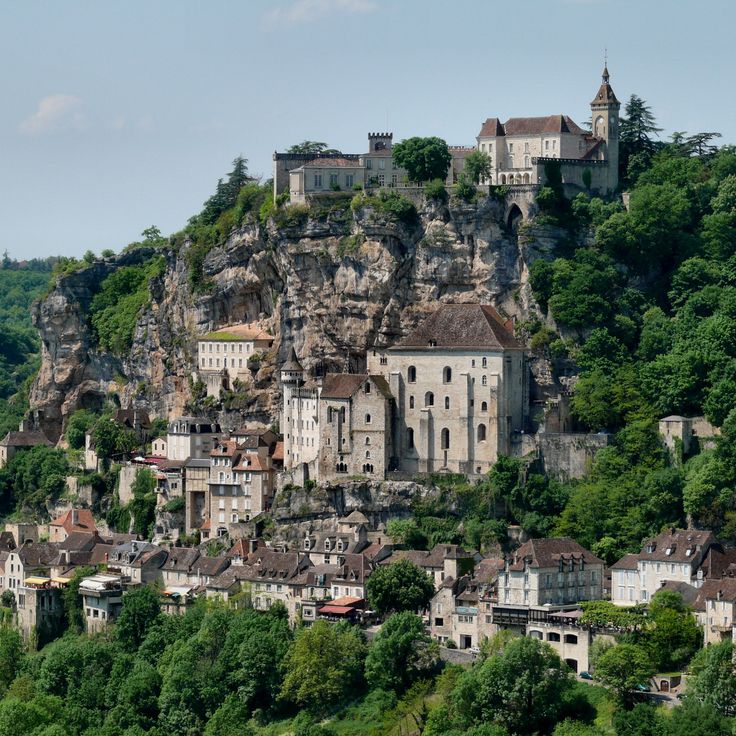
Rocamadour is part of Occitanie's heritage, extending across several terraces on a limestone cliff above the Alzou valley. The town's seven medieval churches are distributed across different levels, connected by staircases and pathways. The Basilica of Saint-Sauveur and the Chapel of Notre-Dame are among the most significant religious buildings in this vertical settlement.
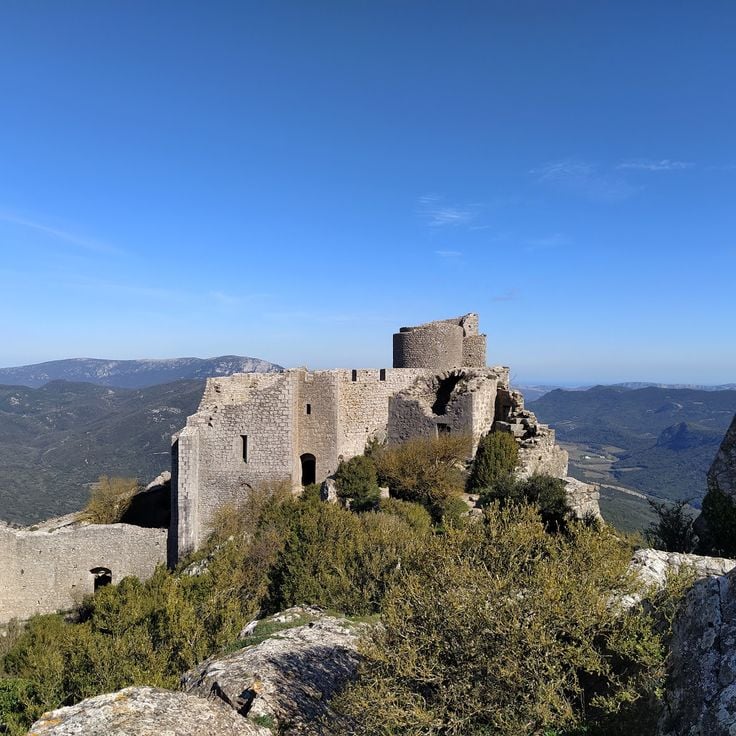
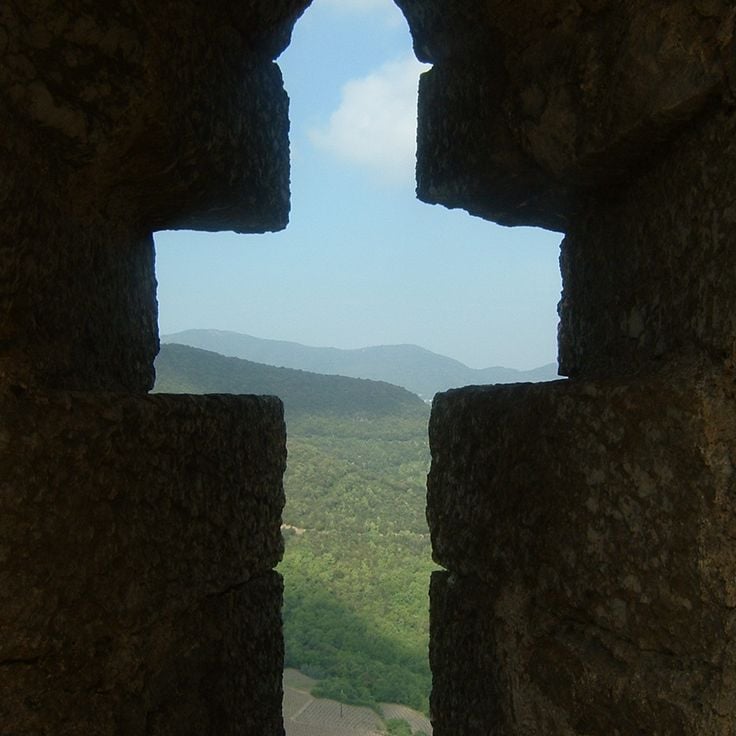
Peyrepertuse Castle is part of Occitanie's medieval heritage and rises on an 800-meter limestone ridge overlooking the Corbières valley. This fortress extends across several terraces and consists of two fortified sections protected by walls and towers. Following the Treaty of Corbeil in 1258, the monument served as a defense for the French border. From the top, wide views reach across the landscape and surrounding villages.
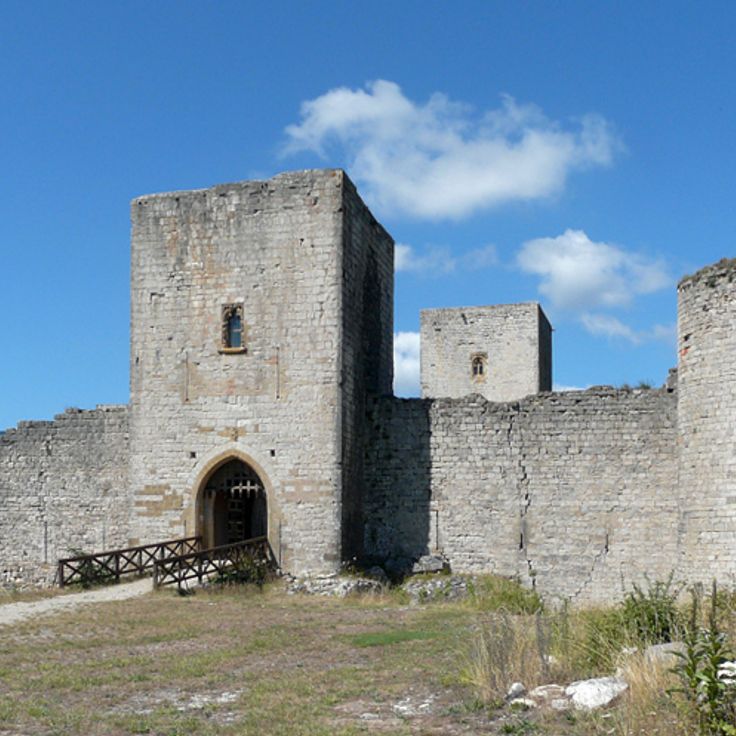
The Château de Puivert is a 13th-century fortress that rises above the Quercorb valley. This former feudal castle preserves several halls, including the Musicians' Hall, decorated with Romanesque sculptures depicting medieval instrumentalists. The site documents the courtly life of the period and fits into Occitanie's broader medieval heritage, where castles and villages tell stories spanning centuries.
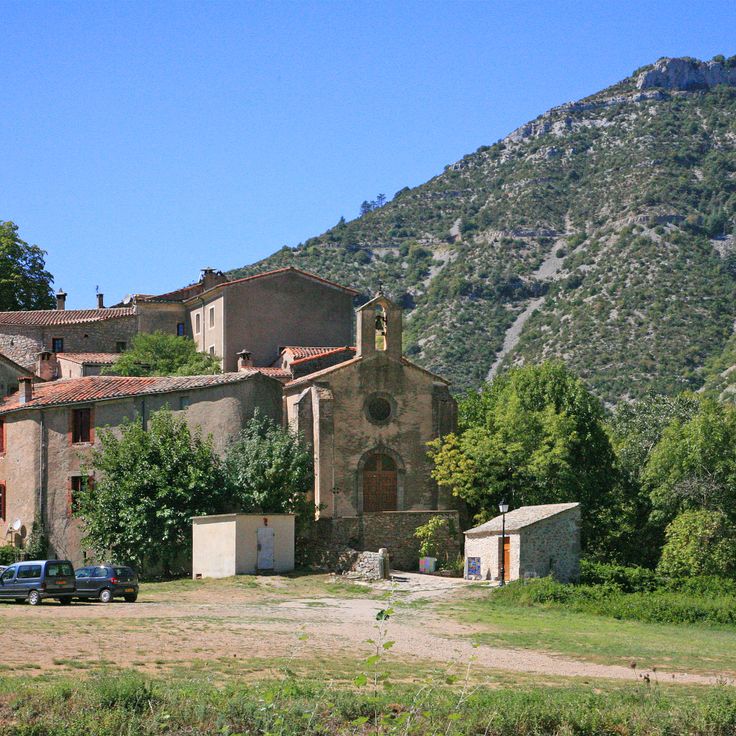
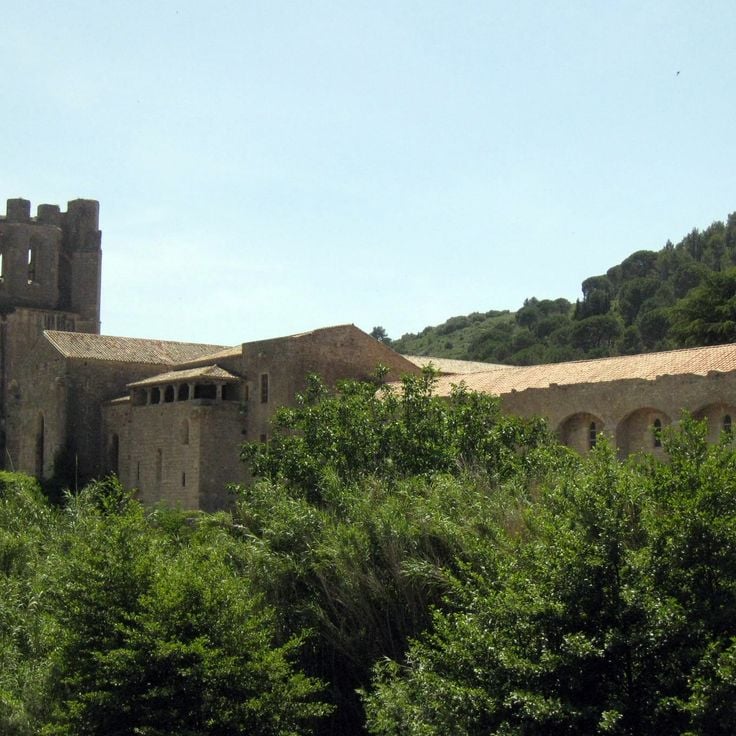
Sainte-Marie de Lagrasse Abbey is a Benedictine monastery founded in the 8th century that stands on the banks of the Orbieu River in a medieval village. The abbey contains buildings spanning many centuries: a Romanesque church from the 11th century, a Gothic cloister from the 13th century, a bell tower, and monastery structures through the 18th century. This abbey demonstrates the long history of religious communities in Occitanie and represents a key architectural monument from the Middle Ages.
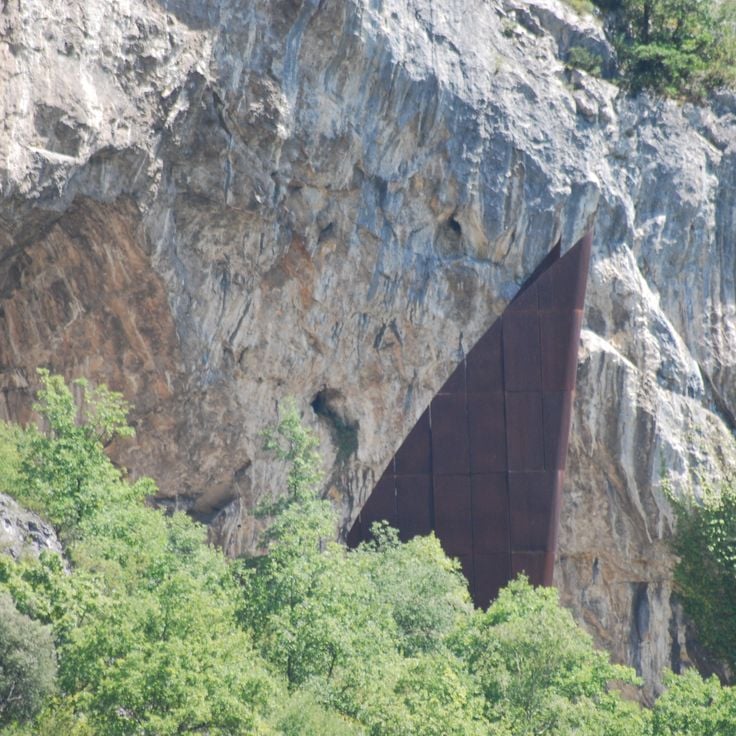
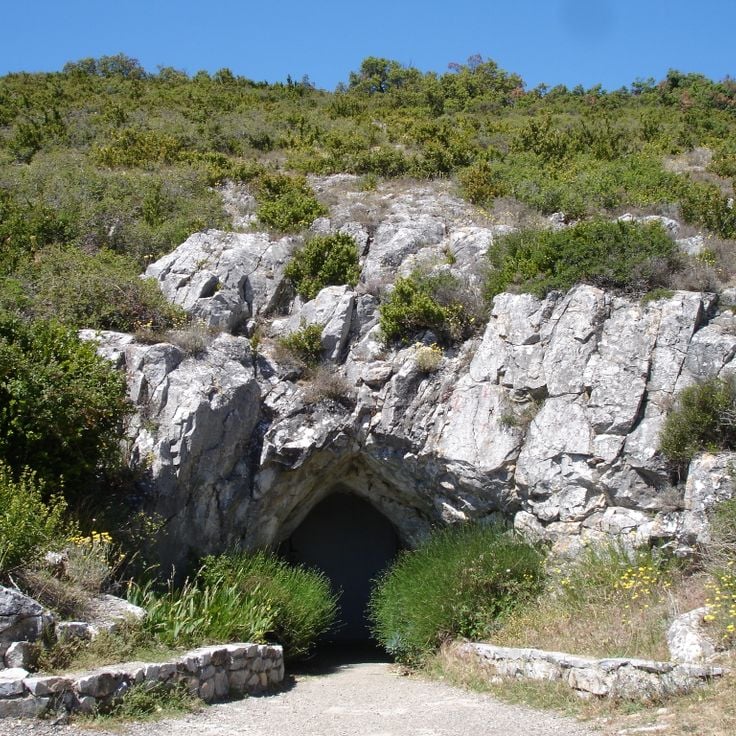
This cave is part of Occitanie's heritage and holds prehistoric wall paintings from the Magdalenian culture created about 14000 years ago. The Niaux Cave displays images of bison and horses drawn on rock walls using charcoal and mineral pigments. The Salon Noir, the main chamber with the paintings, sits about 800 meters from the entrance and can only be visited with a guide.
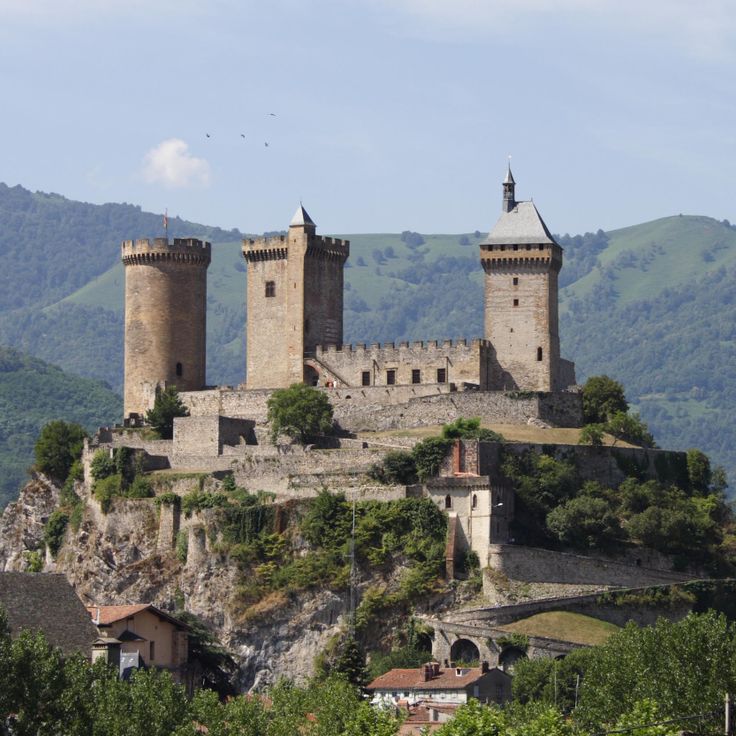
The Château de Foix is a 10th-century fortress built on a limestone rock that rises above the town. This castle served as the seat of the Counts of Foix and held great importance in the history of Languedoc. It reflects the medieval past of the region and shows how strongholds were constructed during that era. Today, the fortress houses a museum that documents the medieval history and military architecture of the region. The Château de Foix fits well into this collection of Cathar castles and medieval villages across Occitanie, where history is written in stone.
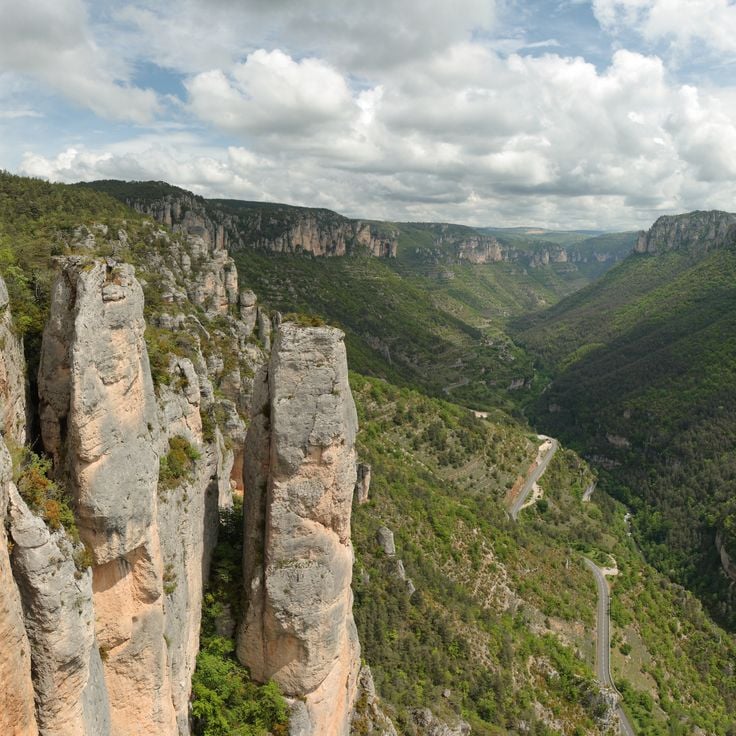
The Balconies of Vertigo in this collection of medieval villages in Occitanie showcase the geological diversity of the region. Located at 800 meters altitude, these observation platforms offer direct views over the canyon and limestone formations of Grands Causses Natural Park. From these vantage points, visitors can explore the gorges of Lozère and the rocky structures of the Causses plateau.
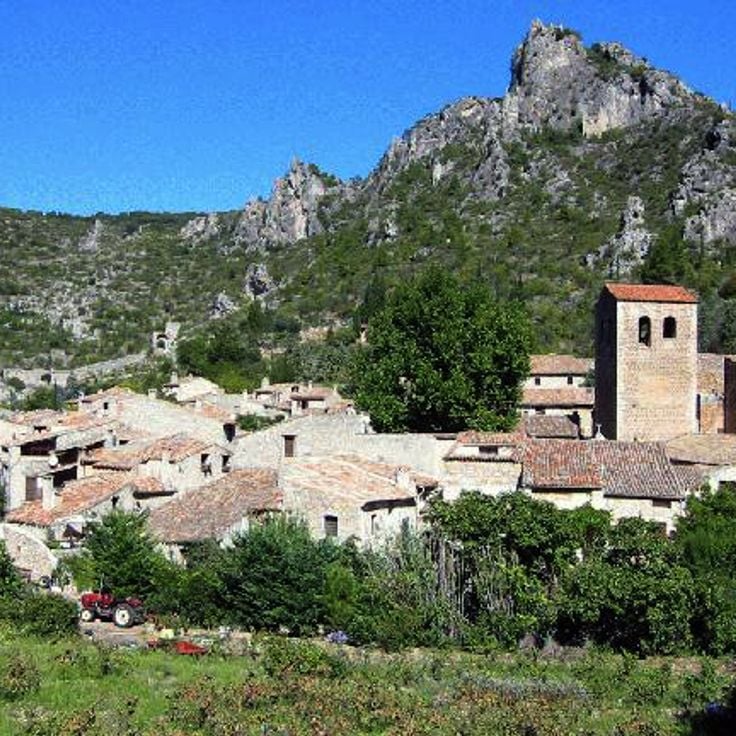
Saint-Guilhem-le-Désert is a village in the Hérault valley in Occitanie. At its center stands the Abbey of Gellone from the 11th century, with its Romanesque church that holds the relics of Saint William of Aquitaine. The houses of this village are built from pale ochre limestone and line the narrow streets leading to the village square with its fountain. The village sits on the Way of Saint James and runs along the gorges of the Hérault. Saint-Guilhem-le-Désert shows how religious architecture and the natural landscape came together over many centuries.
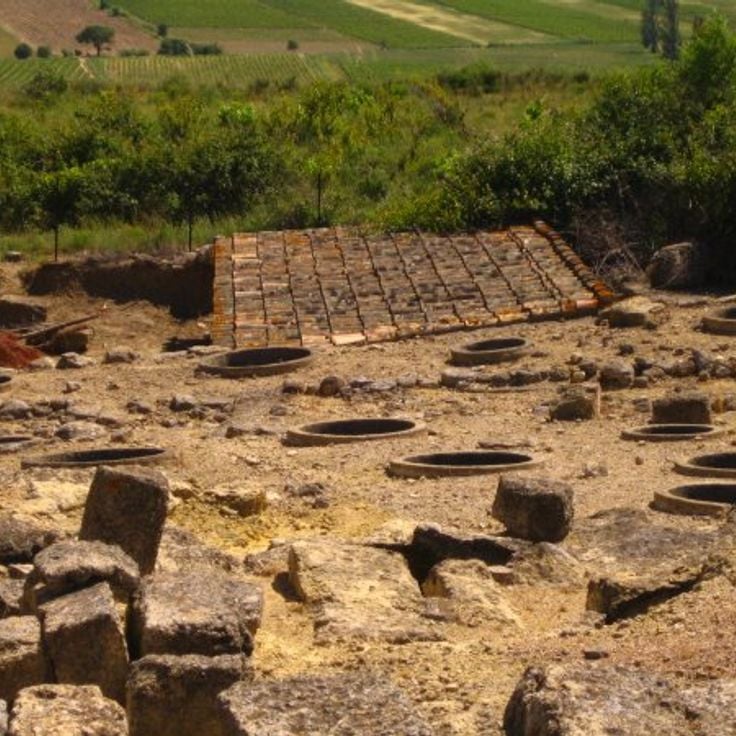
The Oppidum d'Ensérune is an archaeological site in this region of medieval villages and fortresses, preserving on a hilltop the remains of a Gallo-Roman settlement dating from around the 6th century BC to the 1st century AD. Excavations have revealed residential quarters, streets, storage facilities and defensive walls. The associated museum displays pottery, tools, jewelry and other artifacts found in the area.
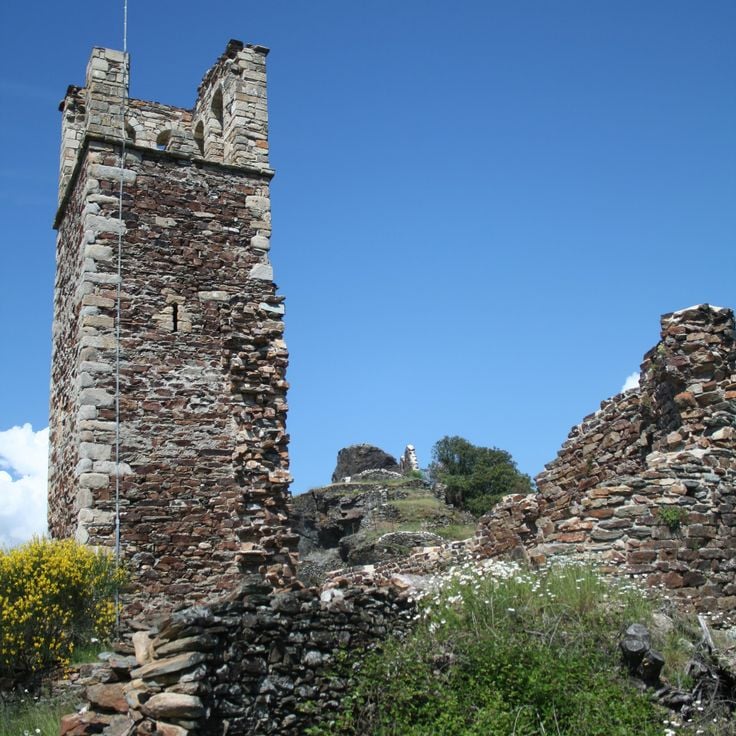
The Château de Termes is a 13th century fortress perched on a limestone outcrop in the Occitanie region. This castle was one of the most important defensive structures for the Cathars during the Albigensian Crusade and surrendered after a siege lasting several months in 1210. The ruins show remains of defensive towers, walls and cisterns, reflecting the history of this region where medieval villages and castles bear witness to centuries of religious and military conflict.
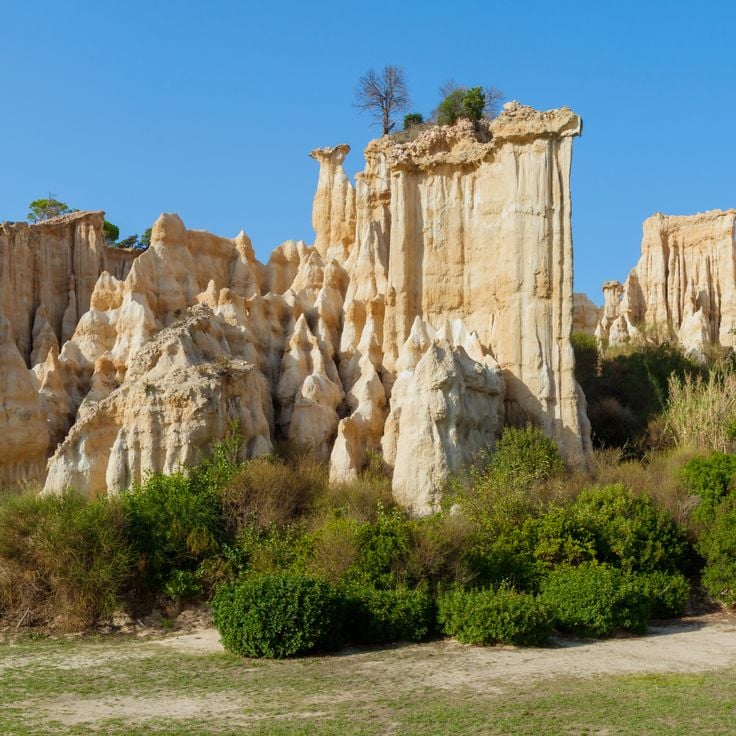
Les Orgues d'Ille-sur-Têt are sandstone formations created by erosion over millions of years. These rock spires reach heights of up to 12 meters (39 feet) and form a labyrinth of columns, towers and crevices. The site demonstrates how wind and rain shape sedimentary rock. The ochre and reddish tones of the formations shift depending on the time of day and light conditions.
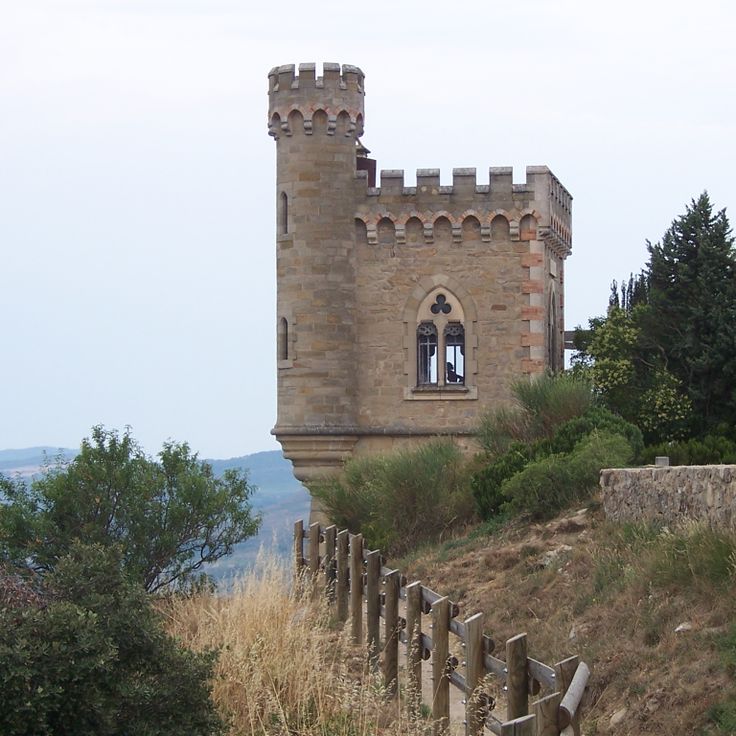
Rennes-le-Château is a village in the Aude region and part of this collection of sites where medieval history and geology shape Occitanie. Located at 470 meters in elevation, the village contains the Church of Sainte-Marie-Madeleine, which was reshaped in the 19th century by priest Bérenger Saunière and features unusual decorations and symbols throughout its interior. The Tour Magdala, a lookout tower built in the late 19th century, gives visitors views across the surrounding hills and valleys. The village has drawn attention for the stories and theories connected to this place.
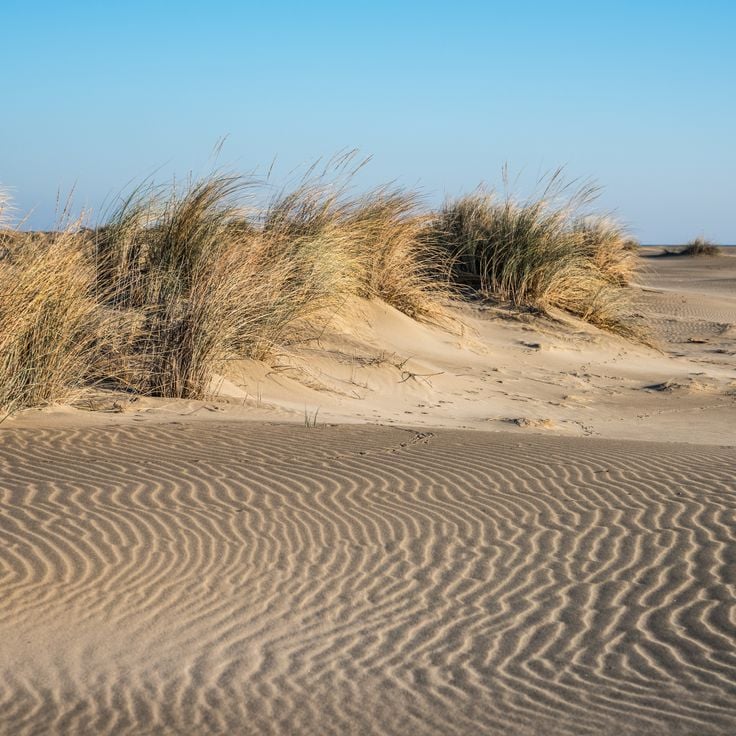
Espiguette Beach stretches along the Mediterranean coast with fine sand and natural dune landscapes. A lighthouse from the 1800s stands at the southern end and guides maritime traffic. This beach is part of a nature reserve where coastal plants like marram grass and sea holly grow. Within the broader context of Occitanie, this coastal area complements the region's mix of medieval villages, fortified structures, and geological wonders.
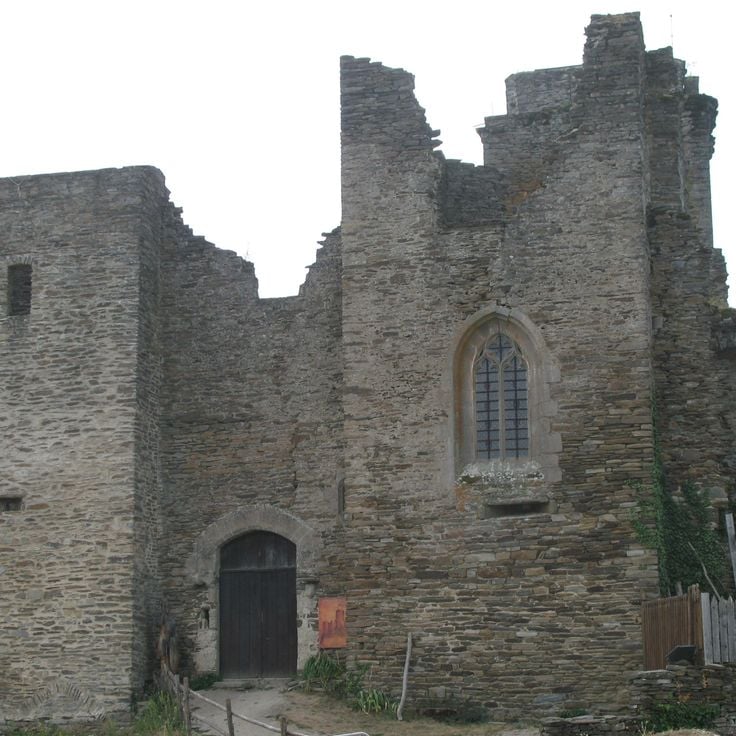
The Château de Valon is a 12th century fortress ruin standing on a rocky outcrop above the Truyère Valley. This castle fits into the historical landscape of Occitanie, where medieval fortresses and villages bear witness to centuries of the region's past. From its elevated position, this fortress offers sweeping views across the Aveyron landscape and surrounding valleys. The stone walls and exposed setting show how builders chose strategic locations to control their lands and territories.
This medieval fortress stands above the Alagnon Valley and is part of the rich architectural heritage of Occitanie. Following restoration, tours present the castle's history and architecture. Montaigut Castle belongs to a region where medieval villages and fortresses tell stories spanning centuries, while deep gorges and natural formations shape the landscape.
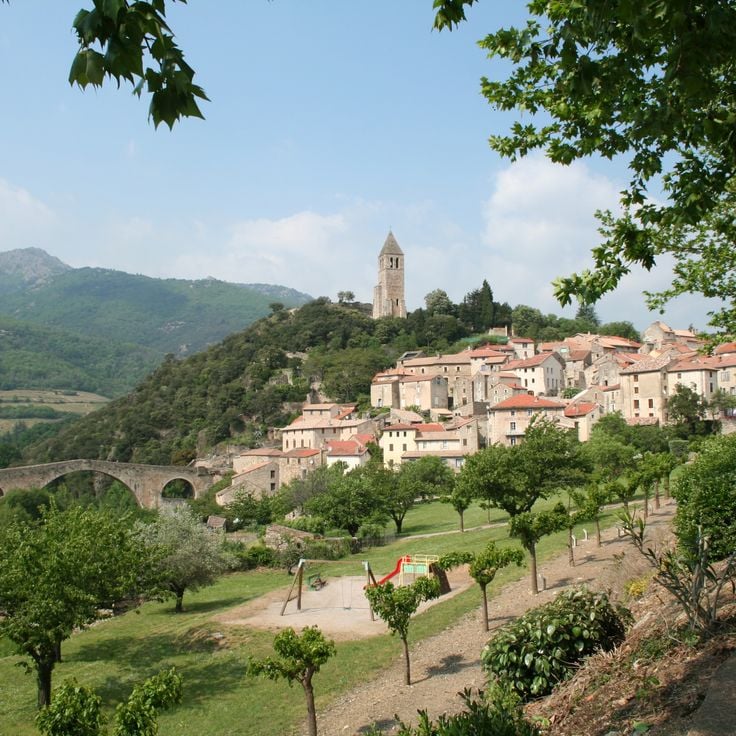
Olargues is a village of medieval origin in Hérault, characterized by its stone houses from past centuries and its narrow cobbled streets. Within this collection of medieval villages in Occitanie, Olargues exemplifies the architectural heritage of a region shaped by centuries of history. The Pont du Diable, an old stone bridge, spans the Jaur river and connects both banks. The church and bell tower define the profile of Olargues.
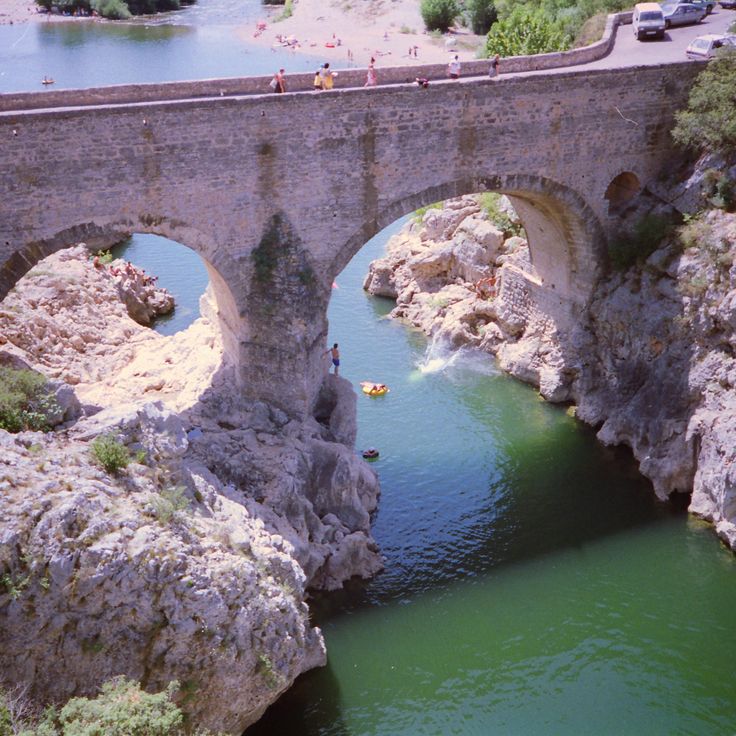
The Pont du Diable is a Romanesque stone bridge from the 11th century, rising 20 meters (66 feet) above the Hérault river. This medieval construction connects the municipalities of Saint-Jean-de-Fos and Aniane and served for centuries as an important trade route between the villages of the region. It represents the architectural heritage of Occitanie, where medieval villages are nestled in valleys and castles and monasteries reveal the history of past eras.
Saint-Gervais-sur-Mare Abbey stands as a religious structure in this collection of medieval Occitanie heritage, built in the 12th century and set in the Hérault mountains. The abbey displays Romanesque architecture with massive stone walls, a simple portal, and a square bell tower. Originally part of a Benedictine monastery, the church served as a pilgrimage stop along the route to Santiago de Compostela, connecting to the spiritual and historical layers of the region.
The Grotte de Limousis presents a cave with multiple levels where stalactites and stalagmites grow. Inside lies an underground chamber with aragonite crystals that formed over thousands of years. A visit leads through different galleries where geological formations document how this karst cave developed. The cave shows the natural processes that shaped this corner of Occitanie over long periods of time.
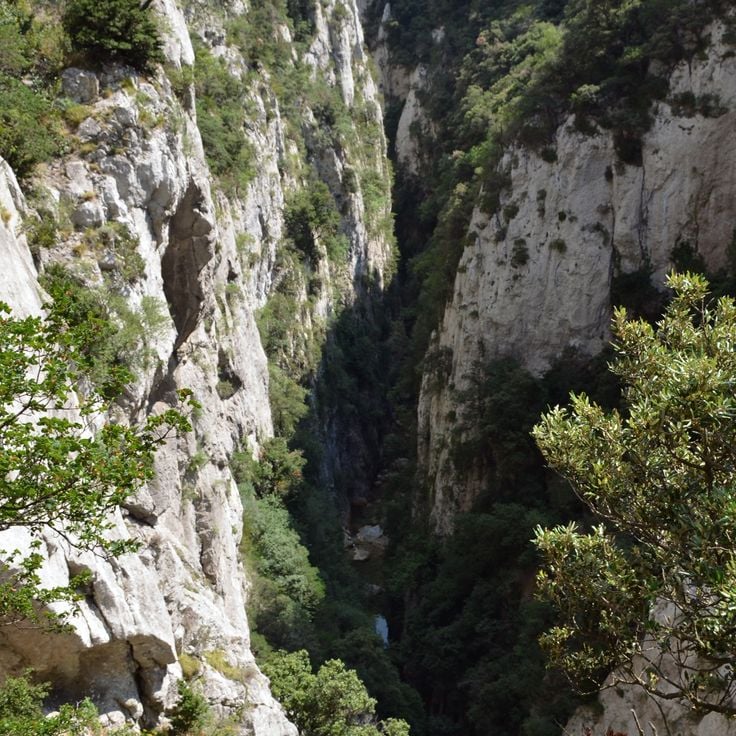
The Gorges de Galamus are a dramatic gorge shaped by the Agly River cutting through limestone over thousands of years. The river has carved approximately 500 meters deep into the stone, connecting the Fenouillèdes region to Roussillon. A road is carved directly into the rock face, allowing passage through the gorge. A 7th-century hermitage dedicated to Saint Anthony of Padua clings to the cliff wall.
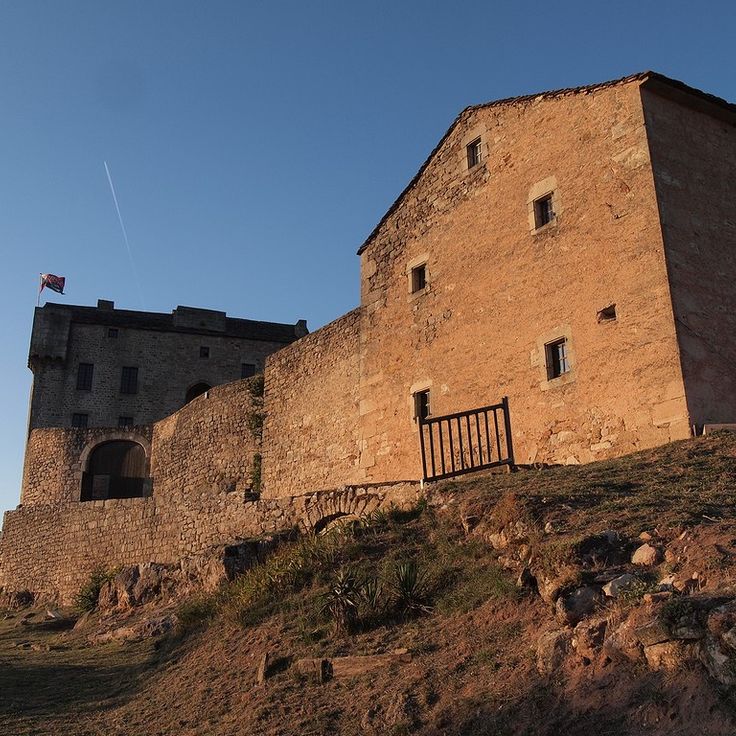
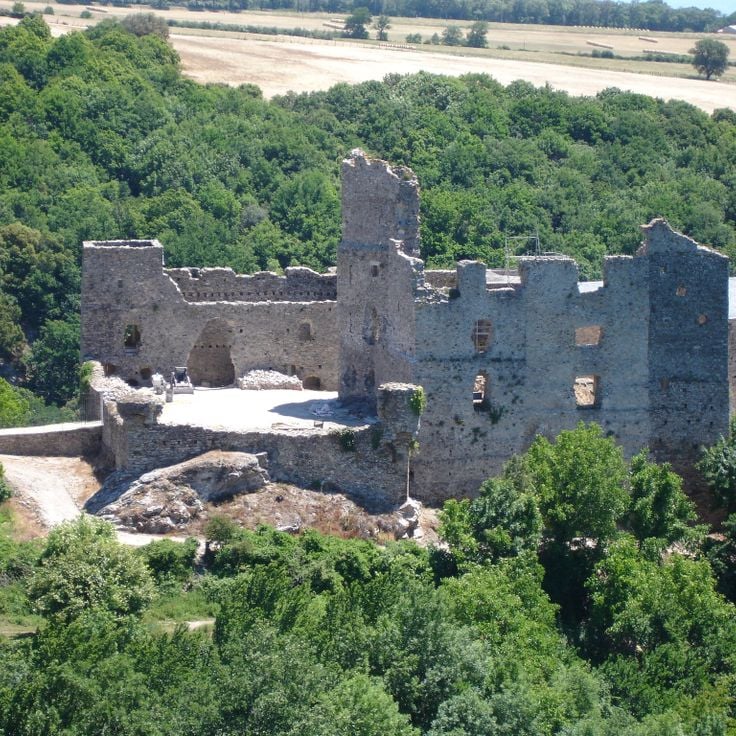
This castle rises on a hill and displays architectural elements from different periods between the 10th and 16th centuries. It connects with the collection of medieval villages in Occitanie, where castles and monasteries chronicle the era of the Cathars and religious orders. The complex includes a square keep, residential buildings and fortification walls. A museum within the premises documents the history of coin minting in the region with tools and numismatic collections.
Larressingle is a fortified village from the thirteenth century in the Occitanie region, part of this area's rich heritage of castles and medieval settlements. The village preserves stone houses, ramparts and a castle within its circular walls measuring one hundred meters in diameter. The tight arrangement of buildings and the preserved fortifications show how people lived and protected themselves in this period.
This Cistercian monastery was founded in 1151 in Gers and is part of Occitanie's medieval heritage. The abbey displays Romanesque architecture with Gothic elements and reflects the region's religious history. The building houses permanent exhibitions of paintings from the 16th to 20th centuries.
The Gavarnie Falls drops 422 meters in multiple tiers within a natural amphitheater of limestone walls rising 1500 meters from the valley floor. This waterfall embodies the remarkable geology of Occitanie, where water and stone have shaped dramatic landscapes over millennia. The Gavarnie Falls demonstrates the power of nature and stands as one of the region's geological wonders, where history and the natural world meet.
The Château de Mauvezin is an eleventh-century fortress perched on a hill at 870 meters elevation. This castle fits within the collection of medieval villages and castles across Occitanie, where fortifications and monasteries preserve the history of the Cathar era and religious orders. The Château de Mauvezin contains a museum displaying medieval military equipment and commands views over the Baronnies region.
This village is part of the collection of medieval villages in Occitanie, which presents Cathar castles and limestone gorges. Saint-Cirq-Lapopie rises 100 meters above the Lot River and preserves its medieval architecture from the 13th century. Stone houses, narrow streets, and fortified gates create an authentic picture of that era. From this height, you can look along the valley of the river.
The Gouffre de l'Oeil Doux is a natural cavity in limestone rock, about 20 meters deep, located within the vineyards of the Massif de la Clape. Mediterranean vegetation grows on the surrounding rock walls, and the water takes on green hues from its mineral content and light reflection. This geological formation is part of Occitanie's landscape where history and natural wonders meet, alongside medieval villages, castles, and ancient caves that define the region's character.
The Cirque de Navacelles represents the geological diversity of Occitanie, showcasing a canyon that descends 300 meters into the limestone plateau. Carved by the Vis river over millions of years, this natural formation reveals layers of stone and a winding river course. Multiple viewpoints allow visitors to observe these geological features from different angles.
The Cascade des Anglais is part of Occitanie's heritage, where history and geology meet. This site features multiple waterfalls that flow down rock formations in the Ariège mountains. Natural pools form between the cascading levels, suitable for swimming. Marked hiking trails lead through the forested surroundings to the different waterfalls and provide access to the bathing areas.
La Couvertoirade is a medieval village on the Larzac plateau, founded by the Templars in the 12th century. The village preserves its complete 15th-century defensive walls with five towers and two fortified gates. The Templars built a castle and a church here, both still visible today. Stone houses from the medieval period line the cobbled streets. La Couvertoirade is part of the medieval villages in Occitanie and showcases the architectural heritage of the Templar order in this region with its fully preserved fortifications.
The Gorges de la Jonte is a limestone canyon that stretches for several kilometers between the Causses plateaus. Hiking trails wind along the rock walls, offering views of the tall cliffs. This gorge serves as a nesting site for griffon vultures, black vultures, and other birds of prey. It is home to one of the largest colonies of these birds in France. The site is part of the natural heritage of Occitanie and draws visitors interested in nature and wildlife.
The Fontaine de Fontestorbes is a natural spring in Ariège that cycles between flowing and stopping approximately every 30 minutes. Water emerges from the rock with the flow rate periodically rising and falling. This hydrogeological phenomenon results from underground cavities that function as a natural siphon, regulating the rhythm of water discharge. This spring exemplifies the geological curiosities found throughout Occitanie, where history and natural wonders coexist.
Rocamadour is part of Occitanie's heritage, extending across several terraces on a limestone cliff above the Alzou valley. The town's seven medieval churches are distributed across different levels, connected by staircases and pathways. The Basilica of Saint-Sauveur and the Chapel of Notre-Dame are among the most significant religious buildings in this vertical settlement.
Peyrepertuse Castle is part of Occitanie's medieval heritage and rises on an 800-meter limestone ridge overlooking the Corbières valley. This fortress extends across several terraces and consists of two fortified sections protected by walls and towers. Following the Treaty of Corbeil in 1258, the monument served as a defense for the French border. From the top, wide views reach across the landscape and surrounding villages.
The Château de Puivert is a 13th-century fortress that rises above the Quercorb valley. This former feudal castle preserves several halls, including the Musicians' Hall, decorated with Romanesque sculptures depicting medieval instrumentalists. The site documents the courtly life of the period and fits into Occitanie's broader medieval heritage, where castles and villages tell stories spanning centuries.
Sainte-Marie de Lagrasse Abbey is a Benedictine monastery founded in the 8th century that stands on the banks of the Orbieu River in a medieval village. The abbey contains buildings spanning many centuries: a Romanesque church from the 11th century, a Gothic cloister from the 13th century, a bell tower, and monastery structures through the 18th century. This abbey demonstrates the long history of religious communities in Occitanie and represents a key architectural monument from the Middle Ages.
This cave is part of Occitanie's heritage and holds prehistoric wall paintings from the Magdalenian culture created about 14000 years ago. The Niaux Cave displays images of bison and horses drawn on rock walls using charcoal and mineral pigments. The Salon Noir, the main chamber with the paintings, sits about 800 meters from the entrance and can only be visited with a guide.
The Château de Foix is a 10th-century fortress built on a limestone rock that rises above the town. This castle served as the seat of the Counts of Foix and held great importance in the history of Languedoc. It reflects the medieval past of the region and shows how strongholds were constructed during that era. Today, the fortress houses a museum that documents the medieval history and military architecture of the region. The Château de Foix fits well into this collection of Cathar castles and medieval villages across Occitanie, where history is written in stone.
The Balconies of Vertigo in this collection of medieval villages in Occitanie showcase the geological diversity of the region. Located at 800 meters altitude, these observation platforms offer direct views over the canyon and limestone formations of Grands Causses Natural Park. From these vantage points, visitors can explore the gorges of Lozère and the rocky structures of the Causses plateau.
Saint-Guilhem-le-Désert is a village in the Hérault valley in Occitanie. At its center stands the Abbey of Gellone from the 11th century, with its Romanesque church that holds the relics of Saint William of Aquitaine. The houses of this village are built from pale ochre limestone and line the narrow streets leading to the village square with its fountain. The village sits on the Way of Saint James and runs along the gorges of the Hérault. Saint-Guilhem-le-Désert shows how religious architecture and the natural landscape came together over many centuries.
The Oppidum d'Ensérune is an archaeological site in this region of medieval villages and fortresses, preserving on a hilltop the remains of a Gallo-Roman settlement dating from around the 6th century BC to the 1st century AD. Excavations have revealed residential quarters, streets, storage facilities and defensive walls. The associated museum displays pottery, tools, jewelry and other artifacts found in the area.
The Château de Termes is a 13th century fortress perched on a limestone outcrop in the Occitanie region. This castle was one of the most important defensive structures for the Cathars during the Albigensian Crusade and surrendered after a siege lasting several months in 1210. The ruins show remains of defensive towers, walls and cisterns, reflecting the history of this region where medieval villages and castles bear witness to centuries of religious and military conflict.
Les Orgues d'Ille-sur-Têt are sandstone formations created by erosion over millions of years. These rock spires reach heights of up to 12 meters (39 feet) and form a labyrinth of columns, towers and crevices. The site demonstrates how wind and rain shape sedimentary rock. The ochre and reddish tones of the formations shift depending on the time of day and light conditions.
Rennes-le-Château is a village in the Aude region and part of this collection of sites where medieval history and geology shape Occitanie. Located at 470 meters in elevation, the village contains the Church of Sainte-Marie-Madeleine, which was reshaped in the 19th century by priest Bérenger Saunière and features unusual decorations and symbols throughout its interior. The Tour Magdala, a lookout tower built in the late 19th century, gives visitors views across the surrounding hills and valleys. The village has drawn attention for the stories and theories connected to this place.
Espiguette Beach stretches along the Mediterranean coast with fine sand and natural dune landscapes. A lighthouse from the 1800s stands at the southern end and guides maritime traffic. This beach is part of a nature reserve where coastal plants like marram grass and sea holly grow. Within the broader context of Occitanie, this coastal area complements the region's mix of medieval villages, fortified structures, and geological wonders.
The Château de Valon is a 12th century fortress ruin standing on a rocky outcrop above the Truyère Valley. This castle fits into the historical landscape of Occitanie, where medieval fortresses and villages bear witness to centuries of the region's past. From its elevated position, this fortress offers sweeping views across the Aveyron landscape and surrounding valleys. The stone walls and exposed setting show how builders chose strategic locations to control their lands and territories.
This medieval fortress stands above the Alagnon Valley and is part of the rich architectural heritage of Occitanie. Following restoration, tours present the castle's history and architecture. Montaigut Castle belongs to a region where medieval villages and fortresses tell stories spanning centuries, while deep gorges and natural formations shape the landscape.
Olargues is a village of medieval origin in Hérault, characterized by its stone houses from past centuries and its narrow cobbled streets. Within this collection of medieval villages in Occitanie, Olargues exemplifies the architectural heritage of a region shaped by centuries of history. The Pont du Diable, an old stone bridge, spans the Jaur river and connects both banks. The church and bell tower define the profile of Olargues.
The Pont du Diable is a Romanesque stone bridge from the 11th century, rising 20 meters (66 feet) above the Hérault river. This medieval construction connects the municipalities of Saint-Jean-de-Fos and Aniane and served for centuries as an important trade route between the villages of the region. It represents the architectural heritage of Occitanie, where medieval villages are nestled in valleys and castles and monasteries reveal the history of past eras.
Saint-Gervais-sur-Mare Abbey stands as a religious structure in this collection of medieval Occitanie heritage, built in the 12th century and set in the Hérault mountains. The abbey displays Romanesque architecture with massive stone walls, a simple portal, and a square bell tower. Originally part of a Benedictine monastery, the church served as a pilgrimage stop along the route to Santiago de Compostela, connecting to the spiritual and historical layers of the region.
The Grotte de Limousis presents a cave with multiple levels where stalactites and stalagmites grow. Inside lies an underground chamber with aragonite crystals that formed over thousands of years. A visit leads through different galleries where geological formations document how this karst cave developed. The cave shows the natural processes that shaped this corner of Occitanie over long periods of time.
The Gorges de Galamus are a dramatic gorge shaped by the Agly River cutting through limestone over thousands of years. The river has carved approximately 500 meters deep into the stone, connecting the Fenouillèdes region to Roussillon. A road is carved directly into the rock face, allowing passage through the gorge. A 7th-century hermitage dedicated to Saint Anthony of Padua clings to the cliff wall.
This castle rises on a hill and displays architectural elements from different periods between the 10th and 16th centuries. It connects with the collection of medieval villages in Occitanie, where castles and monasteries chronicle the era of the Cathars and religious orders. The complex includes a square keep, residential buildings and fortification walls. A museum within the premises documents the history of coin minting in the region with tools and numismatic collections.
Larressingle is a fortified village from the thirteenth century in the Occitanie region, part of this area's rich heritage of castles and medieval settlements. The village preserves stone houses, ramparts and a castle within its circular walls measuring one hundred meters in diameter. The tight arrangement of buildings and the preserved fortifications show how people lived and protected themselves in this period.
This Cistercian monastery was founded in 1151 in Gers and is part of Occitanie's medieval heritage. The abbey displays Romanesque architecture with Gothic elements and reflects the region's religious history. The building houses permanent exhibitions of paintings from the 16th to 20th centuries.
The Gavarnie Falls drops 422 meters in multiple tiers within a natural amphitheater of limestone walls rising 1500 meters from the valley floor. This waterfall embodies the remarkable geology of Occitanie, where water and stone have shaped dramatic landscapes over millennia. The Gavarnie Falls demonstrates the power of nature and stands as one of the region's geological wonders, where history and the natural world meet.
The Château de Mauvezin is an eleventh-century fortress perched on a hill at 870 meters elevation. This castle fits within the collection of medieval villages and castles across Occitanie, where fortifications and monasteries preserve the history of the Cathar era and religious orders. The Château de Mauvezin contains a museum displaying medieval military equipment and commands views over the Baronnies region.
This village is part of the collection of medieval villages in Occitanie, which presents Cathar castles and limestone gorges. Saint-Cirq-Lapopie rises 100 meters above the Lot River and preserves its medieval architecture from the 13th century. Stone houses, narrow streets, and fortified gates create an authentic picture of that era. From this height, you can look along the valley of the river.
The Gouffre de l'Oeil Doux is a natural cavity in limestone rock, about 20 meters deep, located within the vineyards of the Massif de la Clape. Mediterranean vegetation grows on the surrounding rock walls, and the water takes on green hues from its mineral content and light reflection. This geological formation is part of Occitanie's landscape where history and natural wonders meet, alongside medieval villages, castles, and ancient caves that define the region's character.
The Cirque de Navacelles represents the geological diversity of Occitanie, showcasing a canyon that descends 300 meters into the limestone plateau. Carved by the Vis river over millions of years, this natural formation reveals layers of stone and a winding river course. Multiple viewpoints allow visitors to observe these geological features from different angles.
The Cascade des Anglais is part of Occitanie's heritage, where history and geology meet. This site features multiple waterfalls that flow down rock formations in the Ariège mountains. Natural pools form between the cascading levels, suitable for swimming. Marked hiking trails lead through the forested surroundings to the different waterfalls and provide access to the bathing areas.
La Couvertoirade is a medieval village on the Larzac plateau, founded by the Templars in the 12th century. The village preserves its complete 15th-century defensive walls with five towers and two fortified gates. The Templars built a castle and a church here, both still visible today. Stone houses from the medieval period line the cobbled streets. La Couvertoirade is part of the medieval villages in Occitanie and showcases the architectural heritage of the Templar order in this region with its fully preserved fortifications.
The Gorges de la Jonte is a limestone canyon that stretches for several kilometers between the Causses plateaus. Hiking trails wind along the rock walls, offering views of the tall cliffs. This gorge serves as a nesting site for griffon vultures, black vultures, and other birds of prey. It is home to one of the largest colonies of these birds in France. The site is part of the natural heritage of Occitanie and draws visitors interested in nature and wildlife.
The Fontaine de Fontestorbes is a natural spring in Ariège that cycles between flowing and stopping approximately every 30 minutes. Water emerges from the rock with the flow rate periodically rising and falling. This hydrogeological phenomenon results from underground cavities that function as a natural siphon, regulating the rhythm of water discharge. This spring exemplifies the geological curiosities found throughout Occitanie, where history and natural wonders coexist.
Rocamadour is part of Occitanie's heritage, extending across several terraces on a limestone cliff above the Alzou valley. The town's seven medieval churches are distributed across different levels, connected by staircases and pathways. The Basilica of Saint-Sauveur and the Chapel of Notre-Dame are among the most significant religious buildings in this vertical settlement.
Peyrepertuse Castle is part of Occitanie's medieval heritage and rises on an 800-meter limestone ridge overlooking the Corbières valley. This fortress extends across several terraces and consists of two fortified sections protected by walls and towers. Following the Treaty of Corbeil in 1258, the monument served as a defense for the French border. From the top, wide views reach across the landscape and surrounding villages.
The Château de Puivert is a 13th-century fortress that rises above the Quercorb valley. This former feudal castle preserves several halls, including the Musicians' Hall, decorated with Romanesque sculptures depicting medieval instrumentalists. The site documents the courtly life of the period and fits into Occitanie's broader medieval heritage, where castles and villages tell stories spanning centuries.
Sainte-Marie de Lagrasse Abbey is a Benedictine monastery founded in the 8th century that stands on the banks of the Orbieu River in a medieval village. The abbey contains buildings spanning many centuries: a Romanesque church from the 11th century, a Gothic cloister from the 13th century, a bell tower, and monastery structures through the 18th century. This abbey demonstrates the long history of religious communities in Occitanie and represents a key architectural monument from the Middle Ages.
This cave is part of Occitanie's heritage and holds prehistoric wall paintings from the Magdalenian culture created about 14000 years ago. The Niaux Cave displays images of bison and horses drawn on rock walls using charcoal and mineral pigments. The Salon Noir, the main chamber with the paintings, sits about 800 meters from the entrance and can only be visited with a guide.
The Château de Foix is a 10th-century fortress built on a limestone rock that rises above the town. This castle served as the seat of the Counts of Foix and held great importance in the history of Languedoc. It reflects the medieval past of the region and shows how strongholds were constructed during that era. Today, the fortress houses a museum that documents the medieval history and military architecture of the region. The Château de Foix fits well into this collection of Cathar castles and medieval villages across Occitanie, where history is written in stone.
The Balconies of Vertigo in this collection of medieval villages in Occitanie showcase the geological diversity of the region. Located at 800 meters altitude, these observation platforms offer direct views over the canyon and limestone formations of Grands Causses Natural Park. From these vantage points, visitors can explore the gorges of Lozère and the rocky structures of the Causses plateau.
Saint-Guilhem-le-Désert is a village in the Hérault valley in Occitanie. At its center stands the Abbey of Gellone from the 11th century, with its Romanesque church that holds the relics of Saint William of Aquitaine. The houses of this village are built from pale ochre limestone and line the narrow streets leading to the village square with its fountain. The village sits on the Way of Saint James and runs along the gorges of the Hérault. Saint-Guilhem-le-Désert shows how religious architecture and the natural landscape came together over many centuries.
The Oppidum d'Ensérune is an archaeological site in this region of medieval villages and fortresses, preserving on a hilltop the remains of a Gallo-Roman settlement dating from around the 6th century BC to the 1st century AD. Excavations have revealed residential quarters, streets, storage facilities and defensive walls. The associated museum displays pottery, tools, jewelry and other artifacts found in the area.
The Château de Termes is a 13th century fortress perched on a limestone outcrop in the Occitanie region. This castle was one of the most important defensive structures for the Cathars during the Albigensian Crusade and surrendered after a siege lasting several months in 1210. The ruins show remains of defensive towers, walls and cisterns, reflecting the history of this region where medieval villages and castles bear witness to centuries of religious and military conflict.
Les Orgues d'Ille-sur-Têt are sandstone formations created by erosion over millions of years. These rock spires reach heights of up to 12 meters (39 feet) and form a labyrinth of columns, towers and crevices. The site demonstrates how wind and rain shape sedimentary rock. The ochre and reddish tones of the formations shift depending on the time of day and light conditions.
Rennes-le-Château is a village in the Aude region and part of this collection of sites where medieval history and geology shape Occitanie. Located at 470 meters in elevation, the village contains the Church of Sainte-Marie-Madeleine, which was reshaped in the 19th century by priest Bérenger Saunière and features unusual decorations and symbols throughout its interior. The Tour Magdala, a lookout tower built in the late 19th century, gives visitors views across the surrounding hills and valleys. The village has drawn attention for the stories and theories connected to this place.
Espiguette Beach stretches along the Mediterranean coast with fine sand and natural dune landscapes. A lighthouse from the 1800s stands at the southern end and guides maritime traffic. This beach is part of a nature reserve where coastal plants like marram grass and sea holly grow. Within the broader context of Occitanie, this coastal area complements the region's mix of medieval villages, fortified structures, and geological wonders.
The Château de Valon is a 12th century fortress ruin standing on a rocky outcrop above the Truyère Valley. This castle fits into the historical landscape of Occitanie, where medieval fortresses and villages bear witness to centuries of the region's past. From its elevated position, this fortress offers sweeping views across the Aveyron landscape and surrounding valleys. The stone walls and exposed setting show how builders chose strategic locations to control their lands and territories.
This medieval fortress stands above the Alagnon Valley and is part of the rich architectural heritage of Occitanie. Following restoration, tours present the castle's history and architecture. Montaigut Castle belongs to a region where medieval villages and fortresses tell stories spanning centuries, while deep gorges and natural formations shape the landscape.
Olargues is a village of medieval origin in Hérault, characterized by its stone houses from past centuries and its narrow cobbled streets. Within this collection of medieval villages in Occitanie, Olargues exemplifies the architectural heritage of a region shaped by centuries of history. The Pont du Diable, an old stone bridge, spans the Jaur river and connects both banks. The church and bell tower define the profile of Olargues.
The Pont du Diable is a Romanesque stone bridge from the 11th century, rising 20 meters (66 feet) above the Hérault river. This medieval construction connects the municipalities of Saint-Jean-de-Fos and Aniane and served for centuries as an important trade route between the villages of the region. It represents the architectural heritage of Occitanie, where medieval villages are nestled in valleys and castles and monasteries reveal the history of past eras.
Saint-Gervais-sur-Mare Abbey stands as a religious structure in this collection of medieval Occitanie heritage, built in the 12th century and set in the Hérault mountains. The abbey displays Romanesque architecture with massive stone walls, a simple portal, and a square bell tower. Originally part of a Benedictine monastery, the church served as a pilgrimage stop along the route to Santiago de Compostela, connecting to the spiritual and historical layers of the region.
The Grotte de Limousis presents a cave with multiple levels where stalactites and stalagmites grow. Inside lies an underground chamber with aragonite crystals that formed over thousands of years. A visit leads through different galleries where geological formations document how this karst cave developed. The cave shows the natural processes that shaped this corner of Occitanie over long periods of time.
The Gorges de Galamus are a dramatic gorge shaped by the Agly River cutting through limestone over thousands of years. The river has carved approximately 500 meters deep into the stone, connecting the Fenouillèdes region to Roussillon. A road is carved directly into the rock face, allowing passage through the gorge. A 7th-century hermitage dedicated to Saint Anthony of Padua clings to the cliff wall.
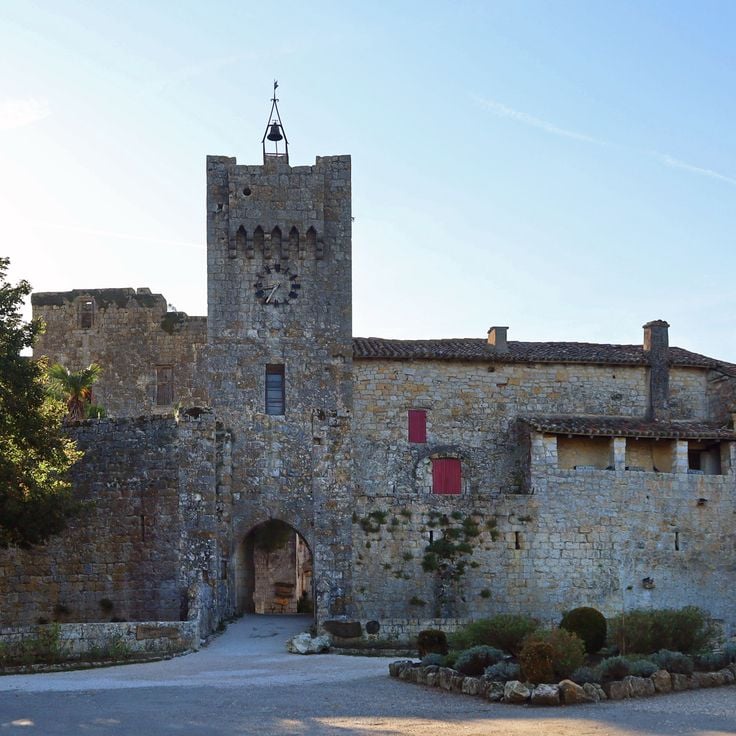
This castle rises on a hill and displays architectural elements from different periods between the 10th and 16th centuries. It connects with the collection of medieval villages in Occitanie, where castles and monasteries chronicle the era of the Cathars and religious orders. The complex includes a square keep, residential buildings and fortification walls. A museum within the premises documents the history of coin minting in the region with tools and numismatic collections.
Larressingle is a fortified village from the thirteenth century in the Occitanie region, part of this area's rich heritage of castles and medieval settlements. The village preserves stone houses, ramparts and a castle within its circular walls measuring one hundred meters in diameter. The tight arrangement of buildings and the preserved fortifications show how people lived and protected themselves in this period.
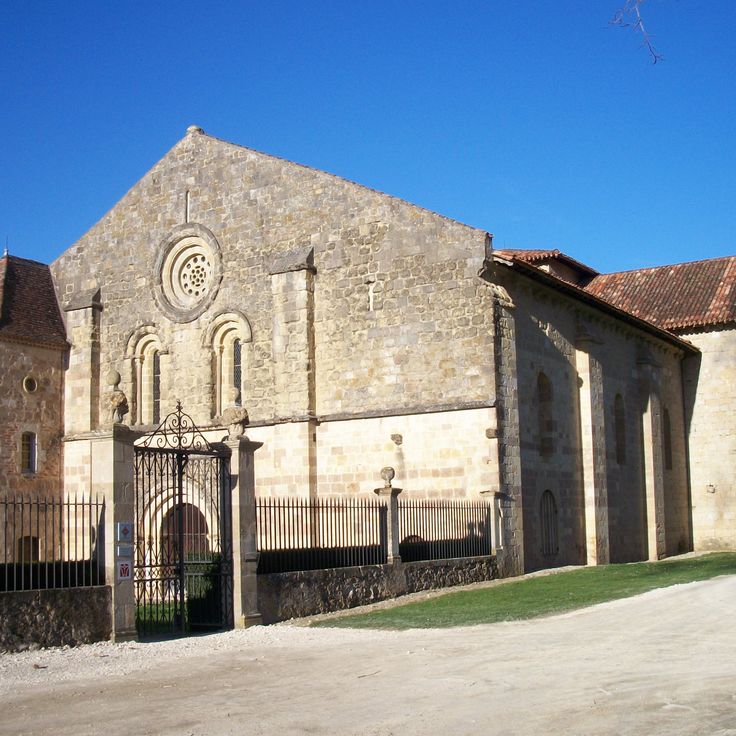
This Cistercian monastery was founded in 1151 in Gers and is part of Occitanie's medieval heritage. The abbey displays Romanesque architecture with Gothic elements and reflects the region's religious history. The building houses permanent exhibitions of paintings from the 16th to 20th centuries.
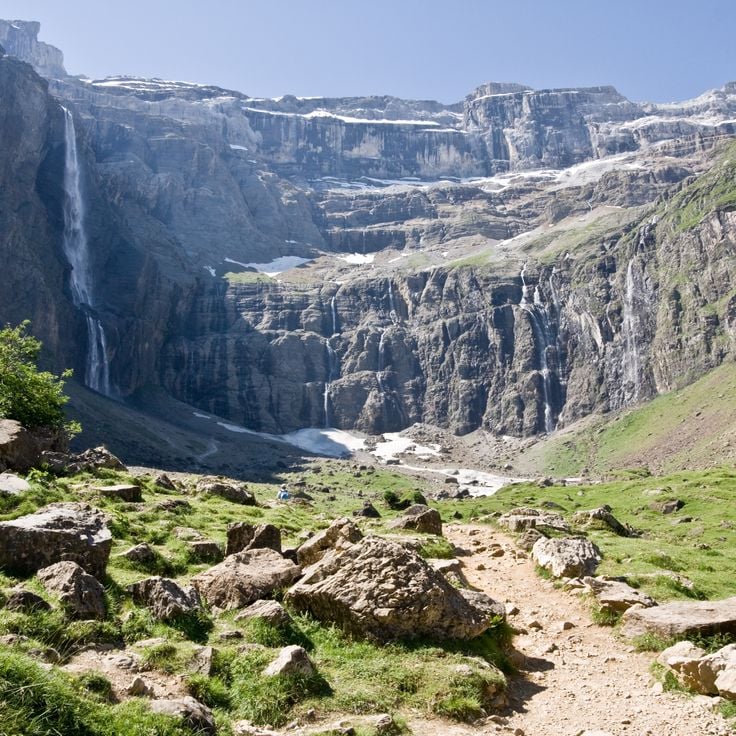
The Gavarnie Falls drops 422 meters in multiple tiers within a natural amphitheater of limestone walls rising 1500 meters from the valley floor. This waterfall embodies the remarkable geology of Occitanie, where water and stone have shaped dramatic landscapes over millennia. The Gavarnie Falls demonstrates the power of nature and stands as one of the region's geological wonders, where history and the natural world meet.
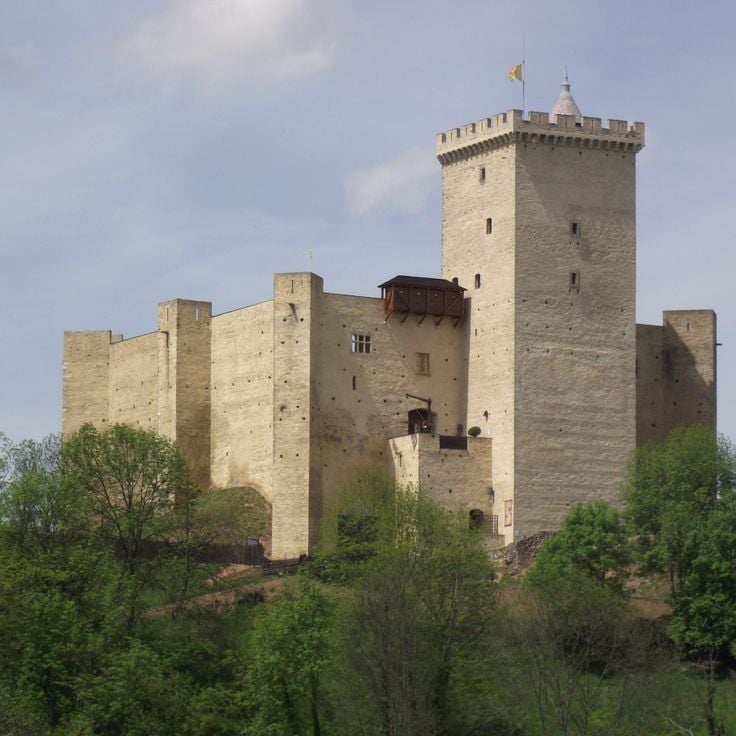
The Château de Mauvezin is an eleventh-century fortress perched on a hill at 870 meters elevation. This castle fits within the collection of medieval villages and castles across Occitanie, where fortifications and monasteries preserve the history of the Cathar era and religious orders. The Château de Mauvezin contains a museum displaying medieval military equipment and commands views over the Baronnies region.
This village is part of the collection of medieval villages in Occitanie, which presents Cathar castles and limestone gorges. Saint-Cirq-Lapopie rises 100 meters above the Lot River and preserves its medieval architecture from the 13th century. Stone houses, narrow streets, and fortified gates create an authentic picture of that era. From this height, you can look along the valley of the river.
To make the most of your visit, leave early in the morning when the paths are less busy and the light softly shines on the cliffs. Villages like Saint-Cirq-Lapopie feel truly special at that time.