See the monuments around you in AROpen chests in the app
Around Us is built for your phone — point your camera at the streets and discover the monuments and places around you in augmented reality.Around Us is built for your phone — chests unlock when you walk, explore and capture nearby places.
Stone structures from two thousand years still stand side by side in Italy, revealing how Romans built temples that Renaissance architects later surrounded with their own palaces.
Italy holds buildings from more than two thousand years of history, layered one atop another across its cities and countryside. Walk through Rome and you see Roman temples next to Renaissance palaces, each built in different eras but sharing the same streets. Florence gathered art and churches from the 15th century and beyond into grand museums and soaring cathedrals. Venice built its entire life around water, creating canals that connected the city islands because the ground itself could not support roads. In the south, the region around Naples tells another story: Mount Vesuvius looms over the landscape, and the ancient city of Pompeii sits frozen beneath layers of ash, preserved exactly as it was when the volcano erupted nearly two thousand years ago. These places show how Italians adapted to their land, learned from those who came before them, and created buildings that have outlasted empires.
Stone structures from two thousand years still stand side by side in Italy, revealing how Romans built temples that Renaissance architects later surrounded with their own palaces.
Italy holds buildings from more than two thousand years of history, layered one atop another across its cities and countryside. Walk through Rome and you see Roman temples next to Renaissance palaces, each built in different eras but sharing the same streets. Florence gathered art and churches from the 15th century and beyond into grand museums and soaring cathedrals. Venice built its entire life around water, creating canals that connected the city islands because the ground itself could not support roads. In the south, the region around Naples tells another story: Mount Vesuvius looms over the landscape, and the ancient city of Pompeii sits frozen beneath layers of ash, preserved exactly as it was when the volcano erupted nearly two thousand years ago. These places show how Italians adapted to their land, learned from those who came before them, and created buildings that have outlasted empires.
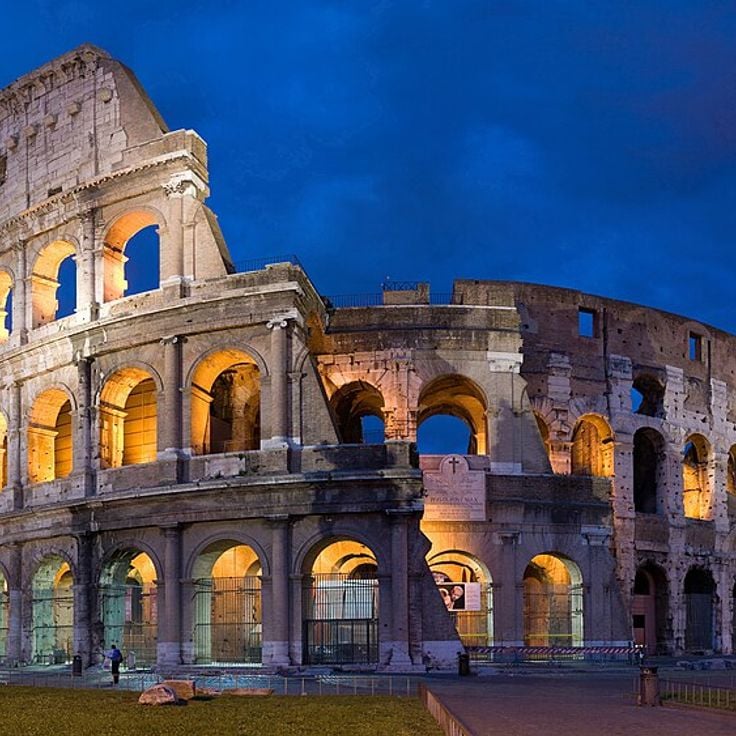
The Colosseum stands at the heart of Rome and was built in the first century. It is one of the most famous structures from the ancient Roman world, built to hold around 50,000 spectators who came here to watch gladiator fights and other public events. Its outer facade rises in several levels of arches, and inside you can see a network of corridors and underground chambers. The Colosseum gives a clear sense of how Romans organized large gatherings and the technical skill they brought to building on this scale.
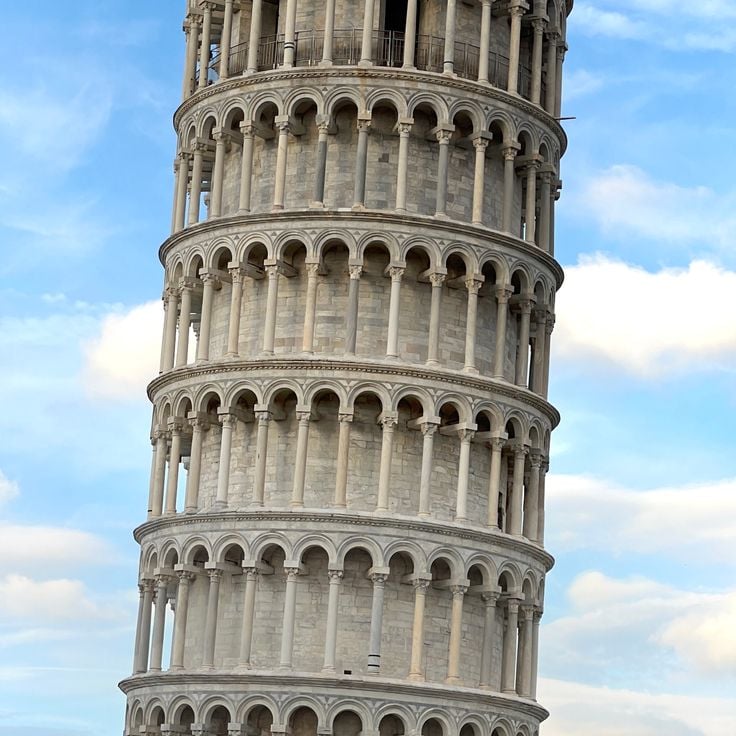
The Leaning Tower of Pisa is the free-standing bell tower of the cathedral complex on Piazza dei Miracoli. Built in white marble, it rises to about 184 feet (56 meters). Since the 12th century, it has tilted to one side because the ground beneath it is too soft. This tilt was never intended: the tower was originally designed to stand straight. Eight stories of Romanesque arcades run up its sides, and the lean is visible from every corner of the square. Climbing the spiral staircase brings you to the bell chamber, where you can look out over the rooftops of Pisa and the hills of Tuscany. The tower was built over several centuries and is one of the most recognized structures in Italy.
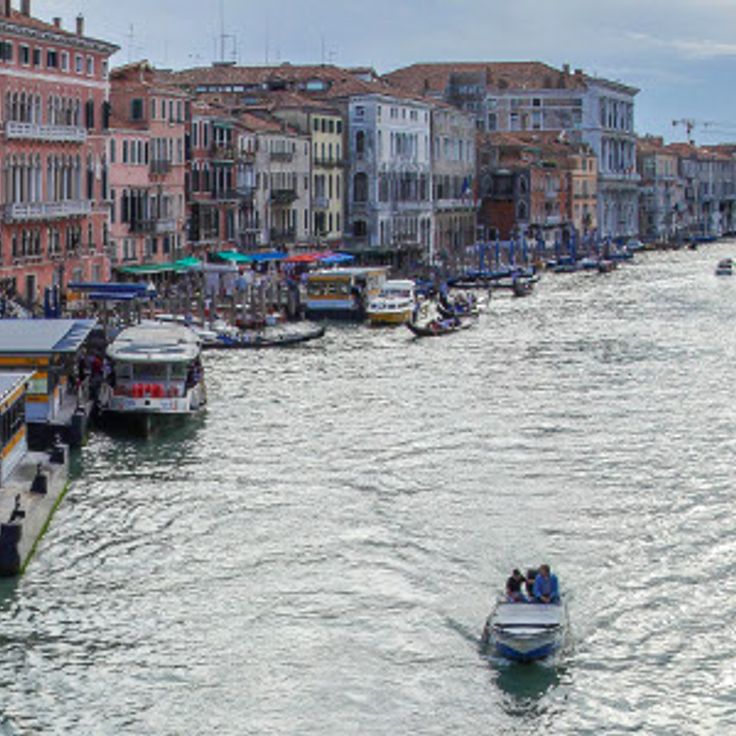
The Venice Canals are not ordinary waterways. They were built because the ground beneath this city could not support roads, so the water became the street. Gondolas and water buses move through narrow and wide passages, lined by palaces and houses from different centuries. In the morning, boats bring goods to the markets. In the afternoon, locals travel from one neighborhood to another. The light reflecting off the water shifts throughout the day, giving the city a character that changes by the hour.
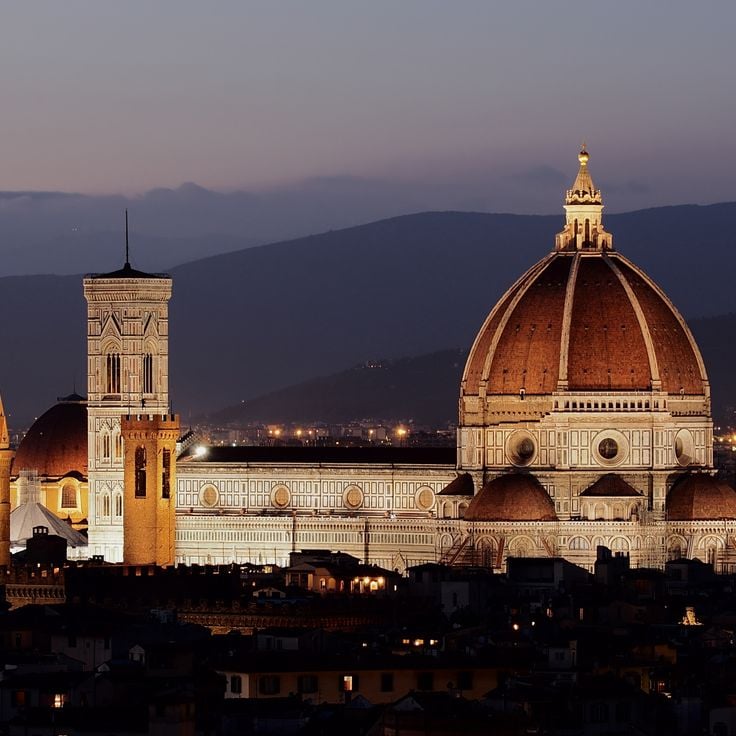
Florence Cathedral stands at the heart of the city and is one of the most recognized buildings of the Italian Renaissance. Its marble facade in white, green, and pink draws the eye from a distance. The dome, completed by Brunelleschi in the 15th century, has shaped the skyline ever since. Inside, frescoes by Vasari and Zuccari cover the ceiling with scenes of the Last Judgment. Next to the cathedral, the bell tower designed by Giotto rises above the square, completing a group of buildings that defines the center of Florence.
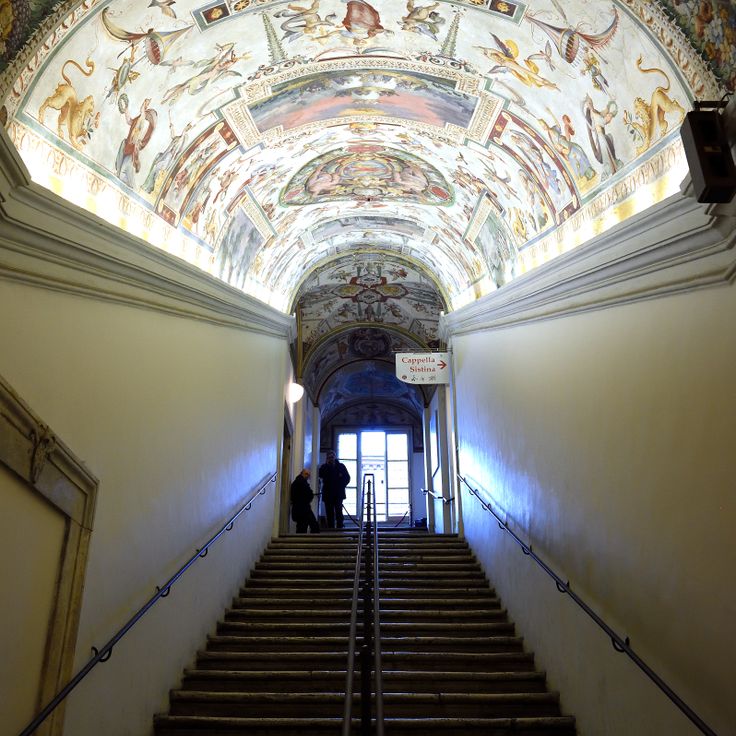
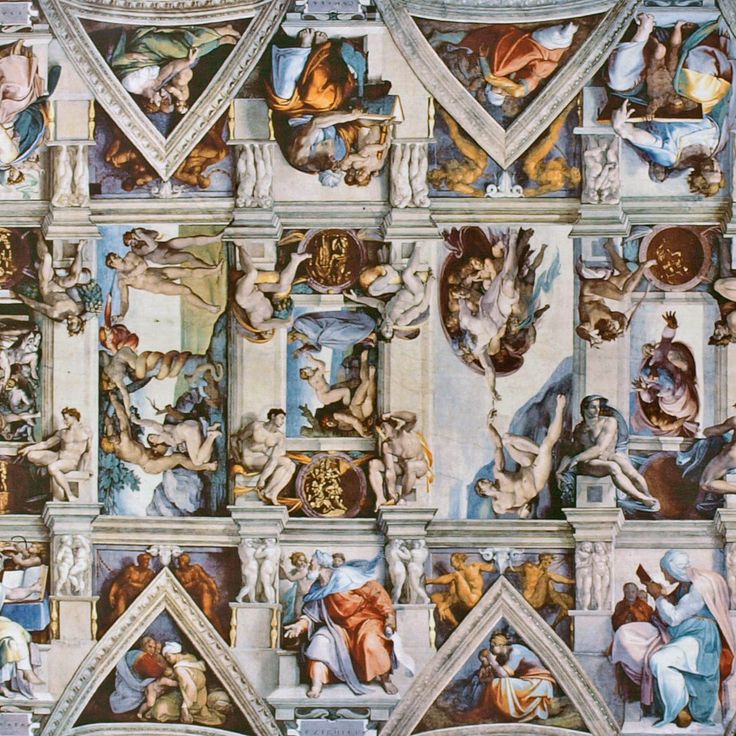
The Vatican Museums hold one of the largest art collections ever assembled, gathered over centuries by the popes. Walking through the long corridors, visitors see Greek and Roman sculptures, religious paintings, tapestries and manuscripts. Frescoes cover ceilings and walls throughout the rooms, and each section shifts in style and period. At the end of the route sits the Sistine Chapel, with its ceiling frescoes painted in the 16th century.
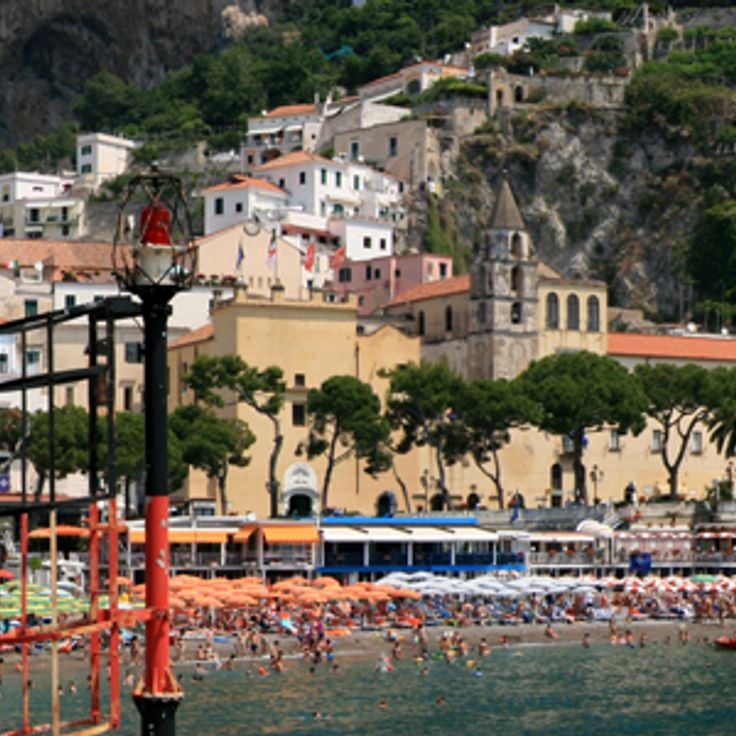
The Amalfi Coast runs along the southern edge of Campania, where the same land that holds Vesuvius and Pompeii meets the sea. Its towns were built on narrow terraces carved into steep slopes. Stairs connect different levels while narrow lanes wind through the buildings. Lemon and olive groves cover the hillsides above the villages. Houses show pastel colors and domed roofs that step down toward the water. Fishermen and craftspeople work in shops near the harbors. Trails run along cliffs with lookout points over the Tyrrhenian Sea.
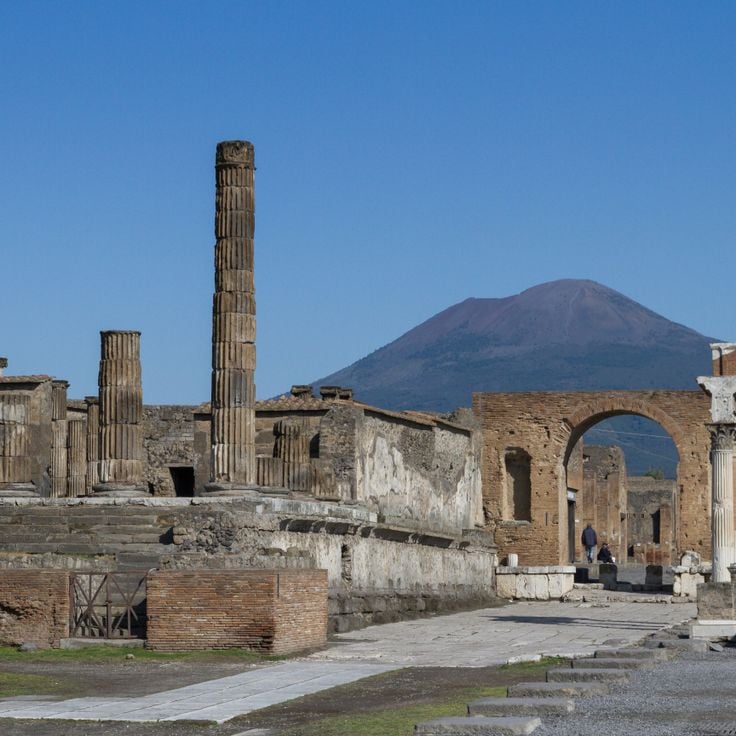
Pompeii sits on the Bay of Naples and was buried under a layer of ash from Vesuvius in the first century. This city shows what daily life looked like in Roman times: streets, houses with frescoes on the walls, bathhouses with mosaics, and a forum where public life took place. Theaters, temples and shops have survived. Plaster casts reveal people and animals in their final moments before the eruption. Archaeologists have worked here since the 18th century, uncovering new sections over time.
The Sistine Chapel, inside Vatican City, is known for the ceiling paintings that Michelangelo completed in the early 16th century. Scenes like the Creation of Adam cover the entire vaulted ceiling, while the altar wall shows the Last Judgment. The chapel also serves as the gathering place for the papal conclave, where cardinals meet to elect a new pope.
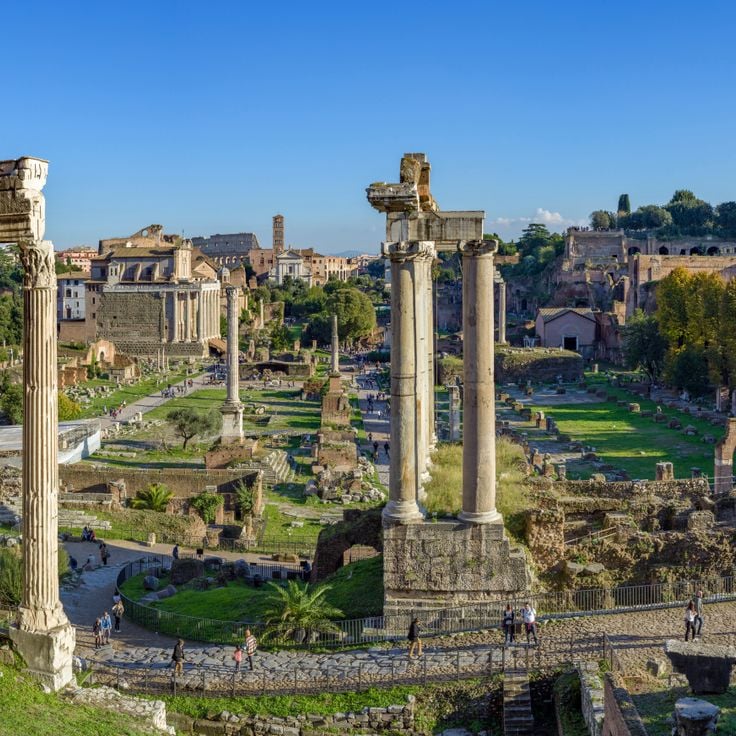
The Roman Forum sits between the Capitoline and Palatine hills, where Rome once conducted its public life. Courts, temples, and government buildings once lined this open square, and people gathered here for trials, speeches, and markets. Today, columns, arches, and stone foundations tell the story of what once stood here. Walking through this space connects visitors directly to the city that shaped Western history for centuries.
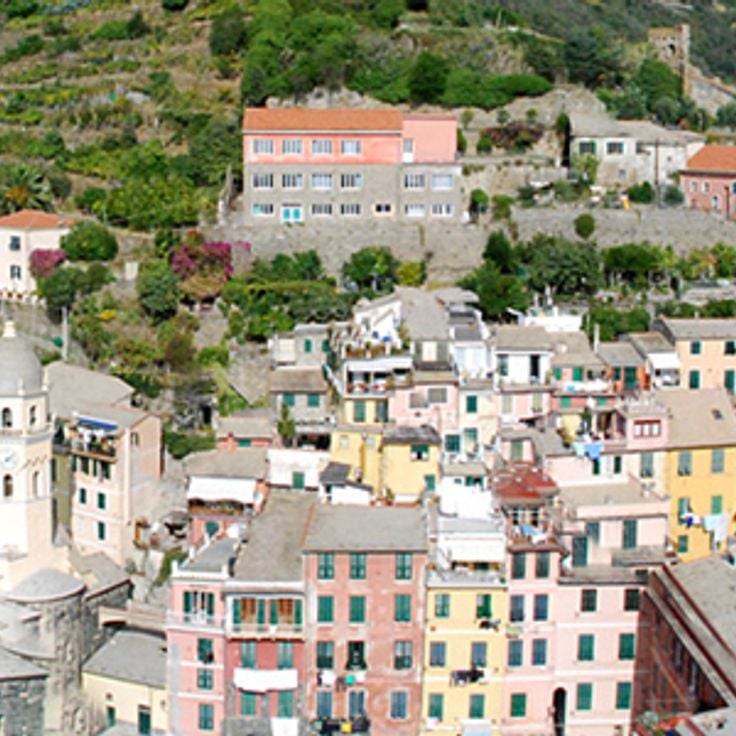
Cinque Terre is made up of five villages clinging to steep cliffs above the Ligurian Sea. The lanes are narrow, the houses colorful, and the slopes are covered in terraced vineyards. Hiking trails run between the villages along the coastline, passing rocks and open water. In the morning, fishermen bring their boats ashore, and small restaurants serve dishes made with local seafood. Visitors often walk from one village to the next, or take a short train ride through tunnels cut into the rock.
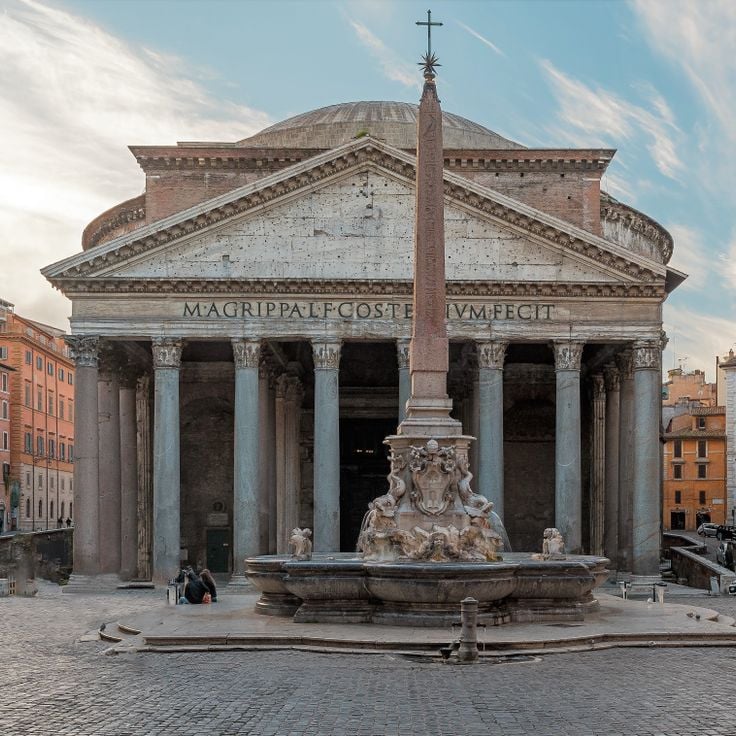
The Pantheon stands at the center of Rome as one of the oldest buildings still in daily use. Built in the 2nd century, its concrete dome spans 43 meters (141 feet) and sits on a cylindrical base with marble columns. A round opening at the top lets daylight fall into the space, shifting slowly across the floor as the hours pass. The interior feels open and wide, shaped by proportions that still surprise visitors. First dedicated to all Roman gods, it later became a church and remains one today. Walking inside connects you directly to two thousand years of Roman history.
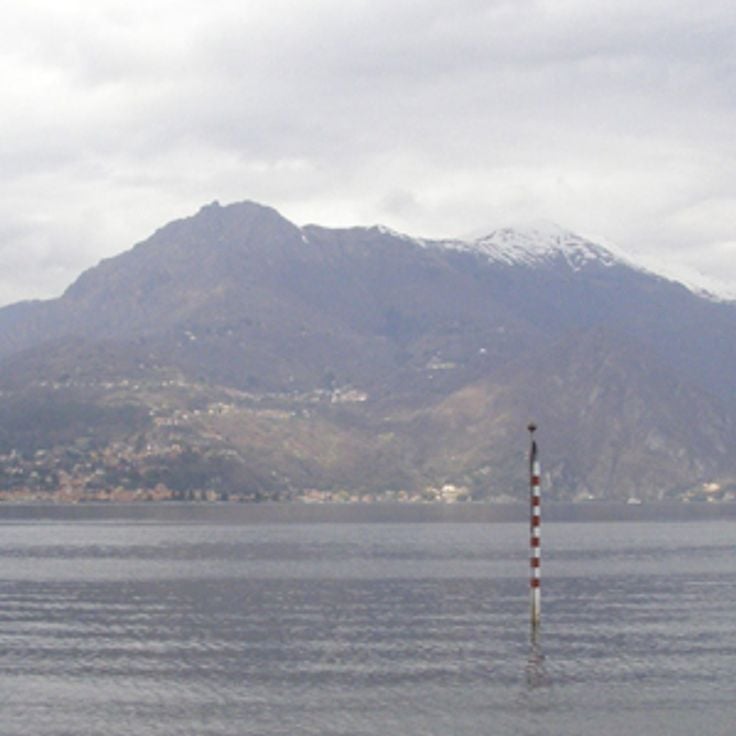
Lake Como sits in northern Italy, wedged between steep mountains. Its shores are lined with old villas whose terraces drop directly to the water. Palm trees stand alongside cypress groves, and small towns of stone houses and narrow lanes follow the waterfront. Ferries cross from one side to the other, and on sunny days the mountain peaks mirror themselves on the surface. The lake shows how people in this part of Italy have built their lives around the water and the land for centuries.
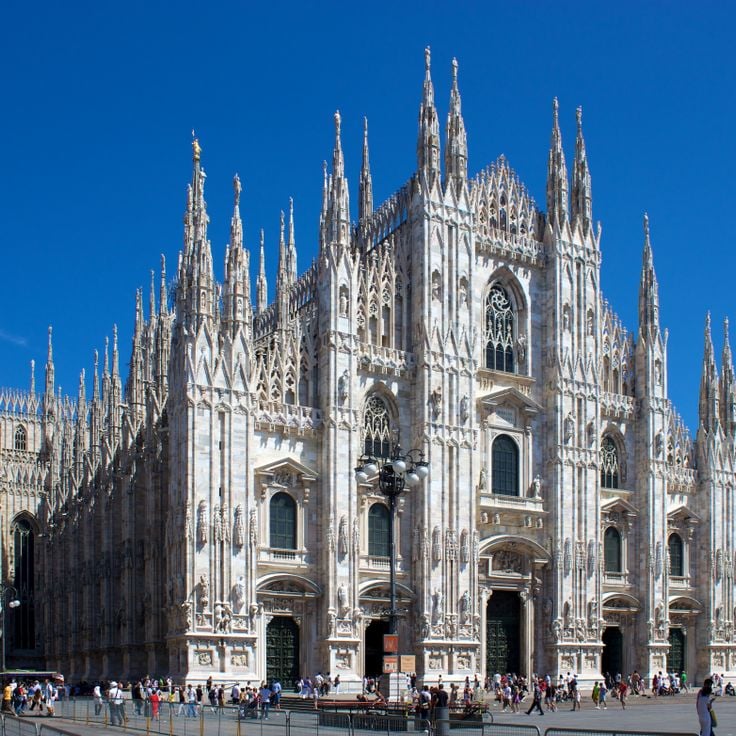
Milan Cathedral stands at the heart of the city and is one of the finest examples of Gothic architecture in Italy. Construction began in 1386 and continued for several centuries. The white marble facade is covered with hundreds of statues and spires. Visitors can climb to the roof and walk among the sculptures. Inside, there are high vaults, colored glass windows and a long nave. The cathedral has shaped Milan's skyline since the Middle Ages.
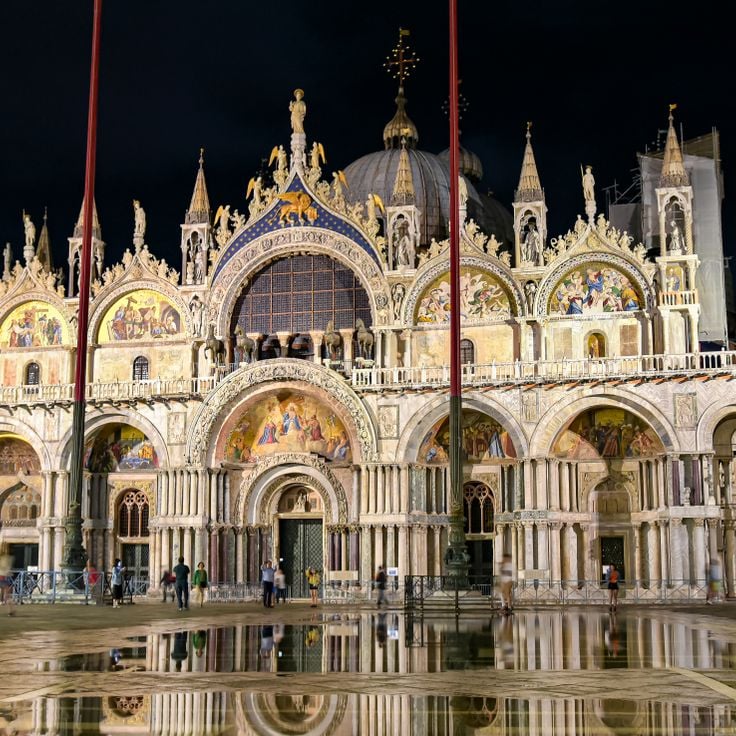
St. Mark's Basilica was consecrated in 1094 and stands as one of the clearest examples of how Venice drew from many cultures at once. Its five domes, golden mosaics, and marble columns come from different eras and places, some from the Byzantine East, others taken from Roman ruins. Inside, gilded tesserae cover nearly every surface, giving the space a warmth that changes with the light.
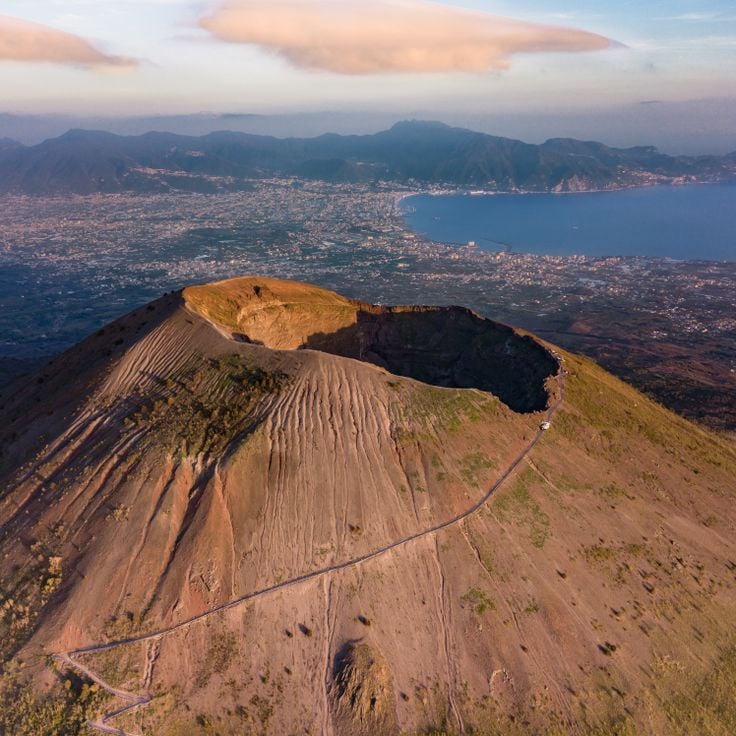
Mount Vesuvius rises 4203 feet (1281 meters) above the coast near Naples and shapes the landscape of the Campania region. In 79 AD, it erupted and buried the Roman cities of Pompeii and Herculaneum under ash and rock. Paths now lead to the crater rim, where you can look down into the opening. Steam rises from fumaroles on the slopes on certain days. The hillsides of Mount Vesuvius carry vineyards and orchards that grow well in the rich volcanic soil.
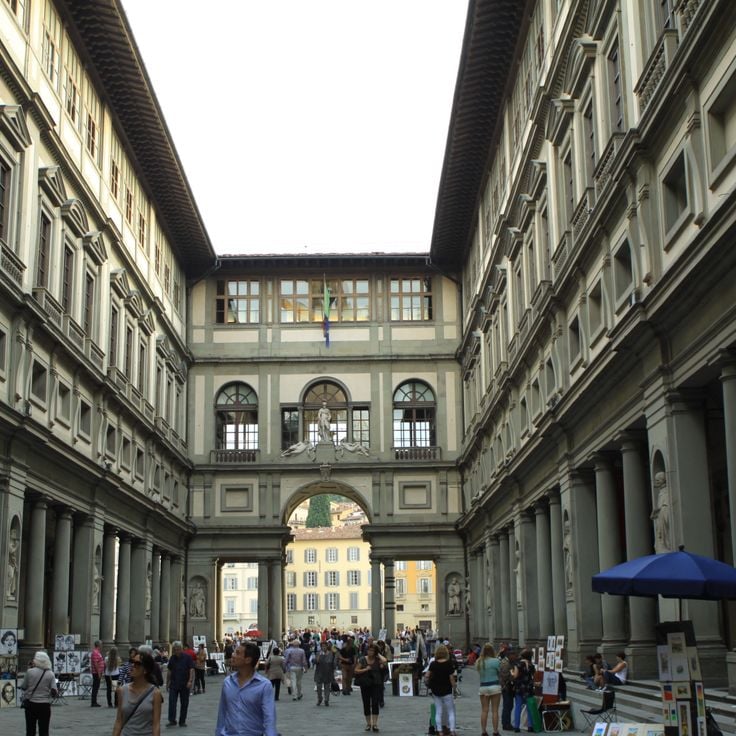
The Uffizi Gallery sits in the center of Florence and holds paintings and sculptures from the Italian Renaissance. Long corridors with high ceilings lead visitors from room to room, with light coming through tall windows. The rooms are arranged by schools and periods, so you can follow how art changed over the decades. Works by Botticelli, Leonardo da Vinci, and Michelangelo hang on these walls. In a collection like this one, you see why Florence became the city where the Renaissance took its clearest shape.
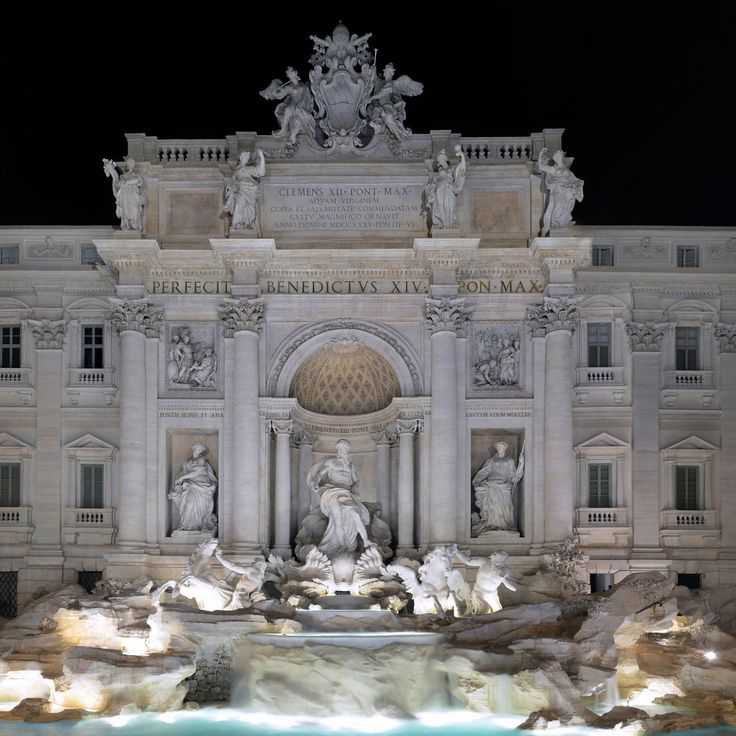
The Trevi Fountain was completed in 1762 and stands against the back wall of Palazzo Poli, which serves as a backdrop for the sculptural group. At the center is Neptune on a shell-shaped chariot, surrounded by cascades of water that flow over rocks into a wide basin. Like many of Rome's great monuments, the Trevi Fountain shows how baroque art brought water, stone, and architecture together into a single image.
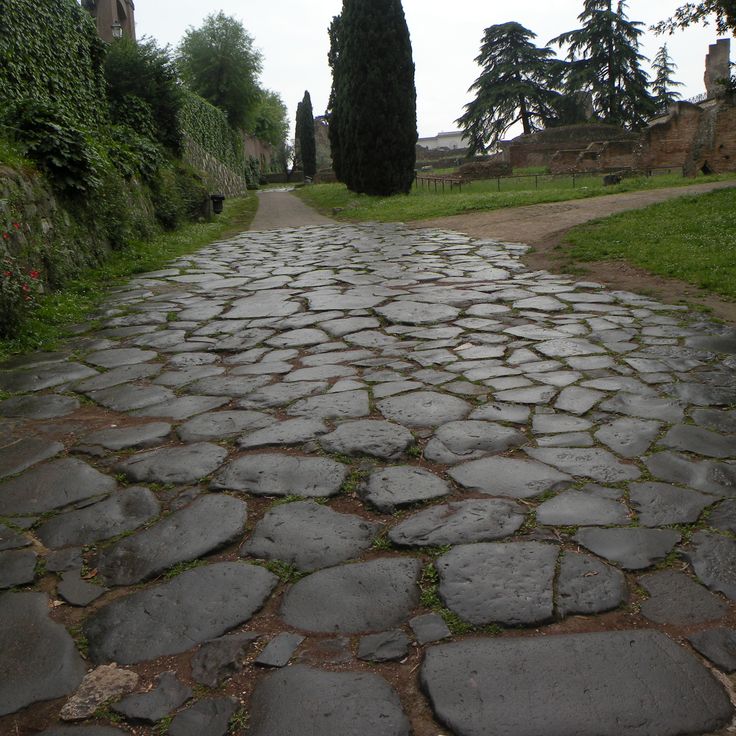
Palatine Hill rises above the Forum and is one of the oldest inhabited hills in Rome. This is where Romulus is said to have founded the city. The hill holds the remains of imperial residences where emperors such as Augustus and Tiberius once lived. Broken walls, arches, and column fragments shape the terrain. From the terraces, you can see the Forum on one side and the Circus Maximus on the other. Pine trees grow among the stones and cast shadows over the old paths. Excavations have uncovered foundations, mosaic floors, and traces of frescoes. Palatine Hill connects the mythical origins of Rome with the history of the Roman Empire.
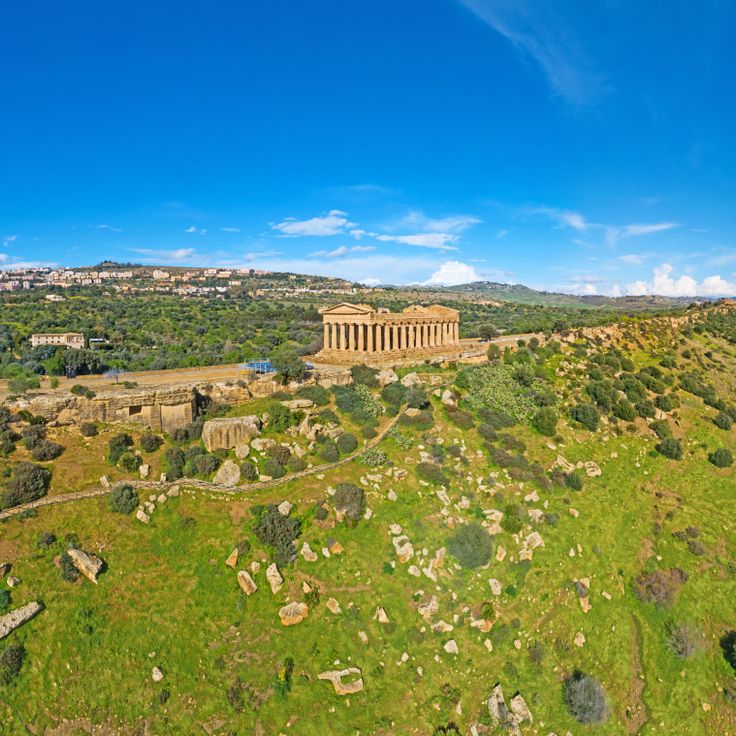
The Valley of the Temples outside Agrigento lines a stone ridge with eight Doric temples built in the 5th century BCE. This site was once part of a major Greek colony on Sicily, and its temples faced the coast as visible signs of the city's presence. The Temple of Concordia is one of the most complete Greek temples anywhere in the world. Walking through the site today, you can see how ancient builders used the slope of the land to place their sanctuaries so they could be seen from far away. The stone columns stand against the open sky, giving a clear sense of the scale of classical building.
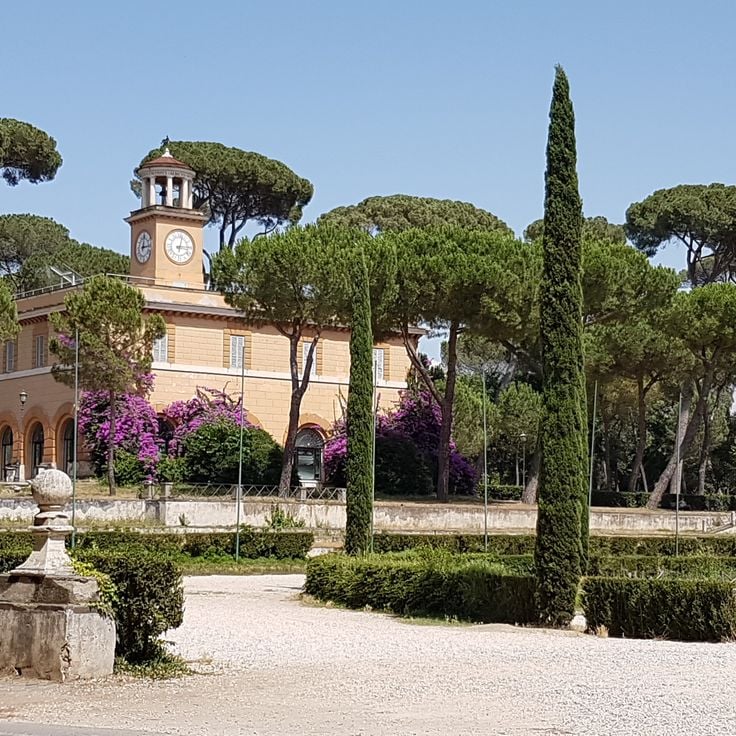
Villa Borghese Gardens is one of the largest green spaces in Rome, sitting just north of the historic center. The grounds date back to the 17th century, when the Borghese family created a private garden here. Over time, the gardens opened to the public and grew to include museums, a theater, a zoo, and tennis courts. Small lakes let visitors rent boats and spend time on the water. Shaded paths wind past sculptures and fountains. Families spread out on the lawns for picnics, runners follow the long trails, and those looking to step away from the city noise find corners where the streets feel far away.
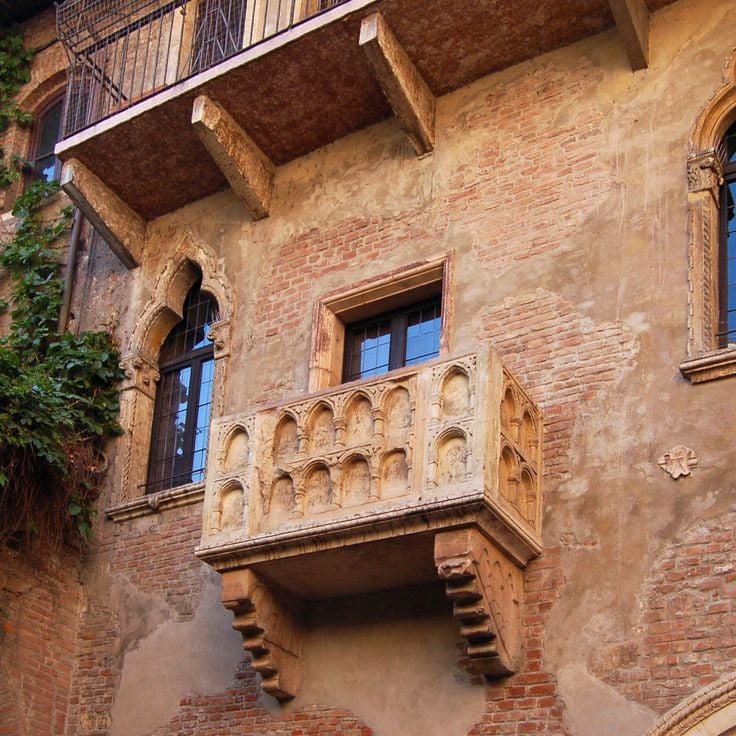
Juliet's House sits in the old center of Verona and ties a real 13th-century medieval townhouse to the story of Romeo and Juliet. The narrow courtyard is lined with walls where visitors have left messages of love over many years. A small balcony overlooks this courtyard and became a symbol of the famous story, though the link to the play came only in later times. Inside, the rooms display Renaissance furniture and objects that give a sense of daily life in a medieval home. A bronze statue in the courtyard is a popular spot for photos.
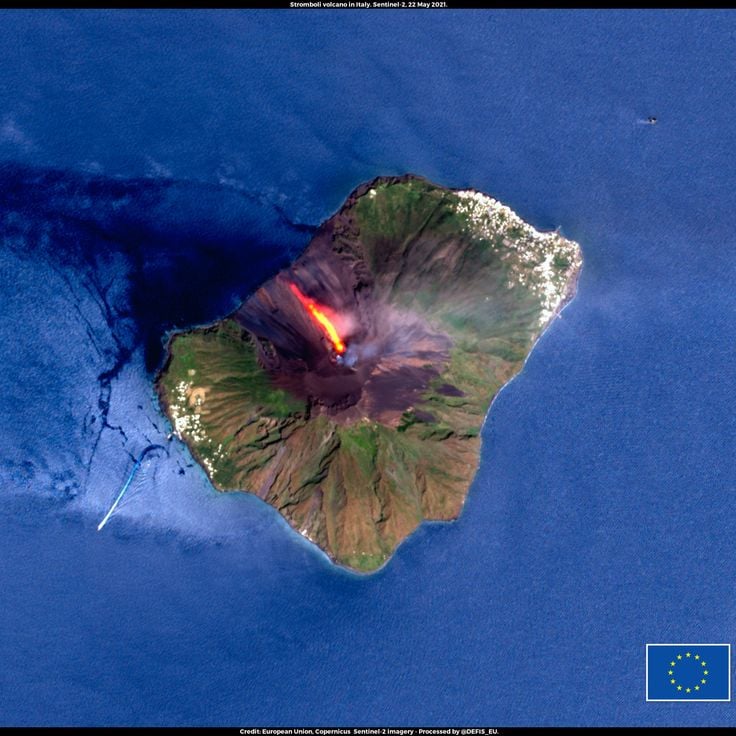
Stromboli Volcano rises more than 900 meters (about 3,000 feet) out of the sea and has been active for more than 2,000 years. At night, lava flows down its slopes and casts orange and red light across the sky above the Aeolian Islands. Like Vesuvius near Naples, this volcano shows how the Italian land has been shaped by forces far older than any building.
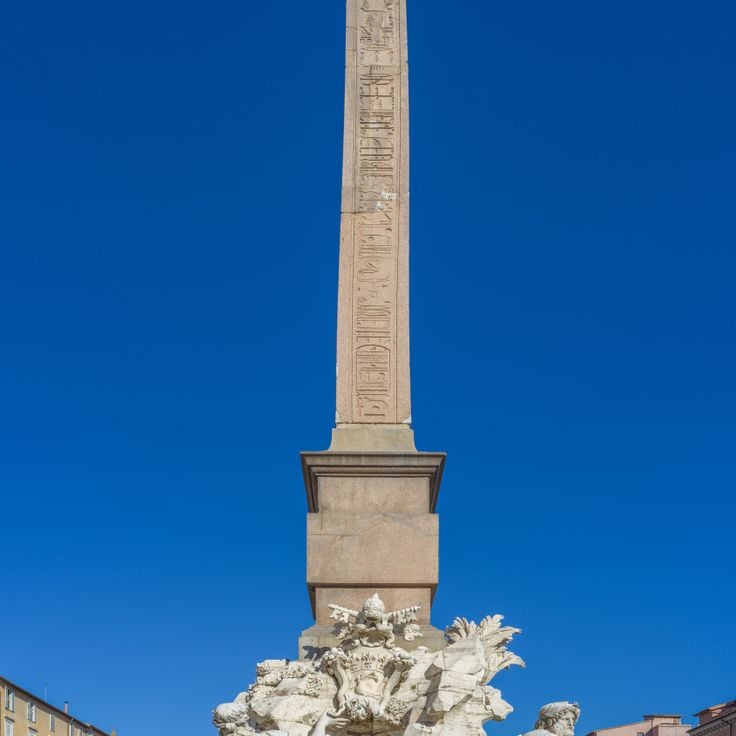
Navona Square in Rome follows the outline of an ancient Roman stadium from the 1st century. In the 15th century, the site became a public space, and three fountains were added during the Baroque period. The central Fountain of the Four Rivers was designed by Gian Lorenzo Bernini and shows four river gods, each representing a different continent. On the western side stands the church of Sant'Agnese in Agone. Today, locals and visitors gather on the paved ground between the fountains. Street performers and cafés line the edges, while the long, oval shape still recalls the original stadium beneath it.
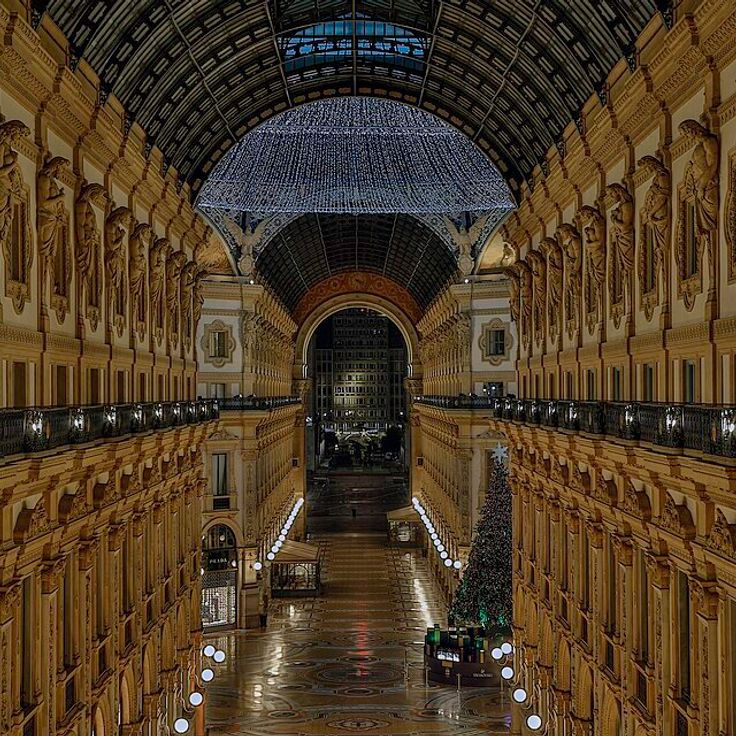
The Galleria Vittorio Emanuele II connects Piazza del Duomo with La Scala theater through two intersecting corridors under a glass roof. The floors show mosaics with symbols of Italian cities, including a bull that visitors traditionally spin their heel on for good luck. Cafés with tables under the arches invite people to stay a while, and shops sell fashion, books, and leather goods. Built in the 19th century, the structure combines iron, glass, and stone in a style that was considered forward-looking across Europe at the time. People pass through it, meet under the central dome, or simply walk slowly between the shop windows.
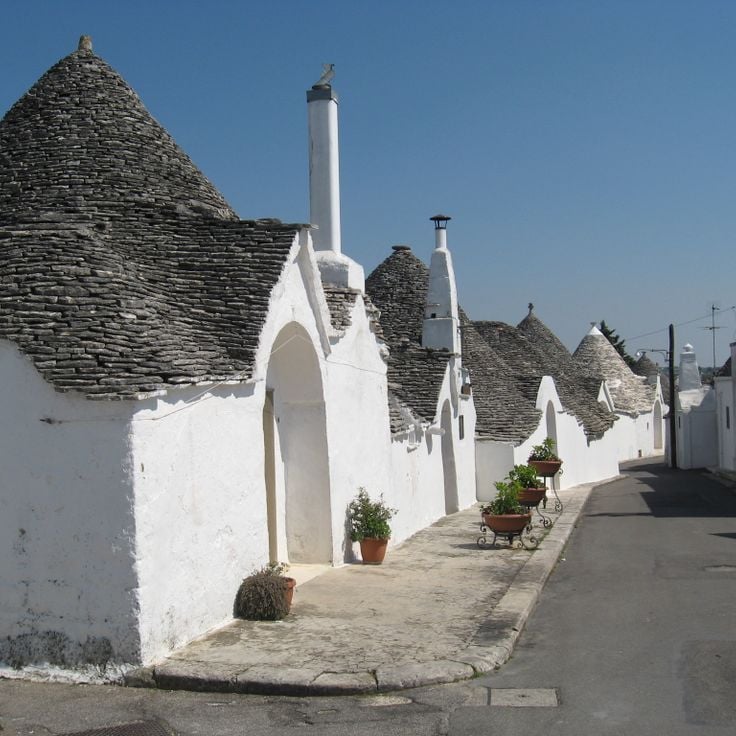
The Trulli Houses of Alberobello are small, round stone buildings with cone-shaped roofs made of flat limestone slabs stacked without mortar. Dating from the 16th century, they fit naturally into the story this collection tells about how Italians built with the materials and methods of their time. The walls are whitewashed, and the roofs narrow toward the top. One notable feature of this construction was that it could be taken apart quickly. Today, many of these houses work as shops, restaurants, or places to stay, while others are still lived in.
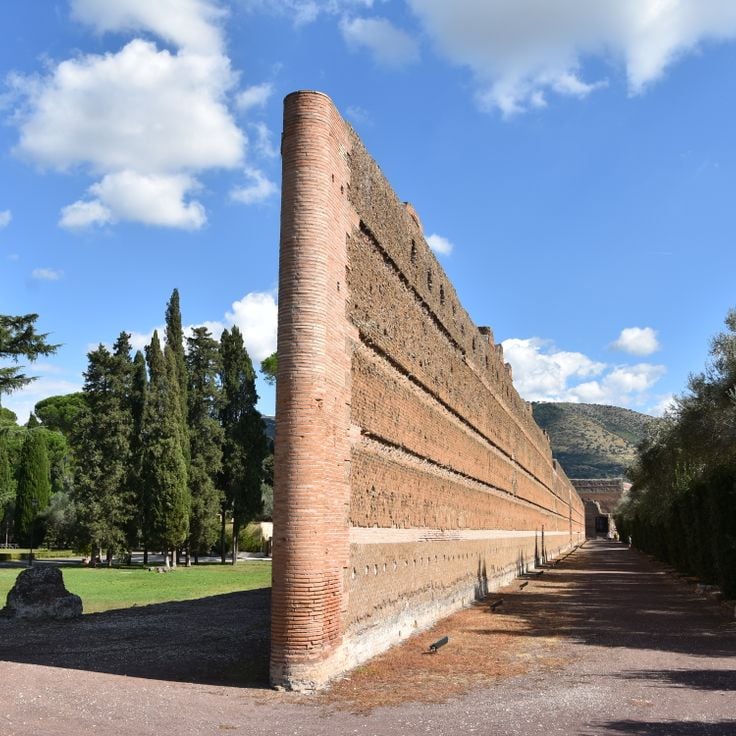
Hadrian's Villa in Tivoli was built in the 2nd century by Emperor Hadrian and shows just how far Roman construction could go. Across the grounds, you find palaces, baths, a theater, temples, and water features that together give a clear sense of how Romans built for power, comfort, and beauty at the same time.
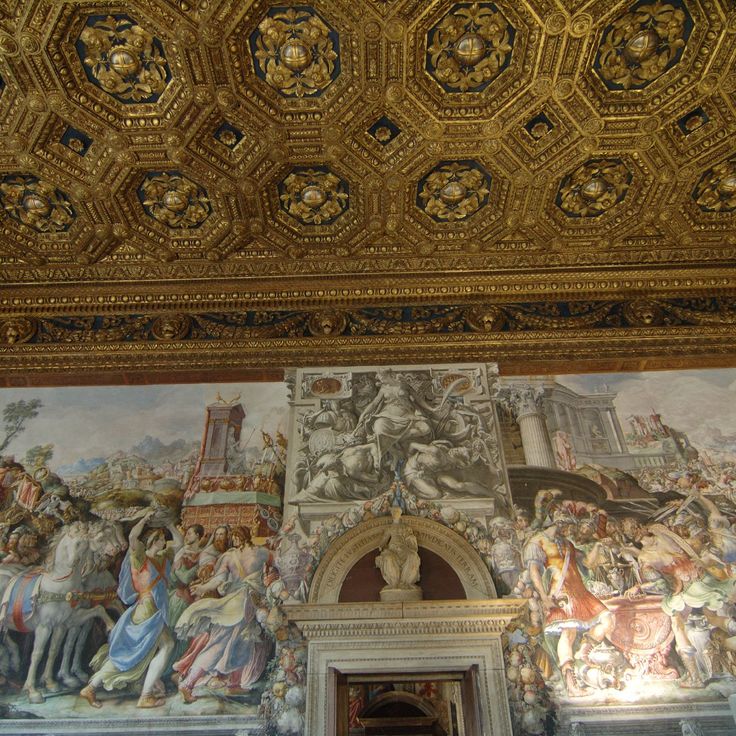
Palazzo Vecchio has stood at the heart of Florence since the 13th century, serving as the seat of the Florentine Republic. Its halls are covered in frescoes and sculptures from the Medici era, including the Salone dei Cinquecento with its painted ceiling. The tower rises above the city rooftops, offering views of the surrounding hills. The building brings together medieval defensive architecture and later Renaissance additions. This is where political decisions were made, and the artworks inside show how the city's power and history were shaped over centuries.
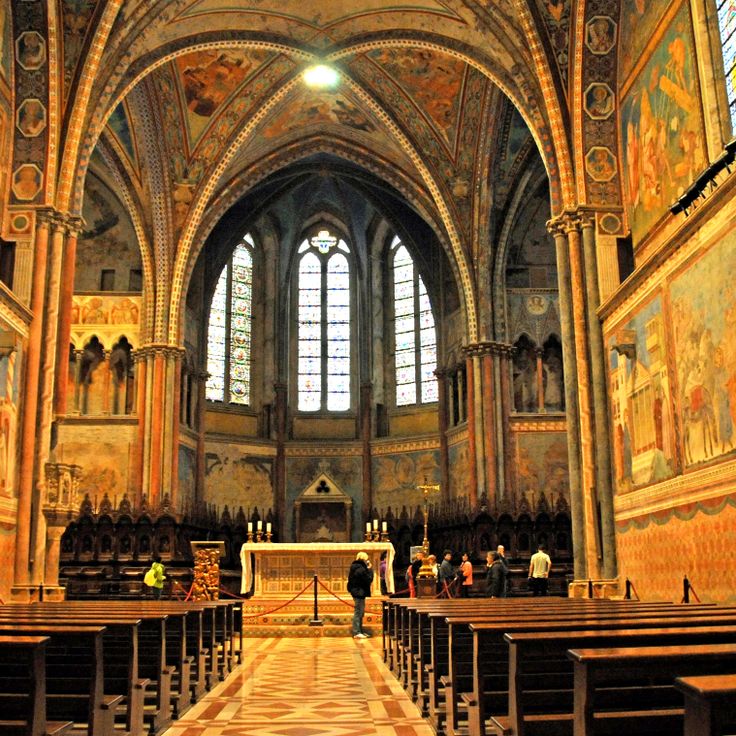
The Basilica of San Francesco d'Assisi rises above the tomb of Saint Francis and has drawn pilgrims since the 13th century. Two churches sit one on top of the other, with a crypt below. The upper church walls are covered with painted scenes from the life of the saint, among them works by Giotto. In the lower church, the light is low and the medieval frescoes seem to glow in the half-dark. The crypt holds the remains of Francis himself. People come here to pray, to look at the art, or simply to stand in a place that has mattered to so many for so long.
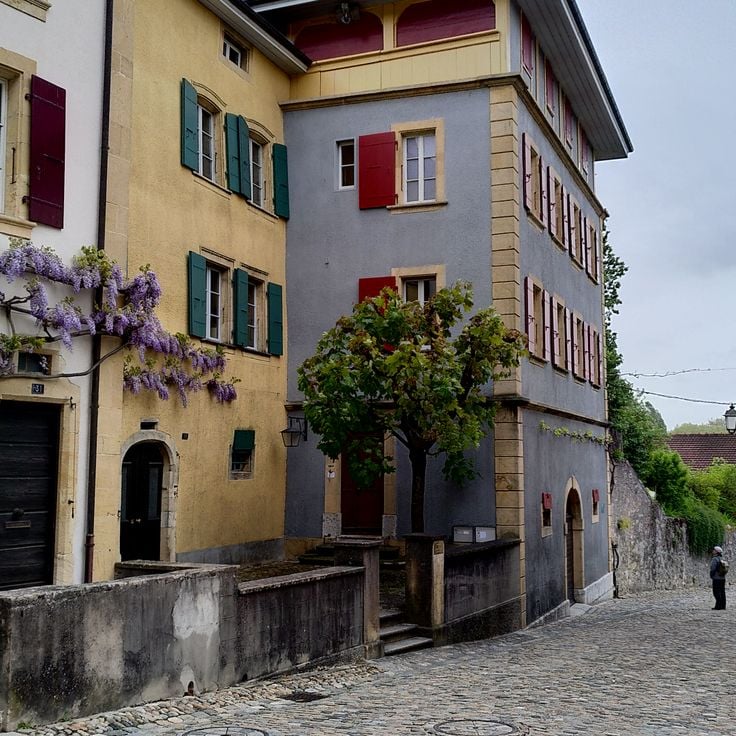
This Roman temple in Nîmes dates from the 1st century AD and stands on a raised platform reached by a broad staircase. The rectangular building has Corinthian columns framing the entrance, and an inscription above the doorway recalls the sons of Augustus, to whom the temple was dedicated. The facade has survived in near-complete condition, offering a direct look at how early imperial Roman architecture appeared. The temple sits at the heart of the city, where it has shaped the skyline for two thousand years, and stands as one of the best preserved examples of Roman construction outside Italy.
Monteriggioni is a small town from the thirteenth century, surrounded by fourteen towers and a stone wall about 1.2 miles (2 kilometers) long. The town served as a defensive outpost against Florence and has kept its medieval structure to this day. Those who climb the walls look out over the rolling hills of Tuscany. The lanes inside are narrow, and the few buildings mostly date back to the founding period. Monteriggioni gives a direct sense of how fortified settlements looked and worked in medieval times.
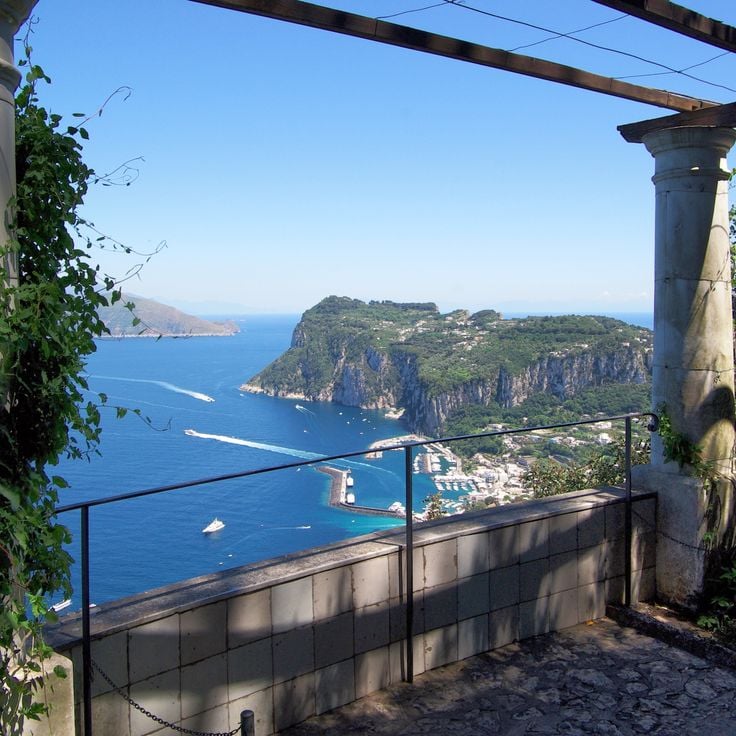
Capri sits off the coast of Naples and shows how the sea shapes everything on an island. Steep cliffs drop into the water, sea caves open along the shoreline, and hidden coves can only be reached by boat. The two main towns have cafés, restaurants, and shops that line narrow streets, while the Piazzetta draws people together at the center of daily life. Paths climb through the vegetation to Monte Solaro, where you can see the Sorrentine Peninsula and the Gulf of Naples spread out below. Ruins of Roman villas are scattered across the island, a reminder that this place has drawn visitors for nearly two thousand years.
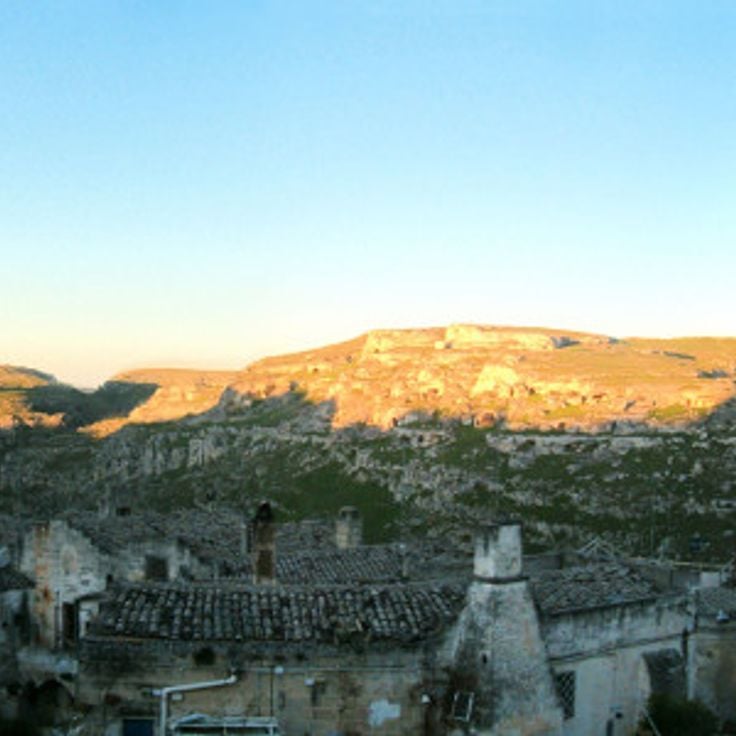
The Sassi di Matera are carved into the soft tufa rock of the Basilicata region. For thousands of years, people lived in these caves, expanded them, stacked houses onto steep slopes, and chiseled churches from the rock face. Narrow alleys run between living spaces, stables, and small chapels, all sitting close together. The area remained inhabited until the mid-twentieth century. Today many houses are restored, some turned into hotels or restaurants, but the original structure is still clearly visible.
The Colosseum stands at the heart of Rome and was built in the first century. It is one of the most famous structures from the ancient Roman world, built to hold around 50,000 spectators who came here to watch gladiator fights and other public events. Its outer facade rises in several levels of arches, and inside you can see a network of corridors and underground chambers. The Colosseum gives a clear sense of how Romans organized large gatherings and the technical skill they brought to building on this scale.
The Leaning Tower of Pisa is the free-standing bell tower of the cathedral complex on Piazza dei Miracoli. Built in white marble, it rises to about 184 feet (56 meters). Since the 12th century, it has tilted to one side because the ground beneath it is too soft. This tilt was never intended: the tower was originally designed to stand straight. Eight stories of Romanesque arcades run up its sides, and the lean is visible from every corner of the square. Climbing the spiral staircase brings you to the bell chamber, where you can look out over the rooftops of Pisa and the hills of Tuscany. The tower was built over several centuries and is one of the most recognized structures in Italy.
The Venice Canals are not ordinary waterways. They were built because the ground beneath this city could not support roads, so the water became the street. Gondolas and water buses move through narrow and wide passages, lined by palaces and houses from different centuries. In the morning, boats bring goods to the markets. In the afternoon, locals travel from one neighborhood to another. The light reflecting off the water shifts throughout the day, giving the city a character that changes by the hour.
Florence Cathedral stands at the heart of the city and is one of the most recognized buildings of the Italian Renaissance. Its marble facade in white, green, and pink draws the eye from a distance. The dome, completed by Brunelleschi in the 15th century, has shaped the skyline ever since. Inside, frescoes by Vasari and Zuccari cover the ceiling with scenes of the Last Judgment. Next to the cathedral, the bell tower designed by Giotto rises above the square, completing a group of buildings that defines the center of Florence.
The Vatican Museums hold one of the largest art collections ever assembled, gathered over centuries by the popes. Walking through the long corridors, visitors see Greek and Roman sculptures, religious paintings, tapestries and manuscripts. Frescoes cover ceilings and walls throughout the rooms, and each section shifts in style and period. At the end of the route sits the Sistine Chapel, with its ceiling frescoes painted in the 16th century.
The Amalfi Coast runs along the southern edge of Campania, where the same land that holds Vesuvius and Pompeii meets the sea. Its towns were built on narrow terraces carved into steep slopes. Stairs connect different levels while narrow lanes wind through the buildings. Lemon and olive groves cover the hillsides above the villages. Houses show pastel colors and domed roofs that step down toward the water. Fishermen and craftspeople work in shops near the harbors. Trails run along cliffs with lookout points over the Tyrrhenian Sea.
Pompeii sits on the Bay of Naples and was buried under a layer of ash from Vesuvius in the first century. This city shows what daily life looked like in Roman times: streets, houses with frescoes on the walls, bathhouses with mosaics, and a forum where public life took place. Theaters, temples and shops have survived. Plaster casts reveal people and animals in their final moments before the eruption. Archaeologists have worked here since the 18th century, uncovering new sections over time.
The Sistine Chapel, inside Vatican City, is known for the ceiling paintings that Michelangelo completed in the early 16th century. Scenes like the Creation of Adam cover the entire vaulted ceiling, while the altar wall shows the Last Judgment. The chapel also serves as the gathering place for the papal conclave, where cardinals meet to elect a new pope.
The Roman Forum sits between the Capitoline and Palatine hills, where Rome once conducted its public life. Courts, temples, and government buildings once lined this open square, and people gathered here for trials, speeches, and markets. Today, columns, arches, and stone foundations tell the story of what once stood here. Walking through this space connects visitors directly to the city that shaped Western history for centuries.
Cinque Terre is made up of five villages clinging to steep cliffs above the Ligurian Sea. The lanes are narrow, the houses colorful, and the slopes are covered in terraced vineyards. Hiking trails run between the villages along the coastline, passing rocks and open water. In the morning, fishermen bring their boats ashore, and small restaurants serve dishes made with local seafood. Visitors often walk from one village to the next, or take a short train ride through tunnels cut into the rock.
The Pantheon stands at the center of Rome as one of the oldest buildings still in daily use. Built in the 2nd century, its concrete dome spans 43 meters (141 feet) and sits on a cylindrical base with marble columns. A round opening at the top lets daylight fall into the space, shifting slowly across the floor as the hours pass. The interior feels open and wide, shaped by proportions that still surprise visitors. First dedicated to all Roman gods, it later became a church and remains one today. Walking inside connects you directly to two thousand years of Roman history.
Lake Como sits in northern Italy, wedged between steep mountains. Its shores are lined with old villas whose terraces drop directly to the water. Palm trees stand alongside cypress groves, and small towns of stone houses and narrow lanes follow the waterfront. Ferries cross from one side to the other, and on sunny days the mountain peaks mirror themselves on the surface. The lake shows how people in this part of Italy have built their lives around the water and the land for centuries.
Milan Cathedral stands at the heart of the city and is one of the finest examples of Gothic architecture in Italy. Construction began in 1386 and continued for several centuries. The white marble facade is covered with hundreds of statues and spires. Visitors can climb to the roof and walk among the sculptures. Inside, there are high vaults, colored glass windows and a long nave. The cathedral has shaped Milan's skyline since the Middle Ages.
St. Mark's Basilica was consecrated in 1094 and stands as one of the clearest examples of how Venice drew from many cultures at once. Its five domes, golden mosaics, and marble columns come from different eras and places, some from the Byzantine East, others taken from Roman ruins. Inside, gilded tesserae cover nearly every surface, giving the space a warmth that changes with the light.
Mount Vesuvius rises 4203 feet (1281 meters) above the coast near Naples and shapes the landscape of the Campania region. In 79 AD, it erupted and buried the Roman cities of Pompeii and Herculaneum under ash and rock. Paths now lead to the crater rim, where you can look down into the opening. Steam rises from fumaroles on the slopes on certain days. The hillsides of Mount Vesuvius carry vineyards and orchards that grow well in the rich volcanic soil.
The Uffizi Gallery sits in the center of Florence and holds paintings and sculptures from the Italian Renaissance. Long corridors with high ceilings lead visitors from room to room, with light coming through tall windows. The rooms are arranged by schools and periods, so you can follow how art changed over the decades. Works by Botticelli, Leonardo da Vinci, and Michelangelo hang on these walls. In a collection like this one, you see why Florence became the city where the Renaissance took its clearest shape.
The Trevi Fountain was completed in 1762 and stands against the back wall of Palazzo Poli, which serves as a backdrop for the sculptural group. At the center is Neptune on a shell-shaped chariot, surrounded by cascades of water that flow over rocks into a wide basin. Like many of Rome's great monuments, the Trevi Fountain shows how baroque art brought water, stone, and architecture together into a single image.
Palatine Hill rises above the Forum and is one of the oldest inhabited hills in Rome. This is where Romulus is said to have founded the city. The hill holds the remains of imperial residences where emperors such as Augustus and Tiberius once lived. Broken walls, arches, and column fragments shape the terrain. From the terraces, you can see the Forum on one side and the Circus Maximus on the other. Pine trees grow among the stones and cast shadows over the old paths. Excavations have uncovered foundations, mosaic floors, and traces of frescoes. Palatine Hill connects the mythical origins of Rome with the history of the Roman Empire.
The Valley of the Temples outside Agrigento lines a stone ridge with eight Doric temples built in the 5th century BCE. This site was once part of a major Greek colony on Sicily, and its temples faced the coast as visible signs of the city's presence. The Temple of Concordia is one of the most complete Greek temples anywhere in the world. Walking through the site today, you can see how ancient builders used the slope of the land to place their sanctuaries so they could be seen from far away. The stone columns stand against the open sky, giving a clear sense of the scale of classical building.
Villa Borghese Gardens is one of the largest green spaces in Rome, sitting just north of the historic center. The grounds date back to the 17th century, when the Borghese family created a private garden here. Over time, the gardens opened to the public and grew to include museums, a theater, a zoo, and tennis courts. Small lakes let visitors rent boats and spend time on the water. Shaded paths wind past sculptures and fountains. Families spread out on the lawns for picnics, runners follow the long trails, and those looking to step away from the city noise find corners where the streets feel far away.
Juliet's House sits in the old center of Verona and ties a real 13th-century medieval townhouse to the story of Romeo and Juliet. The narrow courtyard is lined with walls where visitors have left messages of love over many years. A small balcony overlooks this courtyard and became a symbol of the famous story, though the link to the play came only in later times. Inside, the rooms display Renaissance furniture and objects that give a sense of daily life in a medieval home. A bronze statue in the courtyard is a popular spot for photos.
Stromboli Volcano rises more than 900 meters (about 3,000 feet) out of the sea and has been active for more than 2,000 years. At night, lava flows down its slopes and casts orange and red light across the sky above the Aeolian Islands. Like Vesuvius near Naples, this volcano shows how the Italian land has been shaped by forces far older than any building.
Navona Square in Rome follows the outline of an ancient Roman stadium from the 1st century. In the 15th century, the site became a public space, and three fountains were added during the Baroque period. The central Fountain of the Four Rivers was designed by Gian Lorenzo Bernini and shows four river gods, each representing a different continent. On the western side stands the church of Sant'Agnese in Agone. Today, locals and visitors gather on the paved ground between the fountains. Street performers and cafés line the edges, while the long, oval shape still recalls the original stadium beneath it.
The Galleria Vittorio Emanuele II connects Piazza del Duomo with La Scala theater through two intersecting corridors under a glass roof. The floors show mosaics with symbols of Italian cities, including a bull that visitors traditionally spin their heel on for good luck. Cafés with tables under the arches invite people to stay a while, and shops sell fashion, books, and leather goods. Built in the 19th century, the structure combines iron, glass, and stone in a style that was considered forward-looking across Europe at the time. People pass through it, meet under the central dome, or simply walk slowly between the shop windows.
The Trulli Houses of Alberobello are small, round stone buildings with cone-shaped roofs made of flat limestone slabs stacked without mortar. Dating from the 16th century, they fit naturally into the story this collection tells about how Italians built with the materials and methods of their time. The walls are whitewashed, and the roofs narrow toward the top. One notable feature of this construction was that it could be taken apart quickly. Today, many of these houses work as shops, restaurants, or places to stay, while others are still lived in.
Hadrian's Villa in Tivoli was built in the 2nd century by Emperor Hadrian and shows just how far Roman construction could go. Across the grounds, you find palaces, baths, a theater, temples, and water features that together give a clear sense of how Romans built for power, comfort, and beauty at the same time.
Palazzo Vecchio has stood at the heart of Florence since the 13th century, serving as the seat of the Florentine Republic. Its halls are covered in frescoes and sculptures from the Medici era, including the Salone dei Cinquecento with its painted ceiling. The tower rises above the city rooftops, offering views of the surrounding hills. The building brings together medieval defensive architecture and later Renaissance additions. This is where political decisions were made, and the artworks inside show how the city's power and history were shaped over centuries.
The Basilica of San Francesco d'Assisi rises above the tomb of Saint Francis and has drawn pilgrims since the 13th century. Two churches sit one on top of the other, with a crypt below. The upper church walls are covered with painted scenes from the life of the saint, among them works by Giotto. In the lower church, the light is low and the medieval frescoes seem to glow in the half-dark. The crypt holds the remains of Francis himself. People come here to pray, to look at the art, or simply to stand in a place that has mattered to so many for so long.
This Roman temple in Nîmes dates from the 1st century AD and stands on a raised platform reached by a broad staircase. The rectangular building has Corinthian columns framing the entrance, and an inscription above the doorway recalls the sons of Augustus, to whom the temple was dedicated. The facade has survived in near-complete condition, offering a direct look at how early imperial Roman architecture appeared. The temple sits at the heart of the city, where it has shaped the skyline for two thousand years, and stands as one of the best preserved examples of Roman construction outside Italy.
Monteriggioni is a small town from the thirteenth century, surrounded by fourteen towers and a stone wall about 1.2 miles (2 kilometers) long. The town served as a defensive outpost against Florence and has kept its medieval structure to this day. Those who climb the walls look out over the rolling hills of Tuscany. The lanes inside are narrow, and the few buildings mostly date back to the founding period. Monteriggioni gives a direct sense of how fortified settlements looked and worked in medieval times.
Capri sits off the coast of Naples and shows how the sea shapes everything on an island. Steep cliffs drop into the water, sea caves open along the shoreline, and hidden coves can only be reached by boat. The two main towns have cafés, restaurants, and shops that line narrow streets, while the Piazzetta draws people together at the center of daily life. Paths climb through the vegetation to Monte Solaro, where you can see the Sorrentine Peninsula and the Gulf of Naples spread out below. Ruins of Roman villas are scattered across the island, a reminder that this place has drawn visitors for nearly two thousand years.
The Sassi di Matera are carved into the soft tufa rock of the Basilicata region. For thousands of years, people lived in these caves, expanded them, stacked houses onto steep slopes, and chiseled churches from the rock face. Narrow alleys run between living spaces, stables, and small chapels, all sitting close together. The area remained inhabited until the mid-twentieth century. Today many houses are restored, some turned into hotels or restaurants, but the original structure is still clearly visible.
The Colosseum stands at the heart of Rome and was built in the first century. It is one of the most famous structures from the ancient Roman world, built to hold around 50,000 spectators who came here to watch gladiator fights and other public events. Its outer facade rises in several levels of arches, and inside you can see a network of corridors and underground chambers. The Colosseum gives a clear sense of how Romans organized large gatherings and the technical skill they brought to building on this scale.
The Leaning Tower of Pisa is the free-standing bell tower of the cathedral complex on Piazza dei Miracoli. Built in white marble, it rises to about 184 feet (56 meters). Since the 12th century, it has tilted to one side because the ground beneath it is too soft. This tilt was never intended: the tower was originally designed to stand straight. Eight stories of Romanesque arcades run up its sides, and the lean is visible from every corner of the square. Climbing the spiral staircase brings you to the bell chamber, where you can look out over the rooftops of Pisa and the hills of Tuscany. The tower was built over several centuries and is one of the most recognized structures in Italy.
The Venice Canals are not ordinary waterways. They were built because the ground beneath this city could not support roads, so the water became the street. Gondolas and water buses move through narrow and wide passages, lined by palaces and houses from different centuries. In the morning, boats bring goods to the markets. In the afternoon, locals travel from one neighborhood to another. The light reflecting off the water shifts throughout the day, giving the city a character that changes by the hour.
Florence Cathedral stands at the heart of the city and is one of the most recognized buildings of the Italian Renaissance. Its marble facade in white, green, and pink draws the eye from a distance. The dome, completed by Brunelleschi in the 15th century, has shaped the skyline ever since. Inside, frescoes by Vasari and Zuccari cover the ceiling with scenes of the Last Judgment. Next to the cathedral, the bell tower designed by Giotto rises above the square, completing a group of buildings that defines the center of Florence.
The Vatican Museums hold one of the largest art collections ever assembled, gathered over centuries by the popes. Walking through the long corridors, visitors see Greek and Roman sculptures, religious paintings, tapestries and manuscripts. Frescoes cover ceilings and walls throughout the rooms, and each section shifts in style and period. At the end of the route sits the Sistine Chapel, with its ceiling frescoes painted in the 16th century.
The Amalfi Coast runs along the southern edge of Campania, where the same land that holds Vesuvius and Pompeii meets the sea. Its towns were built on narrow terraces carved into steep slopes. Stairs connect different levels while narrow lanes wind through the buildings. Lemon and olive groves cover the hillsides above the villages. Houses show pastel colors and domed roofs that step down toward the water. Fishermen and craftspeople work in shops near the harbors. Trails run along cliffs with lookout points over the Tyrrhenian Sea.
Pompeii sits on the Bay of Naples and was buried under a layer of ash from Vesuvius in the first century. This city shows what daily life looked like in Roman times: streets, houses with frescoes on the walls, bathhouses with mosaics, and a forum where public life took place. Theaters, temples and shops have survived. Plaster casts reveal people and animals in their final moments before the eruption. Archaeologists have worked here since the 18th century, uncovering new sections over time.
The Sistine Chapel, inside Vatican City, is known for the ceiling paintings that Michelangelo completed in the early 16th century. Scenes like the Creation of Adam cover the entire vaulted ceiling, while the altar wall shows the Last Judgment. The chapel also serves as the gathering place for the papal conclave, where cardinals meet to elect a new pope.
The Roman Forum sits between the Capitoline and Palatine hills, where Rome once conducted its public life. Courts, temples, and government buildings once lined this open square, and people gathered here for trials, speeches, and markets. Today, columns, arches, and stone foundations tell the story of what once stood here. Walking through this space connects visitors directly to the city that shaped Western history for centuries.
Cinque Terre is made up of five villages clinging to steep cliffs above the Ligurian Sea. The lanes are narrow, the houses colorful, and the slopes are covered in terraced vineyards. Hiking trails run between the villages along the coastline, passing rocks and open water. In the morning, fishermen bring their boats ashore, and small restaurants serve dishes made with local seafood. Visitors often walk from one village to the next, or take a short train ride through tunnels cut into the rock.
The Pantheon stands at the center of Rome as one of the oldest buildings still in daily use. Built in the 2nd century, its concrete dome spans 43 meters (141 feet) and sits on a cylindrical base with marble columns. A round opening at the top lets daylight fall into the space, shifting slowly across the floor as the hours pass. The interior feels open and wide, shaped by proportions that still surprise visitors. First dedicated to all Roman gods, it later became a church and remains one today. Walking inside connects you directly to two thousand years of Roman history.
Lake Como sits in northern Italy, wedged between steep mountains. Its shores are lined with old villas whose terraces drop directly to the water. Palm trees stand alongside cypress groves, and small towns of stone houses and narrow lanes follow the waterfront. Ferries cross from one side to the other, and on sunny days the mountain peaks mirror themselves on the surface. The lake shows how people in this part of Italy have built their lives around the water and the land for centuries.
Milan Cathedral stands at the heart of the city and is one of the finest examples of Gothic architecture in Italy. Construction began in 1386 and continued for several centuries. The white marble facade is covered with hundreds of statues and spires. Visitors can climb to the roof and walk among the sculptures. Inside, there are high vaults, colored glass windows and a long nave. The cathedral has shaped Milan's skyline since the Middle Ages.
St. Mark's Basilica was consecrated in 1094 and stands as one of the clearest examples of how Venice drew from many cultures at once. Its five domes, golden mosaics, and marble columns come from different eras and places, some from the Byzantine East, others taken from Roman ruins. Inside, gilded tesserae cover nearly every surface, giving the space a warmth that changes with the light.
Mount Vesuvius rises 4203 feet (1281 meters) above the coast near Naples and shapes the landscape of the Campania region. In 79 AD, it erupted and buried the Roman cities of Pompeii and Herculaneum under ash and rock. Paths now lead to the crater rim, where you can look down into the opening. Steam rises from fumaroles on the slopes on certain days. The hillsides of Mount Vesuvius carry vineyards and orchards that grow well in the rich volcanic soil.
The Uffizi Gallery sits in the center of Florence and holds paintings and sculptures from the Italian Renaissance. Long corridors with high ceilings lead visitors from room to room, with light coming through tall windows. The rooms are arranged by schools and periods, so you can follow how art changed over the decades. Works by Botticelli, Leonardo da Vinci, and Michelangelo hang on these walls. In a collection like this one, you see why Florence became the city where the Renaissance took its clearest shape.
The Trevi Fountain was completed in 1762 and stands against the back wall of Palazzo Poli, which serves as a backdrop for the sculptural group. At the center is Neptune on a shell-shaped chariot, surrounded by cascades of water that flow over rocks into a wide basin. Like many of Rome's great monuments, the Trevi Fountain shows how baroque art brought water, stone, and architecture together into a single image.
Palatine Hill rises above the Forum and is one of the oldest inhabited hills in Rome. This is where Romulus is said to have founded the city. The hill holds the remains of imperial residences where emperors such as Augustus and Tiberius once lived. Broken walls, arches, and column fragments shape the terrain. From the terraces, you can see the Forum on one side and the Circus Maximus on the other. Pine trees grow among the stones and cast shadows over the old paths. Excavations have uncovered foundations, mosaic floors, and traces of frescoes. Palatine Hill connects the mythical origins of Rome with the history of the Roman Empire.
The Valley of the Temples outside Agrigento lines a stone ridge with eight Doric temples built in the 5th century BCE. This site was once part of a major Greek colony on Sicily, and its temples faced the coast as visible signs of the city's presence. The Temple of Concordia is one of the most complete Greek temples anywhere in the world. Walking through the site today, you can see how ancient builders used the slope of the land to place their sanctuaries so they could be seen from far away. The stone columns stand against the open sky, giving a clear sense of the scale of classical building.
Villa Borghese Gardens is one of the largest green spaces in Rome, sitting just north of the historic center. The grounds date back to the 17th century, when the Borghese family created a private garden here. Over time, the gardens opened to the public and grew to include museums, a theater, a zoo, and tennis courts. Small lakes let visitors rent boats and spend time on the water. Shaded paths wind past sculptures and fountains. Families spread out on the lawns for picnics, runners follow the long trails, and those looking to step away from the city noise find corners where the streets feel far away.
Juliet's House sits in the old center of Verona and ties a real 13th-century medieval townhouse to the story of Romeo and Juliet. The narrow courtyard is lined with walls where visitors have left messages of love over many years. A small balcony overlooks this courtyard and became a symbol of the famous story, though the link to the play came only in later times. Inside, the rooms display Renaissance furniture and objects that give a sense of daily life in a medieval home. A bronze statue in the courtyard is a popular spot for photos.
Stromboli Volcano rises more than 900 meters (about 3,000 feet) out of the sea and has been active for more than 2,000 years. At night, lava flows down its slopes and casts orange and red light across the sky above the Aeolian Islands. Like Vesuvius near Naples, this volcano shows how the Italian land has been shaped by forces far older than any building.
Navona Square in Rome follows the outline of an ancient Roman stadium from the 1st century. In the 15th century, the site became a public space, and three fountains were added during the Baroque period. The central Fountain of the Four Rivers was designed by Gian Lorenzo Bernini and shows four river gods, each representing a different continent. On the western side stands the church of Sant'Agnese in Agone. Today, locals and visitors gather on the paved ground between the fountains. Street performers and cafés line the edges, while the long, oval shape still recalls the original stadium beneath it.
The Galleria Vittorio Emanuele II connects Piazza del Duomo with La Scala theater through two intersecting corridors under a glass roof. The floors show mosaics with symbols of Italian cities, including a bull that visitors traditionally spin their heel on for good luck. Cafés with tables under the arches invite people to stay a while, and shops sell fashion, books, and leather goods. Built in the 19th century, the structure combines iron, glass, and stone in a style that was considered forward-looking across Europe at the time. People pass through it, meet under the central dome, or simply walk slowly between the shop windows.
The Trulli Houses of Alberobello are small, round stone buildings with cone-shaped roofs made of flat limestone slabs stacked without mortar. Dating from the 16th century, they fit naturally into the story this collection tells about how Italians built with the materials and methods of their time. The walls are whitewashed, and the roofs narrow toward the top. One notable feature of this construction was that it could be taken apart quickly. Today, many of these houses work as shops, restaurants, or places to stay, while others are still lived in.
Hadrian's Villa in Tivoli was built in the 2nd century by Emperor Hadrian and shows just how far Roman construction could go. Across the grounds, you find palaces, baths, a theater, temples, and water features that together give a clear sense of how Romans built for power, comfort, and beauty at the same time.
Palazzo Vecchio has stood at the heart of Florence since the 13th century, serving as the seat of the Florentine Republic. Its halls are covered in frescoes and sculptures from the Medici era, including the Salone dei Cinquecento with its painted ceiling. The tower rises above the city rooftops, offering views of the surrounding hills. The building brings together medieval defensive architecture and later Renaissance additions. This is where political decisions were made, and the artworks inside show how the city's power and history were shaped over centuries.
The Basilica of San Francesco d'Assisi rises above the tomb of Saint Francis and has drawn pilgrims since the 13th century. Two churches sit one on top of the other, with a crypt below. The upper church walls are covered with painted scenes from the life of the saint, among them works by Giotto. In the lower church, the light is low and the medieval frescoes seem to glow in the half-dark. The crypt holds the remains of Francis himself. People come here to pray, to look at the art, or simply to stand in a place that has mattered to so many for so long.
This Roman temple in Nîmes dates from the 1st century AD and stands on a raised platform reached by a broad staircase. The rectangular building has Corinthian columns framing the entrance, and an inscription above the doorway recalls the sons of Augustus, to whom the temple was dedicated. The facade has survived in near-complete condition, offering a direct look at how early imperial Roman architecture appeared. The temple sits at the heart of the city, where it has shaped the skyline for two thousand years, and stands as one of the best preserved examples of Roman construction outside Italy.
Monteriggioni is a small town from the thirteenth century, surrounded by fourteen towers and a stone wall about 1.2 miles (2 kilometers) long. The town served as a defensive outpost against Florence and has kept its medieval structure to this day. Those who climb the walls look out over the rolling hills of Tuscany. The lanes inside are narrow, and the few buildings mostly date back to the founding period. Monteriggioni gives a direct sense of how fortified settlements looked and worked in medieval times.
Capri sits off the coast of Naples and shows how the sea shapes everything on an island. Steep cliffs drop into the water, sea caves open along the shoreline, and hidden coves can only be reached by boat. The two main towns have cafés, restaurants, and shops that line narrow streets, while the Piazzetta draws people together at the center of daily life. Paths climb through the vegetation to Monte Solaro, where you can see the Sorrentine Peninsula and the Gulf of Naples spread out below. Ruins of Roman villas are scattered across the island, a reminder that this place has drawn visitors for nearly two thousand years.
The Sassi di Matera are carved into the soft tufa rock of the Basilicata region. For thousands of years, people lived in these caves, expanded them, stacked houses onto steep slopes, and chiseled churches from the rock face. Narrow alleys run between living spaces, stables, and small chapels, all sitting close together. The area remained inhabited until the mid-twentieth century. Today many houses are restored, some turned into hotels or restaurants, but the original structure is still clearly visible.
When you visit these places, bring comfortable shoes and plenty of water, especially if you plan to walk Rome's cobblestone streets or climb the Uffizi's long staircases. Many monuments charge admission fees, and lines can grow long in summer months, so consider buying tickets in advance or visiting early in the morning.