Cascade Locks and Canal, Navigation locks and canal in Cascade Locks, Oregon, US
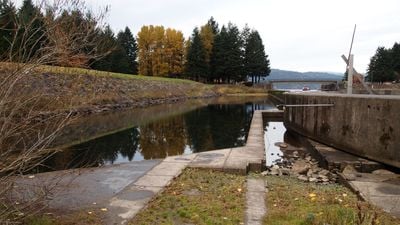
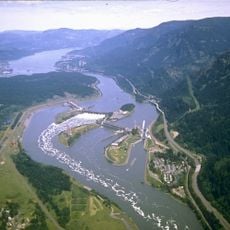
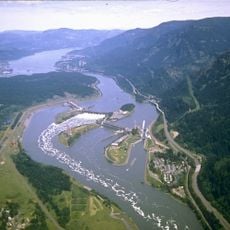
Cascade Locks and Canal is a historic waterway structure along the Columbia River featuring two lock chambers built into solid rock. The system manages water levels through a series of gates that allow vessels to navigate safely through the area.
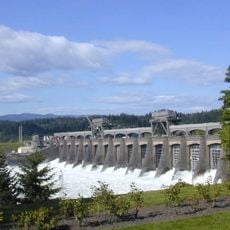
Studies for a canal at the Cascades began in 1875, but interest faded when the Oregon Railroad and Navigation Company reached The Dalles. Congress allocated funds in 1893, and the locks opened on 5 November 1896, built by contractors Ball and Platt of New York. The project cost $3,891,536.83 and took nearly 20 years, delayed by storms, snow and high water. The Bonneville Dam made the locks obsolete in 1938.
The locks let steamboats bypass the Cascades Rapids, opening a route from the lower Columbia to The Dalles. The nearby settlement of Cascade Locks grew from about 100 residents in 1880, alongside some 350 lock workers, to around 550 by 1900, with salmon fishing as a main source of income.
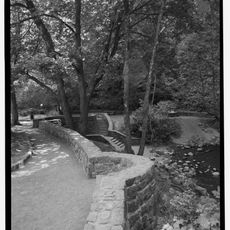
The site is easily accessible with clearly marked walkways and observation areas overlooking the structures. Informative signs and displays throughout the park help explain how the system worked.
The lock gates stood 90 feet high and 56 feet wide, built to handle a river whose level swings 55 feet between high and low water. Three graduated gate sets were installed, but only two were used at once: when rising water drowned the lower gates, they were swung open and the upper sets took over the lift.
The community of curious travelers
AroundUs brings together thousands of curated places, local tips, and hidden gems, enriched daily by 94,039 contributors worldwide.