Marble Mountain-Trout Creek Hill, Shield volcano in Skamania County, Washington, United States
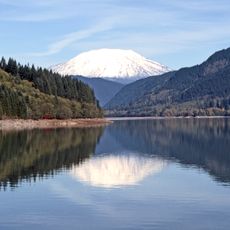
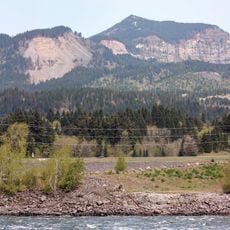
Marble Mountain-Trout Creek Hill is a volcanic field in the Cascade Mountains of southern Washington, United States, southeast of Mount St. Helens. Its vents include Trout Creek Hill, a small basaltic shield volcano, and West Crater, a small andesitic lava dome with associated lava flows. The volcanic zone stretches about 20 km northwest to southeast, with basalts and some andesites.
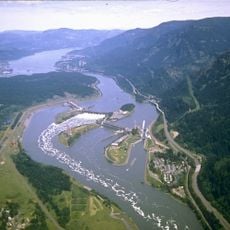
The Marble Mountain-Trout Creek Hill field began its volcanic activity about 340,000 years ago, when Trout Creek Hill, a small basaltic shield volcano, produced a lava flow that ran 20 km southeast and dammed the Columbia River for a short time. The field's latest activity is dated to about 8,000 years before present. West Crater, a small andesitic lava dome with associated flows, lies in the field, which stretches roughly 20 km northwest to southeast in the Cascade Range southeast of Mount St. Helens.
The field lies southeast of Mount St. Helens in the Cascade Range, and its vents are grouped in a northwest-southeast zone about 20 km long. The rocks are mostly basalt, sometimes followed by andesite, as at West Crater. The Global Volcanism Program lists the field for visitors checking its eruptive record.
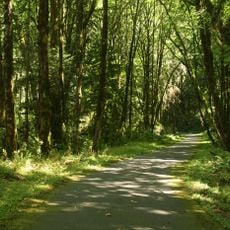
The volcanic area can be reached via roads through Gifford Pinchot National Forest with trails to explore including the Pacific Crest National Scenic Trail. Access is available year-round, though conditions vary by season and weather.
The field's two named vents differ in composition: Trout Creek Hill is a basaltic shield volcano, while West Crater is a small andesitic lava dome with associated flows. The volcanic zone stretches about 20 km northwest to southeast in the Cascade Range, southeast of Mount St. Helens.
The community of curious travelers
AroundUs brings together thousands of curated places, local tips, and hidden gems, enriched daily by 94,630 contributors worldwide.