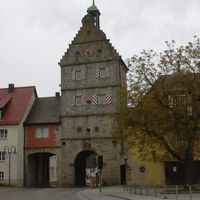
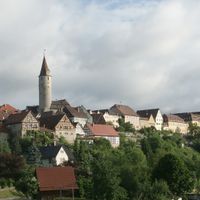
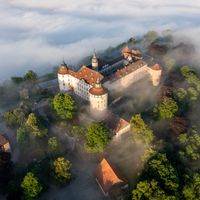
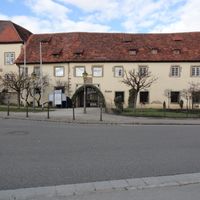
Landkreis Schwäbisch Hall, Administrative district in northeastern Baden-Württemberg, Germany
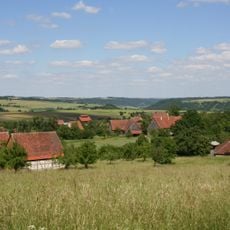
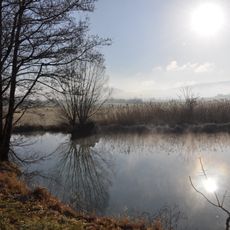
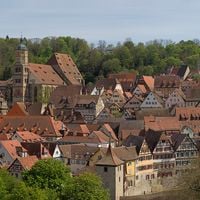
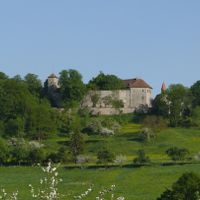
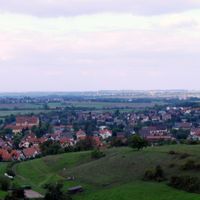
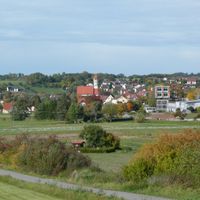
Landkreis Schwäbisch Hall is a rural district in northeastern Baden-Württemberg covering 1,484 square kilometers (573 square miles) where the Jagst and Kocher rivers flow through the Hohenlohe plain. The landscape is shaped by these waterways and the gentle terrain typical of this region.
The district was created in 1803 when the free imperial city of Schwäbisch Hall merged with Württemberg, and it underwent major restructuring in 1973 when it combined with Crailsheim district. These administrative changes shaped the area into its present form.
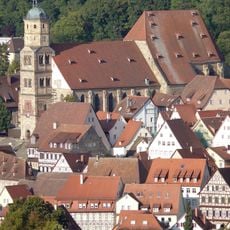
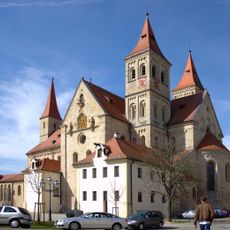
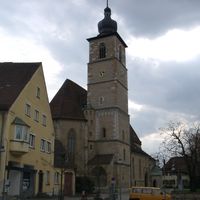
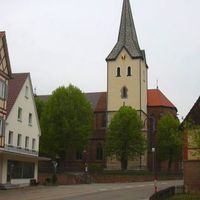
The district's main town features a Gothic church with an elaborate front staircase that becomes an open-air theater stage during summer months. This blend of religious architecture and contemporary performances shapes how locals and visitors experience the town today.
The area has good road connections through multiple highways that make it easy to navigate by car throughout the district. The rural character means planning ahead helps if you want to visit several towns, but driving between locations is straightforward.
Natural salt springs throughout the territory brought medieval wealth and prosperity that shaped settlement patterns and commerce. This mineral-rich heritage remains embedded in the local economy and identity of several towns today.
The community of curious travelers
AroundUs brings together thousands of curated places, local tips, and hidden gems, enriched daily by 91,786 contributors worldwide.