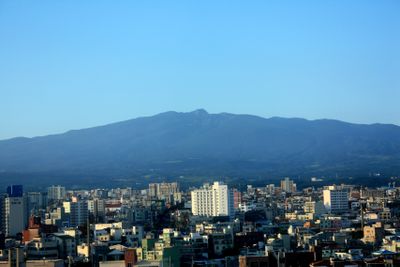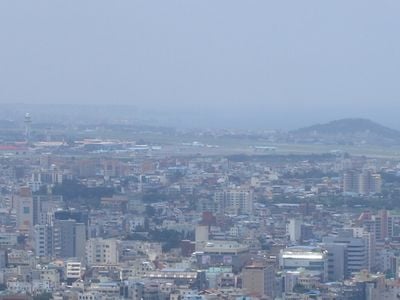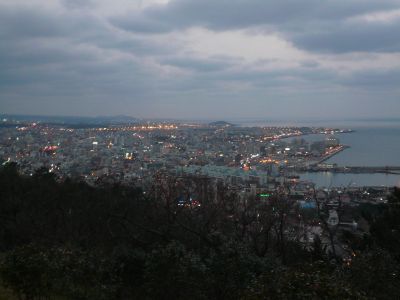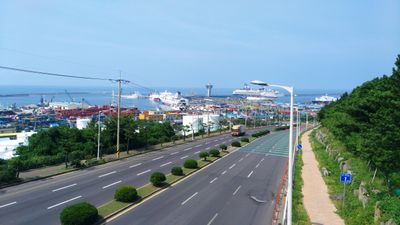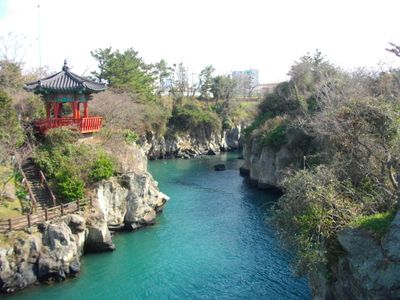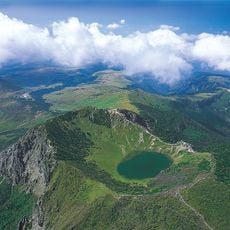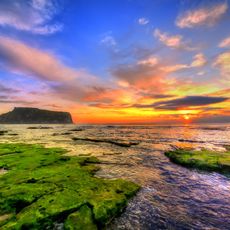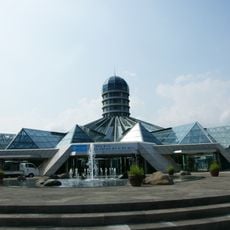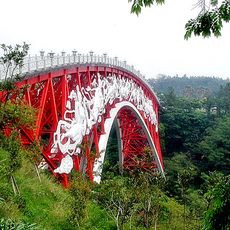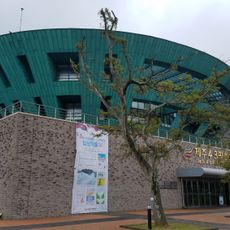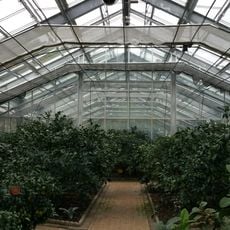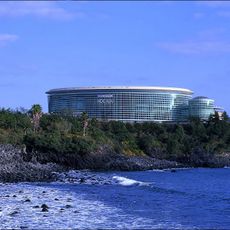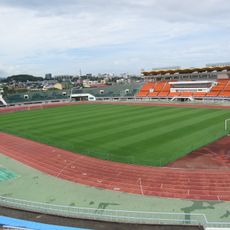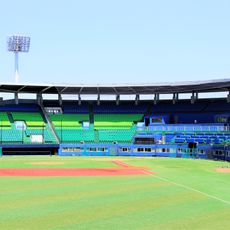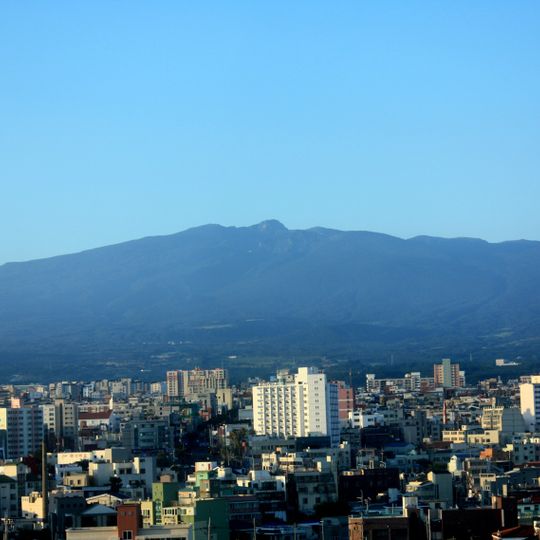
Jeju, Administrative capital on Jeju Island, South Korea.
Jeju is an administrative city on the northern part of Jeju Island in Jeju Province, South Korea, stretching along the coast and serving as the economic center of the island. The city combines modern high-rises and shopping districts with older residential neighborhoods where traditional construction using lava stone remains visible.
The settlement developed from the 15th century as the administrative seat of the island under the Joseon dynasty and remained a small port town for centuries. After the establishment of the independent Jeju Province in 1946, the town grew rapidly and was expanded into the official administrative center during the 1950s.
The old town around the Dongmun Market area shows low houses with black lava stone walls and narrow lanes where local vendors sell fresh fish and regional specialties. Many residents speak the Jeju dialect alongside Korean, which differs sharply from mainland speech and sounds almost incomprehensible to visitors from Seoul.
The international airport sits centrally in town and offers frequent connections to the mainland, while the port area provides ferry links to other Korean harbors. Most attractions and hotels are located along the coastal road, which is easy to explore on foot or by public bus.
The flight route between this airport and Seoul ranks as the busiest in the world, with over 60,000 flights per year and often more than 100 daily connections. Despite this high frequency, the flight takes only about an hour and is used mainly by domestic travelers visiting the island for short holidays.
The community of curious travelers
AroundUs brings together thousands of curated places, local tips, and hidden gems, enriched daily by 91,218 contributors worldwide.