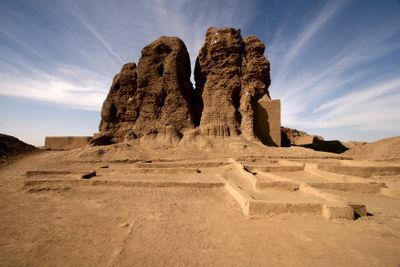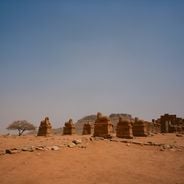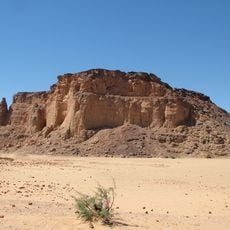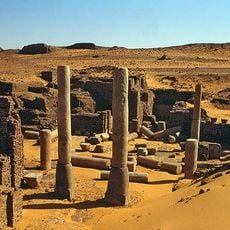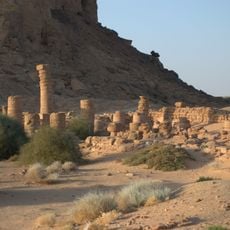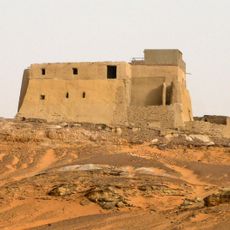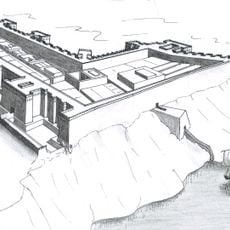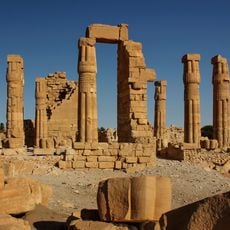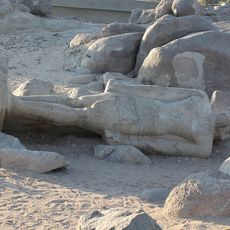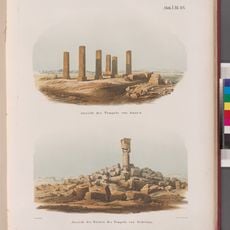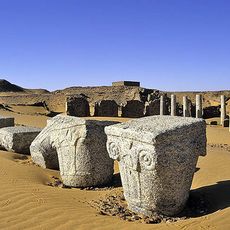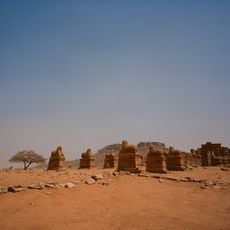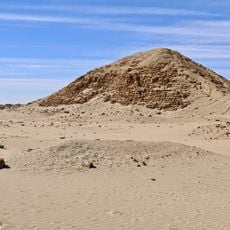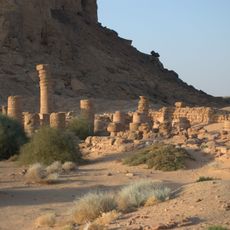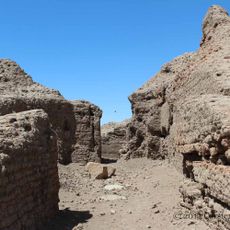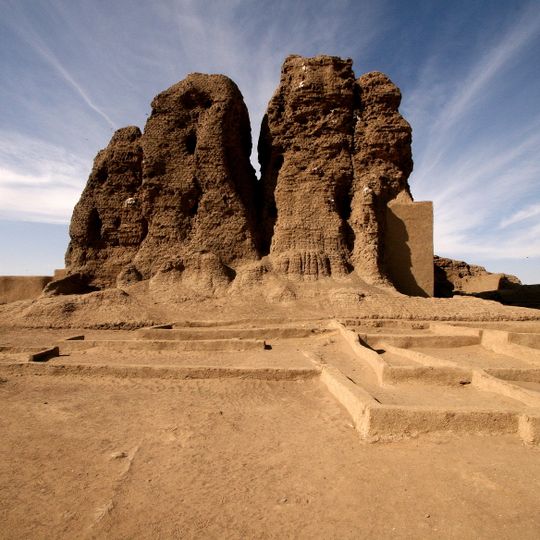
Western deffufa, Mudbrick fortification in Kerma, Sudan.
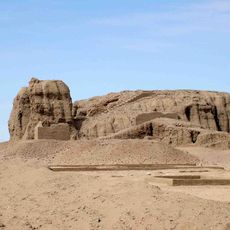
The Western Deffufa is a solid mudbrick mass about 18 metres high, built of stacked layers with thick walls. Inside, a stairway climbs through columned rooms and corridors to a platform on top, while chambers extend below ground. It stands within the archaeological site of Kerma, near the Nile.
The Western Deffufa was raised in mudbrick around 2400 BCE, in the Middle Kerma period, as a solid mass with internal chambers and stairways rather than a fortification. Kerma was the capital of an independent kingdom that traded with Egypt and controlled the Third Cataract of the Nile. Egyptian pharaohs of the New Kingdom conquered Kush around 1500 BCE, and the building later served as a Christian church before its ruins were excavated in the 20th century.
The Western Deffufa is a mudbrick fortification, not a temple. Its name comes from the Nubian word for the massive mudbrick structures of Kerma; the western one stands near the royal cemetery with its great tumuli. Visitors can still see the buttressed outer walls and the narrow chambers inside.
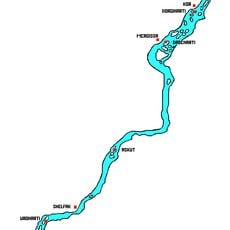
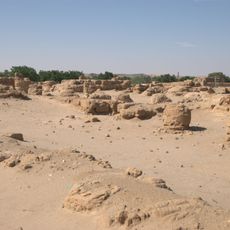
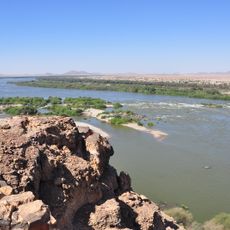
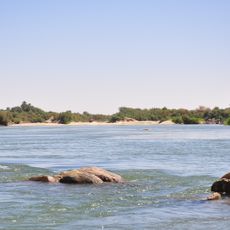
The Western Deffufa stands about 2 km east of the Nile at Kerma, reached by road from the town of Kerma; the site is open ground with sand and uneven mudbrick, so sturdy shoes help. The interior staircases and galleries are narrow and unlit, and the upper platform is reached on foot.
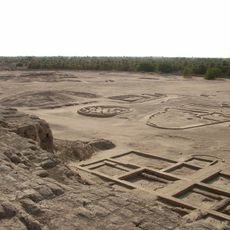
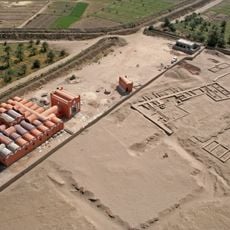
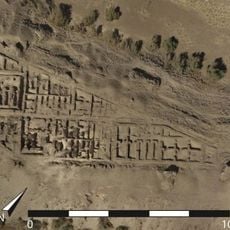
Excavations revealed that the Kerma civilization had organized streets and distinct residential districts, showing sophisticated urban planning rarely seen elsewhere in this ancient period. This suggests the structure was part of a well-developed city rather than an isolated religious site.
The community of curious travelers
AroundUs brings together thousands of curated places, local tips, and hidden gems, enriched daily by 94,219 contributors worldwide.