Jabal Hafit, Mountain on the UAE–Oman border, Emirate of Abu Dhabi
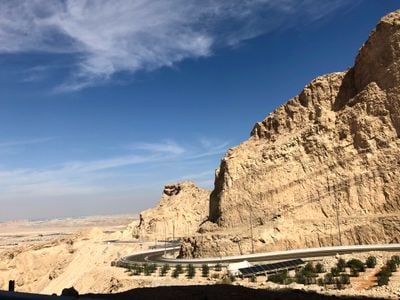
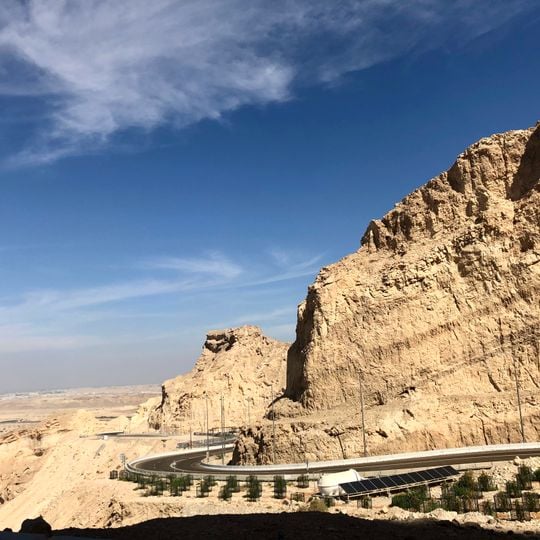
Jabal Hafit is a mountain on the border between Abu Dhabi and Oman, rising through layers of pale limestone and accessed by a narrow road with many switchbacks. The pavement winds along the slope and ends at a height where the oasis city of Al Ain and the surrounding plains come into view.
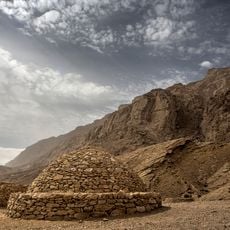
The mountain gives its name to the Hafit Period of the Bronze Age (3200–2600 BCE), after more than 500 beehive tombs found at its foothills, first discovered in 1950 and excavated by a Danish archaeological mission in 1959. The tombs held pottery, copper tools, bronze ornaments, pearls and Mesopotamian ceramics, evidence of early trade. The mountain and its tombs are listed within the UNESCO World Heritage site "Desert Park and Tombs".
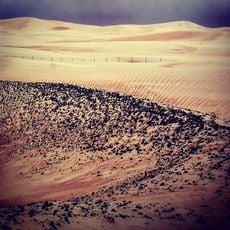
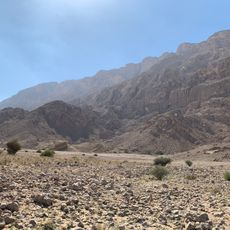
The name comes from an Arabic word meaning empty mountain, reflecting the bare slopes that glow pale under sunlight. Visitors today see the dry rock faces and narrow switchbacks cutting through the stone, while hikers and cyclists use the steep bends for early morning or evening rides.
Driving the winding road takes around half an hour at a moderate pace, while cyclists need considerably longer depending on fitness. Those who go up early in the morning or late in the evening find cooler temperatures and better views across the plain, while midday sun beats down hard on the rocks.
Inside the mountain lies a branching cave system carved by water over thousands of years, showing formations at different stages of growth. Geologists find marine fossils in the rock faces, proving the area lay under the sea millions of years ago.
The community of curious travelers
AroundUs brings together thousands of curated places, local tips, and hidden gems, enriched daily by 92,571 contributors worldwide.