Christmas Island National Park, Nature reserve in Christmas Island, Australia.
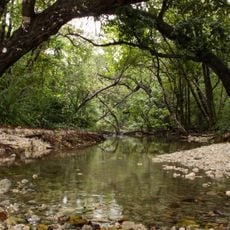
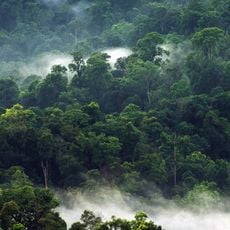
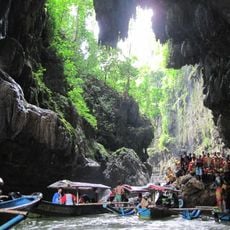
Christmas Island National Park covers about 85 km², or 63% of Christmas Island, an Australian territory in the Indian Ocean. It is an uplifted limestone cap over volcanic andesite bedrock, with sea cliffs up to 60 m high, stepped terraces, rock platforms and pools, and a fractured limestone cave system, some caves water-filled. Its boundaries extend 50 m beyond the low water line, taking in 46 km of the island's 73 km shoreline.
Phosphate mining in the 1960s moved into the island's western forests, raising concern for Abbott's booby. A 1974 government committee examined mining's environmental impact and recommended a conservation area. The national park was proclaimed on 21 February 1980 under the National Parks and Wildlife Conservation Act 1975, initially covering the south-west corner, then extended in 1986 and 1989 to most of the rainforest.
The island's isolation has produced at least 225 endemic animal species, and ten of its more than 100 bird species are endemic, including the Abbott's booby and Christmas Island frigatebird. The park's name comes from its discovery on Christmas Day 1643. Since 2000 a baiting programme has cleared yellow crazy ants from about 95% of the island, helping stabilise the Christmas Island imperial pigeon and Christmas hawk-owl.
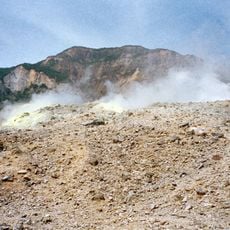
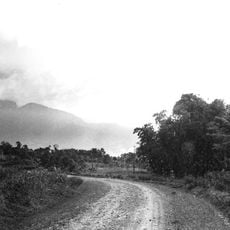
The park covers about 63% of the island, roughly 85 km², and its boundary runs 50 m beyond the low water line along 46 km of the 73 km shoreline. Access is by the island's roads; the terrain is limestone with fractured rock and cave systems, and the soil dries out in the dry season. The wet season runs from December to April, when rain affects walking conditions.
The park is known for the annual migration of over 100 million red crabs moving from forest to ocean. This synchronized mass movement is a rare natural event that visitors can witness firsthand.
The community of curious travelers
AroundUs brings together thousands of curated places, local tips, and hidden gems, enriched daily by 94,514 contributors worldwide.