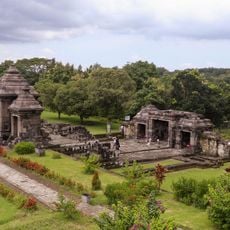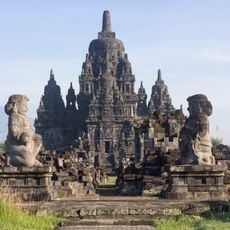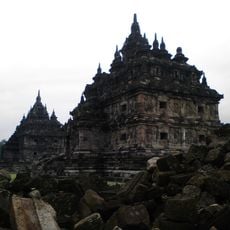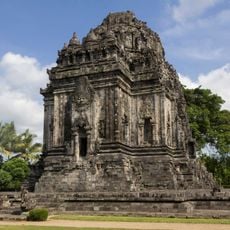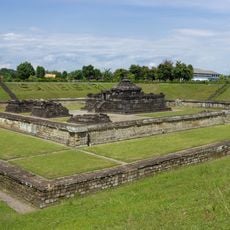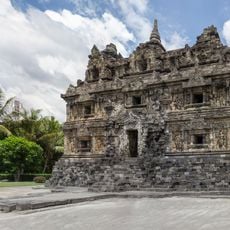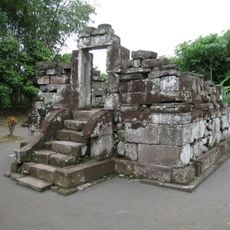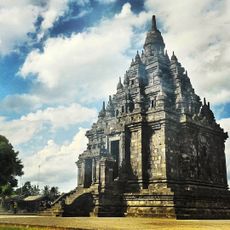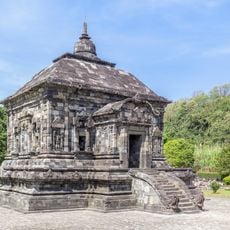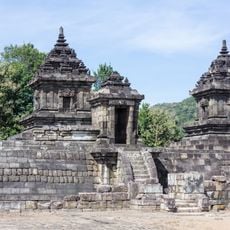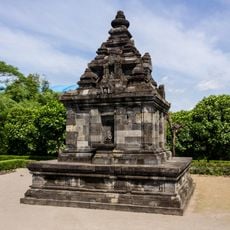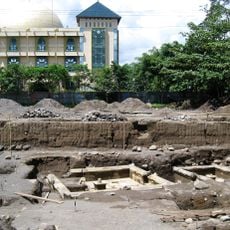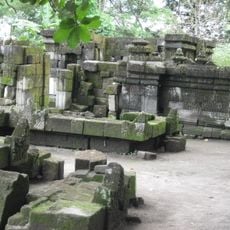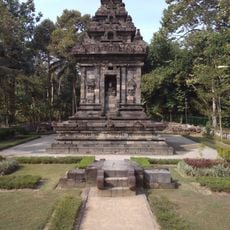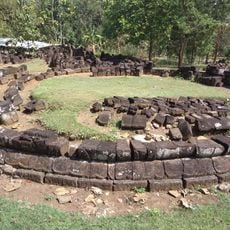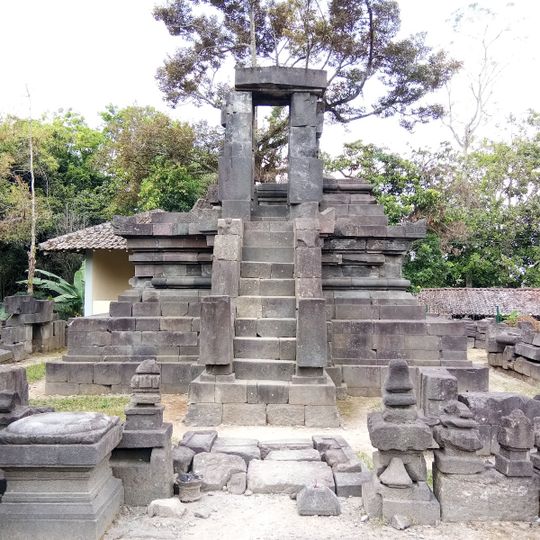
Candi Lawang, Ancient Hindu-Buddhist temple in Boyolali, Indonesia.
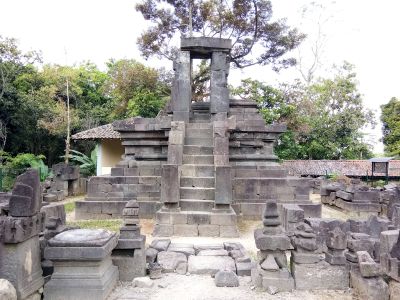
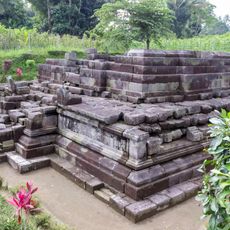
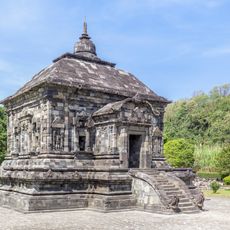
Candi Lawang is an ancient temple constructed from stone with detailed carvings and inscriptions displaying religious symbols from early Javanese architecture. The site features structured stone elements that showcase the building techniques and artistic skills of that historical period.
The temple was built in the 9th century when Hindu-Buddhist influences shaped the architectural landscape of Central Java. Its construction reflects a period when these religious traditions significantly impacted the region's cultural development.
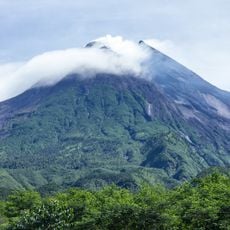
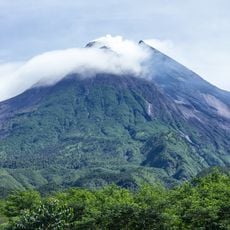
The name Lawang means "door" in Javanese, and the site lies in Dangean hamlet, Gedangan village, Cepogo, on the eastern slope of Mount Merapi at 915 m. A yoni still sits intact in the centre of the main temple, and an inscription reading "ju thi ka la ma sa tka" is carved on the door threshold. An eight-armed Durga statue found here is kept at the Radya Pustaka Museum in Surakarta.
Candi Lawang stands at 915 m on the eastern slope of Mount Merapi, about 25 m from Kali Gandul and 900 m from Candi Sari Cepogo. The main temple faces west; its sunken sumuran is 3.6 m deep, so watch your footing near the broken floor. The site lies in a coffee plantation area reached from Boyolali via Cepogo.
The temple was first reported in 1919 by P.A. Hadiwijaya, head of the Sukabumi plantation at Paras, who noted a temple buried in the middle of a coffee plantation; excavation followed a year later. A yoni still stands intact in the centre of the main temple, and an inscription reading "ju thi ka la ma sa tka" is carved on the door threshold.
The community of curious travelers
AroundUs brings together thousands of curated places, local tips, and hidden gems, enriched daily by 93,407 contributors worldwide.