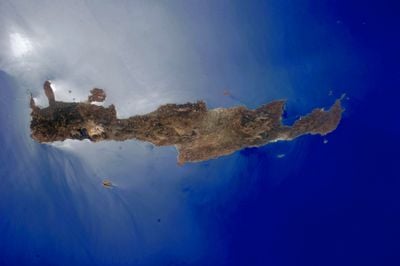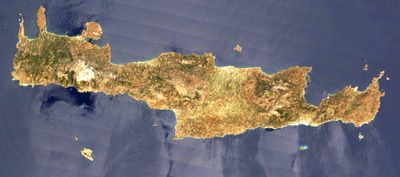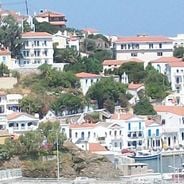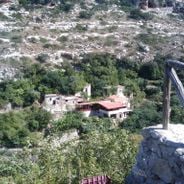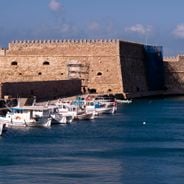
Crete, Mediterranean island in Greece
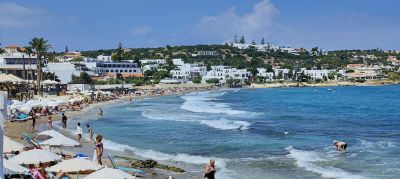
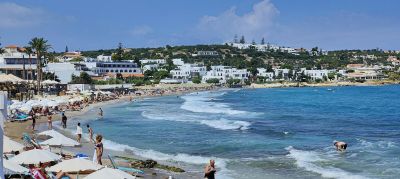
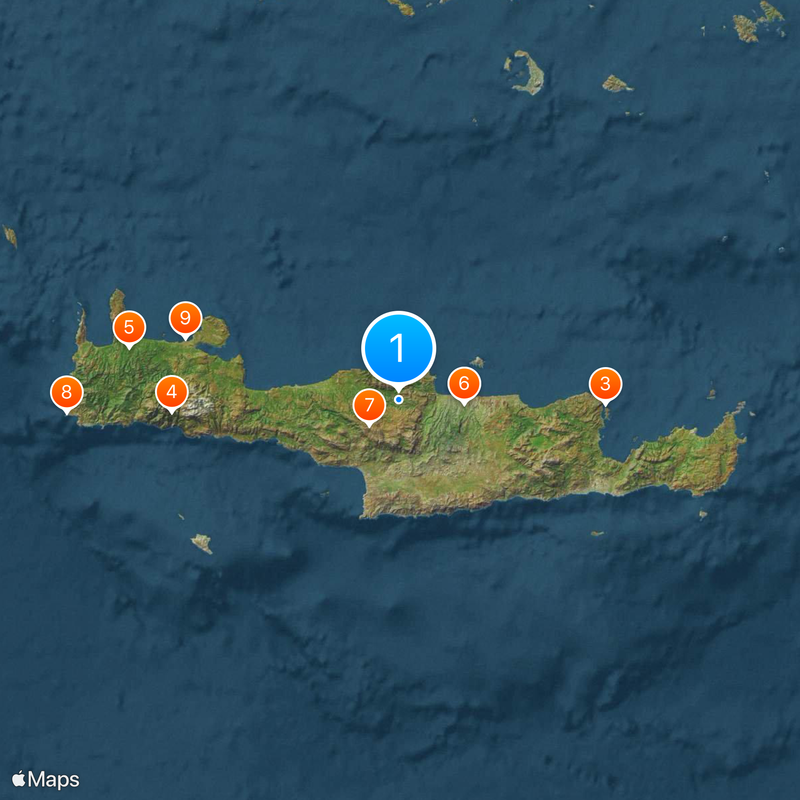
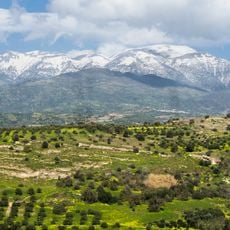
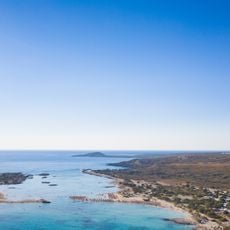
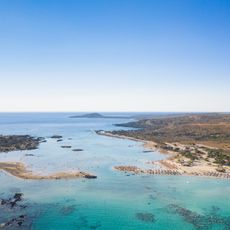
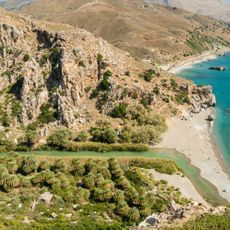
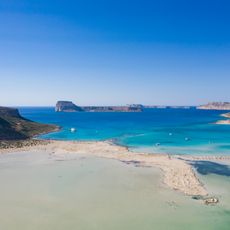
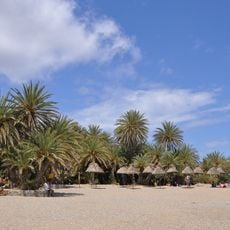
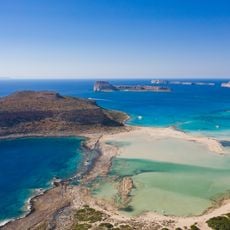
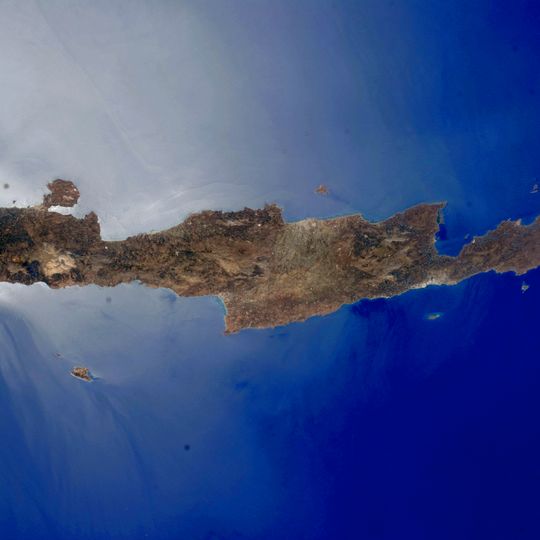
Crete is the largest island in Greece, stretching roughly 260 kilometers from east to west between the Aegean Sea and the Libyan Sea, with peaks rising to 2456 meters. The coastline shifts between sandy beaches, steep cliffs, and small coves, while inland you find mountain ranges, high plateaus, and deep gorges cutting through the terrain.
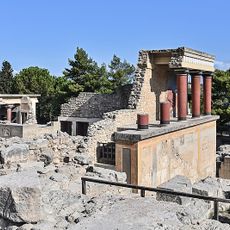
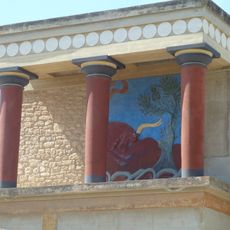
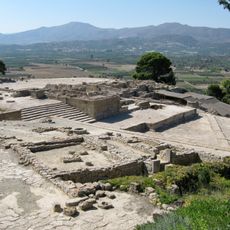
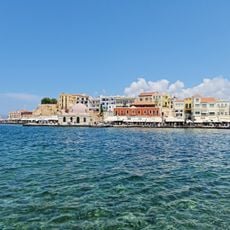
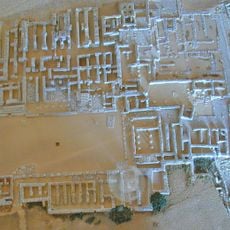
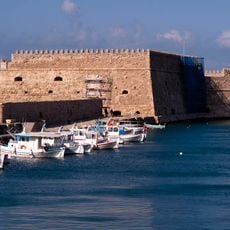
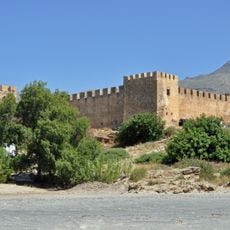
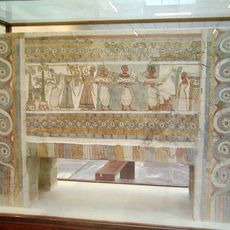
The Minoan civilization arose here around 2700 BC and built the first advanced society in Europe, with the palace at Knossos serving as its administrative heart. Later, Byzantine, Venetian, and Ottoman rule shaped the island until it officially joined Greece in 1913.
You hear the Cretan lyra at village festivals and family gatherings, often paired with traditional dances that locals still perform regularly. Taverns serve food rich in olive oil and wild herbs that grow across the hills, ingredients that shape every meal on the island.
The island divides into four main regions: Heraklion, Rethymno, Chania, and Lasithi, with Heraklion serving as the main transport hub through its international airport. Roads connect the coastal towns to each other, while mountain routes tend to be winding and can close during winter months.
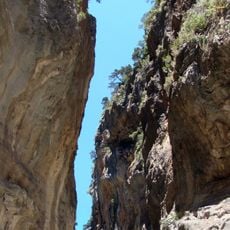
The Samaria Gorge cuts roughly 16 kilometers (10 miles) through the White Mountains and ranks as the longest canyon in Europe, home to several plant species found nowhere else. At its narrowest point, the gorge squeezes down to just a few meters between the rock walls.
The community of curious travelers
AroundUs brings together thousands of curated places, local tips, and hidden gems, enriched daily by 92,726 contributors worldwide.