See the monuments around you in AROpen chests in the app
Around Us is built for your phone — point your camera at the streets and discover the monuments and places around you in augmented reality.Around Us is built for your phone — chests unlock when you walk, explore and capture nearby places.
The neo-Gothic style of the 19th century revived medieval shapes in cathedrals, parliaments, and universities across Europe, the Americas, Asia, and Oceania.
This collection presents neogothic architecture from the 19th and early 20th centuries, when architects across Europe, the Americas, Asia and Oceania revived medieval building forms. The movement began in Britain and spread worldwide, employing pointed arches, flying buttresses, ribbed vaults and stone spires. This architectural language was used for churches, universities, government buildings and railway stations.
The collection includes religious structures like Cologne Cathedral and Notre-Dame Basilica in Montreal, government buildings such as the Parliament Complex in Ottawa and the Palace of Westminster in London, educational institutions like the University of Glasgow Main Building, and transport hubs including St. Pancras Station in London and Victoria Terminus in Mumbai. These structures demonstrate how architects adapted medieval techniques to modern building materials and functions.
The neo-Gothic style of the 19th century revived medieval shapes in cathedrals, parliaments, and universities across Europe, the Americas, Asia, and Oceania.
This collection presents neogothic architecture from the 19th and early 20th centuries, when architects across Europe, the Americas, Asia and Oceania revived medieval building forms. The movement began in Britain and spread worldwide, employing pointed arches, flying buttresses, ribbed vaults and stone spires. This architectural language was used for churches, universities, government buildings and railway stations.
The collection includes religious structures like Cologne Cathedral and Notre-Dame Basilica in Montreal, government buildings such as the Parliament Complex in Ottawa and the Palace of Westminster in London, educational institutions like the University of Glasgow Main Building, and transport hubs including St. Pancras Station in London and Victoria Terminus in Mumbai. These structures demonstrate how architects adapted medieval techniques to modern building materials and functions.
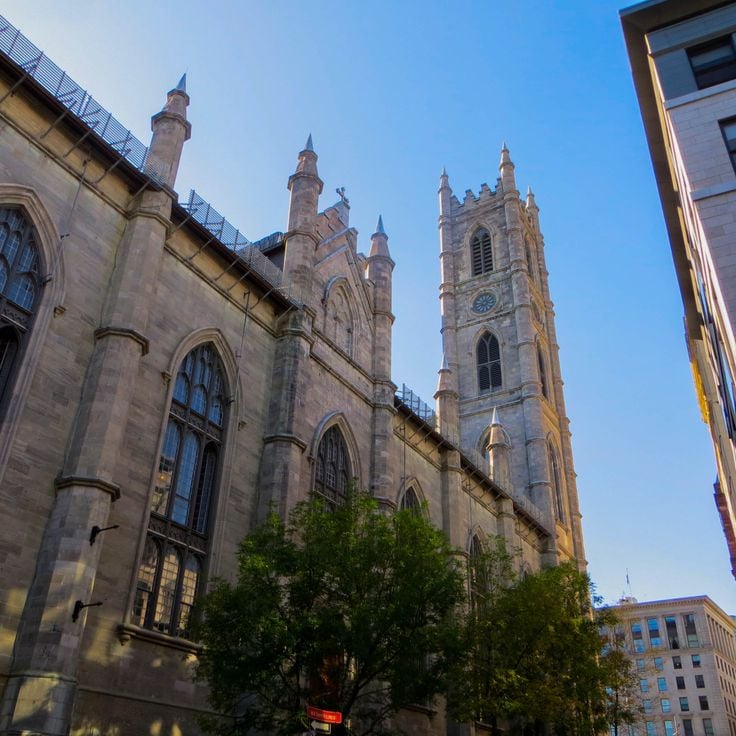
The Basilica of Notre-Dame in Montreal displays 19th-century neogothic architecture featuring pointed arches, ribbed vaults, and richly carved wooden interior elements. The colored windows date from the construction period and reflect the craftsmanship of that era. The building combines French and British influences in its design. The interior woodwork follows medieval patterns and demonstrates the technical skills of 19th-century artisans.
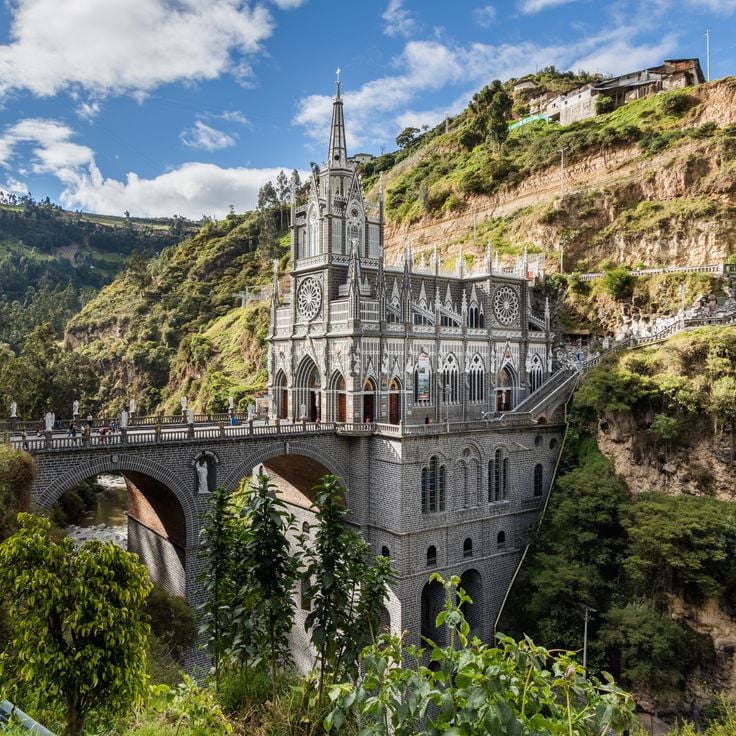
The Sanctuary of Las Lajas shows how neogothic architecture adapted to dramatic landscapes. Built between 1916 and 1949, the sanctuary stands on a bridge 130 meters (425 feet) above the Guáitara River and combines religious purpose with technical achievement. The stone structure features pointed arches, vertical buttresses, and towers that rise against the canyon. This pilgrimage site follows medieval building principles and overlooks mountain gorges.
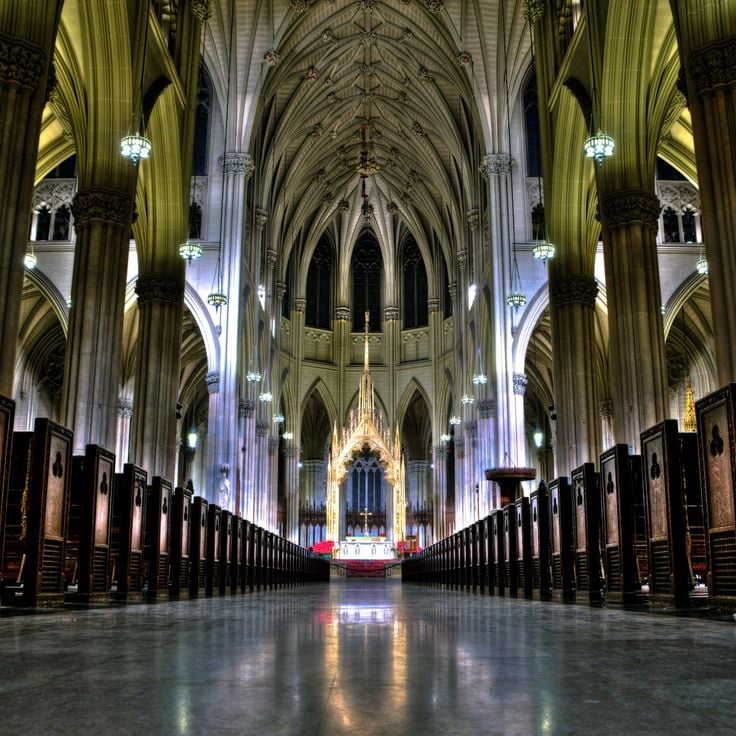
This cathedral was completed in 1879 and displays the neogothic features of its time. The facade has pointed arches and stone towers, while the interior features ribbed vaults. The building was constructed using white marble and was modeled after European cathedral designs. This cathedral serves as the seat of the Archbishop of New York and accommodates a large number of worshippers. The organ is notably large and shapes the acoustic character of the sacred space.
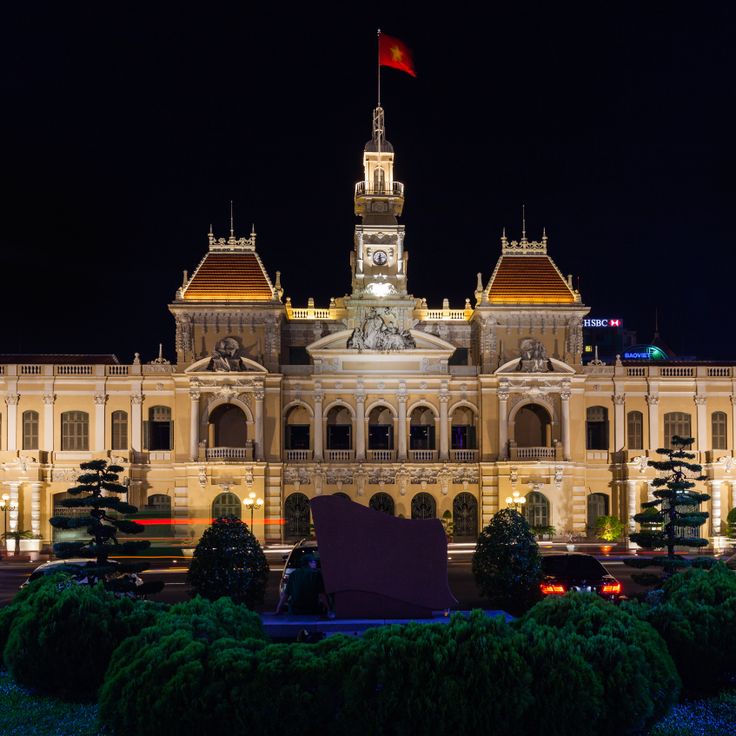
This administrative building was constructed between 1902 and 1908, blending French colonial architecture with neogothic elements such as pointed arches and decorative facade details. The Ho Chi Minh City Hall continues to serve as the seat of the city government and demonstrates the influence of European architectural movements in Southeast Asia during the French colonial period. The symmetrical facade features a central clock tower, while interior spaces incorporate stone vaults and wooden paneling. The building stands at the northeast end of Nguyen Hue Boulevard.
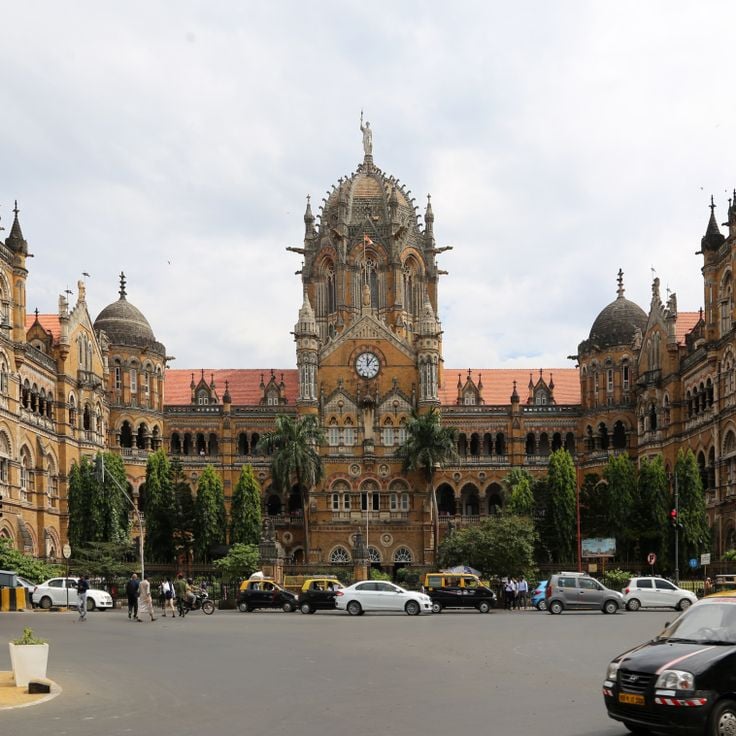
The Victoria Terminus in Mumbai represents neogothic architecture through its blend of British and Indian architectural elements. Built between 1879 and 1887, the railway station features pointed arches, ribbed vaults, and stone spires that are characteristic of the gothic style. The structure served as a major hub of the Indian railway network during the British colonial period. The building demonstrates how medieval architectural forms were adapted to functional transport buildings of the 19th century. The station integrates traditional gothic elements with decorative details from Indian architectural traditions.
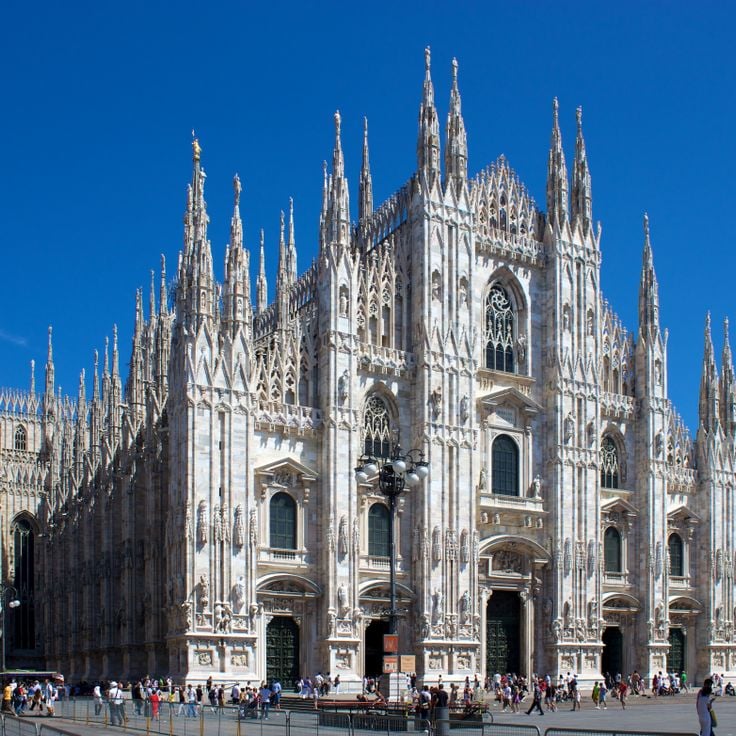
Milan Cathedral stands at the center of the city and shows how gothic forms remained alive across centuries. Construction began in the 14th century, but the facade received its neogothic appearance in the 19th century under Napoleon. The building measures about 157 meters in length and contains several thousand statues, over a hundred spires, and detailed flying buttresses. This blend of medieval elements and neogothic additions makes the cathedral one of Europe's largest religious buildings.
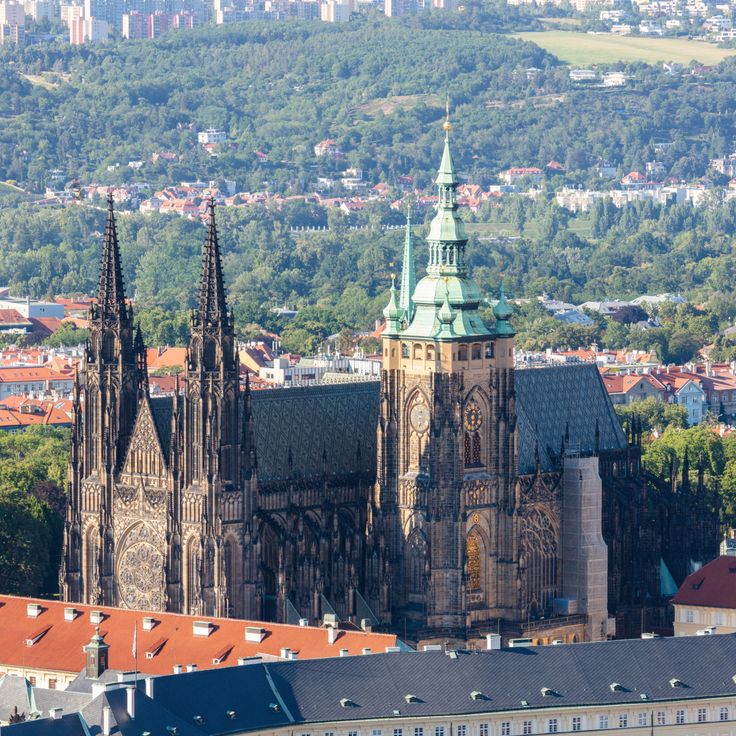
Prague Castle features Neo-Gothic expansions and renovations from the 19th and early 20th centuries, particularly at St. Vitus Cathedral. These buildings use pointed arches, ribbed vaults, and stone carvings that revive medieval architectural traditions. The castle serves as the seat of the Czech government and holds collections related to Bohemian history.
The United States Capitol combines classical and neo-Gothic architectural elements added during several renovation phases in the 19th century. The Capitol's dome was constructed between 1855 and 1866 according to plans by Thomas U. Walter. The interior features neo-Gothic details such as pointed arches and ribbed vaults in several spaces that appeared during the Victorian-era expansions. These details reflect the medieval revival architecture that characterized 19th-century government buildings in America.
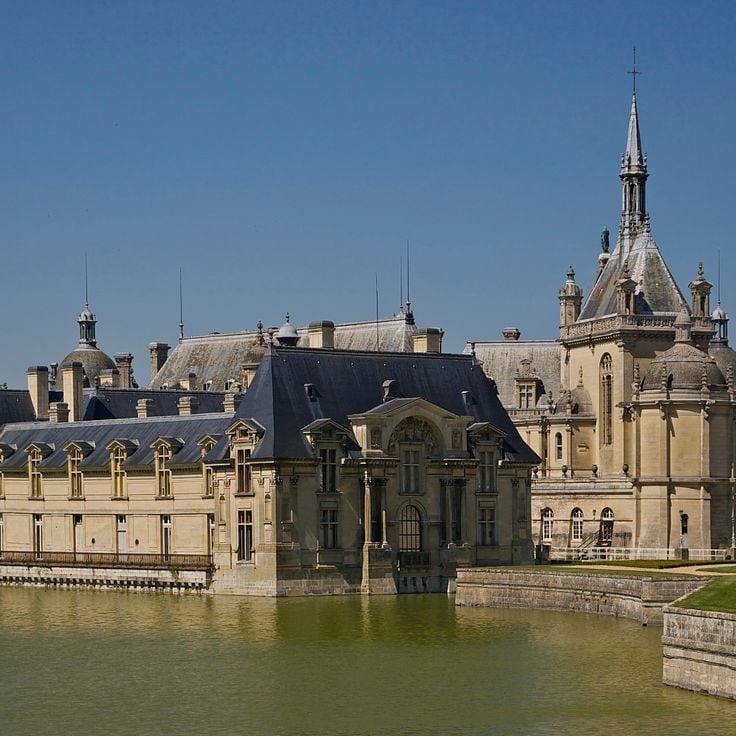
Château de Chantilly, located northeast of Paris, houses the Musée Condé with an important collection of paintings, including works by Raphael, Poussin, and Ingres. The château consists of two buildings from different periods: the Grand Château from the 16th century and the Petit Château, rebuilt in the 19th century in the Neo-Gothic style. The architecture features characteristic elements such as pointed arches, turrets, and decorative stonework. The estate also includes French and English gardens, as well as historic stables that now house an equestrian museum.
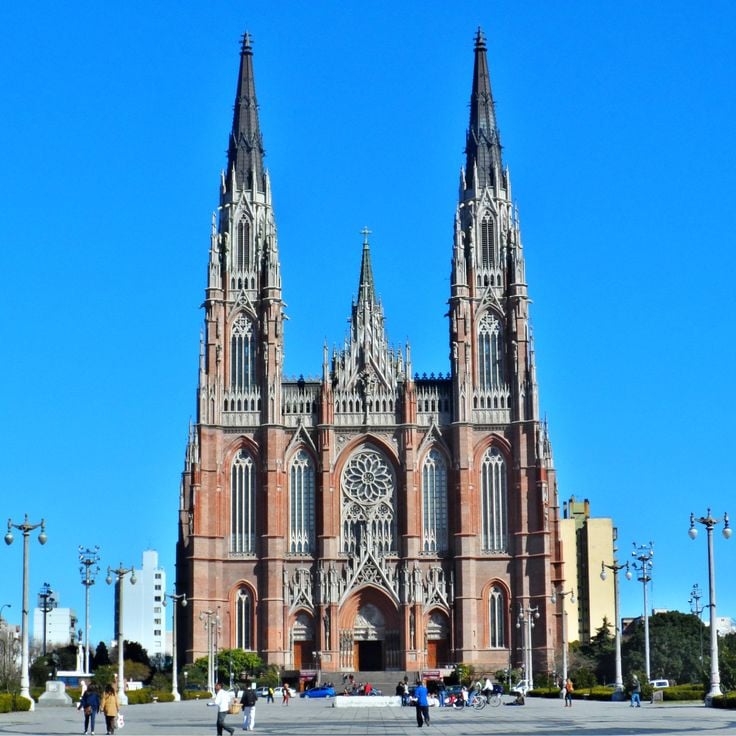
This cathedral in La Plata was completed in 1932 and displays Neo-Gothic forms with two facade towers rising 120 meters high. The building was constructed as the main church for La Plata, a city founded in 1882 as the new capital of Buenos Aires Province. Architects Ernesto Meyer and Pedro Benoit began construction in 1885 and continued it over several decades. The interior follows a Latin cross floor plan with five aisles and a crossing crowned by a dome. The facade shows pointed arches and rose windows, while the interior contains ribbed vaults and stained glass windows depicting biblical scenes.
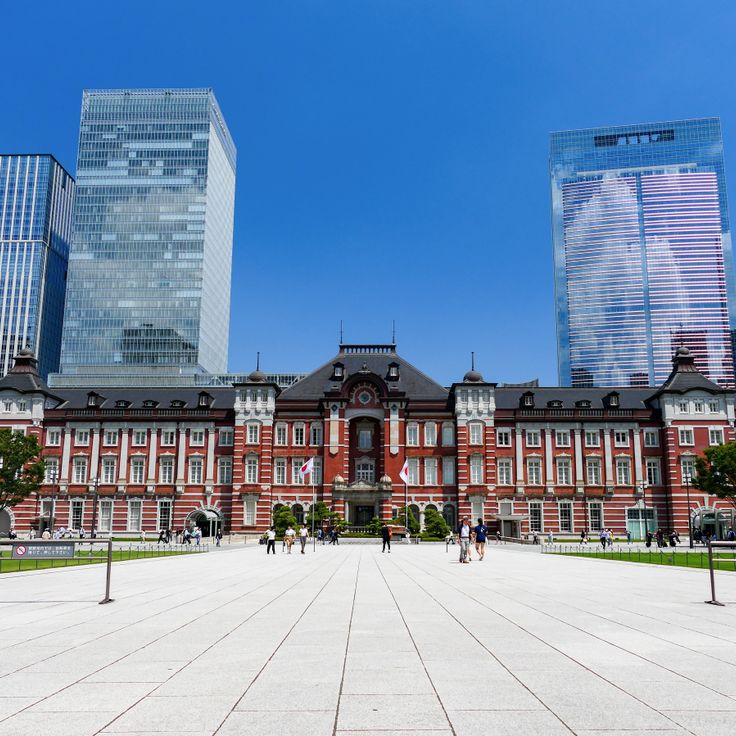
Tokyo Station displays rare European-inspired architecture from early 20th-century Japan. The red brick facade and symmetrical round arches of Tokyo Station show clear influences of the Neo-Renaissance style that became popular during Japan's Meiji era in the capital city. The copper roofs and horizontal articulation of the three-story building reflect one nation's effort to blend Western construction techniques with local materials. The station underwent complete restoration between 2007 and 2012 after suffering severe wartime damage, bringing the building back to its original 1914 appearance. The lateral domes were reconstructed during this period following historical plans.
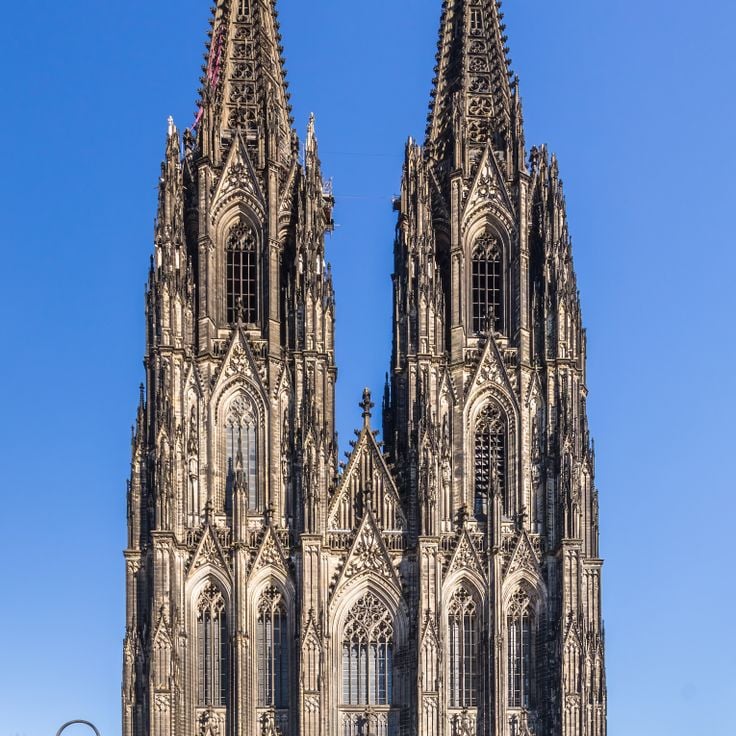
Cologne Cathedral is a leading example of Neogothic architecture in Germany. Its two distinctive towers rise about 157 meters above the city and shape Cologne's skyline. Construction began in 1248 following medieval plans, but the building was only completed in 1880 when the Neogothic movement revived the original design. The facade displays classic Gothic elements such as pointed arches, flying buttresses, and openwork stone spires. Inside, the three-aisled nave features ribbed vaults and slender columns. The cathedral houses the shrine of the Three Wise Men and numerous medieval windows depicting liturgical scenes.
This parliamentary complex in Canada's capital comprises three main buildings constructed of sandstone with copper roofs, embodying 19th-century neogothic architecture. The buildings display characteristic pointed arches, flying buttresses, and ribbed vaults inspired by medieval style. The central Peace Tower rises 92 meters and houses a carillon of 53 bells. The buildings serve as the seat of the Canadian Parliament and contain the chambers of the House of Commons and Senate as well as government offices.
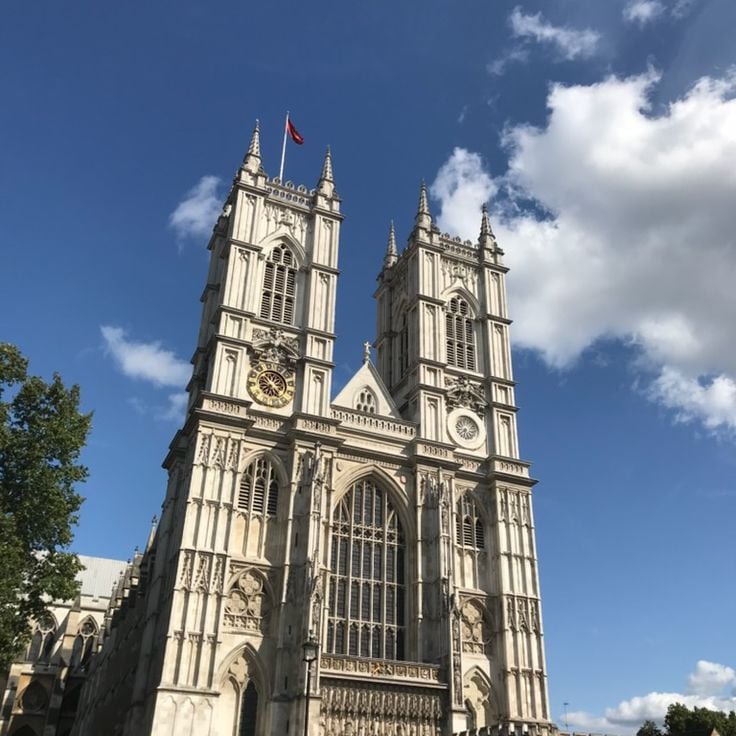
This church in London displays Gothic architecture from the 13th century and has played a central role in British history for over 900 years. The building features pointed arches, buttresses, and ribbed vaults characteristic of medieval construction. Nearly all British monarchs since 1066 have been crowned here. The church houses the tombs of monarchs as well as notable figures such as poets, scientists, and statesmen. It remains an active place of worship and is part of the UNESCO World Heritage site of the Palace of Westminster and Westminster Abbey.
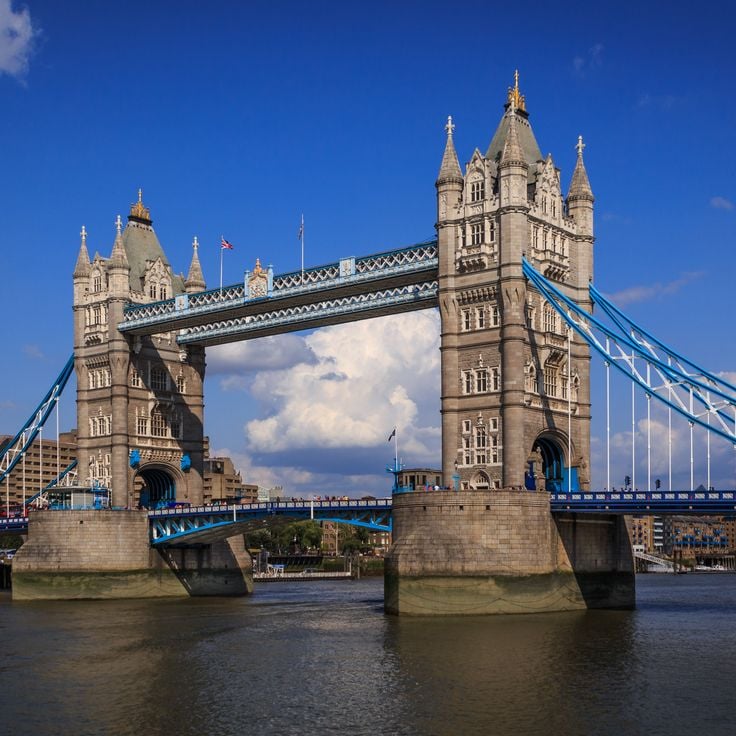
This bridge spans the Thames with two 65-meter-high towers and a hydraulic bascule mechanism that opened in 1894. The neogothic design of Tower Bridge matches the medieval architecture of the adjacent Tower of London and displays pointed arches, decorative turrets, and stone ornament. The upper walkways offer views of the river and house exhibitions about engineering history. The original steam engines that lifted the 1000-ton bascule decks have been replaced with electric motors, though the Victorian engine rooms remain accessible to visitors.
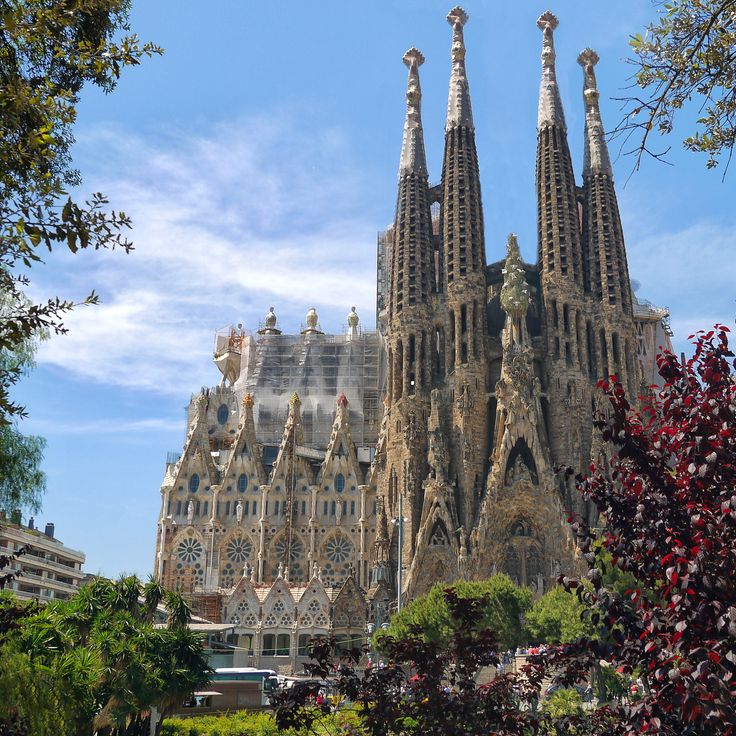
The Sagrada Familia in Barcelona is the masterwork of Catalan architect Antoni Gaudí. It combines neogothic tradition with organic forms and modernist decoration. The basilica features pointed arches, stone towers, and ribbed vaults that recall medieval cathedrals. At the same time, the structure imitates trees, bones, and natural geometry. Construction began in 1882, but Gaudí took over the project a year later and made it his life's work. The basilica has three large facades representing the Nativity, the Passion, and the Glory of Christ, along with eighteen towers.
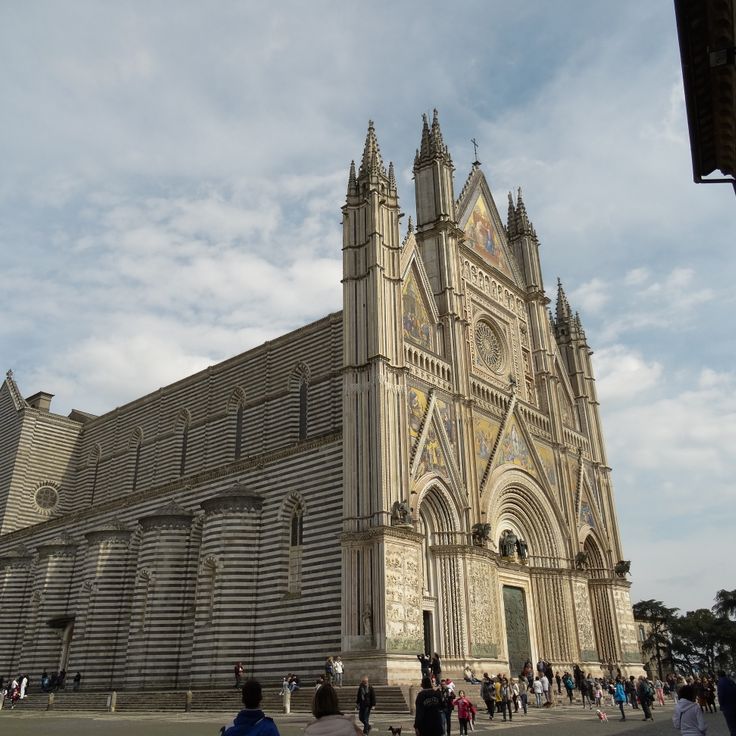
Orvieto Cathedral displays Gothic architecture with a facade composed of mosaics and reliefs that became a model for neogothic religious buildings during the revival of medieval forms in the 19th century. Construction began in the 13th century and combines pointed arches, buttresses, and ribbed vaults. The colored mosaic panels on the western facade depict biblical scenes, while the reliefs show prophets and saints. Inside are frescoes and a series of chapels that were added over several centuries.
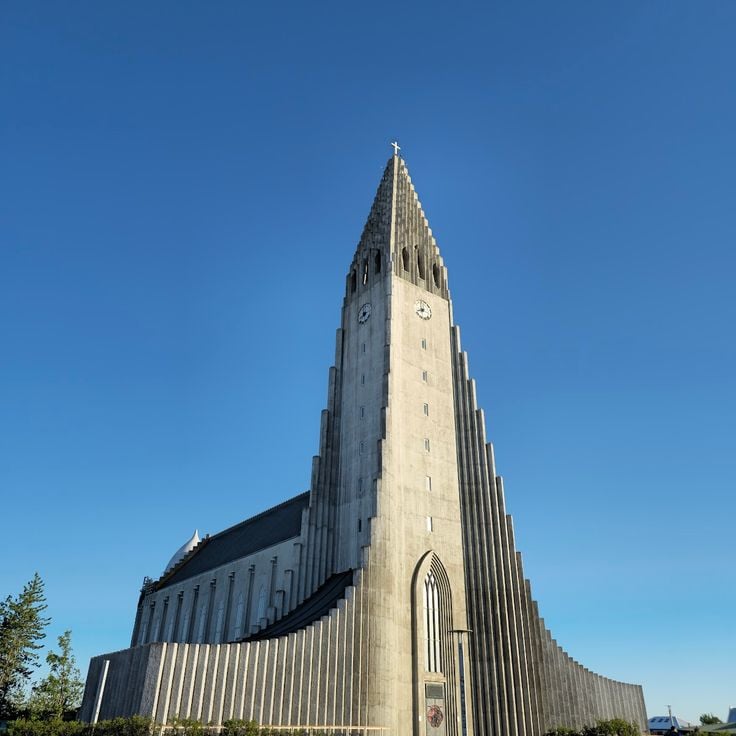
Hallgrímskirkja is a church built between 1945 and 1986 and one of Iceland's most significant examples of neo-gothic architecture. Its facade imitates the basalt columns that occur naturally in the Icelandic landscape, connecting medieval building principles with the region's geological features. The tower offers views over Reykjavik and the surrounding area. The church was named after Icelandic poet Hallgrímur Pétursson and serves as both a place of worship and a national monument.
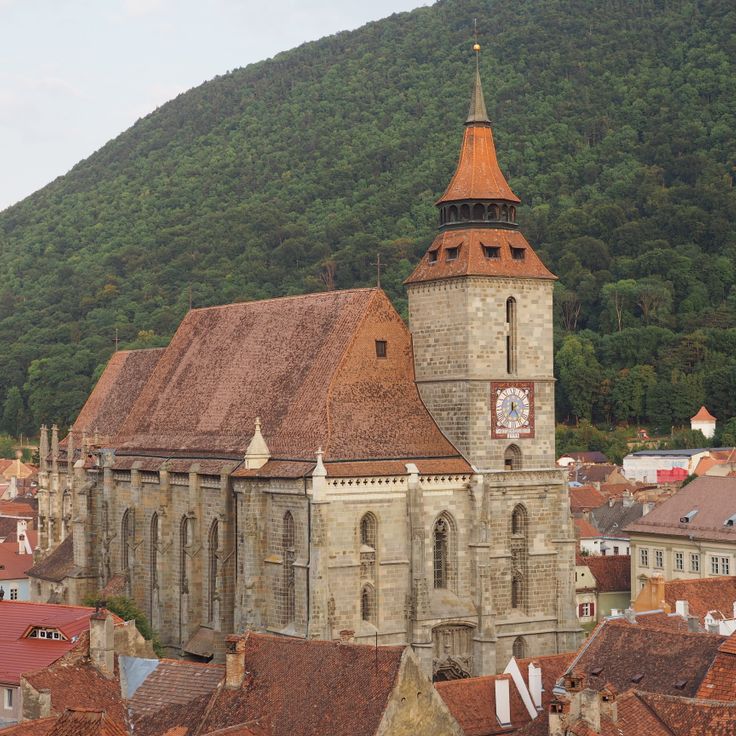
The Black Church in Brașov displays the Gothic features that later inspired 19th-century Neogothicism. Built in the 14th century with tall stone walls and colored stained glass, it serves as a historical reference point for the revival of Gothic elements such as pointed arches and ribbed vaults. The church took its name from a 17th-century fire that blackened its exterior walls. It houses an important collection of 17th-century Anatolian carpets.
This cathedral in Antwerp shows architecture in the neogothic style. A tower 123 meters (404 ft) high rises above the city. The building has pointed arches, ribbed vaults, and buttresses that are typical of the reinterpretation of medieval forms. Inside, artworks from several centuries show the development of Flemish painting. The multi-nave building combines medieval construction techniques with 19th-century craftsmanship.
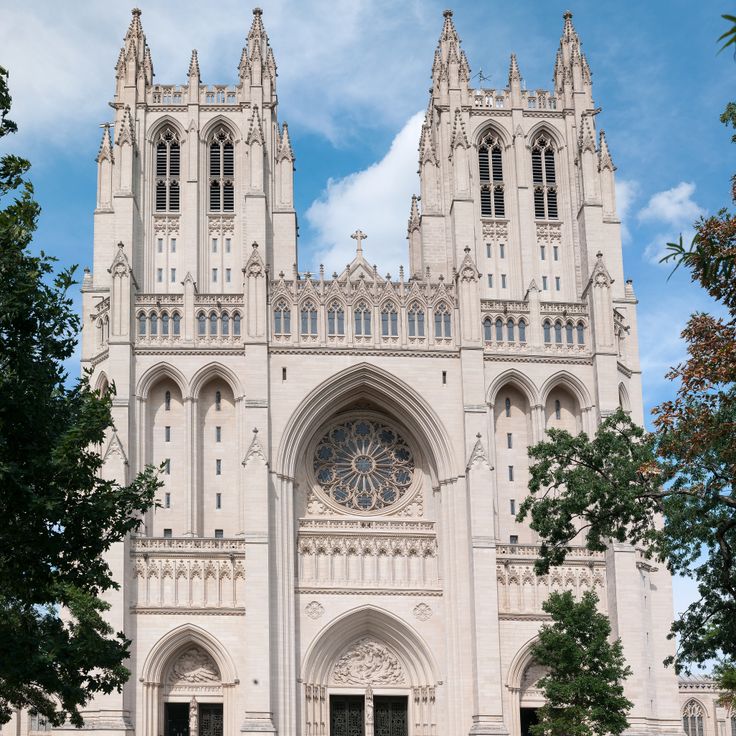
Washington National Cathedral was built between 1907 and 1990 following 14th-century medieval models and stands as one of the most significant neo-gothic structures in North America. The central tower reaches 91 meters in height, making the cathedral the highest point in the city. The architecture displays typical gothic elements including pointed arches, flying buttresses, ribbed vaults, and tracery. The building served as the national church for state funerals and important ceremonies. The cathedral sits on a hill in the northwest part of Washington and shows how American architects adapted medieval construction methods.
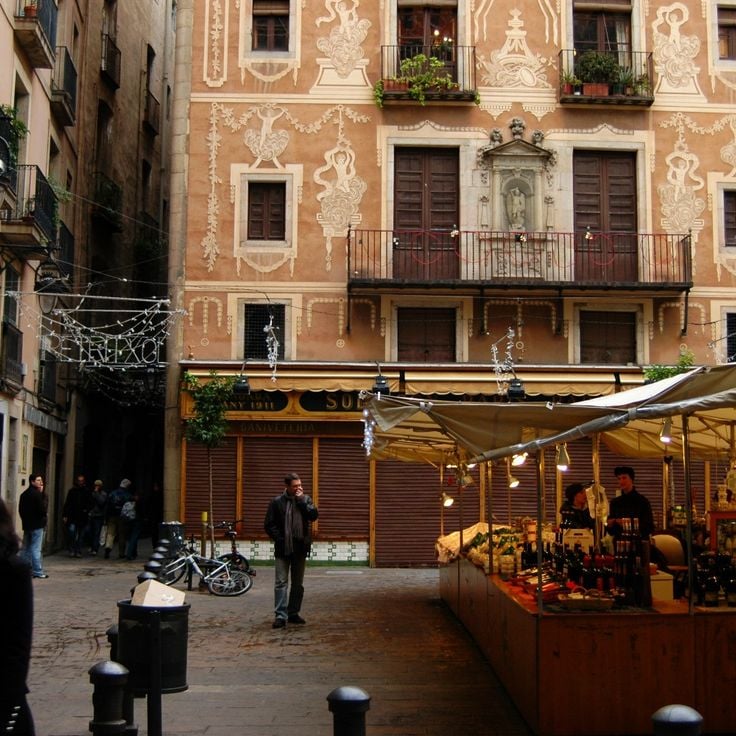
The Gothic Quarter in Barcelona is a historic neighborhood at the heart of the city that preserves the medieval urban structure. Narrow streets connect small squares where shops and cafés are located. Stone buildings from different centuries display Gothic elements such as pointed arches and buttresses. The quarter extends between La Rambla and Via Laietana and forms the oldest part of the Catalan capital. Visitors find the cathedral, the town hall, and remains of the Roman city walls there.
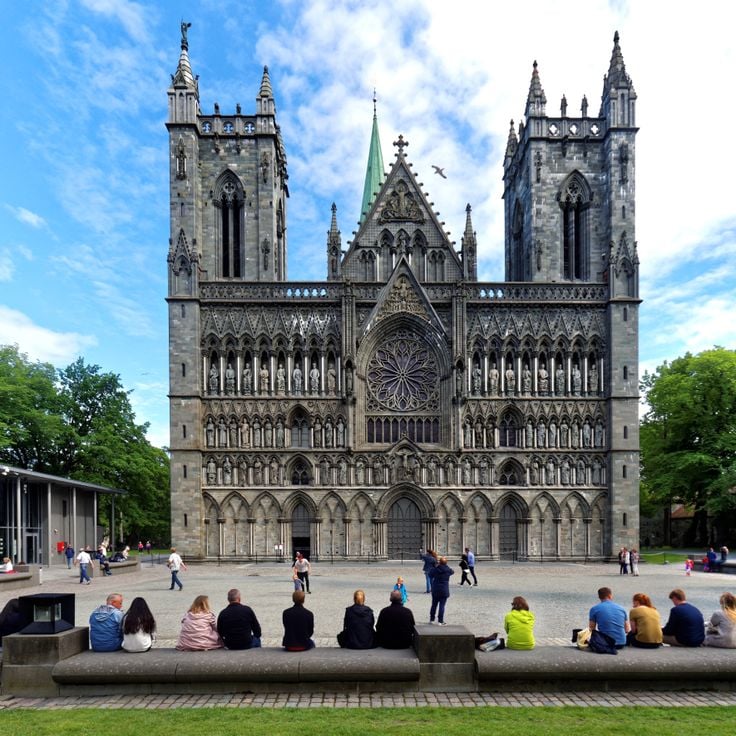
Nidarosdomen in Trondheim dates to 1070 and stands on the site where Saint King Olav was buried. The cathedral displays Norwegian stone walls with hundreds of carved figures across its western facade. You can see images of biblical saints and Norwegian kings sculpted in stone. The building combines Romanesque and Gothic forms with pointed arches, buttresses, and an octagonal choir. After several fires, the structure was extensively restored during the past two centuries while preserving its medieval core. Nidarosdomen has served as the coronation church for Norwegian monarchs for centuries and shows how architects developed Scandinavian church building practices.
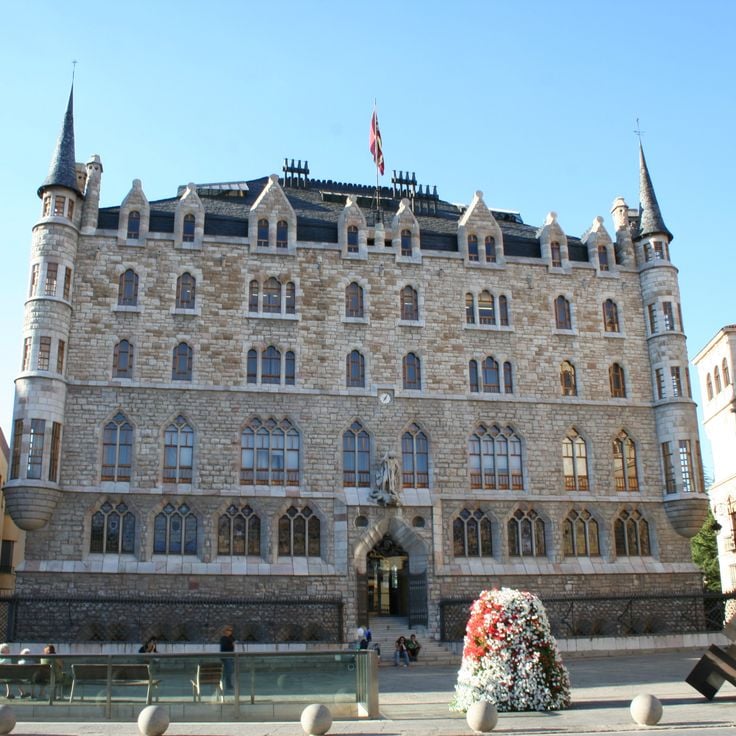
Casa Botines in León represents Gaudí's interpretation of neo-gothic architecture beyond Catalonia. Built in 1891, it was designed as both a commercial and residential space for textile merchants. The building features four corner towers and a slate-covered facade. Pointed arches and stone crenellations reference medieval forms. Inside, the iron framework demonstrates modern engineering solutions from the late 19th century.
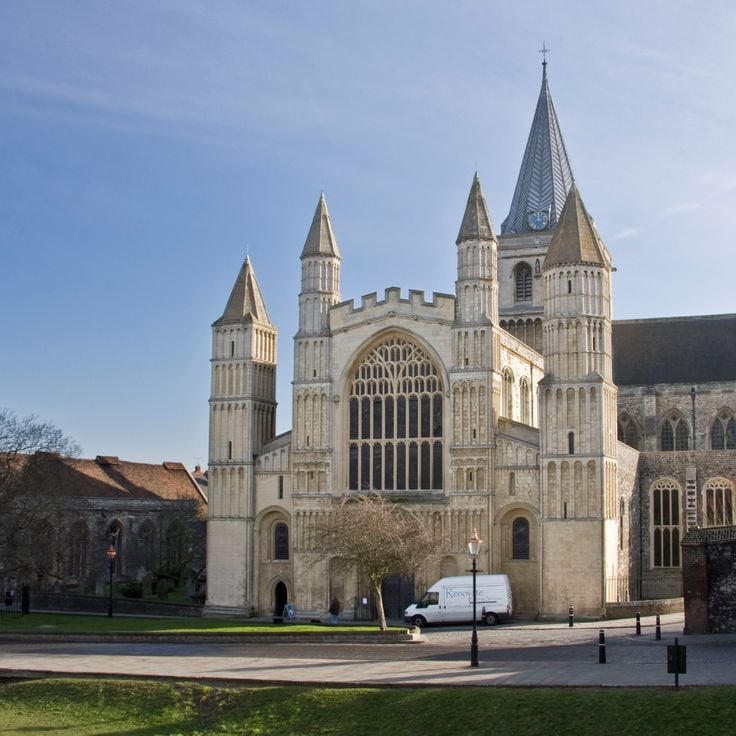
Rochester Cathedral was founded in 604 and is one of England's oldest churches. The building shows Romanesque arches and a Norman crypt dating from the 11th century. The square central tower rises above the nave. During 19th-century restoration, the cathedral received pointed arches, windows with tracery, and stone buttresses that reflect medieval design elements. The west facade dates from this period and combines Romanesque foundations with Gothic pointed-arch windows. The cathedral stands at the center of Rochester near the Norman castle and has served as an episcopal seat for over 1400 years.
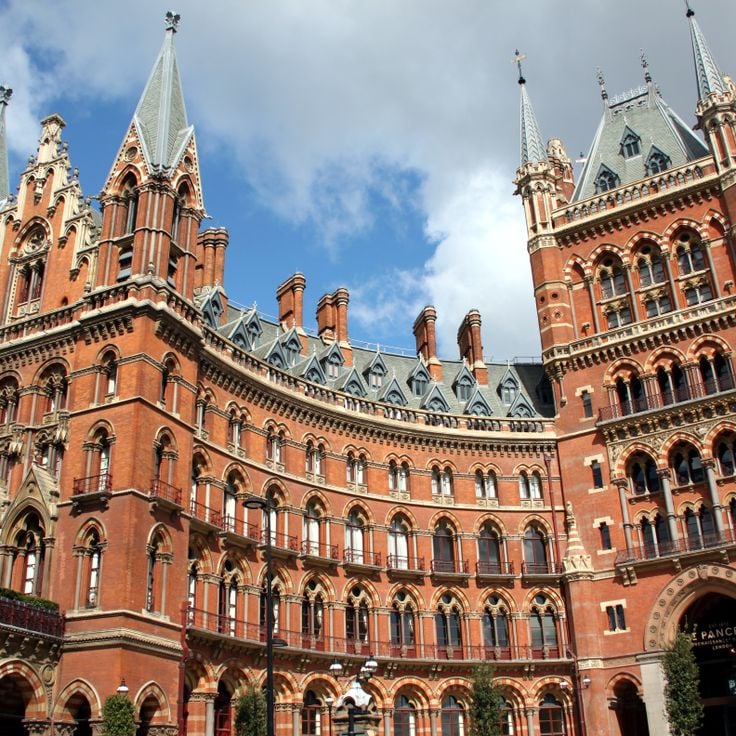
The St. Pancras Renaissance London Hotel occupies part of the St. Pancras railway station building, designed by George Gilbert Scott between 1868 and 1876. The neo-gothic facade features pointed arches, polychrome brick patterns, and a prominent clock tower that together form one of the most significant railway structures from the Victorian era. This complex demonstrates how the neo-gothic movement adapted medieval architectural language to modern transport infrastructure. The building originally served as the Midland Grand Hotel, closed in 1935, and reopened as a luxury hotel in 2011 after extensive restoration.
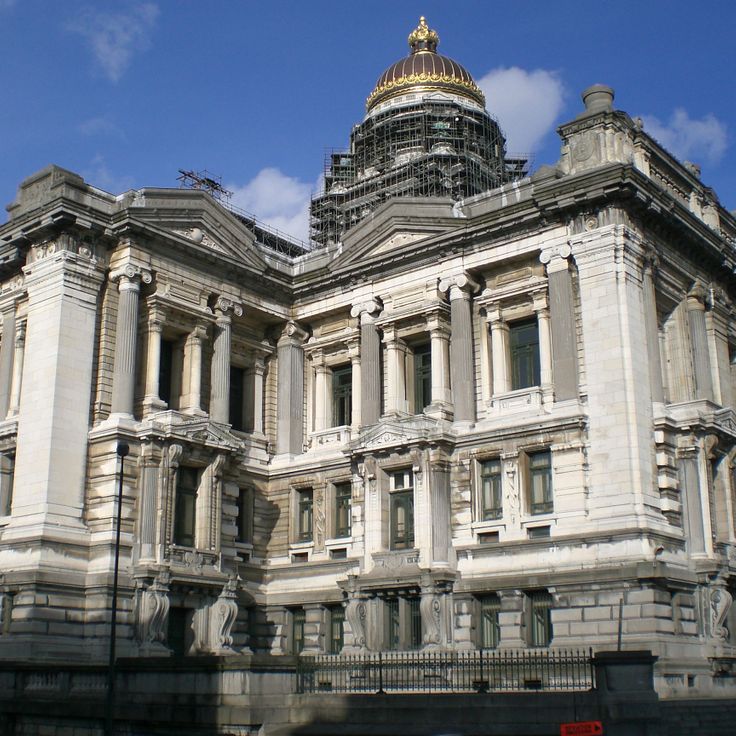
The Palace of Justice in Brussels displays neogothic architecture on a monumental scale. Built between 1866 and 1883 according to plans by Joseph Poelaert, the building combines medieval forms such as pointed arches with 19th century steel construction. The facades feature stone buttresses and tall towers. Inside, vaulted rooms and a central rotunda serve as Belgium's main court, representing the country's administrative and judicial system.
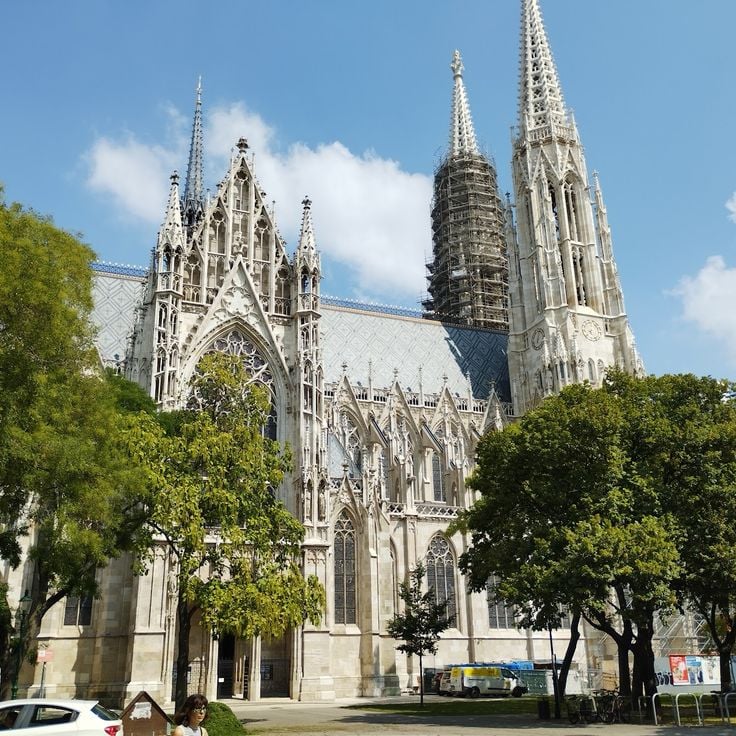
The Votive Church stands in Vienna's Alsergrund district and ranks among Austria's most important neogothic religious buildings. Emperor Francis Joseph I commissioned the church in 1856 after surviving an assassination attempt, with architect Heinrich von Ferstel designing the structure. The two spires rise 99 meters and have shaped the city skyline along the Ringstrasse since construction was completed in 1879. The facade displays French Gothic elements with intricate tracery and pointed arches. Inside, slender clustered columns divide the nave into three aisles, while the stained glass windows were created in Tyrolean workshops. This church demonstrates how 19th-century architects adapted medieval construction forms to modern monumental structures.
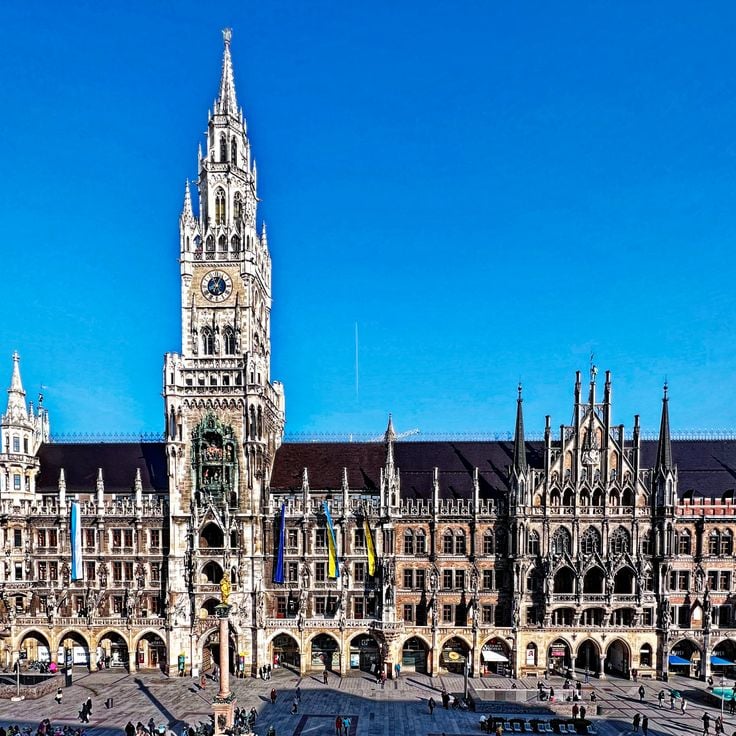
Munich's New Town Hall displays late 19th century neo-Gothic architecture on Marienplatz. Built between 1867 and 1909 according to plans by Georg von Hauberrisser, it features the characteristic elements of that era: a tower standing 85 meters high, pointed arches, ornamental spires, and a richly articulated stone facade. The tower's carillon performs historical scenes daily and draws visitors from around the world. The architectural design demonstrates how neo-Gothic construction principles were adapted for modern administrative buildings, combining medieval formal language with contemporary functional requirements.
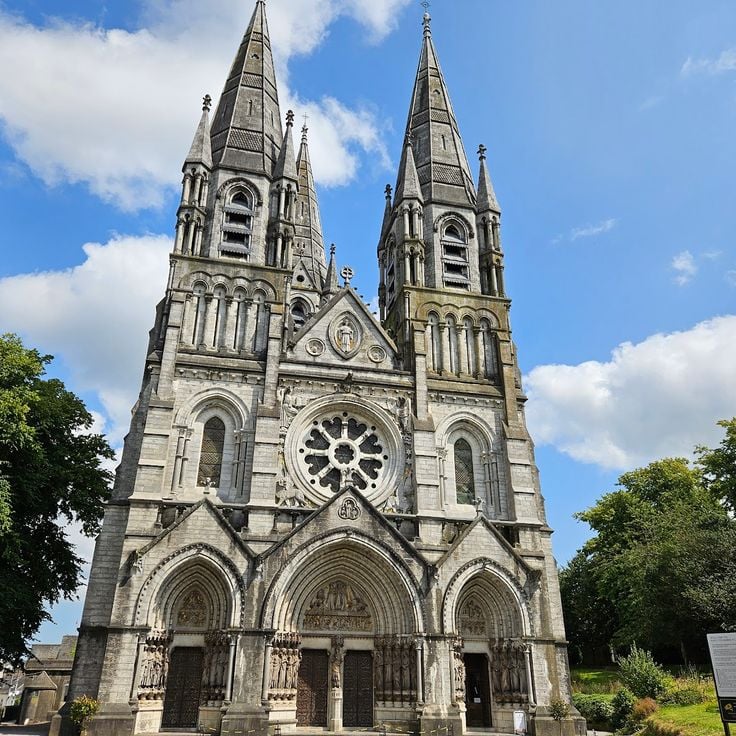
Saint-Finbarr Cathedral in Cork was built between 1865 and 1879 following designs by English architect William Burges. It shows how 19th-century architects revived French Gothic forms from the 13th century. The limestone structure has three spires and features pointed arches, buttresses, and a richly articulated facade. Inside, you find expansive mosaics, carved wooden panels, and polychrome stone. Three towers crown the western facade, with the central spire reaching 73 meters. The building replaced several earlier churches on this site and is named after Saint Fin Barre, the patron saint and founder of Cork.
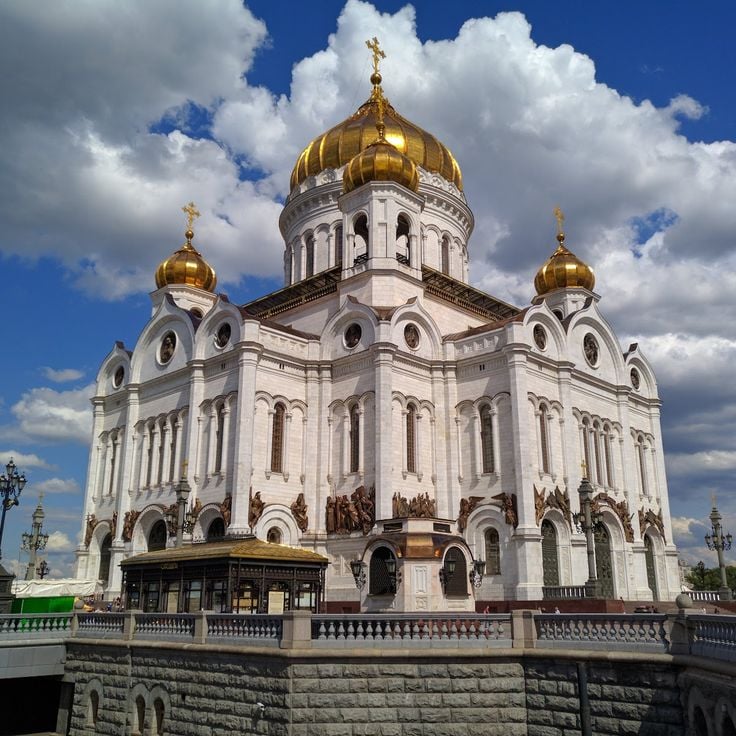
The Cathedral of Christ the Savior in Moscow combines neogothic structural principles with traditional Russian Orthodox architectural forms. Built between 1839 and 1883, destroyed by Soviet authorities in 1931, and rebuilt between 1995 and 2000, the cathedral features five gilded domes and a cross-shaped plan. Marble and granite clad the facades with detailed reliefs, while the interior accommodates about 10,000 worshippers. This structure demonstrates how 19th-century architects adapted medieval construction methods to local religious traditions.
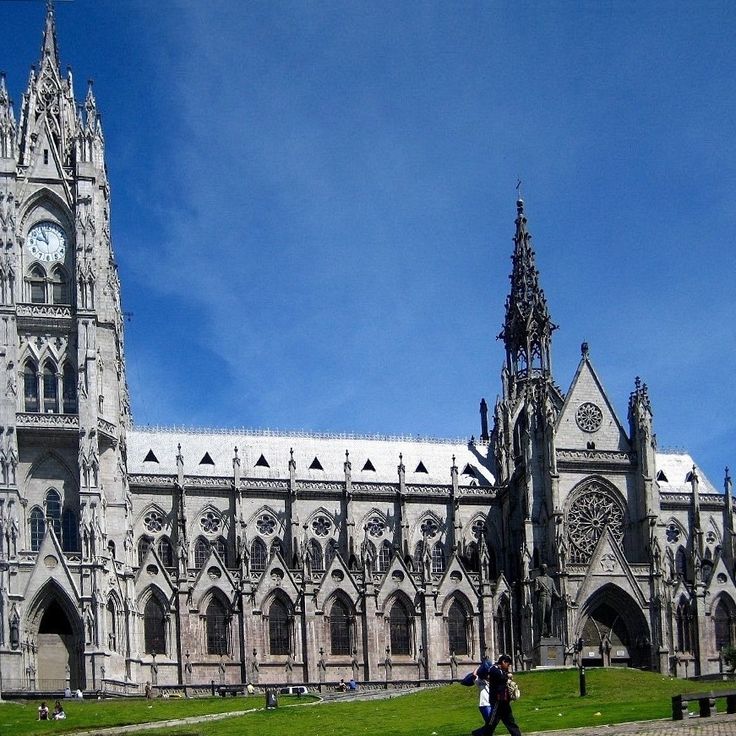
The Basilica of the National Vow in Quito is a neogothic structure built between 1892 and 1988 and remains the largest neogothic building in Ecuador. The structure employs traditional gothic elements such as pointed arches, flying buttresses, and ribbed vaults. The facade displays native animals like iguanas and Galapagos tortoises in place of the usual European gargoyles. The towers reach 115 meters in height and provide access to observation platforms. This basilica stands in the historic center of Quito at high elevation and was commissioned following a national vow made in 1883.
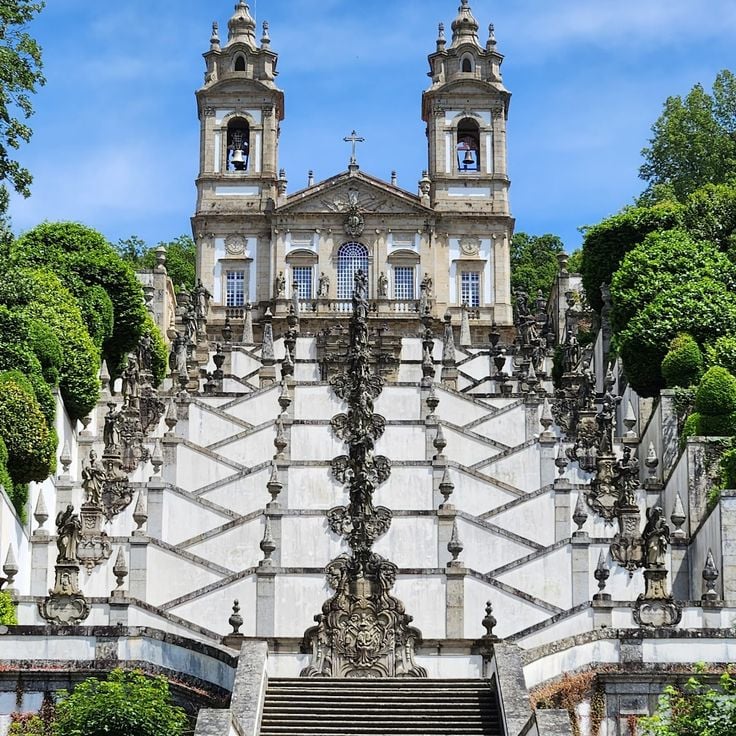
The Bom Jesus do Monte sanctuary in Tenões blends multiple architectural styles across five centuries. The original shrine dates to 1373, while the present neoclassical church was built between 1784 and 1811. A monumental Baroque staircase with more than 580 steps climbs the wooded hillside and contains chapels with scenes of Christ's Passion. Later additions and architectural details incorporate neogothic elements that merge medieval forms with subsequent stylistic approaches.
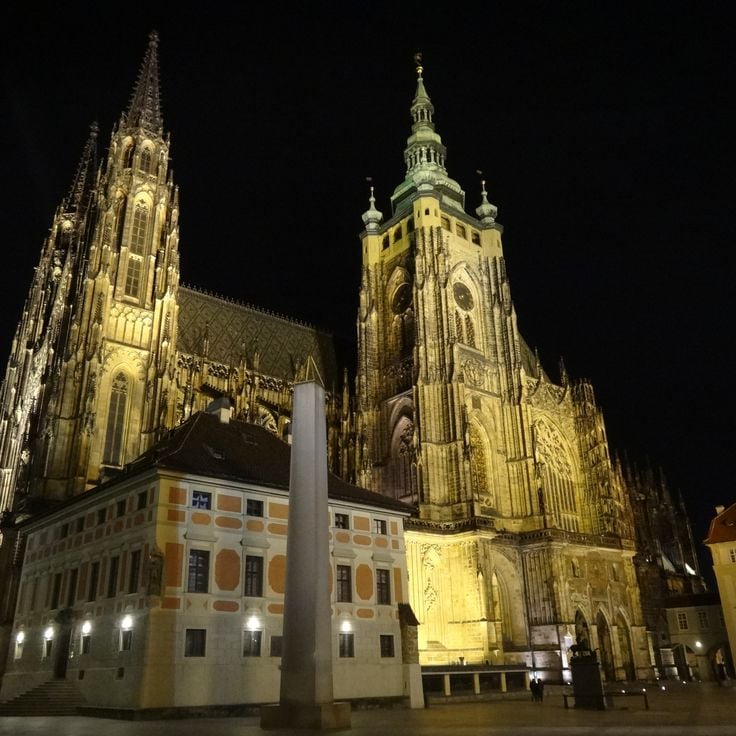
Saint Vitus Cathedral in Prague displays Neo-Gothic architecture that began in the 14th century and was completed in the late 19th century under architects Josef Mocker and Kamil Hilbert. It serves as the seat of the Archbishop of Prague and houses the coronation regalia of Bohemian kings, the burials of the Premyslid dynasty, Charles IV, and Saint Wenceslaus. The structure combines original Gothic elements with Neo-Gothic additions including the main tower at 96.5 meters (316 feet), rose windows, and chapels along the nave. Stained glass by Alfons Mucha from the early 20th century and the gold-decorated Saint Wenceslaus Chapel demonstrate artistic traditions connected to the Neo-Gothic movement.
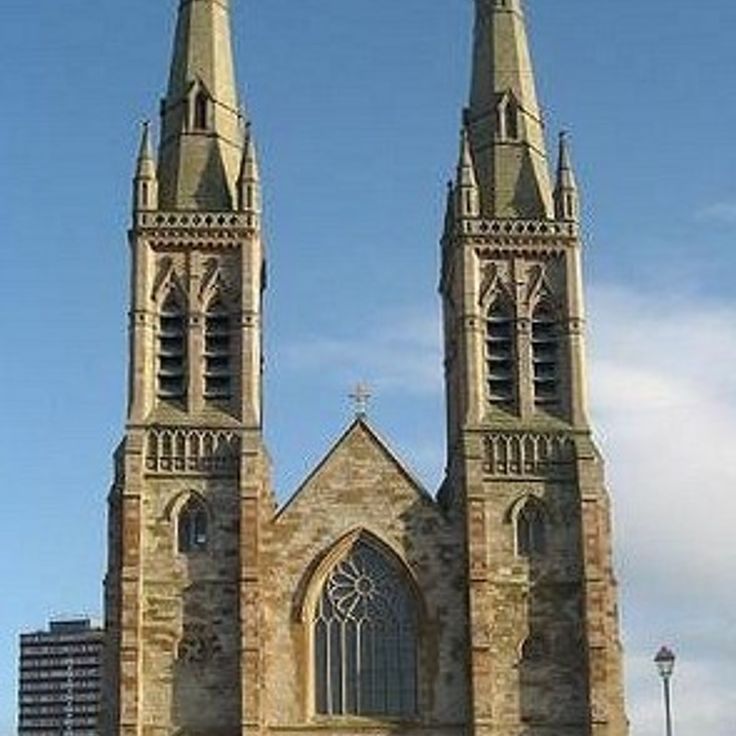
Belfast Cathedral was built between 1860 and 1866 according to plans by Jeremiah McAuley and serves as the seat of the Catholic Diocese of Down and Connor. This cathedral displays neogothic forms through its pointed arches, a tower standing 61 meters (200 feet) high, and detailed stone tracery. The interior features wrought iron screens, carved capitals, and a high altar built from Caen stone. Located on Falls Road, this building documents the revival of medieval construction forms for church purposes in industrial 19th-century Northern Ireland. The architecture combines regional materials with Gothic vaulting structures and buttress systems.
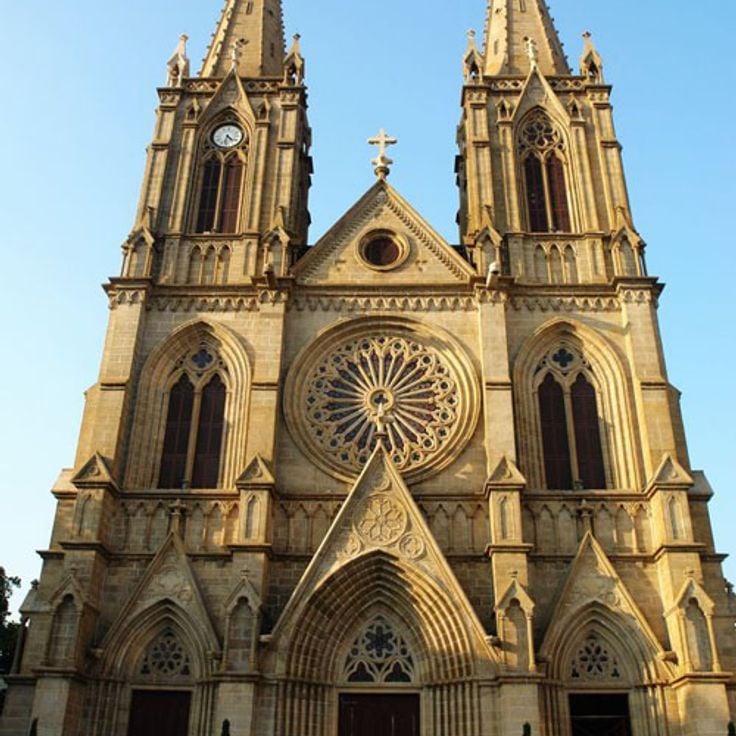
The Cathedral of the Sacred Heart in Guangzhou displays Neo-Gothic architecture in southern China. Built between 1863 and 1888 following designs by French architect Leon Vautrin, this cathedral applies medieval Gothic principles through pointed arches, buttresses, and ribbed vaults. The exterior walls are constructed entirely of granite, earning it the local name Stone House. The two towers reach a height of 58 meters. Inside, stained glass windows imported from France during the original construction period adorn the interior.
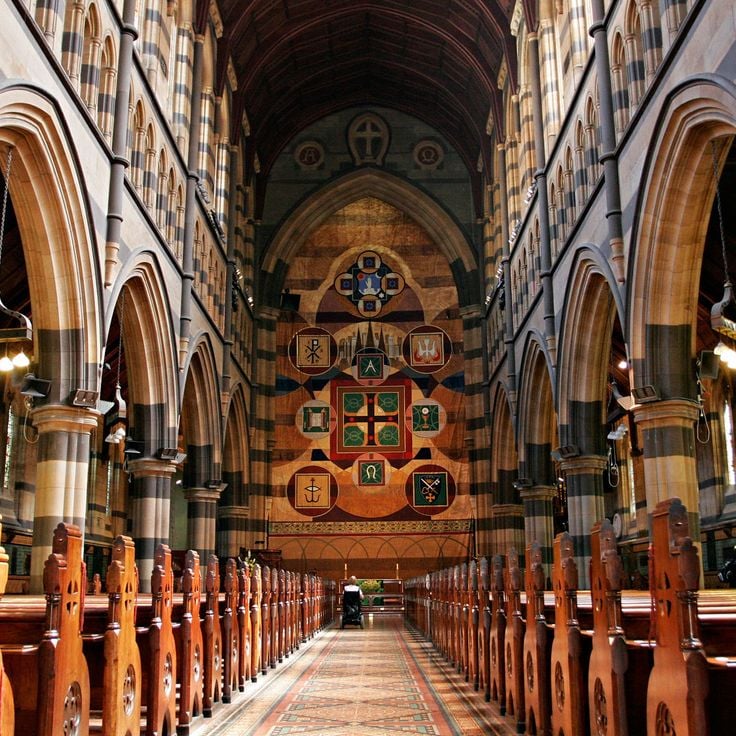
This Anglican cathedral demonstrates how neo-Gothic forms were adapted in late 19th-century colonial Australia. St Paul's Cathedral was built between 1880 and 1891 following designs by British architect William Butterfield, displaying characteristic Victorian neo-Gothic features including pointed arches, a three-aisled layout, and a spire reaching 96 meters high. The cathedral sits at the intersection of Flinders Street and Swanston Street and serves as the seat of the Anglican Archbishop of Melbourne. It shows how neo-Gothic architecture spread to British colonies around the world.
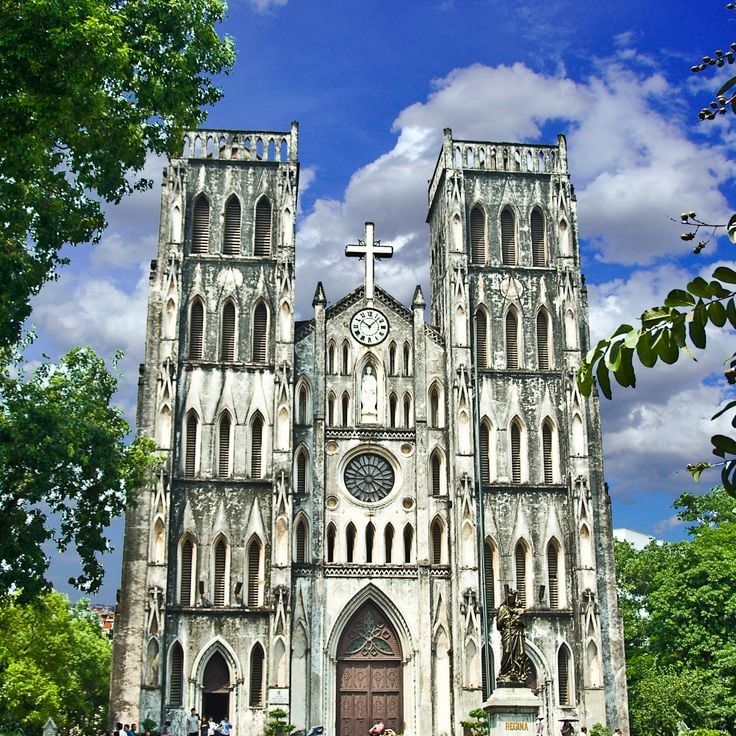
Saint-Joseph Cathedral in Hanoi is one of the major Neo-Gothic religious structures in Southeast Asia from the late 19th century. French colonial authorities commissioned the building between 1884 and 1887, with architects employing medieval forms including pointed arches, tracery, and two square towers on the western facade. The construction combines European Neo-Gothic design elements with local building materials and climate requirements. The cathedral demonstrates how the Neo-Gothic style spread from Europe and North America to territories controlled by colonial powers. The building continues to serve as the seat of the Archdiocese of Hanoi.
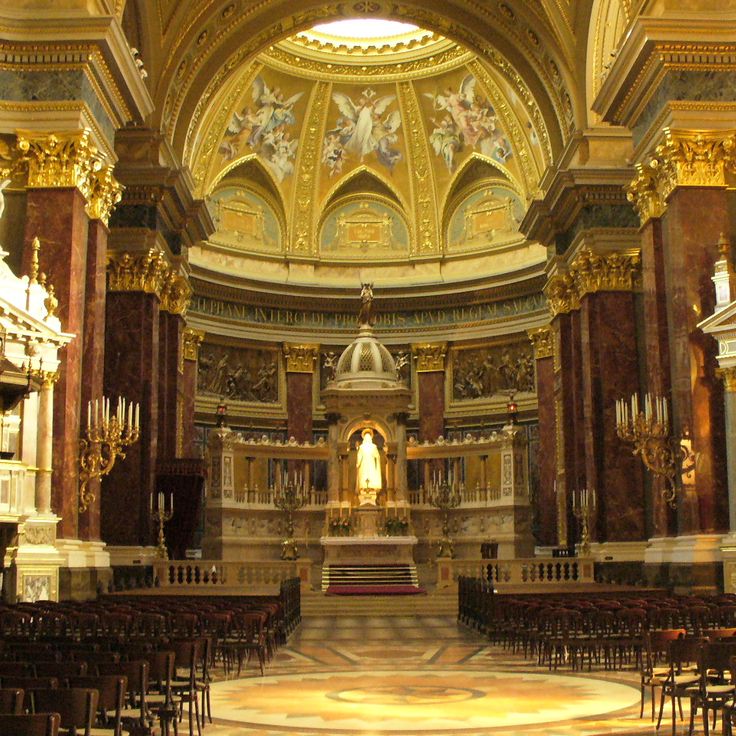
St. Stephen's Basilica in Pest is a major neo-gothic religious building in Budapest and serves as a co-cathedral of the Hungarian capital. Built between 1851 and 1905, the structure combines neo-gothic elements with classical and Romanesque features. It is marked by a large dome that shapes the city's skyline. Inside, visitors can see relics of Saint Stephen, the first king of Hungary. The basilica is one of the largest religious buildings in the country.
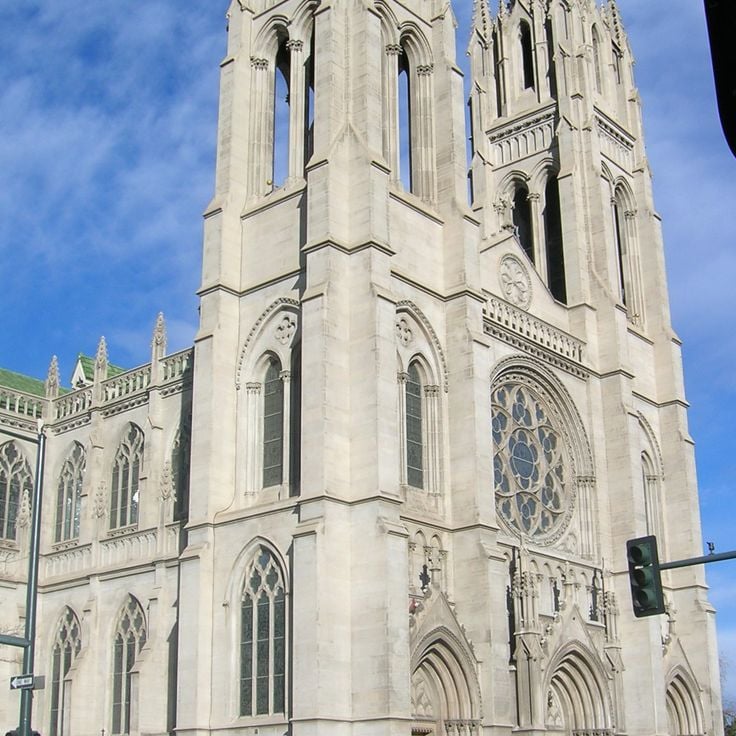
This basilica was built between 1902 and 1912 following designs by French architect Leon Coquard. Located on elevated ground north of Colorado's state capitol, it dominates Denver's skyline with two 61-meter towers topped by golden crosses. The basilica displays hallmark neogothic elements: pointed arches in Colorado sandstone, tracery windows with stained glass from Munich and Paris, and a three-aisled nave with ribbed vaults. Inside, visitors find a white Carrara marble high altar, side chapels holding sculpture by European artists, and bronze baptismal fonts. Designated as a minor basilica in 1979, this building demonstrates how medieval construction techniques were adapted for religious architecture in western North America during the early 20th century.
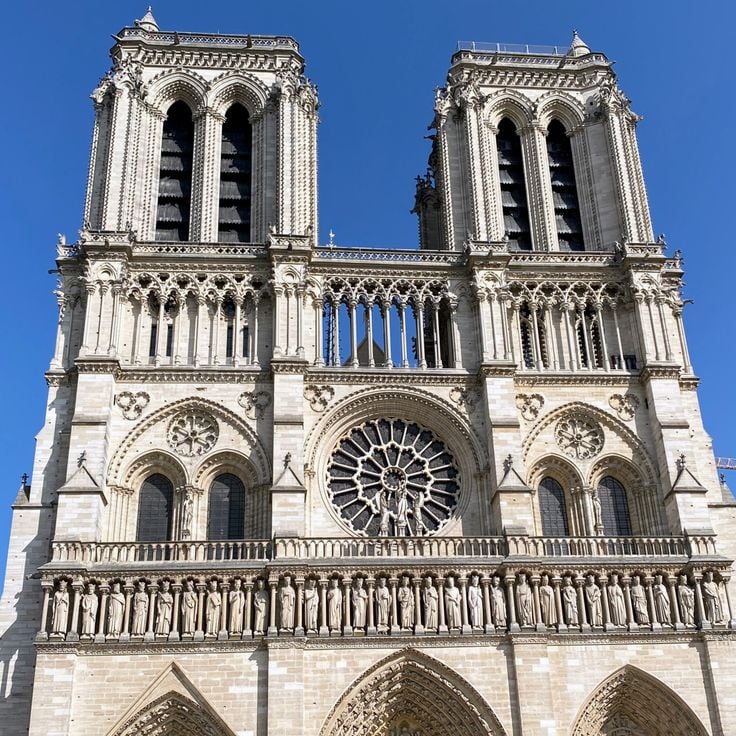
This cathedral represents the original Gothic architecture that inspired the 19th-century Neo-Gothic movement. Its structure displays the fundamental elements that Neo-Gothic architects sought to recreate: pointed arches, complex rose windows, soaring vaults, and a densely sculptured facade. The cathedral has shaped Paris's skyline for more than 800 years and stands as testimony to the technical skill of medieval European master builders. Its influence on the design of 19th-century Neo-Gothic buildings makes it an essential historical reference point for understanding the architectural revival of that era.
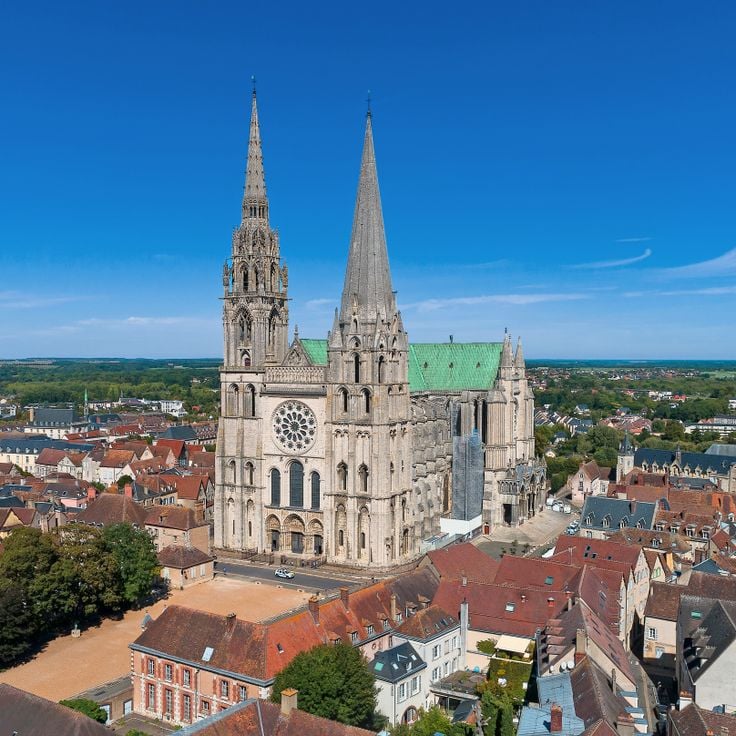
This cathedral shows the principles of Gothic construction that architects in the nineteenth century studied and reinterpreted. The structure impresses with its pointed arches, slender columns, and vaults that draw the eye upward. Colored stained glass tells biblical stories and scenes from daily life in the past. This cathedral served as a model for many later neogothic projects that sought to reproduce these building techniques and the characteristic sense of lightness.
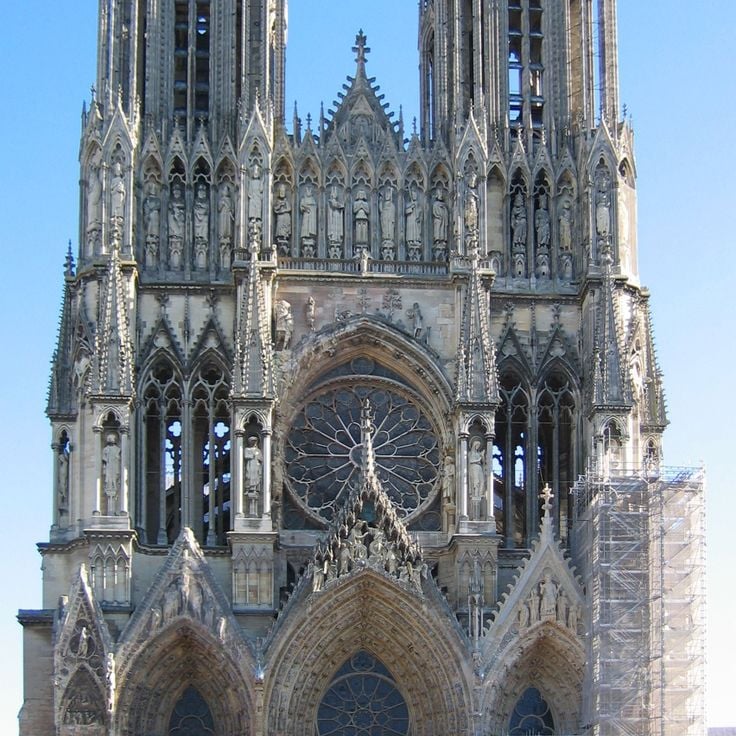
Reims Cathedral displays the craftsmanship of Gothic architecture with detailed sculptures and soaring vaults that inspired 19th-century architects. The facade is densely covered with stone figures representing biblical scenes and holy figures. As the historic location of French royal coronations, this cathedral embodies the spiritual and political importance that the Gothic style expressed. Its features - pointed arches, flying buttresses, and ribbed vaults - were adapted by architects worldwide in modern government buildings and religious structures.
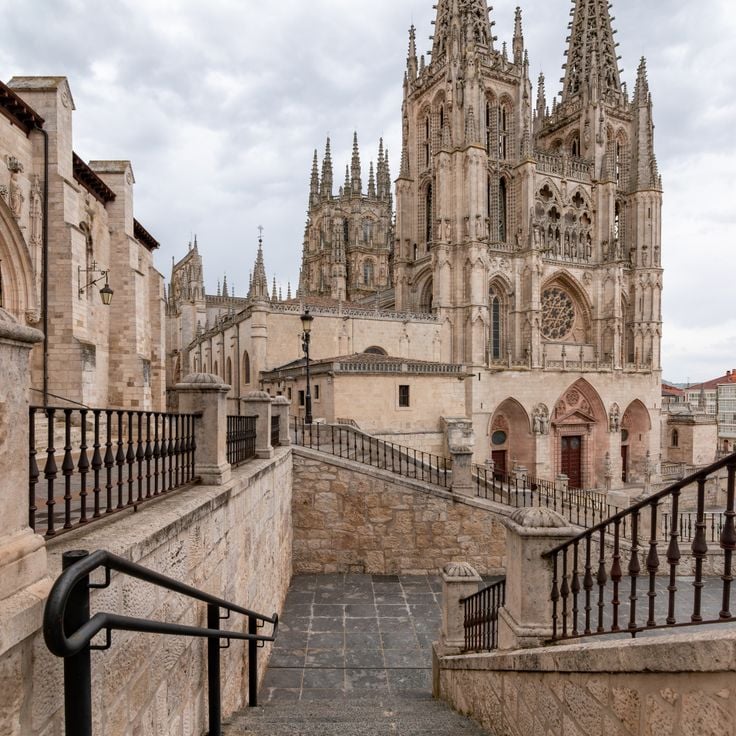
This cathedral displays features of Spanish Gothic architecture that 19th-century architects sought to recreate through neogothic design. Its towers and richly decorated facades show the craftsmanship of medieval builders. The building demonstrates how Gothic style developed its own regional character in Spain, with ornamental details that reflect local artistic traditions. These distinctive elements inspired neogothic architects who wanted to adapt Gothic language to different contexts.
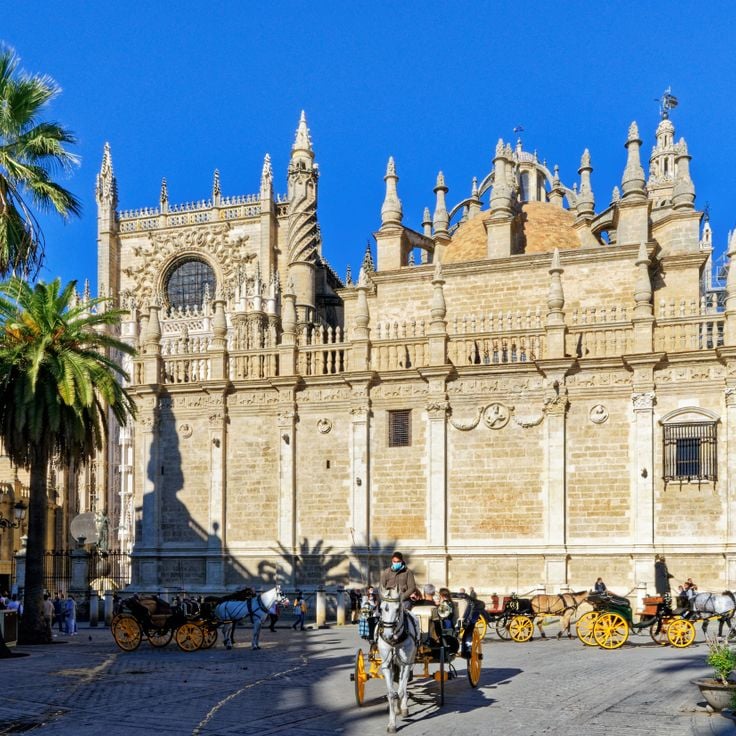
The Cathedral of Seville stands as one of the great models for 19th-century architects who revived Gothic forms. This building shows how medieval craftsmen created vast spaces that reach toward the sky. The cathedral houses the tomb of Christopher Columbus and remains an important pilgrimage site. With its stone masonry and soaring height, it inspired the Neo-Gothic builders who adapted medieval techniques for the new purposes of the 19th century.
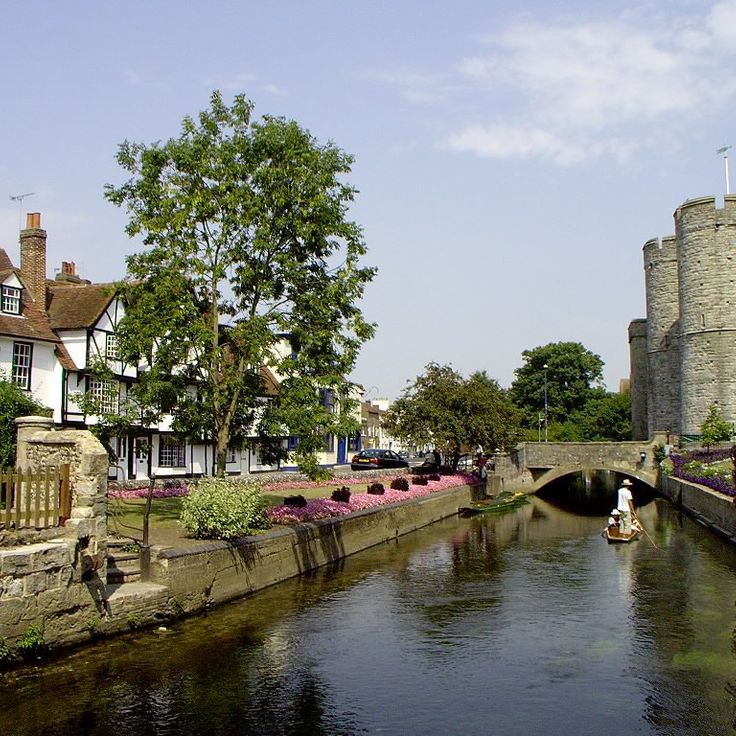
Canterbury Cathedral is a masterwork of medieval Gothic architecture and served as a direct model for architects working in the Neo-Gothic style. Its structure displays the key features of Gothic design: pointed arches, steep roofs, and intricate stonework. Inside, soaring vaults, colored windows, and rich decoration create a powerful spatial experience. As an important pilgrimage destination and historical structure, this cathedral became a model for Neo-Gothic buildings across Britain and Europe.
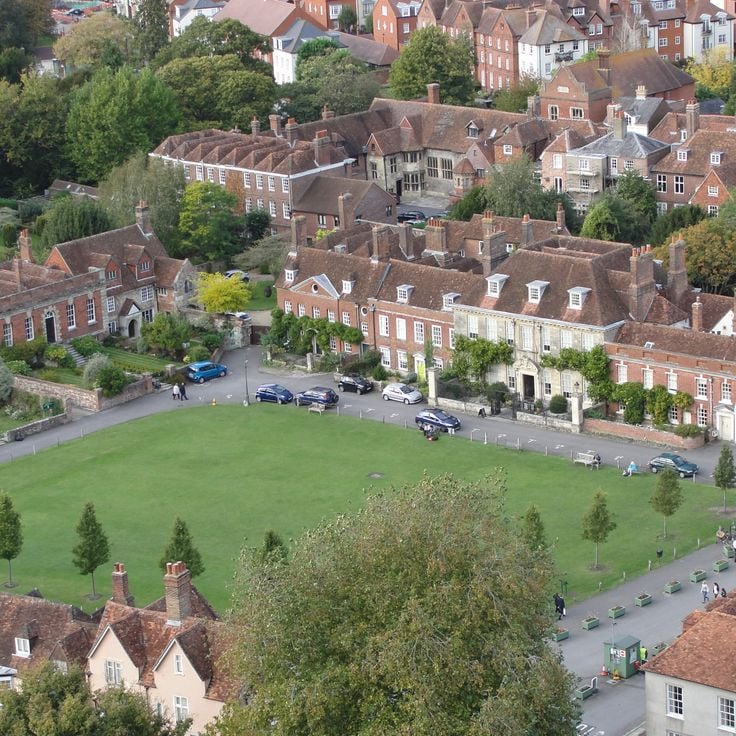
Salisbury Cathedral is an English church whose tall spire shapes the landscape of Wiltshire. It houses one of the oldest still-working mechanical clocks in Europe. The architecture displays features of English Gothic with balanced proportions and detailed stonework. Soaring vaults, slender columns, and decorative windows show medieval craftsmanship. This cathedral served as an important model for Neo-Gothic architects who wanted to capture English design.
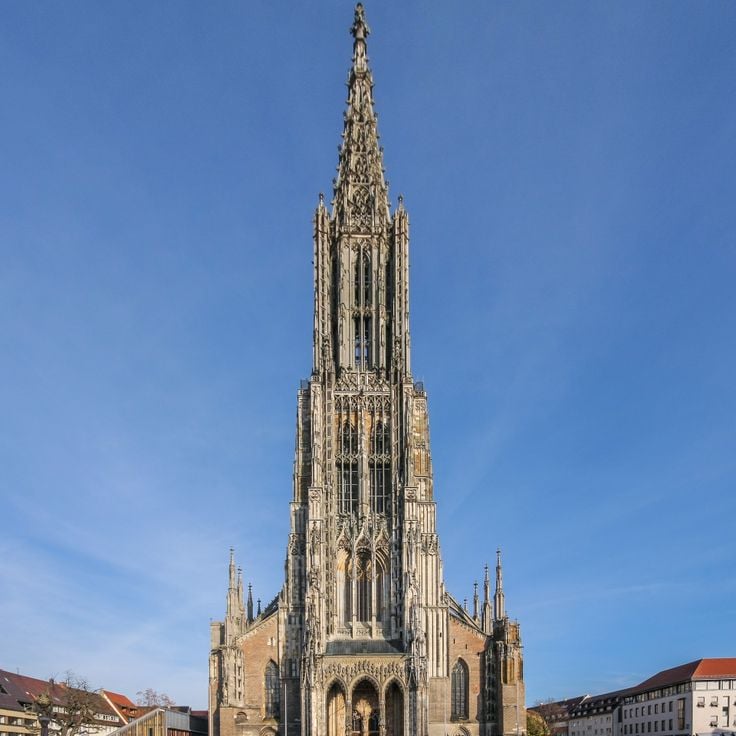
Ulm Cathedral exemplifies neogothic architecture through its complete expression of this style. Its tower ranks among the highest in the world and demonstrates the architectural ambition that drove medieval builders to reach skyward. The building displays all characteristic features of the period: pointed arches, finely carved decorations, and vertical lines that rise toward the sky. The craftsmanship of its builders is evident in every detail. The tower dominated the European urban landscape for centuries and inspired 19th-century architects who revived medieval building forms.
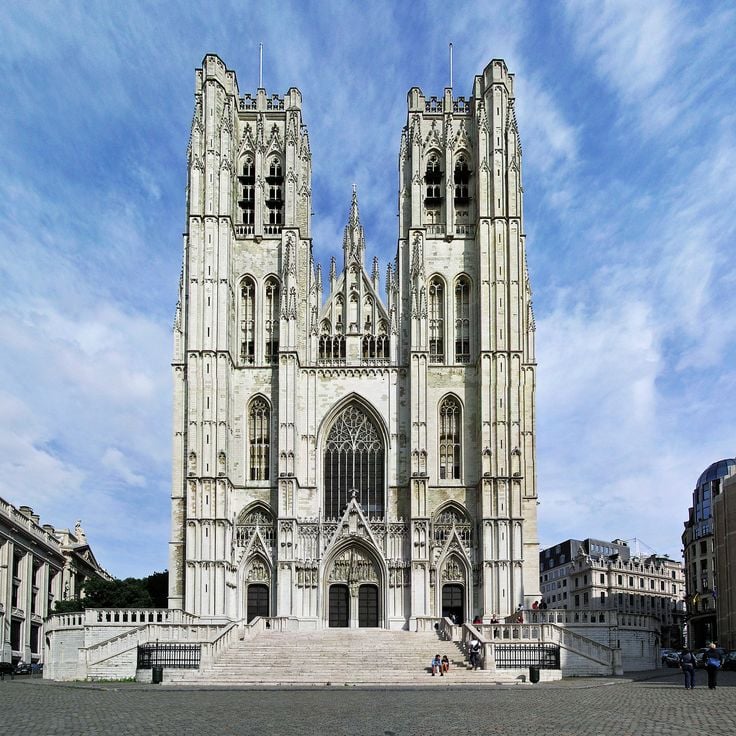
This Brussels cathedral combines Gothic architecture with Baroque chapels, showing how architectural styles evolved over centuries. The building demonstrates the development of Gothic architecture through different periods. Its high vaults and carved stone reveal the craftsmanship of medieval artisans. Located in the heart of the city, this cathedral witnessed important historical moments and represents how Gothic cathedrals developed across Europe.
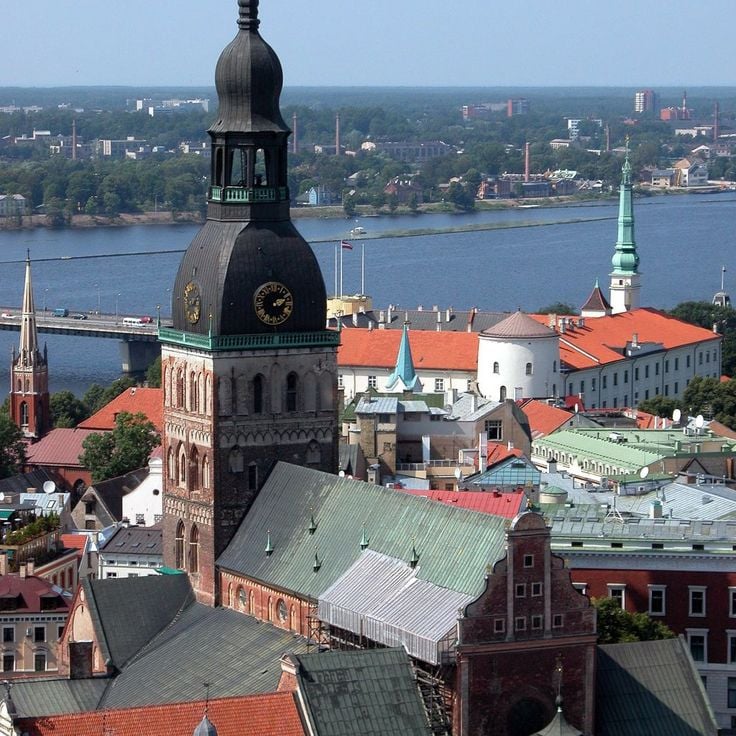
Riga's Protestant Cathedral is one of the largest medieval churches in the Baltic region. Built starting in the 13th century, it shows how Gothic construction techniques spread across Europe and later inspired architects working in the neogothic style. The cathedral demonstrates the religious and cultural development of Riga and the Baltic lands. Its forms and structural solutions served as models for neogothic architects in the region.
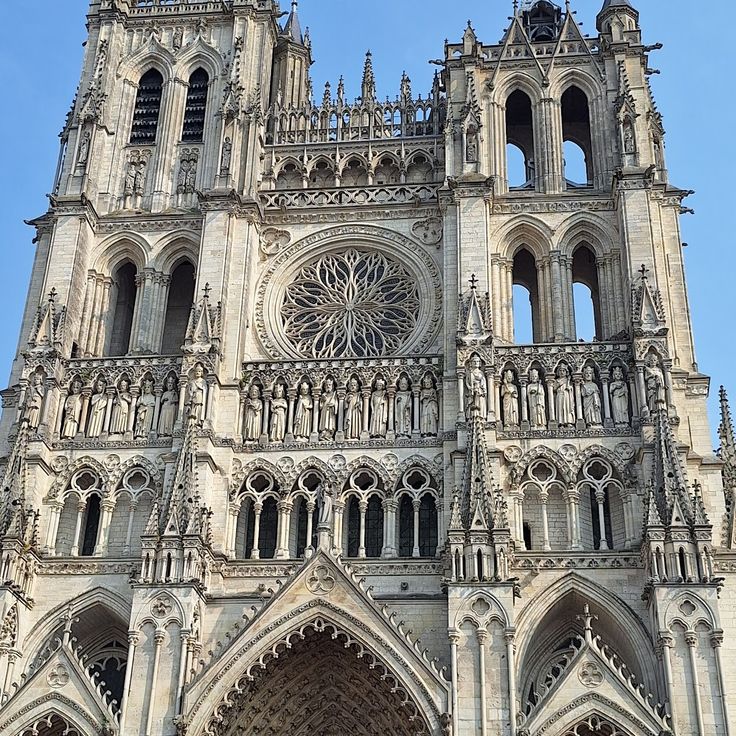
The Cathedral of Amiens displays the development of Gothic architecture in Europe through its pointed arches, delicate stone columns, and large windows. Built over several centuries, its design reflects the craftsmanship of its builders. The interior scale and proportional harmony of this cathedral directly inspired neogothic architects of the 19th century, who incorporated medieval building forms into their own works.
The Basilica of Notre-Dame in Montreal displays 19th-century neogothic architecture featuring pointed arches, ribbed vaults, and richly carved wooden interior elements. The colored windows date from the construction period and reflect the craftsmanship of that era. The building combines French and British influences in its design. The interior woodwork follows medieval patterns and demonstrates the technical skills of 19th-century artisans.
The Sanctuary of Las Lajas shows how neogothic architecture adapted to dramatic landscapes. Built between 1916 and 1949, the sanctuary stands on a bridge 130 meters (425 feet) above the Guáitara River and combines religious purpose with technical achievement. The stone structure features pointed arches, vertical buttresses, and towers that rise against the canyon. This pilgrimage site follows medieval building principles and overlooks mountain gorges.
This cathedral was completed in 1879 and displays the neogothic features of its time. The facade has pointed arches and stone towers, while the interior features ribbed vaults. The building was constructed using white marble and was modeled after European cathedral designs. This cathedral serves as the seat of the Archbishop of New York and accommodates a large number of worshippers. The organ is notably large and shapes the acoustic character of the sacred space.
This administrative building was constructed between 1902 and 1908, blending French colonial architecture with neogothic elements such as pointed arches and decorative facade details. The Ho Chi Minh City Hall continues to serve as the seat of the city government and demonstrates the influence of European architectural movements in Southeast Asia during the French colonial period. The symmetrical facade features a central clock tower, while interior spaces incorporate stone vaults and wooden paneling. The building stands at the northeast end of Nguyen Hue Boulevard.
The Victoria Terminus in Mumbai represents neogothic architecture through its blend of British and Indian architectural elements. Built between 1879 and 1887, the railway station features pointed arches, ribbed vaults, and stone spires that are characteristic of the gothic style. The structure served as a major hub of the Indian railway network during the British colonial period. The building demonstrates how medieval architectural forms were adapted to functional transport buildings of the 19th century. The station integrates traditional gothic elements with decorative details from Indian architectural traditions.
Milan Cathedral stands at the center of the city and shows how gothic forms remained alive across centuries. Construction began in the 14th century, but the facade received its neogothic appearance in the 19th century under Napoleon. The building measures about 157 meters in length and contains several thousand statues, over a hundred spires, and detailed flying buttresses. This blend of medieval elements and neogothic additions makes the cathedral one of Europe's largest religious buildings.
Prague Castle features Neo-Gothic expansions and renovations from the 19th and early 20th centuries, particularly at St. Vitus Cathedral. These buildings use pointed arches, ribbed vaults, and stone carvings that revive medieval architectural traditions. The castle serves as the seat of the Czech government and holds collections related to Bohemian history.
The United States Capitol combines classical and neo-Gothic architectural elements added during several renovation phases in the 19th century. The Capitol's dome was constructed between 1855 and 1866 according to plans by Thomas U. Walter. The interior features neo-Gothic details such as pointed arches and ribbed vaults in several spaces that appeared during the Victorian-era expansions. These details reflect the medieval revival architecture that characterized 19th-century government buildings in America.
Château de Chantilly, located northeast of Paris, houses the Musée Condé with an important collection of paintings, including works by Raphael, Poussin, and Ingres. The château consists of two buildings from different periods: the Grand Château from the 16th century and the Petit Château, rebuilt in the 19th century in the Neo-Gothic style. The architecture features characteristic elements such as pointed arches, turrets, and decorative stonework. The estate also includes French and English gardens, as well as historic stables that now house an equestrian museum.
This cathedral in La Plata was completed in 1932 and displays Neo-Gothic forms with two facade towers rising 120 meters high. The building was constructed as the main church for La Plata, a city founded in 1882 as the new capital of Buenos Aires Province. Architects Ernesto Meyer and Pedro Benoit began construction in 1885 and continued it over several decades. The interior follows a Latin cross floor plan with five aisles and a crossing crowned by a dome. The facade shows pointed arches and rose windows, while the interior contains ribbed vaults and stained glass windows depicting biblical scenes.
Tokyo Station displays rare European-inspired architecture from early 20th-century Japan. The red brick facade and symmetrical round arches of Tokyo Station show clear influences of the Neo-Renaissance style that became popular during Japan's Meiji era in the capital city. The copper roofs and horizontal articulation of the three-story building reflect one nation's effort to blend Western construction techniques with local materials. The station underwent complete restoration between 2007 and 2012 after suffering severe wartime damage, bringing the building back to its original 1914 appearance. The lateral domes were reconstructed during this period following historical plans.
Cologne Cathedral is a leading example of Neogothic architecture in Germany. Its two distinctive towers rise about 157 meters above the city and shape Cologne's skyline. Construction began in 1248 following medieval plans, but the building was only completed in 1880 when the Neogothic movement revived the original design. The facade displays classic Gothic elements such as pointed arches, flying buttresses, and openwork stone spires. Inside, the three-aisled nave features ribbed vaults and slender columns. The cathedral houses the shrine of the Three Wise Men and numerous medieval windows depicting liturgical scenes.
This parliamentary complex in Canada's capital comprises three main buildings constructed of sandstone with copper roofs, embodying 19th-century neogothic architecture. The buildings display characteristic pointed arches, flying buttresses, and ribbed vaults inspired by medieval style. The central Peace Tower rises 92 meters and houses a carillon of 53 bells. The buildings serve as the seat of the Canadian Parliament and contain the chambers of the House of Commons and Senate as well as government offices.
This church in London displays Gothic architecture from the 13th century and has played a central role in British history for over 900 years. The building features pointed arches, buttresses, and ribbed vaults characteristic of medieval construction. Nearly all British monarchs since 1066 have been crowned here. The church houses the tombs of monarchs as well as notable figures such as poets, scientists, and statesmen. It remains an active place of worship and is part of the UNESCO World Heritage site of the Palace of Westminster and Westminster Abbey.
This bridge spans the Thames with two 65-meter-high towers and a hydraulic bascule mechanism that opened in 1894. The neogothic design of Tower Bridge matches the medieval architecture of the adjacent Tower of London and displays pointed arches, decorative turrets, and stone ornament. The upper walkways offer views of the river and house exhibitions about engineering history. The original steam engines that lifted the 1000-ton bascule decks have been replaced with electric motors, though the Victorian engine rooms remain accessible to visitors.
The Sagrada Familia in Barcelona is the masterwork of Catalan architect Antoni Gaudí. It combines neogothic tradition with organic forms and modernist decoration. The basilica features pointed arches, stone towers, and ribbed vaults that recall medieval cathedrals. At the same time, the structure imitates trees, bones, and natural geometry. Construction began in 1882, but Gaudí took over the project a year later and made it his life's work. The basilica has three large facades representing the Nativity, the Passion, and the Glory of Christ, along with eighteen towers.
Orvieto Cathedral displays Gothic architecture with a facade composed of mosaics and reliefs that became a model for neogothic religious buildings during the revival of medieval forms in the 19th century. Construction began in the 13th century and combines pointed arches, buttresses, and ribbed vaults. The colored mosaic panels on the western facade depict biblical scenes, while the reliefs show prophets and saints. Inside are frescoes and a series of chapels that were added over several centuries.
Hallgrímskirkja is a church built between 1945 and 1986 and one of Iceland's most significant examples of neo-gothic architecture. Its facade imitates the basalt columns that occur naturally in the Icelandic landscape, connecting medieval building principles with the region's geological features. The tower offers views over Reykjavik and the surrounding area. The church was named after Icelandic poet Hallgrímur Pétursson and serves as both a place of worship and a national monument.
The Black Church in Brașov displays the Gothic features that later inspired 19th-century Neogothicism. Built in the 14th century with tall stone walls and colored stained glass, it serves as a historical reference point for the revival of Gothic elements such as pointed arches and ribbed vaults. The church took its name from a 17th-century fire that blackened its exterior walls. It houses an important collection of 17th-century Anatolian carpets.
This cathedral in Antwerp shows architecture in the neogothic style. A tower 123 meters (404 ft) high rises above the city. The building has pointed arches, ribbed vaults, and buttresses that are typical of the reinterpretation of medieval forms. Inside, artworks from several centuries show the development of Flemish painting. The multi-nave building combines medieval construction techniques with 19th-century craftsmanship.
Washington National Cathedral was built between 1907 and 1990 following 14th-century medieval models and stands as one of the most significant neo-gothic structures in North America. The central tower reaches 91 meters in height, making the cathedral the highest point in the city. The architecture displays typical gothic elements including pointed arches, flying buttresses, ribbed vaults, and tracery. The building served as the national church for state funerals and important ceremonies. The cathedral sits on a hill in the northwest part of Washington and shows how American architects adapted medieval construction methods.
The Gothic Quarter in Barcelona is a historic neighborhood at the heart of the city that preserves the medieval urban structure. Narrow streets connect small squares where shops and cafés are located. Stone buildings from different centuries display Gothic elements such as pointed arches and buttresses. The quarter extends between La Rambla and Via Laietana and forms the oldest part of the Catalan capital. Visitors find the cathedral, the town hall, and remains of the Roman city walls there.
Nidarosdomen in Trondheim dates to 1070 and stands on the site where Saint King Olav was buried. The cathedral displays Norwegian stone walls with hundreds of carved figures across its western facade. You can see images of biblical saints and Norwegian kings sculpted in stone. The building combines Romanesque and Gothic forms with pointed arches, buttresses, and an octagonal choir. After several fires, the structure was extensively restored during the past two centuries while preserving its medieval core. Nidarosdomen has served as the coronation church for Norwegian monarchs for centuries and shows how architects developed Scandinavian church building practices.
Casa Botines in León represents Gaudí's interpretation of neo-gothic architecture beyond Catalonia. Built in 1891, it was designed as both a commercial and residential space for textile merchants. The building features four corner towers and a slate-covered facade. Pointed arches and stone crenellations reference medieval forms. Inside, the iron framework demonstrates modern engineering solutions from the late 19th century.
Rochester Cathedral was founded in 604 and is one of England's oldest churches. The building shows Romanesque arches and a Norman crypt dating from the 11th century. The square central tower rises above the nave. During 19th-century restoration, the cathedral received pointed arches, windows with tracery, and stone buttresses that reflect medieval design elements. The west facade dates from this period and combines Romanesque foundations with Gothic pointed-arch windows. The cathedral stands at the center of Rochester near the Norman castle and has served as an episcopal seat for over 1400 years.
The St. Pancras Renaissance London Hotel occupies part of the St. Pancras railway station building, designed by George Gilbert Scott between 1868 and 1876. The neo-gothic facade features pointed arches, polychrome brick patterns, and a prominent clock tower that together form one of the most significant railway structures from the Victorian era. This complex demonstrates how the neo-gothic movement adapted medieval architectural language to modern transport infrastructure. The building originally served as the Midland Grand Hotel, closed in 1935, and reopened as a luxury hotel in 2011 after extensive restoration.
The Palace of Justice in Brussels displays neogothic architecture on a monumental scale. Built between 1866 and 1883 according to plans by Joseph Poelaert, the building combines medieval forms such as pointed arches with 19th century steel construction. The facades feature stone buttresses and tall towers. Inside, vaulted rooms and a central rotunda serve as Belgium's main court, representing the country's administrative and judicial system.
The Votive Church stands in Vienna's Alsergrund district and ranks among Austria's most important neogothic religious buildings. Emperor Francis Joseph I commissioned the church in 1856 after surviving an assassination attempt, with architect Heinrich von Ferstel designing the structure. The two spires rise 99 meters and have shaped the city skyline along the Ringstrasse since construction was completed in 1879. The facade displays French Gothic elements with intricate tracery and pointed arches. Inside, slender clustered columns divide the nave into three aisles, while the stained glass windows were created in Tyrolean workshops. This church demonstrates how 19th-century architects adapted medieval construction forms to modern monumental structures.
Munich's New Town Hall displays late 19th century neo-Gothic architecture on Marienplatz. Built between 1867 and 1909 according to plans by Georg von Hauberrisser, it features the characteristic elements of that era: a tower standing 85 meters high, pointed arches, ornamental spires, and a richly articulated stone facade. The tower's carillon performs historical scenes daily and draws visitors from around the world. The architectural design demonstrates how neo-Gothic construction principles were adapted for modern administrative buildings, combining medieval formal language with contemporary functional requirements.
Saint-Finbarr Cathedral in Cork was built between 1865 and 1879 following designs by English architect William Burges. It shows how 19th-century architects revived French Gothic forms from the 13th century. The limestone structure has three spires and features pointed arches, buttresses, and a richly articulated facade. Inside, you find expansive mosaics, carved wooden panels, and polychrome stone. Three towers crown the western facade, with the central spire reaching 73 meters. The building replaced several earlier churches on this site and is named after Saint Fin Barre, the patron saint and founder of Cork.
The Cathedral of Christ the Savior in Moscow combines neogothic structural principles with traditional Russian Orthodox architectural forms. Built between 1839 and 1883, destroyed by Soviet authorities in 1931, and rebuilt between 1995 and 2000, the cathedral features five gilded domes and a cross-shaped plan. Marble and granite clad the facades with detailed reliefs, while the interior accommodates about 10,000 worshippers. This structure demonstrates how 19th-century architects adapted medieval construction methods to local religious traditions.
The Basilica of the National Vow in Quito is a neogothic structure built between 1892 and 1988 and remains the largest neogothic building in Ecuador. The structure employs traditional gothic elements such as pointed arches, flying buttresses, and ribbed vaults. The facade displays native animals like iguanas and Galapagos tortoises in place of the usual European gargoyles. The towers reach 115 meters in height and provide access to observation platforms. This basilica stands in the historic center of Quito at high elevation and was commissioned following a national vow made in 1883.
The Bom Jesus do Monte sanctuary in Tenões blends multiple architectural styles across five centuries. The original shrine dates to 1373, while the present neoclassical church was built between 1784 and 1811. A monumental Baroque staircase with more than 580 steps climbs the wooded hillside and contains chapels with scenes of Christ's Passion. Later additions and architectural details incorporate neogothic elements that merge medieval forms with subsequent stylistic approaches.
Saint Vitus Cathedral in Prague displays Neo-Gothic architecture that began in the 14th century and was completed in the late 19th century under architects Josef Mocker and Kamil Hilbert. It serves as the seat of the Archbishop of Prague and houses the coronation regalia of Bohemian kings, the burials of the Premyslid dynasty, Charles IV, and Saint Wenceslaus. The structure combines original Gothic elements with Neo-Gothic additions including the main tower at 96.5 meters (316 feet), rose windows, and chapels along the nave. Stained glass by Alfons Mucha from the early 20th century and the gold-decorated Saint Wenceslaus Chapel demonstrate artistic traditions connected to the Neo-Gothic movement.
Belfast Cathedral was built between 1860 and 1866 according to plans by Jeremiah McAuley and serves as the seat of the Catholic Diocese of Down and Connor. This cathedral displays neogothic forms through its pointed arches, a tower standing 61 meters (200 feet) high, and detailed stone tracery. The interior features wrought iron screens, carved capitals, and a high altar built from Caen stone. Located on Falls Road, this building documents the revival of medieval construction forms for church purposes in industrial 19th-century Northern Ireland. The architecture combines regional materials with Gothic vaulting structures and buttress systems.
The Cathedral of the Sacred Heart in Guangzhou displays Neo-Gothic architecture in southern China. Built between 1863 and 1888 following designs by French architect Leon Vautrin, this cathedral applies medieval Gothic principles through pointed arches, buttresses, and ribbed vaults. The exterior walls are constructed entirely of granite, earning it the local name Stone House. The two towers reach a height of 58 meters. Inside, stained glass windows imported from France during the original construction period adorn the interior.
This Anglican cathedral demonstrates how neo-Gothic forms were adapted in late 19th-century colonial Australia. St Paul's Cathedral was built between 1880 and 1891 following designs by British architect William Butterfield, displaying characteristic Victorian neo-Gothic features including pointed arches, a three-aisled layout, and a spire reaching 96 meters high. The cathedral sits at the intersection of Flinders Street and Swanston Street and serves as the seat of the Anglican Archbishop of Melbourne. It shows how neo-Gothic architecture spread to British colonies around the world.
Saint-Joseph Cathedral in Hanoi is one of the major Neo-Gothic religious structures in Southeast Asia from the late 19th century. French colonial authorities commissioned the building between 1884 and 1887, with architects employing medieval forms including pointed arches, tracery, and two square towers on the western facade. The construction combines European Neo-Gothic design elements with local building materials and climate requirements. The cathedral demonstrates how the Neo-Gothic style spread from Europe and North America to territories controlled by colonial powers. The building continues to serve as the seat of the Archdiocese of Hanoi.
St. Stephen's Basilica in Pest is a major neo-gothic religious building in Budapest and serves as a co-cathedral of the Hungarian capital. Built between 1851 and 1905, the structure combines neo-gothic elements with classical and Romanesque features. It is marked by a large dome that shapes the city's skyline. Inside, visitors can see relics of Saint Stephen, the first king of Hungary. The basilica is one of the largest religious buildings in the country.
This basilica was built between 1902 and 1912 following designs by French architect Leon Coquard. Located on elevated ground north of Colorado's state capitol, it dominates Denver's skyline with two 61-meter towers topped by golden crosses. The basilica displays hallmark neogothic elements: pointed arches in Colorado sandstone, tracery windows with stained glass from Munich and Paris, and a three-aisled nave with ribbed vaults. Inside, visitors find a white Carrara marble high altar, side chapels holding sculpture by European artists, and bronze baptismal fonts. Designated as a minor basilica in 1979, this building demonstrates how medieval construction techniques were adapted for religious architecture in western North America during the early 20th century.
This cathedral represents the original Gothic architecture that inspired the 19th-century Neo-Gothic movement. Its structure displays the fundamental elements that Neo-Gothic architects sought to recreate: pointed arches, complex rose windows, soaring vaults, and a densely sculptured facade. The cathedral has shaped Paris's skyline for more than 800 years and stands as testimony to the technical skill of medieval European master builders. Its influence on the design of 19th-century Neo-Gothic buildings makes it an essential historical reference point for understanding the architectural revival of that era.
This cathedral shows the principles of Gothic construction that architects in the nineteenth century studied and reinterpreted. The structure impresses with its pointed arches, slender columns, and vaults that draw the eye upward. Colored stained glass tells biblical stories and scenes from daily life in the past. This cathedral served as a model for many later neogothic projects that sought to reproduce these building techniques and the characteristic sense of lightness.
Reims Cathedral displays the craftsmanship of Gothic architecture with detailed sculptures and soaring vaults that inspired 19th-century architects. The facade is densely covered with stone figures representing biblical scenes and holy figures. As the historic location of French royal coronations, this cathedral embodies the spiritual and political importance that the Gothic style expressed. Its features - pointed arches, flying buttresses, and ribbed vaults - were adapted by architects worldwide in modern government buildings and religious structures.
This cathedral displays features of Spanish Gothic architecture that 19th-century architects sought to recreate through neogothic design. Its towers and richly decorated facades show the craftsmanship of medieval builders. The building demonstrates how Gothic style developed its own regional character in Spain, with ornamental details that reflect local artistic traditions. These distinctive elements inspired neogothic architects who wanted to adapt Gothic language to different contexts.
The Cathedral of Seville stands as one of the great models for 19th-century architects who revived Gothic forms. This building shows how medieval craftsmen created vast spaces that reach toward the sky. The cathedral houses the tomb of Christopher Columbus and remains an important pilgrimage site. With its stone masonry and soaring height, it inspired the Neo-Gothic builders who adapted medieval techniques for the new purposes of the 19th century.
Canterbury Cathedral is a masterwork of medieval Gothic architecture and served as a direct model for architects working in the Neo-Gothic style. Its structure displays the key features of Gothic design: pointed arches, steep roofs, and intricate stonework. Inside, soaring vaults, colored windows, and rich decoration create a powerful spatial experience. As an important pilgrimage destination and historical structure, this cathedral became a model for Neo-Gothic buildings across Britain and Europe.
Salisbury Cathedral is an English church whose tall spire shapes the landscape of Wiltshire. It houses one of the oldest still-working mechanical clocks in Europe. The architecture displays features of English Gothic with balanced proportions and detailed stonework. Soaring vaults, slender columns, and decorative windows show medieval craftsmanship. This cathedral served as an important model for Neo-Gothic architects who wanted to capture English design.
Ulm Cathedral exemplifies neogothic architecture through its complete expression of this style. Its tower ranks among the highest in the world and demonstrates the architectural ambition that drove medieval builders to reach skyward. The building displays all characteristic features of the period: pointed arches, finely carved decorations, and vertical lines that rise toward the sky. The craftsmanship of its builders is evident in every detail. The tower dominated the European urban landscape for centuries and inspired 19th-century architects who revived medieval building forms.
This Brussels cathedral combines Gothic architecture with Baroque chapels, showing how architectural styles evolved over centuries. The building demonstrates the development of Gothic architecture through different periods. Its high vaults and carved stone reveal the craftsmanship of medieval artisans. Located in the heart of the city, this cathedral witnessed important historical moments and represents how Gothic cathedrals developed across Europe.
Riga's Protestant Cathedral is one of the largest medieval churches in the Baltic region. Built starting in the 13th century, it shows how Gothic construction techniques spread across Europe and later inspired architects working in the neogothic style. The cathedral demonstrates the religious and cultural development of Riga and the Baltic lands. Its forms and structural solutions served as models for neogothic architects in the region.
The Cathedral of Amiens displays the development of Gothic architecture in Europe through its pointed arches, delicate stone columns, and large windows. Built over several centuries, its design reflects the craftsmanship of its builders. The interior scale and proportional harmony of this cathedral directly inspired neogothic architects of the 19th century, who incorporated medieval building forms into their own works.
The Basilica of Notre-Dame in Montreal displays 19th-century neogothic architecture featuring pointed arches, ribbed vaults, and richly carved wooden interior elements. The colored windows date from the construction period and reflect the craftsmanship of that era. The building combines French and British influences in its design. The interior woodwork follows medieval patterns and demonstrates the technical skills of 19th-century artisans.
The Sanctuary of Las Lajas shows how neogothic architecture adapted to dramatic landscapes. Built between 1916 and 1949, the sanctuary stands on a bridge 130 meters (425 feet) above the Guáitara River and combines religious purpose with technical achievement. The stone structure features pointed arches, vertical buttresses, and towers that rise against the canyon. This pilgrimage site follows medieval building principles and overlooks mountain gorges.
This cathedral was completed in 1879 and displays the neogothic features of its time. The facade has pointed arches and stone towers, while the interior features ribbed vaults. The building was constructed using white marble and was modeled after European cathedral designs. This cathedral serves as the seat of the Archbishop of New York and accommodates a large number of worshippers. The organ is notably large and shapes the acoustic character of the sacred space.
This administrative building was constructed between 1902 and 1908, blending French colonial architecture with neogothic elements such as pointed arches and decorative facade details. The Ho Chi Minh City Hall continues to serve as the seat of the city government and demonstrates the influence of European architectural movements in Southeast Asia during the French colonial period. The symmetrical facade features a central clock tower, while interior spaces incorporate stone vaults and wooden paneling. The building stands at the northeast end of Nguyen Hue Boulevard.
The Victoria Terminus in Mumbai represents neogothic architecture through its blend of British and Indian architectural elements. Built between 1879 and 1887, the railway station features pointed arches, ribbed vaults, and stone spires that are characteristic of the gothic style. The structure served as a major hub of the Indian railway network during the British colonial period. The building demonstrates how medieval architectural forms were adapted to functional transport buildings of the 19th century. The station integrates traditional gothic elements with decorative details from Indian architectural traditions.
Milan Cathedral stands at the center of the city and shows how gothic forms remained alive across centuries. Construction began in the 14th century, but the facade received its neogothic appearance in the 19th century under Napoleon. The building measures about 157 meters in length and contains several thousand statues, over a hundred spires, and detailed flying buttresses. This blend of medieval elements and neogothic additions makes the cathedral one of Europe's largest religious buildings.
Prague Castle features Neo-Gothic expansions and renovations from the 19th and early 20th centuries, particularly at St. Vitus Cathedral. These buildings use pointed arches, ribbed vaults, and stone carvings that revive medieval architectural traditions. The castle serves as the seat of the Czech government and holds collections related to Bohemian history.
The United States Capitol combines classical and neo-Gothic architectural elements added during several renovation phases in the 19th century. The Capitol's dome was constructed between 1855 and 1866 according to plans by Thomas U. Walter. The interior features neo-Gothic details such as pointed arches and ribbed vaults in several spaces that appeared during the Victorian-era expansions. These details reflect the medieval revival architecture that characterized 19th-century government buildings in America.
Château de Chantilly, located northeast of Paris, houses the Musée Condé with an important collection of paintings, including works by Raphael, Poussin, and Ingres. The château consists of two buildings from different periods: the Grand Château from the 16th century and the Petit Château, rebuilt in the 19th century in the Neo-Gothic style. The architecture features characteristic elements such as pointed arches, turrets, and decorative stonework. The estate also includes French and English gardens, as well as historic stables that now house an equestrian museum.
This cathedral in La Plata was completed in 1932 and displays Neo-Gothic forms with two facade towers rising 120 meters high. The building was constructed as the main church for La Plata, a city founded in 1882 as the new capital of Buenos Aires Province. Architects Ernesto Meyer and Pedro Benoit began construction in 1885 and continued it over several decades. The interior follows a Latin cross floor plan with five aisles and a crossing crowned by a dome. The facade shows pointed arches and rose windows, while the interior contains ribbed vaults and stained glass windows depicting biblical scenes.
Tokyo Station displays rare European-inspired architecture from early 20th-century Japan. The red brick facade and symmetrical round arches of Tokyo Station show clear influences of the Neo-Renaissance style that became popular during Japan's Meiji era in the capital city. The copper roofs and horizontal articulation of the three-story building reflect one nation's effort to blend Western construction techniques with local materials. The station underwent complete restoration between 2007 and 2012 after suffering severe wartime damage, bringing the building back to its original 1914 appearance. The lateral domes were reconstructed during this period following historical plans.
Cologne Cathedral is a leading example of Neogothic architecture in Germany. Its two distinctive towers rise about 157 meters above the city and shape Cologne's skyline. Construction began in 1248 following medieval plans, but the building was only completed in 1880 when the Neogothic movement revived the original design. The facade displays classic Gothic elements such as pointed arches, flying buttresses, and openwork stone spires. Inside, the three-aisled nave features ribbed vaults and slender columns. The cathedral houses the shrine of the Three Wise Men and numerous medieval windows depicting liturgical scenes.
This parliamentary complex in Canada's capital comprises three main buildings constructed of sandstone with copper roofs, embodying 19th-century neogothic architecture. The buildings display characteristic pointed arches, flying buttresses, and ribbed vaults inspired by medieval style. The central Peace Tower rises 92 meters and houses a carillon of 53 bells. The buildings serve as the seat of the Canadian Parliament and contain the chambers of the House of Commons and Senate as well as government offices.
This church in London displays Gothic architecture from the 13th century and has played a central role in British history for over 900 years. The building features pointed arches, buttresses, and ribbed vaults characteristic of medieval construction. Nearly all British monarchs since 1066 have been crowned here. The church houses the tombs of monarchs as well as notable figures such as poets, scientists, and statesmen. It remains an active place of worship and is part of the UNESCO World Heritage site of the Palace of Westminster and Westminster Abbey.
This bridge spans the Thames with two 65-meter-high towers and a hydraulic bascule mechanism that opened in 1894. The neogothic design of Tower Bridge matches the medieval architecture of the adjacent Tower of London and displays pointed arches, decorative turrets, and stone ornament. The upper walkways offer views of the river and house exhibitions about engineering history. The original steam engines that lifted the 1000-ton bascule decks have been replaced with electric motors, though the Victorian engine rooms remain accessible to visitors.
The Sagrada Familia in Barcelona is the masterwork of Catalan architect Antoni Gaudí. It combines neogothic tradition with organic forms and modernist decoration. The basilica features pointed arches, stone towers, and ribbed vaults that recall medieval cathedrals. At the same time, the structure imitates trees, bones, and natural geometry. Construction began in 1882, but Gaudí took over the project a year later and made it his life's work. The basilica has three large facades representing the Nativity, the Passion, and the Glory of Christ, along with eighteen towers.
Orvieto Cathedral displays Gothic architecture with a facade composed of mosaics and reliefs that became a model for neogothic religious buildings during the revival of medieval forms in the 19th century. Construction began in the 13th century and combines pointed arches, buttresses, and ribbed vaults. The colored mosaic panels on the western facade depict biblical scenes, while the reliefs show prophets and saints. Inside are frescoes and a series of chapels that were added over several centuries.
Hallgrímskirkja is a church built between 1945 and 1986 and one of Iceland's most significant examples of neo-gothic architecture. Its facade imitates the basalt columns that occur naturally in the Icelandic landscape, connecting medieval building principles with the region's geological features. The tower offers views over Reykjavik and the surrounding area. The church was named after Icelandic poet Hallgrímur Pétursson and serves as both a place of worship and a national monument.
The Black Church in Brașov displays the Gothic features that later inspired 19th-century Neogothicism. Built in the 14th century with tall stone walls and colored stained glass, it serves as a historical reference point for the revival of Gothic elements such as pointed arches and ribbed vaults. The church took its name from a 17th-century fire that blackened its exterior walls. It houses an important collection of 17th-century Anatolian carpets.
This cathedral in Antwerp shows architecture in the neogothic style. A tower 123 meters (404 ft) high rises above the city. The building has pointed arches, ribbed vaults, and buttresses that are typical of the reinterpretation of medieval forms. Inside, artworks from several centuries show the development of Flemish painting. The multi-nave building combines medieval construction techniques with 19th-century craftsmanship.
Washington National Cathedral was built between 1907 and 1990 following 14th-century medieval models and stands as one of the most significant neo-gothic structures in North America. The central tower reaches 91 meters in height, making the cathedral the highest point in the city. The architecture displays typical gothic elements including pointed arches, flying buttresses, ribbed vaults, and tracery. The building served as the national church for state funerals and important ceremonies. The cathedral sits on a hill in the northwest part of Washington and shows how American architects adapted medieval construction methods.
The Gothic Quarter in Barcelona is a historic neighborhood at the heart of the city that preserves the medieval urban structure. Narrow streets connect small squares where shops and cafés are located. Stone buildings from different centuries display Gothic elements such as pointed arches and buttresses. The quarter extends between La Rambla and Via Laietana and forms the oldest part of the Catalan capital. Visitors find the cathedral, the town hall, and remains of the Roman city walls there.
Nidarosdomen in Trondheim dates to 1070 and stands on the site where Saint King Olav was buried. The cathedral displays Norwegian stone walls with hundreds of carved figures across its western facade. You can see images of biblical saints and Norwegian kings sculpted in stone. The building combines Romanesque and Gothic forms with pointed arches, buttresses, and an octagonal choir. After several fires, the structure was extensively restored during the past two centuries while preserving its medieval core. Nidarosdomen has served as the coronation church for Norwegian monarchs for centuries and shows how architects developed Scandinavian church building practices.
Casa Botines in León represents Gaudí's interpretation of neo-gothic architecture beyond Catalonia. Built in 1891, it was designed as both a commercial and residential space for textile merchants. The building features four corner towers and a slate-covered facade. Pointed arches and stone crenellations reference medieval forms. Inside, the iron framework demonstrates modern engineering solutions from the late 19th century.
Rochester Cathedral was founded in 604 and is one of England's oldest churches. The building shows Romanesque arches and a Norman crypt dating from the 11th century. The square central tower rises above the nave. During 19th-century restoration, the cathedral received pointed arches, windows with tracery, and stone buttresses that reflect medieval design elements. The west facade dates from this period and combines Romanesque foundations with Gothic pointed-arch windows. The cathedral stands at the center of Rochester near the Norman castle and has served as an episcopal seat for over 1400 years.
The St. Pancras Renaissance London Hotel occupies part of the St. Pancras railway station building, designed by George Gilbert Scott between 1868 and 1876. The neo-gothic facade features pointed arches, polychrome brick patterns, and a prominent clock tower that together form one of the most significant railway structures from the Victorian era. This complex demonstrates how the neo-gothic movement adapted medieval architectural language to modern transport infrastructure. The building originally served as the Midland Grand Hotel, closed in 1935, and reopened as a luxury hotel in 2011 after extensive restoration.
The Palace of Justice in Brussels displays neogothic architecture on a monumental scale. Built between 1866 and 1883 according to plans by Joseph Poelaert, the building combines medieval forms such as pointed arches with 19th century steel construction. The facades feature stone buttresses and tall towers. Inside, vaulted rooms and a central rotunda serve as Belgium's main court, representing the country's administrative and judicial system.
The Votive Church stands in Vienna's Alsergrund district and ranks among Austria's most important neogothic religious buildings. Emperor Francis Joseph I commissioned the church in 1856 after surviving an assassination attempt, with architect Heinrich von Ferstel designing the structure. The two spires rise 99 meters and have shaped the city skyline along the Ringstrasse since construction was completed in 1879. The facade displays French Gothic elements with intricate tracery and pointed arches. Inside, slender clustered columns divide the nave into three aisles, while the stained glass windows were created in Tyrolean workshops. This church demonstrates how 19th-century architects adapted medieval construction forms to modern monumental structures.
Munich's New Town Hall displays late 19th century neo-Gothic architecture on Marienplatz. Built between 1867 and 1909 according to plans by Georg von Hauberrisser, it features the characteristic elements of that era: a tower standing 85 meters high, pointed arches, ornamental spires, and a richly articulated stone facade. The tower's carillon performs historical scenes daily and draws visitors from around the world. The architectural design demonstrates how neo-Gothic construction principles were adapted for modern administrative buildings, combining medieval formal language with contemporary functional requirements.
Saint-Finbarr Cathedral in Cork was built between 1865 and 1879 following designs by English architect William Burges. It shows how 19th-century architects revived French Gothic forms from the 13th century. The limestone structure has three spires and features pointed arches, buttresses, and a richly articulated facade. Inside, you find expansive mosaics, carved wooden panels, and polychrome stone. Three towers crown the western facade, with the central spire reaching 73 meters. The building replaced several earlier churches on this site and is named after Saint Fin Barre, the patron saint and founder of Cork.
The Cathedral of Christ the Savior in Moscow combines neogothic structural principles with traditional Russian Orthodox architectural forms. Built between 1839 and 1883, destroyed by Soviet authorities in 1931, and rebuilt between 1995 and 2000, the cathedral features five gilded domes and a cross-shaped plan. Marble and granite clad the facades with detailed reliefs, while the interior accommodates about 10,000 worshippers. This structure demonstrates how 19th-century architects adapted medieval construction methods to local religious traditions.
The Basilica of the National Vow in Quito is a neogothic structure built between 1892 and 1988 and remains the largest neogothic building in Ecuador. The structure employs traditional gothic elements such as pointed arches, flying buttresses, and ribbed vaults. The facade displays native animals like iguanas and Galapagos tortoises in place of the usual European gargoyles. The towers reach 115 meters in height and provide access to observation platforms. This basilica stands in the historic center of Quito at high elevation and was commissioned following a national vow made in 1883.
The Bom Jesus do Monte sanctuary in Tenões blends multiple architectural styles across five centuries. The original shrine dates to 1373, while the present neoclassical church was built between 1784 and 1811. A monumental Baroque staircase with more than 580 steps climbs the wooded hillside and contains chapels with scenes of Christ's Passion. Later additions and architectural details incorporate neogothic elements that merge medieval forms with subsequent stylistic approaches.
Saint Vitus Cathedral in Prague displays Neo-Gothic architecture that began in the 14th century and was completed in the late 19th century under architects Josef Mocker and Kamil Hilbert. It serves as the seat of the Archbishop of Prague and houses the coronation regalia of Bohemian kings, the burials of the Premyslid dynasty, Charles IV, and Saint Wenceslaus. The structure combines original Gothic elements with Neo-Gothic additions including the main tower at 96.5 meters (316 feet), rose windows, and chapels along the nave. Stained glass by Alfons Mucha from the early 20th century and the gold-decorated Saint Wenceslaus Chapel demonstrate artistic traditions connected to the Neo-Gothic movement.
Belfast Cathedral was built between 1860 and 1866 according to plans by Jeremiah McAuley and serves as the seat of the Catholic Diocese of Down and Connor. This cathedral displays neogothic forms through its pointed arches, a tower standing 61 meters (200 feet) high, and detailed stone tracery. The interior features wrought iron screens, carved capitals, and a high altar built from Caen stone. Located on Falls Road, this building documents the revival of medieval construction forms for church purposes in industrial 19th-century Northern Ireland. The architecture combines regional materials with Gothic vaulting structures and buttress systems.
The Cathedral of the Sacred Heart in Guangzhou displays Neo-Gothic architecture in southern China. Built between 1863 and 1888 following designs by French architect Leon Vautrin, this cathedral applies medieval Gothic principles through pointed arches, buttresses, and ribbed vaults. The exterior walls are constructed entirely of granite, earning it the local name Stone House. The two towers reach a height of 58 meters. Inside, stained glass windows imported from France during the original construction period adorn the interior.
This Anglican cathedral demonstrates how neo-Gothic forms were adapted in late 19th-century colonial Australia. St Paul's Cathedral was built between 1880 and 1891 following designs by British architect William Butterfield, displaying characteristic Victorian neo-Gothic features including pointed arches, a three-aisled layout, and a spire reaching 96 meters high. The cathedral sits at the intersection of Flinders Street and Swanston Street and serves as the seat of the Anglican Archbishop of Melbourne. It shows how neo-Gothic architecture spread to British colonies around the world.
Saint-Joseph Cathedral in Hanoi is one of the major Neo-Gothic religious structures in Southeast Asia from the late 19th century. French colonial authorities commissioned the building between 1884 and 1887, with architects employing medieval forms including pointed arches, tracery, and two square towers on the western facade. The construction combines European Neo-Gothic design elements with local building materials and climate requirements. The cathedral demonstrates how the Neo-Gothic style spread from Europe and North America to territories controlled by colonial powers. The building continues to serve as the seat of the Archdiocese of Hanoi.
St. Stephen's Basilica in Pest is a major neo-gothic religious building in Budapest and serves as a co-cathedral of the Hungarian capital. Built between 1851 and 1905, the structure combines neo-gothic elements with classical and Romanesque features. It is marked by a large dome that shapes the city's skyline. Inside, visitors can see relics of Saint Stephen, the first king of Hungary. The basilica is one of the largest religious buildings in the country.
This basilica was built between 1902 and 1912 following designs by French architect Leon Coquard. Located on elevated ground north of Colorado's state capitol, it dominates Denver's skyline with two 61-meter towers topped by golden crosses. The basilica displays hallmark neogothic elements: pointed arches in Colorado sandstone, tracery windows with stained glass from Munich and Paris, and a three-aisled nave with ribbed vaults. Inside, visitors find a white Carrara marble high altar, side chapels holding sculpture by European artists, and bronze baptismal fonts. Designated as a minor basilica in 1979, this building demonstrates how medieval construction techniques were adapted for religious architecture in western North America during the early 20th century.
This cathedral represents the original Gothic architecture that inspired the 19th-century Neo-Gothic movement. Its structure displays the fundamental elements that Neo-Gothic architects sought to recreate: pointed arches, complex rose windows, soaring vaults, and a densely sculptured facade. The cathedral has shaped Paris's skyline for more than 800 years and stands as testimony to the technical skill of medieval European master builders. Its influence on the design of 19th-century Neo-Gothic buildings makes it an essential historical reference point for understanding the architectural revival of that era.
This cathedral shows the principles of Gothic construction that architects in the nineteenth century studied and reinterpreted. The structure impresses with its pointed arches, slender columns, and vaults that draw the eye upward. Colored stained glass tells biblical stories and scenes from daily life in the past. This cathedral served as a model for many later neogothic projects that sought to reproduce these building techniques and the characteristic sense of lightness.
Reims Cathedral displays the craftsmanship of Gothic architecture with detailed sculptures and soaring vaults that inspired 19th-century architects. The facade is densely covered with stone figures representing biblical scenes and holy figures. As the historic location of French royal coronations, this cathedral embodies the spiritual and political importance that the Gothic style expressed. Its features - pointed arches, flying buttresses, and ribbed vaults - were adapted by architects worldwide in modern government buildings and religious structures.
This cathedral displays features of Spanish Gothic architecture that 19th-century architects sought to recreate through neogothic design. Its towers and richly decorated facades show the craftsmanship of medieval builders. The building demonstrates how Gothic style developed its own regional character in Spain, with ornamental details that reflect local artistic traditions. These distinctive elements inspired neogothic architects who wanted to adapt Gothic language to different contexts.
The Cathedral of Seville stands as one of the great models for 19th-century architects who revived Gothic forms. This building shows how medieval craftsmen created vast spaces that reach toward the sky. The cathedral houses the tomb of Christopher Columbus and remains an important pilgrimage site. With its stone masonry and soaring height, it inspired the Neo-Gothic builders who adapted medieval techniques for the new purposes of the 19th century.
Canterbury Cathedral is a masterwork of medieval Gothic architecture and served as a direct model for architects working in the Neo-Gothic style. Its structure displays the key features of Gothic design: pointed arches, steep roofs, and intricate stonework. Inside, soaring vaults, colored windows, and rich decoration create a powerful spatial experience. As an important pilgrimage destination and historical structure, this cathedral became a model for Neo-Gothic buildings across Britain and Europe.
Salisbury Cathedral is an English church whose tall spire shapes the landscape of Wiltshire. It houses one of the oldest still-working mechanical clocks in Europe. The architecture displays features of English Gothic with balanced proportions and detailed stonework. Soaring vaults, slender columns, and decorative windows show medieval craftsmanship. This cathedral served as an important model for Neo-Gothic architects who wanted to capture English design.
Ulm Cathedral exemplifies neogothic architecture through its complete expression of this style. Its tower ranks among the highest in the world and demonstrates the architectural ambition that drove medieval builders to reach skyward. The building displays all characteristic features of the period: pointed arches, finely carved decorations, and vertical lines that rise toward the sky. The craftsmanship of its builders is evident in every detail. The tower dominated the European urban landscape for centuries and inspired 19th-century architects who revived medieval building forms.
This Brussels cathedral combines Gothic architecture with Baroque chapels, showing how architectural styles evolved over centuries. The building demonstrates the development of Gothic architecture through different periods. Its high vaults and carved stone reveal the craftsmanship of medieval artisans. Located in the heart of the city, this cathedral witnessed important historical moments and represents how Gothic cathedrals developed across Europe.
Riga's Protestant Cathedral is one of the largest medieval churches in the Baltic region. Built starting in the 13th century, it shows how Gothic construction techniques spread across Europe and later inspired architects working in the neogothic style. The cathedral demonstrates the religious and cultural development of Riga and the Baltic lands. Its forms and structural solutions served as models for neogothic architects in the region.
The Cathedral of Amiens displays the development of Gothic architecture in Europe through its pointed arches, delicate stone columns, and large windows. Built over several centuries, its design reflects the craftsmanship of its builders. The interior scale and proportional harmony of this cathedral directly inspired neogothic architects of the 19th century, who incorporated medieval building forms into their own works.
When you visit these buildings, take your time to look at the details of the brickwork and sculptures. Architects of the 19th century often hid messages and symbols in the decorations, which tell stories about the values of that time.