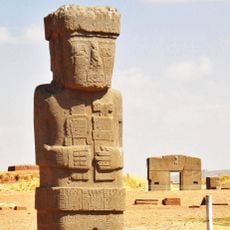
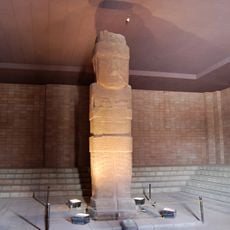
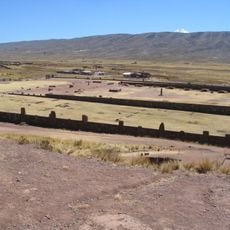
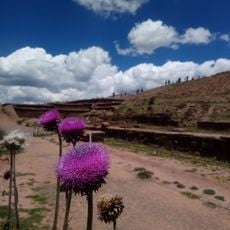
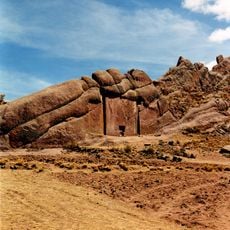
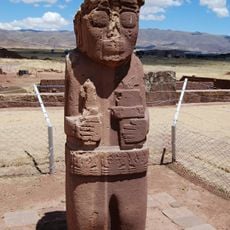
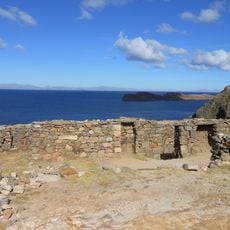
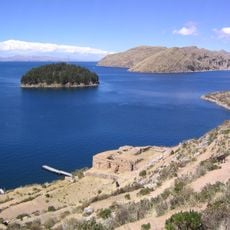
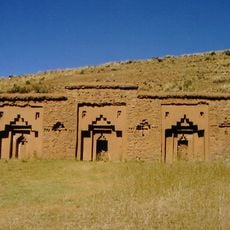
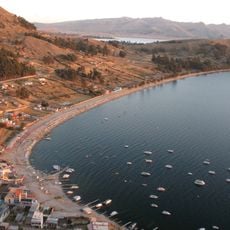
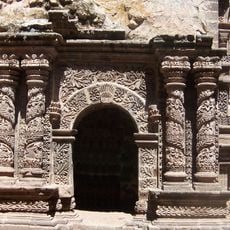
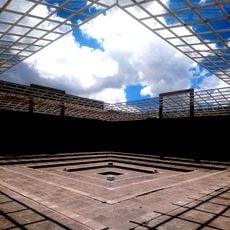
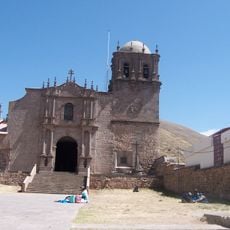
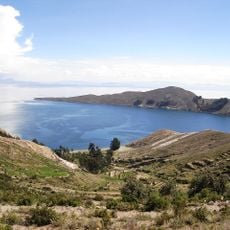
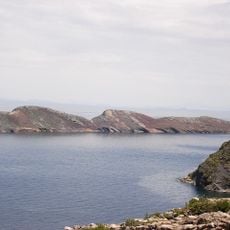
Pachat'aqa, Archaeological site near Lake Titicaca in Copacabana Municipality, Bolivia.
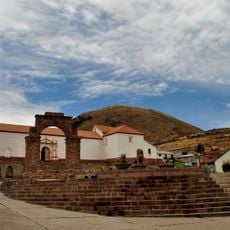
Pachat'aqa is an archaeological site with two parallel stone blocks located about 600 meters south of Copacabana. Multiple structural remains and steps indicate a carefully organized construction for specific observational purposes.
This site was built during the Chiripa culture period around 1764 BC. It was constructed to track celestial movements and help predict important calendar events for ancient communities.
The name Pachat'aqa comes from the Aymara language and means 'place where time is measured'. This reflects how ancient Andean peoples used this location to track the movement of celestial bodies.
The site sits on the summit of Mount Kesanani, about 600 metres south of Copacabana town, reached on foot via a marked uphill path; sturdy shoes and water are sensible for the climb. The two parallel stone blocks stand at the top, so allow time to walk up and back down before dark.
The Spanish name "Horca del Inca" (Inca Gallows) is a misnomer: the two parallel stone blocks form a lintel, not a gallows. The Aymara name Pachataka means "place where time is measured", and the structure was used to determine seasons, track lunar movements and predict eclipses.
The community of curious travelers
AroundUs brings together thousands of curated places, local tips, and hidden gems, enriched daily by 94,012 contributors worldwide.