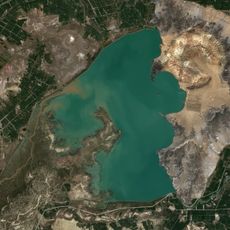
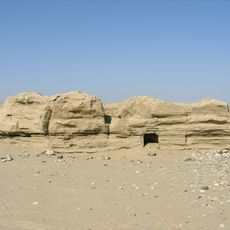
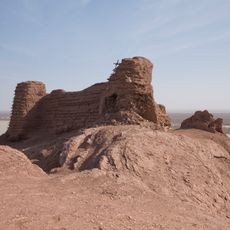
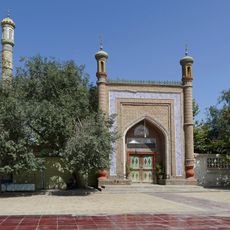
Djoumboulak Koum, Archaeological site in Keriya, Xinjiang, China.
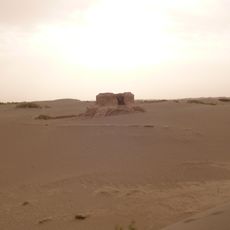
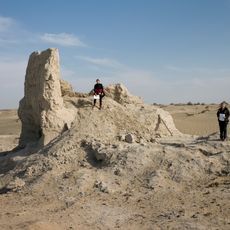
Djoumboulak Koum is an archaeological site in the Taklamakan desert in Xinjiang, where ruins of an ancient fortified settlement lie buried beneath sand layers. The remains reveal settlement structures and everyday objects left behind by people living here in the first half of the first millennium before Christ.
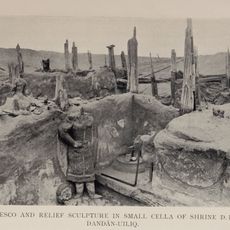
The site was excavated between 1991 and 1998 by Franco-Chinese teams and revealed a fortified settlement from the middle of the first millennium before Christ. These excavations showed that this region of Central Asia was long inhabited and occupied by organized communities.
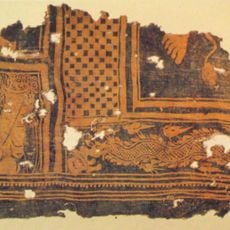
The discoveries at this location include metalwork, textile fragments, and pottery that demonstrate the advanced craftsmanship of early Central Asian communities.
The site is located in the Taklamakan desert, so proper equipment for desert conditions is important, including protection from sun and sand. Visitors should check in advance with authorities in Xinjiang, as access may be restricted.
The dry desert climate and sand dunes have preserved the archaeological remains in remarkable condition over many centuries. These natural conditions make the location an exceptional source for studying ancient material cultures.
The community of curious travelers
AroundUs brings together thousands of curated places, local tips, and hidden gems, enriched daily by 91,471 contributors worldwide.