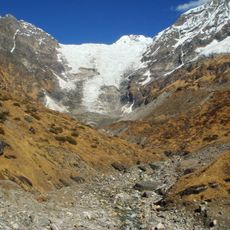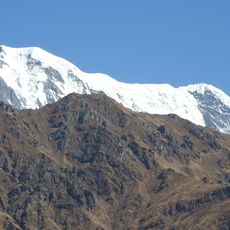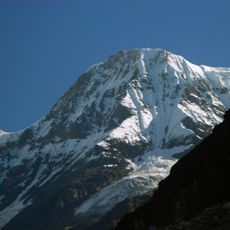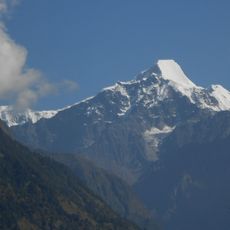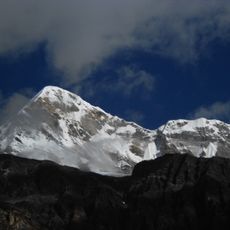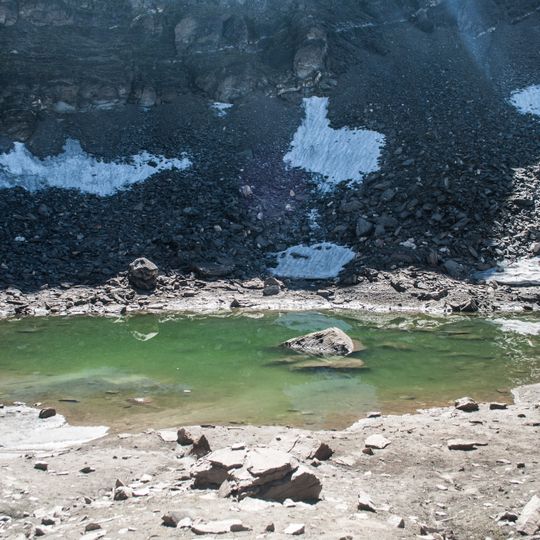
Roopkund, Glacial lake in Chamoli district, India
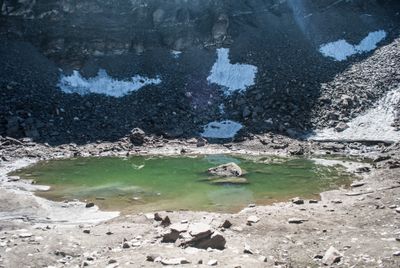
Roopkund is a glacial lake in Chamoli district at 5,029 meters (16,499 feet) altitude in the Himalayas. The circular body of water measures roughly 40 meters (130 feet) across and reaches three meters (10 feet) in depth.
Skeletons were rediscovered in 1942 by forest ranger Hari Kishan Madhwal; British authorities first feared they were casualties of a hidden Japanese invasion force. Radiocarbon dating at Oxford gave 850 CE ±30 years, and later genome-wide analysis of 38 individuals showed two separate events: 23 people of South Asian ancestry around 800 CE, and 15 people of eastern Mediterranean and Southeast Asian ancestry around 1800 CE.
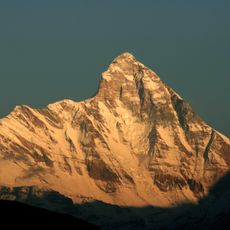
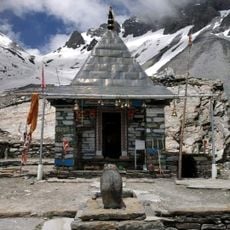
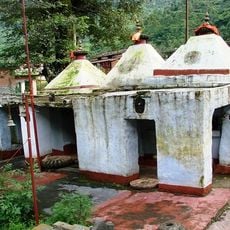
Local songs and legends tell of Raja Jasdhaval of Kanauj, his pregnant wife Rani Balampa, servants and a dance troupe, all caught in a hailstorm near the lake on their pilgrimage to the Nanda Devi shrine. The lake lies on the Nanda Devi pilgrimage route, and the Nanda Devi Raj Jat festival is held here every twelve years.
The lake stays frozen throughout winter, and bones become visible in spring when ice melts. The trek to reach it takes several days and requires acclimatization to altitude.
Genetic tests on the skeletons revealed three distinct ancestry groups from South Asia, Southeast Asia, and the eastern Mediterranean. Researchers believe the people died at different times from weather events such as hailstorms.
The community of curious travelers
AroundUs brings together thousands of curated places, local tips, and hidden gems, enriched daily by 92,310 contributors worldwide.