See the monuments around you in AROpen chests in the app
Around Us is built for your phone — point your camera at the streets and discover the monuments and places around you in augmented reality.Around Us is built for your phone — chests unlock when you walk, explore and capture nearby places.
Rome preserves more than 2,000 years of architectural history within its city limits, maintaining ancient temples and amphitheaters beside Renaissance churches and Baroque piazzas. The Roman Forum displays ruins from the first century BC through the fourth century AD, including government buildings and temples that formed the administrative heart of the Roman Empire. The Pantheon demonstrates Roman engineering with its concrete dome, while the Colosseum remains the largest ancient amphitheater ever built. The city evolved through subsequent centuries as papal patronage transformed medieval Rome into a showcase of Renaissance and Baroque art and architecture.
The Vatican holds significant religious and artistic collections, including the Sistine Chapel with Michelangelo's ceiling frescoes and Saint Peter's Basilica, the world's largest church building. Throughout the historic center, public squares like Piazza Navona preserve the footprint of ancient Roman structures while displaying Baroque fountains by Bernini and Borromini. The Trevi Fountain draws thousands of visitors daily to its 18th century facade, and the Spanish Steps connect different elevation levels of the city. Rome's neighborhoods maintain traditional Italian life around these monuments, with restaurants, shops and residences occupying buildings from various historical periods.
Rome preserves more than 2,000 years of architectural history within its city limits, maintaining ancient temples and amphitheaters beside Renaissance churches and Baroque piazzas. The Roman Forum displays ruins from the first century BC through the fourth century AD, including government buildings and temples that formed the administrative heart of the Roman Empire. The Pantheon demonstrates Roman engineering with its concrete dome, while the Colosseum remains the largest ancient amphitheater ever built. The city evolved through subsequent centuries as papal patronage transformed medieval Rome into a showcase of Renaissance and Baroque art and architecture.
The Vatican holds significant religious and artistic collections, including the Sistine Chapel with Michelangelo's ceiling frescoes and Saint Peter's Basilica, the world's largest church building. Throughout the historic center, public squares like Piazza Navona preserve the footprint of ancient Roman structures while displaying Baroque fountains by Bernini and Borromini. The Trevi Fountain draws thousands of visitors daily to its 18th century facade, and the Spanish Steps connect different elevation levels of the city. Rome's neighborhoods maintain traditional Italian life around these monuments, with restaurants, shops and residences occupying buildings from various historical periods.
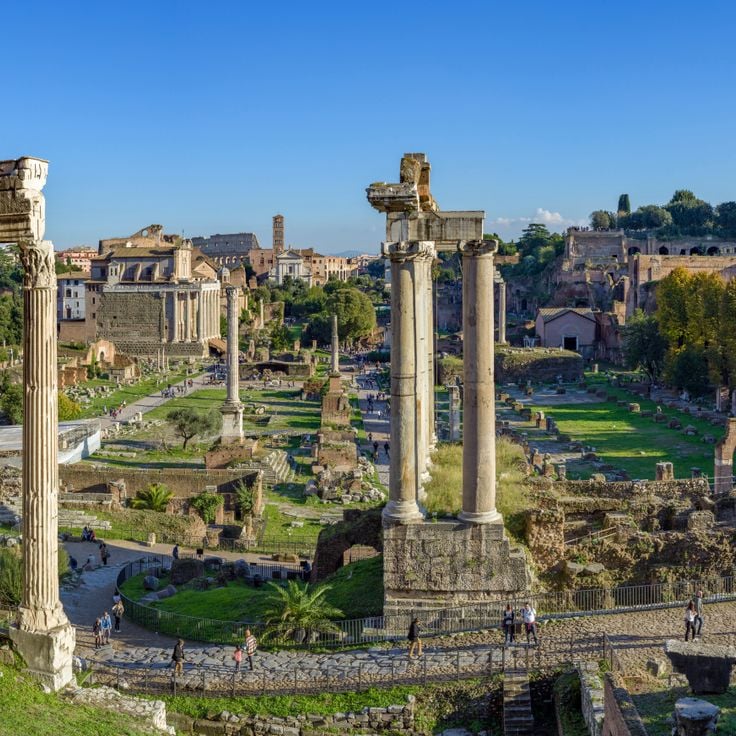
The Roman Forum sits between the Palatine and Capitoline hills and preserves temples, basilicas and government buildings from Roman antiquity. It served as the political and commercial center of the Roman Empire and today displays ruins spanning from the first century BC to the fourth century AD. The site includes the Via Sacra, the Temple of Saturn, the Basilica Aemilia and the Arch of Septimius Severus. This location documents the architectural and administrative evolution of Roman civilization and anchors Rome's collection of more than 2,000 years of architectural history.
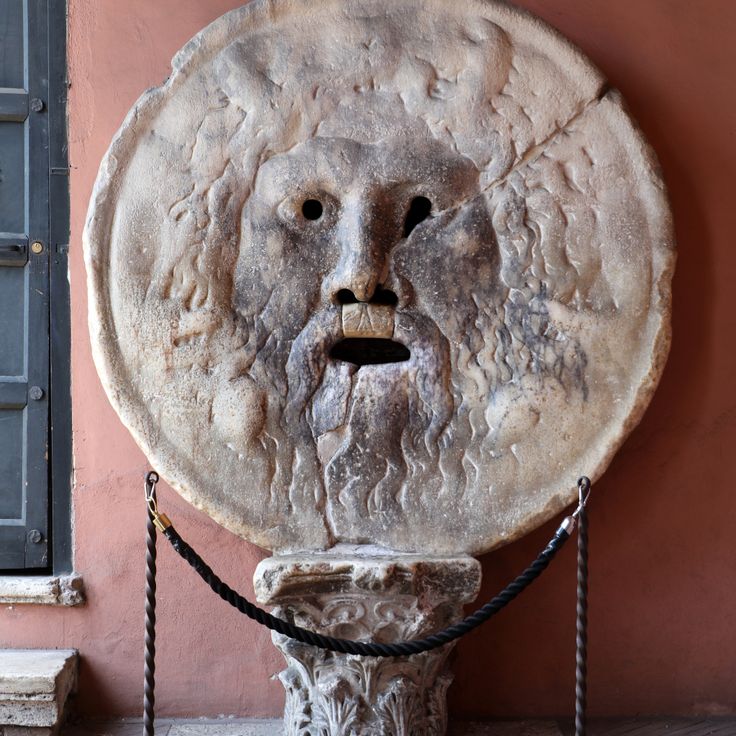
The Bocca della Verità is a round marble disc from the 1st century located in the portico of the Santa Maria in Cosmedin church. This ancient sculpture, whose name means "Mouth of Truth," originally served as a drain cover. According to medieval legend, the mouth would bite off the hand of anyone telling a lie. The disc measures approximately 5 feet 9 inches (175 centimeters) in diameter and likely represents a pagan deity or river god. This monument exemplifies how Rome integrates ancient artifacts into its Christian architecture.
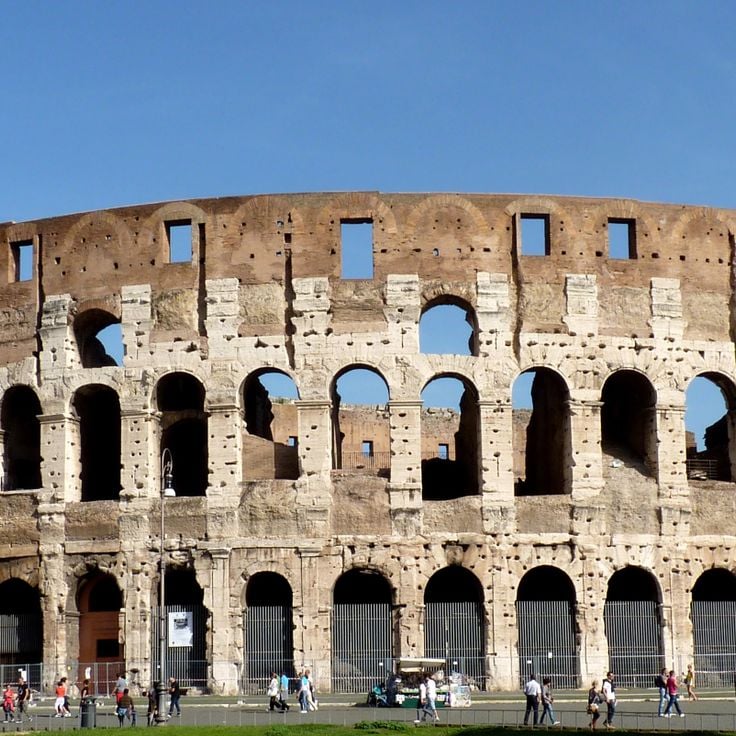
The Colosseum is the largest ancient amphitheater ever built, showcasing Roman engineering and construction from the first century. With its four levels and numerous entrances, it could accommodate tens of thousands of spectators for gladiator fights and animal shows. Today the Colosseum stands as one of the most striking remains of the Roman past and witnesses the more than 2,000 years of architectural history that Rome preserves within its city limits.
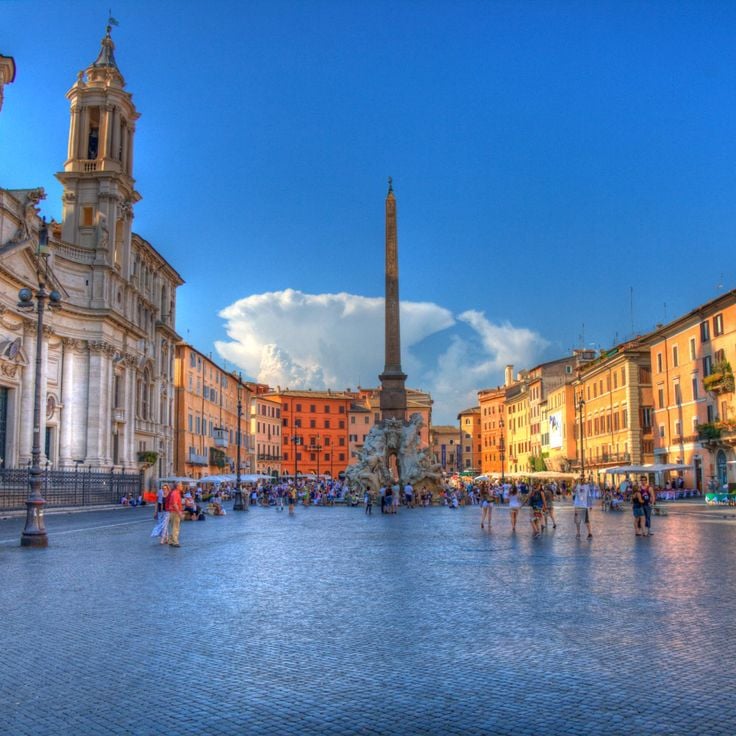
Piazza Navona connects Roman antiquity with Renaissance and Baroque design, as this square preserves the outline of the ancient Stadium of Domitian. Three fountains occupy the plaza: Bernini's Four Rivers fountain stands at the center, the Neptune fountain to the north, and the Moor fountain to the south. Seventeenth-century buildings surround the square, displaying typical Roman Baroque facades. The church of Sant'Agnese in Agone, designed by Borromini, anchors the western side and completes the Baroque ensemble. Located between the Pantheon and the Tiber River in Rome's historic center, this plaza has served as a gathering place for centuries, fitting seamlessly within the city's layers of architectural history that span over two millennia.
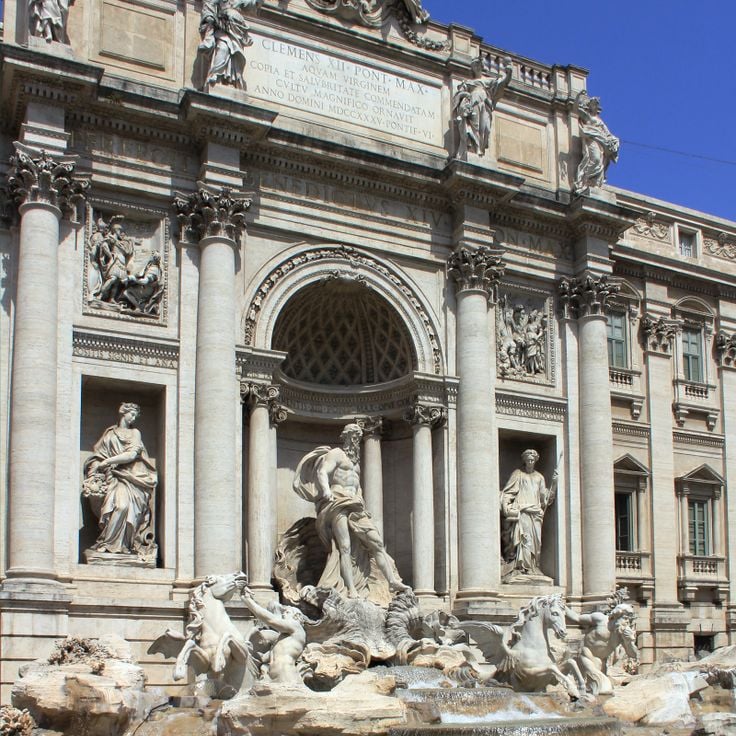
The Trevi Fountain from the 18th century displays Neptune riding a shell chariot pulled by tritons. This structure combines a monumental palace facade with a central basin. The fountain sits in a small square where thousands of visitors gather daily. It fits into Rome's long history of more than 2,000 years of architecture, part of the historic center where Baroque art stands alongside ancient ruins and Renaissance churches.
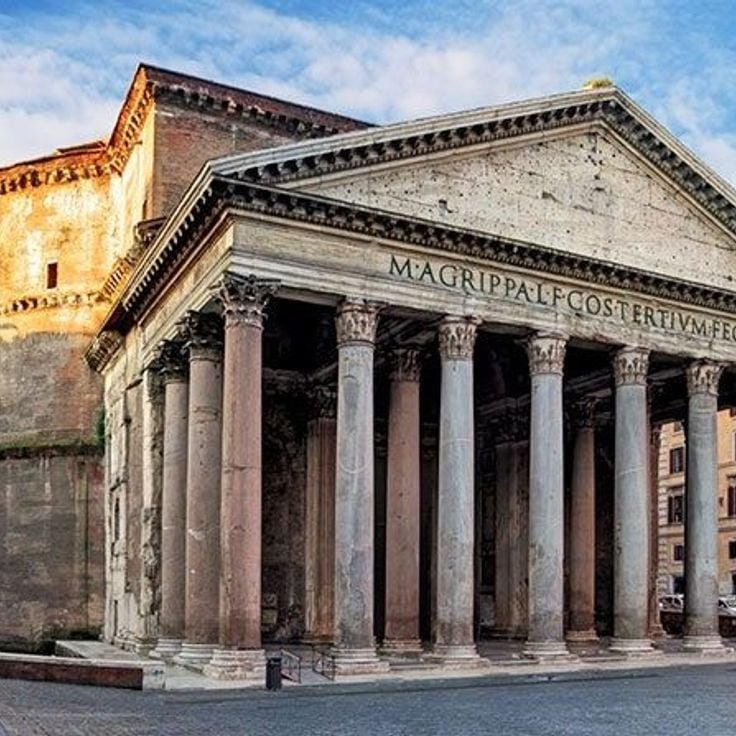
The Pantheon in Rome is an ancient Roman building that shows how the Romans built with concrete and engineering skill. It stands out for its large dome, which has no supporting columns inside and lets light stream through an opening at its top. Built in the early empire period, it remains one of the best-preserved structures from Roman times. The building sits in the historic center of Rome among temples, churches, and palaces from many periods, representing how the city has maintained its architectural past from over 2000 years of history.
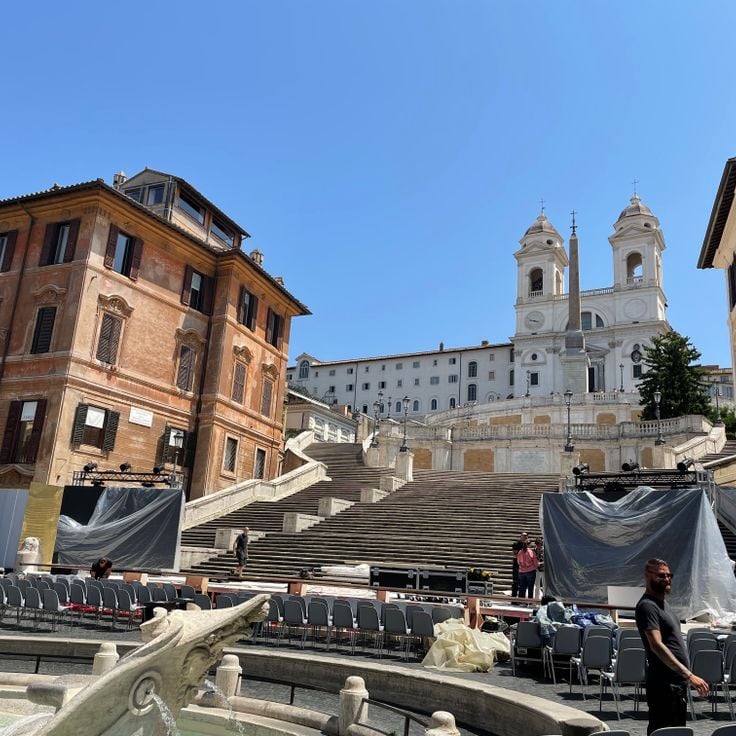
The Spanish Steps are a grand staircase in Rome that rises up a steep slope, flanked by historic buildings on both sides. This monumental stairway connects Piazza di Spagna with the Trinita dei Monti church and serves as a central gathering place in Rome's historic center. People sit on the steps throughout the day, watching the flow of life around them. The surrounding streets are filled with shops, restaurants and residences housed in buildings spanning different historical periods. This location embodies the way Rome blends ancient urban planning with the everyday rhythms of modern city life.
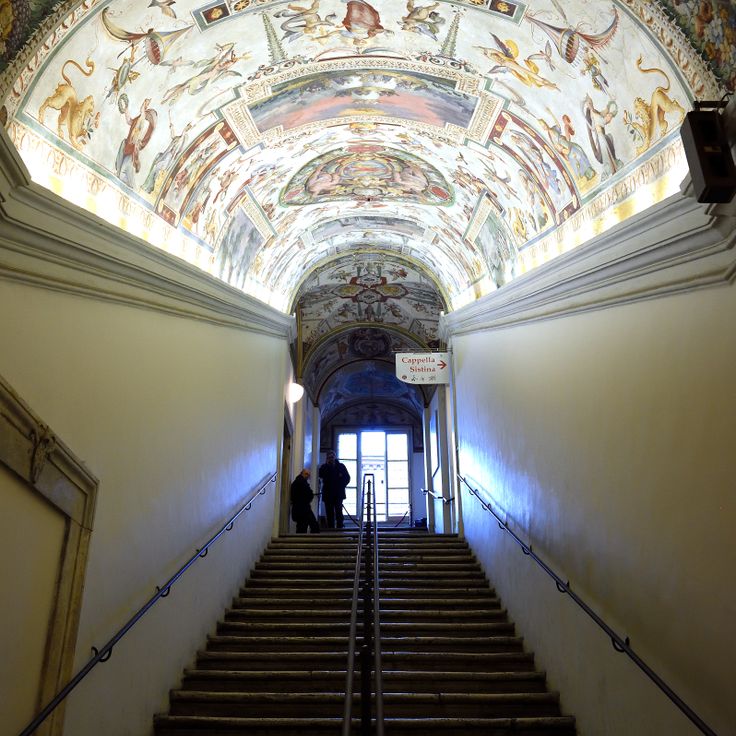
The Vatican Museums display art collections built over centuries of papal patronage. They sit within Rome, where the city preserves more than 2,000 years of architectural history. The museums house works from ancient times through the Renaissance and Baroque periods. Visitors walk through long corridors filled with paintings, sculptures, and ancient objects. The Sistine Chapel with Michelangelo's ceiling frescoes stands as the centerpiece. The complex shows how papal support shaped Rome's role as a center of art and faith.
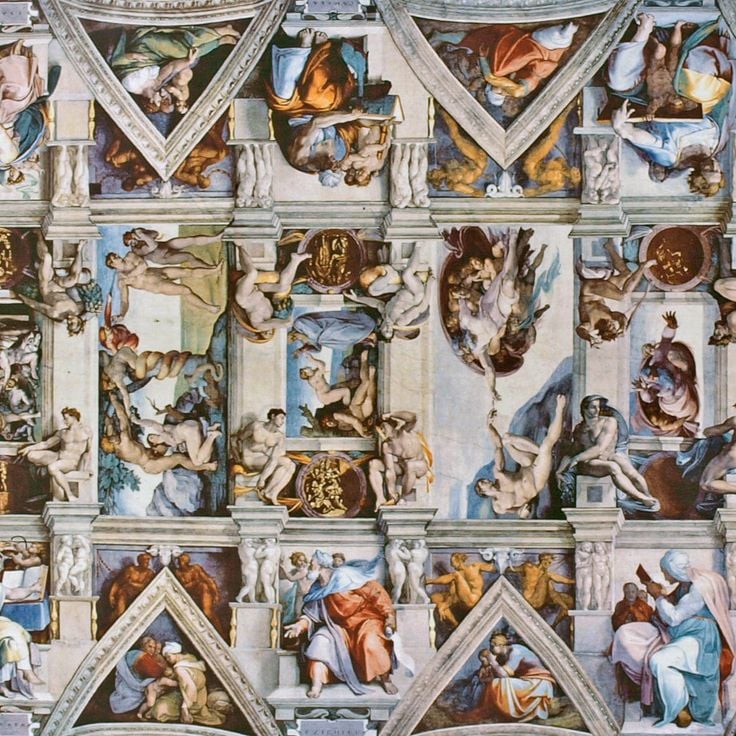
The Sistine Chapel holds one of Rome's greatest artistic treasures, with Michelangelo's ceiling paintings and Last Judgment fresco from the 16th century. This papal chapel preserves works that shaped Rome's religious and artistic importance, drawing visitors from around the world to see paintings that define the city's cultural legacy.
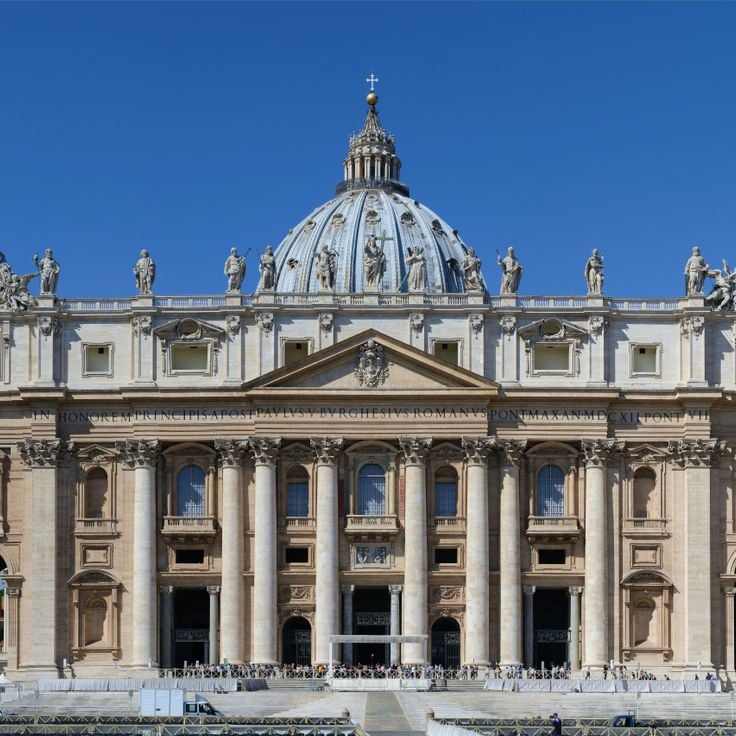
Saint Peter's Basilica is the world's largest church building and represents over 2,000 years of architectural history in Rome. Its dome, designed by Michelangelo, defines the city's skyline and showcases Roman engineering mastery. The altar sits above the tomb of Saint Peter, making this basilica the most important place in the Catholic Church. Inside, artworks from the Renaissance and Baroque periods fill the vast interior. The building itself shows how papal patronage shaped Rome into a center of religious and artistic achievement.
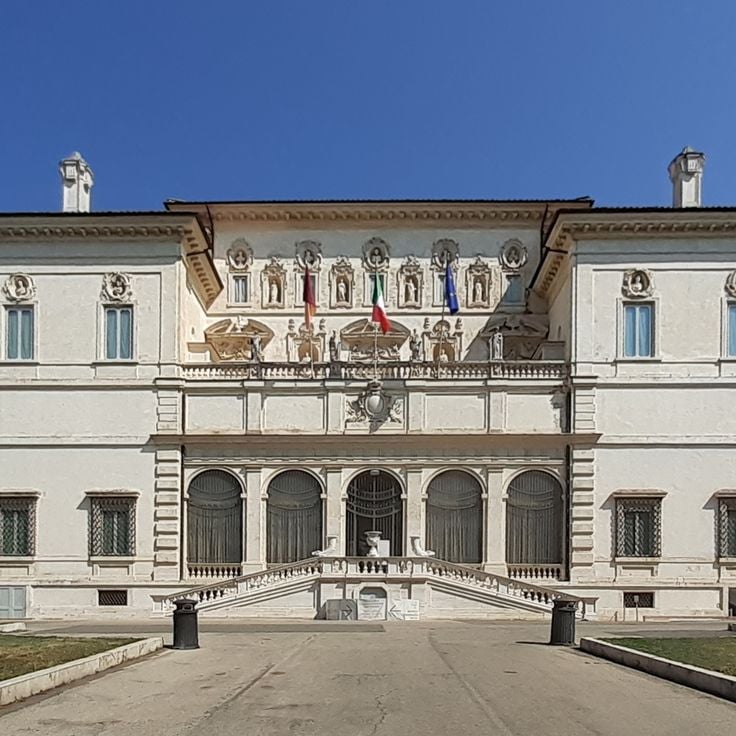
The Galleria Borghese is a museum housed in a seventeenth century villa within Borghese Park, displaying works by Bernini, Caravaggio and Raphael. This museum represents one of Rome's finest artistic collections, part of the city's preservation of more than 2,000 years of architectural and artistic history. The villa itself exemplifies the artistic splendor that emerged during the Renaissance and Baroque periods, when papal patronage transformed Rome into a showcase of masterworks and architectural treasures.
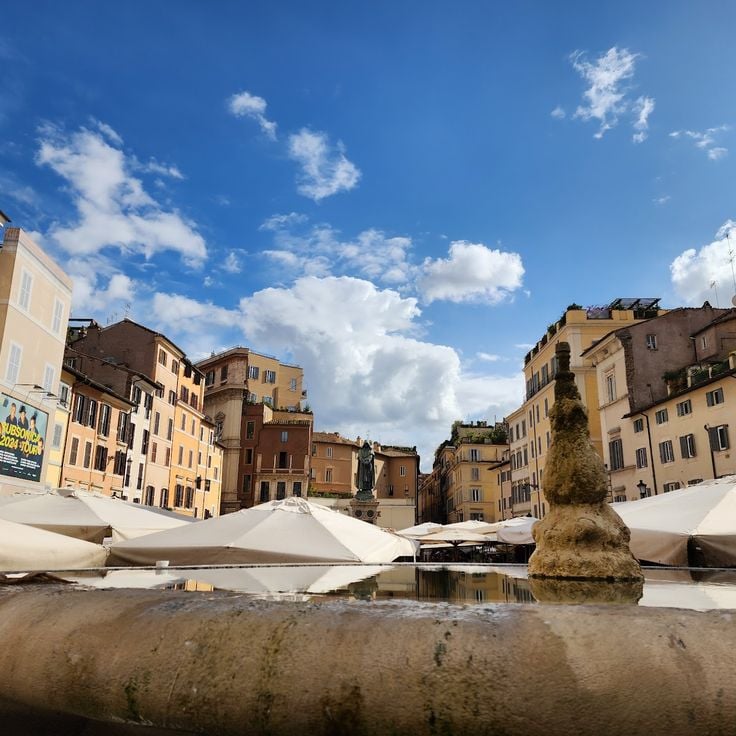
Campo de' Fiori is a historic square in Rome that fits into this collection of monuments and landmarks because it preserves the city's active market tradition. Since the 19th century, this square has hosted a daily market selling food, spices and flowers. The square shows how Rome functioned as a center of everyday life alongside major monuments like the Roman Forum and Pantheon. Buildings from different periods surround the square, reflecting traditional Roman life and commerce.
Trastevere is a district in Rome shaped by medieval streets and local eating traditions. Narrow lanes wind between old buildings where restaurants serve regional Roman food. The Basilica of Santa Maria dates to the 12th century and displays Romanesque design. The neighborhood keeps the feel of older Rome with its tight streets and family-owned shops. You will find people gathering in the restaurants and on small squares throughout the day. This district fits well with your visit to Rome's ancient temples and churches, as it shows how residents have lived and worked in the city across many centuries.
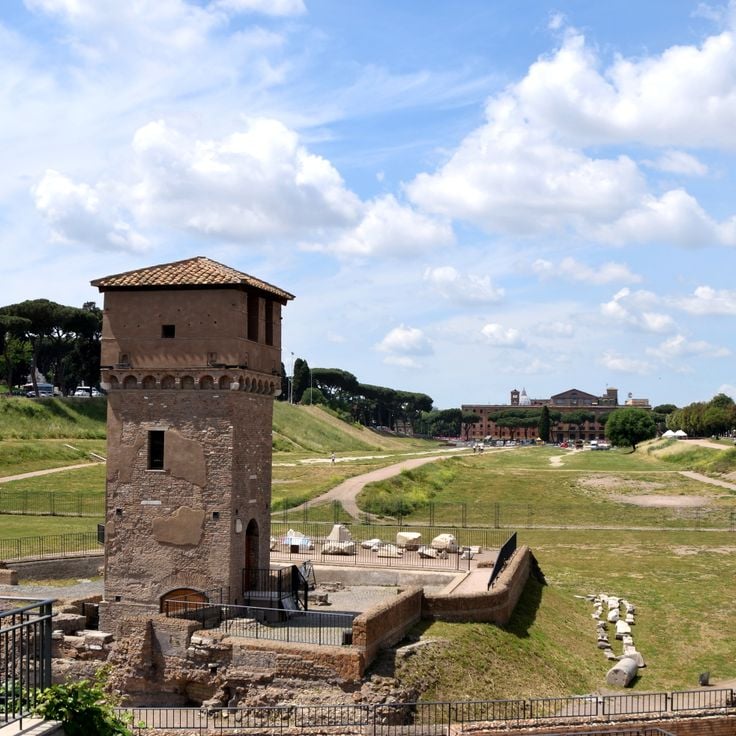
The Circus Maximus is the ancient stadium in Rome that held up to 250,000 spectators and served as the primary venue for chariot races from the 6th century BC through the 6th century AD. It shows how Romans built large gathering places for their favorite entertainments and stands as part of Rome's more than 2,000 years of architectural history.
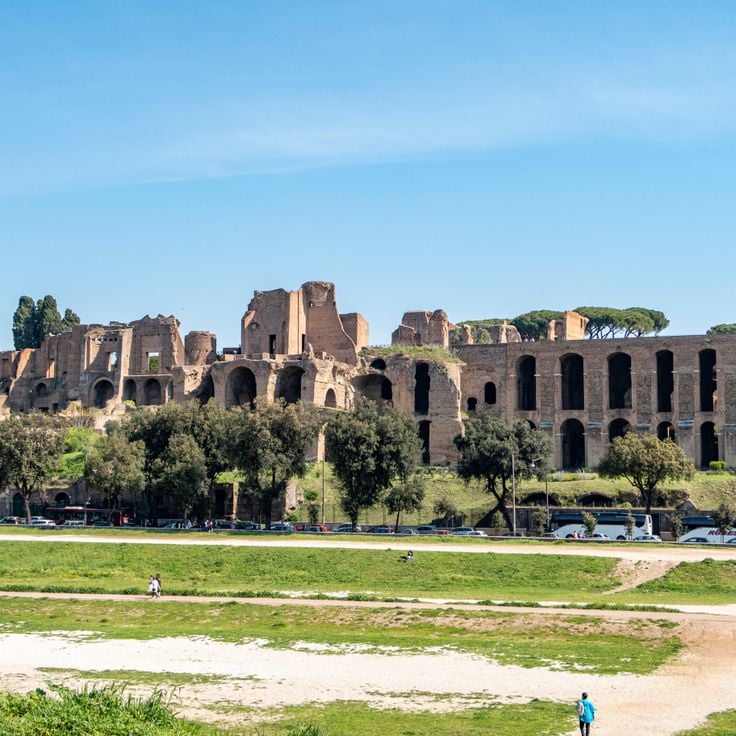
Palatine Hill is one of the seven hills of Rome and sits at the heart of the ancient city. Here stand the remains of several imperial palaces from different periods of Roman history. The hill shows excavations from the Iron Age and documents Rome's development from an early settlement into the capital of an empire. The ruins allow visitors to see the living spaces and public areas where Roman emperors lived and ruled. Palatine Hill connects with the nearby Roman Forum and the Colosseum to form a unified archaeological site that displays Rome's political and administrative history across more than 2,000 years.
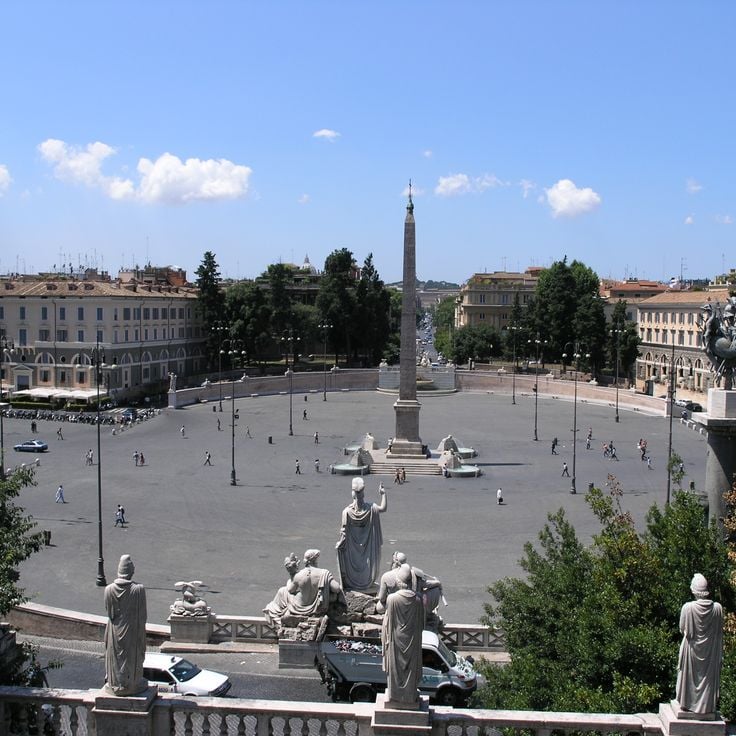
Piazza del Popolo is a broad square on Rome's northern side where multiple historical periods come together visibly. An Egyptian obelisk from the 13th century BC stands in the center, transported to Rome to enhance the city's grandeur. Two Baroque churches built in the 17th century frame the sides of the square and contribute to its religious character. The Flaminio gateway marks an entrance to the square and connects it to ancient Roman times. The square itself is spacious and demonstrates how Rome has layered architectural styles across centuries. Visitors can observe how an ancient Egyptian monument sits alongside European Baroque structures in a single public space.
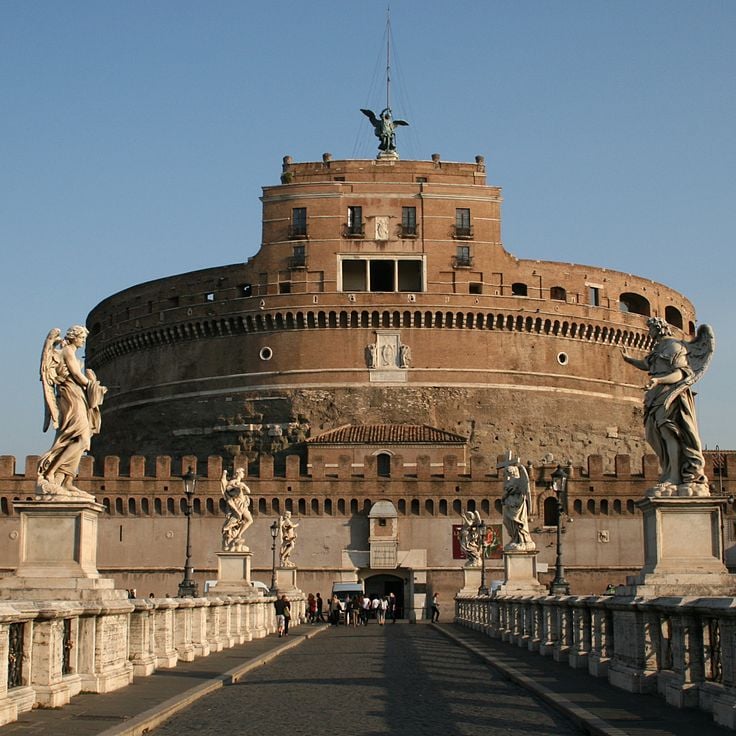
Castel Sant'Angelo was built in 139 as a mausoleum for Emperor Hadrian and later transformed into a papal fortress. Over the centuries, this cylindrical structure served as a refuge for popes, a military stronghold and a prison. A covered passageway connects Castel Sant'Angelo directly to the Vatican, providing popes with a secure escape route during times of crisis. The upper terrace offers views across Rome and the Tiber River. Today the building houses a museum displaying papal apartments, weapon collections and Renaissance frescoes that document the different phases of use throughout this ancient structure's history.
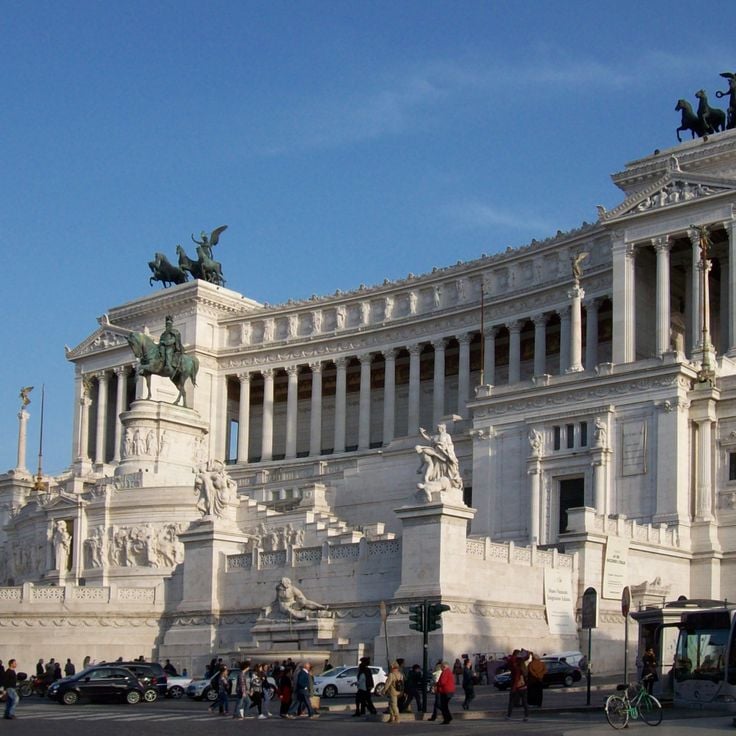
The Altare della Patria is a white marble national monument inaugurated in 1911 to celebrate Italy's unification. It houses the tomb of the unknown soldier and displays bronze sculptures representing Italian regions. The architecture combines classical Roman elements with early 20th-century design. Wide staircases lead to upper terraces that offer views across the city and the Roman Forum. This monument fits within Rome's preservation of 2,000 years of architectural history, from ancient temples and amphitheaters to Renaissance churches and Baroque squares.
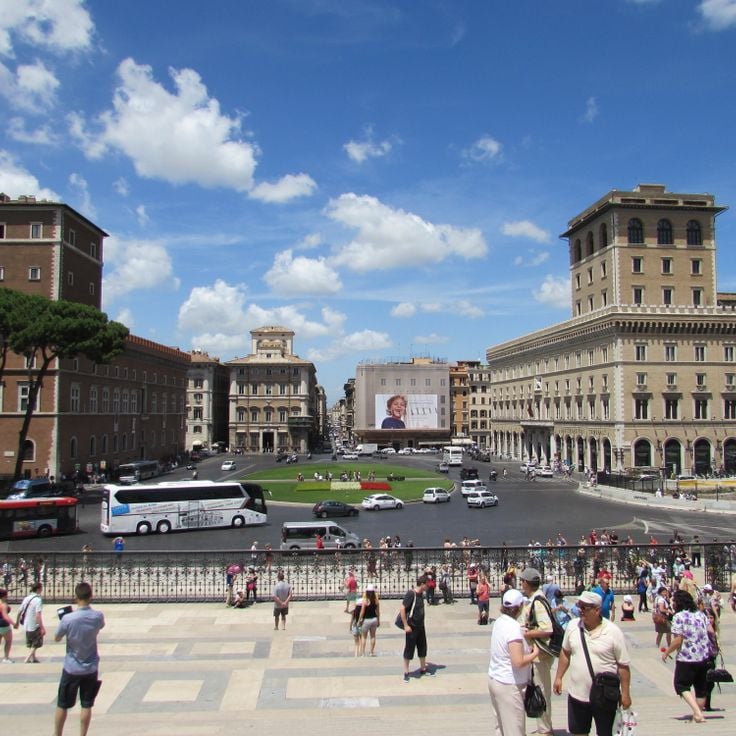
Piazza Venezia connects four major streets in Rome's historic center and showcases the city's architectural layers spanning over 2000 years. The Palazzo Venezia displays Renaissance design, while the Victor Emmanuel II National Monument rises with its white marble facade, celebrating Italian unification. From this central square, visitors can see how different periods shaped Rome's appearance, from ancient street patterns to medieval and modern additions. Local shops and restaurants around the piazza reflect the rhythm of daily life in this part of the city.
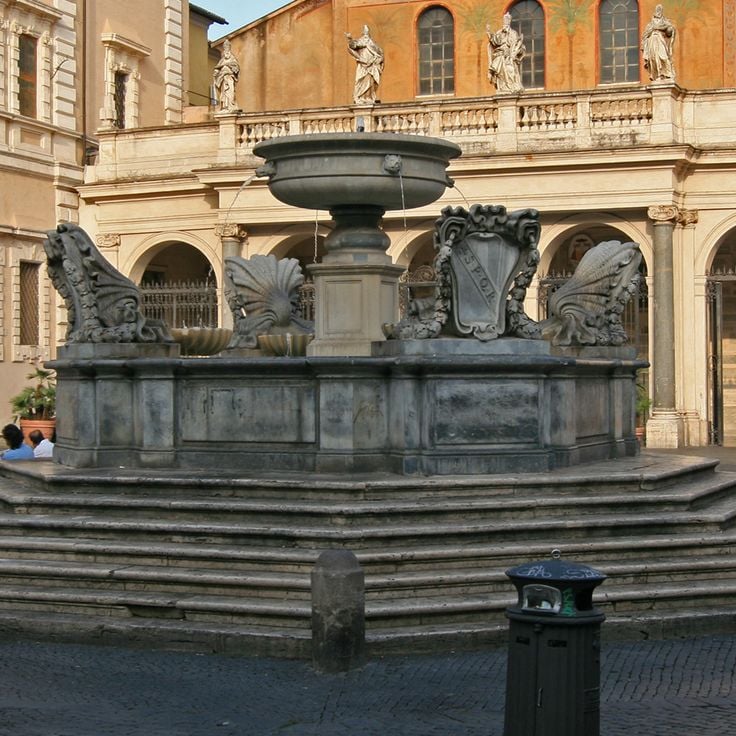
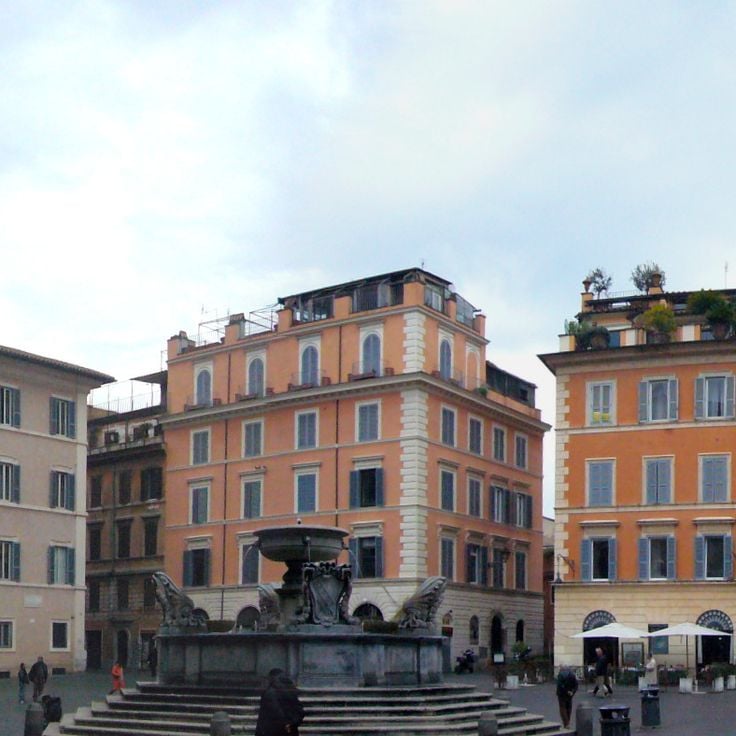
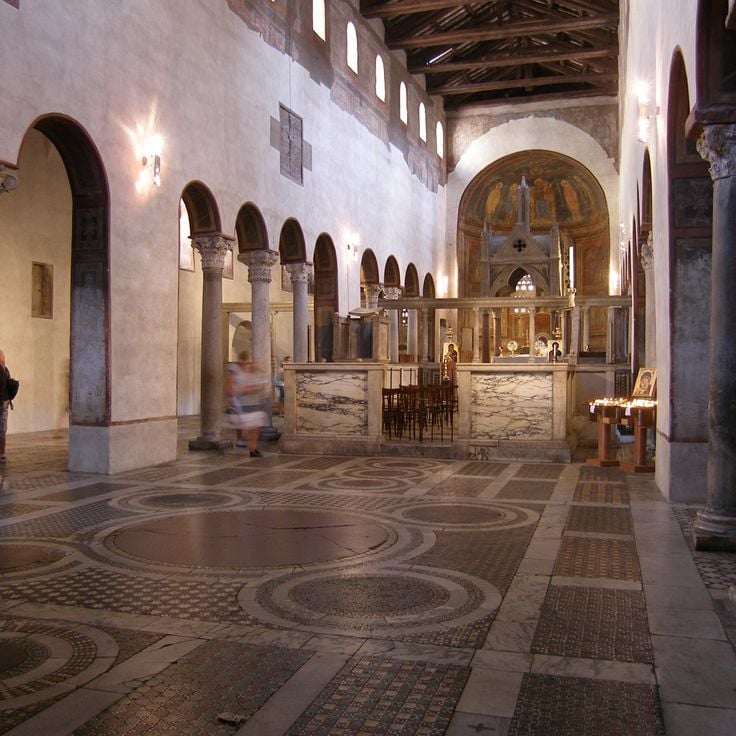
Piazza di Santa Maria in Trastevere is part of the collection of ancient monuments and landmarks to visit in Rome. The medieval square houses a 12th-century basilica with mosaics and an octagonal fountain from the 17th century. The neighborhood maintains traditional Italian life around this monument, with restaurants, shops and residences occupying buildings from different historical periods.
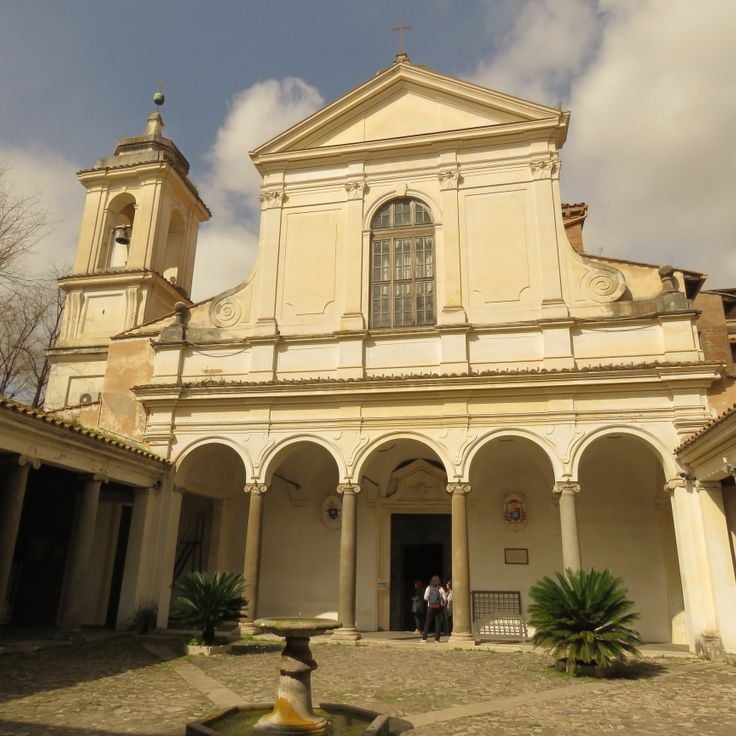
This Basilica of San Clemente in Rome contains three distinct levels of construction, revealing first-century Roman buildings, a Mithraic temple site, and medieval frescoes. The structure shows how Rome developed across different periods, with layers stacked one above another. Visitors can descend through the church and see the ancient Roman walls and religious spaces that lie beneath the current building.
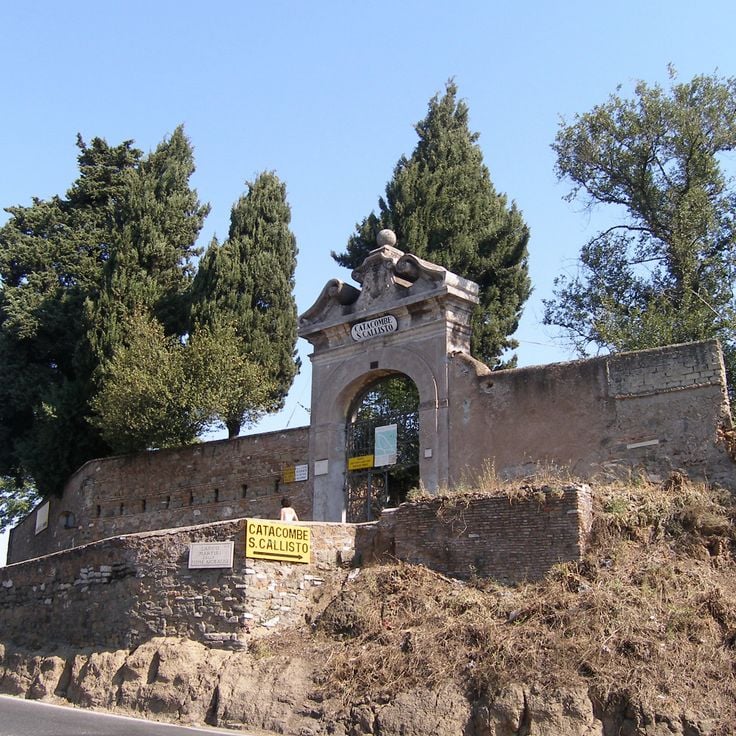
The Catacombs of Callixtus are a network of underground tunnels in Rome that contain the tombs of 16 popes and many martyrs. These burial sites show how early Christians placed their dead beneath the city while Rome was transforming from ancient temples into a center of papal power. The corridors are narrow and dimly lit, with simple niches carved into the walls where the faithful were buried. The Catacombs of Callixtus reveal the story of Rome's early Christian community across several centuries.
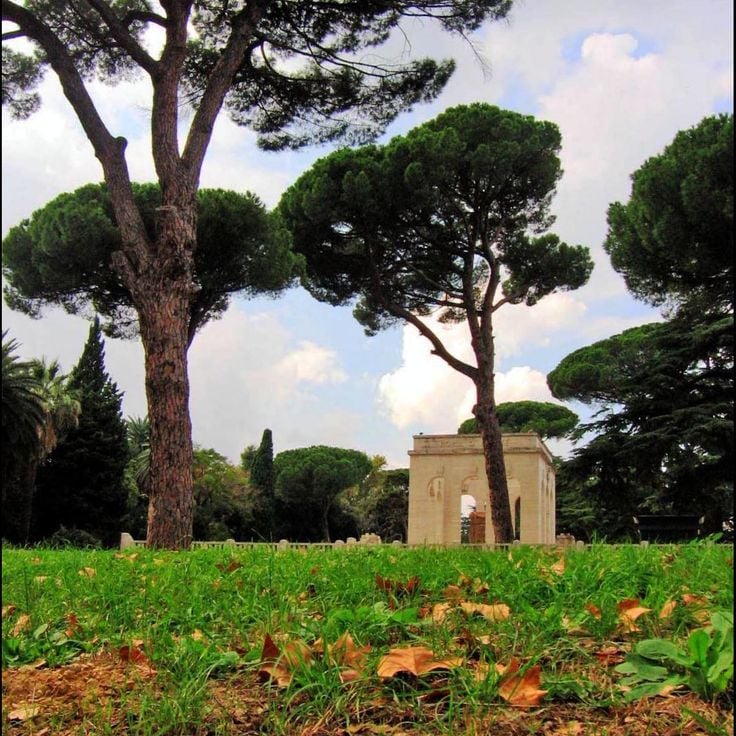
The Janiculum is an 82-meter hill in Rome from which visitors can see the seven hills of Rome and the Vatican. This viewpoint offers a perspective on the city that preserves over 2,000 years of architectural history, from ancient temples and amphitheaters to Renaissance churches and Baroque squares. From here you can observe the Pantheon with its concrete dome, the Colosseum as the largest ancient amphitheater, and historic plazas like Piazza Navona with its fountains.
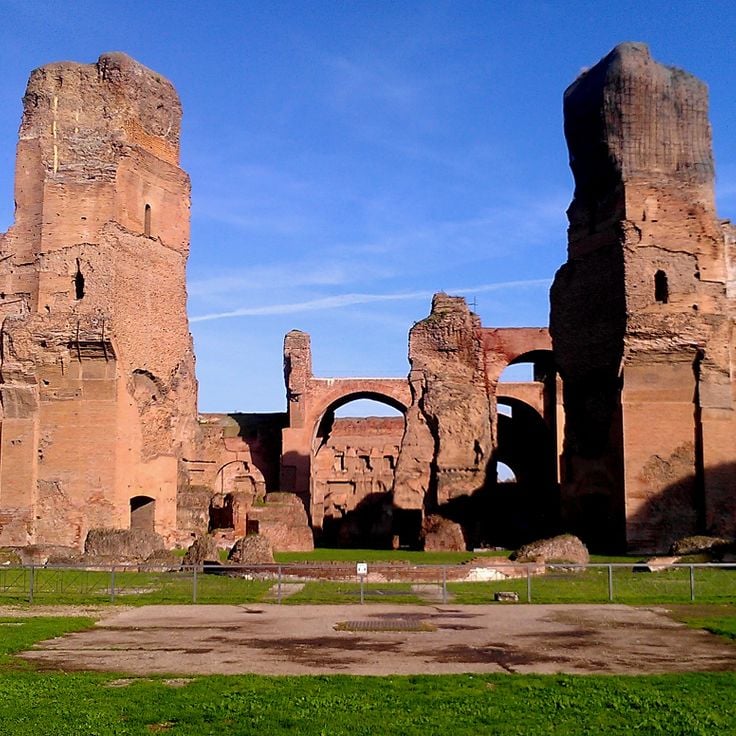
The Baths of Caracalla are an ancient bathing complex from the 3rd century that reveals how Romans lived and spent their leisure time. This facility belonged to Rome's great monuments and today stands as ruins that visitors can explore. The structure was large enough to serve many people at once and featured various pools and bathing chambers. The Baths of Caracalla demonstrate how important public bathing was to daily life in the Roman Empire. They complement the other ancient buildings throughout Rome and showcase the engineering skills of Roman builders.
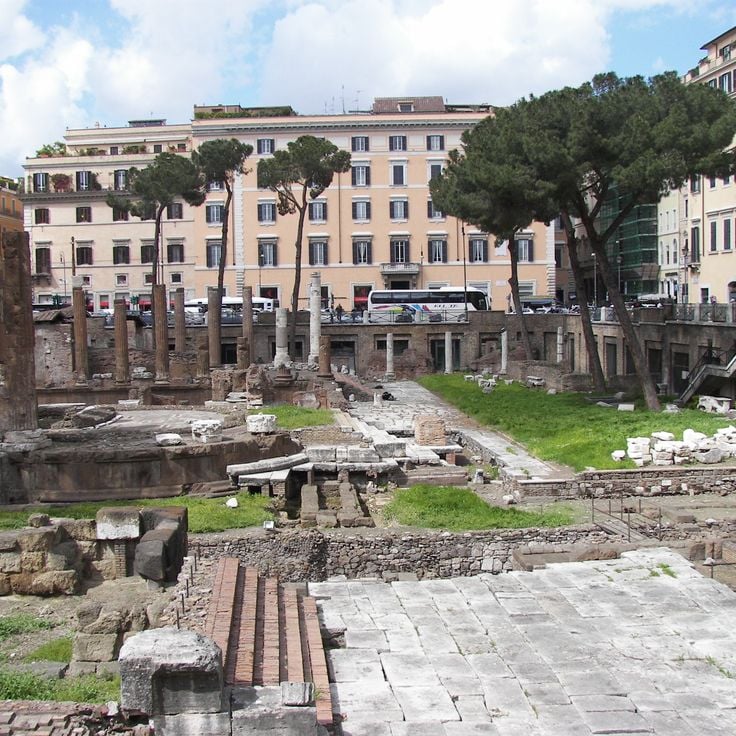
The Largo di Torre Argentina is an ancient square in Rome that preserves four Republican temples and the foundations of Pompey's Theater from the first century BC. This site shows what Rome looked like during the Republic, before emperors shaped the city. The ruins sit several meters below the modern street level and tell the story of buildings that defined Roman life over 2,000 years ago. The square belongs to Rome's vast collection of ancient monuments and landmarks, which hold centuries of architectural history throughout the city.
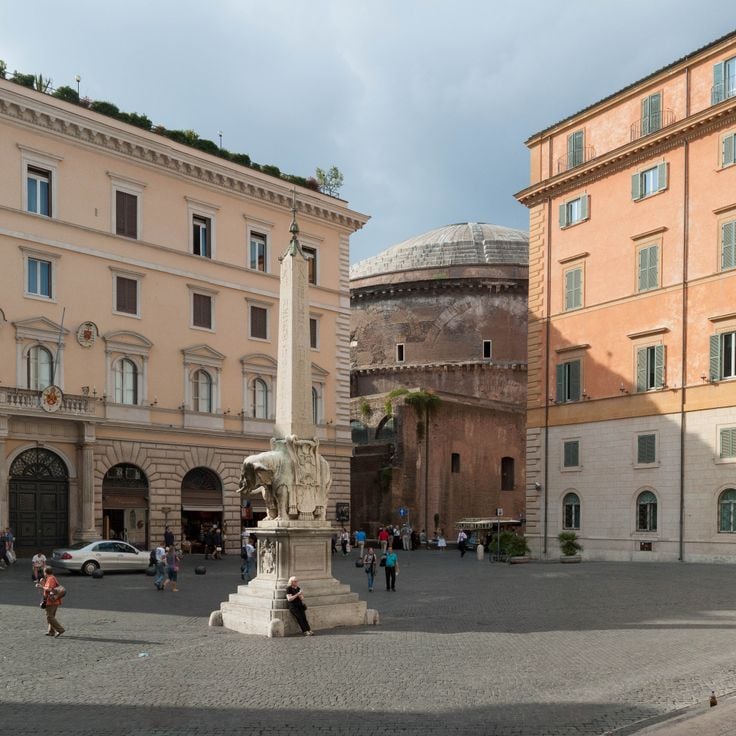
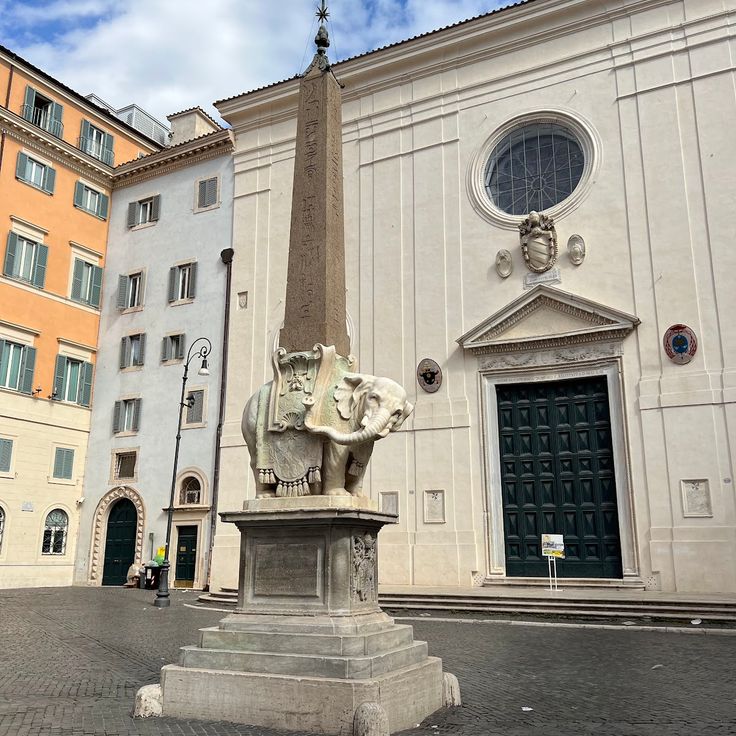
Piazza della Minerva is a historic square in Rome that displays a notable obelisk mounted on an elephant, a work created by Bernini in the 17th century. The square sits beside the Church of Santa Maria sopra Minerva and shows the skill of Baroque design. The combination of ancient architecture and later artistic additions makes this place an example of how Rome layered temples and churches across the centuries, preserving different periods within the same space.
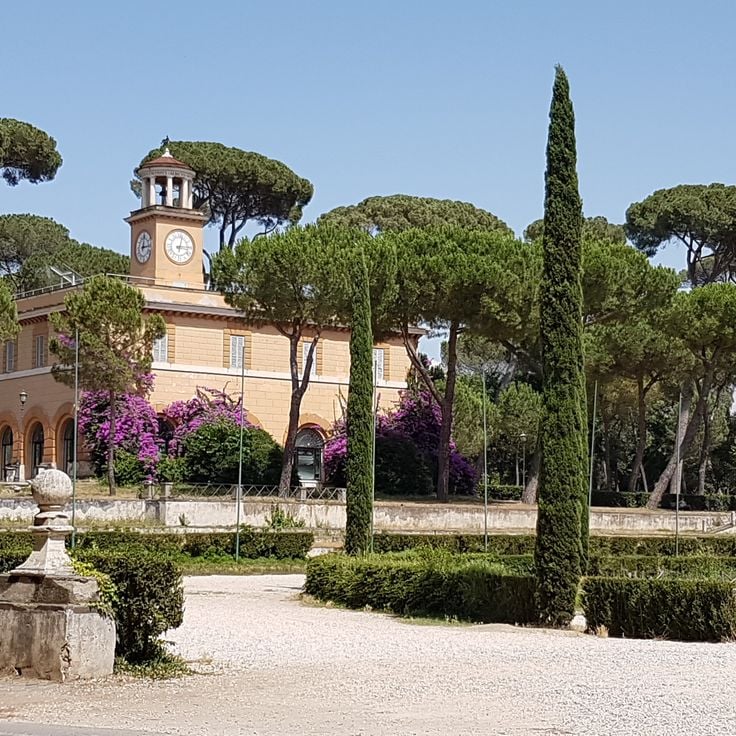
Villa Borghese Gardens is a large green park in central Rome, part of the city's 2,000 years of preserved architectural history. The gardens hold lakes, statues, museums and the Galleria Borghese, one of Rome's major art collections. Wide paths and green spaces offer a place to rest among the monuments and historic buildings that surround it. Visitors discover artworks and architecture from different periods, reflecting Rome's artistic development from ancient times through the Baroque era.
Santa Maria sopra Minerva is a Gothic basilica from the 13th century that shows how Rome layers different architectural styles across the centuries. The interior features a blue vaulted ceiling and frescoes that display artwork from various periods. The church holds the tomb of Saint Catherine of Siena and stands atop the remains of an ancient Roman temple, illustrating how history is built upon itself throughout the city.
This 8th-century basilica in Rome houses the ancient stone mask that legend says tests the truthfulness of what people say. The church sits within the city's historic center, where ancient temples, Renaissance churches, and Baroque squares stand alongside each other, showing how Rome has changed from ancient times to today. The building reflects the more than 2,000 years of architectural history that Rome preserves within its limits.
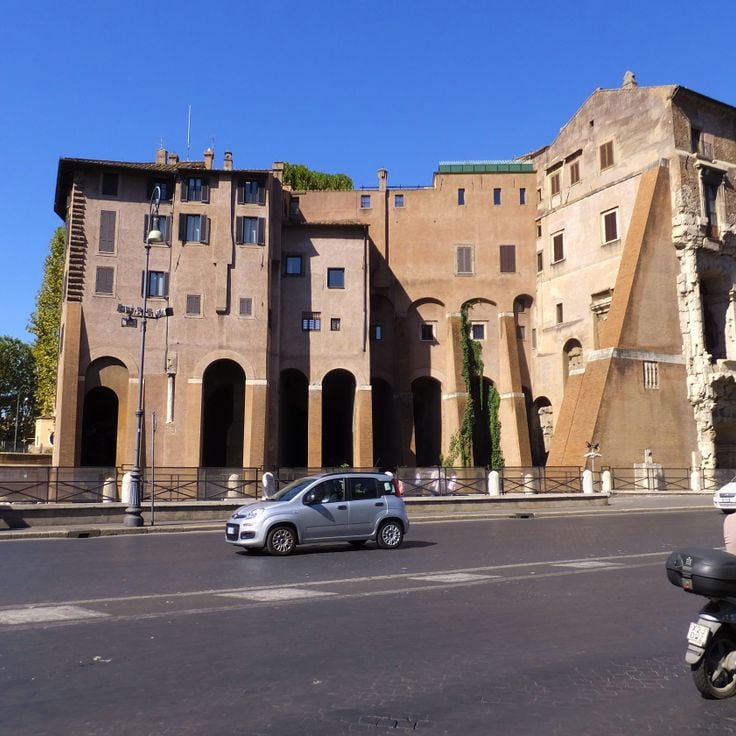
Teatro Marcello in Rome demonstrates Roman architectural design from 13 BCE, featuring three stacked orders of columns that define the structure. This theater represents the public buildings that formed Roman society and stands among the ancient monuments that shape the historic center. Visitors walking through Rome encounter this structure as part of the city's continuous display of architecture from different periods, showing how Romans designed spaces for gathering and performance.
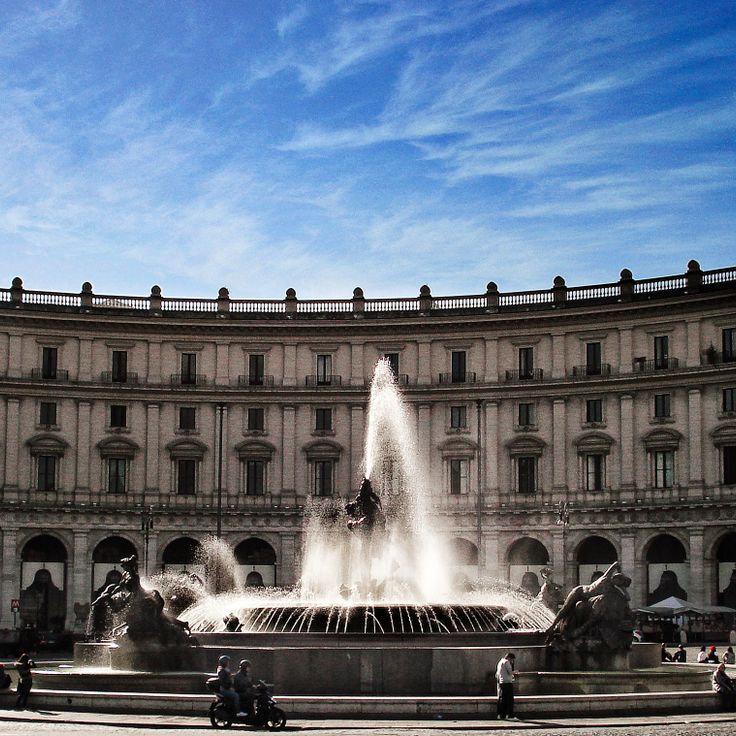
The Fontana dello Naiadi sits in the heart of Rome and displays four bronze figures spouting water. Each figure represents a nymph and embodies different types of water. Built in 1888, the fountain fits into Rome's long history, where fountains and water features have been part of the cityscape since ancient times. It stands on Piazza della Repubblica and connects the enduring tradition of Roman hydraulic engineering with 19th century design.
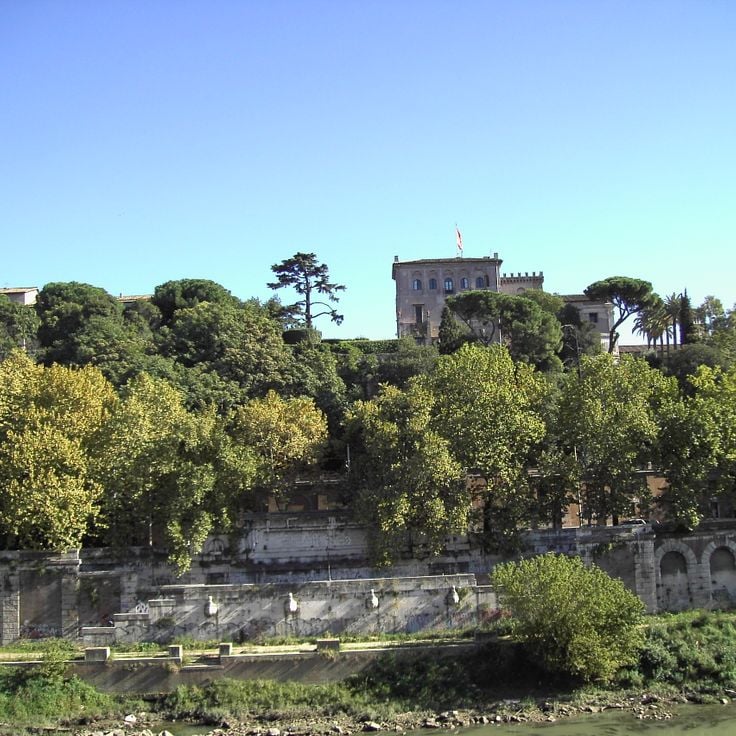
Aventine Hill is the southernmost of Rome's seven hills and rises about 47 meters above the surrounding area. The hill holds several churches built across different periods, reflecting how Rome has layered its spiritual and artistic traditions over centuries. As part of the broader collection of ancient monuments and landmarks in Rome, Aventine Hill shows how the city preserves more than 2,000 years of history alongside daily life. The hill sits within the historic center where neighborhoods maintain traditional Italian routines around these important structures, with shops and residences occupying buildings from various historical periods.
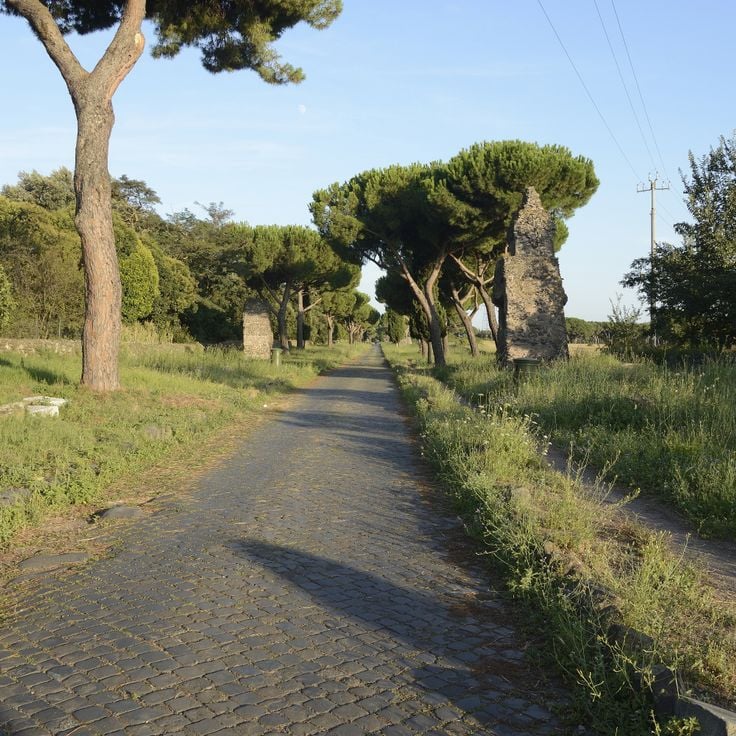
The Appian Way is one of the most important roads built by the Romans. Constructed in 312 BC, it stretches from Rome to Brindisi and carries the original stone pavement in several sections. Walking along this ancient route, you see burial monuments and house ruins left behind by people who lived nearly 2,000 years ago. The road demonstrates how Roman engineers connected their empire across long distances and how they built infrastructure that lasted for centuries.
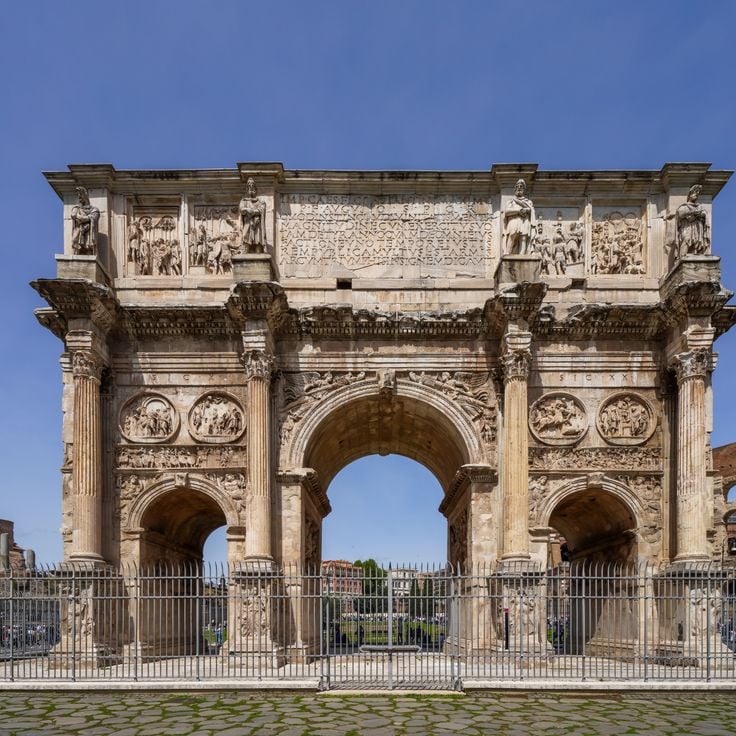
The Arch of Constantine stands within Rome's collection of ancient monuments as a testament to how Roman architecture evolved across centuries. Built in 315 AD to celebrate Constantine's victory over Maxentius, this arch rises 69 feet (21 meters) high between the Colosseum and the Palatine Hill. Its reliefs draw from different time periods, incorporating sculptural elements taken from earlier imperial monuments. The decoration merges scenes from Trajan's Dacian campaigns with imagery from Constantine's era. This combination of artistic styles marks the shift from classical Roman art to late antique forms, making the arch one of Rome's most significant monuments from the imperial period.
The Roman Forum sits between the Palatine and Capitoline hills and preserves temples, basilicas and government buildings from Roman antiquity. It served as the political and commercial center of the Roman Empire and today displays ruins spanning from the first century BC to the fourth century AD. The site includes the Via Sacra, the Temple of Saturn, the Basilica Aemilia and the Arch of Septimius Severus. This location documents the architectural and administrative evolution of Roman civilization and anchors Rome's collection of more than 2,000 years of architectural history.
The Bocca della Verità is a round marble disc from the 1st century located in the portico of the Santa Maria in Cosmedin church. This ancient sculpture, whose name means "Mouth of Truth," originally served as a drain cover. According to medieval legend, the mouth would bite off the hand of anyone telling a lie. The disc measures approximately 5 feet 9 inches (175 centimeters) in diameter and likely represents a pagan deity or river god. This monument exemplifies how Rome integrates ancient artifacts into its Christian architecture.
The Colosseum is the largest ancient amphitheater ever built, showcasing Roman engineering and construction from the first century. With its four levels and numerous entrances, it could accommodate tens of thousands of spectators for gladiator fights and animal shows. Today the Colosseum stands as one of the most striking remains of the Roman past and witnesses the more than 2,000 years of architectural history that Rome preserves within its city limits.
Piazza Navona connects Roman antiquity with Renaissance and Baroque design, as this square preserves the outline of the ancient Stadium of Domitian. Three fountains occupy the plaza: Bernini's Four Rivers fountain stands at the center, the Neptune fountain to the north, and the Moor fountain to the south. Seventeenth-century buildings surround the square, displaying typical Roman Baroque facades. The church of Sant'Agnese in Agone, designed by Borromini, anchors the western side and completes the Baroque ensemble. Located between the Pantheon and the Tiber River in Rome's historic center, this plaza has served as a gathering place for centuries, fitting seamlessly within the city's layers of architectural history that span over two millennia.
The Trevi Fountain from the 18th century displays Neptune riding a shell chariot pulled by tritons. This structure combines a monumental palace facade with a central basin. The fountain sits in a small square where thousands of visitors gather daily. It fits into Rome's long history of more than 2,000 years of architecture, part of the historic center where Baroque art stands alongside ancient ruins and Renaissance churches.
The Pantheon in Rome is an ancient Roman building that shows how the Romans built with concrete and engineering skill. It stands out for its large dome, which has no supporting columns inside and lets light stream through an opening at its top. Built in the early empire period, it remains one of the best-preserved structures from Roman times. The building sits in the historic center of Rome among temples, churches, and palaces from many periods, representing how the city has maintained its architectural past from over 2000 years of history.
The Spanish Steps are a grand staircase in Rome that rises up a steep slope, flanked by historic buildings on both sides. This monumental stairway connects Piazza di Spagna with the Trinita dei Monti church and serves as a central gathering place in Rome's historic center. People sit on the steps throughout the day, watching the flow of life around them. The surrounding streets are filled with shops, restaurants and residences housed in buildings spanning different historical periods. This location embodies the way Rome blends ancient urban planning with the everyday rhythms of modern city life.
The Vatican Museums display art collections built over centuries of papal patronage. They sit within Rome, where the city preserves more than 2,000 years of architectural history. The museums house works from ancient times through the Renaissance and Baroque periods. Visitors walk through long corridors filled with paintings, sculptures, and ancient objects. The Sistine Chapel with Michelangelo's ceiling frescoes stands as the centerpiece. The complex shows how papal support shaped Rome's role as a center of art and faith.
The Sistine Chapel holds one of Rome's greatest artistic treasures, with Michelangelo's ceiling paintings and Last Judgment fresco from the 16th century. This papal chapel preserves works that shaped Rome's religious and artistic importance, drawing visitors from around the world to see paintings that define the city's cultural legacy.
Saint Peter's Basilica is the world's largest church building and represents over 2,000 years of architectural history in Rome. Its dome, designed by Michelangelo, defines the city's skyline and showcases Roman engineering mastery. The altar sits above the tomb of Saint Peter, making this basilica the most important place in the Catholic Church. Inside, artworks from the Renaissance and Baroque periods fill the vast interior. The building itself shows how papal patronage shaped Rome into a center of religious and artistic achievement.
The Galleria Borghese is a museum housed in a seventeenth century villa within Borghese Park, displaying works by Bernini, Caravaggio and Raphael. This museum represents one of Rome's finest artistic collections, part of the city's preservation of more than 2,000 years of architectural and artistic history. The villa itself exemplifies the artistic splendor that emerged during the Renaissance and Baroque periods, when papal patronage transformed Rome into a showcase of masterworks and architectural treasures.
Campo de' Fiori is a historic square in Rome that fits into this collection of monuments and landmarks because it preserves the city's active market tradition. Since the 19th century, this square has hosted a daily market selling food, spices and flowers. The square shows how Rome functioned as a center of everyday life alongside major monuments like the Roman Forum and Pantheon. Buildings from different periods surround the square, reflecting traditional Roman life and commerce.
Trastevere is a district in Rome shaped by medieval streets and local eating traditions. Narrow lanes wind between old buildings where restaurants serve regional Roman food. The Basilica of Santa Maria dates to the 12th century and displays Romanesque design. The neighborhood keeps the feel of older Rome with its tight streets and family-owned shops. You will find people gathering in the restaurants and on small squares throughout the day. This district fits well with your visit to Rome's ancient temples and churches, as it shows how residents have lived and worked in the city across many centuries.
The Circus Maximus is the ancient stadium in Rome that held up to 250,000 spectators and served as the primary venue for chariot races from the 6th century BC through the 6th century AD. It shows how Romans built large gathering places for their favorite entertainments and stands as part of Rome's more than 2,000 years of architectural history.
Palatine Hill is one of the seven hills of Rome and sits at the heart of the ancient city. Here stand the remains of several imperial palaces from different periods of Roman history. The hill shows excavations from the Iron Age and documents Rome's development from an early settlement into the capital of an empire. The ruins allow visitors to see the living spaces and public areas where Roman emperors lived and ruled. Palatine Hill connects with the nearby Roman Forum and the Colosseum to form a unified archaeological site that displays Rome's political and administrative history across more than 2,000 years.
Piazza del Popolo is a broad square on Rome's northern side where multiple historical periods come together visibly. An Egyptian obelisk from the 13th century BC stands in the center, transported to Rome to enhance the city's grandeur. Two Baroque churches built in the 17th century frame the sides of the square and contribute to its religious character. The Flaminio gateway marks an entrance to the square and connects it to ancient Roman times. The square itself is spacious and demonstrates how Rome has layered architectural styles across centuries. Visitors can observe how an ancient Egyptian monument sits alongside European Baroque structures in a single public space.
Castel Sant'Angelo was built in 139 as a mausoleum for Emperor Hadrian and later transformed into a papal fortress. Over the centuries, this cylindrical structure served as a refuge for popes, a military stronghold and a prison. A covered passageway connects Castel Sant'Angelo directly to the Vatican, providing popes with a secure escape route during times of crisis. The upper terrace offers views across Rome and the Tiber River. Today the building houses a museum displaying papal apartments, weapon collections and Renaissance frescoes that document the different phases of use throughout this ancient structure's history.
The Altare della Patria is a white marble national monument inaugurated in 1911 to celebrate Italy's unification. It houses the tomb of the unknown soldier and displays bronze sculptures representing Italian regions. The architecture combines classical Roman elements with early 20th-century design. Wide staircases lead to upper terraces that offer views across the city and the Roman Forum. This monument fits within Rome's preservation of 2,000 years of architectural history, from ancient temples and amphitheaters to Renaissance churches and Baroque squares.
Piazza Venezia connects four major streets in Rome's historic center and showcases the city's architectural layers spanning over 2000 years. The Palazzo Venezia displays Renaissance design, while the Victor Emmanuel II National Monument rises with its white marble facade, celebrating Italian unification. From this central square, visitors can see how different periods shaped Rome's appearance, from ancient street patterns to medieval and modern additions. Local shops and restaurants around the piazza reflect the rhythm of daily life in this part of the city.
Piazza di Santa Maria in Trastevere is part of the collection of ancient monuments and landmarks to visit in Rome. The medieval square houses a 12th-century basilica with mosaics and an octagonal fountain from the 17th century. The neighborhood maintains traditional Italian life around this monument, with restaurants, shops and residences occupying buildings from different historical periods.
This Basilica of San Clemente in Rome contains three distinct levels of construction, revealing first-century Roman buildings, a Mithraic temple site, and medieval frescoes. The structure shows how Rome developed across different periods, with layers stacked one above another. Visitors can descend through the church and see the ancient Roman walls and religious spaces that lie beneath the current building.
The Catacombs of Callixtus are a network of underground tunnels in Rome that contain the tombs of 16 popes and many martyrs. These burial sites show how early Christians placed their dead beneath the city while Rome was transforming from ancient temples into a center of papal power. The corridors are narrow and dimly lit, with simple niches carved into the walls where the faithful were buried. The Catacombs of Callixtus reveal the story of Rome's early Christian community across several centuries.
The Janiculum is an 82-meter hill in Rome from which visitors can see the seven hills of Rome and the Vatican. This viewpoint offers a perspective on the city that preserves over 2,000 years of architectural history, from ancient temples and amphitheaters to Renaissance churches and Baroque squares. From here you can observe the Pantheon with its concrete dome, the Colosseum as the largest ancient amphitheater, and historic plazas like Piazza Navona with its fountains.
The Baths of Caracalla are an ancient bathing complex from the 3rd century that reveals how Romans lived and spent their leisure time. This facility belonged to Rome's great monuments and today stands as ruins that visitors can explore. The structure was large enough to serve many people at once and featured various pools and bathing chambers. The Baths of Caracalla demonstrate how important public bathing was to daily life in the Roman Empire. They complement the other ancient buildings throughout Rome and showcase the engineering skills of Roman builders.
The Largo di Torre Argentina is an ancient square in Rome that preserves four Republican temples and the foundations of Pompey's Theater from the first century BC. This site shows what Rome looked like during the Republic, before emperors shaped the city. The ruins sit several meters below the modern street level and tell the story of buildings that defined Roman life over 2,000 years ago. The square belongs to Rome's vast collection of ancient monuments and landmarks, which hold centuries of architectural history throughout the city.
Piazza della Minerva is a historic square in Rome that displays a notable obelisk mounted on an elephant, a work created by Bernini in the 17th century. The square sits beside the Church of Santa Maria sopra Minerva and shows the skill of Baroque design. The combination of ancient architecture and later artistic additions makes this place an example of how Rome layered temples and churches across the centuries, preserving different periods within the same space.
Villa Borghese Gardens is a large green park in central Rome, part of the city's 2,000 years of preserved architectural history. The gardens hold lakes, statues, museums and the Galleria Borghese, one of Rome's major art collections. Wide paths and green spaces offer a place to rest among the monuments and historic buildings that surround it. Visitors discover artworks and architecture from different periods, reflecting Rome's artistic development from ancient times through the Baroque era.
Santa Maria sopra Minerva is a Gothic basilica from the 13th century that shows how Rome layers different architectural styles across the centuries. The interior features a blue vaulted ceiling and frescoes that display artwork from various periods. The church holds the tomb of Saint Catherine of Siena and stands atop the remains of an ancient Roman temple, illustrating how history is built upon itself throughout the city.
This 8th-century basilica in Rome houses the ancient stone mask that legend says tests the truthfulness of what people say. The church sits within the city's historic center, where ancient temples, Renaissance churches, and Baroque squares stand alongside each other, showing how Rome has changed from ancient times to today. The building reflects the more than 2,000 years of architectural history that Rome preserves within its limits.
Teatro Marcello in Rome demonstrates Roman architectural design from 13 BCE, featuring three stacked orders of columns that define the structure. This theater represents the public buildings that formed Roman society and stands among the ancient monuments that shape the historic center. Visitors walking through Rome encounter this structure as part of the city's continuous display of architecture from different periods, showing how Romans designed spaces for gathering and performance.
The Fontana dello Naiadi sits in the heart of Rome and displays four bronze figures spouting water. Each figure represents a nymph and embodies different types of water. Built in 1888, the fountain fits into Rome's long history, where fountains and water features have been part of the cityscape since ancient times. It stands on Piazza della Repubblica and connects the enduring tradition of Roman hydraulic engineering with 19th century design.
Aventine Hill is the southernmost of Rome's seven hills and rises about 47 meters above the surrounding area. The hill holds several churches built across different periods, reflecting how Rome has layered its spiritual and artistic traditions over centuries. As part of the broader collection of ancient monuments and landmarks in Rome, Aventine Hill shows how the city preserves more than 2,000 years of history alongside daily life. The hill sits within the historic center where neighborhoods maintain traditional Italian routines around these important structures, with shops and residences occupying buildings from various historical periods.
The Appian Way is one of the most important roads built by the Romans. Constructed in 312 BC, it stretches from Rome to Brindisi and carries the original stone pavement in several sections. Walking along this ancient route, you see burial monuments and house ruins left behind by people who lived nearly 2,000 years ago. The road demonstrates how Roman engineers connected their empire across long distances and how they built infrastructure that lasted for centuries.
The Arch of Constantine stands within Rome's collection of ancient monuments as a testament to how Roman architecture evolved across centuries. Built in 315 AD to celebrate Constantine's victory over Maxentius, this arch rises 69 feet (21 meters) high between the Colosseum and the Palatine Hill. Its reliefs draw from different time periods, incorporating sculptural elements taken from earlier imperial monuments. The decoration merges scenes from Trajan's Dacian campaigns with imagery from Constantine's era. This combination of artistic styles marks the shift from classical Roman art to late antique forms, making the arch one of Rome's most significant monuments from the imperial period.
The Roman Forum sits between the Palatine and Capitoline hills and preserves temples, basilicas and government buildings from Roman antiquity. It served as the political and commercial center of the Roman Empire and today displays ruins spanning from the first century BC to the fourth century AD. The site includes the Via Sacra, the Temple of Saturn, the Basilica Aemilia and the Arch of Septimius Severus. This location documents the architectural and administrative evolution of Roman civilization and anchors Rome's collection of more than 2,000 years of architectural history.
The Bocca della Verità is a round marble disc from the 1st century located in the portico of the Santa Maria in Cosmedin church. This ancient sculpture, whose name means "Mouth of Truth," originally served as a drain cover. According to medieval legend, the mouth would bite off the hand of anyone telling a lie. The disc measures approximately 5 feet 9 inches (175 centimeters) in diameter and likely represents a pagan deity or river god. This monument exemplifies how Rome integrates ancient artifacts into its Christian architecture.
The Colosseum is the largest ancient amphitheater ever built, showcasing Roman engineering and construction from the first century. With its four levels and numerous entrances, it could accommodate tens of thousands of spectators for gladiator fights and animal shows. Today the Colosseum stands as one of the most striking remains of the Roman past and witnesses the more than 2,000 years of architectural history that Rome preserves within its city limits.
Piazza Navona connects Roman antiquity with Renaissance and Baroque design, as this square preserves the outline of the ancient Stadium of Domitian. Three fountains occupy the plaza: Bernini's Four Rivers fountain stands at the center, the Neptune fountain to the north, and the Moor fountain to the south. Seventeenth-century buildings surround the square, displaying typical Roman Baroque facades. The church of Sant'Agnese in Agone, designed by Borromini, anchors the western side and completes the Baroque ensemble. Located between the Pantheon and the Tiber River in Rome's historic center, this plaza has served as a gathering place for centuries, fitting seamlessly within the city's layers of architectural history that span over two millennia.
The Trevi Fountain from the 18th century displays Neptune riding a shell chariot pulled by tritons. This structure combines a monumental palace facade with a central basin. The fountain sits in a small square where thousands of visitors gather daily. It fits into Rome's long history of more than 2,000 years of architecture, part of the historic center where Baroque art stands alongside ancient ruins and Renaissance churches.
The Pantheon in Rome is an ancient Roman building that shows how the Romans built with concrete and engineering skill. It stands out for its large dome, which has no supporting columns inside and lets light stream through an opening at its top. Built in the early empire period, it remains one of the best-preserved structures from Roman times. The building sits in the historic center of Rome among temples, churches, and palaces from many periods, representing how the city has maintained its architectural past from over 2000 years of history.
The Spanish Steps are a grand staircase in Rome that rises up a steep slope, flanked by historic buildings on both sides. This monumental stairway connects Piazza di Spagna with the Trinita dei Monti church and serves as a central gathering place in Rome's historic center. People sit on the steps throughout the day, watching the flow of life around them. The surrounding streets are filled with shops, restaurants and residences housed in buildings spanning different historical periods. This location embodies the way Rome blends ancient urban planning with the everyday rhythms of modern city life.
The Vatican Museums display art collections built over centuries of papal patronage. They sit within Rome, where the city preserves more than 2,000 years of architectural history. The museums house works from ancient times through the Renaissance and Baroque periods. Visitors walk through long corridors filled with paintings, sculptures, and ancient objects. The Sistine Chapel with Michelangelo's ceiling frescoes stands as the centerpiece. The complex shows how papal support shaped Rome's role as a center of art and faith.
The Sistine Chapel holds one of Rome's greatest artistic treasures, with Michelangelo's ceiling paintings and Last Judgment fresco from the 16th century. This papal chapel preserves works that shaped Rome's religious and artistic importance, drawing visitors from around the world to see paintings that define the city's cultural legacy.
Saint Peter's Basilica is the world's largest church building and represents over 2,000 years of architectural history in Rome. Its dome, designed by Michelangelo, defines the city's skyline and showcases Roman engineering mastery. The altar sits above the tomb of Saint Peter, making this basilica the most important place in the Catholic Church. Inside, artworks from the Renaissance and Baroque periods fill the vast interior. The building itself shows how papal patronage shaped Rome into a center of religious and artistic achievement.
The Galleria Borghese is a museum housed in a seventeenth century villa within Borghese Park, displaying works by Bernini, Caravaggio and Raphael. This museum represents one of Rome's finest artistic collections, part of the city's preservation of more than 2,000 years of architectural and artistic history. The villa itself exemplifies the artistic splendor that emerged during the Renaissance and Baroque periods, when papal patronage transformed Rome into a showcase of masterworks and architectural treasures.
Campo de' Fiori is a historic square in Rome that fits into this collection of monuments and landmarks because it preserves the city's active market tradition. Since the 19th century, this square has hosted a daily market selling food, spices and flowers. The square shows how Rome functioned as a center of everyday life alongside major monuments like the Roman Forum and Pantheon. Buildings from different periods surround the square, reflecting traditional Roman life and commerce.
Trastevere is a district in Rome shaped by medieval streets and local eating traditions. Narrow lanes wind between old buildings where restaurants serve regional Roman food. The Basilica of Santa Maria dates to the 12th century and displays Romanesque design. The neighborhood keeps the feel of older Rome with its tight streets and family-owned shops. You will find people gathering in the restaurants and on small squares throughout the day. This district fits well with your visit to Rome's ancient temples and churches, as it shows how residents have lived and worked in the city across many centuries.
The Circus Maximus is the ancient stadium in Rome that held up to 250,000 spectators and served as the primary venue for chariot races from the 6th century BC through the 6th century AD. It shows how Romans built large gathering places for their favorite entertainments and stands as part of Rome's more than 2,000 years of architectural history.
Palatine Hill is one of the seven hills of Rome and sits at the heart of the ancient city. Here stand the remains of several imperial palaces from different periods of Roman history. The hill shows excavations from the Iron Age and documents Rome's development from an early settlement into the capital of an empire. The ruins allow visitors to see the living spaces and public areas where Roman emperors lived and ruled. Palatine Hill connects with the nearby Roman Forum and the Colosseum to form a unified archaeological site that displays Rome's political and administrative history across more than 2,000 years.
Piazza del Popolo is a broad square on Rome's northern side where multiple historical periods come together visibly. An Egyptian obelisk from the 13th century BC stands in the center, transported to Rome to enhance the city's grandeur. Two Baroque churches built in the 17th century frame the sides of the square and contribute to its religious character. The Flaminio gateway marks an entrance to the square and connects it to ancient Roman times. The square itself is spacious and demonstrates how Rome has layered architectural styles across centuries. Visitors can observe how an ancient Egyptian monument sits alongside European Baroque structures in a single public space.
Castel Sant'Angelo was built in 139 as a mausoleum for Emperor Hadrian and later transformed into a papal fortress. Over the centuries, this cylindrical structure served as a refuge for popes, a military stronghold and a prison. A covered passageway connects Castel Sant'Angelo directly to the Vatican, providing popes with a secure escape route during times of crisis. The upper terrace offers views across Rome and the Tiber River. Today the building houses a museum displaying papal apartments, weapon collections and Renaissance frescoes that document the different phases of use throughout this ancient structure's history.
The Altare della Patria is a white marble national monument inaugurated in 1911 to celebrate Italy's unification. It houses the tomb of the unknown soldier and displays bronze sculptures representing Italian regions. The architecture combines classical Roman elements with early 20th-century design. Wide staircases lead to upper terraces that offer views across the city and the Roman Forum. This monument fits within Rome's preservation of 2,000 years of architectural history, from ancient temples and amphitheaters to Renaissance churches and Baroque squares.
Piazza Venezia connects four major streets in Rome's historic center and showcases the city's architectural layers spanning over 2000 years. The Palazzo Venezia displays Renaissance design, while the Victor Emmanuel II National Monument rises with its white marble facade, celebrating Italian unification. From this central square, visitors can see how different periods shaped Rome's appearance, from ancient street patterns to medieval and modern additions. Local shops and restaurants around the piazza reflect the rhythm of daily life in this part of the city.
Piazza di Santa Maria in Trastevere is part of the collection of ancient monuments and landmarks to visit in Rome. The medieval square houses a 12th-century basilica with mosaics and an octagonal fountain from the 17th century. The neighborhood maintains traditional Italian life around this monument, with restaurants, shops and residences occupying buildings from different historical periods.
This Basilica of San Clemente in Rome contains three distinct levels of construction, revealing first-century Roman buildings, a Mithraic temple site, and medieval frescoes. The structure shows how Rome developed across different periods, with layers stacked one above another. Visitors can descend through the church and see the ancient Roman walls and religious spaces that lie beneath the current building.
The Catacombs of Callixtus are a network of underground tunnels in Rome that contain the tombs of 16 popes and many martyrs. These burial sites show how early Christians placed their dead beneath the city while Rome was transforming from ancient temples into a center of papal power. The corridors are narrow and dimly lit, with simple niches carved into the walls where the faithful were buried. The Catacombs of Callixtus reveal the story of Rome's early Christian community across several centuries.
The Janiculum is an 82-meter hill in Rome from which visitors can see the seven hills of Rome and the Vatican. This viewpoint offers a perspective on the city that preserves over 2,000 years of architectural history, from ancient temples and amphitheaters to Renaissance churches and Baroque squares. From here you can observe the Pantheon with its concrete dome, the Colosseum as the largest ancient amphitheater, and historic plazas like Piazza Navona with its fountains.
The Baths of Caracalla are an ancient bathing complex from the 3rd century that reveals how Romans lived and spent their leisure time. This facility belonged to Rome's great monuments and today stands as ruins that visitors can explore. The structure was large enough to serve many people at once and featured various pools and bathing chambers. The Baths of Caracalla demonstrate how important public bathing was to daily life in the Roman Empire. They complement the other ancient buildings throughout Rome and showcase the engineering skills of Roman builders.
The Largo di Torre Argentina is an ancient square in Rome that preserves four Republican temples and the foundations of Pompey's Theater from the first century BC. This site shows what Rome looked like during the Republic, before emperors shaped the city. The ruins sit several meters below the modern street level and tell the story of buildings that defined Roman life over 2,000 years ago. The square belongs to Rome's vast collection of ancient monuments and landmarks, which hold centuries of architectural history throughout the city.
Piazza della Minerva is a historic square in Rome that displays a notable obelisk mounted on an elephant, a work created by Bernini in the 17th century. The square sits beside the Church of Santa Maria sopra Minerva and shows the skill of Baroque design. The combination of ancient architecture and later artistic additions makes this place an example of how Rome layered temples and churches across the centuries, preserving different periods within the same space.
Villa Borghese Gardens is a large green park in central Rome, part of the city's 2,000 years of preserved architectural history. The gardens hold lakes, statues, museums and the Galleria Borghese, one of Rome's major art collections. Wide paths and green spaces offer a place to rest among the monuments and historic buildings that surround it. Visitors discover artworks and architecture from different periods, reflecting Rome's artistic development from ancient times through the Baroque era.
Santa Maria sopra Minerva is a Gothic basilica from the 13th century that shows how Rome layers different architectural styles across the centuries. The interior features a blue vaulted ceiling and frescoes that display artwork from various periods. The church holds the tomb of Saint Catherine of Siena and stands atop the remains of an ancient Roman temple, illustrating how history is built upon itself throughout the city.
This 8th-century basilica in Rome houses the ancient stone mask that legend says tests the truthfulness of what people say. The church sits within the city's historic center, where ancient temples, Renaissance churches, and Baroque squares stand alongside each other, showing how Rome has changed from ancient times to today. The building reflects the more than 2,000 years of architectural history that Rome preserves within its limits.
Teatro Marcello in Rome demonstrates Roman architectural design from 13 BCE, featuring three stacked orders of columns that define the structure. This theater represents the public buildings that formed Roman society and stands among the ancient monuments that shape the historic center. Visitors walking through Rome encounter this structure as part of the city's continuous display of architecture from different periods, showing how Romans designed spaces for gathering and performance.
The Fontana dello Naiadi sits in the heart of Rome and displays four bronze figures spouting water. Each figure represents a nymph and embodies different types of water. Built in 1888, the fountain fits into Rome's long history, where fountains and water features have been part of the cityscape since ancient times. It stands on Piazza della Repubblica and connects the enduring tradition of Roman hydraulic engineering with 19th century design.
Aventine Hill is the southernmost of Rome's seven hills and rises about 47 meters above the surrounding area. The hill holds several churches built across different periods, reflecting how Rome has layered its spiritual and artistic traditions over centuries. As part of the broader collection of ancient monuments and landmarks in Rome, Aventine Hill shows how the city preserves more than 2,000 years of history alongside daily life. The hill sits within the historic center where neighborhoods maintain traditional Italian routines around these important structures, with shops and residences occupying buildings from various historical periods.
The Appian Way is one of the most important roads built by the Romans. Constructed in 312 BC, it stretches from Rome to Brindisi and carries the original stone pavement in several sections. Walking along this ancient route, you see burial monuments and house ruins left behind by people who lived nearly 2,000 years ago. The road demonstrates how Roman engineers connected their empire across long distances and how they built infrastructure that lasted for centuries.
The Arch of Constantine stands within Rome's collection of ancient monuments as a testament to how Roman architecture evolved across centuries. Built in 315 AD to celebrate Constantine's victory over Maxentius, this arch rises 69 feet (21 meters) high between the Colosseum and the Palatine Hill. Its reliefs draw from different time periods, incorporating sculptural elements taken from earlier imperial monuments. The decoration merges scenes from Trajan's Dacian campaigns with imagery from Constantine's era. This combination of artistic styles marks the shift from classical Roman art to late antique forms, making the arch one of Rome's most significant monuments from the imperial period.