See the monuments around you in AROpen chests in the app
Around Us is built for your phone — point your camera at the streets and discover the monuments and places around you in augmented reality.Around Us is built for your phone — chests unlock when you walk, explore and capture nearby places.
Historic sites and landmarks to visit in Nuremberg
Nuremberg holds layers of history within its walls. The city's medieval heart, surrounded by ancient fortifications, tells stories of craft and commerce from centuries past. Stone churches still stand where they were built in the 14th century, and narrow streets wind between half-timbered houses that seem frozen in time. But this city also carries the weight of the 20th century. Visitors walk through spaces that witnessed both the darkest chapters of history and the trials that followed, making Nuremberg a place where you confront the past directly.
The Old Town draws you in with its cobblestone squares, Gothic spires, and the sound of fountains that have flowed for generations. You can see where leather workers once lived and crafted their trade, where markets still happen today much as they did hundreds of years ago. Churches like St. Lawrence hold treasures within—carved wooden altarpieces and glass windows that survived wars and destruction. Museums here gather millions of objects that trace how German culture developed from its earliest days to modern times.
What makes Nuremberg distinct is how openly it addresses all of its history. The Nazi Congress Hall, never completed, now houses a museum that documents how a nation lost itself. The Palace of Justice stands as witness to the trials that sought accountability. Walking through Nuremberg means encountering both the beauty of medieval tradition and the reality of historical reckoning, in the same afternoon.
Historic sites and landmarks to visit in Nuremberg
Nuremberg holds layers of history within its walls. The city's medieval heart, surrounded by ancient fortifications, tells stories of craft and commerce from centuries past. Stone churches still stand where they were built in the 14th century, and narrow streets wind between half-timbered houses that seem frozen in time. But this city also carries the weight of the 20th century. Visitors walk through spaces that witnessed both the darkest chapters of history and the trials that followed, making Nuremberg a place where you confront the past directly.
The Old Town draws you in with its cobblestone squares, Gothic spires, and the sound of fountains that have flowed for generations. You can see where leather workers once lived and crafted their trade, where markets still happen today much as they did hundreds of years ago. Churches like St. Lawrence hold treasures within—carved wooden altarpieces and glass windows that survived wars and destruction. Museums here gather millions of objects that trace how German culture developed from its earliest days to modern times.
What makes Nuremberg distinct is how openly it addresses all of its history. The Nazi Congress Hall, never completed, now houses a museum that documents how a nation lost itself. The Palace of Justice stands as witness to the trials that sought accountability. Walking through Nuremberg means encountering both the beauty of medieval tradition and the reality of historical reckoning, in the same afternoon.
The Old Town of Nuremberg is the medieval heart of the city and a central location within this collection of historic sites and landmarks. It is surrounded by walls from the 14th century and shows how the city was rebuilt after the destruction of 1945. Gothic churches, cobblestone squares, and Renaissance fountains define the character of the place. Visitors can see where craftspeople lived and worked, where markets took place and still take place today. The narrow streets lined with half-timbered houses feel as if they belong to another era.
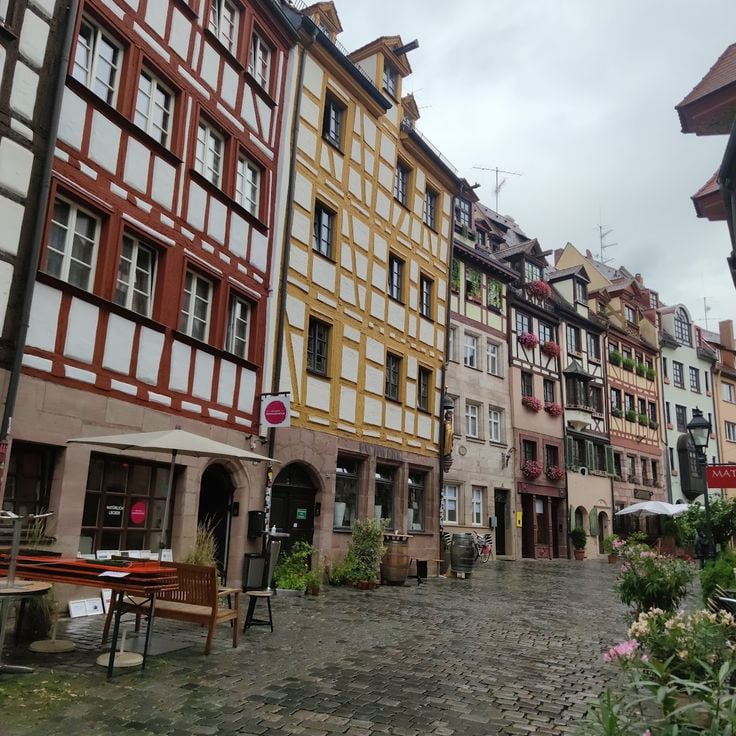
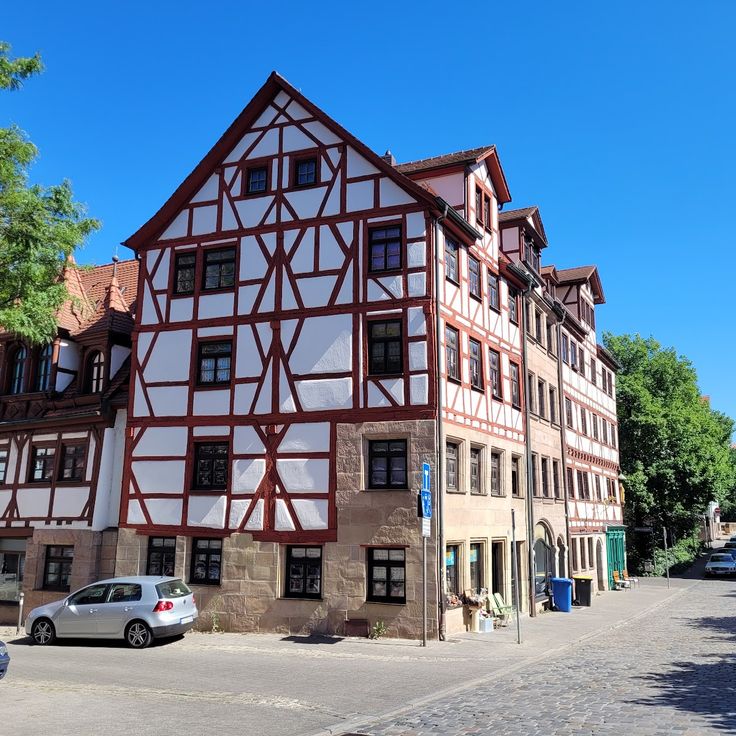
Weißgerbergasse is a cobblestoned street in Nuremberg's Old Town, where the city's layers of history come together. This street tells the story of how leather artisans lived and worked in the 15th and 16th centuries. Half-timbered houses with colorful facades line the path, their steep roofs a reminder of a medieval craft tradition. Walking here, you see how people organized their lives around their trade, with homes and workshops close together. The stones beneath your feet and the wooden beams overhead connect you directly to centuries of daily life in this place.
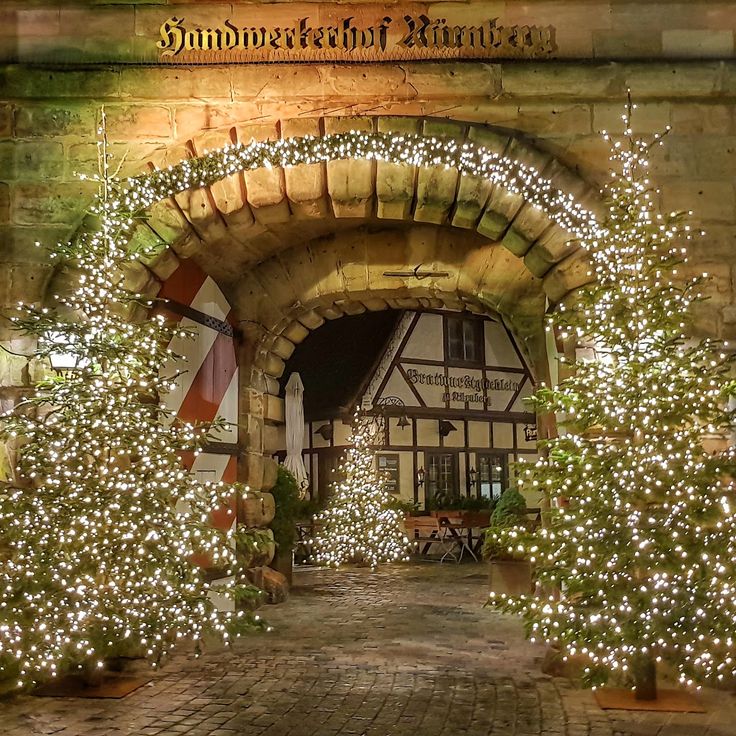
The Handwerkerhof is a crafts village built within Nuremberg's medieval towers, offering visitors a direct view into traditional Bavarian trades like pottery, glassmaking, and leatherworking. This site connects to the broader history of the city, where craftspeople once lived and worked in these same streets centuries ago. The workshops here show how artisans practiced their trades and passed their skills forward through time. Walking through the Handwerkerhof, you see the continuation of techniques that helped shape the city's identity and economy from the Middle Ages onward.
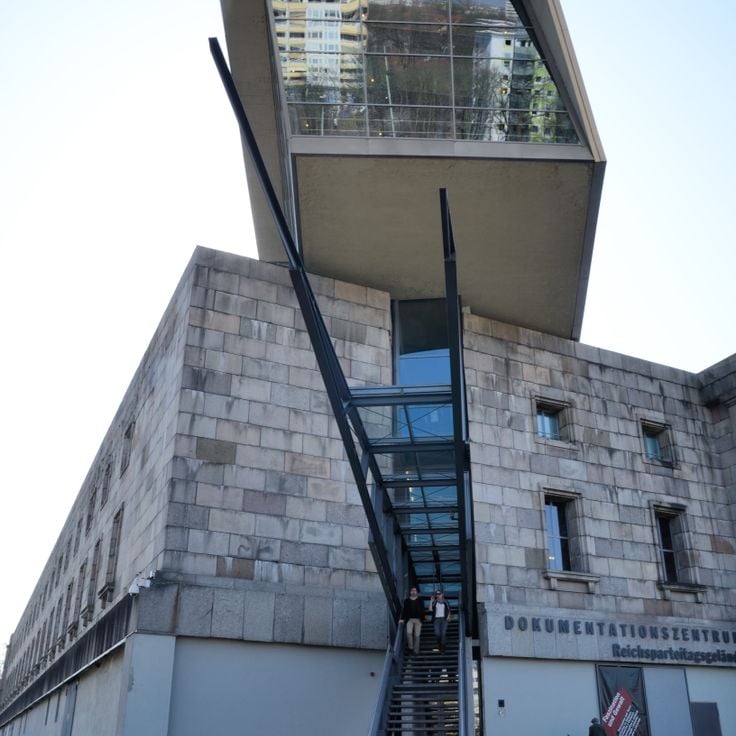
The Documentation Center occupies the unfinished Congress Hall at the Nazi Party Rally Grounds and examines the rise and fall of the Hitler regime through documents, films, and eyewitness accounts. Within Nuremberg's collection of historic sites, this museum invites visitors to confront the darkest chapters of the 20th century and understand how a nation lost itself during this period.
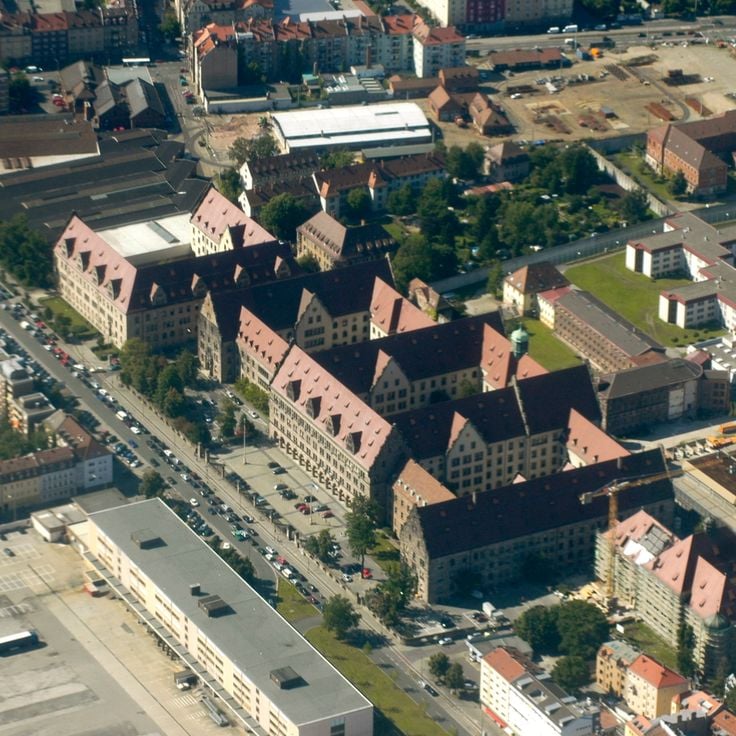
The Nuremberg Palace of Justice plays a central role in the city's historic sites, serving as a place where you directly encounter accountability for the past. Between 1945 and 1949, this building hosted the trials of Nazi war criminals. The Palace of Justice stands as a witness to these proceedings that sought justice and responsibility. Today, a memorial museum here documents this judicial period and shows how a nation reckoned with its darkest chapter.
St. Lawrence Church is a stone building that has stood in place since the 13th and 14th centuries. Inside, you find carved altars and glass windows that have survived the centuries. This church shows how craftspeople brought their skills to religious spaces. Visitors see works by Adam Kraft, a master of stone carving. St. Lawrence Church belongs to Nuremberg's medieval heart and speaks to the city's tradition of skilled craftsmanship.
The Germanisches Nationalmuseum anchors Nuremberg's story of how German culture developed across centuries. With more than one million objects, it shows how people worked, created, and lived from the earliest times through the 20th century. You walk through rooms filled with everyday tools, religious carvings, paintings, and crafted goods that reveal what mattered to people in each era. This museum sits within a city that holds both the beauty of medieval tradition and the weight of historical reckoning, making it a place where you see how culture shapes and reflects a society.
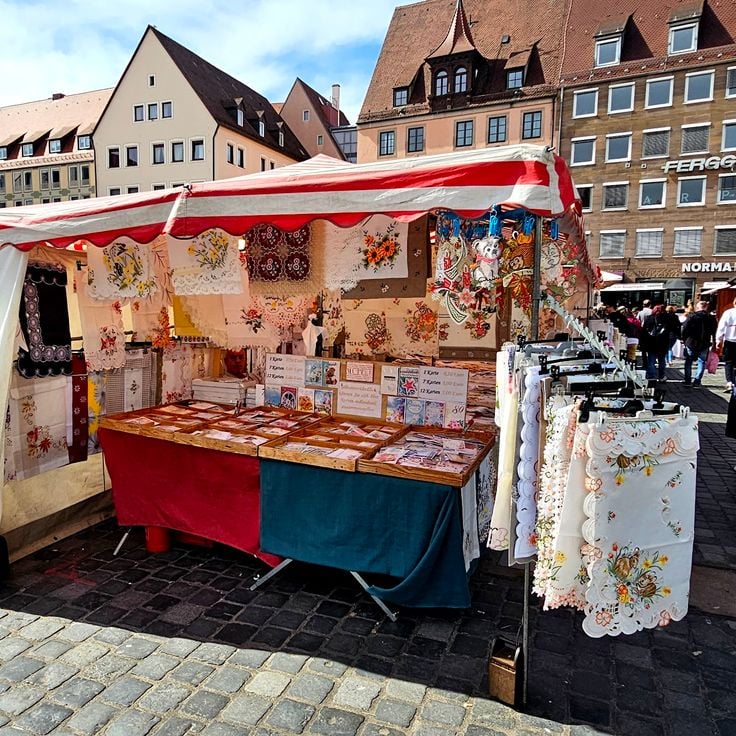
The Hauptmarkt is a rectangular square from the 14th century at the heart of Nuremberg's Old Town. Here stands the Schöne Fontäne, a Gothic fountain that has dominated the plaza's center for centuries. The Church of Our Lady rises immediately beside it, framing the square with its impressive exterior. A weekly market still takes place on this plaza, just as it has for hundreds of years. The Hauptmarkt connects Nuremberg's medieval trading past with the present, showing how this space has drawn people across generations.
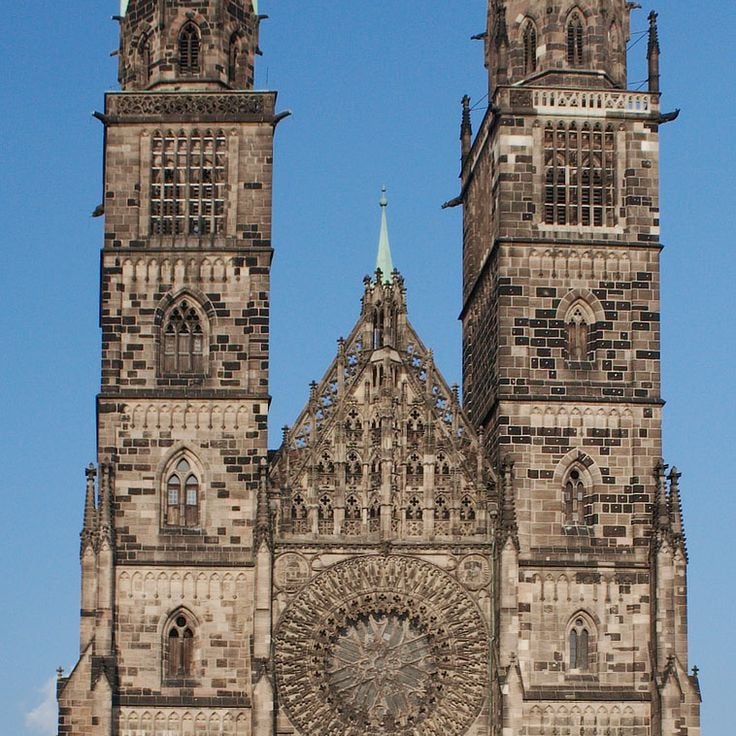
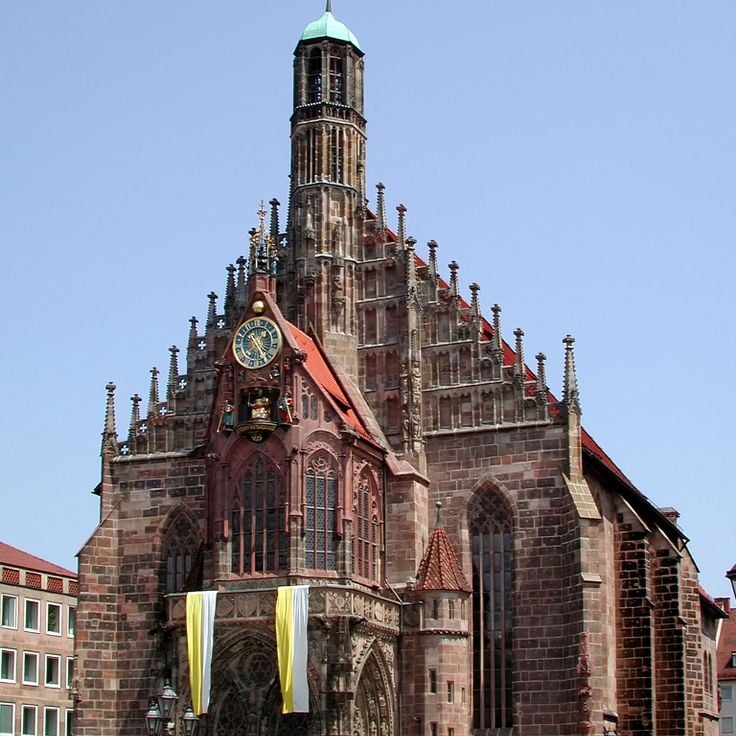
The Church of Our Lady is a Gothic religious building from the 14th century that stands on Nuremberg's main market square, embodying the medieval history of the city. Its facade displays intricately carved stone figures and decorations that speak to the craftsmanship of earlier times. As part of the historic Old Town, this church contributes to what makes Nuremberg a place where you encounter layers of the past—a setting where the beauty of medieval tradition and the weight of historical memory exist side by side.
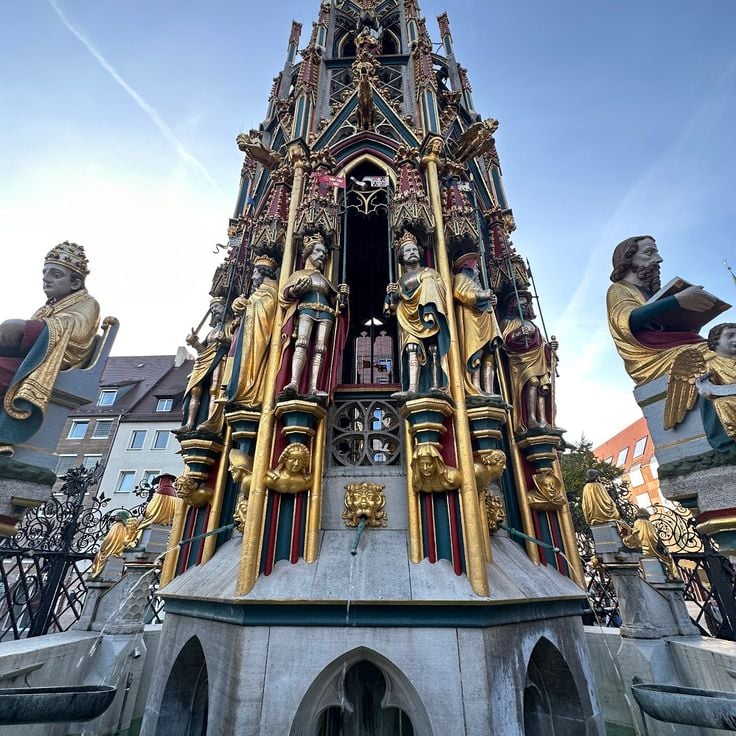
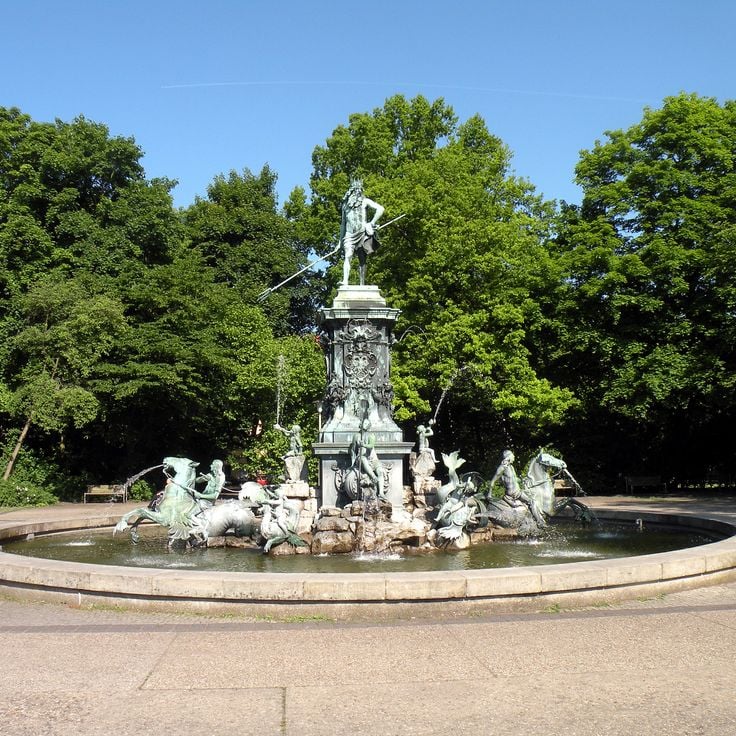
The Beautiful Fountain is a Gothic monument from the 14th century that stands in the heart of Nuremberg's Old Town. With its colorful sculptures and a golden ring said to bring luck to those who touch it, this fountain embodies the medieval craftsmanship that defines the city. It represents one of the spaces where Nuremberg's layered history comes alive—a gathering place where people have met for centuries, much as they do today.
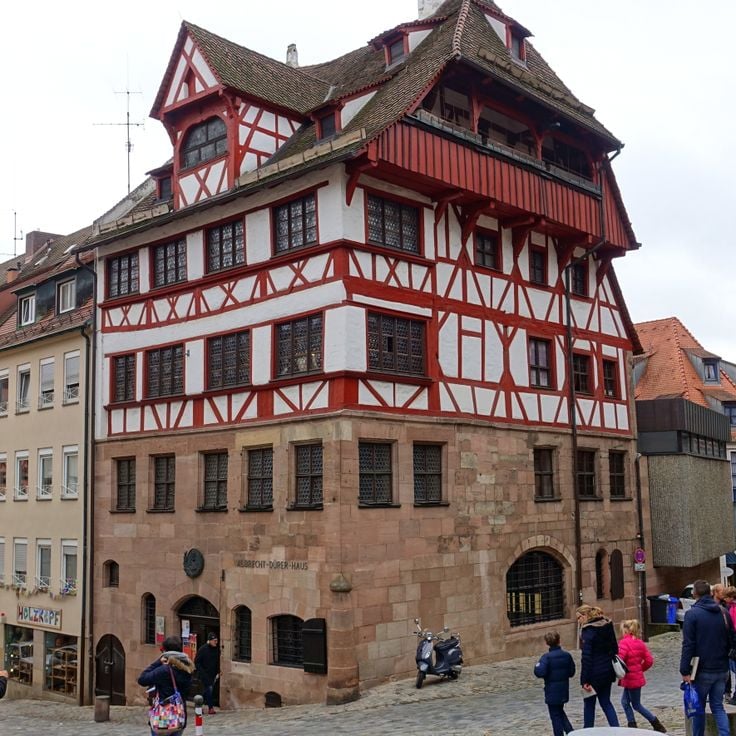
The Albrecht Dürer House is a timber-framed dwelling from the 15th century that contributes to understanding Nuremberg's cultural history. From 1509 to 1528, the renowned German painter Albrecht Dürer lived here. The house shows how an artist worked and lived during the early modern period. Today visitors can see Dürer's works and learn about his life in this historic city. The building itself remains part of Nuremberg's medieval past and stands in the heart of the Old Town.
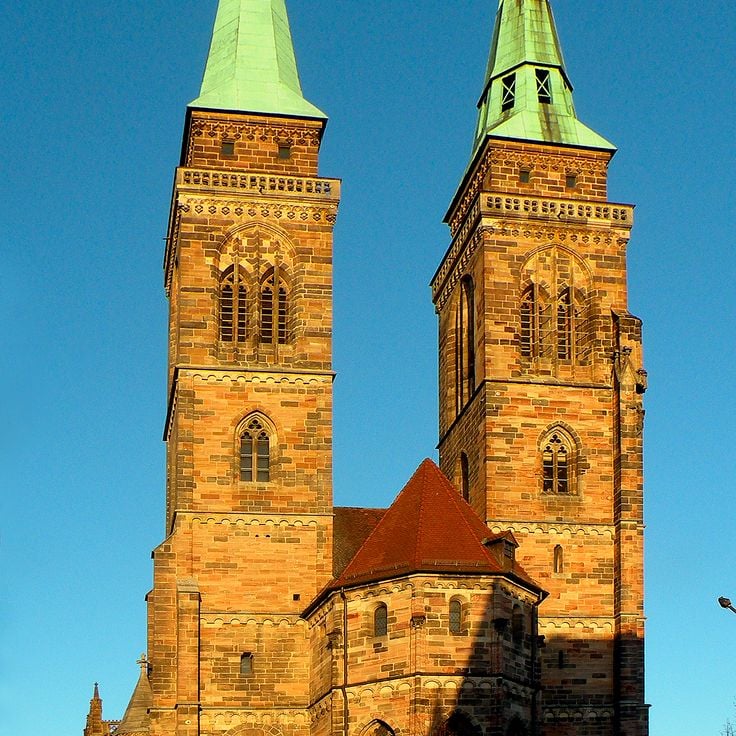
St. Sebald Church stands at the heart of Nuremberg's Old Town as a witness to the city's medieval past. Built in the 13th century, this Gothic structure houses the reliquary of Saint Sebald, Nuremberg's patron saint, crafted from worked bronze. The shrine represents the skill of artisans who shaped the city's identity through centuries. Walking through this church, you encounter both the religious devotion and the craft traditions that shaped Nuremberg's development from its earliest days.
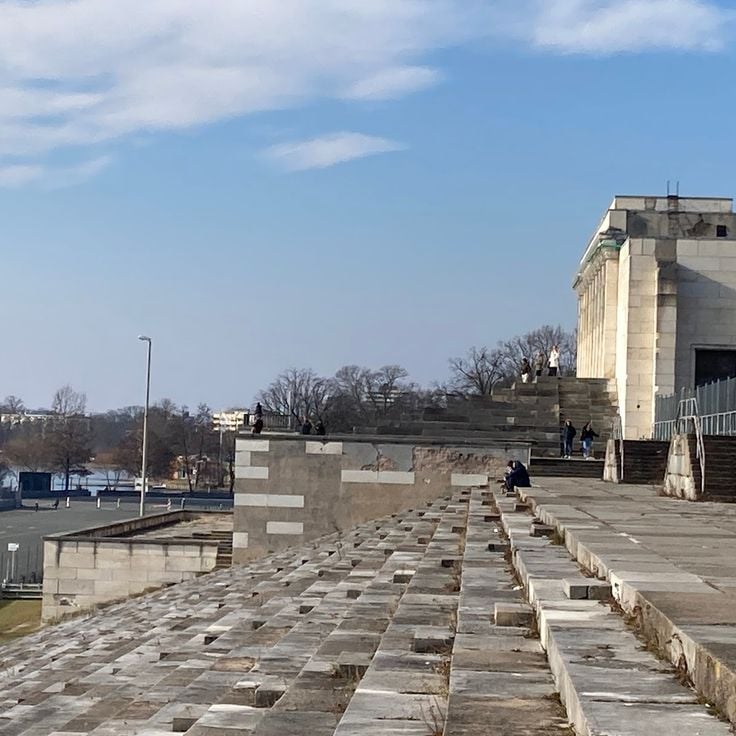
The Zeppelinfeld is a parade ground built by the Nazi regime between 1935 and 1937, designed to hold 200,000 people during the gatherings of the National Socialist party. This site in Nuremberg represents the dark chapter of the 20th century that the city openly addresses today. Walking through this space allows visitors to confront history directly and understand how a nation lost itself during that period.
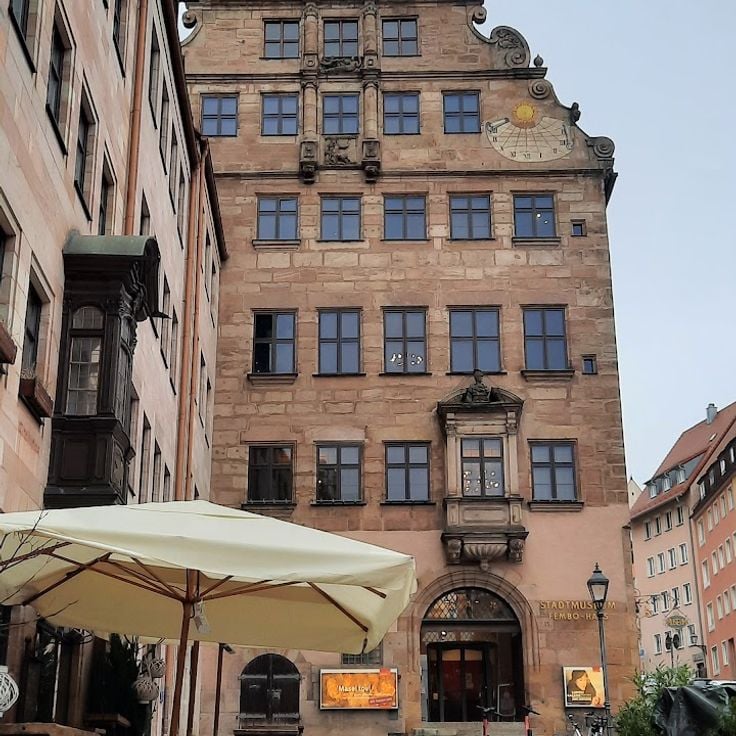
The City Museum at Fembo House shows how Nuremberg developed from the Middle Ages to today. The building itself, a patrician house from the 16th century, reflects the time when wealthy families built such grand homes. Inside the museum, you find objects from different eras: old craft tools, furniture, clothing, and everyday items. You see how merchants and craftspeople lived, how the city grew and changed over time. The exhibits show Nuremberg's economic power as a trading center and how architecture shaped the city's story. This museum helps you understand why Nuremberg was so important and how people here lived across centuries.
The Medieval Dungeons are a set of twelve underground cells dating from the 14th century, preserved beneath the old town hall in Nuremberg. They show how the city carried out its judicial system and held prisoners within its walls. These spaces belong to Nuremberg's collection of historic sites where you encounter both the structure of medieval life and the layers of history that shaped the city. Descending into these cells brings you face to face with the reality of how justice worked in medieval times.
The Hospital of the Holy Spirit stands as one of Nuremberg's oldest institutions, founded in 1339 to care for pilgrims, the sick, and the elderly. Built on wooden stilts above the Pegnitz River, this structure demonstrates how medieval citizens organized support for those in need. The hospital remains within the Old Town's narrow streets, where you can observe how practical solutions were engineered centuries ago. Walking past this building offers insight into the city's longstanding traditions of community care and the daily realities of medieval life.
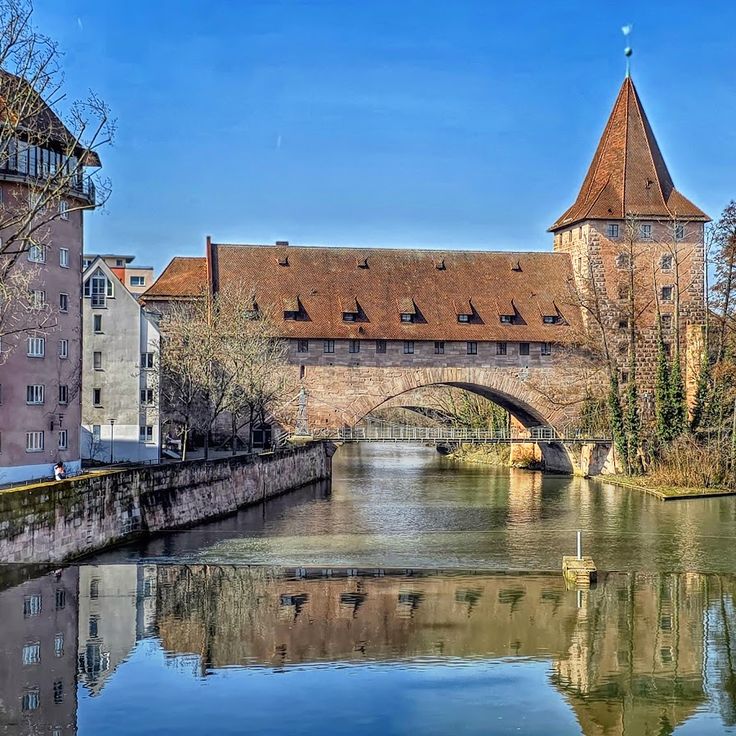
This 14th-century wooden bridge crosses the Pegnitz and once connected the city to the executioner's tower on the opposite bank. It stands as a reminder of how Nuremberg functioned in medieval times, when different parts of the city had specific roles. Today, walking across this bridge places you within the layers of history that the city preserves. It fits into the larger story of Nuremberg, where you encounter the past directly in many corners.
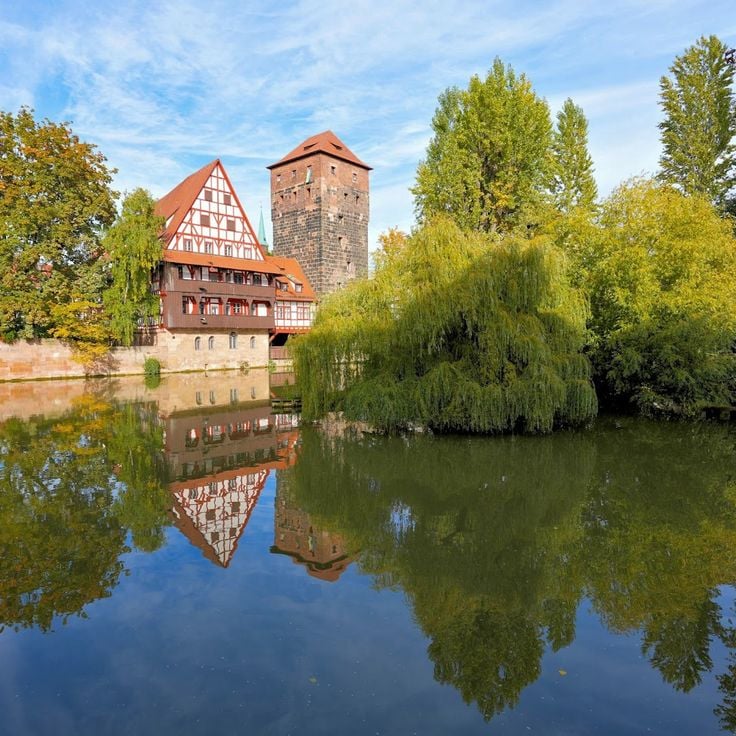
The Weinstadel represents medieval commerce in Nuremberg. This 15th-century Gothic building served as a warehouse for the wine trade and stands among the narrow streets and half-timbered houses of the Old Town. Its design shows how merchants organized their business and stored goods during the city's years as a major trading center. Walking past it, you can imagine the bustle of merchants and workers who moved through these streets centuries ago, handling the goods that made Nuremberg prosperous.
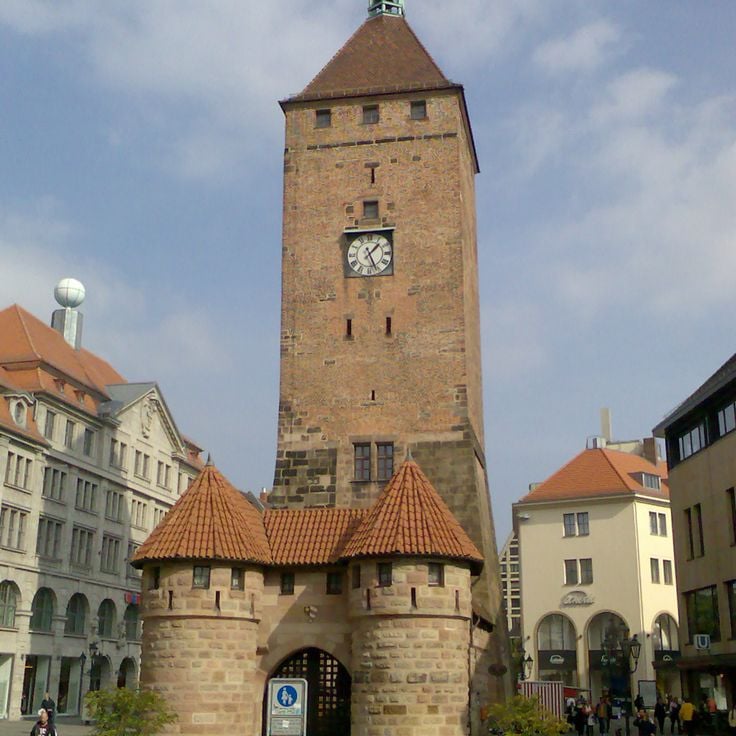
The White Tower was one of Nuremberg's original fortifications, built from local sandstone in the 13th century. This tower now marks the entrance to the historic center and shows how the medieval city protected itself with walls and towers. Walking past it connects you to the layers of medieval history that define Nuremberg's character and demonstrates the craftsmanship of those who built the city's defenses.
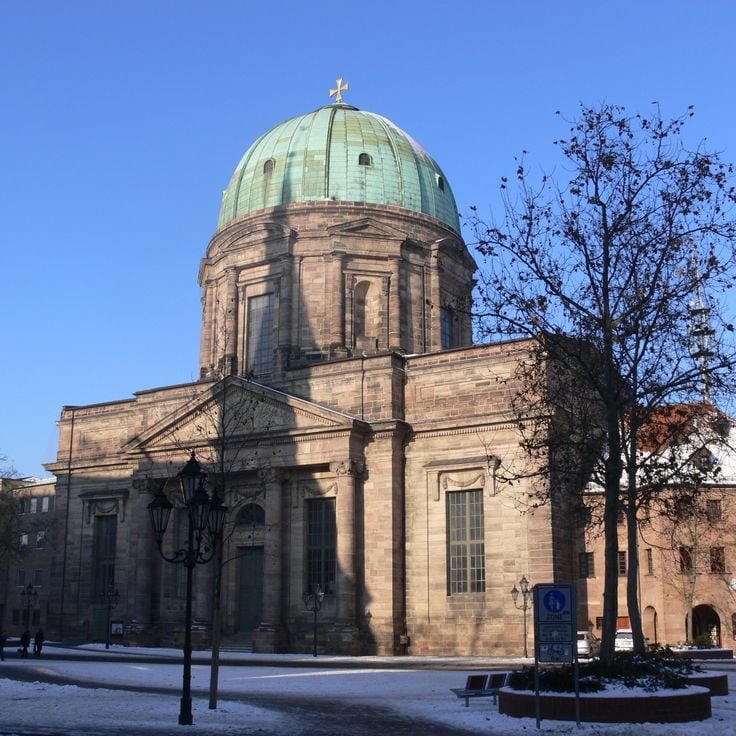
St. Elizabeth Church is among the historic sites and landmarks of Nuremberg, showing how religious buildings evolved over generations. This 18th-century Catholic church in classical style was built on the site of an earlier chapel dedicated to Saint Elizabeth of Hungary. It stands in the Old Town and connects with the stone churches and winding streets that form Nuremberg's medieval heart. The building reflects a different architectural style than the Gothic spires and old houses around it, yet demonstrates the continuity of religious life at this location. For visitors, St. Elizabeth Church offers insight into architectural history and the role churches played in Nuremberg's development across centuries.
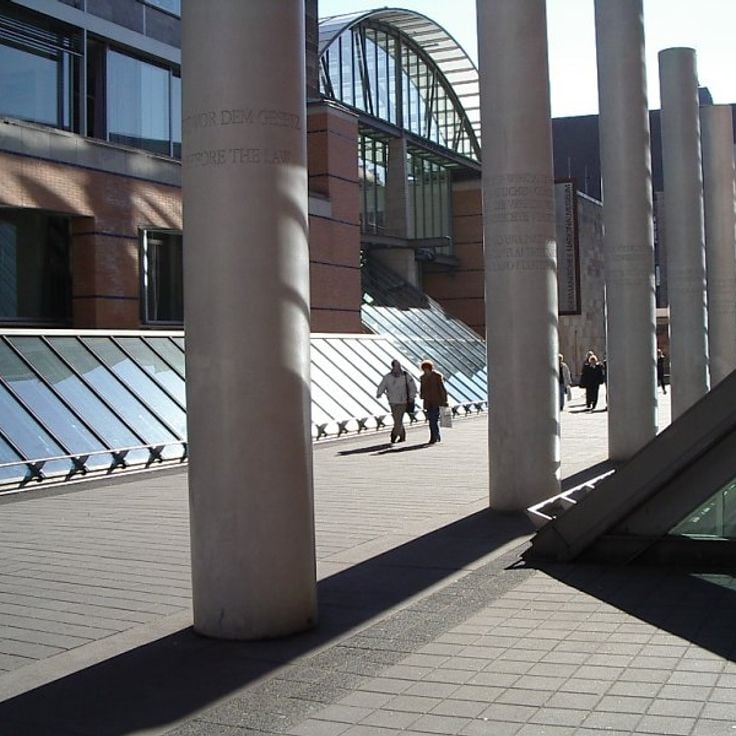
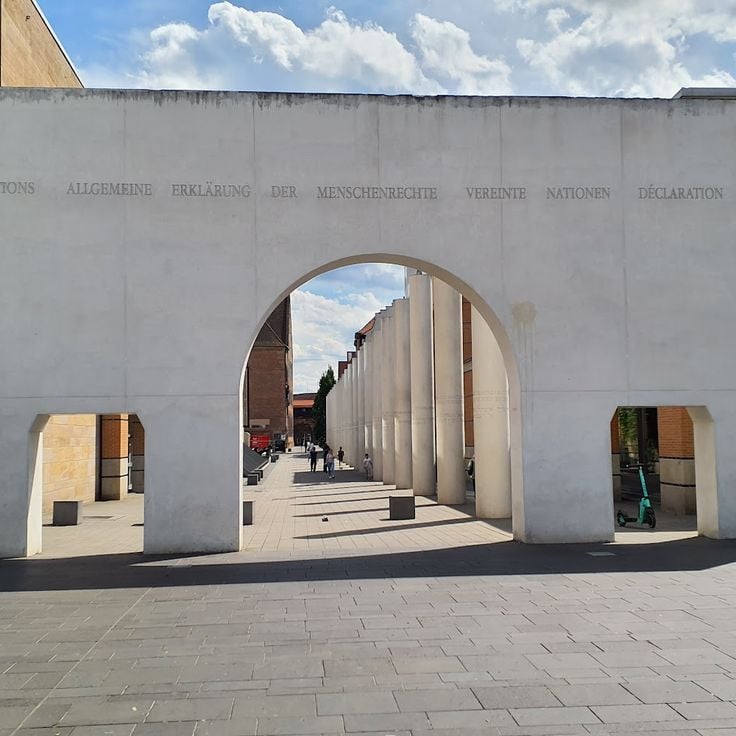
The Way of Human Rights in Nuremberg is a meaningful place within this city where past and present meet. This monument consists of twenty-nine white concrete columns inscribed with articles of the Universal Declaration of Human Rights, each in a different language. An oak tree grows in the center. Visitors walk between the columns and read the words that express rights meant for all people. The monument reflects what Nuremberg represents: a city that confronts its history directly and stands for human dignity and accountability.
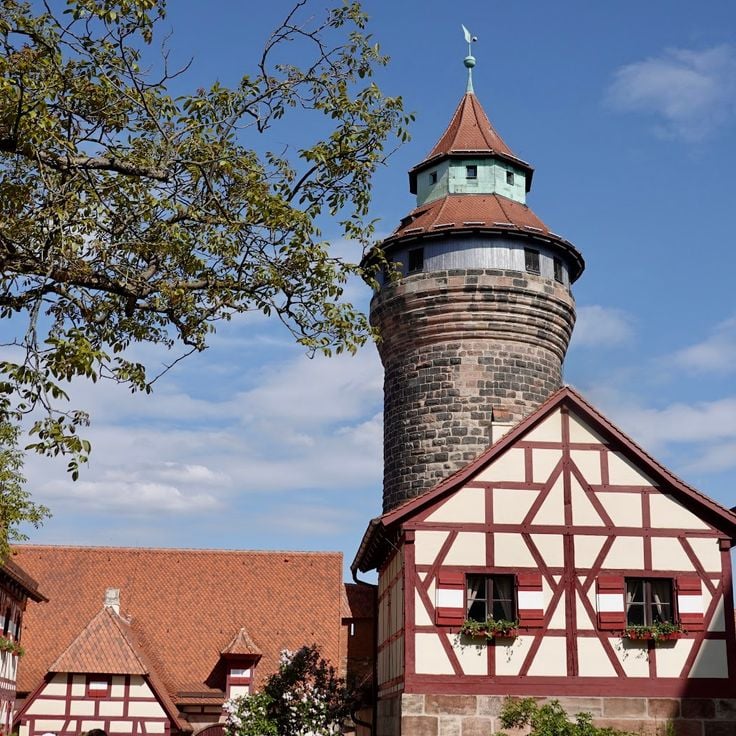
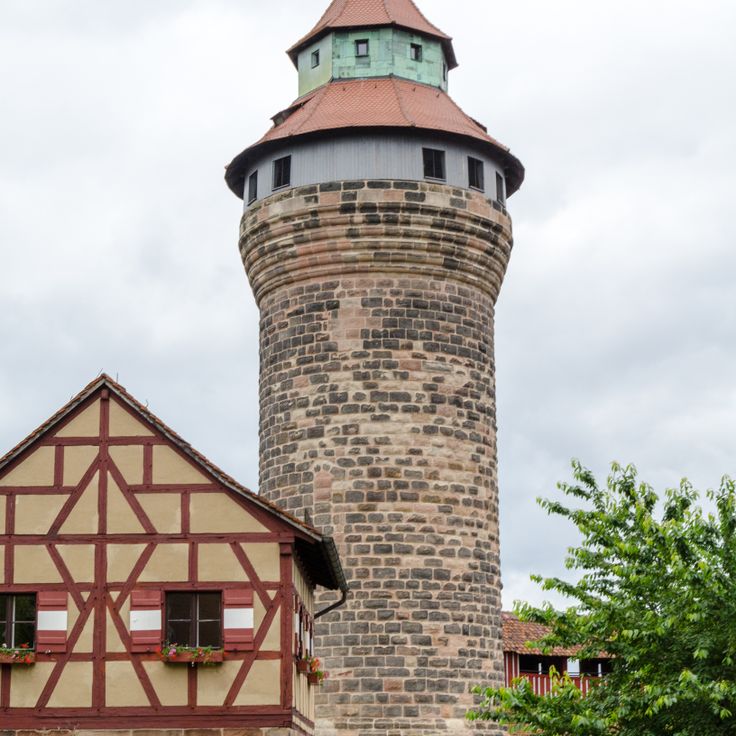
The Sinwell Tower is a circular stone structure from the Imperial Castle dating to the 12th century. Rising 47 meters (154 feet) tall, it remains open to visitors who can climb to its upper platform for views across the city. Within Nuremberg's collection of historic sites, this tower represents the medieval foundations of the city and offers a direct sense of how the city looked and functioned hundreds of years ago.
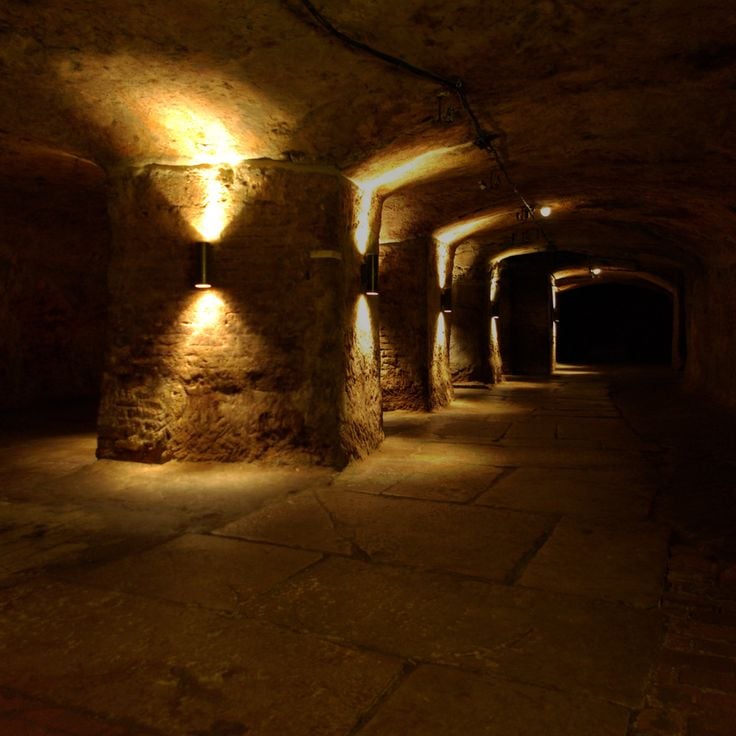
The Deep Well is an underground structure at Nuremberg's Imperial Castle, carved deep into the red sandstone beneath the fortress. Built to supply drinking water during medieval times, this engineering feat proved crucial during sieges when the castle faced attack. Walking down the well, you see the marks of the chisels that carved this passage into rock, revealing how people solved the problem of survival within fortress walls. Today, visitors descend into this cool, narrow space to understand how the castle maintained its defenses and kept its people alive during times of threat.
The Trödelmarkt is a river island nestled between two arms of the Pegnitz in Nuremberg's Old Town. As part of the city's historic fabric, it demonstrates how this place preserves the crafts and daily rhythms of earlier centuries. Restored half-timbered houses on the island now house shops and restaurants, creating spaces where people gather much as they did generations ago. Walking across the Trödelmarkt, you see how medieval structures continue to shape modern life in the city, blending old architecture with contemporary use.
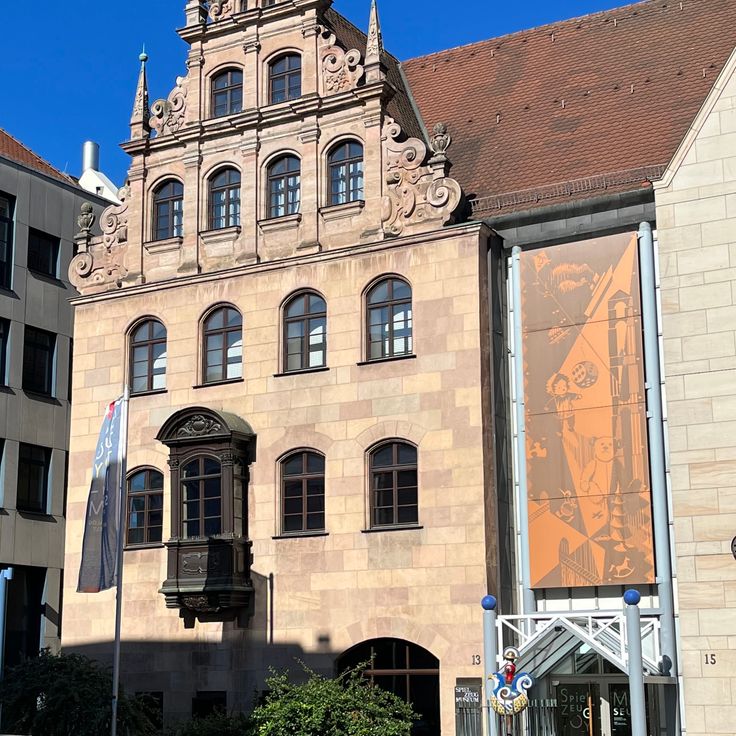
The Toy Museum in Nuremberg traces play through centuries of objects. You walk through rooms filled with antique dolls, model trains, carved wooden figures, and board games from across Europe. The collection spans from the 14th century to today, showing how toys have changed and how children have played through different periods. This museum connects to Nuremberg's longer story as a city where craftspeople built their trades, including the making of toys that were sold across the continent.
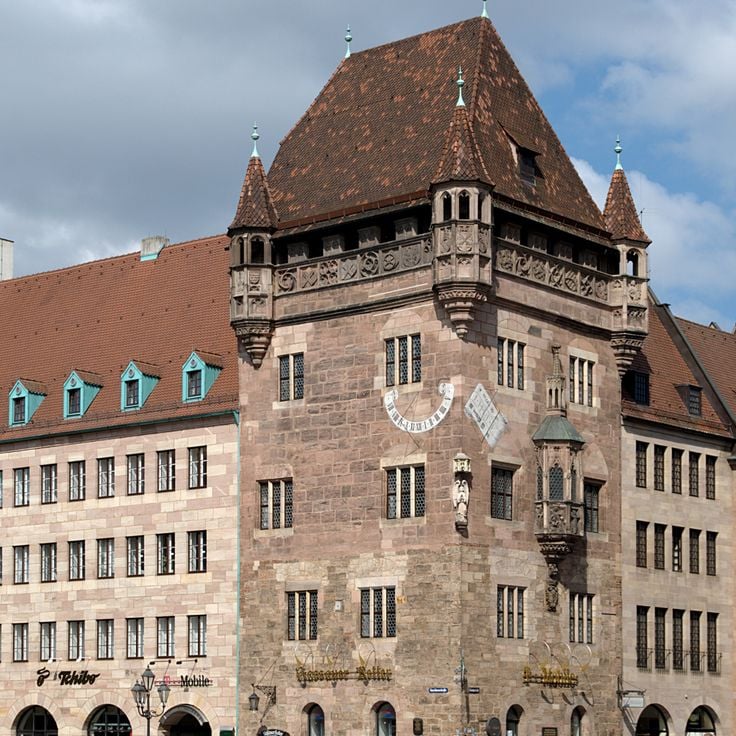
Nassau House stands as a surviving example of medieval domestic life in Nuremberg. Built from red sandstone in the 13th century, this fortified building reveals how wealthy families lived and protected their homes in the Middle Ages. Four habitable stories, an interior spiral staircase, and sculpted decorations carved into the main facade show the craftsmanship and resources available to the city's merchant class. Within Nuremberg's broader history, Nassau House represents the layers of tradition that shaped the Old Town, connecting modern visitors to the daily lives and ambitions of people who lived within these stone walls centuries ago.
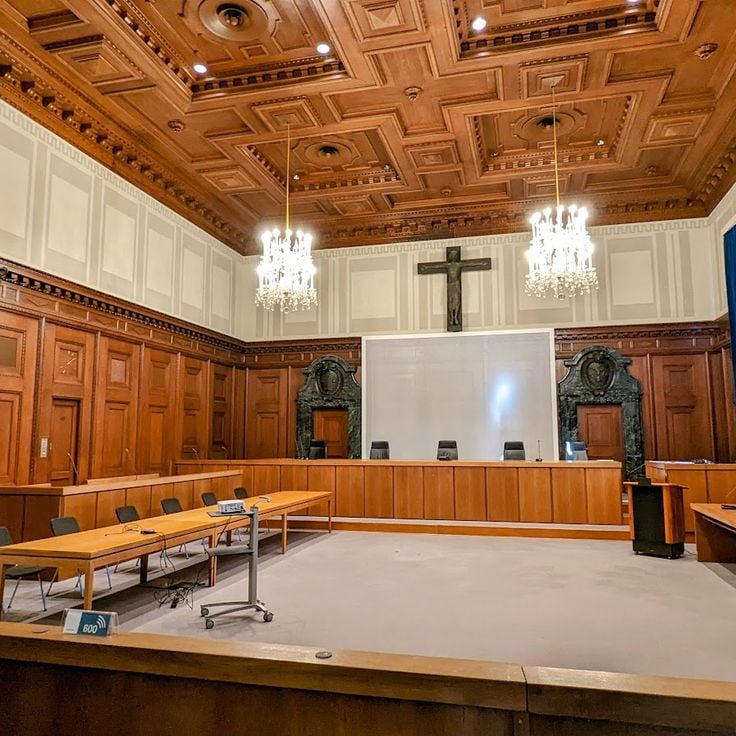
The Nuremberg Trials Memorial documents the 1945-1949 judicial proceedings and shows how the international community sought accountability after World War II. The site preserves photographs, original audio recordings, and a reconstruction of the courtroom. Within Nuremberg's story, this memorial represents how the city faces its past directly—it reveals how a place that witnessed dark chapters pursued justice and recorded this process for future generations.
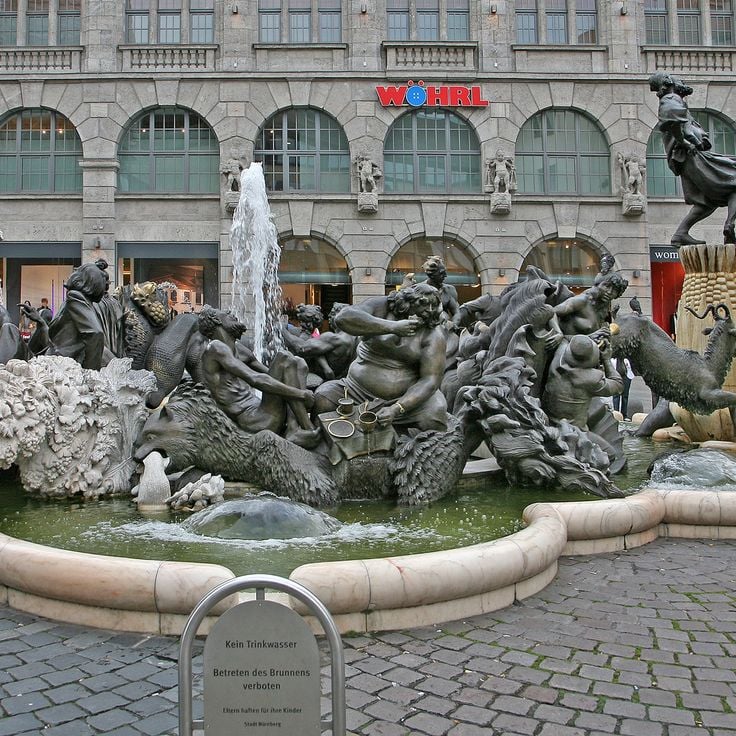
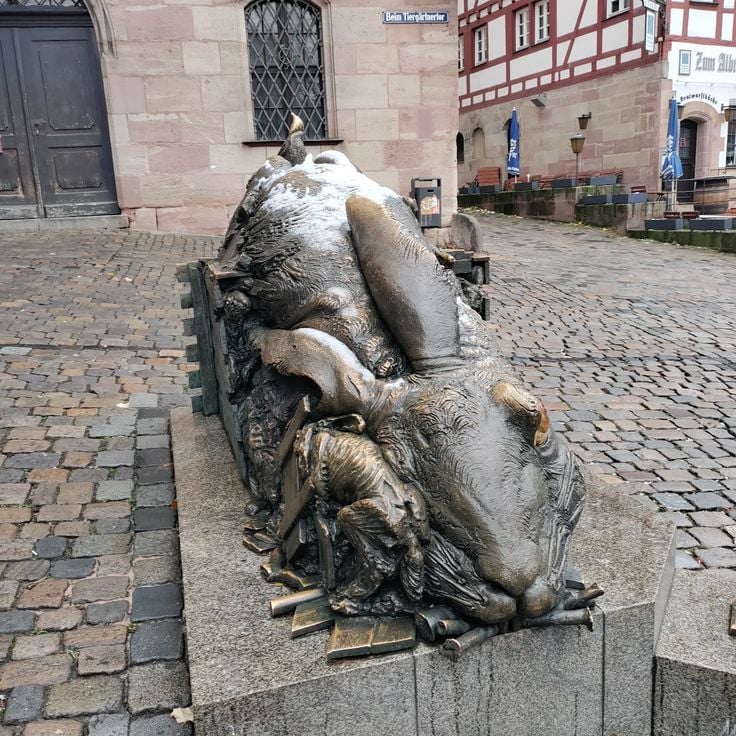
The Marriage Carousel Fountain stands in the heart of Nuremberg's Old Town, depicting six scenes inspired by Hans Sachs, a local poet who wrote satirical verses about marriage. Bronze figures show the joys and struggles of wedlock as reimagined by an artist in 1984. This fountain connects Nuremberg's medieval craft traditions with its literary past, fitting naturally into the city's history as a place where skilled artisans and cultural life flourished together.
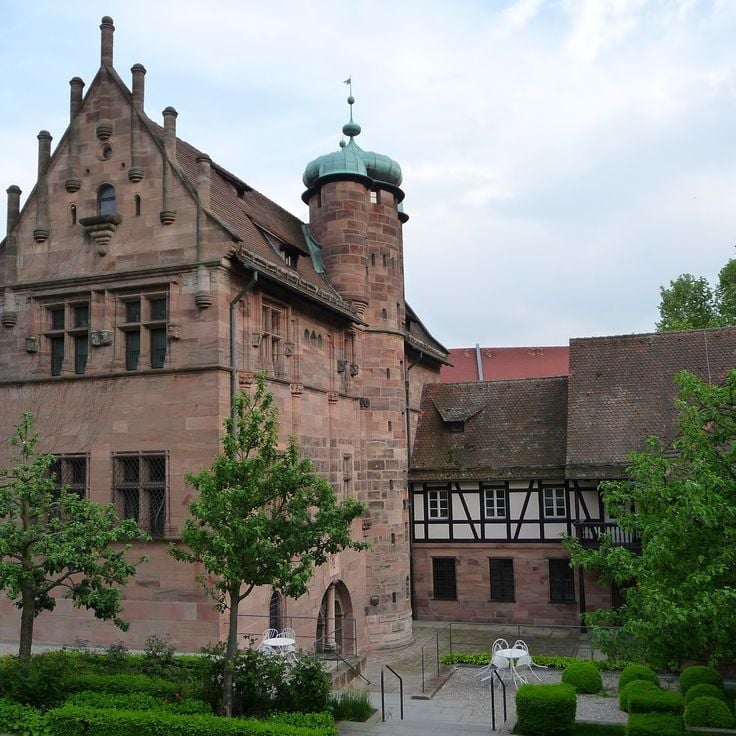
Tucher Castle and Hirsvogel Hall is a museum set in a 16th-century manor house that shows how Nuremberg merchant families lived. Inside, you find period furnishings that reveal the daily routines and tastes of wealthy households. A Renaissance ballroom shows where celebrations and gatherings took place. This place helps you understand the comfort and style that successful traders enjoyed while Nuremberg flourished as a center of commerce and craft.
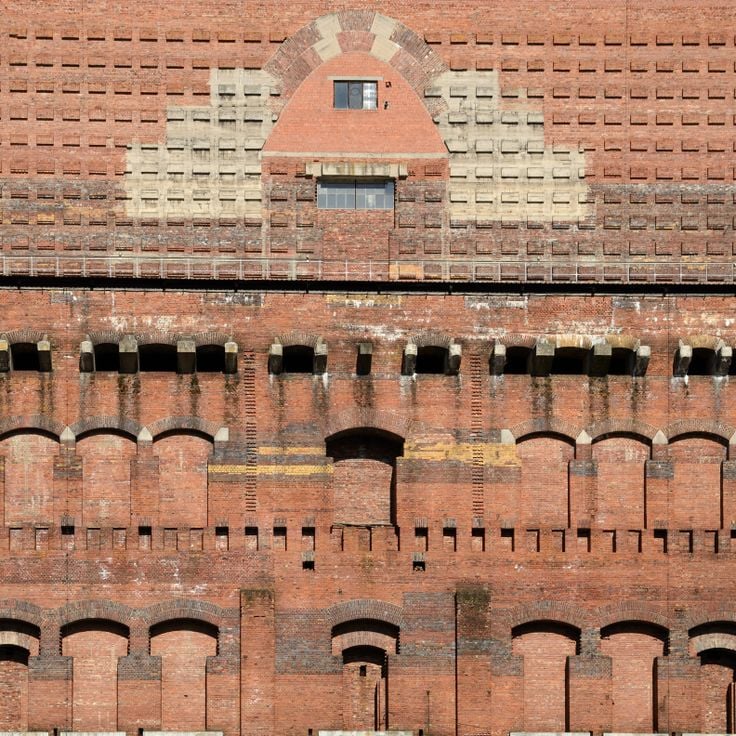
This Congress Hall is a monumental structure designed by Albert Speer in the 1930s for Nazi party gatherings. Today it stands in Nuremberg as a site of historical memory, housing a museum that documents how a nation lost itself. The unfinished building now serves visitors who confront both the weight of the past and the need for accountability. The Congress Hall embodies Nuremberg's approach of addressing all of its history openly—from medieval craft traditions to the trials and reckoning of the 20th century, all within the same city walls.
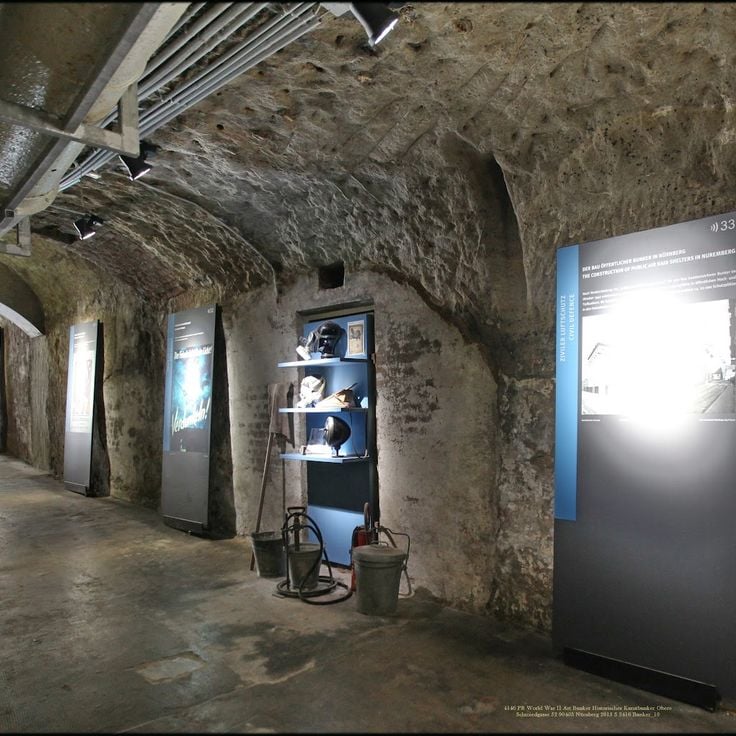
This Art Bunker is a network of medieval underground tunnels that was converted into a climate-controlled bunker during World War II to protect artistic treasures from Allied bombing. It shows how Nuremberg worked to preserve its cultural riches during wartime. The bunker stands today as evidence of both medieval craftsmanship and the need to save artworks in times of destruction. Visitors can see which artistic objects found shelter here and how the city protected its heritage.
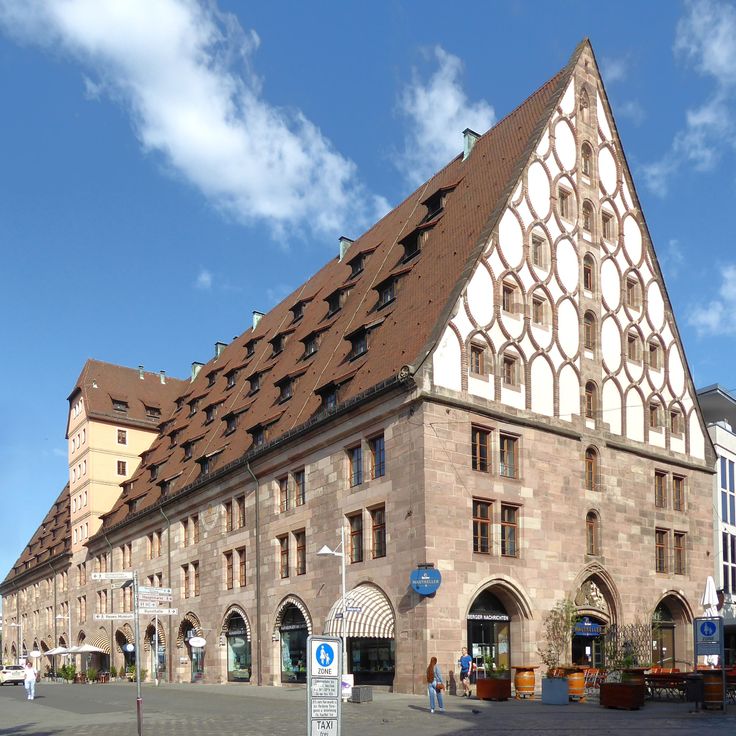
The Mauthalle stands in Nuremberg's Old Town as a testament to the city's medieval commercial power. This Gothic building from 1498 served as the municipal granary and customs office. It was the largest grain storage facility in the city, showing how central grain trade was to Nuremberg's prosperity. Today, visitors can explore in this building how the city's economic life was rooted in commerce and craft.
The Fountain of Virtues stands in Nuremberg's medieval Old Town as a Renaissance creation from 1589. Six cherub figures adorning this fountain represent Christian virtues that mattered to the people of the city centuries ago. The work showcases the artistic skill that made Nuremberg famous across Europe. Walking past this fountain, you see how the city expressed its values in stone and water, creating a gathering place that still marks the heart of historic Nuremberg.
The Hesperides Gardens are part of Nuremberg's network of historic sites where the city openly addresses its full past. These Baroque and Classicist parks were created in the 17th and 18th centuries within the Saint-Johannis district. Over 360 green spaces are maintained according to historical horticultural methods. Walking through these gardens offers a different perspective on Nuremberg's layered history—a place where you can step away from the cobblestone streets and narrow half-timbered houses to find spaces shaped by centuries of tradition and care.
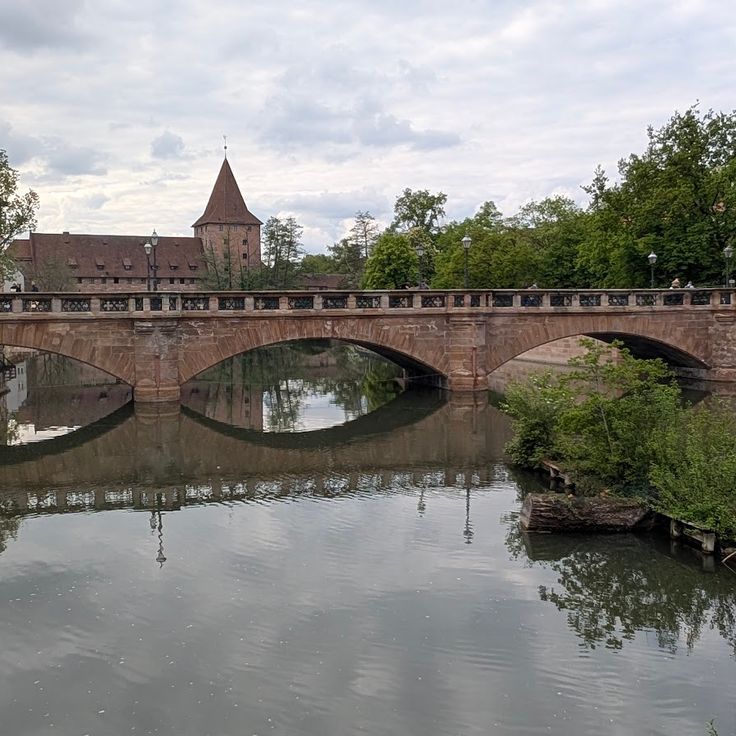
The Schlayer Tower is a 15th-century defensive structure that stands as part of Nuremberg's medieval fortification system. Built from sandstone in a square plan, it sits on an island formed by the Pegnitz River. The tower shows how the city's builders used water and stone together to protect their community, and it remains a physical reminder of how Nuremberg defended itself during the Middle Ages.
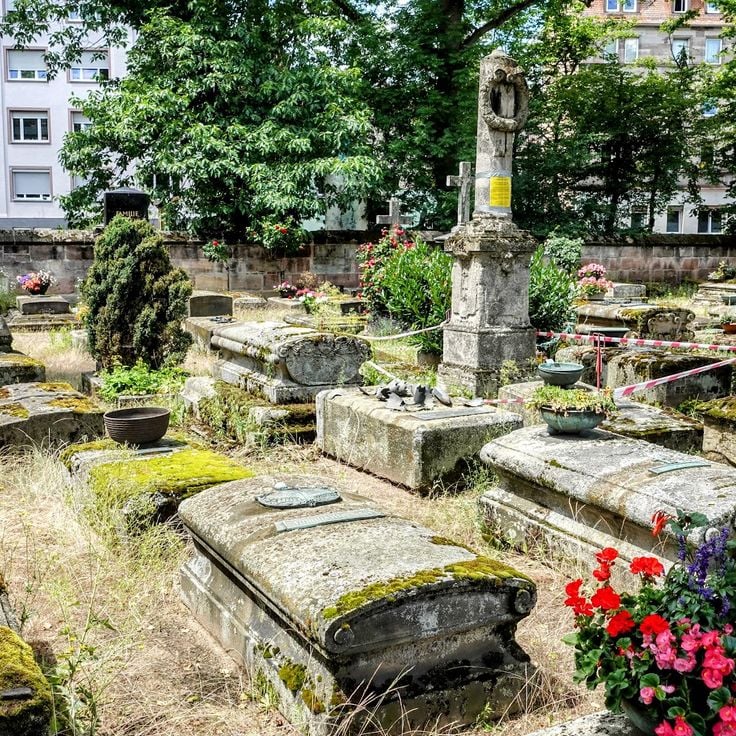
Saint Roch Cemetery is part of Nuremberg's legacy as a place where the city preserves its past. Founded in 1510 during the bubonic plague outbreak, this necropolis shows how people of that era faced loss and remembrance. Here rest notable figures like Friedrich Staedtler, the pencil maker, and Johann Pachelbel, the Baroque composer. The graves speak to the craftsmanship and artistic achievement that shaped Nuremberg's reputation. Walking through this cemetery, visitors encounter a quiet space where art history and everyday life converge.
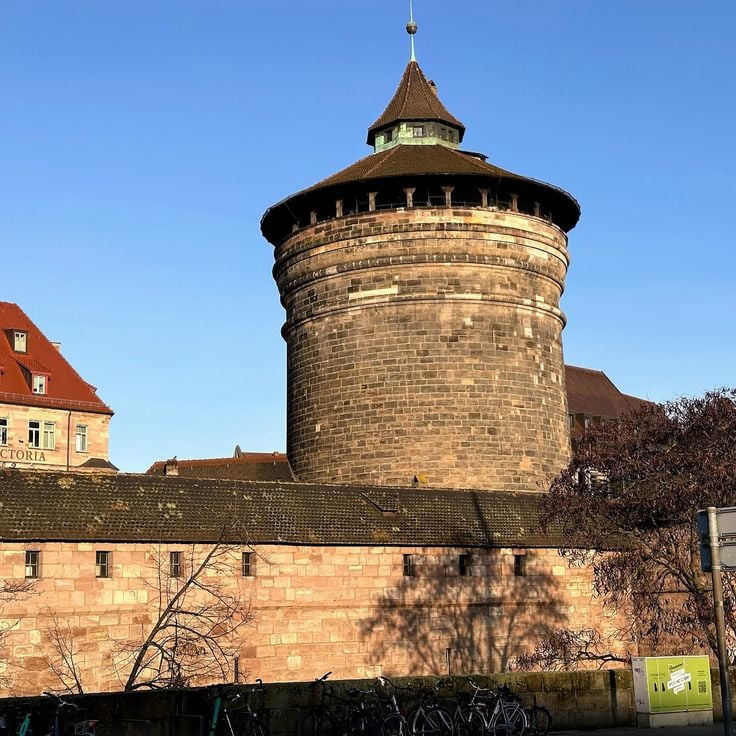
The Frauentor Gate is one of the historic entrances to Nuremberg's medieval core, which still marks the boundary between the old town and the areas beyond. Built in the 14th century and reconstructed to match its original design, this tower once controlled who entered and left the city. Walking through it connects you to the daily life of merchants and craftspeople from centuries ago. The Frauentor Gate stands as a physical reminder of how the city defended itself and organized trade along its streets.
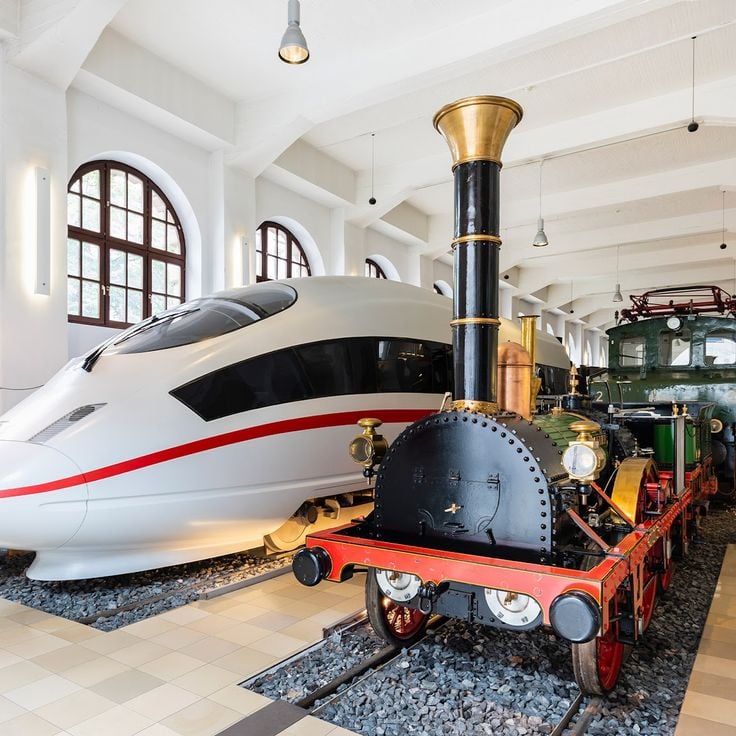
The German Railway Museum – Hall 2 in Nuremberg displays the history of trains and locomotives across different eras. Historic locomotives and period trains sit on display, showing how rail technology evolved over time. Visitors can see the machines that once carried people and goods across Germany and understand how railways shaped the nation's growth. The museum offers activities for children, letting them engage directly with this transportation heritage. The museum fits into Nuremberg's larger story of how the city witnessed both industrial progress and historical change, connecting the medieval past to the modern era.
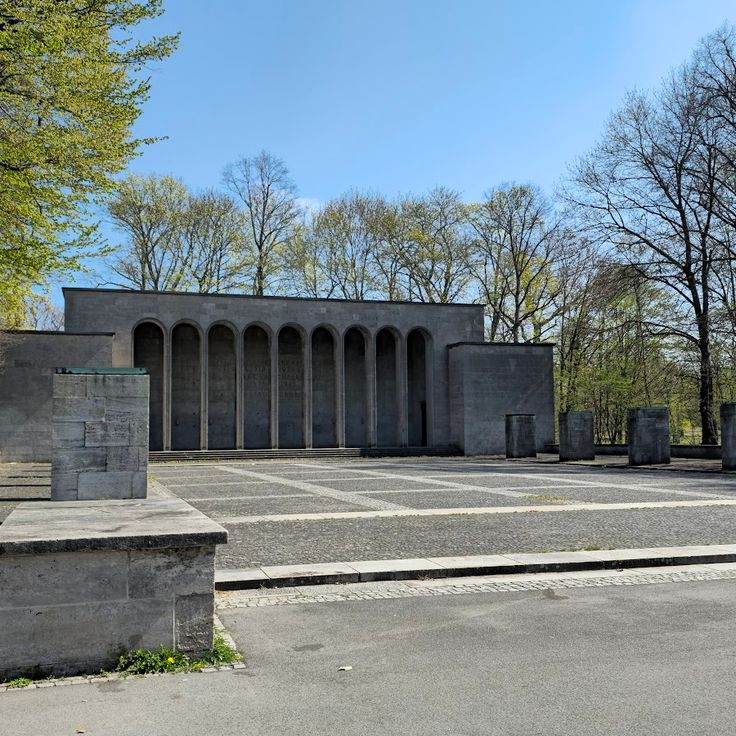
The Hall of Honor in Nuremberg was built in 1930 to commemorate soldiers from the First World War. The building was later used for events during the Nazi era. Today it stands among the historic sites where Nuremberg directly confronts all layers of its past—from medieval traditions to the darkest chapters of the 20th century. The place allows visitors to encounter this complex history firsthand.
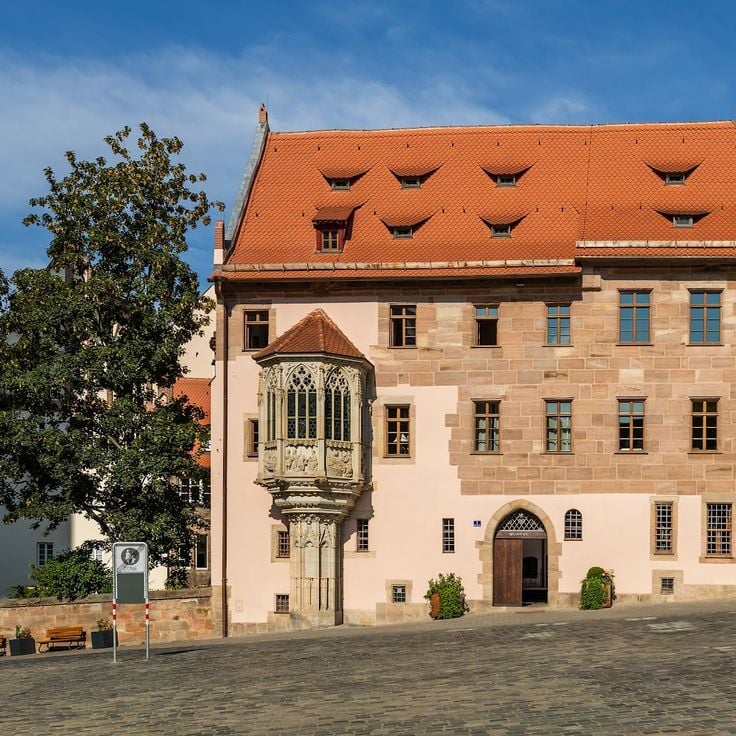
The Peller House is a 16th-century Renaissance building reconstructed after the Margrave wars. This house shows how Nuremberg recovered and rebuilt itself following destruction, and it stands as a testament to the city's craft and artistic tradition. The municipality owns the building today and uses it for cultural events and administrative functions. As you walk through Nuremberg's medieval streets, you encounter here a place that embodies both Renaissance beauty and the power of restoration.
The Pilate House is a late Gothic building from 1489 that stands as a reminder of Nuremberg's medieval craftsmanship. Built for a wealthy armorer, this seven-story structure shows how skilled workers of the time constructed their homes, building upward to make use of valuable space in the crowded medieval city. From the top floor, the building offers sweeping views across the Old Town's rooftops, church spires, and winding streets. The Pilate House represents the connection between the trades that made Nuremberg prosperous and the everyday life of its residents.
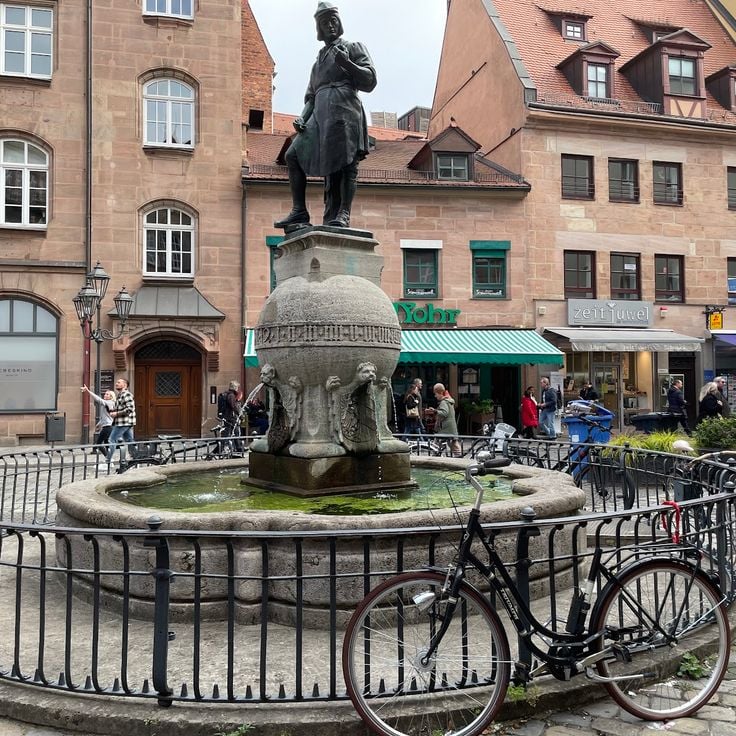
The Peter Henlein Fountain stands on Hefnersplatz and honors the 16th-century Nuremberg watchmaker who invented the first pocket watch. This bronze monument was built in 1905 and shows how the city values its craft heritage. The fountain fits into Nuremberg's story, where skilled artisans and inventors worked across the centuries. It reminds visitors that Nuremberg was shaped not only by medieval churches and ancient walls, but also by people whose inventions changed the world.
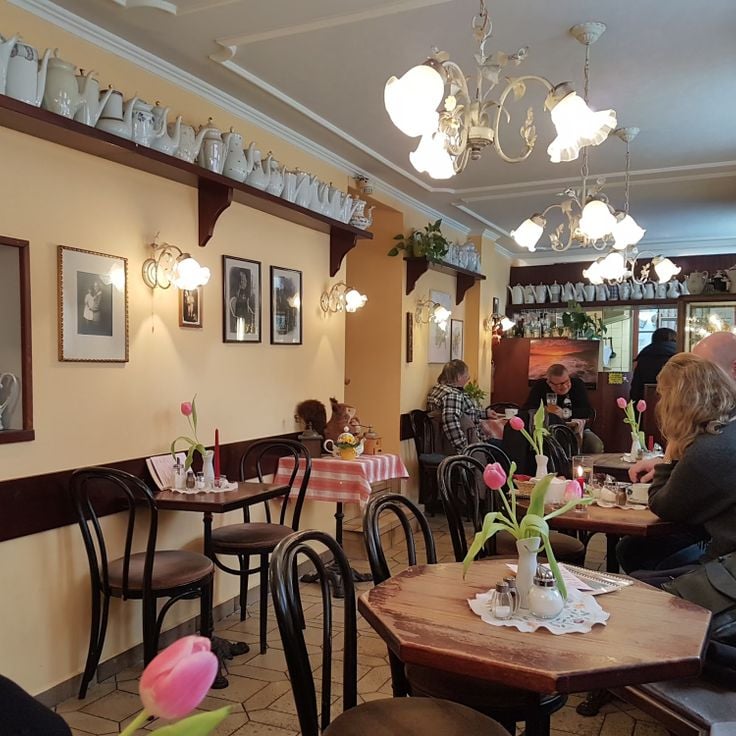
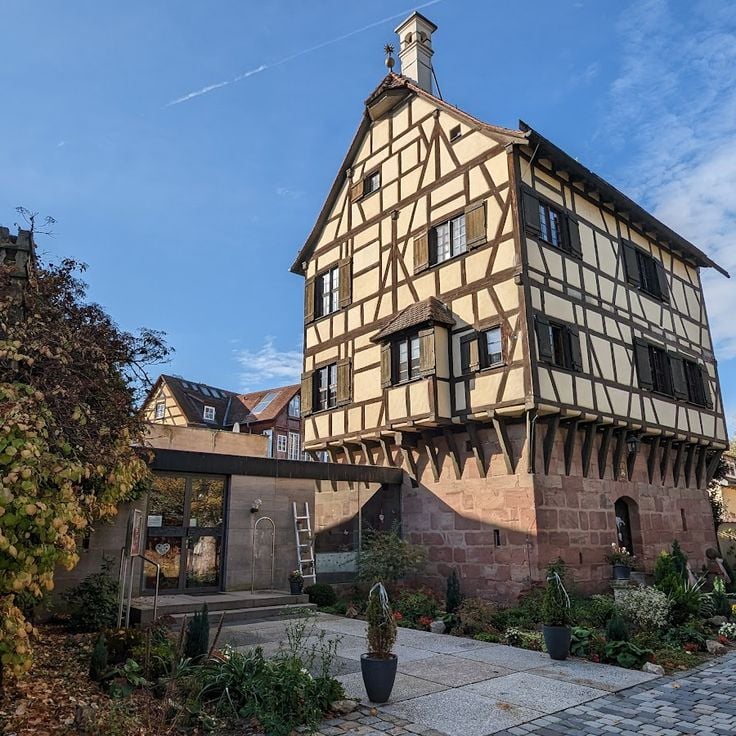
Saint Sebald Parish Courtyard is a quiet retreat within Nuremberg's medieval streets. The building dates to the 14th century, and its courtyard gathers beneath old stone walls. A café here invites you to sit with coffee or tea surrounded by centuries of history. An exhibition inside documents the Jewish heritage of Nuremberg—a vital chapter of the city's past. This courtyard embodies what makes Nuremberg distinctive: the ability to encounter both the medieval world and the honest reckoning with all the layers of history that shaped the city.
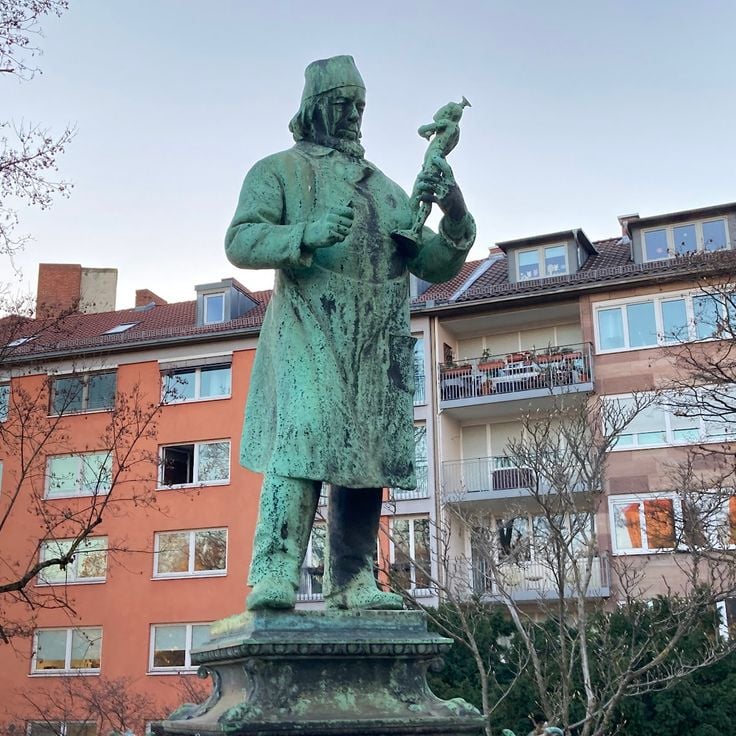
The Burgschmiet Fountain in Nuremberg was built in 1897 to honor Jacob Daniel Burgschmiet, a master founder and sculptor who created important monuments throughout the city. He was responsible for the statues dedicated to Albrecht Dürer and Philipp Melanchthon, two figures central to Nuremberg's identity. The fountain stands in the heart of the old city, where craftsmanship and artistry have long been part of daily life. This monument reflects how Nuremberg has chosen to remember its makers and thinkers across the centuries.
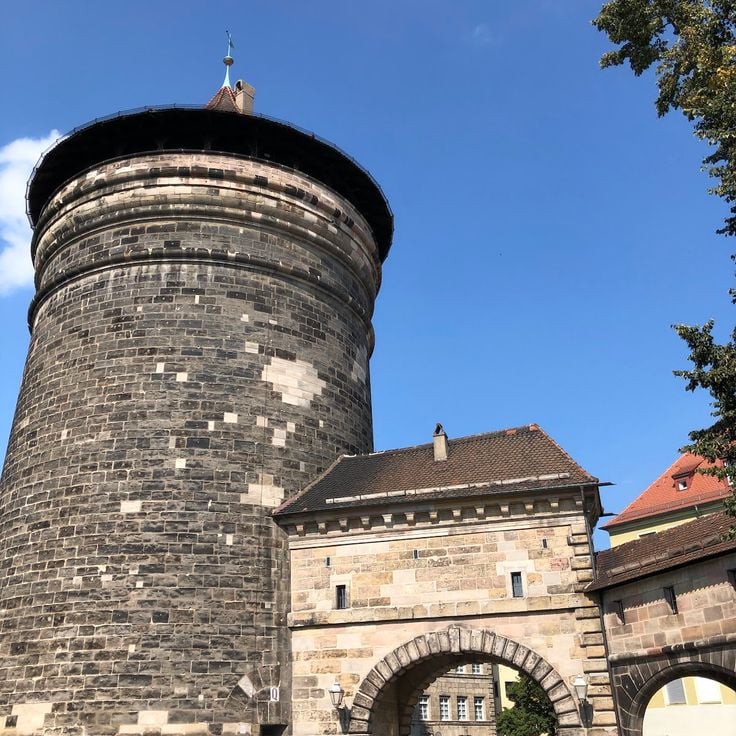
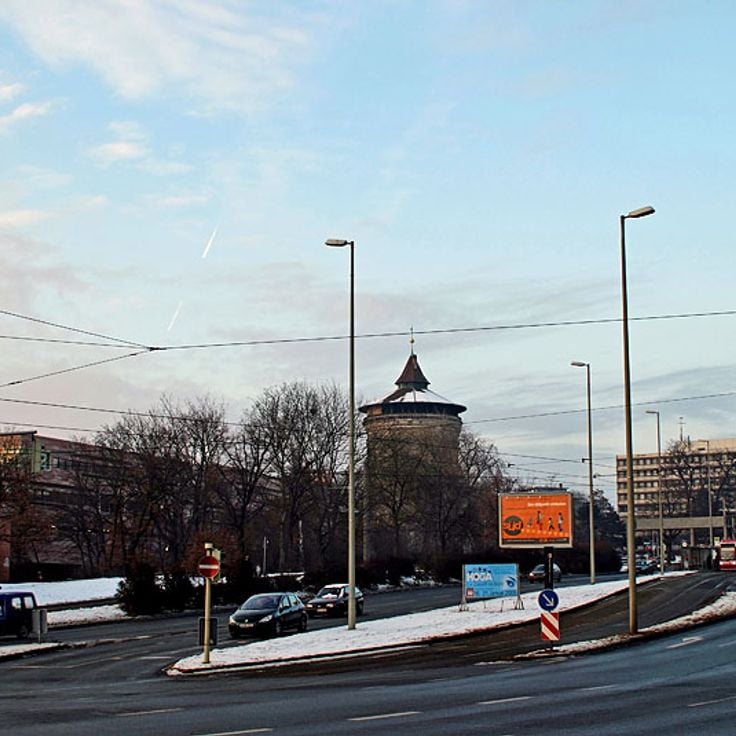
The Spittlertor Gate Tower is a cylindrical defensive structure from the 14th century and one of four main bastions of the fortification system that protected medieval Nuremberg. This tower stands as part of the ancient city walls still surrounding the Old Town today, telling the story of medieval defense and urban protection. Built with the craftsmanship of its era, it connects with Nuremberg's other historic structures to show how the city was shaped and defended through the centuries.
The Unschlitt House in Nuremberg demonstrates how the city preserved its trading traditions across centuries. Hans Beheim the Elder designed this sandstone building in 1491 in the Late Gothic style as a grain storage facility. The building later transformed into a commercial hall for selling fats, reflecting the city's shifting economic needs. Standing among the Old Town's cobblestone squares and Gothic spires, it tells the story of the craftspeople and merchants who shaped Nuremberg.
The Laufer Gate Tower is a medieval fortified structure that marks the boundary between Nuremberg's historic center and the newer districts that grew beyond it. This tower belongs to the city's collection of buildings that hold centuries of history within their walls. It once marked the edge of the town, where craftspeople worked and merchants conducted their trade protected by the city's defenses. Today, the Laufer Gate Tower connects the medieval heart of Nuremberg with the areas that expanded outward over time, inviting visitors to walk through the different periods of the city's development.
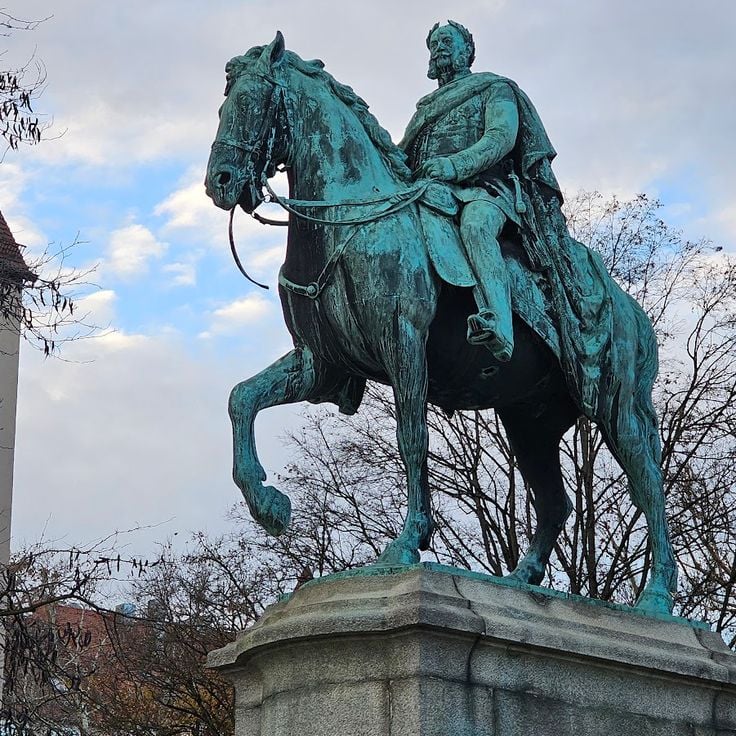
This equestrian bronze statue depicts Emperor William I and was inaugurated in 1905 on Egidienplatz in Nuremberg's Old Town. Sculptor Wilhelm Rümann created the work, which stands at the heart of the medieval city and reflects the political history of the German Empire from the early 20th century. The monument is part of the many layers of history that shape Nuremberg's streets and squares—a testament to a time when the city played a role in major political events.
The Old Town of Nuremberg is the medieval heart of the city and a central location within this collection of historic sites and landmarks. It is surrounded by walls from the 14th century and shows how the city was rebuilt after the destruction of 1945. Gothic churches, cobblestone squares, and Renaissance fountains define the character of the place. Visitors can see where craftspeople lived and worked, where markets took place and still take place today. The narrow streets lined with half-timbered houses feel as if they belong to another era.
Weißgerbergasse is a cobblestoned street in Nuremberg's Old Town, where the city's layers of history come together. This street tells the story of how leather artisans lived and worked in the 15th and 16th centuries. Half-timbered houses with colorful facades line the path, their steep roofs a reminder of a medieval craft tradition. Walking here, you see how people organized their lives around their trade, with homes and workshops close together. The stones beneath your feet and the wooden beams overhead connect you directly to centuries of daily life in this place.
The Handwerkerhof is a crafts village built within Nuremberg's medieval towers, offering visitors a direct view into traditional Bavarian trades like pottery, glassmaking, and leatherworking. This site connects to the broader history of the city, where craftspeople once lived and worked in these same streets centuries ago. The workshops here show how artisans practiced their trades and passed their skills forward through time. Walking through the Handwerkerhof, you see the continuation of techniques that helped shape the city's identity and economy from the Middle Ages onward.
The Documentation Center occupies the unfinished Congress Hall at the Nazi Party Rally Grounds and examines the rise and fall of the Hitler regime through documents, films, and eyewitness accounts. Within Nuremberg's collection of historic sites, this museum invites visitors to confront the darkest chapters of the 20th century and understand how a nation lost itself during this period.
The Nuremberg Palace of Justice plays a central role in the city's historic sites, serving as a place where you directly encounter accountability for the past. Between 1945 and 1949, this building hosted the trials of Nazi war criminals. The Palace of Justice stands as a witness to these proceedings that sought justice and responsibility. Today, a memorial museum here documents this judicial period and shows how a nation reckoned with its darkest chapter.
St. Lawrence Church is a stone building that has stood in place since the 13th and 14th centuries. Inside, you find carved altars and glass windows that have survived the centuries. This church shows how craftspeople brought their skills to religious spaces. Visitors see works by Adam Kraft, a master of stone carving. St. Lawrence Church belongs to Nuremberg's medieval heart and speaks to the city's tradition of skilled craftsmanship.
The Germanisches Nationalmuseum anchors Nuremberg's story of how German culture developed across centuries. With more than one million objects, it shows how people worked, created, and lived from the earliest times through the 20th century. You walk through rooms filled with everyday tools, religious carvings, paintings, and crafted goods that reveal what mattered to people in each era. This museum sits within a city that holds both the beauty of medieval tradition and the weight of historical reckoning, making it a place where you see how culture shapes and reflects a society.
The Hauptmarkt is a rectangular square from the 14th century at the heart of Nuremberg's Old Town. Here stands the Schöne Fontäne, a Gothic fountain that has dominated the plaza's center for centuries. The Church of Our Lady rises immediately beside it, framing the square with its impressive exterior. A weekly market still takes place on this plaza, just as it has for hundreds of years. The Hauptmarkt connects Nuremberg's medieval trading past with the present, showing how this space has drawn people across generations.
The Church of Our Lady is a Gothic religious building from the 14th century that stands on Nuremberg's main market square, embodying the medieval history of the city. Its facade displays intricately carved stone figures and decorations that speak to the craftsmanship of earlier times. As part of the historic Old Town, this church contributes to what makes Nuremberg a place where you encounter layers of the past—a setting where the beauty of medieval tradition and the weight of historical memory exist side by side.
The Beautiful Fountain is a Gothic monument from the 14th century that stands in the heart of Nuremberg's Old Town. With its colorful sculptures and a golden ring said to bring luck to those who touch it, this fountain embodies the medieval craftsmanship that defines the city. It represents one of the spaces where Nuremberg's layered history comes alive—a gathering place where people have met for centuries, much as they do today.
The Albrecht Dürer House is a timber-framed dwelling from the 15th century that contributes to understanding Nuremberg's cultural history. From 1509 to 1528, the renowned German painter Albrecht Dürer lived here. The house shows how an artist worked and lived during the early modern period. Today visitors can see Dürer's works and learn about his life in this historic city. The building itself remains part of Nuremberg's medieval past and stands in the heart of the Old Town.
St. Sebald Church stands at the heart of Nuremberg's Old Town as a witness to the city's medieval past. Built in the 13th century, this Gothic structure houses the reliquary of Saint Sebald, Nuremberg's patron saint, crafted from worked bronze. The shrine represents the skill of artisans who shaped the city's identity through centuries. Walking through this church, you encounter both the religious devotion and the craft traditions that shaped Nuremberg's development from its earliest days.
The Zeppelinfeld is a parade ground built by the Nazi regime between 1935 and 1937, designed to hold 200,000 people during the gatherings of the National Socialist party. This site in Nuremberg represents the dark chapter of the 20th century that the city openly addresses today. Walking through this space allows visitors to confront history directly and understand how a nation lost itself during that period.
The City Museum at Fembo House shows how Nuremberg developed from the Middle Ages to today. The building itself, a patrician house from the 16th century, reflects the time when wealthy families built such grand homes. Inside the museum, you find objects from different eras: old craft tools, furniture, clothing, and everyday items. You see how merchants and craftspeople lived, how the city grew and changed over time. The exhibits show Nuremberg's economic power as a trading center and how architecture shaped the city's story. This museum helps you understand why Nuremberg was so important and how people here lived across centuries.
The Medieval Dungeons are a set of twelve underground cells dating from the 14th century, preserved beneath the old town hall in Nuremberg. They show how the city carried out its judicial system and held prisoners within its walls. These spaces belong to Nuremberg's collection of historic sites where you encounter both the structure of medieval life and the layers of history that shaped the city. Descending into these cells brings you face to face with the reality of how justice worked in medieval times.
The Hospital of the Holy Spirit stands as one of Nuremberg's oldest institutions, founded in 1339 to care for pilgrims, the sick, and the elderly. Built on wooden stilts above the Pegnitz River, this structure demonstrates how medieval citizens organized support for those in need. The hospital remains within the Old Town's narrow streets, where you can observe how practical solutions were engineered centuries ago. Walking past this building offers insight into the city's longstanding traditions of community care and the daily realities of medieval life.
This 14th-century wooden bridge crosses the Pegnitz and once connected the city to the executioner's tower on the opposite bank. It stands as a reminder of how Nuremberg functioned in medieval times, when different parts of the city had specific roles. Today, walking across this bridge places you within the layers of history that the city preserves. It fits into the larger story of Nuremberg, where you encounter the past directly in many corners.
The Weinstadel represents medieval commerce in Nuremberg. This 15th-century Gothic building served as a warehouse for the wine trade and stands among the narrow streets and half-timbered houses of the Old Town. Its design shows how merchants organized their business and stored goods during the city's years as a major trading center. Walking past it, you can imagine the bustle of merchants and workers who moved through these streets centuries ago, handling the goods that made Nuremberg prosperous.
The White Tower was one of Nuremberg's original fortifications, built from local sandstone in the 13th century. This tower now marks the entrance to the historic center and shows how the medieval city protected itself with walls and towers. Walking past it connects you to the layers of medieval history that define Nuremberg's character and demonstrates the craftsmanship of those who built the city's defenses.
St. Elizabeth Church is among the historic sites and landmarks of Nuremberg, showing how religious buildings evolved over generations. This 18th-century Catholic church in classical style was built on the site of an earlier chapel dedicated to Saint Elizabeth of Hungary. It stands in the Old Town and connects with the stone churches and winding streets that form Nuremberg's medieval heart. The building reflects a different architectural style than the Gothic spires and old houses around it, yet demonstrates the continuity of religious life at this location. For visitors, St. Elizabeth Church offers insight into architectural history and the role churches played in Nuremberg's development across centuries.
The Way of Human Rights in Nuremberg is a meaningful place within this city where past and present meet. This monument consists of twenty-nine white concrete columns inscribed with articles of the Universal Declaration of Human Rights, each in a different language. An oak tree grows in the center. Visitors walk between the columns and read the words that express rights meant for all people. The monument reflects what Nuremberg represents: a city that confronts its history directly and stands for human dignity and accountability.
The Sinwell Tower is a circular stone structure from the Imperial Castle dating to the 12th century. Rising 47 meters (154 feet) tall, it remains open to visitors who can climb to its upper platform for views across the city. Within Nuremberg's collection of historic sites, this tower represents the medieval foundations of the city and offers a direct sense of how the city looked and functioned hundreds of years ago.
The Deep Well is an underground structure at Nuremberg's Imperial Castle, carved deep into the red sandstone beneath the fortress. Built to supply drinking water during medieval times, this engineering feat proved crucial during sieges when the castle faced attack. Walking down the well, you see the marks of the chisels that carved this passage into rock, revealing how people solved the problem of survival within fortress walls. Today, visitors descend into this cool, narrow space to understand how the castle maintained its defenses and kept its people alive during times of threat.
The Trödelmarkt is a river island nestled between two arms of the Pegnitz in Nuremberg's Old Town. As part of the city's historic fabric, it demonstrates how this place preserves the crafts and daily rhythms of earlier centuries. Restored half-timbered houses on the island now house shops and restaurants, creating spaces where people gather much as they did generations ago. Walking across the Trödelmarkt, you see how medieval structures continue to shape modern life in the city, blending old architecture with contemporary use.
The Toy Museum in Nuremberg traces play through centuries of objects. You walk through rooms filled with antique dolls, model trains, carved wooden figures, and board games from across Europe. The collection spans from the 14th century to today, showing how toys have changed and how children have played through different periods. This museum connects to Nuremberg's longer story as a city where craftspeople built their trades, including the making of toys that were sold across the continent.
Nassau House stands as a surviving example of medieval domestic life in Nuremberg. Built from red sandstone in the 13th century, this fortified building reveals how wealthy families lived and protected their homes in the Middle Ages. Four habitable stories, an interior spiral staircase, and sculpted decorations carved into the main facade show the craftsmanship and resources available to the city's merchant class. Within Nuremberg's broader history, Nassau House represents the layers of tradition that shaped the Old Town, connecting modern visitors to the daily lives and ambitions of people who lived within these stone walls centuries ago.
The Nuremberg Trials Memorial documents the 1945-1949 judicial proceedings and shows how the international community sought accountability after World War II. The site preserves photographs, original audio recordings, and a reconstruction of the courtroom. Within Nuremberg's story, this memorial represents how the city faces its past directly—it reveals how a place that witnessed dark chapters pursued justice and recorded this process for future generations.
The Marriage Carousel Fountain stands in the heart of Nuremberg's Old Town, depicting six scenes inspired by Hans Sachs, a local poet who wrote satirical verses about marriage. Bronze figures show the joys and struggles of wedlock as reimagined by an artist in 1984. This fountain connects Nuremberg's medieval craft traditions with its literary past, fitting naturally into the city's history as a place where skilled artisans and cultural life flourished together.
Tucher Castle and Hirsvogel Hall is a museum set in a 16th-century manor house that shows how Nuremberg merchant families lived. Inside, you find period furnishings that reveal the daily routines and tastes of wealthy households. A Renaissance ballroom shows where celebrations and gatherings took place. This place helps you understand the comfort and style that successful traders enjoyed while Nuremberg flourished as a center of commerce and craft.
This Congress Hall is a monumental structure designed by Albert Speer in the 1930s for Nazi party gatherings. Today it stands in Nuremberg as a site of historical memory, housing a museum that documents how a nation lost itself. The unfinished building now serves visitors who confront both the weight of the past and the need for accountability. The Congress Hall embodies Nuremberg's approach of addressing all of its history openly—from medieval craft traditions to the trials and reckoning of the 20th century, all within the same city walls.
This Art Bunker is a network of medieval underground tunnels that was converted into a climate-controlled bunker during World War II to protect artistic treasures from Allied bombing. It shows how Nuremberg worked to preserve its cultural riches during wartime. The bunker stands today as evidence of both medieval craftsmanship and the need to save artworks in times of destruction. Visitors can see which artistic objects found shelter here and how the city protected its heritage.
The Mauthalle stands in Nuremberg's Old Town as a testament to the city's medieval commercial power. This Gothic building from 1498 served as the municipal granary and customs office. It was the largest grain storage facility in the city, showing how central grain trade was to Nuremberg's prosperity. Today, visitors can explore in this building how the city's economic life was rooted in commerce and craft.
The Fountain of Virtues stands in Nuremberg's medieval Old Town as a Renaissance creation from 1589. Six cherub figures adorning this fountain represent Christian virtues that mattered to the people of the city centuries ago. The work showcases the artistic skill that made Nuremberg famous across Europe. Walking past this fountain, you see how the city expressed its values in stone and water, creating a gathering place that still marks the heart of historic Nuremberg.
The Hesperides Gardens are part of Nuremberg's network of historic sites where the city openly addresses its full past. These Baroque and Classicist parks were created in the 17th and 18th centuries within the Saint-Johannis district. Over 360 green spaces are maintained according to historical horticultural methods. Walking through these gardens offers a different perspective on Nuremberg's layered history—a place where you can step away from the cobblestone streets and narrow half-timbered houses to find spaces shaped by centuries of tradition and care.
The Schlayer Tower is a 15th-century defensive structure that stands as part of Nuremberg's medieval fortification system. Built from sandstone in a square plan, it sits on an island formed by the Pegnitz River. The tower shows how the city's builders used water and stone together to protect their community, and it remains a physical reminder of how Nuremberg defended itself during the Middle Ages.
Saint Roch Cemetery is part of Nuremberg's legacy as a place where the city preserves its past. Founded in 1510 during the bubonic plague outbreak, this necropolis shows how people of that era faced loss and remembrance. Here rest notable figures like Friedrich Staedtler, the pencil maker, and Johann Pachelbel, the Baroque composer. The graves speak to the craftsmanship and artistic achievement that shaped Nuremberg's reputation. Walking through this cemetery, visitors encounter a quiet space where art history and everyday life converge.
The Frauentor Gate is one of the historic entrances to Nuremberg's medieval core, which still marks the boundary between the old town and the areas beyond. Built in the 14th century and reconstructed to match its original design, this tower once controlled who entered and left the city. Walking through it connects you to the daily life of merchants and craftspeople from centuries ago. The Frauentor Gate stands as a physical reminder of how the city defended itself and organized trade along its streets.
The German Railway Museum – Hall 2 in Nuremberg displays the history of trains and locomotives across different eras. Historic locomotives and period trains sit on display, showing how rail technology evolved over time. Visitors can see the machines that once carried people and goods across Germany and understand how railways shaped the nation's growth. The museum offers activities for children, letting them engage directly with this transportation heritage. The museum fits into Nuremberg's larger story of how the city witnessed both industrial progress and historical change, connecting the medieval past to the modern era.
The Hall of Honor in Nuremberg was built in 1930 to commemorate soldiers from the First World War. The building was later used for events during the Nazi era. Today it stands among the historic sites where Nuremberg directly confronts all layers of its past—from medieval traditions to the darkest chapters of the 20th century. The place allows visitors to encounter this complex history firsthand.
The Peller House is a 16th-century Renaissance building reconstructed after the Margrave wars. This house shows how Nuremberg recovered and rebuilt itself following destruction, and it stands as a testament to the city's craft and artistic tradition. The municipality owns the building today and uses it for cultural events and administrative functions. As you walk through Nuremberg's medieval streets, you encounter here a place that embodies both Renaissance beauty and the power of restoration.
The Pilate House is a late Gothic building from 1489 that stands as a reminder of Nuremberg's medieval craftsmanship. Built for a wealthy armorer, this seven-story structure shows how skilled workers of the time constructed their homes, building upward to make use of valuable space in the crowded medieval city. From the top floor, the building offers sweeping views across the Old Town's rooftops, church spires, and winding streets. The Pilate House represents the connection between the trades that made Nuremberg prosperous and the everyday life of its residents.
The Peter Henlein Fountain stands on Hefnersplatz and honors the 16th-century Nuremberg watchmaker who invented the first pocket watch. This bronze monument was built in 1905 and shows how the city values its craft heritage. The fountain fits into Nuremberg's story, where skilled artisans and inventors worked across the centuries. It reminds visitors that Nuremberg was shaped not only by medieval churches and ancient walls, but also by people whose inventions changed the world.
Saint Sebald Parish Courtyard is a quiet retreat within Nuremberg's medieval streets. The building dates to the 14th century, and its courtyard gathers beneath old stone walls. A café here invites you to sit with coffee or tea surrounded by centuries of history. An exhibition inside documents the Jewish heritage of Nuremberg—a vital chapter of the city's past. This courtyard embodies what makes Nuremberg distinctive: the ability to encounter both the medieval world and the honest reckoning with all the layers of history that shaped the city.
The Burgschmiet Fountain in Nuremberg was built in 1897 to honor Jacob Daniel Burgschmiet, a master founder and sculptor who created important monuments throughout the city. He was responsible for the statues dedicated to Albrecht Dürer and Philipp Melanchthon, two figures central to Nuremberg's identity. The fountain stands in the heart of the old city, where craftsmanship and artistry have long been part of daily life. This monument reflects how Nuremberg has chosen to remember its makers and thinkers across the centuries.
The Spittlertor Gate Tower is a cylindrical defensive structure from the 14th century and one of four main bastions of the fortification system that protected medieval Nuremberg. This tower stands as part of the ancient city walls still surrounding the Old Town today, telling the story of medieval defense and urban protection. Built with the craftsmanship of its era, it connects with Nuremberg's other historic structures to show how the city was shaped and defended through the centuries.
The Unschlitt House in Nuremberg demonstrates how the city preserved its trading traditions across centuries. Hans Beheim the Elder designed this sandstone building in 1491 in the Late Gothic style as a grain storage facility. The building later transformed into a commercial hall for selling fats, reflecting the city's shifting economic needs. Standing among the Old Town's cobblestone squares and Gothic spires, it tells the story of the craftspeople and merchants who shaped Nuremberg.
The Laufer Gate Tower is a medieval fortified structure that marks the boundary between Nuremberg's historic center and the newer districts that grew beyond it. This tower belongs to the city's collection of buildings that hold centuries of history within their walls. It once marked the edge of the town, where craftspeople worked and merchants conducted their trade protected by the city's defenses. Today, the Laufer Gate Tower connects the medieval heart of Nuremberg with the areas that expanded outward over time, inviting visitors to walk through the different periods of the city's development.
This equestrian bronze statue depicts Emperor William I and was inaugurated in 1905 on Egidienplatz in Nuremberg's Old Town. Sculptor Wilhelm Rümann created the work, which stands at the heart of the medieval city and reflects the political history of the German Empire from the early 20th century. The monument is part of the many layers of history that shape Nuremberg's streets and squares—a testament to a time when the city played a role in major political events.
The Old Town of Nuremberg is the medieval heart of the city and a central location within this collection of historic sites and landmarks. It is surrounded by walls from the 14th century and shows how the city was rebuilt after the destruction of 1945. Gothic churches, cobblestone squares, and Renaissance fountains define the character of the place. Visitors can see where craftspeople lived and worked, where markets took place and still take place today. The narrow streets lined with half-timbered houses feel as if they belong to another era.
Weißgerbergasse is a cobblestoned street in Nuremberg's Old Town, where the city's layers of history come together. This street tells the story of how leather artisans lived and worked in the 15th and 16th centuries. Half-timbered houses with colorful facades line the path, their steep roofs a reminder of a medieval craft tradition. Walking here, you see how people organized their lives around their trade, with homes and workshops close together. The stones beneath your feet and the wooden beams overhead connect you directly to centuries of daily life in this place.
The Handwerkerhof is a crafts village built within Nuremberg's medieval towers, offering visitors a direct view into traditional Bavarian trades like pottery, glassmaking, and leatherworking. This site connects to the broader history of the city, where craftspeople once lived and worked in these same streets centuries ago. The workshops here show how artisans practiced their trades and passed their skills forward through time. Walking through the Handwerkerhof, you see the continuation of techniques that helped shape the city's identity and economy from the Middle Ages onward.
The Documentation Center occupies the unfinished Congress Hall at the Nazi Party Rally Grounds and examines the rise and fall of the Hitler regime through documents, films, and eyewitness accounts. Within Nuremberg's collection of historic sites, this museum invites visitors to confront the darkest chapters of the 20th century and understand how a nation lost itself during this period.
The Nuremberg Palace of Justice plays a central role in the city's historic sites, serving as a place where you directly encounter accountability for the past. Between 1945 and 1949, this building hosted the trials of Nazi war criminals. The Palace of Justice stands as a witness to these proceedings that sought justice and responsibility. Today, a memorial museum here documents this judicial period and shows how a nation reckoned with its darkest chapter.
St. Lawrence Church is a stone building that has stood in place since the 13th and 14th centuries. Inside, you find carved altars and glass windows that have survived the centuries. This church shows how craftspeople brought their skills to religious spaces. Visitors see works by Adam Kraft, a master of stone carving. St. Lawrence Church belongs to Nuremberg's medieval heart and speaks to the city's tradition of skilled craftsmanship.
The Germanisches Nationalmuseum anchors Nuremberg's story of how German culture developed across centuries. With more than one million objects, it shows how people worked, created, and lived from the earliest times through the 20th century. You walk through rooms filled with everyday tools, religious carvings, paintings, and crafted goods that reveal what mattered to people in each era. This museum sits within a city that holds both the beauty of medieval tradition and the weight of historical reckoning, making it a place where you see how culture shapes and reflects a society.
The Hauptmarkt is a rectangular square from the 14th century at the heart of Nuremberg's Old Town. Here stands the Schöne Fontäne, a Gothic fountain that has dominated the plaza's center for centuries. The Church of Our Lady rises immediately beside it, framing the square with its impressive exterior. A weekly market still takes place on this plaza, just as it has for hundreds of years. The Hauptmarkt connects Nuremberg's medieval trading past with the present, showing how this space has drawn people across generations.
The Church of Our Lady is a Gothic religious building from the 14th century that stands on Nuremberg's main market square, embodying the medieval history of the city. Its facade displays intricately carved stone figures and decorations that speak to the craftsmanship of earlier times. As part of the historic Old Town, this church contributes to what makes Nuremberg a place where you encounter layers of the past—a setting where the beauty of medieval tradition and the weight of historical memory exist side by side.
The Beautiful Fountain is a Gothic monument from the 14th century that stands in the heart of Nuremberg's Old Town. With its colorful sculptures and a golden ring said to bring luck to those who touch it, this fountain embodies the medieval craftsmanship that defines the city. It represents one of the spaces where Nuremberg's layered history comes alive—a gathering place where people have met for centuries, much as they do today.
The Albrecht Dürer House is a timber-framed dwelling from the 15th century that contributes to understanding Nuremberg's cultural history. From 1509 to 1528, the renowned German painter Albrecht Dürer lived here. The house shows how an artist worked and lived during the early modern period. Today visitors can see Dürer's works and learn about his life in this historic city. The building itself remains part of Nuremberg's medieval past and stands in the heart of the Old Town.
St. Sebald Church stands at the heart of Nuremberg's Old Town as a witness to the city's medieval past. Built in the 13th century, this Gothic structure houses the reliquary of Saint Sebald, Nuremberg's patron saint, crafted from worked bronze. The shrine represents the skill of artisans who shaped the city's identity through centuries. Walking through this church, you encounter both the religious devotion and the craft traditions that shaped Nuremberg's development from its earliest days.
The Zeppelinfeld is a parade ground built by the Nazi regime between 1935 and 1937, designed to hold 200,000 people during the gatherings of the National Socialist party. This site in Nuremberg represents the dark chapter of the 20th century that the city openly addresses today. Walking through this space allows visitors to confront history directly and understand how a nation lost itself during that period.
The City Museum at Fembo House shows how Nuremberg developed from the Middle Ages to today. The building itself, a patrician house from the 16th century, reflects the time when wealthy families built such grand homes. Inside the museum, you find objects from different eras: old craft tools, furniture, clothing, and everyday items. You see how merchants and craftspeople lived, how the city grew and changed over time. The exhibits show Nuremberg's economic power as a trading center and how architecture shaped the city's story. This museum helps you understand why Nuremberg was so important and how people here lived across centuries.
The Medieval Dungeons are a set of twelve underground cells dating from the 14th century, preserved beneath the old town hall in Nuremberg. They show how the city carried out its judicial system and held prisoners within its walls. These spaces belong to Nuremberg's collection of historic sites where you encounter both the structure of medieval life and the layers of history that shaped the city. Descending into these cells brings you face to face with the reality of how justice worked in medieval times.
The Hospital of the Holy Spirit stands as one of Nuremberg's oldest institutions, founded in 1339 to care for pilgrims, the sick, and the elderly. Built on wooden stilts above the Pegnitz River, this structure demonstrates how medieval citizens organized support for those in need. The hospital remains within the Old Town's narrow streets, where you can observe how practical solutions were engineered centuries ago. Walking past this building offers insight into the city's longstanding traditions of community care and the daily realities of medieval life.
This 14th-century wooden bridge crosses the Pegnitz and once connected the city to the executioner's tower on the opposite bank. It stands as a reminder of how Nuremberg functioned in medieval times, when different parts of the city had specific roles. Today, walking across this bridge places you within the layers of history that the city preserves. It fits into the larger story of Nuremberg, where you encounter the past directly in many corners.
The Weinstadel represents medieval commerce in Nuremberg. This 15th-century Gothic building served as a warehouse for the wine trade and stands among the narrow streets and half-timbered houses of the Old Town. Its design shows how merchants organized their business and stored goods during the city's years as a major trading center. Walking past it, you can imagine the bustle of merchants and workers who moved through these streets centuries ago, handling the goods that made Nuremberg prosperous.
The White Tower was one of Nuremberg's original fortifications, built from local sandstone in the 13th century. This tower now marks the entrance to the historic center and shows how the medieval city protected itself with walls and towers. Walking past it connects you to the layers of medieval history that define Nuremberg's character and demonstrates the craftsmanship of those who built the city's defenses.
St. Elizabeth Church is among the historic sites and landmarks of Nuremberg, showing how religious buildings evolved over generations. This 18th-century Catholic church in classical style was built on the site of an earlier chapel dedicated to Saint Elizabeth of Hungary. It stands in the Old Town and connects with the stone churches and winding streets that form Nuremberg's medieval heart. The building reflects a different architectural style than the Gothic spires and old houses around it, yet demonstrates the continuity of religious life at this location. For visitors, St. Elizabeth Church offers insight into architectural history and the role churches played in Nuremberg's development across centuries.
The Way of Human Rights in Nuremberg is a meaningful place within this city where past and present meet. This monument consists of twenty-nine white concrete columns inscribed with articles of the Universal Declaration of Human Rights, each in a different language. An oak tree grows in the center. Visitors walk between the columns and read the words that express rights meant for all people. The monument reflects what Nuremberg represents: a city that confronts its history directly and stands for human dignity and accountability.
The Sinwell Tower is a circular stone structure from the Imperial Castle dating to the 12th century. Rising 47 meters (154 feet) tall, it remains open to visitors who can climb to its upper platform for views across the city. Within Nuremberg's collection of historic sites, this tower represents the medieval foundations of the city and offers a direct sense of how the city looked and functioned hundreds of years ago.
The Deep Well is an underground structure at Nuremberg's Imperial Castle, carved deep into the red sandstone beneath the fortress. Built to supply drinking water during medieval times, this engineering feat proved crucial during sieges when the castle faced attack. Walking down the well, you see the marks of the chisels that carved this passage into rock, revealing how people solved the problem of survival within fortress walls. Today, visitors descend into this cool, narrow space to understand how the castle maintained its defenses and kept its people alive during times of threat.
The Trödelmarkt is a river island nestled between two arms of the Pegnitz in Nuremberg's Old Town. As part of the city's historic fabric, it demonstrates how this place preserves the crafts and daily rhythms of earlier centuries. Restored half-timbered houses on the island now house shops and restaurants, creating spaces where people gather much as they did generations ago. Walking across the Trödelmarkt, you see how medieval structures continue to shape modern life in the city, blending old architecture with contemporary use.
The Toy Museum in Nuremberg traces play through centuries of objects. You walk through rooms filled with antique dolls, model trains, carved wooden figures, and board games from across Europe. The collection spans from the 14th century to today, showing how toys have changed and how children have played through different periods. This museum connects to Nuremberg's longer story as a city where craftspeople built their trades, including the making of toys that were sold across the continent.
Nassau House stands as a surviving example of medieval domestic life in Nuremberg. Built from red sandstone in the 13th century, this fortified building reveals how wealthy families lived and protected their homes in the Middle Ages. Four habitable stories, an interior spiral staircase, and sculpted decorations carved into the main facade show the craftsmanship and resources available to the city's merchant class. Within Nuremberg's broader history, Nassau House represents the layers of tradition that shaped the Old Town, connecting modern visitors to the daily lives and ambitions of people who lived within these stone walls centuries ago.
The Nuremberg Trials Memorial documents the 1945-1949 judicial proceedings and shows how the international community sought accountability after World War II. The site preserves photographs, original audio recordings, and a reconstruction of the courtroom. Within Nuremberg's story, this memorial represents how the city faces its past directly—it reveals how a place that witnessed dark chapters pursued justice and recorded this process for future generations.
The Marriage Carousel Fountain stands in the heart of Nuremberg's Old Town, depicting six scenes inspired by Hans Sachs, a local poet who wrote satirical verses about marriage. Bronze figures show the joys and struggles of wedlock as reimagined by an artist in 1984. This fountain connects Nuremberg's medieval craft traditions with its literary past, fitting naturally into the city's history as a place where skilled artisans and cultural life flourished together.
Tucher Castle and Hirsvogel Hall is a museum set in a 16th-century manor house that shows how Nuremberg merchant families lived. Inside, you find period furnishings that reveal the daily routines and tastes of wealthy households. A Renaissance ballroom shows where celebrations and gatherings took place. This place helps you understand the comfort and style that successful traders enjoyed while Nuremberg flourished as a center of commerce and craft.
This Congress Hall is a monumental structure designed by Albert Speer in the 1930s for Nazi party gatherings. Today it stands in Nuremberg as a site of historical memory, housing a museum that documents how a nation lost itself. The unfinished building now serves visitors who confront both the weight of the past and the need for accountability. The Congress Hall embodies Nuremberg's approach of addressing all of its history openly—from medieval craft traditions to the trials and reckoning of the 20th century, all within the same city walls.
This Art Bunker is a network of medieval underground tunnels that was converted into a climate-controlled bunker during World War II to protect artistic treasures from Allied bombing. It shows how Nuremberg worked to preserve its cultural riches during wartime. The bunker stands today as evidence of both medieval craftsmanship and the need to save artworks in times of destruction. Visitors can see which artistic objects found shelter here and how the city protected its heritage.
The Mauthalle stands in Nuremberg's Old Town as a testament to the city's medieval commercial power. This Gothic building from 1498 served as the municipal granary and customs office. It was the largest grain storage facility in the city, showing how central grain trade was to Nuremberg's prosperity. Today, visitors can explore in this building how the city's economic life was rooted in commerce and craft.
The Fountain of Virtues stands in Nuremberg's medieval Old Town as a Renaissance creation from 1589. Six cherub figures adorning this fountain represent Christian virtues that mattered to the people of the city centuries ago. The work showcases the artistic skill that made Nuremberg famous across Europe. Walking past this fountain, you see how the city expressed its values in stone and water, creating a gathering place that still marks the heart of historic Nuremberg.
The Hesperides Gardens are part of Nuremberg's network of historic sites where the city openly addresses its full past. These Baroque and Classicist parks were created in the 17th and 18th centuries within the Saint-Johannis district. Over 360 green spaces are maintained according to historical horticultural methods. Walking through these gardens offers a different perspective on Nuremberg's layered history—a place where you can step away from the cobblestone streets and narrow half-timbered houses to find spaces shaped by centuries of tradition and care.
The Schlayer Tower is a 15th-century defensive structure that stands as part of Nuremberg's medieval fortification system. Built from sandstone in a square plan, it sits on an island formed by the Pegnitz River. The tower shows how the city's builders used water and stone together to protect their community, and it remains a physical reminder of how Nuremberg defended itself during the Middle Ages.
Saint Roch Cemetery is part of Nuremberg's legacy as a place where the city preserves its past. Founded in 1510 during the bubonic plague outbreak, this necropolis shows how people of that era faced loss and remembrance. Here rest notable figures like Friedrich Staedtler, the pencil maker, and Johann Pachelbel, the Baroque composer. The graves speak to the craftsmanship and artistic achievement that shaped Nuremberg's reputation. Walking through this cemetery, visitors encounter a quiet space where art history and everyday life converge.
The Frauentor Gate is one of the historic entrances to Nuremberg's medieval core, which still marks the boundary between the old town and the areas beyond. Built in the 14th century and reconstructed to match its original design, this tower once controlled who entered and left the city. Walking through it connects you to the daily life of merchants and craftspeople from centuries ago. The Frauentor Gate stands as a physical reminder of how the city defended itself and organized trade along its streets.
The German Railway Museum – Hall 2 in Nuremberg displays the history of trains and locomotives across different eras. Historic locomotives and period trains sit on display, showing how rail technology evolved over time. Visitors can see the machines that once carried people and goods across Germany and understand how railways shaped the nation's growth. The museum offers activities for children, letting them engage directly with this transportation heritage. The museum fits into Nuremberg's larger story of how the city witnessed both industrial progress and historical change, connecting the medieval past to the modern era.
The Hall of Honor in Nuremberg was built in 1930 to commemorate soldiers from the First World War. The building was later used for events during the Nazi era. Today it stands among the historic sites where Nuremberg directly confronts all layers of its past—from medieval traditions to the darkest chapters of the 20th century. The place allows visitors to encounter this complex history firsthand.
The Peller House is a 16th-century Renaissance building reconstructed after the Margrave wars. This house shows how Nuremberg recovered and rebuilt itself following destruction, and it stands as a testament to the city's craft and artistic tradition. The municipality owns the building today and uses it for cultural events and administrative functions. As you walk through Nuremberg's medieval streets, you encounter here a place that embodies both Renaissance beauty and the power of restoration.
The Pilate House is a late Gothic building from 1489 that stands as a reminder of Nuremberg's medieval craftsmanship. Built for a wealthy armorer, this seven-story structure shows how skilled workers of the time constructed their homes, building upward to make use of valuable space in the crowded medieval city. From the top floor, the building offers sweeping views across the Old Town's rooftops, church spires, and winding streets. The Pilate House represents the connection between the trades that made Nuremberg prosperous and the everyday life of its residents.
The Peter Henlein Fountain stands on Hefnersplatz and honors the 16th-century Nuremberg watchmaker who invented the first pocket watch. This bronze monument was built in 1905 and shows how the city values its craft heritage. The fountain fits into Nuremberg's story, where skilled artisans and inventors worked across the centuries. It reminds visitors that Nuremberg was shaped not only by medieval churches and ancient walls, but also by people whose inventions changed the world.
Saint Sebald Parish Courtyard is a quiet retreat within Nuremberg's medieval streets. The building dates to the 14th century, and its courtyard gathers beneath old stone walls. A café here invites you to sit with coffee or tea surrounded by centuries of history. An exhibition inside documents the Jewish heritage of Nuremberg—a vital chapter of the city's past. This courtyard embodies what makes Nuremberg distinctive: the ability to encounter both the medieval world and the honest reckoning with all the layers of history that shaped the city.
The Burgschmiet Fountain in Nuremberg was built in 1897 to honor Jacob Daniel Burgschmiet, a master founder and sculptor who created important monuments throughout the city. He was responsible for the statues dedicated to Albrecht Dürer and Philipp Melanchthon, two figures central to Nuremberg's identity. The fountain stands in the heart of the old city, where craftsmanship and artistry have long been part of daily life. This monument reflects how Nuremberg has chosen to remember its makers and thinkers across the centuries.
The Spittlertor Gate Tower is a cylindrical defensive structure from the 14th century and one of four main bastions of the fortification system that protected medieval Nuremberg. This tower stands as part of the ancient city walls still surrounding the Old Town today, telling the story of medieval defense and urban protection. Built with the craftsmanship of its era, it connects with Nuremberg's other historic structures to show how the city was shaped and defended through the centuries.
The Unschlitt House in Nuremberg demonstrates how the city preserved its trading traditions across centuries. Hans Beheim the Elder designed this sandstone building in 1491 in the Late Gothic style as a grain storage facility. The building later transformed into a commercial hall for selling fats, reflecting the city's shifting economic needs. Standing among the Old Town's cobblestone squares and Gothic spires, it tells the story of the craftspeople and merchants who shaped Nuremberg.
The Laufer Gate Tower is a medieval fortified structure that marks the boundary between Nuremberg's historic center and the newer districts that grew beyond it. This tower belongs to the city's collection of buildings that hold centuries of history within their walls. It once marked the edge of the town, where craftspeople worked and merchants conducted their trade protected by the city's defenses. Today, the Laufer Gate Tower connects the medieval heart of Nuremberg with the areas that expanded outward over time, inviting visitors to walk through the different periods of the city's development.
This equestrian bronze statue depicts Emperor William I and was inaugurated in 1905 on Egidienplatz in Nuremberg's Old Town. Sculptor Wilhelm Rümann created the work, which stands at the heart of the medieval city and reflects the political history of the German Empire from the early 20th century. The monument is part of the many layers of history that shape Nuremberg's streets and squares—a testament to a time when the city played a role in major political events.