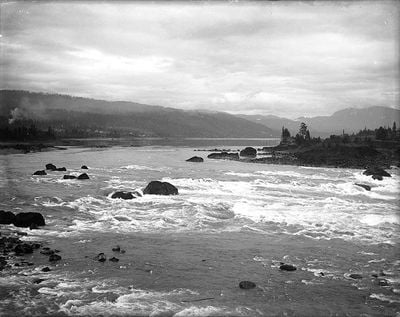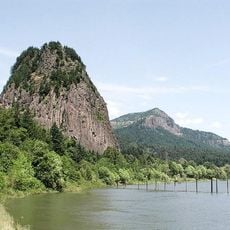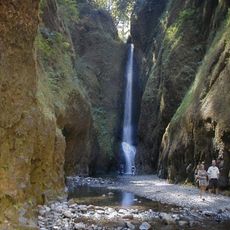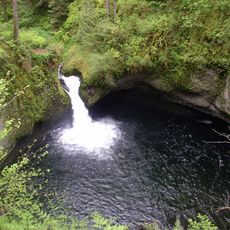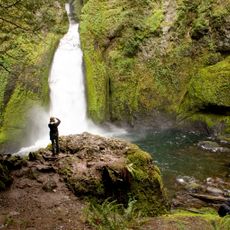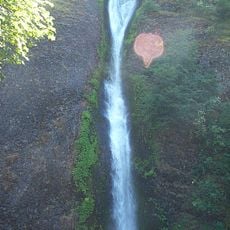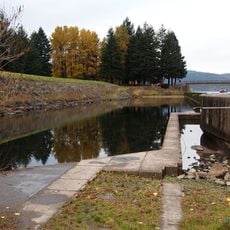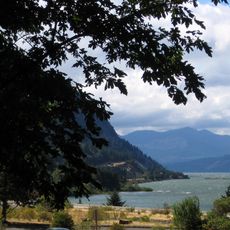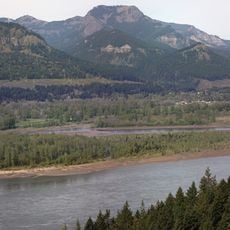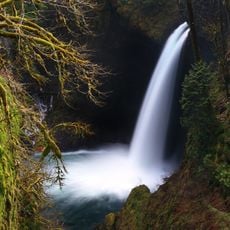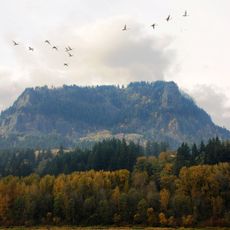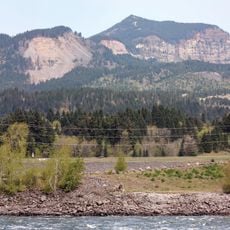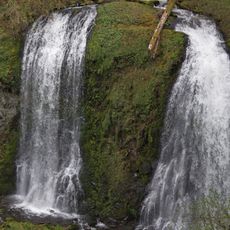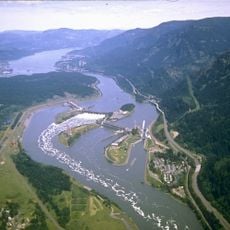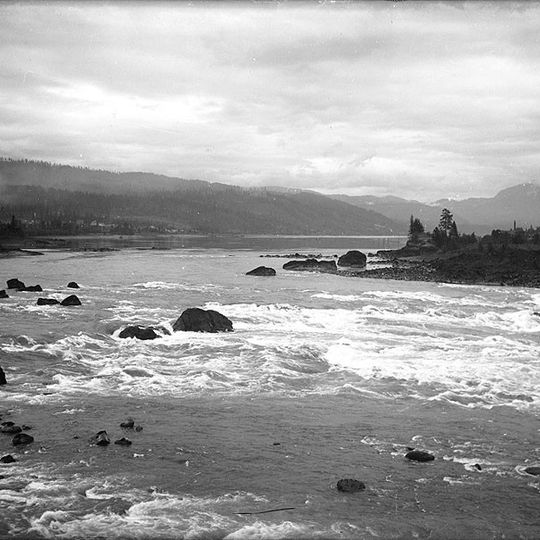
Cascades Rapids, Rapids on Columbia River, Oregon.
Cascades Rapids was a section of the Columbia River where the water flowed swiftly over rocky obstacles and descended significantly, creating a barrier to river travel. The turbulent water stretched for several miles and made upstream passage dangerous for anyone attempting to navigate through.
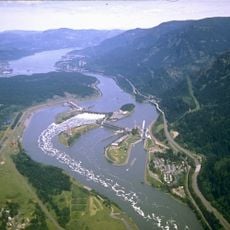
The rapids formed naturally within the Columbia River and became a major obstacle for early exploration and trade in the western region. A canal with locks was built in 1896 to route vessels around the dangerous water, but the site was completely flooded when Bonneville Dam was constructed during the 1930s.
Native American tribes gathered at this location for generations to catch salmon during seasonal fish migrations upstream. The site served as a meeting place where multiple communities came together for fishing and trade.
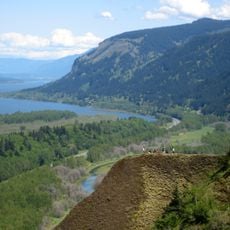
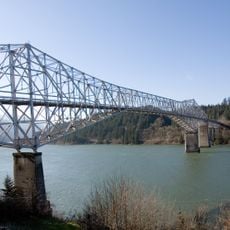
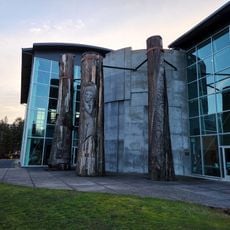
The location is now underwater, covered by the Bonneville Reservoir that formed behind the dam. Visitors can view the former site from the water or learn more about the history at nearby museums and interpretive centers along the river.
These rapids lent their name to an entire mountain range and became the namesake for the Cascade Range, which extends over a thousand miles from British Columbia down to Northern California. The name spread so widely that few people today realize an obscure river feature gave its name to an entire geographic region.
The community of curious travelers
AroundUs brings together thousands of curated places, local tips, and hidden gems, enriched daily by 92,749 contributors worldwide.