See the monuments around you in AROpen chests in the app
Around Us is built for your phone — point your camera at the streets and discover the monuments and places around you in augmented reality.Around Us is built for your phone — chests unlock when you walk, explore and capture nearby places.
Castles and palaces from different periods and regions reveal how architecture adapted to military needs, royal ambitions, or religious purposes. Some were built as fortresses, others served as residences or symbols of power. Construction styles range from medieval defenses to grand estates of later centuries. Each structure carries the mark of its time and its builders.
This collection includes places such as Neuschwanstein in Bavaria, Edinburgh Castle in Scotland, and the Alhambra in Granada. It also features Himeji Castle in Japan, the Potala Palace in Lhasa, and Prague Castle. Some sites stand on cliffs or in mountains, others lie in river valleys or near towns. Visiting them shows how defense, living space, and display came together in one building.
Castles and palaces from different periods and regions reveal how architecture adapted to military needs, royal ambitions, or religious purposes. Some were built as fortresses, others served as residences or symbols of power. Construction styles range from medieval defenses to grand estates of later centuries. Each structure carries the mark of its time and its builders.
This collection includes places such as Neuschwanstein in Bavaria, Edinburgh Castle in Scotland, and the Alhambra in Granada. It also features Himeji Castle in Japan, the Potala Palace in Lhasa, and Prague Castle. Some sites stand on cliffs or in mountains, others lie in river valleys or near towns. Visiting them shows how defense, living space, and display came together in one building.
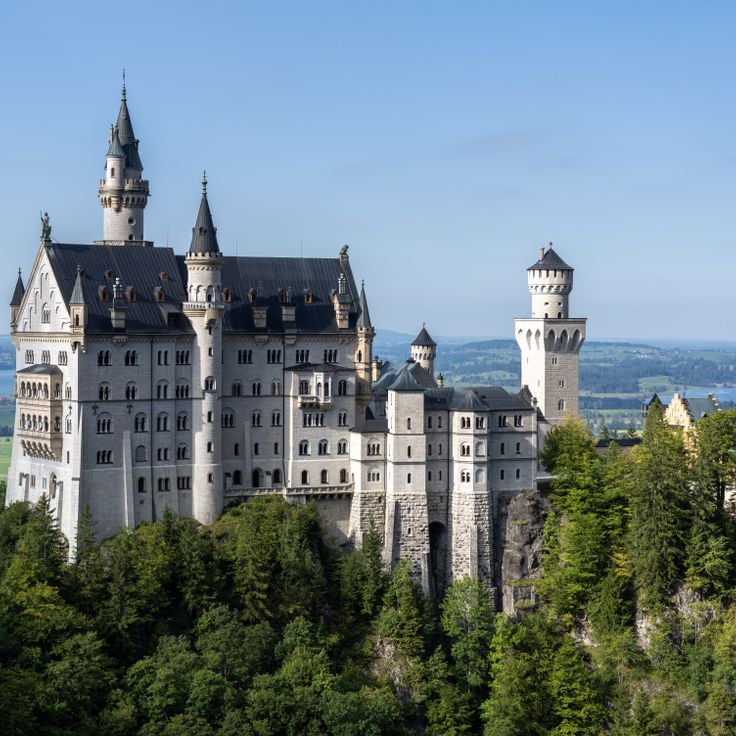
This castle stands on a rocky peak in the Bavarian Alps and represents one of the most recognized buildings from the 19th century. King Ludwig II commissioned its construction beginning in 1869 as a romantic residence. The white limestone facades and blue towers recall medieval fortresses, though they were built at a time when such structures no longer served military purposes. Inside, historical halls combine with technology that was modern for the period, including central heating and running water. Terraces offer views across forests and lakes. Neuschwanstein Castle demonstrates how medieval architecture was reinterpreted in the late 19th century and documents the vision of a king who withdrew from political reality.
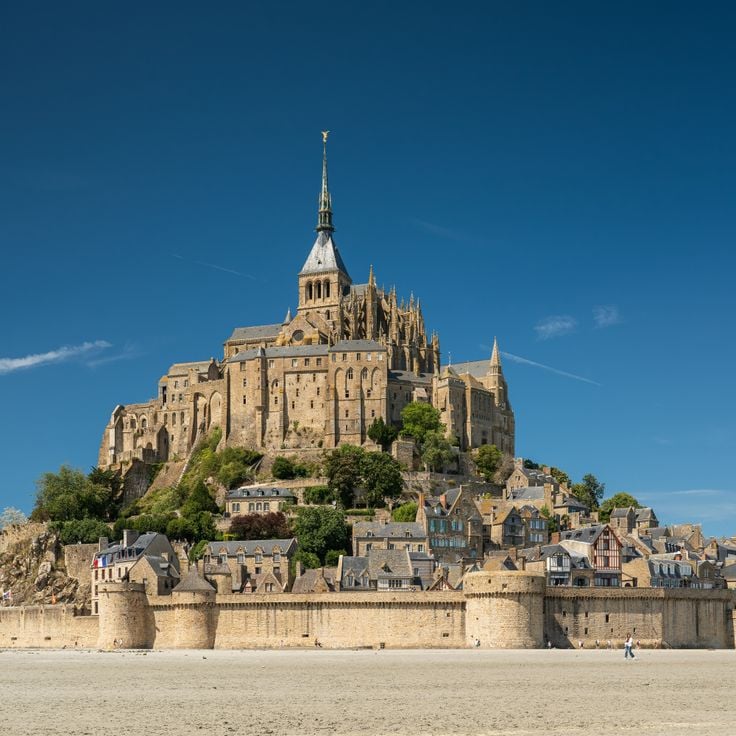
This religious and military complex rises from a granite island fortified since the 8th century. The abbey sits at the summit, surrounded by walls and towers built during medieval times to protect against attacks. Narrow lanes wind between stone buildings that cling to the slope. At high tide, Mont Saint-Michel becomes an island, while at low tide a wide expanse of sand connects it to the mainland. The architecture combines Romanesque arches, Gothic pointed vaults, and defensive towers from different construction periods between the 11th and 16th centuries. Pilgrims and visitors walk along narrow pathways leading to upper terraces that overlook the bay and surrounding salt marshes.
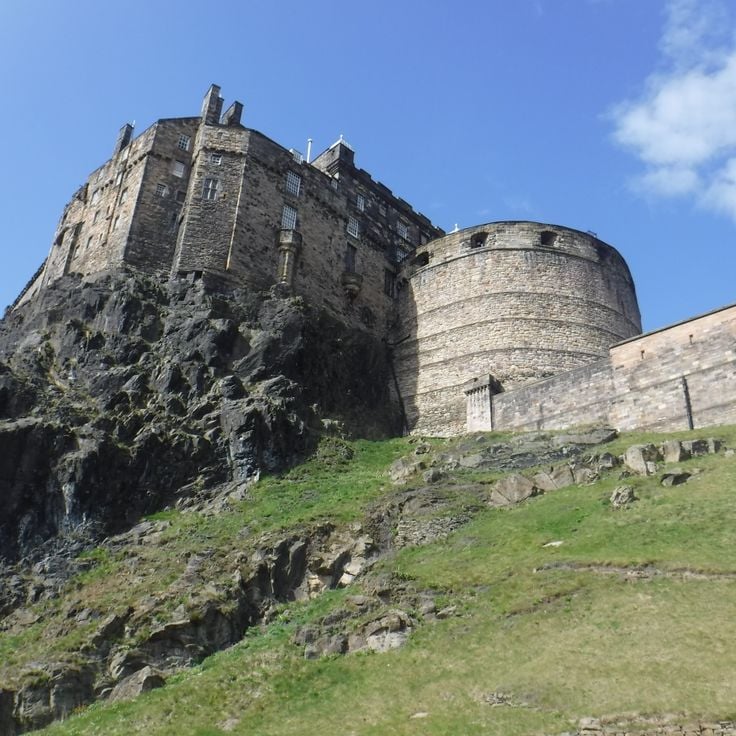
This fortress stands on an extinct volcano and has overlooked Edinburgh since the 12th century. The stone walls enclose royal jewels and military buildings that document Scotland's history from medieval battles to royal power. The rock rises sharply above the city and shows how natural defense and human construction work together. Visitors walk through gates and courtyards where soldiers kept watch for centuries and kings ruled.
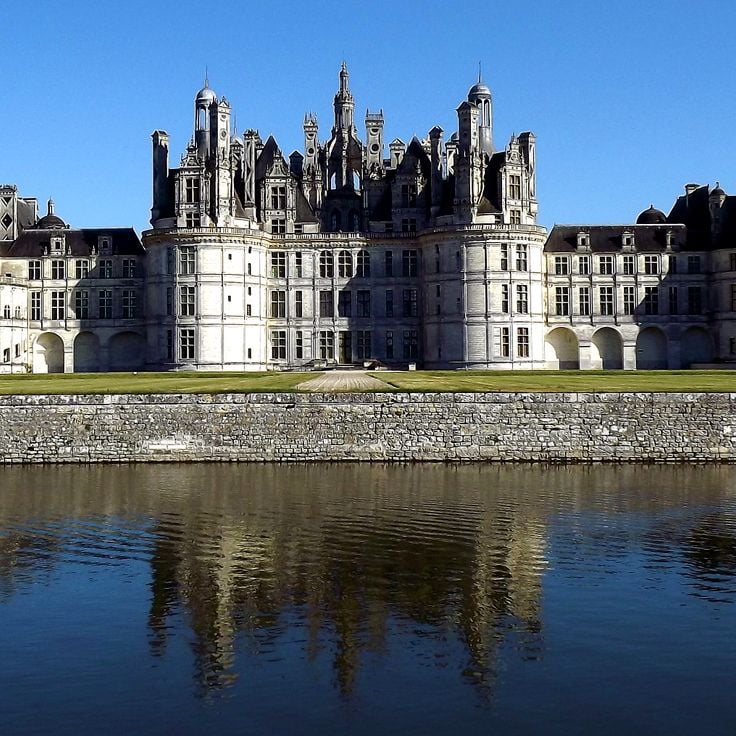
This castle stands as one of the most recognizable examples of French Renaissance architecture from the 16th century. The structure displays 440 rooms, 84 staircases, and 365 chimneys that reflect the power of the French royal court. The central double-helix staircase is considered an architectural achievement, possibly inspired by Leonardo da Vinci. Château de Chambord was originally built as a hunting lodge and combines French traditions with Italian Renaissance influences in its facade design and distinctive rooftop towers.
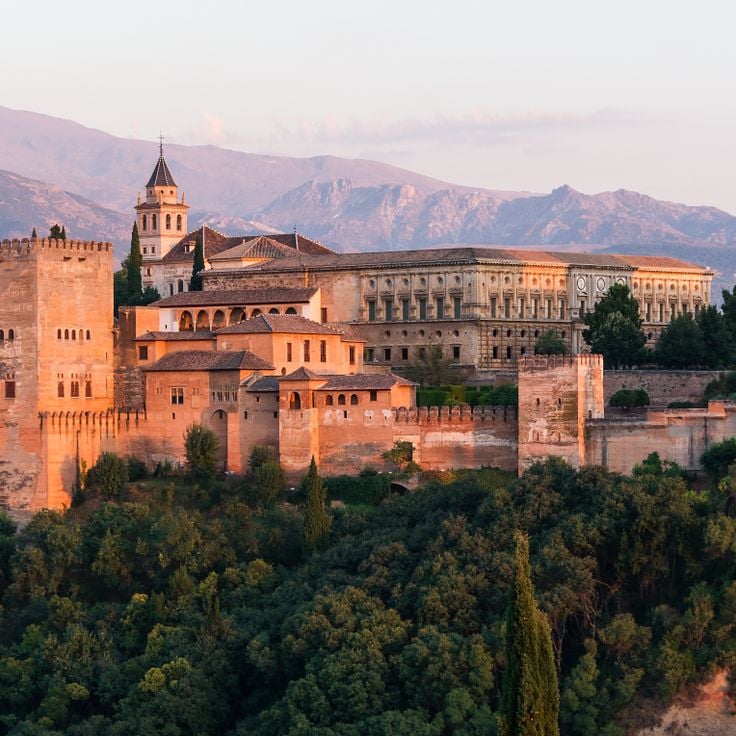
This 13th-century fortress combines Moorish palaces, gardens, and defensive structures on a hill above Granada. The complex shows Islamic architecture with courtyards, water pools, and tile work. Visitors walk through rooms with geometric patterns and Arabic inscriptions on the walls. The gardens contain cypress trees, orange trees, and fountains. From the terraces you can see the city and the Sierra Nevada mountains (over 9800 feet or 3000 meters high). The Nasrid dynasty built this residence as a government seat and retreat. Later, Christian kings added a palace in Renaissance style.
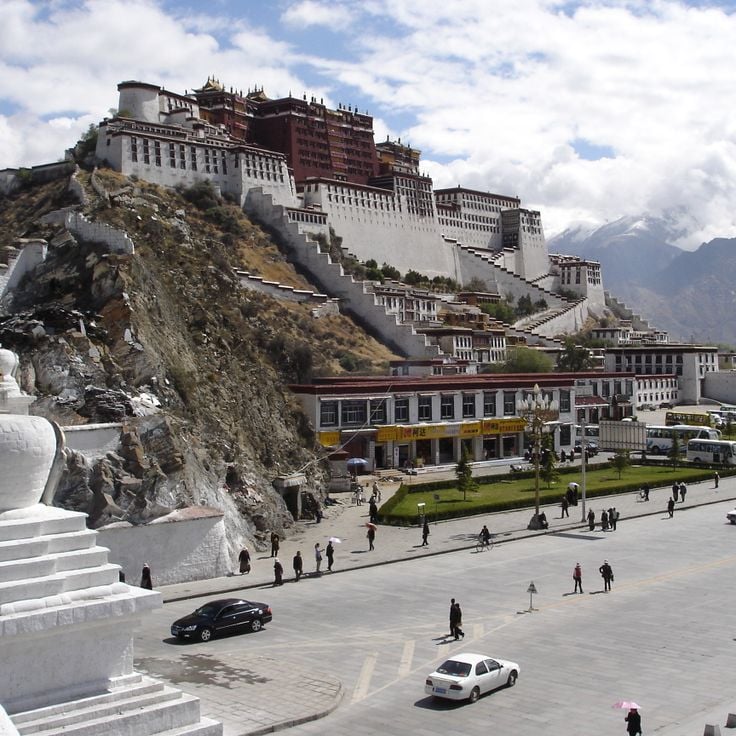
Potala Palace served as the winter residence of the Dalai Lamas for centuries and sits on a hill above Lhasa. The complex combines religious spaces with living quarters and administrative buildings. Red and white facades mark different functions within the structure. This palace demonstrates Tibetan architecture from the 17th century, with thick stone walls and golden roofs that spread across multiple levels.
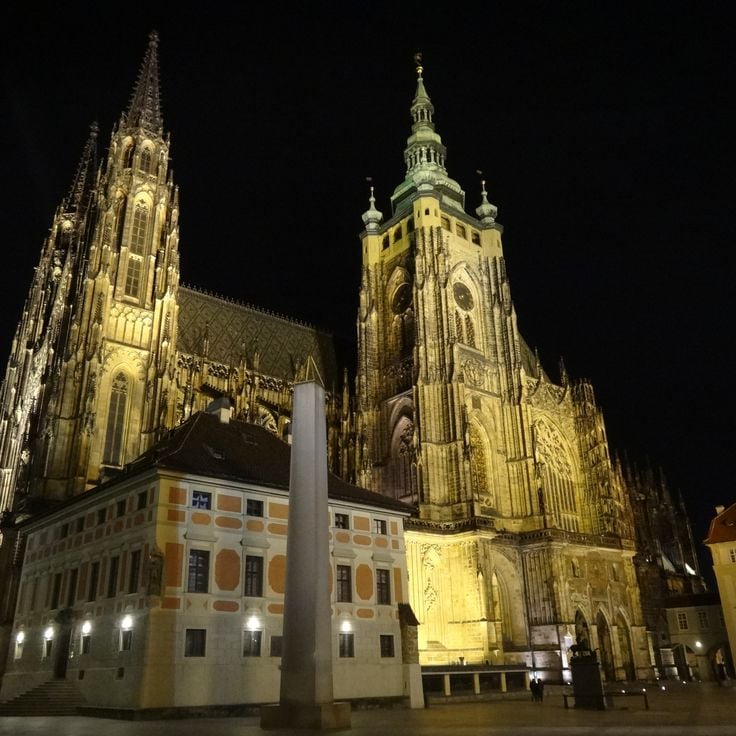
This castle in Prague covers several courtyards, churches, and historic buildings spread across a hill above the Vltava River. The complex began in the 9th century and served as the residence of Bohemian rulers. Today Prague Castle combines Romanesque foundations with Gothic towers, Baroque palaces, and gardens. St. Vitus Cathedral rises at the center, surrounded by administrative buildings and Golden Lane with its small houses. Visitors walk through gates and squares where changing of the guard takes place. The castle documents centuries of Bohemian history and shows how military fortifications became spaces for ceremony and government.
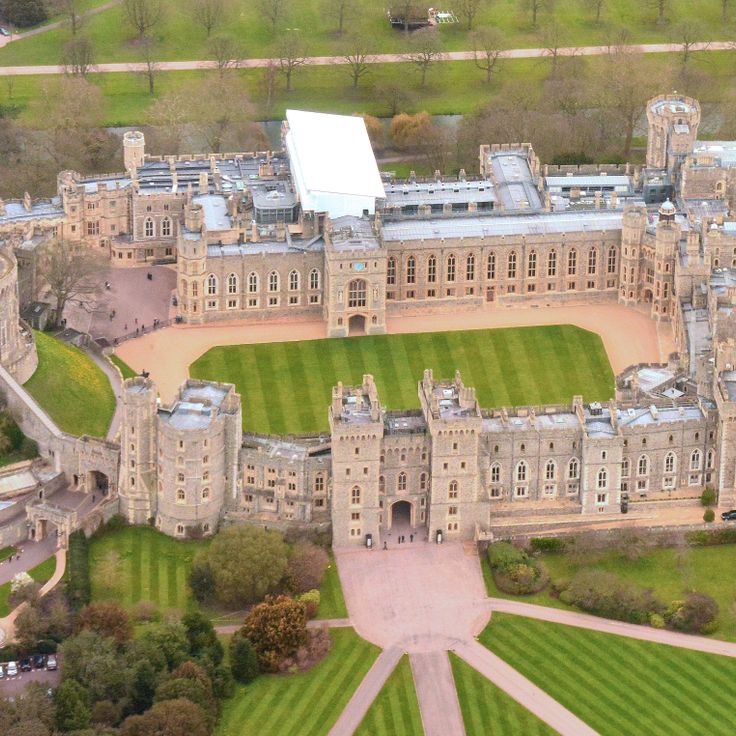
This castle has served as an official residence for English monarchs for nearly a thousand years, documenting one of the longest continuously inhabited royal fortresses in the world. Windsor Castle contains St. George's Chapel from the 15th century, state apartments with royal art collections, and the Round Tower rising above the River Thames. The complex began as a Norman fortification and expanded through centuries, incorporating Gothic, Baroque, and Georgian elements that combine military defense with royal living quarters.
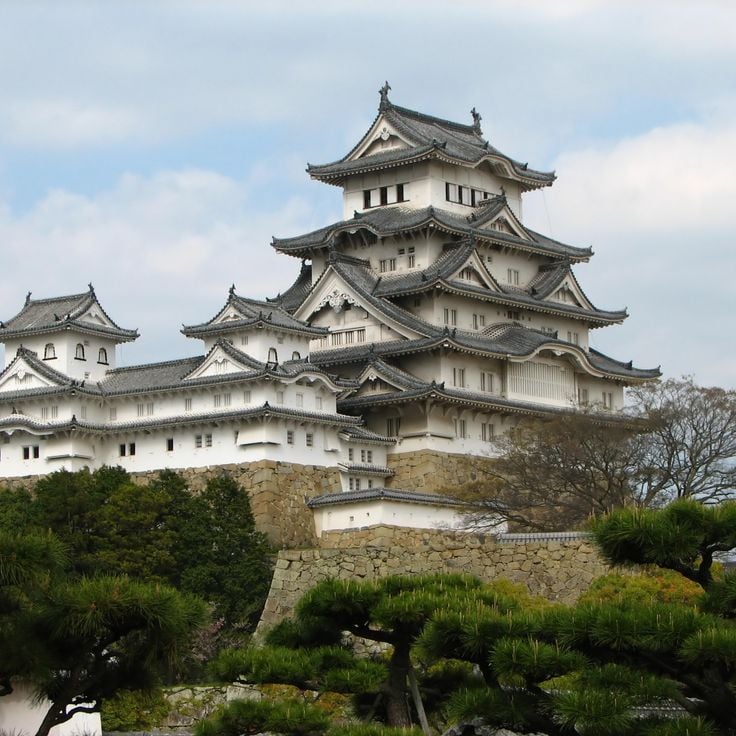
This castle dates from the 14th century and shows traditional Japanese construction with multiple stories and white exterior walls. Himeji Castle served as a military fortress and later residence for regional lords during the feudal period. The complex includes a defense system with towers, gates, and winding paths designed to confuse attackers. The white walls, made of plaster over wooden frames, gave the castle its nickname as the White Heron Castle. The main keep rises six floors and combines practical defensive features with the representative architecture of the Edo period.
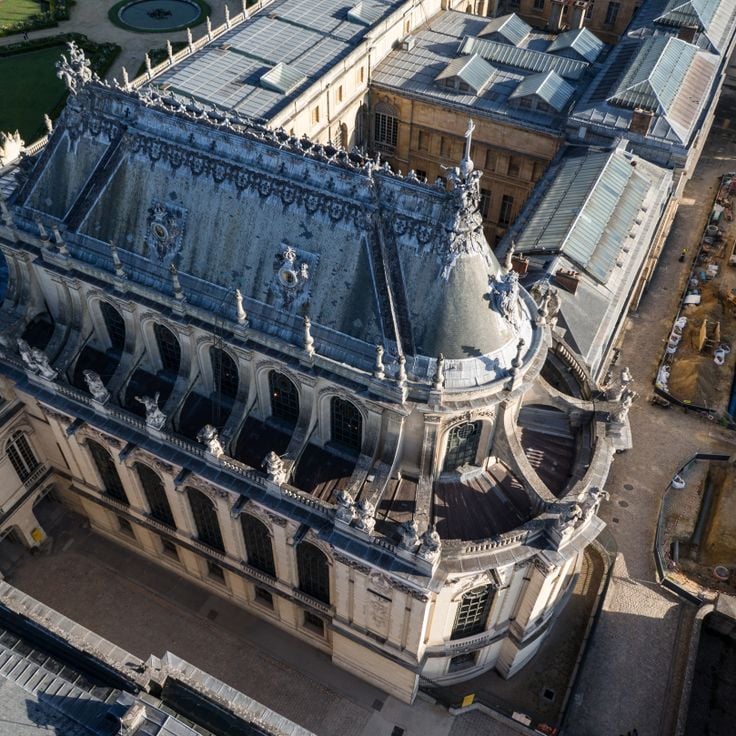
This palace was built in the 17th century as the residence of French kings. The complex holds 2300 rooms, including the Hall of Mirrors with 357 mirrors on its walls. The gardens follow a geometric layout with fountains, pools and trimmed hedges. Louis XIV moved the royal court here in 1682. The rooms display ceiling paintings, gilded ornaments and marble. In the park stand the Grand Trianon and the Petit Trianon, smaller palaces for the royal family. The orangery sheltered exotic plants during winter.
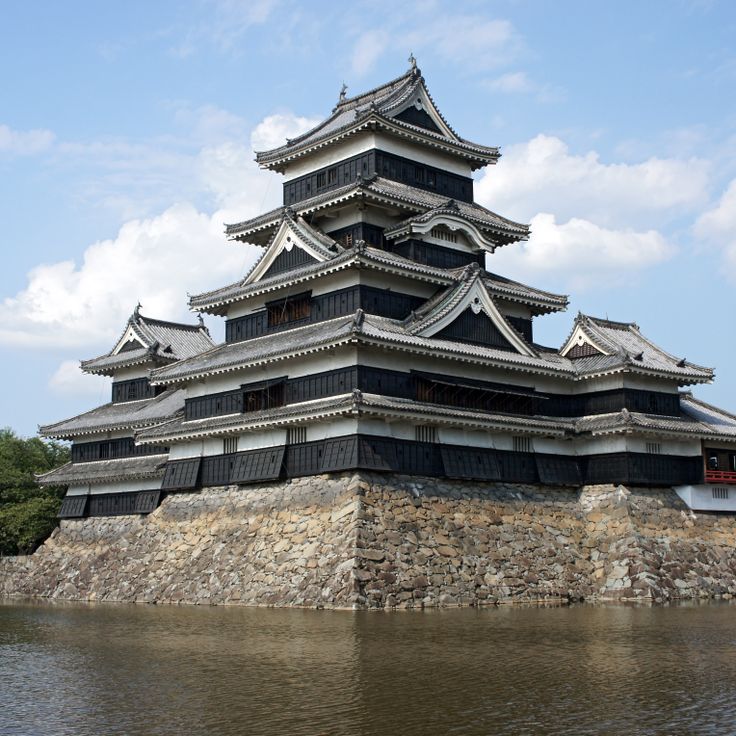
This castle from the 16th century rises with black exterior walls and six floors above the town. The steep wooden staircases inside lead through original constructions that have remained intact for centuries. From the upper levels, the view extends across the surrounding plain and distant mountain peaks. The architecture combines military defense functions with the refinement of a feudal residence. The dark facade stands against the sky and reflects in the surrounding moat.
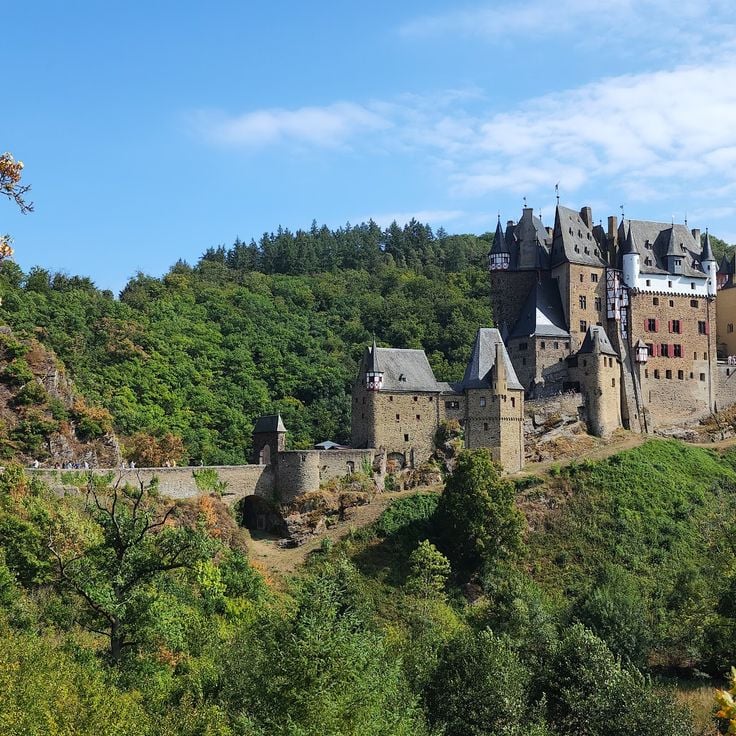
This castle from the 12th century rises on a rock spur above a river valley and belongs to the collection of historic fortresses. Eltz Castle preserves original furniture and armor from several centuries in its rooms. The structure remained in the hands of the same family and shows medieval domestic life and defensive architecture in their original condition.
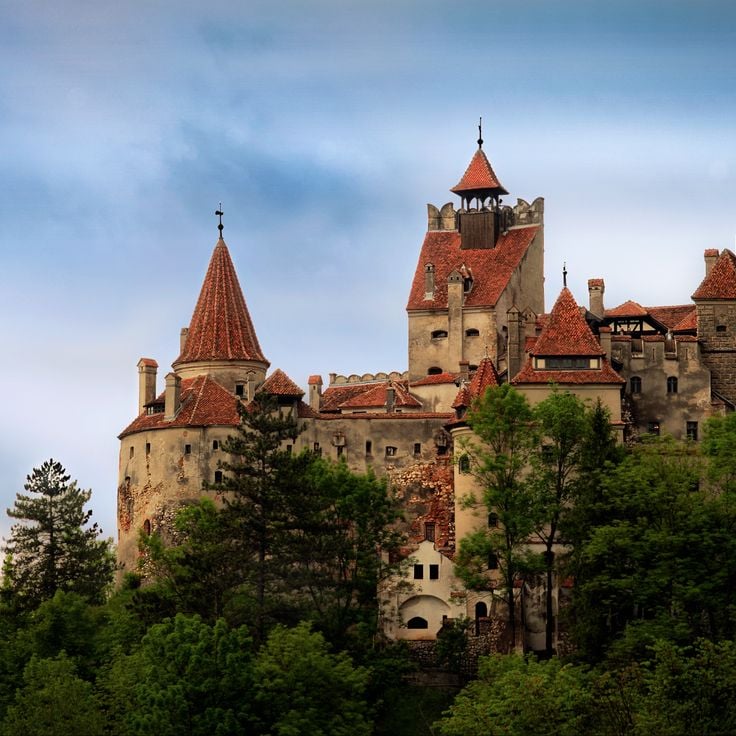
This medieval structure rises on a rock in the Carpathian Mountains and was built in the 14th century as a border post between Transylvania and Wallachia. The fortress served to control trade routes through the mountains and defend against Ottoman attacks. The towers, staircases and narrow passages show typical defensive architecture from this period. Later, Bran Castle was converted into a royal residence. The steep roofs, white walls and labyrinth of rooms inspired Bram Stoker's description of Dracula's castle, though the author himself never visited. The castle represents medieval military architecture in southeastern Europe and shows the transition from fortress to residence.
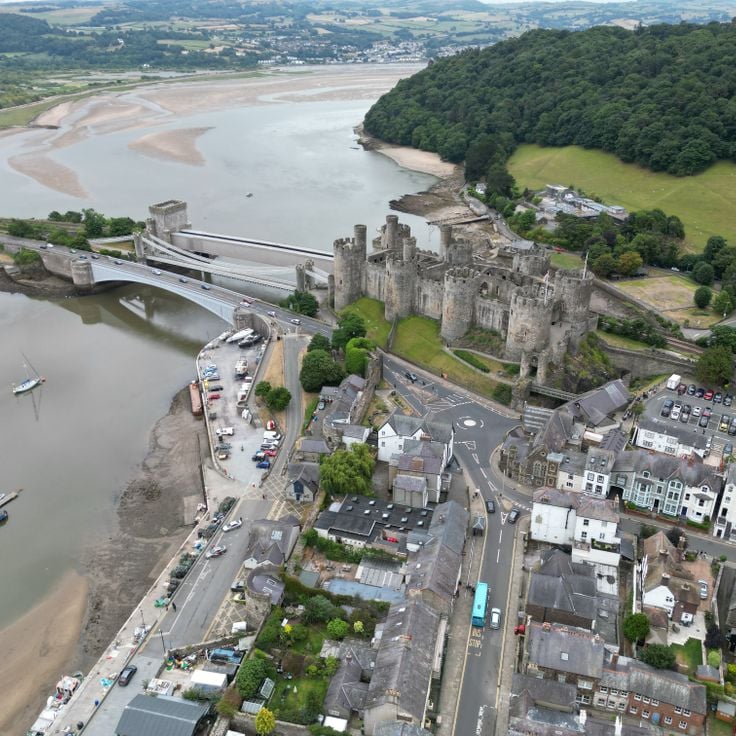
This medieval fortress represents some of the most important military architecture built in Wales during the late 13th century. The walls of this castle reach up to 15 feet (4.5 meters) in thickness and are reinforced by eight towers that overlook the valley and estuary. Construction began in 1283 and was completed within six years. The structure documents the military architecture of that era and demonstrates how royal power was secured through stone fortifications.
This 12th-century castle was renovated in the French style during the 19th century and now houses a museum with medieval art. The architecture combines Gothic towers with romantic turrets and balconies. Inside, the rooms display carved wooden furniture, tapestries, and paintings from different periods. The courtyard leads to a chapel with painted vaults. In the basement, a limestone cave can be visited during guided tours. The grounds sit on a travertine hill and are surrounded by a park with old trees. In spring, linden and chestnut trees bloom along the paths around the walls.
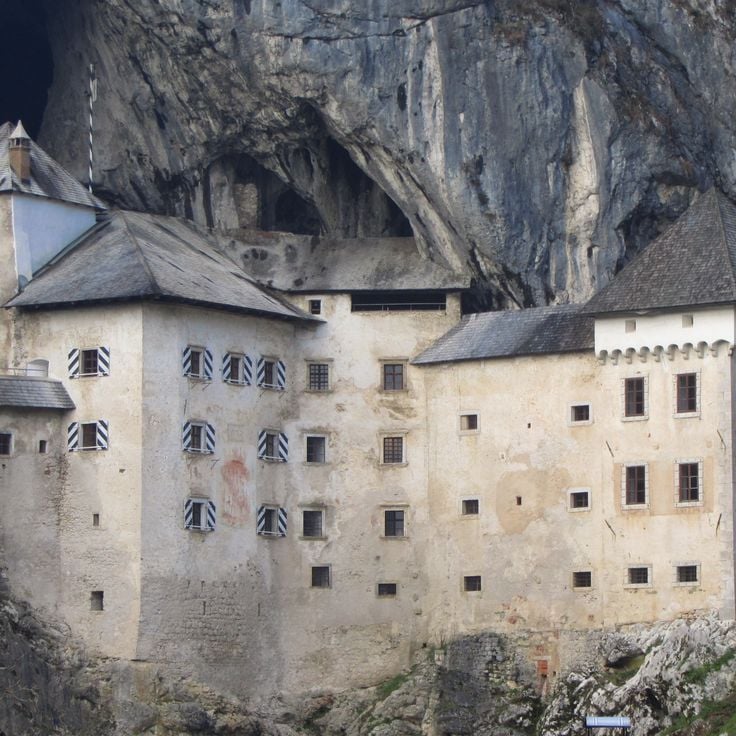
This fortress was built in the 13th century into a 123-meter-high cliff face and documents medieval architecture in Slovenia. The castle emerged directly in front of a natural cave that served residents as a secret escape route. The position in the steep rock face offered protection from attackers and made the structure nearly impossible to capture. Over the centuries the complex was expanded and rebuilt several times, while the connection between rock and building remained. The castle shows how medieval builders adapted military defenses to natural terrain.
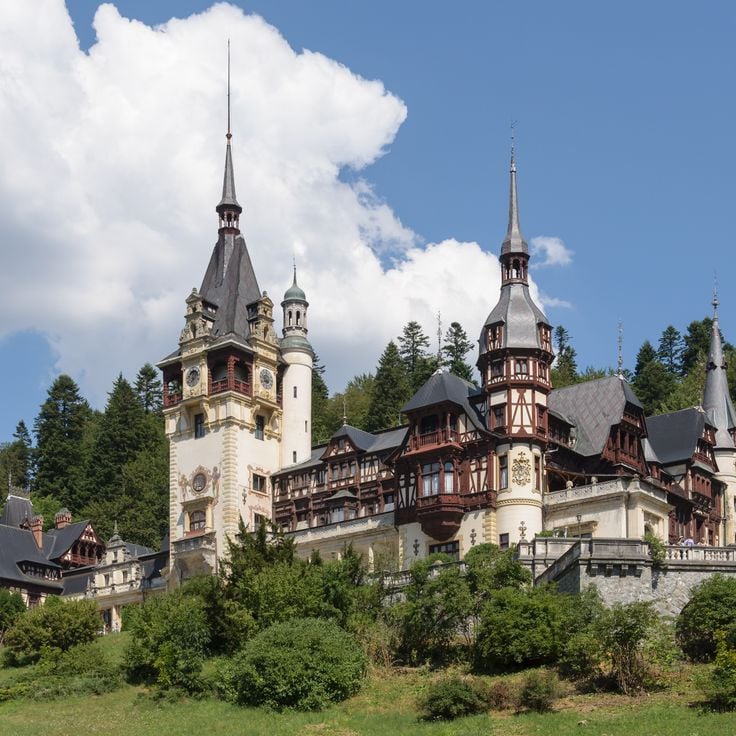
This castle was built between 1873 and 1914, combining German Neo-Renaissance style with Romanian architecture. Peles Castle sits in the Carpathian Mountains at around 3,300 feet (1,000 meters) and served as a summer residence for the Romanian royal family. The interior rooms display wood carvings from different regions, stained glass windows with historical themes, and an extensive collection of arms and armor spanning from medieval times to the modern era. The surrounding park follows English garden traditions with terraces, fountains, and sculptures.
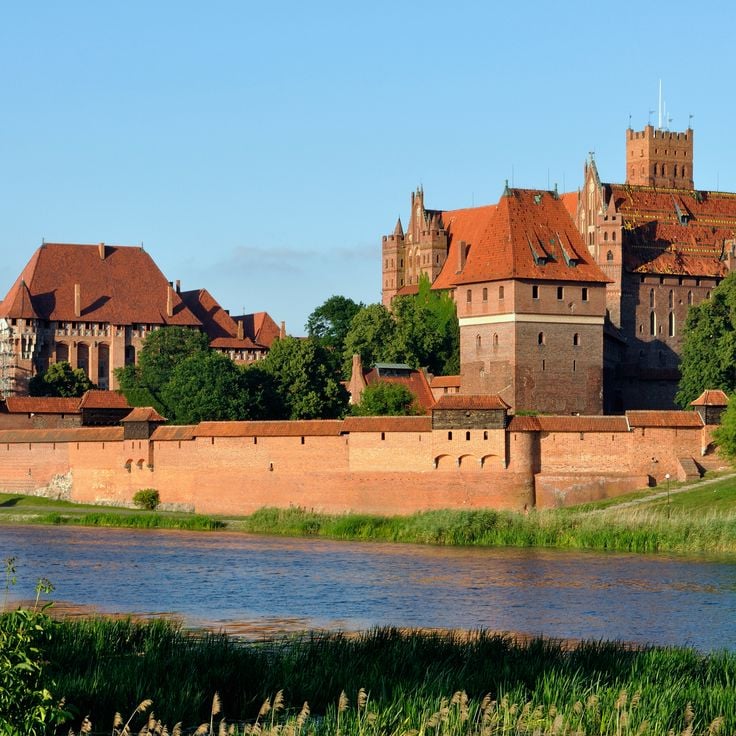
This castle served as the headquarters of the Teutonic Order in the 13th century and represents one of the most significant fortresses from the era of medieval military architecture. The complex is built almost entirely of brick and grew over several centuries into one of the largest castles in Europe. The walls, towers and inner courtyards show the characteristic Gothic style of the Order's knights. Visitors can walk through halls, chapels and defensive structures to experience the dimensions of this historic residence.
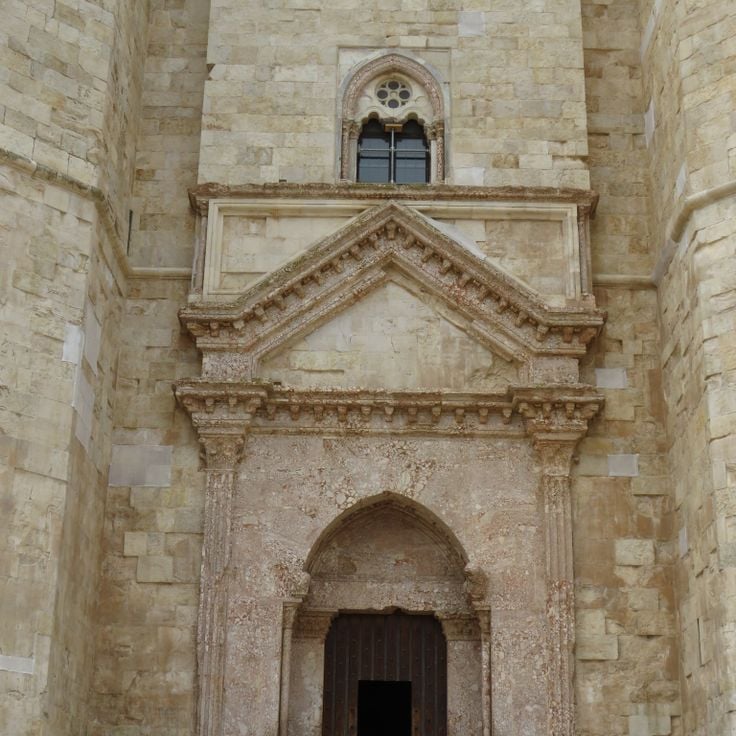
Castel del Monte sits on a hill near the town of Andria and was built in the thirteenth century under Emperor Frederick II. The floor plan follows the octagonal plan and each of the eight towers repeats the same shape. The architecture blends Romanesque elements, Gothic arches and influences from across the Mediterranean. The interior shows pale stonework and large rooms with windows that let in light. From the hill you can see the wide countryside of Apulia. The function of the building remains unclear as it never served as a fortress or residential palace. The clean geometry and placement on the hill make it an example of the spirit of that time.
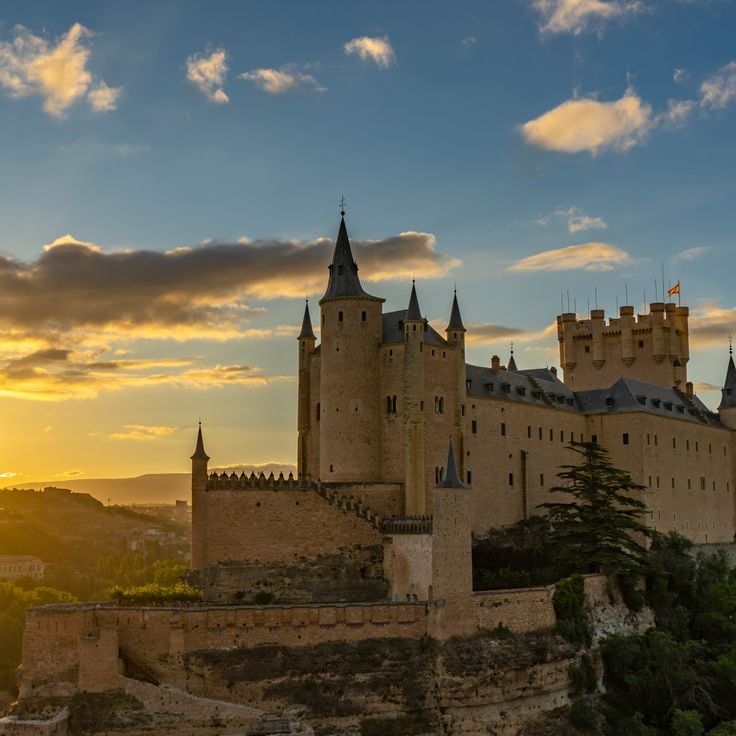
The Alcázar de Segovia rises on a rocky spur at the meeting point of two rivers and looks from a distance like a stone ship. The fortress dates from the 12th century and served over the centuries as a royal residence, state prison and military academy. Its towers and battlements shape the skyline of the old town. The interior rooms show Mudéjar work with geometric patterns and colored tiles. From the keep you can see the Castilian plain and the distant mountains. The throne room preserves wall paintings and carved wooden ceilings. Visitors pass through armories, chapels and galleries that offer insight into courtly life in past eras.
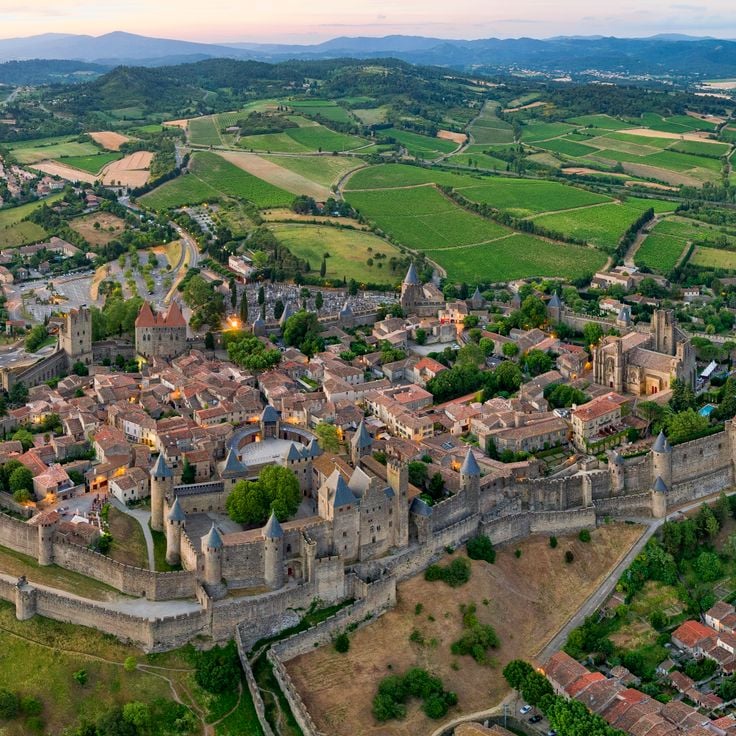
This medieval walled town sits on a hill above the Aude River and displays over a mile of walls with more than fifty towers. Two layers of defenses surround the old settlement, inhabited since ancient times. In the thirteenth century, fortifications were strengthened when Carcassonne held a key position in conflicts between the French crown and Catalan rulers. Extensive restoration work in the nineteenth century altered much of the structure, a topic still discussed today. Walking the narrow streets, you pass houses from different periods, small squares, and the Romanesque basilica of Saint-Nazaire. The inner town feels like a single ensemble where living quarters, churches, and defensive works blend together. From the towers, you see the surrounding countryside, vineyards in the lowlands, and the Pyrenees on the horizon. The site served as a military stronghold for centuries before becoming a residential town.
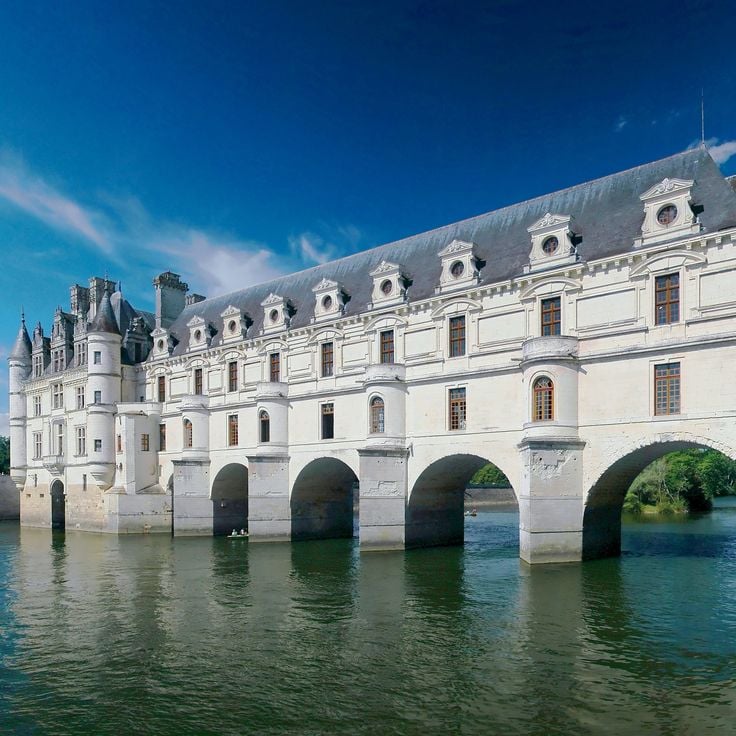
Château de Chenonceau spans the Cher River in the Loire Valley, built as a bridge with a gallery above the water. In the 16th century several women from royal circles shaped the building and designed the gardens. The arches support a long hall with windows that let daylight reach the current below. Inside, rooms display furniture, tapestries and paintings from the Renaissance. Gardens on both banks follow regular patterns and stretch down to the riverbanks. On warm days the façades reflect in the water, and visitors walk through the gallery above the Cher.
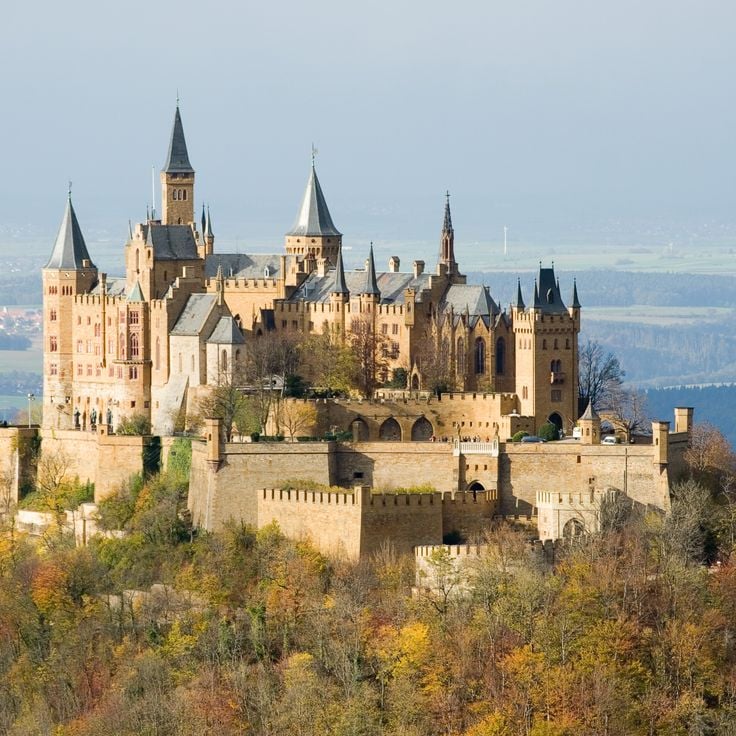
Hohenzollern Castle rises on a wooded hilltop above the Swabian countryside and serves as the ancestral seat of the Prussian royal family. The present structure dates from the mid-1800s and shows towers, battlements and chapels in the Gothic Revival style. Visitors who climb the ramps and stairs reach courtyards, halls and armories displaying portraits, uniforms and royal regalia. From the ramparts the view extends across forests and villages to the ridges of the Swabian Jura.
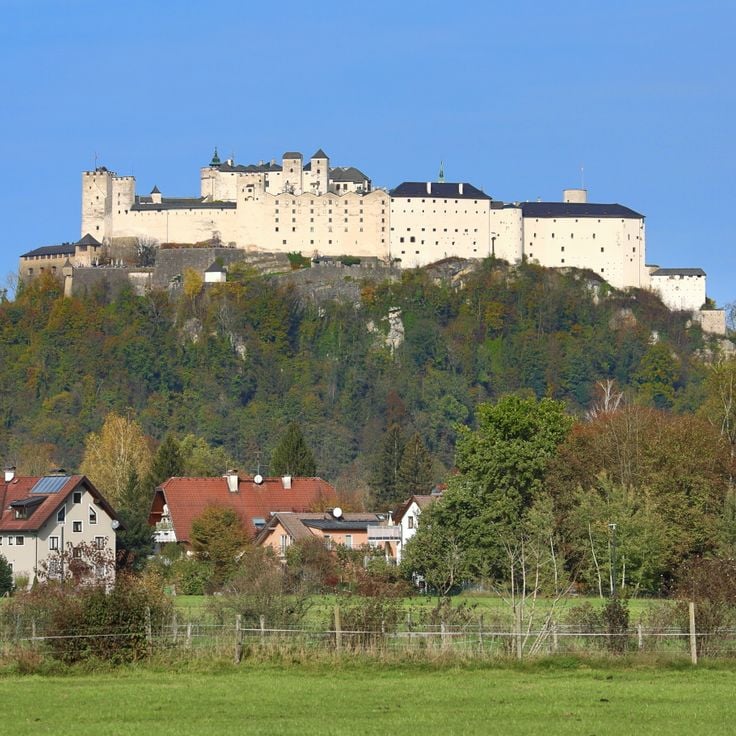
The fortress of Hohensalzburg sits on Festungsberg hill above the city rooftops. It was built in the 11th century and expanded over several centuries. Its walls enclose courtyards, living quarters, and watchtowers. From the terraces you see the old town, the Salzach river, and the mountains all around. The complex served for a long time as the residence of the archbishops and as protection against attacks. Today narrow lanes and staircases lead through the rooms where you can follow the way of life of the former occupants.
Wawel Royal Castle sits on a hill above the Vistula River and served for centuries as the residence of Polish rulers. The complex combines a Gothic cathedral with Renaissance wings and courtyards designed by Italian architects. From the castle hill you can see Krakow's old town and the course of the river. The rooms display Flemish tapestries, paintings by European masters, and crowns of Polish kings. The chapel with its gilded dome holds royal tombs from different periods.
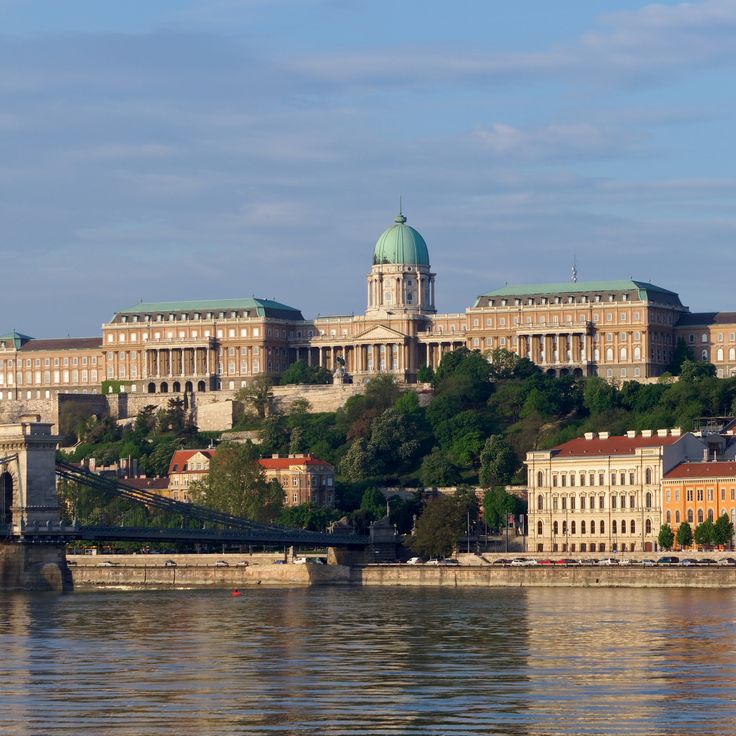
The Budavár Palace shows different building phases from the Middle Ages through the 20th century on the hill above the Danube. Remains of the medieval fortress stand next to structures from the 18th century that were later rebuilt. The rooms and courtyards reflect the rule of several dynasties. From the terraces you see across Budapest and the river. Today the grounds house museums and public collections.
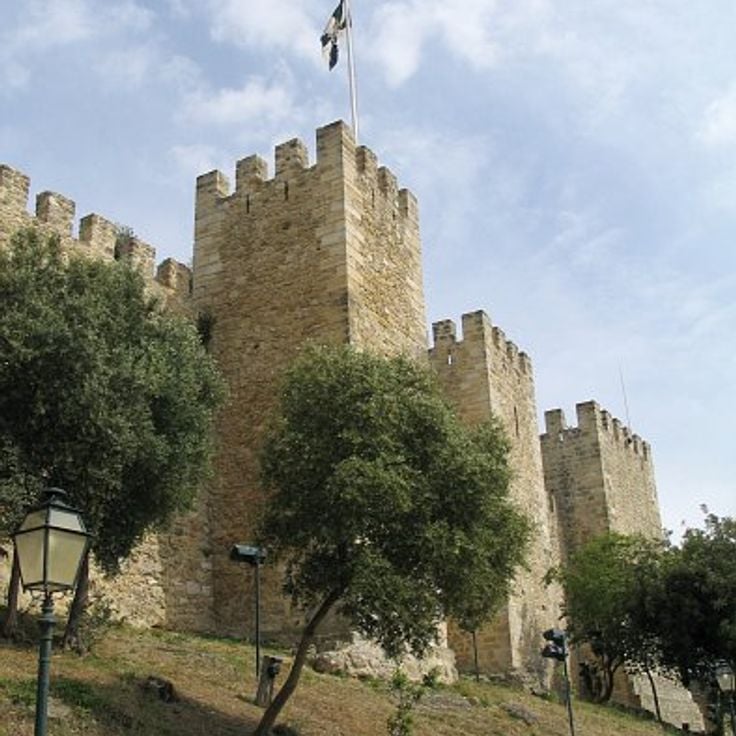
The Saint George Castle stands on a hill above old Lisbon and shows towers, walls and courtyards that date from Moorish times through the Portuguese Reconquista. The site served first as a fortress and later as a royal residence before falling into disrepair and being restored in the 20th century. From the ramparts you look out over the city and the Tagus River. The casemates, parade ground and surviving defensive lines show how soldiers lived here and how the stronghold was meant to repel attacks. Visitors walk through lanes between walls, enter watchtowers and stroll in gardens within the fortification.
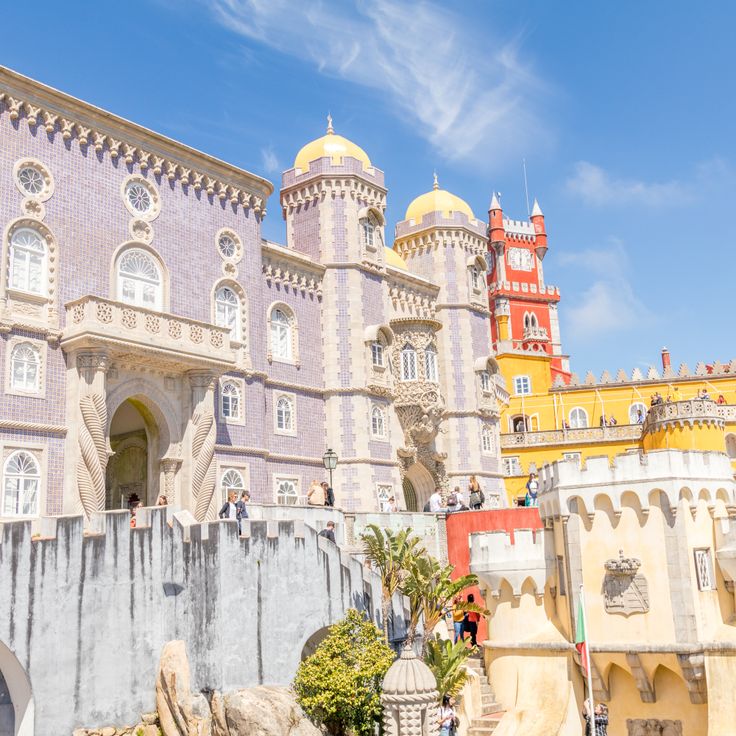
Palácio Nacional da Pena sits on the hills of Sintra and was built in the mid-19th century at the wish of King Ferdinand II. The building mixes neo-Gothic, neo-Manueline and Moorish forms in bold colors: yellow and pink facades, towers with onion domes and decorated arches follow one another. Ferdinand wanted to create a romantic residence that would show different styles from several periods. Around the palace lies a park-like forest with exotic trees, paths and viewpoints. Inside, rooms keep the furnishings and taste of the 19th century. From the courtyard you can see the coast and the green hills. On clear days the view reaches as far as Lisbon. The palace shows how the king and his builders brought together styles from different traditions in a single building to shape a private royal residence.
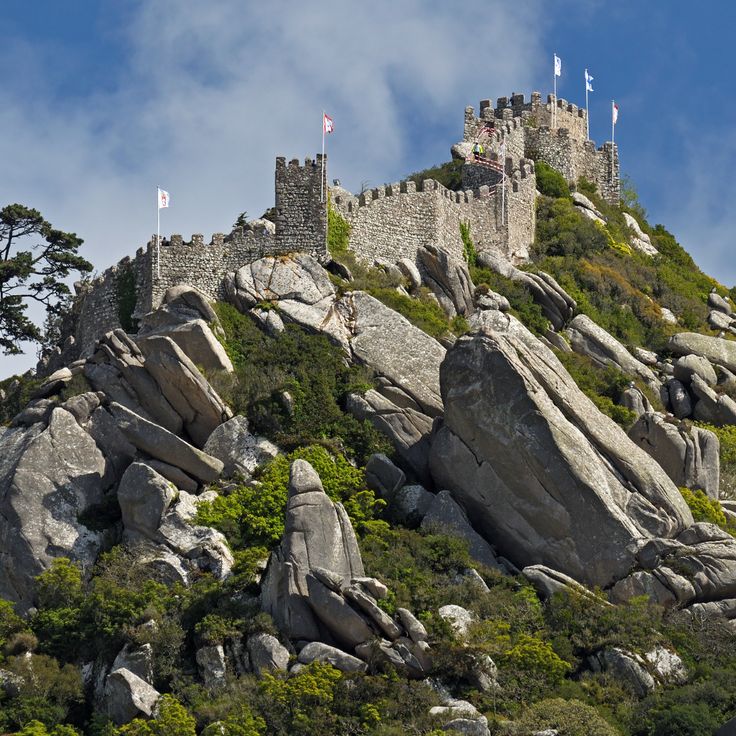
The castle sits on a rocky hill above Sintra and was built by the Moors during their rule in the region. The walls follow the contours of the land and connect several watchtowers. Pine trees and low plants now grow among the stone ruins. From the battlements you can see the surrounding forests, the town below in the valley, and on clear days the Atlantic Ocean. The climb follows old paths that wind between the walls. The site was part of the region's defense system and was later abandoned when the Christian kings favored other fortresses.
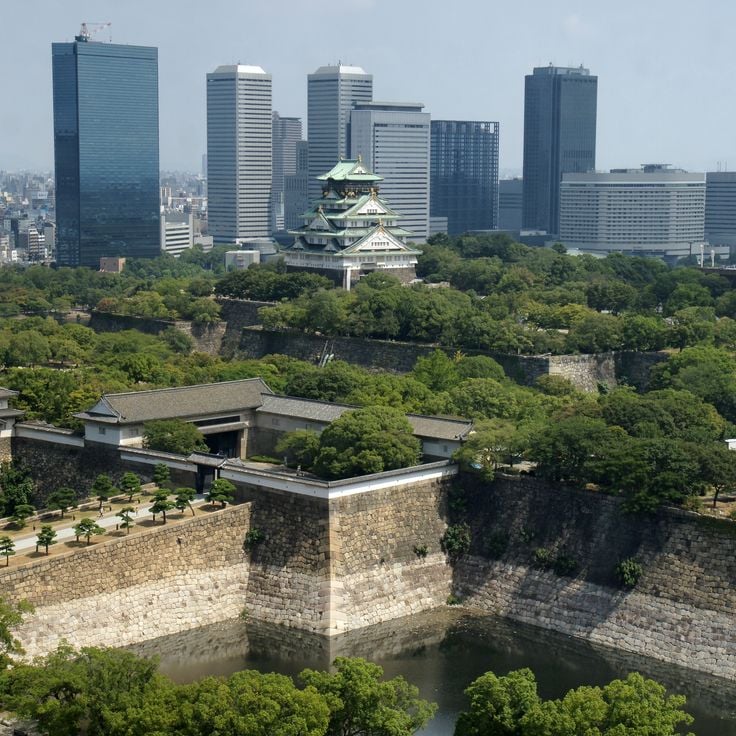
Osaka Castle stands in the center of the city and rises above wide moats and stone walls. The architecture shows how Japanese fortresses looked in the late sixteenth and early seventeenth centuries, with multiple stories, curved roofs, and a tall base made of large stone blocks. The main building was destroyed and rebuilt several times, and the current structure dates from the twentieth century. Visitors see exhibitions about the castle's history and can look out over the city from the top floor. The surrounding park is used by locals, especially during cherry blossom season in spring, when the trees around the walls bloom. The site shows how defense and representation came together in a Japanese castle.
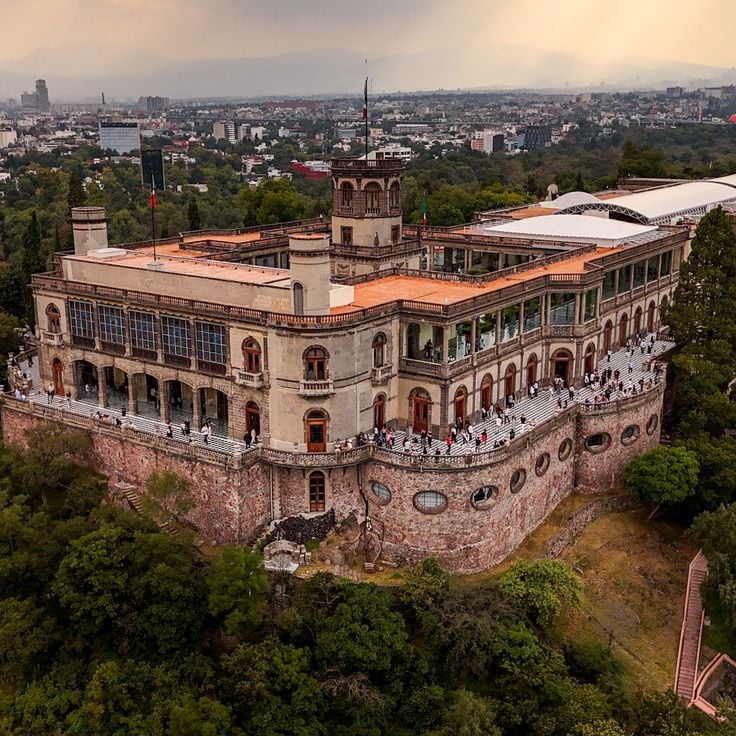
This castle stands on a wooded hill in the heart of Mexico City, rising above Chapultepec Park. The building was constructed in the late 18th century as a summer residence and later served as the seat of Mexican rulers and presidents. The architecture mixes classical forms with styles that became popular at different times. Today the building is a museum displaying rooms with historical furniture, paintings, and murals. From the terraces you can see the city and the surrounding mountains. The castle combines the role of a residence with the function of a place where political decisions were made. The gardens around the house invite walks, while the halls inside tell the story of Mexico.
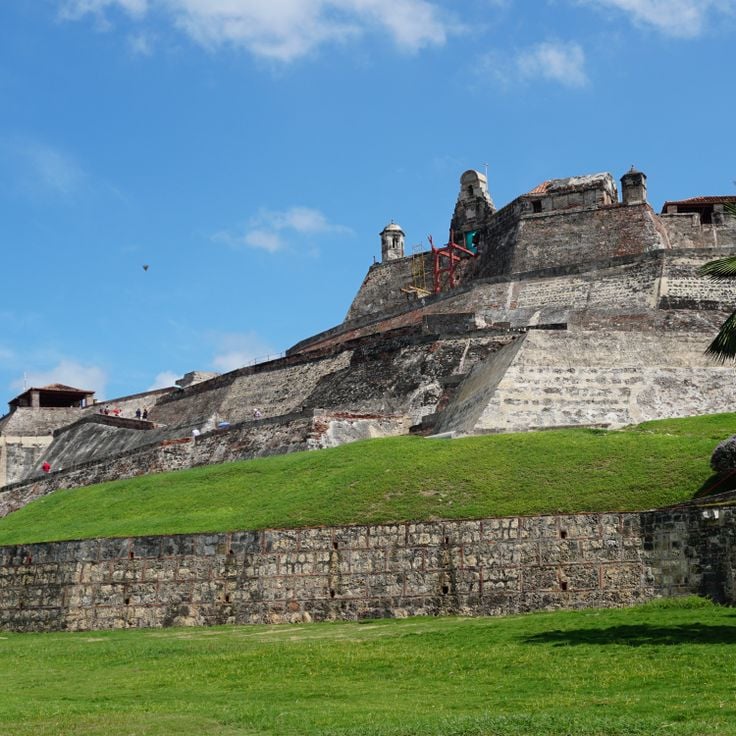
The Castillo de San Felipe de Barajas sits on a hill above Cartagena, watching over the city and the sea. Spanish engineers began building it in the 17th century, and over the decades it grew into one of the largest defense works in South America. Thick walls and bastions climb the slope in terraces, while beneath the ground a network of tunnels connects the different levels. These passages once moved soldiers and supplies quickly, and today you can walk through some of them. From the top there is a wide view over the old town, the bay, and the hills inland. Wind sweeps across the open platforms, and you see how carefully the site was chosen.
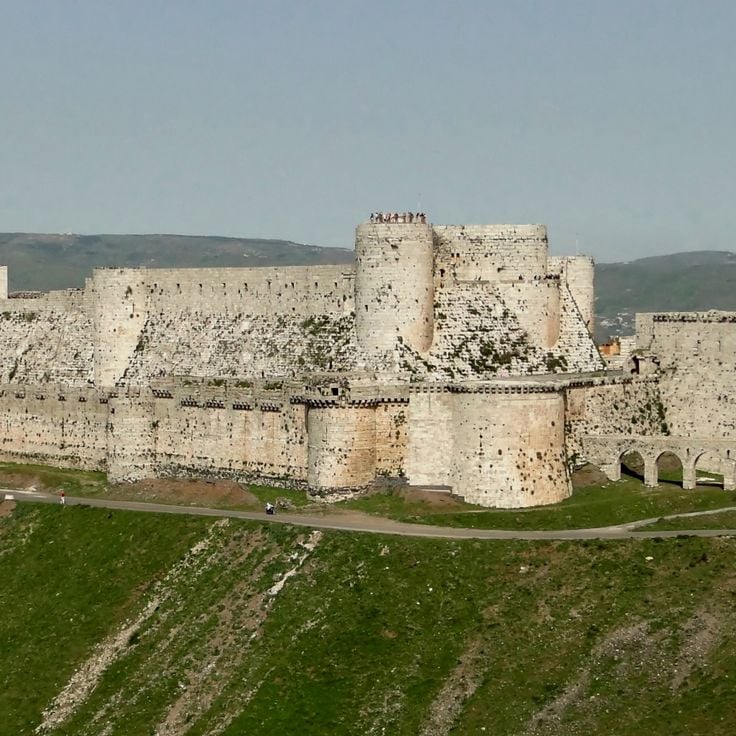
Krak des Chevaliers stands as a large crusader fortress on a hill in the Syrian countryside, showing how medieval defensive structures were built. Constructed and expanded between the 11th and 13th centuries, this castle combines two rings of walls, towers, a great hall, and storage rooms into a complete defensive system. The thick stone walls and the position on high ground were meant to withstand attacks while also serving as a base for a large garrison. Walking through the gateways and courtyards, you see how living quarters, a chapel, and administrative rooms were built into the military layout. The construction blends European and local building methods, reflecting how crusaders adapted their architecture to conditions in the Levant.
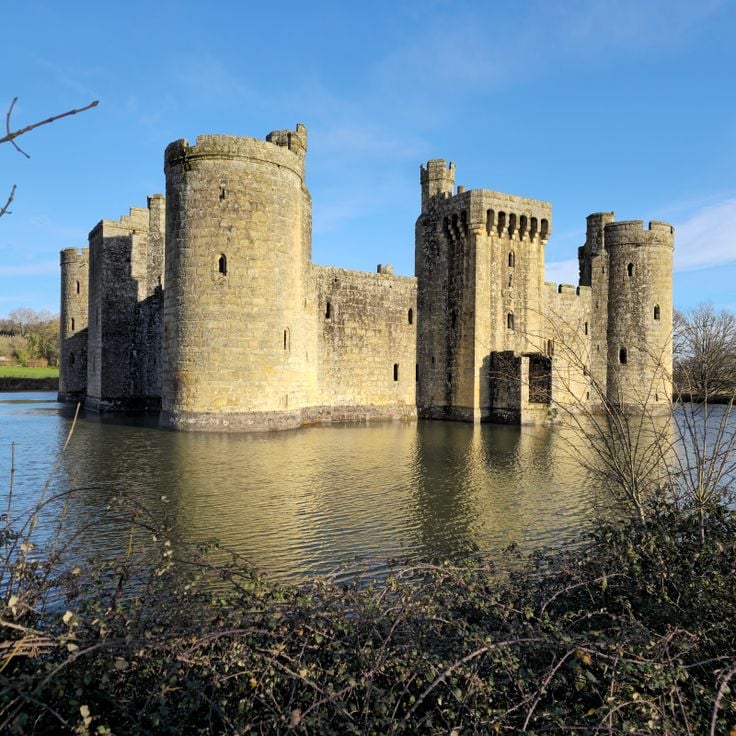
Bodiam Castle was a fourteenth-century defensive structure in East Sussex. The castle stands on a small island, surrounded by a wide moat. Four round towers mark the corners of the square walls. The courtyard now lies open to the sky, with most interior rooms gone. You enter the site over a wooden bridge. The outer walls of sandstone still show openings for windows and arrow slits. The place shows how a small fortress looked in the late Middle Ages and how water served as protection.
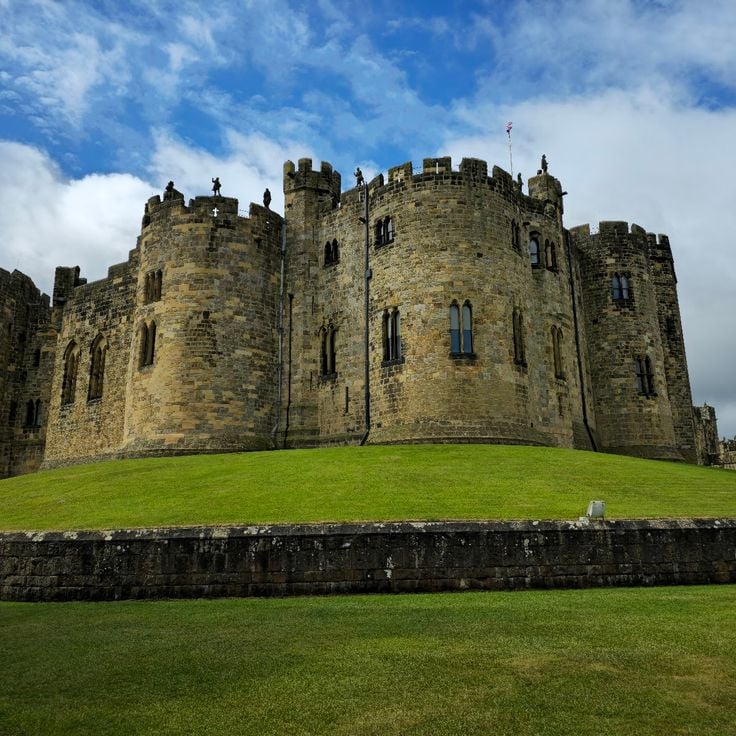
Alnwick Castle stands in Northumberland and has served the Percy family as their home since medieval times. The site began as a fortress against raids from Scotland and was rebuilt several times over the centuries. Towers and walls still show the lines of the old defenses, while interior rooms were later redesigned in Renaissance and 19th-century styles. Collections of paintings, furniture, and weapons are on display. The courtyard and gardens are often used for events. Its location near the Scottish border made the castle a point where military and civilian functions met.
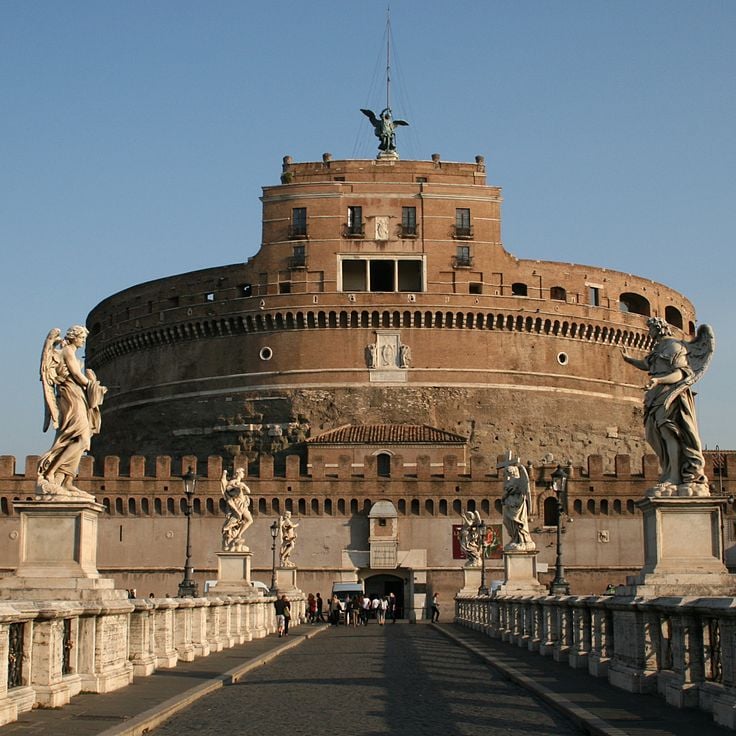
Castel Sant'Angelo was built in the second century as a tomb for Emperor Hadrian and later became a papal fortress. The cylindrical structure on the right bank of the Tiber served over the centuries as a prison, refuge for popes, and armory. A protected passageway connects the building to the Vatican, allowing quick escape in emergencies. The interior rooms display Renaissance frescoes, while the upper terraces offer views over the city. The statue of the Archangel Michael at the top recalls a medieval legend. The building combines Roman architecture with later military and ecclesiastical functions, showing how use and meaning shifted over time.
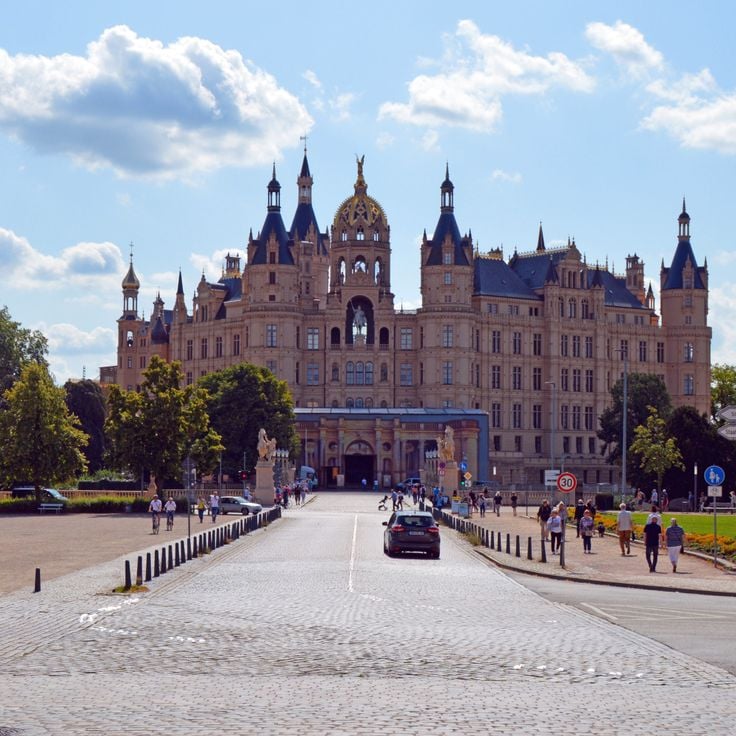
Schwerin Castle sits on an island in Lake Schwerin and shows architecture from several centuries. The facades combine Romanesque foundations, Gothic elements, and additions from the 19th century. Towers, domes, and brickwork shape its appearance. Bridges connect the building to the shore. Interior rooms preserve historical furnishings, paintings, and furniture. Part of the castle now serves as the seat of the state parliament, while other sections open as a museum. Gardens surround the castle on the island and continue along the opposite shore. The water separates the structure from the old town and gives it a quiet setting.
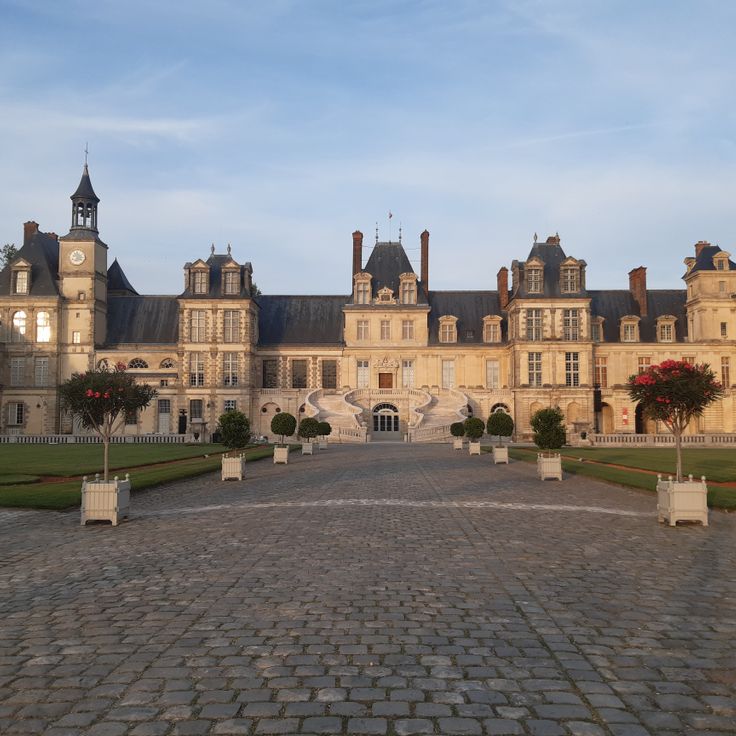
This palace lies southeast of Paris and shows building styles from the Middle Ages to the 19th century. French kings lived here over several centuries and kept adding new wings, courtyards and gardens. The rooms contain wall paintings, stucco work and furniture from different periods. Some halls served for receptions, others as living quarters or chapels. The surrounding park combines formal gardens with open woodland. The palace shows how royal residences grew and changed while serving as seats of power and places to live.
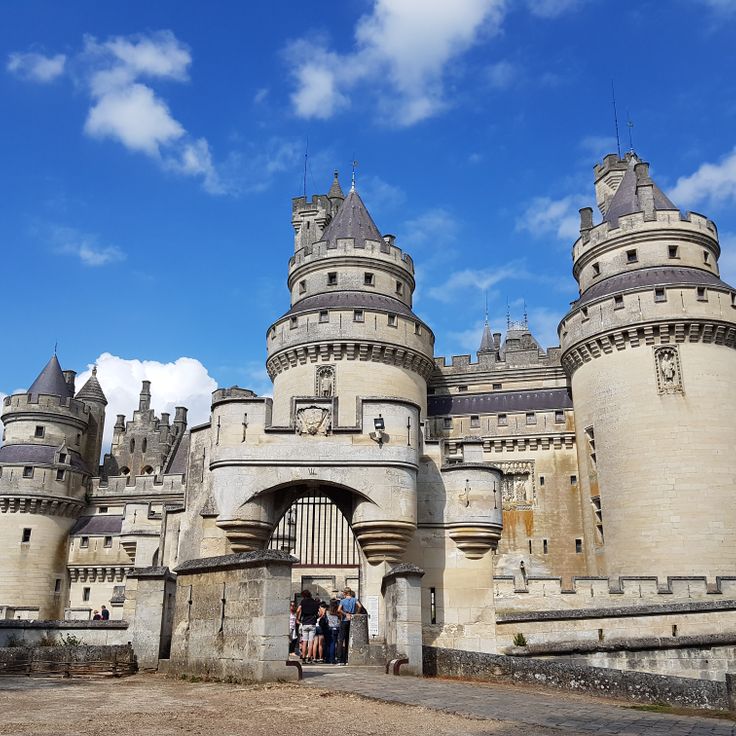
This castle stands at the edge of a forest in the Oise department, about 50 miles (80 kilometers) northeast of Paris. Napoleon III commissioned Eugène Viollet-le-Duc to rebuild the medieval ruin, which had been partly destroyed in the 17th century. Work began in the 1860s and created a fortress with tall towers, battlements, and vaulted halls that reproduced Gothic forms from the Middle Ages. The facades show sculptures of knights and animals, while the interiors were fitted with wooden ceilings and wall paintings. The castle rises above the village of Pierrefonds and offers views over the surrounding forests. It has served as a backdrop for films and historical reenactments, showing how the 19th century interpreted medieval architecture.
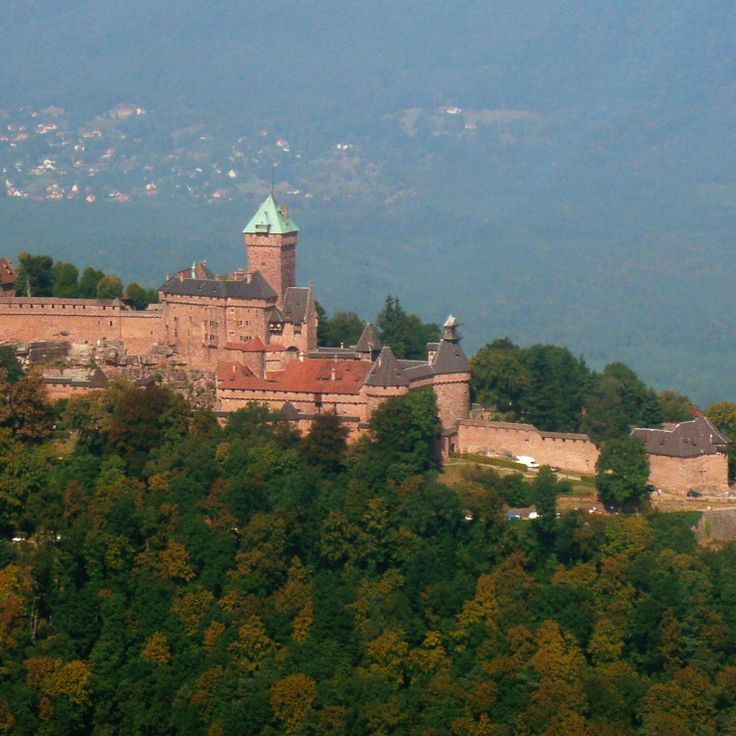
This medieval castle stands on a forested mountain in the Vosges and was built in the 12th century as a fortress. Its position gave control over trade routes between the Rhine plain and Lorraine. After destruction during the Thirty Years' War, it remained a ruin for centuries until Emperor Wilhelm II commissioned its reconstruction in the early 20th century. The present form shows towers, ramparts, and courtyards that recall medieval defensive architecture. From the viewpoints you can see vineyards, valleys, and Alsace stretching toward the Black Forest.
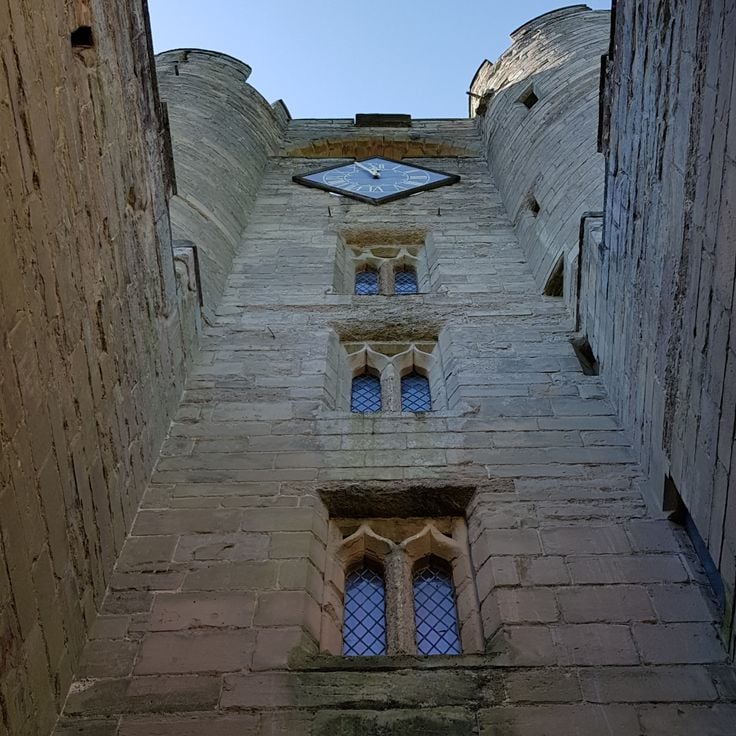
This castle rises on the banks of the River Avon and traces its origins to the 11th century. Warwick Castle served for centuries as a fortress and noble residence. The gray stone walls enclose a courtyard, towers, and living quarters shaped by different periods. Visitors can explore the defensive structures, climb the towers, and take in views of the surrounding countryside. The site shows how military protection and living comfort came together under one roof, and demonstrates the role such castles played in English history.
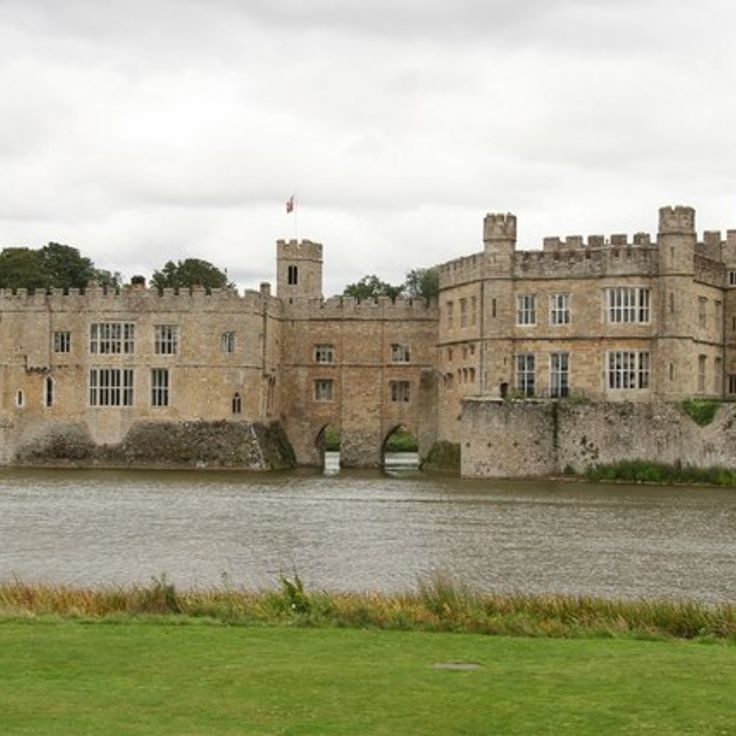
This castle stands in Kent on two islands in a river. Norman builders raised it in the 12th century as a fortress, and later it served as a royal residence for several hundred years. Stone walls surround courtyards, living quarters, and gardens that reflect in the water. You see towers, battlements, and wide staircases that lead to halls. Inside the rooms you find tapestries, carved wooden ceilings, and fireplaces from earlier times. Around the castle lie lawns, paths through thick hedges, and a maze. Swans move across the river, trees frame the walls. The site shows how defense and living space came together in one protected place.
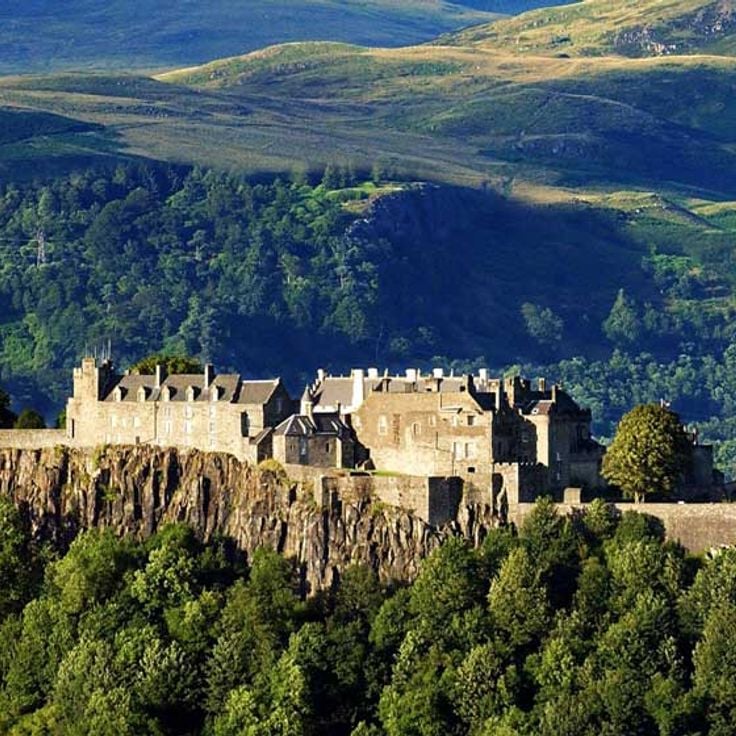
Stirling Castle rises on a volcanic rock above the Scottish lowlands and offers a view into centuries of royal rule. This structure served kings and queens both as residence and fortress. Inside the walls are Renaissance palaces, a Great Hall with an open timber roof, and chapels where monarchs were crowned. From the battlements you can see wide plains that hold the sites of several wars between Scotland and England. The rooms display restored tapestries, carved ceilings, and furniture that trace courtly life during the Stuart period. Stirling Castle shows how defense and display came together in a building that was rebuilt and expanded over hundreds of years.
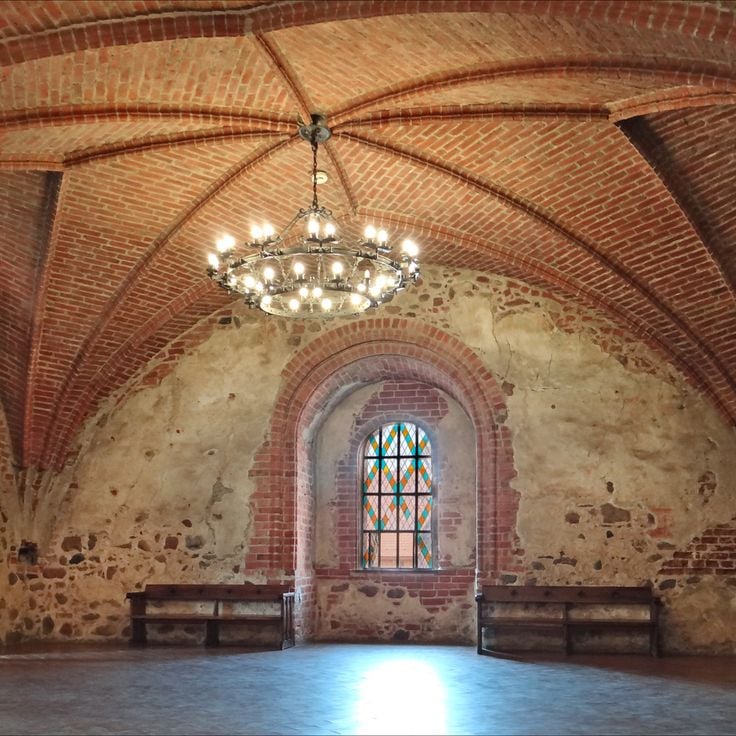
Trakai Island Castle is a medieval fortress built on an island in Lake Galve, about 17 miles (28 kilometers) west of Vilnius. The Grand Dukes of Lithuania raised it in the 14th and 15th centuries as a residence and a stronghold. Red brick walls and towers rise above the water that surrounds the site on all sides. A narrow wooden footbridge links the island to the shore. Inside, exhibitions present Lithuanian history, weapons, and court life. The castle was rebuilt during the 20th century after wars left much of it in ruins. On summer days, rowboats move across the lake; in winter, ice can grow thick enough to walk on. Wooded shores and smaller islands create a quiet setting. Visitors can climb the towers and look out over the water and nearby villages. The site lies in the traditional homeland of the Karaites, a small community with its own customs and wooden houses standing close by.
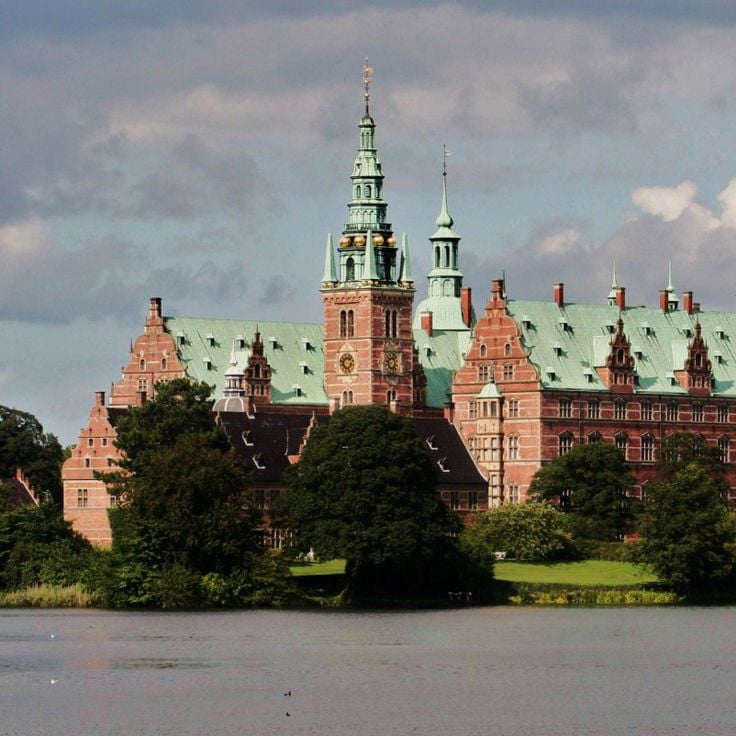
This palace was built in the early 17th century as a residence for the Danish king Christian IV. The buildings stand on three small islands in a lake, connected by narrow stone bridges. Red brick facades alternate with pale sandstone ornaments, and the towers carry gilded spires. The interior rooms display ceiling paintings, carved wooden paneling, and large tapestries from that period. A chapel with a 17th-century organ occupies the north wing. After a fire in the 19th century the palace was rebuilt and now houses a museum of Danish history. The surrounding garden combines the baroque layout with an English landscape park. The palace is one of the important examples of northern European Renaissance and shows how monarchs expressed their power through architecture.
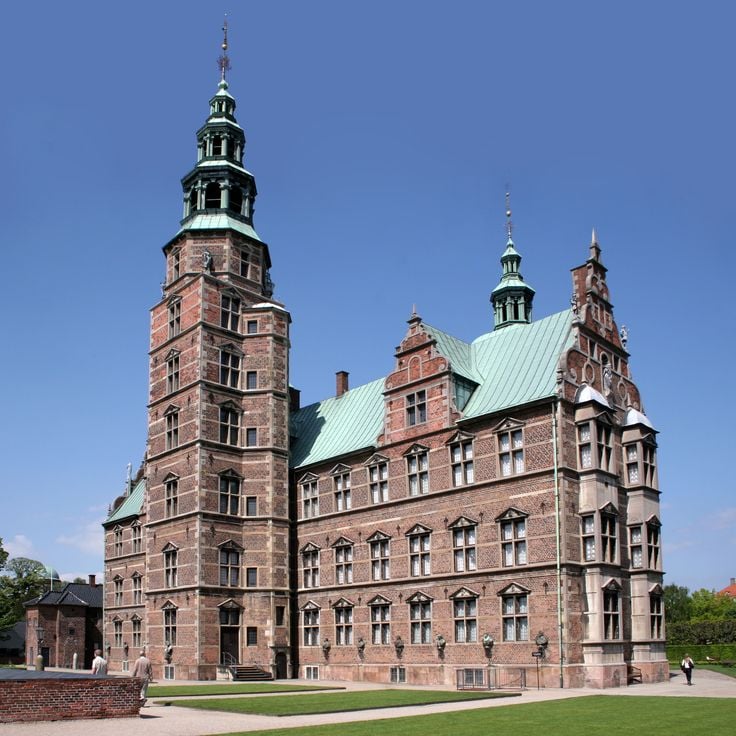
This Renaissance castle stands in central Copenhagen and was built in the early 17th century as a royal residence. The red brick walls and tall towers show the building style of that time. Today Rosenborg Castle houses the Danish Crown Jewels and collections from several centuries of royal history. The rooms are furnished with pieces, paintings and objects from the age of monarchy. The surrounding park offers space for walks. The structure combines living quarters with the display of royal power and shows how a Danish ruler of the 17th century wanted to live.
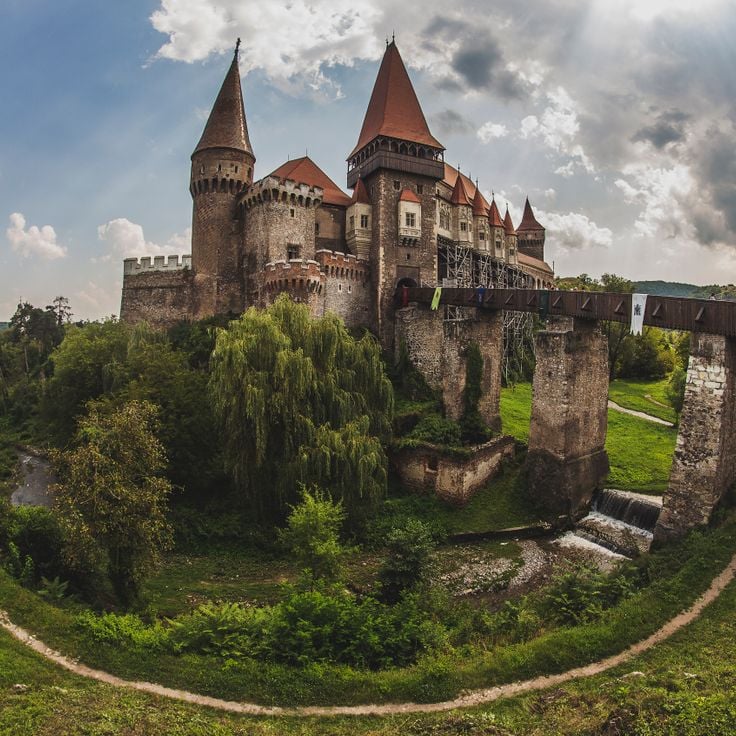
This castle in Hunedoara shows the defensive architecture of the 14th and 15th centuries. The fortress was built on a rock above the Zlaști stream and combines late Gothic construction with Renaissance elements. Stone towers, a wide moat, and high walls once formed protection against attacks. Inside, staircases lead through several levels with halls, a chapel, and living quarters. The building served for centuries as a military stronghold and noble residence. Visitors see here how fortress construction and living culture developed in Transylvania.
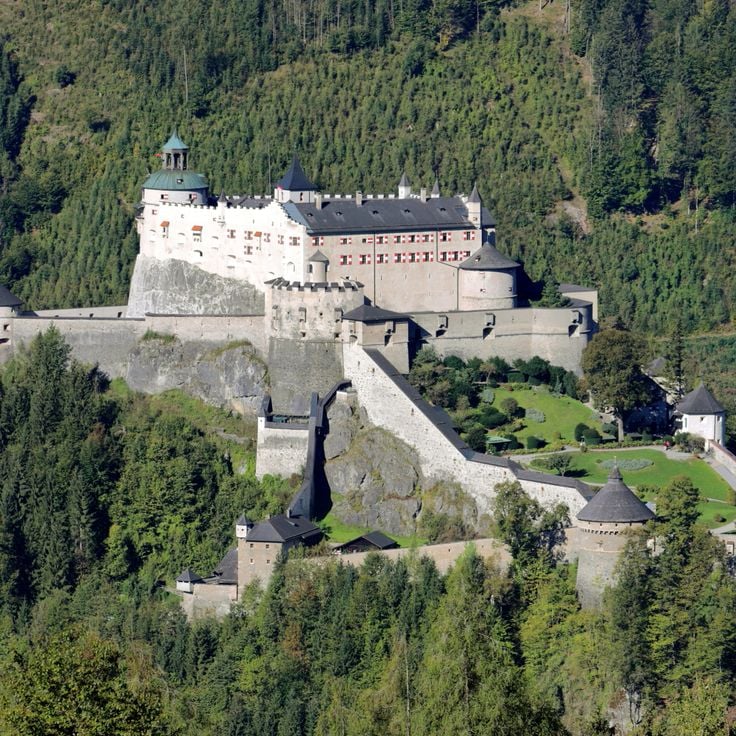
This castle sits on a rocky peak above the Salzach Valley south of Werfen and shows how defense and rule were organized in alpine regions during the Middle Ages. Hohenwerfen was built in the 11th century by the archbishops of Salzburg as a fortress and hunting lodge. Walls, towers and walkways surround a courtyard where falconry demonstrations with hawks and eagles take place today. From the battlements you see the Tennen Mountains and the valley that has carried travelers between Salzburg and the south for centuries. The steep cliff made the castle difficult to attack and tied it to the surrounding landscape.
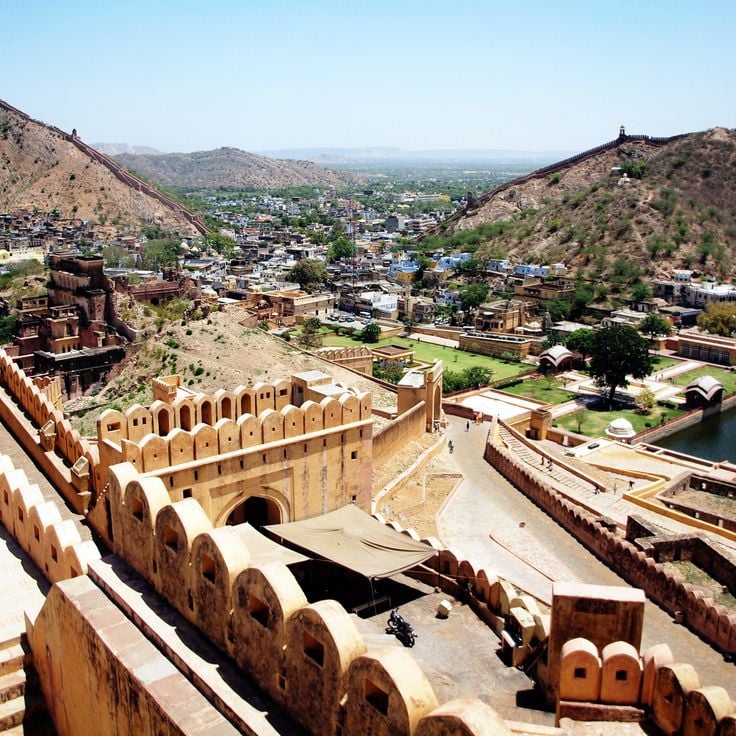
This fort sits on a hill above Maota Lake near Jaipur. The complex was built in the late 16th century and served as the residence of the rulers of Amber. Red sandstone walls surround several courtyards, palaces, and temples. Inside, walls and ceilings are decorated with mirror work, frescoes, and marble reliefs. Visitors reach the fort by a ramp or a steep path that passes through several gates. From the upper terraces, you can see the surrounding hills and the city below.
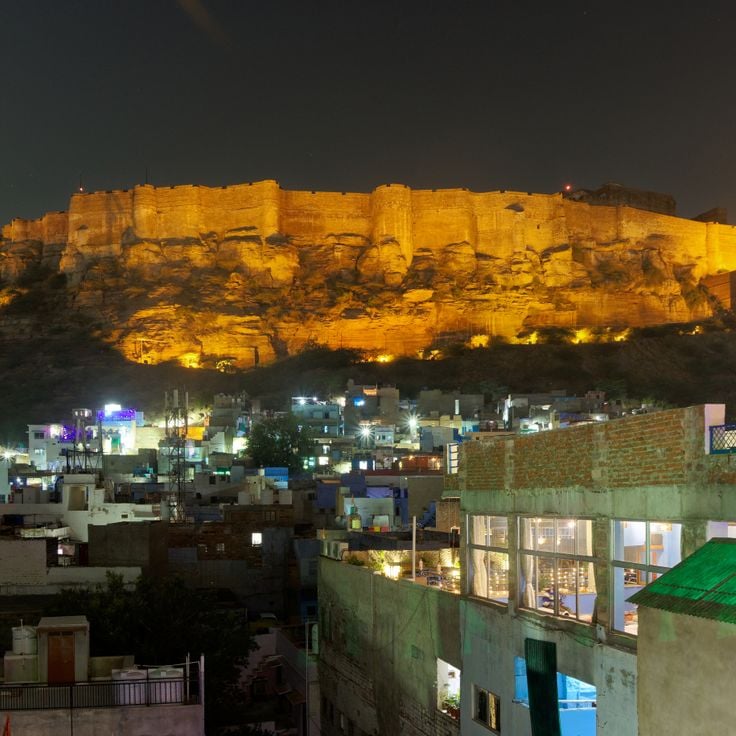
This fort in Jodhpur was built in the 15th century on a rock plateau and shows how military architecture took shape in Rajasthan. The walls rise more than 300 feet (90 meters) above the town and formed a fortified residence for the rulers of the region. Courtyards and palaces behind the defenses combined strength with formal living space. The sandstone used to build the fort carries colors that shift in daylight. Visitors see from the ramparts the blue houses of the old town and the plain beyond.
This castle stands on a rocky peak in the Bavarian Alps and represents one of the most recognized buildings from the 19th century. King Ludwig II commissioned its construction beginning in 1869 as a romantic residence. The white limestone facades and blue towers recall medieval fortresses, though they were built at a time when such structures no longer served military purposes. Inside, historical halls combine with technology that was modern for the period, including central heating and running water. Terraces offer views across forests and lakes. Neuschwanstein Castle demonstrates how medieval architecture was reinterpreted in the late 19th century and documents the vision of a king who withdrew from political reality.
This religious and military complex rises from a granite island fortified since the 8th century. The abbey sits at the summit, surrounded by walls and towers built during medieval times to protect against attacks. Narrow lanes wind between stone buildings that cling to the slope. At high tide, Mont Saint-Michel becomes an island, while at low tide a wide expanse of sand connects it to the mainland. The architecture combines Romanesque arches, Gothic pointed vaults, and defensive towers from different construction periods between the 11th and 16th centuries. Pilgrims and visitors walk along narrow pathways leading to upper terraces that overlook the bay and surrounding salt marshes.
This fortress stands on an extinct volcano and has overlooked Edinburgh since the 12th century. The stone walls enclose royal jewels and military buildings that document Scotland's history from medieval battles to royal power. The rock rises sharply above the city and shows how natural defense and human construction work together. Visitors walk through gates and courtyards where soldiers kept watch for centuries and kings ruled.
This castle stands as one of the most recognizable examples of French Renaissance architecture from the 16th century. The structure displays 440 rooms, 84 staircases, and 365 chimneys that reflect the power of the French royal court. The central double-helix staircase is considered an architectural achievement, possibly inspired by Leonardo da Vinci. Château de Chambord was originally built as a hunting lodge and combines French traditions with Italian Renaissance influences in its facade design and distinctive rooftop towers.
This 13th-century fortress combines Moorish palaces, gardens, and defensive structures on a hill above Granada. The complex shows Islamic architecture with courtyards, water pools, and tile work. Visitors walk through rooms with geometric patterns and Arabic inscriptions on the walls. The gardens contain cypress trees, orange trees, and fountains. From the terraces you can see the city and the Sierra Nevada mountains (over 9800 feet or 3000 meters high). The Nasrid dynasty built this residence as a government seat and retreat. Later, Christian kings added a palace in Renaissance style.
Potala Palace served as the winter residence of the Dalai Lamas for centuries and sits on a hill above Lhasa. The complex combines religious spaces with living quarters and administrative buildings. Red and white facades mark different functions within the structure. This palace demonstrates Tibetan architecture from the 17th century, with thick stone walls and golden roofs that spread across multiple levels.
This castle in Prague covers several courtyards, churches, and historic buildings spread across a hill above the Vltava River. The complex began in the 9th century and served as the residence of Bohemian rulers. Today Prague Castle combines Romanesque foundations with Gothic towers, Baroque palaces, and gardens. St. Vitus Cathedral rises at the center, surrounded by administrative buildings and Golden Lane with its small houses. Visitors walk through gates and squares where changing of the guard takes place. The castle documents centuries of Bohemian history and shows how military fortifications became spaces for ceremony and government.
This castle has served as an official residence for English monarchs for nearly a thousand years, documenting one of the longest continuously inhabited royal fortresses in the world. Windsor Castle contains St. George's Chapel from the 15th century, state apartments with royal art collections, and the Round Tower rising above the River Thames. The complex began as a Norman fortification and expanded through centuries, incorporating Gothic, Baroque, and Georgian elements that combine military defense with royal living quarters.
This castle dates from the 14th century and shows traditional Japanese construction with multiple stories and white exterior walls. Himeji Castle served as a military fortress and later residence for regional lords during the feudal period. The complex includes a defense system with towers, gates, and winding paths designed to confuse attackers. The white walls, made of plaster over wooden frames, gave the castle its nickname as the White Heron Castle. The main keep rises six floors and combines practical defensive features with the representative architecture of the Edo period.
This palace was built in the 17th century as the residence of French kings. The complex holds 2300 rooms, including the Hall of Mirrors with 357 mirrors on its walls. The gardens follow a geometric layout with fountains, pools and trimmed hedges. Louis XIV moved the royal court here in 1682. The rooms display ceiling paintings, gilded ornaments and marble. In the park stand the Grand Trianon and the Petit Trianon, smaller palaces for the royal family. The orangery sheltered exotic plants during winter.
This castle from the 16th century rises with black exterior walls and six floors above the town. The steep wooden staircases inside lead through original constructions that have remained intact for centuries. From the upper levels, the view extends across the surrounding plain and distant mountain peaks. The architecture combines military defense functions with the refinement of a feudal residence. The dark facade stands against the sky and reflects in the surrounding moat.
This castle from the 12th century rises on a rock spur above a river valley and belongs to the collection of historic fortresses. Eltz Castle preserves original furniture and armor from several centuries in its rooms. The structure remained in the hands of the same family and shows medieval domestic life and defensive architecture in their original condition.
This medieval structure rises on a rock in the Carpathian Mountains and was built in the 14th century as a border post between Transylvania and Wallachia. The fortress served to control trade routes through the mountains and defend against Ottoman attacks. The towers, staircases and narrow passages show typical defensive architecture from this period. Later, Bran Castle was converted into a royal residence. The steep roofs, white walls and labyrinth of rooms inspired Bram Stoker's description of Dracula's castle, though the author himself never visited. The castle represents medieval military architecture in southeastern Europe and shows the transition from fortress to residence.
This medieval fortress represents some of the most important military architecture built in Wales during the late 13th century. The walls of this castle reach up to 15 feet (4.5 meters) in thickness and are reinforced by eight towers that overlook the valley and estuary. Construction began in 1283 and was completed within six years. The structure documents the military architecture of that era and demonstrates how royal power was secured through stone fortifications.
This 12th-century castle was renovated in the French style during the 19th century and now houses a museum with medieval art. The architecture combines Gothic towers with romantic turrets and balconies. Inside, the rooms display carved wooden furniture, tapestries, and paintings from different periods. The courtyard leads to a chapel with painted vaults. In the basement, a limestone cave can be visited during guided tours. The grounds sit on a travertine hill and are surrounded by a park with old trees. In spring, linden and chestnut trees bloom along the paths around the walls.
This fortress was built in the 13th century into a 123-meter-high cliff face and documents medieval architecture in Slovenia. The castle emerged directly in front of a natural cave that served residents as a secret escape route. The position in the steep rock face offered protection from attackers and made the structure nearly impossible to capture. Over the centuries the complex was expanded and rebuilt several times, while the connection between rock and building remained. The castle shows how medieval builders adapted military defenses to natural terrain.
This castle was built between 1873 and 1914, combining German Neo-Renaissance style with Romanian architecture. Peles Castle sits in the Carpathian Mountains at around 3,300 feet (1,000 meters) and served as a summer residence for the Romanian royal family. The interior rooms display wood carvings from different regions, stained glass windows with historical themes, and an extensive collection of arms and armor spanning from medieval times to the modern era. The surrounding park follows English garden traditions with terraces, fountains, and sculptures.
This castle served as the headquarters of the Teutonic Order in the 13th century and represents one of the most significant fortresses from the era of medieval military architecture. The complex is built almost entirely of brick and grew over several centuries into one of the largest castles in Europe. The walls, towers and inner courtyards show the characteristic Gothic style of the Order's knights. Visitors can walk through halls, chapels and defensive structures to experience the dimensions of this historic residence.
Castel del Monte sits on a hill near the town of Andria and was built in the thirteenth century under Emperor Frederick II. The floor plan follows the octagonal plan and each of the eight towers repeats the same shape. The architecture blends Romanesque elements, Gothic arches and influences from across the Mediterranean. The interior shows pale stonework and large rooms with windows that let in light. From the hill you can see the wide countryside of Apulia. The function of the building remains unclear as it never served as a fortress or residential palace. The clean geometry and placement on the hill make it an example of the spirit of that time.
The Alcázar de Segovia rises on a rocky spur at the meeting point of two rivers and looks from a distance like a stone ship. The fortress dates from the 12th century and served over the centuries as a royal residence, state prison and military academy. Its towers and battlements shape the skyline of the old town. The interior rooms show Mudéjar work with geometric patterns and colored tiles. From the keep you can see the Castilian plain and the distant mountains. The throne room preserves wall paintings and carved wooden ceilings. Visitors pass through armories, chapels and galleries that offer insight into courtly life in past eras.
This medieval walled town sits on a hill above the Aude River and displays over a mile of walls with more than fifty towers. Two layers of defenses surround the old settlement, inhabited since ancient times. In the thirteenth century, fortifications were strengthened when Carcassonne held a key position in conflicts between the French crown and Catalan rulers. Extensive restoration work in the nineteenth century altered much of the structure, a topic still discussed today. Walking the narrow streets, you pass houses from different periods, small squares, and the Romanesque basilica of Saint-Nazaire. The inner town feels like a single ensemble where living quarters, churches, and defensive works blend together. From the towers, you see the surrounding countryside, vineyards in the lowlands, and the Pyrenees on the horizon. The site served as a military stronghold for centuries before becoming a residential town.
Château de Chenonceau spans the Cher River in the Loire Valley, built as a bridge with a gallery above the water. In the 16th century several women from royal circles shaped the building and designed the gardens. The arches support a long hall with windows that let daylight reach the current below. Inside, rooms display furniture, tapestries and paintings from the Renaissance. Gardens on both banks follow regular patterns and stretch down to the riverbanks. On warm days the façades reflect in the water, and visitors walk through the gallery above the Cher.
Hohenzollern Castle rises on a wooded hilltop above the Swabian countryside and serves as the ancestral seat of the Prussian royal family. The present structure dates from the mid-1800s and shows towers, battlements and chapels in the Gothic Revival style. Visitors who climb the ramps and stairs reach courtyards, halls and armories displaying portraits, uniforms and royal regalia. From the ramparts the view extends across forests and villages to the ridges of the Swabian Jura.
The fortress of Hohensalzburg sits on Festungsberg hill above the city rooftops. It was built in the 11th century and expanded over several centuries. Its walls enclose courtyards, living quarters, and watchtowers. From the terraces you see the old town, the Salzach river, and the mountains all around. The complex served for a long time as the residence of the archbishops and as protection against attacks. Today narrow lanes and staircases lead through the rooms where you can follow the way of life of the former occupants.
Wawel Royal Castle sits on a hill above the Vistula River and served for centuries as the residence of Polish rulers. The complex combines a Gothic cathedral with Renaissance wings and courtyards designed by Italian architects. From the castle hill you can see Krakow's old town and the course of the river. The rooms display Flemish tapestries, paintings by European masters, and crowns of Polish kings. The chapel with its gilded dome holds royal tombs from different periods.
The Budavár Palace shows different building phases from the Middle Ages through the 20th century on the hill above the Danube. Remains of the medieval fortress stand next to structures from the 18th century that were later rebuilt. The rooms and courtyards reflect the rule of several dynasties. From the terraces you see across Budapest and the river. Today the grounds house museums and public collections.
The Saint George Castle stands on a hill above old Lisbon and shows towers, walls and courtyards that date from Moorish times through the Portuguese Reconquista. The site served first as a fortress and later as a royal residence before falling into disrepair and being restored in the 20th century. From the ramparts you look out over the city and the Tagus River. The casemates, parade ground and surviving defensive lines show how soldiers lived here and how the stronghold was meant to repel attacks. Visitors walk through lanes between walls, enter watchtowers and stroll in gardens within the fortification.
Palácio Nacional da Pena sits on the hills of Sintra and was built in the mid-19th century at the wish of King Ferdinand II. The building mixes neo-Gothic, neo-Manueline and Moorish forms in bold colors: yellow and pink facades, towers with onion domes and decorated arches follow one another. Ferdinand wanted to create a romantic residence that would show different styles from several periods. Around the palace lies a park-like forest with exotic trees, paths and viewpoints. Inside, rooms keep the furnishings and taste of the 19th century. From the courtyard you can see the coast and the green hills. On clear days the view reaches as far as Lisbon. The palace shows how the king and his builders brought together styles from different traditions in a single building to shape a private royal residence.
The castle sits on a rocky hill above Sintra and was built by the Moors during their rule in the region. The walls follow the contours of the land and connect several watchtowers. Pine trees and low plants now grow among the stone ruins. From the battlements you can see the surrounding forests, the town below in the valley, and on clear days the Atlantic Ocean. The climb follows old paths that wind between the walls. The site was part of the region's defense system and was later abandoned when the Christian kings favored other fortresses.
Osaka Castle stands in the center of the city and rises above wide moats and stone walls. The architecture shows how Japanese fortresses looked in the late sixteenth and early seventeenth centuries, with multiple stories, curved roofs, and a tall base made of large stone blocks. The main building was destroyed and rebuilt several times, and the current structure dates from the twentieth century. Visitors see exhibitions about the castle's history and can look out over the city from the top floor. The surrounding park is used by locals, especially during cherry blossom season in spring, when the trees around the walls bloom. The site shows how defense and representation came together in a Japanese castle.
This castle stands on a wooded hill in the heart of Mexico City, rising above Chapultepec Park. The building was constructed in the late 18th century as a summer residence and later served as the seat of Mexican rulers and presidents. The architecture mixes classical forms with styles that became popular at different times. Today the building is a museum displaying rooms with historical furniture, paintings, and murals. From the terraces you can see the city and the surrounding mountains. The castle combines the role of a residence with the function of a place where political decisions were made. The gardens around the house invite walks, while the halls inside tell the story of Mexico.
The Castillo de San Felipe de Barajas sits on a hill above Cartagena, watching over the city and the sea. Spanish engineers began building it in the 17th century, and over the decades it grew into one of the largest defense works in South America. Thick walls and bastions climb the slope in terraces, while beneath the ground a network of tunnels connects the different levels. These passages once moved soldiers and supplies quickly, and today you can walk through some of them. From the top there is a wide view over the old town, the bay, and the hills inland. Wind sweeps across the open platforms, and you see how carefully the site was chosen.
Krak des Chevaliers stands as a large crusader fortress on a hill in the Syrian countryside, showing how medieval defensive structures were built. Constructed and expanded between the 11th and 13th centuries, this castle combines two rings of walls, towers, a great hall, and storage rooms into a complete defensive system. The thick stone walls and the position on high ground were meant to withstand attacks while also serving as a base for a large garrison. Walking through the gateways and courtyards, you see how living quarters, a chapel, and administrative rooms were built into the military layout. The construction blends European and local building methods, reflecting how crusaders adapted their architecture to conditions in the Levant.
Bodiam Castle was a fourteenth-century defensive structure in East Sussex. The castle stands on a small island, surrounded by a wide moat. Four round towers mark the corners of the square walls. The courtyard now lies open to the sky, with most interior rooms gone. You enter the site over a wooden bridge. The outer walls of sandstone still show openings for windows and arrow slits. The place shows how a small fortress looked in the late Middle Ages and how water served as protection.
Alnwick Castle stands in Northumberland and has served the Percy family as their home since medieval times. The site began as a fortress against raids from Scotland and was rebuilt several times over the centuries. Towers and walls still show the lines of the old defenses, while interior rooms were later redesigned in Renaissance and 19th-century styles. Collections of paintings, furniture, and weapons are on display. The courtyard and gardens are often used for events. Its location near the Scottish border made the castle a point where military and civilian functions met.
Castel Sant'Angelo was built in the second century as a tomb for Emperor Hadrian and later became a papal fortress. The cylindrical structure on the right bank of the Tiber served over the centuries as a prison, refuge for popes, and armory. A protected passageway connects the building to the Vatican, allowing quick escape in emergencies. The interior rooms display Renaissance frescoes, while the upper terraces offer views over the city. The statue of the Archangel Michael at the top recalls a medieval legend. The building combines Roman architecture with later military and ecclesiastical functions, showing how use and meaning shifted over time.
Schwerin Castle sits on an island in Lake Schwerin and shows architecture from several centuries. The facades combine Romanesque foundations, Gothic elements, and additions from the 19th century. Towers, domes, and brickwork shape its appearance. Bridges connect the building to the shore. Interior rooms preserve historical furnishings, paintings, and furniture. Part of the castle now serves as the seat of the state parliament, while other sections open as a museum. Gardens surround the castle on the island and continue along the opposite shore. The water separates the structure from the old town and gives it a quiet setting.
This palace lies southeast of Paris and shows building styles from the Middle Ages to the 19th century. French kings lived here over several centuries and kept adding new wings, courtyards and gardens. The rooms contain wall paintings, stucco work and furniture from different periods. Some halls served for receptions, others as living quarters or chapels. The surrounding park combines formal gardens with open woodland. The palace shows how royal residences grew and changed while serving as seats of power and places to live.
This castle stands at the edge of a forest in the Oise department, about 50 miles (80 kilometers) northeast of Paris. Napoleon III commissioned Eugène Viollet-le-Duc to rebuild the medieval ruin, which had been partly destroyed in the 17th century. Work began in the 1860s and created a fortress with tall towers, battlements, and vaulted halls that reproduced Gothic forms from the Middle Ages. The facades show sculptures of knights and animals, while the interiors were fitted with wooden ceilings and wall paintings. The castle rises above the village of Pierrefonds and offers views over the surrounding forests. It has served as a backdrop for films and historical reenactments, showing how the 19th century interpreted medieval architecture.
This medieval castle stands on a forested mountain in the Vosges and was built in the 12th century as a fortress. Its position gave control over trade routes between the Rhine plain and Lorraine. After destruction during the Thirty Years' War, it remained a ruin for centuries until Emperor Wilhelm II commissioned its reconstruction in the early 20th century. The present form shows towers, ramparts, and courtyards that recall medieval defensive architecture. From the viewpoints you can see vineyards, valleys, and Alsace stretching toward the Black Forest.
This castle rises on the banks of the River Avon and traces its origins to the 11th century. Warwick Castle served for centuries as a fortress and noble residence. The gray stone walls enclose a courtyard, towers, and living quarters shaped by different periods. Visitors can explore the defensive structures, climb the towers, and take in views of the surrounding countryside. The site shows how military protection and living comfort came together under one roof, and demonstrates the role such castles played in English history.
This castle stands in Kent on two islands in a river. Norman builders raised it in the 12th century as a fortress, and later it served as a royal residence for several hundred years. Stone walls surround courtyards, living quarters, and gardens that reflect in the water. You see towers, battlements, and wide staircases that lead to halls. Inside the rooms you find tapestries, carved wooden ceilings, and fireplaces from earlier times. Around the castle lie lawns, paths through thick hedges, and a maze. Swans move across the river, trees frame the walls. The site shows how defense and living space came together in one protected place.
Stirling Castle rises on a volcanic rock above the Scottish lowlands and offers a view into centuries of royal rule. This structure served kings and queens both as residence and fortress. Inside the walls are Renaissance palaces, a Great Hall with an open timber roof, and chapels where monarchs were crowned. From the battlements you can see wide plains that hold the sites of several wars between Scotland and England. The rooms display restored tapestries, carved ceilings, and furniture that trace courtly life during the Stuart period. Stirling Castle shows how defense and display came together in a building that was rebuilt and expanded over hundreds of years.
Trakai Island Castle is a medieval fortress built on an island in Lake Galve, about 17 miles (28 kilometers) west of Vilnius. The Grand Dukes of Lithuania raised it in the 14th and 15th centuries as a residence and a stronghold. Red brick walls and towers rise above the water that surrounds the site on all sides. A narrow wooden footbridge links the island to the shore. Inside, exhibitions present Lithuanian history, weapons, and court life. The castle was rebuilt during the 20th century after wars left much of it in ruins. On summer days, rowboats move across the lake; in winter, ice can grow thick enough to walk on. Wooded shores and smaller islands create a quiet setting. Visitors can climb the towers and look out over the water and nearby villages. The site lies in the traditional homeland of the Karaites, a small community with its own customs and wooden houses standing close by.
This palace was built in the early 17th century as a residence for the Danish king Christian IV. The buildings stand on three small islands in a lake, connected by narrow stone bridges. Red brick facades alternate with pale sandstone ornaments, and the towers carry gilded spires. The interior rooms display ceiling paintings, carved wooden paneling, and large tapestries from that period. A chapel with a 17th-century organ occupies the north wing. After a fire in the 19th century the palace was rebuilt and now houses a museum of Danish history. The surrounding garden combines the baroque layout with an English landscape park. The palace is one of the important examples of northern European Renaissance and shows how monarchs expressed their power through architecture.
This Renaissance castle stands in central Copenhagen and was built in the early 17th century as a royal residence. The red brick walls and tall towers show the building style of that time. Today Rosenborg Castle houses the Danish Crown Jewels and collections from several centuries of royal history. The rooms are furnished with pieces, paintings and objects from the age of monarchy. The surrounding park offers space for walks. The structure combines living quarters with the display of royal power and shows how a Danish ruler of the 17th century wanted to live.
This castle in Hunedoara shows the defensive architecture of the 14th and 15th centuries. The fortress was built on a rock above the Zlaști stream and combines late Gothic construction with Renaissance elements. Stone towers, a wide moat, and high walls once formed protection against attacks. Inside, staircases lead through several levels with halls, a chapel, and living quarters. The building served for centuries as a military stronghold and noble residence. Visitors see here how fortress construction and living culture developed in Transylvania.
This castle sits on a rocky peak above the Salzach Valley south of Werfen and shows how defense and rule were organized in alpine regions during the Middle Ages. Hohenwerfen was built in the 11th century by the archbishops of Salzburg as a fortress and hunting lodge. Walls, towers and walkways surround a courtyard where falconry demonstrations with hawks and eagles take place today. From the battlements you see the Tennen Mountains and the valley that has carried travelers between Salzburg and the south for centuries. The steep cliff made the castle difficult to attack and tied it to the surrounding landscape.
This fort sits on a hill above Maota Lake near Jaipur. The complex was built in the late 16th century and served as the residence of the rulers of Amber. Red sandstone walls surround several courtyards, palaces, and temples. Inside, walls and ceilings are decorated with mirror work, frescoes, and marble reliefs. Visitors reach the fort by a ramp or a steep path that passes through several gates. From the upper terraces, you can see the surrounding hills and the city below.
This fort in Jodhpur was built in the 15th century on a rock plateau and shows how military architecture took shape in Rajasthan. The walls rise more than 300 feet (90 meters) above the town and formed a fortified residence for the rulers of the region. Courtyards and palaces behind the defenses combined strength with formal living space. The sandstone used to build the fort carries colors that shift in daylight. Visitors see from the ramparts the blue houses of the old town and the plain beyond.
This castle stands on a rocky peak in the Bavarian Alps and represents one of the most recognized buildings from the 19th century. King Ludwig II commissioned its construction beginning in 1869 as a romantic residence. The white limestone facades and blue towers recall medieval fortresses, though they were built at a time when such structures no longer served military purposes. Inside, historical halls combine with technology that was modern for the period, including central heating and running water. Terraces offer views across forests and lakes. Neuschwanstein Castle demonstrates how medieval architecture was reinterpreted in the late 19th century and documents the vision of a king who withdrew from political reality.
This religious and military complex rises from a granite island fortified since the 8th century. The abbey sits at the summit, surrounded by walls and towers built during medieval times to protect against attacks. Narrow lanes wind between stone buildings that cling to the slope. At high tide, Mont Saint-Michel becomes an island, while at low tide a wide expanse of sand connects it to the mainland. The architecture combines Romanesque arches, Gothic pointed vaults, and defensive towers from different construction periods between the 11th and 16th centuries. Pilgrims and visitors walk along narrow pathways leading to upper terraces that overlook the bay and surrounding salt marshes.
This fortress stands on an extinct volcano and has overlooked Edinburgh since the 12th century. The stone walls enclose royal jewels and military buildings that document Scotland's history from medieval battles to royal power. The rock rises sharply above the city and shows how natural defense and human construction work together. Visitors walk through gates and courtyards where soldiers kept watch for centuries and kings ruled.
This castle stands as one of the most recognizable examples of French Renaissance architecture from the 16th century. The structure displays 440 rooms, 84 staircases, and 365 chimneys that reflect the power of the French royal court. The central double-helix staircase is considered an architectural achievement, possibly inspired by Leonardo da Vinci. Château de Chambord was originally built as a hunting lodge and combines French traditions with Italian Renaissance influences in its facade design and distinctive rooftop towers.
This 13th-century fortress combines Moorish palaces, gardens, and defensive structures on a hill above Granada. The complex shows Islamic architecture with courtyards, water pools, and tile work. Visitors walk through rooms with geometric patterns and Arabic inscriptions on the walls. The gardens contain cypress trees, orange trees, and fountains. From the terraces you can see the city and the Sierra Nevada mountains (over 9800 feet or 3000 meters high). The Nasrid dynasty built this residence as a government seat and retreat. Later, Christian kings added a palace in Renaissance style.
Potala Palace served as the winter residence of the Dalai Lamas for centuries and sits on a hill above Lhasa. The complex combines religious spaces with living quarters and administrative buildings. Red and white facades mark different functions within the structure. This palace demonstrates Tibetan architecture from the 17th century, with thick stone walls and golden roofs that spread across multiple levels.
This castle in Prague covers several courtyards, churches, and historic buildings spread across a hill above the Vltava River. The complex began in the 9th century and served as the residence of Bohemian rulers. Today Prague Castle combines Romanesque foundations with Gothic towers, Baroque palaces, and gardens. St. Vitus Cathedral rises at the center, surrounded by administrative buildings and Golden Lane with its small houses. Visitors walk through gates and squares where changing of the guard takes place. The castle documents centuries of Bohemian history and shows how military fortifications became spaces for ceremony and government.
This castle has served as an official residence for English monarchs for nearly a thousand years, documenting one of the longest continuously inhabited royal fortresses in the world. Windsor Castle contains St. George's Chapel from the 15th century, state apartments with royal art collections, and the Round Tower rising above the River Thames. The complex began as a Norman fortification and expanded through centuries, incorporating Gothic, Baroque, and Georgian elements that combine military defense with royal living quarters.
This castle dates from the 14th century and shows traditional Japanese construction with multiple stories and white exterior walls. Himeji Castle served as a military fortress and later residence for regional lords during the feudal period. The complex includes a defense system with towers, gates, and winding paths designed to confuse attackers. The white walls, made of plaster over wooden frames, gave the castle its nickname as the White Heron Castle. The main keep rises six floors and combines practical defensive features with the representative architecture of the Edo period.
This palace was built in the 17th century as the residence of French kings. The complex holds 2300 rooms, including the Hall of Mirrors with 357 mirrors on its walls. The gardens follow a geometric layout with fountains, pools and trimmed hedges. Louis XIV moved the royal court here in 1682. The rooms display ceiling paintings, gilded ornaments and marble. In the park stand the Grand Trianon and the Petit Trianon, smaller palaces for the royal family. The orangery sheltered exotic plants during winter.
This castle from the 16th century rises with black exterior walls and six floors above the town. The steep wooden staircases inside lead through original constructions that have remained intact for centuries. From the upper levels, the view extends across the surrounding plain and distant mountain peaks. The architecture combines military defense functions with the refinement of a feudal residence. The dark facade stands against the sky and reflects in the surrounding moat.
This castle from the 12th century rises on a rock spur above a river valley and belongs to the collection of historic fortresses. Eltz Castle preserves original furniture and armor from several centuries in its rooms. The structure remained in the hands of the same family and shows medieval domestic life and defensive architecture in their original condition.
This medieval structure rises on a rock in the Carpathian Mountains and was built in the 14th century as a border post between Transylvania and Wallachia. The fortress served to control trade routes through the mountains and defend against Ottoman attacks. The towers, staircases and narrow passages show typical defensive architecture from this period. Later, Bran Castle was converted into a royal residence. The steep roofs, white walls and labyrinth of rooms inspired Bram Stoker's description of Dracula's castle, though the author himself never visited. The castle represents medieval military architecture in southeastern Europe and shows the transition from fortress to residence.
This medieval fortress represents some of the most important military architecture built in Wales during the late 13th century. The walls of this castle reach up to 15 feet (4.5 meters) in thickness and are reinforced by eight towers that overlook the valley and estuary. Construction began in 1283 and was completed within six years. The structure documents the military architecture of that era and demonstrates how royal power was secured through stone fortifications.
This 12th-century castle was renovated in the French style during the 19th century and now houses a museum with medieval art. The architecture combines Gothic towers with romantic turrets and balconies. Inside, the rooms display carved wooden furniture, tapestries, and paintings from different periods. The courtyard leads to a chapel with painted vaults. In the basement, a limestone cave can be visited during guided tours. The grounds sit on a travertine hill and are surrounded by a park with old trees. In spring, linden and chestnut trees bloom along the paths around the walls.
This fortress was built in the 13th century into a 123-meter-high cliff face and documents medieval architecture in Slovenia. The castle emerged directly in front of a natural cave that served residents as a secret escape route. The position in the steep rock face offered protection from attackers and made the structure nearly impossible to capture. Over the centuries the complex was expanded and rebuilt several times, while the connection between rock and building remained. The castle shows how medieval builders adapted military defenses to natural terrain.
This castle was built between 1873 and 1914, combining German Neo-Renaissance style with Romanian architecture. Peles Castle sits in the Carpathian Mountains at around 3,300 feet (1,000 meters) and served as a summer residence for the Romanian royal family. The interior rooms display wood carvings from different regions, stained glass windows with historical themes, and an extensive collection of arms and armor spanning from medieval times to the modern era. The surrounding park follows English garden traditions with terraces, fountains, and sculptures.
This castle served as the headquarters of the Teutonic Order in the 13th century and represents one of the most significant fortresses from the era of medieval military architecture. The complex is built almost entirely of brick and grew over several centuries into one of the largest castles in Europe. The walls, towers and inner courtyards show the characteristic Gothic style of the Order's knights. Visitors can walk through halls, chapels and defensive structures to experience the dimensions of this historic residence.
Castel del Monte sits on a hill near the town of Andria and was built in the thirteenth century under Emperor Frederick II. The floor plan follows the octagonal plan and each of the eight towers repeats the same shape. The architecture blends Romanesque elements, Gothic arches and influences from across the Mediterranean. The interior shows pale stonework and large rooms with windows that let in light. From the hill you can see the wide countryside of Apulia. The function of the building remains unclear as it never served as a fortress or residential palace. The clean geometry and placement on the hill make it an example of the spirit of that time.
The Alcázar de Segovia rises on a rocky spur at the meeting point of two rivers and looks from a distance like a stone ship. The fortress dates from the 12th century and served over the centuries as a royal residence, state prison and military academy. Its towers and battlements shape the skyline of the old town. The interior rooms show Mudéjar work with geometric patterns and colored tiles. From the keep you can see the Castilian plain and the distant mountains. The throne room preserves wall paintings and carved wooden ceilings. Visitors pass through armories, chapels and galleries that offer insight into courtly life in past eras.
This medieval walled town sits on a hill above the Aude River and displays over a mile of walls with more than fifty towers. Two layers of defenses surround the old settlement, inhabited since ancient times. In the thirteenth century, fortifications were strengthened when Carcassonne held a key position in conflicts between the French crown and Catalan rulers. Extensive restoration work in the nineteenth century altered much of the structure, a topic still discussed today. Walking the narrow streets, you pass houses from different periods, small squares, and the Romanesque basilica of Saint-Nazaire. The inner town feels like a single ensemble where living quarters, churches, and defensive works blend together. From the towers, you see the surrounding countryside, vineyards in the lowlands, and the Pyrenees on the horizon. The site served as a military stronghold for centuries before becoming a residential town.
Château de Chenonceau spans the Cher River in the Loire Valley, built as a bridge with a gallery above the water. In the 16th century several women from royal circles shaped the building and designed the gardens. The arches support a long hall with windows that let daylight reach the current below. Inside, rooms display furniture, tapestries and paintings from the Renaissance. Gardens on both banks follow regular patterns and stretch down to the riverbanks. On warm days the façades reflect in the water, and visitors walk through the gallery above the Cher.
Hohenzollern Castle rises on a wooded hilltop above the Swabian countryside and serves as the ancestral seat of the Prussian royal family. The present structure dates from the mid-1800s and shows towers, battlements and chapels in the Gothic Revival style. Visitors who climb the ramps and stairs reach courtyards, halls and armories displaying portraits, uniforms and royal regalia. From the ramparts the view extends across forests and villages to the ridges of the Swabian Jura.
The fortress of Hohensalzburg sits on Festungsberg hill above the city rooftops. It was built in the 11th century and expanded over several centuries. Its walls enclose courtyards, living quarters, and watchtowers. From the terraces you see the old town, the Salzach river, and the mountains all around. The complex served for a long time as the residence of the archbishops and as protection against attacks. Today narrow lanes and staircases lead through the rooms where you can follow the way of life of the former occupants.
Wawel Royal Castle sits on a hill above the Vistula River and served for centuries as the residence of Polish rulers. The complex combines a Gothic cathedral with Renaissance wings and courtyards designed by Italian architects. From the castle hill you can see Krakow's old town and the course of the river. The rooms display Flemish tapestries, paintings by European masters, and crowns of Polish kings. The chapel with its gilded dome holds royal tombs from different periods.
The Budavár Palace shows different building phases from the Middle Ages through the 20th century on the hill above the Danube. Remains of the medieval fortress stand next to structures from the 18th century that were later rebuilt. The rooms and courtyards reflect the rule of several dynasties. From the terraces you see across Budapest and the river. Today the grounds house museums and public collections.
The Saint George Castle stands on a hill above old Lisbon and shows towers, walls and courtyards that date from Moorish times through the Portuguese Reconquista. The site served first as a fortress and later as a royal residence before falling into disrepair and being restored in the 20th century. From the ramparts you look out over the city and the Tagus River. The casemates, parade ground and surviving defensive lines show how soldiers lived here and how the stronghold was meant to repel attacks. Visitors walk through lanes between walls, enter watchtowers and stroll in gardens within the fortification.
Palácio Nacional da Pena sits on the hills of Sintra and was built in the mid-19th century at the wish of King Ferdinand II. The building mixes neo-Gothic, neo-Manueline and Moorish forms in bold colors: yellow and pink facades, towers with onion domes and decorated arches follow one another. Ferdinand wanted to create a romantic residence that would show different styles from several periods. Around the palace lies a park-like forest with exotic trees, paths and viewpoints. Inside, rooms keep the furnishings and taste of the 19th century. From the courtyard you can see the coast and the green hills. On clear days the view reaches as far as Lisbon. The palace shows how the king and his builders brought together styles from different traditions in a single building to shape a private royal residence.
The castle sits on a rocky hill above Sintra and was built by the Moors during their rule in the region. The walls follow the contours of the land and connect several watchtowers. Pine trees and low plants now grow among the stone ruins. From the battlements you can see the surrounding forests, the town below in the valley, and on clear days the Atlantic Ocean. The climb follows old paths that wind between the walls. The site was part of the region's defense system and was later abandoned when the Christian kings favored other fortresses.
Osaka Castle stands in the center of the city and rises above wide moats and stone walls. The architecture shows how Japanese fortresses looked in the late sixteenth and early seventeenth centuries, with multiple stories, curved roofs, and a tall base made of large stone blocks. The main building was destroyed and rebuilt several times, and the current structure dates from the twentieth century. Visitors see exhibitions about the castle's history and can look out over the city from the top floor. The surrounding park is used by locals, especially during cherry blossom season in spring, when the trees around the walls bloom. The site shows how defense and representation came together in a Japanese castle.
This castle stands on a wooded hill in the heart of Mexico City, rising above Chapultepec Park. The building was constructed in the late 18th century as a summer residence and later served as the seat of Mexican rulers and presidents. The architecture mixes classical forms with styles that became popular at different times. Today the building is a museum displaying rooms with historical furniture, paintings, and murals. From the terraces you can see the city and the surrounding mountains. The castle combines the role of a residence with the function of a place where political decisions were made. The gardens around the house invite walks, while the halls inside tell the story of Mexico.
The Castillo de San Felipe de Barajas sits on a hill above Cartagena, watching over the city and the sea. Spanish engineers began building it in the 17th century, and over the decades it grew into one of the largest defense works in South America. Thick walls and bastions climb the slope in terraces, while beneath the ground a network of tunnels connects the different levels. These passages once moved soldiers and supplies quickly, and today you can walk through some of them. From the top there is a wide view over the old town, the bay, and the hills inland. Wind sweeps across the open platforms, and you see how carefully the site was chosen.
Krak des Chevaliers stands as a large crusader fortress on a hill in the Syrian countryside, showing how medieval defensive structures were built. Constructed and expanded between the 11th and 13th centuries, this castle combines two rings of walls, towers, a great hall, and storage rooms into a complete defensive system. The thick stone walls and the position on high ground were meant to withstand attacks while also serving as a base for a large garrison. Walking through the gateways and courtyards, you see how living quarters, a chapel, and administrative rooms were built into the military layout. The construction blends European and local building methods, reflecting how crusaders adapted their architecture to conditions in the Levant.
Bodiam Castle was a fourteenth-century defensive structure in East Sussex. The castle stands on a small island, surrounded by a wide moat. Four round towers mark the corners of the square walls. The courtyard now lies open to the sky, with most interior rooms gone. You enter the site over a wooden bridge. The outer walls of sandstone still show openings for windows and arrow slits. The place shows how a small fortress looked in the late Middle Ages and how water served as protection.
Alnwick Castle stands in Northumberland and has served the Percy family as their home since medieval times. The site began as a fortress against raids from Scotland and was rebuilt several times over the centuries. Towers and walls still show the lines of the old defenses, while interior rooms were later redesigned in Renaissance and 19th-century styles. Collections of paintings, furniture, and weapons are on display. The courtyard and gardens are often used for events. Its location near the Scottish border made the castle a point where military and civilian functions met.
Castel Sant'Angelo was built in the second century as a tomb for Emperor Hadrian and later became a papal fortress. The cylindrical structure on the right bank of the Tiber served over the centuries as a prison, refuge for popes, and armory. A protected passageway connects the building to the Vatican, allowing quick escape in emergencies. The interior rooms display Renaissance frescoes, while the upper terraces offer views over the city. The statue of the Archangel Michael at the top recalls a medieval legend. The building combines Roman architecture with later military and ecclesiastical functions, showing how use and meaning shifted over time.
Schwerin Castle sits on an island in Lake Schwerin and shows architecture from several centuries. The facades combine Romanesque foundations, Gothic elements, and additions from the 19th century. Towers, domes, and brickwork shape its appearance. Bridges connect the building to the shore. Interior rooms preserve historical furnishings, paintings, and furniture. Part of the castle now serves as the seat of the state parliament, while other sections open as a museum. Gardens surround the castle on the island and continue along the opposite shore. The water separates the structure from the old town and gives it a quiet setting.
This palace lies southeast of Paris and shows building styles from the Middle Ages to the 19th century. French kings lived here over several centuries and kept adding new wings, courtyards and gardens. The rooms contain wall paintings, stucco work and furniture from different periods. Some halls served for receptions, others as living quarters or chapels. The surrounding park combines formal gardens with open woodland. The palace shows how royal residences grew and changed while serving as seats of power and places to live.
This castle stands at the edge of a forest in the Oise department, about 50 miles (80 kilometers) northeast of Paris. Napoleon III commissioned Eugène Viollet-le-Duc to rebuild the medieval ruin, which had been partly destroyed in the 17th century. Work began in the 1860s and created a fortress with tall towers, battlements, and vaulted halls that reproduced Gothic forms from the Middle Ages. The facades show sculptures of knights and animals, while the interiors were fitted with wooden ceilings and wall paintings. The castle rises above the village of Pierrefonds and offers views over the surrounding forests. It has served as a backdrop for films and historical reenactments, showing how the 19th century interpreted medieval architecture.
This medieval castle stands on a forested mountain in the Vosges and was built in the 12th century as a fortress. Its position gave control over trade routes between the Rhine plain and Lorraine. After destruction during the Thirty Years' War, it remained a ruin for centuries until Emperor Wilhelm II commissioned its reconstruction in the early 20th century. The present form shows towers, ramparts, and courtyards that recall medieval defensive architecture. From the viewpoints you can see vineyards, valleys, and Alsace stretching toward the Black Forest.
This castle rises on the banks of the River Avon and traces its origins to the 11th century. Warwick Castle served for centuries as a fortress and noble residence. The gray stone walls enclose a courtyard, towers, and living quarters shaped by different periods. Visitors can explore the defensive structures, climb the towers, and take in views of the surrounding countryside. The site shows how military protection and living comfort came together under one roof, and demonstrates the role such castles played in English history.
This castle stands in Kent on two islands in a river. Norman builders raised it in the 12th century as a fortress, and later it served as a royal residence for several hundred years. Stone walls surround courtyards, living quarters, and gardens that reflect in the water. You see towers, battlements, and wide staircases that lead to halls. Inside the rooms you find tapestries, carved wooden ceilings, and fireplaces from earlier times. Around the castle lie lawns, paths through thick hedges, and a maze. Swans move across the river, trees frame the walls. The site shows how defense and living space came together in one protected place.
Stirling Castle rises on a volcanic rock above the Scottish lowlands and offers a view into centuries of royal rule. This structure served kings and queens both as residence and fortress. Inside the walls are Renaissance palaces, a Great Hall with an open timber roof, and chapels where monarchs were crowned. From the battlements you can see wide plains that hold the sites of several wars between Scotland and England. The rooms display restored tapestries, carved ceilings, and furniture that trace courtly life during the Stuart period. Stirling Castle shows how defense and display came together in a building that was rebuilt and expanded over hundreds of years.
Trakai Island Castle is a medieval fortress built on an island in Lake Galve, about 17 miles (28 kilometers) west of Vilnius. The Grand Dukes of Lithuania raised it in the 14th and 15th centuries as a residence and a stronghold. Red brick walls and towers rise above the water that surrounds the site on all sides. A narrow wooden footbridge links the island to the shore. Inside, exhibitions present Lithuanian history, weapons, and court life. The castle was rebuilt during the 20th century after wars left much of it in ruins. On summer days, rowboats move across the lake; in winter, ice can grow thick enough to walk on. Wooded shores and smaller islands create a quiet setting. Visitors can climb the towers and look out over the water and nearby villages. The site lies in the traditional homeland of the Karaites, a small community with its own customs and wooden houses standing close by.
This palace was built in the early 17th century as a residence for the Danish king Christian IV. The buildings stand on three small islands in a lake, connected by narrow stone bridges. Red brick facades alternate with pale sandstone ornaments, and the towers carry gilded spires. The interior rooms display ceiling paintings, carved wooden paneling, and large tapestries from that period. A chapel with a 17th-century organ occupies the north wing. After a fire in the 19th century the palace was rebuilt and now houses a museum of Danish history. The surrounding garden combines the baroque layout with an English landscape park. The palace is one of the important examples of northern European Renaissance and shows how monarchs expressed their power through architecture.
This Renaissance castle stands in central Copenhagen and was built in the early 17th century as a royal residence. The red brick walls and tall towers show the building style of that time. Today Rosenborg Castle houses the Danish Crown Jewels and collections from several centuries of royal history. The rooms are furnished with pieces, paintings and objects from the age of monarchy. The surrounding park offers space for walks. The structure combines living quarters with the display of royal power and shows how a Danish ruler of the 17th century wanted to live.
This castle in Hunedoara shows the defensive architecture of the 14th and 15th centuries. The fortress was built on a rock above the Zlaști stream and combines late Gothic construction with Renaissance elements. Stone towers, a wide moat, and high walls once formed protection against attacks. Inside, staircases lead through several levels with halls, a chapel, and living quarters. The building served for centuries as a military stronghold and noble residence. Visitors see here how fortress construction and living culture developed in Transylvania.
This castle sits on a rocky peak above the Salzach Valley south of Werfen and shows how defense and rule were organized in alpine regions during the Middle Ages. Hohenwerfen was built in the 11th century by the archbishops of Salzburg as a fortress and hunting lodge. Walls, towers and walkways surround a courtyard where falconry demonstrations with hawks and eagles take place today. From the battlements you see the Tennen Mountains and the valley that has carried travelers between Salzburg and the south for centuries. The steep cliff made the castle difficult to attack and tied it to the surrounding landscape.
This fort sits on a hill above Maota Lake near Jaipur. The complex was built in the late 16th century and served as the residence of the rulers of Amber. Red sandstone walls surround several courtyards, palaces, and temples. Inside, walls and ceilings are decorated with mirror work, frescoes, and marble reliefs. Visitors reach the fort by a ramp or a steep path that passes through several gates. From the upper terraces, you can see the surrounding hills and the city below.
This fort in Jodhpur was built in the 15th century on a rock plateau and shows how military architecture took shape in Rajasthan. The walls rise more than 300 feet (90 meters) above the town and formed a fortified residence for the rulers of the region. Courtyards and palaces behind the defenses combined strength with formal living space. The sandstone used to build the fort carries colors that shift in daylight. Visitors see from the ramparts the blue houses of the old town and the plain beyond.