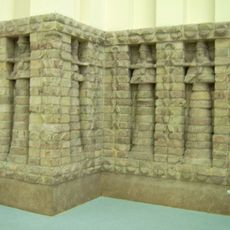
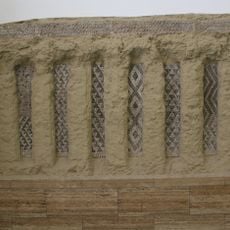
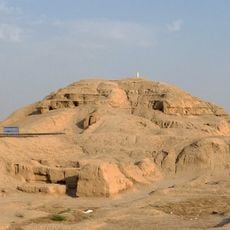
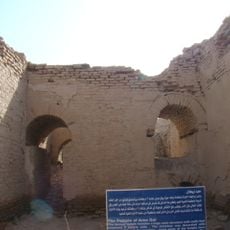
Hajji Muhammad, Archaeological tell in Al Muthanna Governorate, Iraq.
Hajji Muhammad is an archaeological tell in Al Muthanna Governorate containing multiple layers of ancient settlement remains stacked into an elevated mound. The site sits in Lower Mesopotamia near the Euphrates River and preserves evidence of human occupation spanning several centuries.
Excavations between 1937 and 1939 revealed substantial evidence of settlements from the early Ubaid period. The finds traced back to a time roughly 5000 to 4500 years before present day.
The pottery discovered here displays geometric patterns painted in dark brown and black, showing how the Ubaid communities expressed their artistic traditions. These painted vessels reveal what people valued in their daily lives and the crafts they practiced.
The excavation site sits in an open, dry landscape that has been made accessible for research and study. Visitors should expect an open terrain with exposed archaeological layers and should prepare for the local environmental conditions.
Excavations uncovered specialized storage facilities and agricultural tools indicating organized communities. These findings reveal that residents practiced advanced farming methods and managed their resources with care.
The community of curious travelers
AroundUs brings together thousands of curated places, local tips, and hidden gems, enriched daily by 60,000 contributors worldwide.