See the monuments around you in AROpen chests in the app
Around Us is built for your phone — point your camera at the streets and discover the monuments and places around you in augmented reality.Around Us is built for your phone — chests unlock when you walk, explore and capture nearby places.
Ambitious architecture projects that will take shape by 2030
Everywhere, in deserts, along coasts, and in city centers, new building projects change how cities grow and work. Some build tall towers that change the view, others create whole neighborhoods from scratch. Each project shows different ways of thinking about design, technology, and how people live together. In Saudi Arabia, The Line offers a city without cars that runs through the desert, Trojena gives mountain skiing, and Sindalah builds a new island in the Red Sea. In Dubai, buildings like One Za’abeel, where two towers connect with a hanging bridge, or Dubai Creek Tower that switches the look along the water. In Paris, the Tour Triangle, a glass pyramid in the south, shows how the city considers height and space.
These projects are of different sizes and purposes. There are large factories like Oxagon that work on the water, and places to live or work in Jeddah, Zhuhai, and elsewhere. Some are already being built, with the bases and structure going up, others are waiting for permission or funds. Each project aims to meet local needs, whether for more homes, attracting visitors, or trying new ways to build that care for the environment. Together, they show how architects and city planners think about the links between buildings, roads, and daily life around the world.
Ambitious architecture projects that will take shape by 2030
Everywhere, in deserts, along coasts, and in city centers, new building projects change how cities grow and work. Some build tall towers that change the view, others create whole neighborhoods from scratch. Each project shows different ways of thinking about design, technology, and how people live together. In Saudi Arabia, The Line offers a city without cars that runs through the desert, Trojena gives mountain skiing, and Sindalah builds a new island in the Red Sea. In Dubai, buildings like One Za’abeel, where two towers connect with a hanging bridge, or Dubai Creek Tower that switches the look along the water. In Paris, the Tour Triangle, a glass pyramid in the south, shows how the city considers height and space.
These projects are of different sizes and purposes. There are large factories like Oxagon that work on the water, and places to live or work in Jeddah, Zhuhai, and elsewhere. Some are already being built, with the bases and structure going up, others are waiting for permission or funds. Each project aims to meet local needs, whether for more homes, attracting visitors, or trying new ways to build that care for the environment. Together, they show how architects and city planners think about the links between buildings, roads, and daily life around the world.
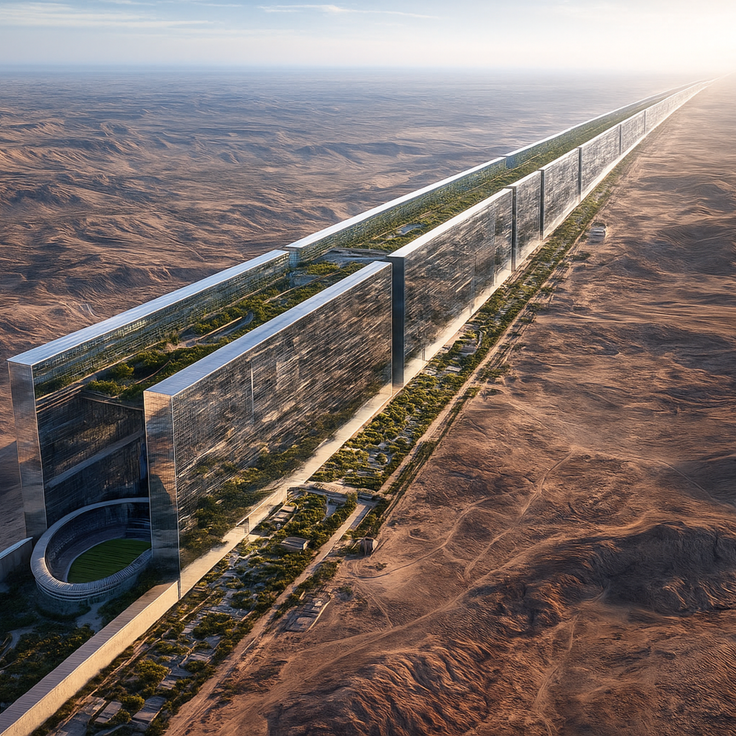
This planned city in the desert follows a straight line across more than a hundred miles and does away entirely with cars and conventional roads. The Line is designed to house millions of people in vertical structures powered by renewable energy. The concept relies on stacked levels that bring together living, working and leisure in close quarters, so that all essential places lie within walking distance. Green spaces and public areas run through the entire development, while the narrow footprint aims to limit intrusion into the landscape.
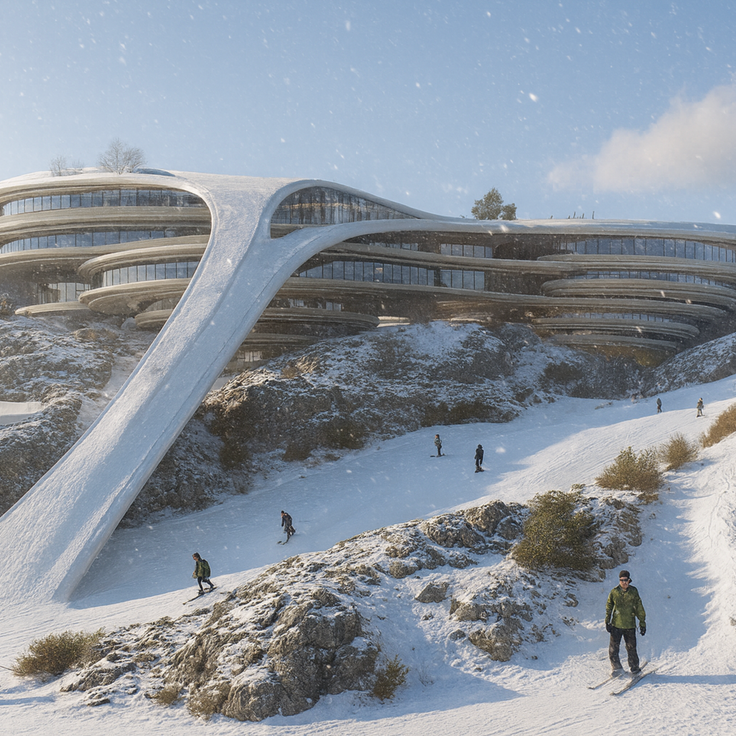
This mountain resort is taking shape in the Sarawat Mountains of northwestern Saudi Arabia as part of the larger Neom project, designed to welcome visitors throughout the year. Trojena Ski Village plans ski runs with artificial snowmaking, along with hiking trails, mountain biking routes, and facilities for water sports. The project includes hotels, residential areas, and event spaces at different elevations. Buildings fit into the rocky landscape, with terraces and viewing platforms. Gondolas and lifts will carry visitors between zones. In winter, skiing will be possible here, while in summer hikers and cyclists can explore the mountain terrain. The resort aims to host international sports competitions.
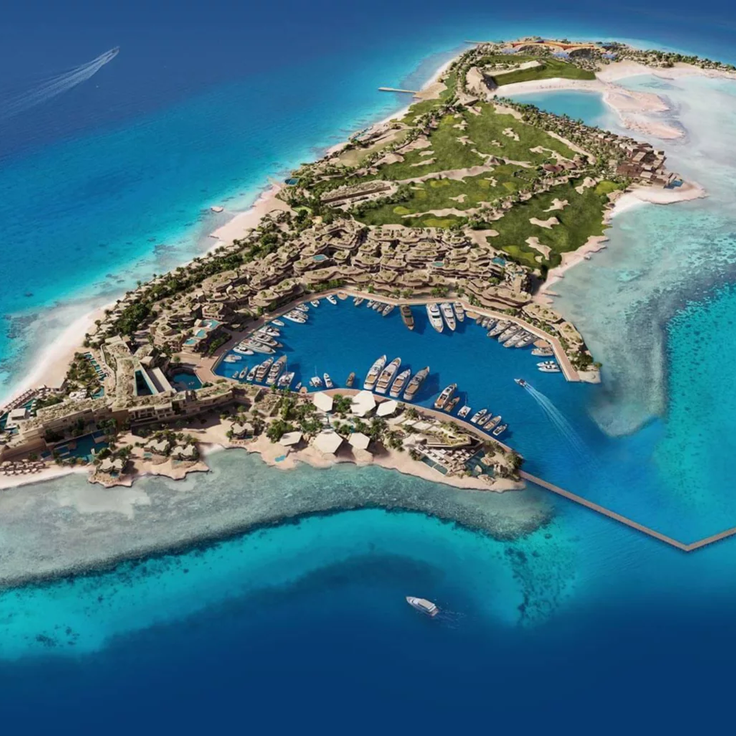
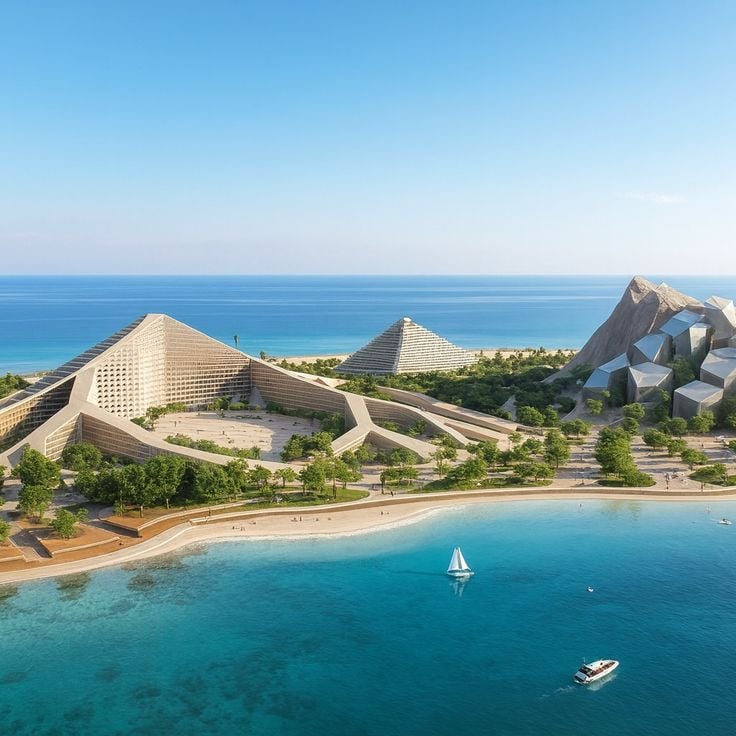
This artificial island in the Red Sea serves as a stopping point for yachts and visitors traveling along the Saudi Arabian coast. Sindalah Island offers a marina with berths for more than 80 vessels, several hotels and restaurants, and beaches for swimming and relaxing. The island was conceived to attract international guests and encourage tourism in the region. Architecturally, the project draws on Mediterranean and Middle Eastern design principles, with light-colored facades, open terraces, and shaded courtyards. The streets are car-free and lead through small squares where shops, cafes, and galleries are planned. The project is part of a wider urban initiative aimed at creating new destinations along the Red Sea coast.
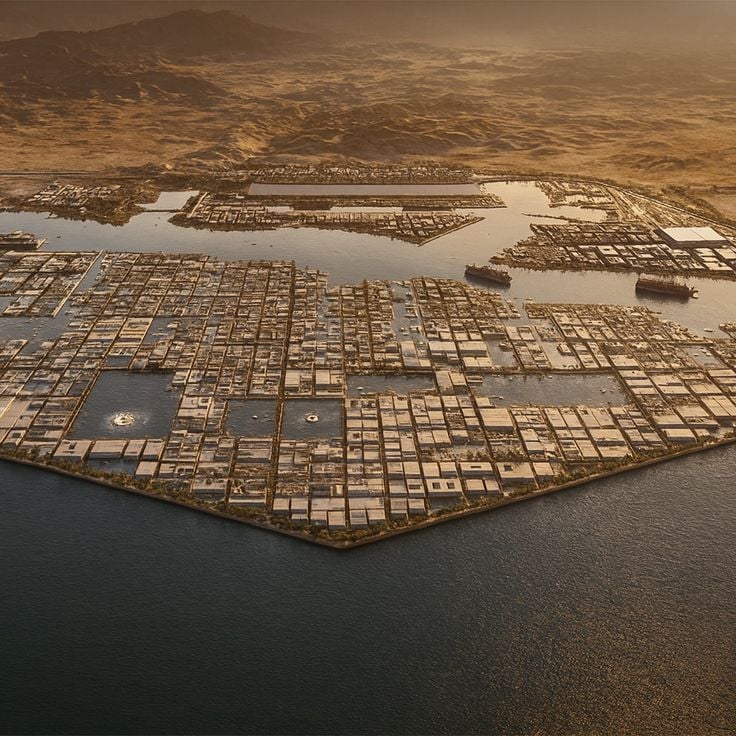
This floating industrial city is part of Neom and focuses on clean manufacturing and new technologies. Oxagon combines port facilities with production plants designed to operate without fossil fuels. The octagonal structure sits partly on water and aims to house companies working in renewable energy, robotics, and advanced manufacturing. The concept envisions goods being made and shipped directly from the waterfront, with residential and commercial areas built into the complex.
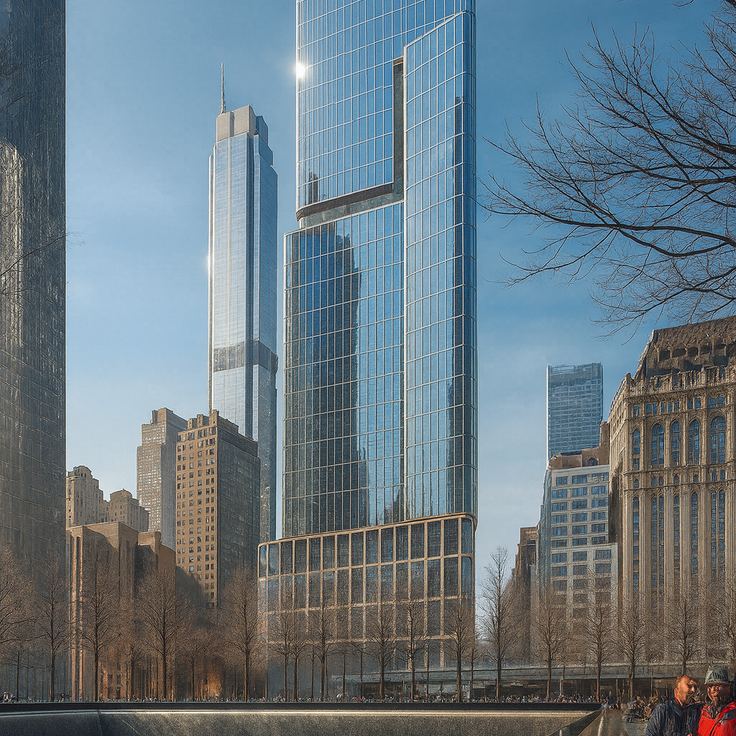
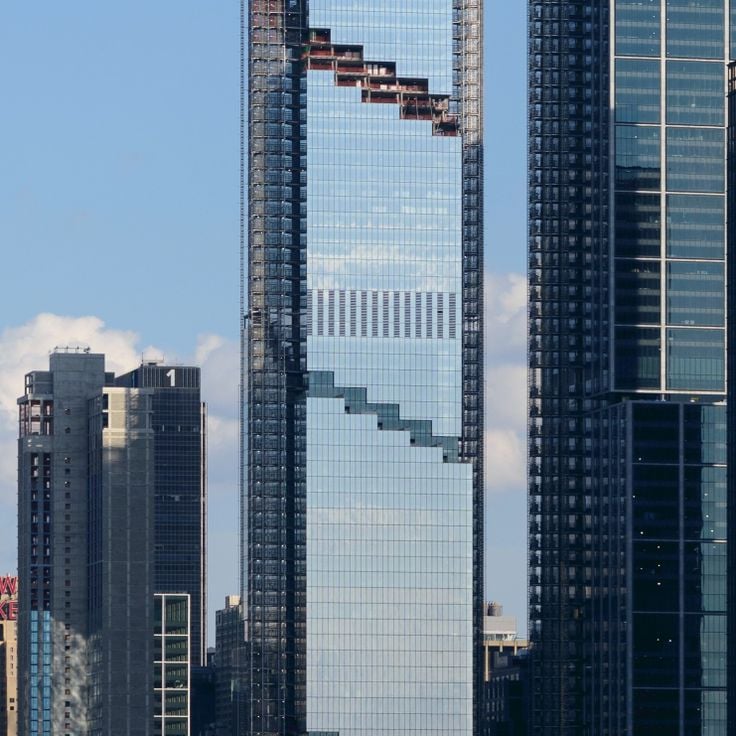
The World Trade Center site in Lower Manhattan continues to evolve with this proposed tower designed for residential and commercial use. Five World Trade Center is planned for the footprint where the Deutsche Bank building once stood. The design calls for a slender tower that combines office space, apartments, and retail. Construction timing depends on financing and approvals. This building is part of the larger effort to complete the redevelopment of the area and bring more activity to the neighborhood. The tower will add density and mixed functions to a district still finding its rhythm after decades of change.
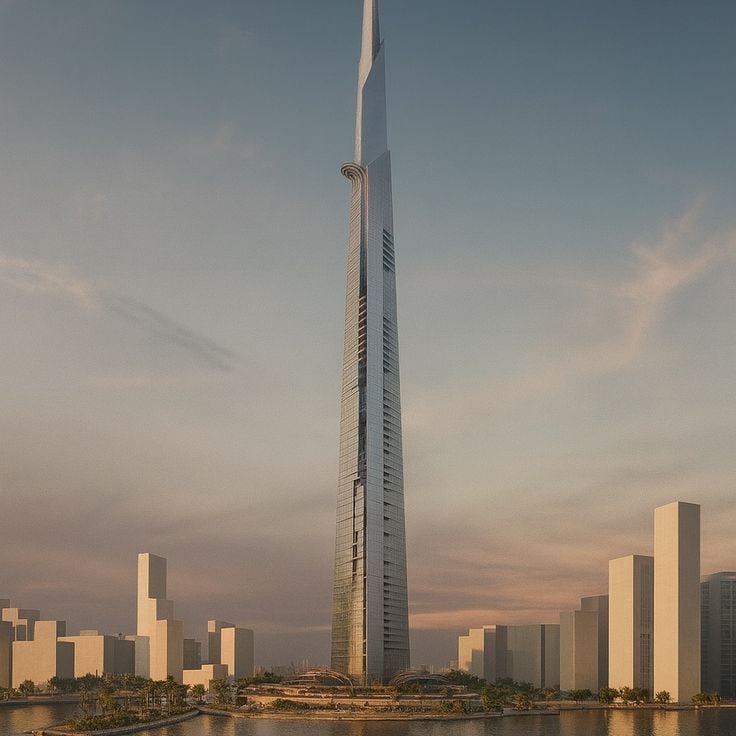
This tower rises in the northern part of Jeddah as part of a larger development along the Red Sea coast. Jeddah Tower will reach over 3,300 feet (1,000 meters) into the sky, making it one of the tallest structures in the world when finished. The slender shape follows organic lines and uses vertical space for offices, residences, and a hotel. The project combines technical innovation with the ambition to set new standards in high-rise construction and reshape the city's skyline.
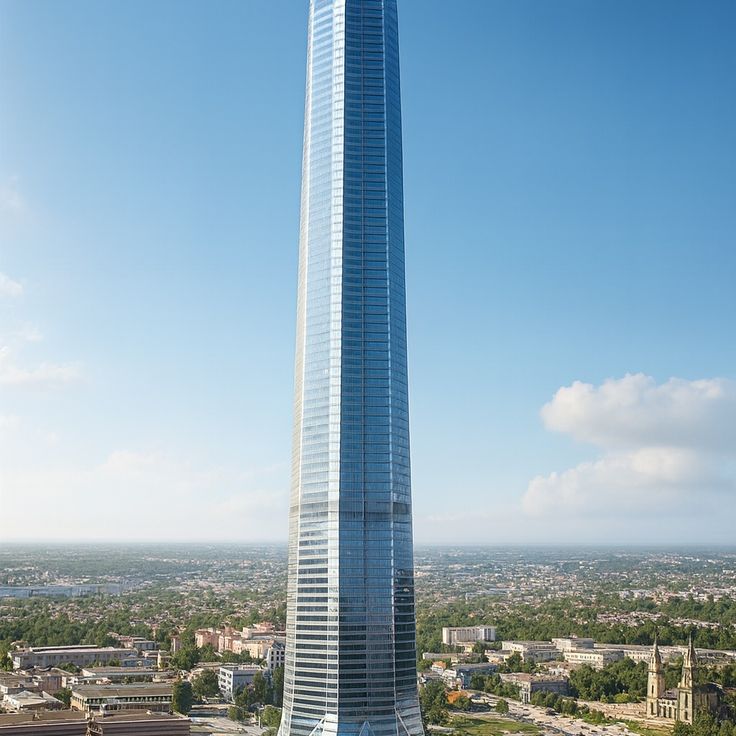
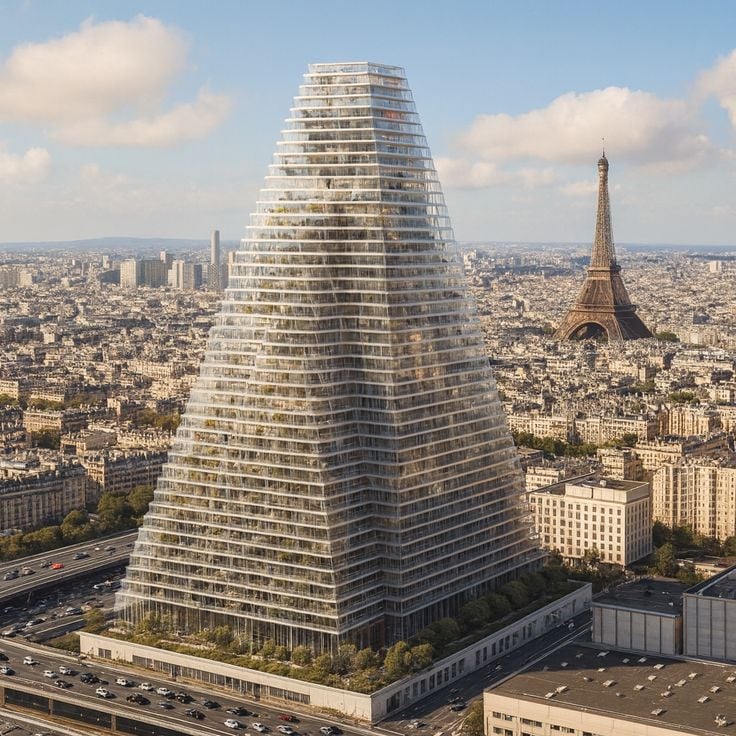
This tower shaped like a pyramid stands at the southern edge of the city, where offices and a hotel occupy multiple floors. The triangular silhouette aims to create a new landmark in a district that has been defined by lower buildings until now. The sloping glass facades reflect the sky and surroundings, while work spaces and hotel areas fill the interior. Tour Triangle represents an attempt to combine high-rise construction with urban renewal in a location that has long remained on the periphery of attention.
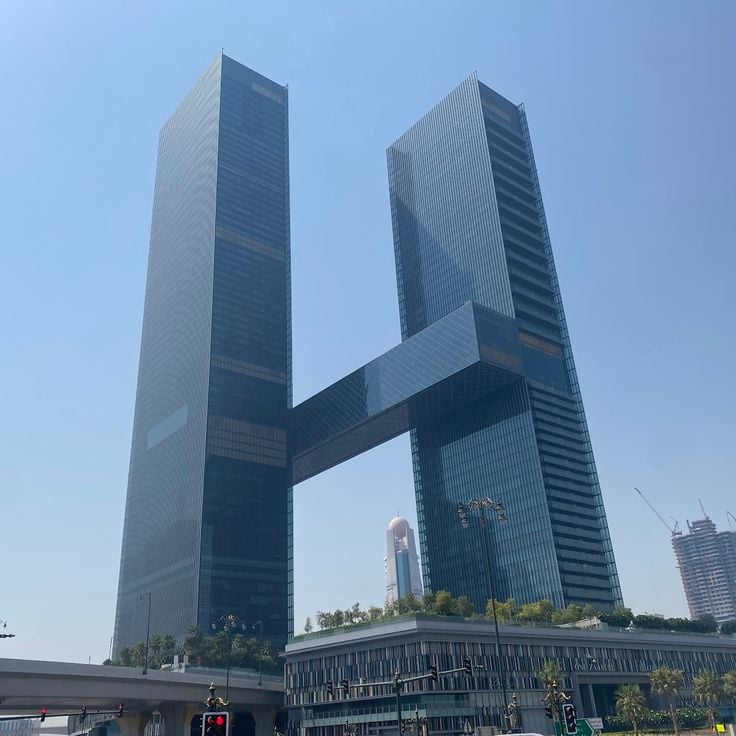
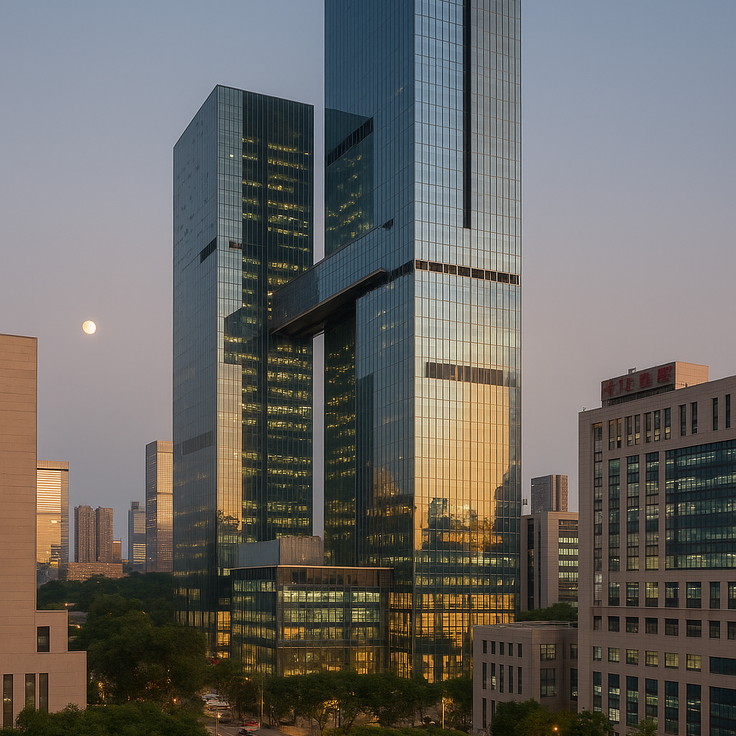
The two towers of One Za'abeel rise from the district in Dubai, connected by a bridge that floats above the streets. Inside this bridge are observation platforms and restaurants where visitors look out over the city. The structure moves between vertical rise and horizontal reach, creating a space that sits high yet extends outward.
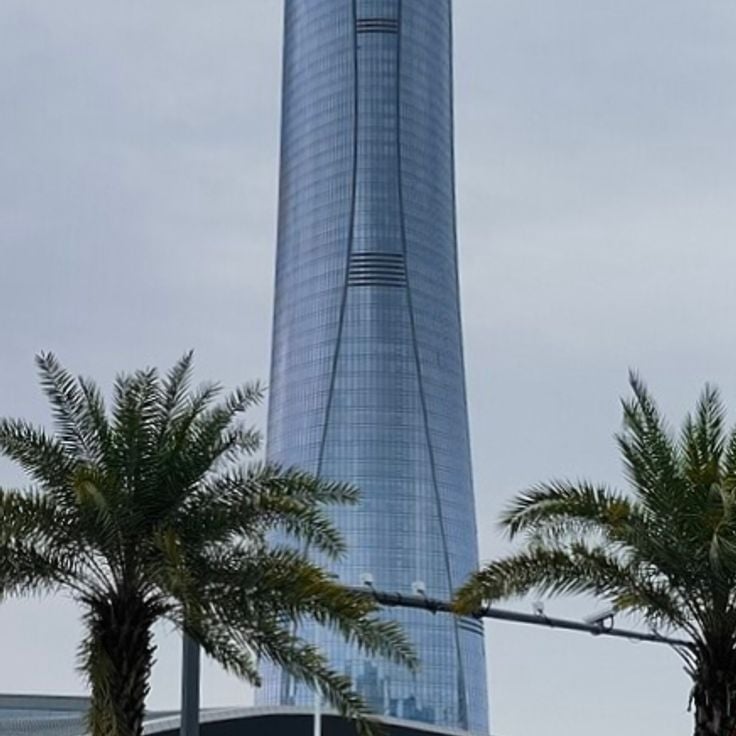
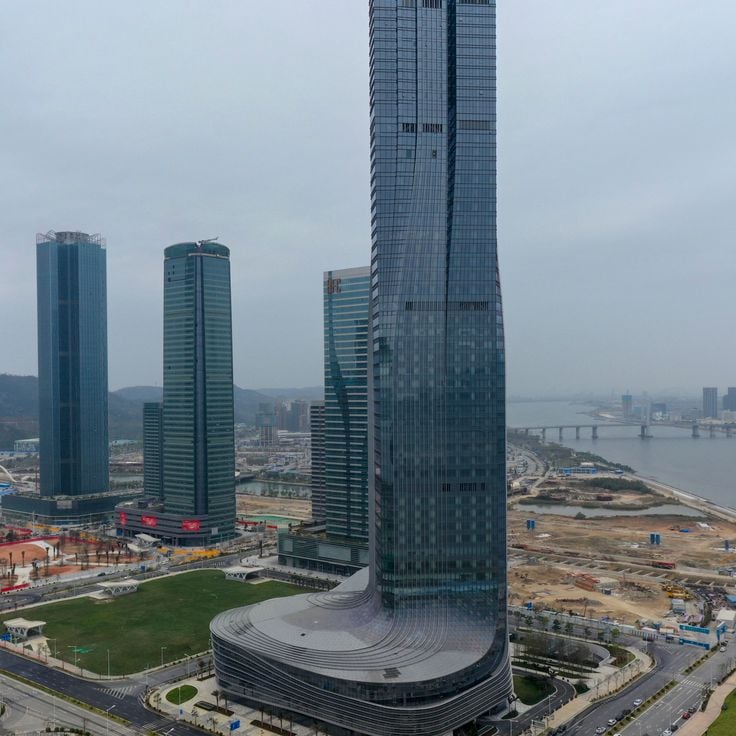
Zhuhai Tower was completed in 2017 near the border with Macau, combining office and residential floors in a single structure. The building stands in a district that has grown steadily over recent years, shaped by connections to neighboring Macau and ongoing investment in infrastructure. Its height is intended to make it visible across the waterfront, marking the development of a city that plays a growing role in the region's economic network.
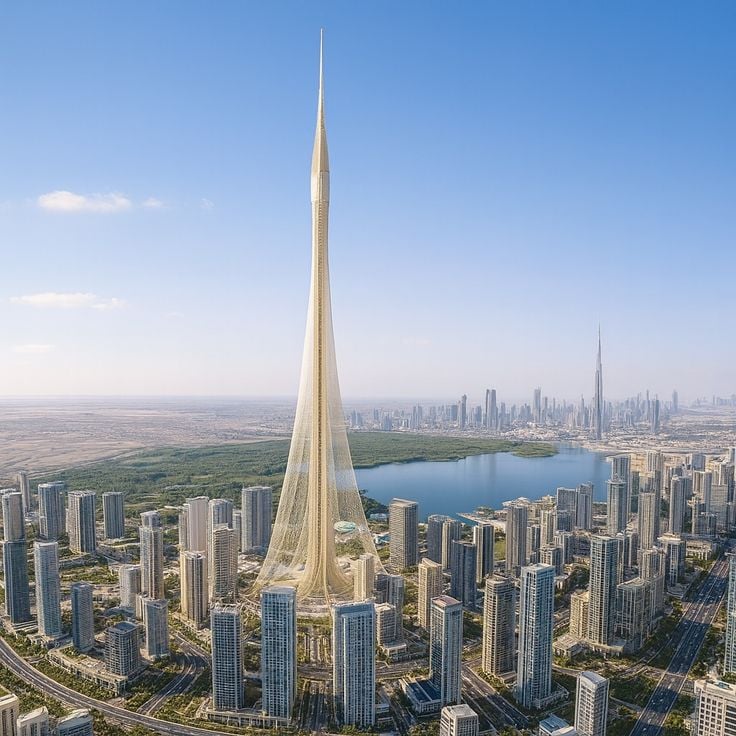
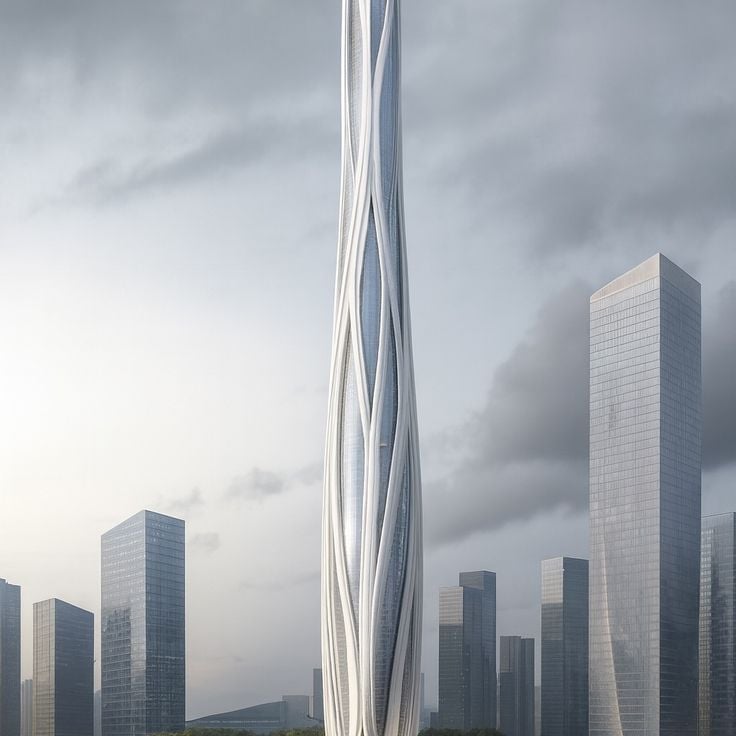
Dubai Creek Tower stands in Dubai Creek Harbour as a planned addition to the city's skyline. This tall structure brings together residential, commercial, and recreational spaces in a vertical layout. The architecture draws from organic shapes and uses advanced construction methods. The design features a slender profile that rises above the surrounding area, offering views across the city. The tower forms part of a larger waterfront development along Dubai Creek, connecting different neighborhoods. Construction is underway, and the project aims to combine practical functions with a distinctive architectural statement. The building represents an effort to expand urban capacity while creating a recognizable point in the landscape.
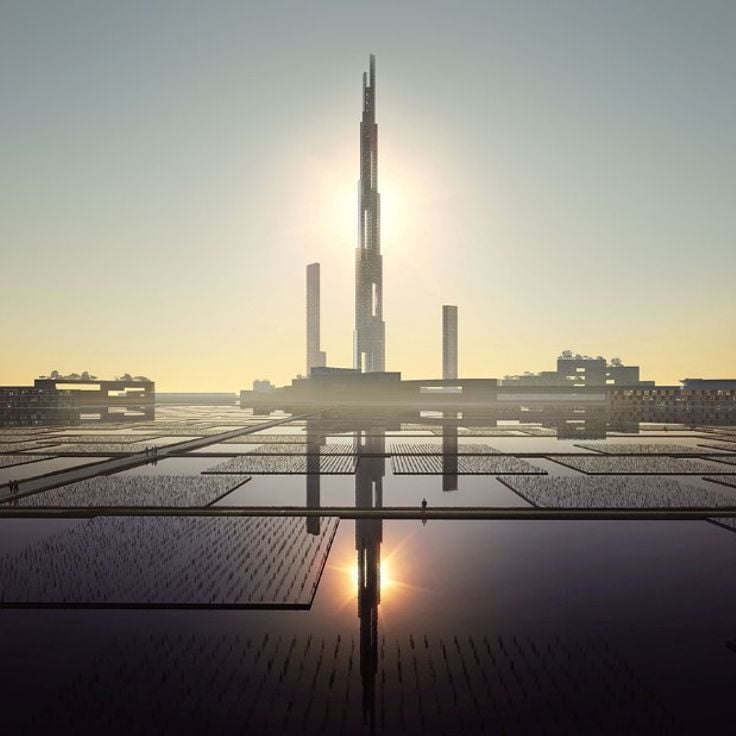
This tower is a proposal for Tokyo that would rise nearly 5,600 feet (1,700 meters) and function as a self-contained vertical city. Sky Mile Tower would combine homes, shops, and offices in a single structure taller than any building ever completed. The plans envision thousands of people living and working inside, with elevators, utilities, and public spaces spread across hundreds of floors. This project ranks among the most ambitious architectural concepts worldwide and tests the limits of engineering. Whether and when this tower will actually be built remains uncertain, but the vision shows how cities might grow upward when ground space becomes scarce.
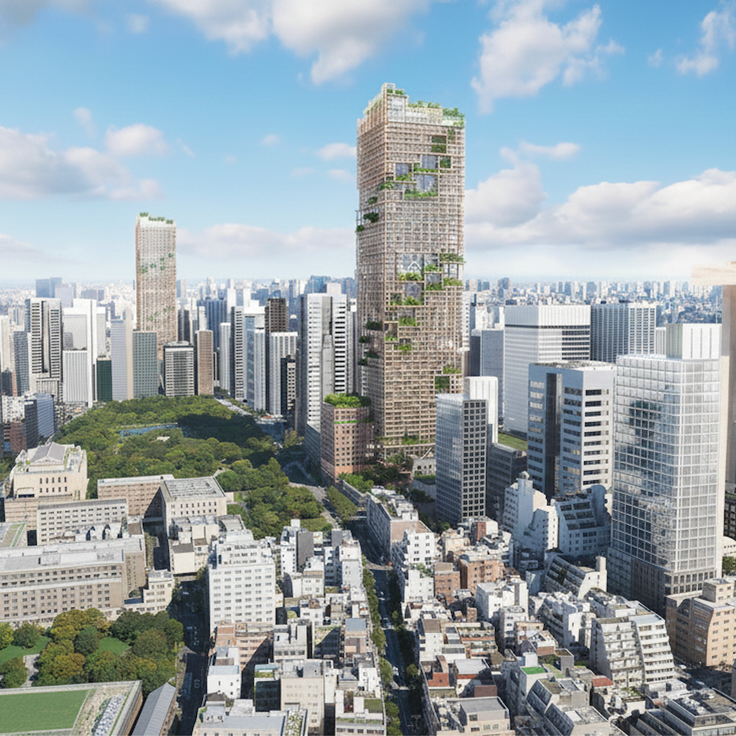
The W350 Project is a planned tower designed to reach 350 meters in height, combining wood with steel as its main materials. This building proposal explores how timber can be used at a large scale in tall construction, aiming to reduce reliance on concrete and metal alone. The design represents a different approach to skyscrapers, bringing natural materials into a city already filled with towers. It reflects ideas about building in ways that work better with the environment while still reaching significant heights.
This technology center near the bay is designed to bring together companies working on research and development. The building provides office space, laboratories, and areas where teams collaborate on new products and solutions. Several structures are connected by walkways and open zones where people move between departments. Shenzhen has grown rapidly over recent decades and remains a hub for industries tied to electronics, software, and innovation. The center is part of a broader effort to attract businesses focused on technology and provide space for their employees. The location near the waterfront offers some relief from the density of surrounding districts. Construction reflects a focus on efficiency and adaptability, with layouts that can shift as companies grow or change direction over time.
The Shimao Shenzhen-Hong Kong International Centre is a complex of towers located near the border crossing between Shenzhen and Hong Kong. The towers will house offices, hotels, and shops, acting as a connection between the business districts of both cities. This project is among the major construction works in Asia that reshape how cities link across borders and compete for business. It demonstrates how architects today think about creating spaces where people from different countries can work and meet.
This financial district rises on an island near Macau, linking Zhuhai to the region's international finance hub. The Hengqin International Financial Center includes several office towers and supporting infrastructure designed to create workspaces for the financial sector. The island location offers views of the sea and surrounding cityscapes. Wide streets and modern buildings shape this new business district, which connects Chinese economic interests with proximity to Macau.
This office tower in New York features terraces that spiral around the building exterior, creating planted outdoor spaces on every floor. The Spiral brings greenery into the vertical architecture of the city, connecting work areas with the natural world at each level. The design allows access to open air throughout the building height, offering a different approach to how offices relate to their surroundings and to nature within a dense urban setting.
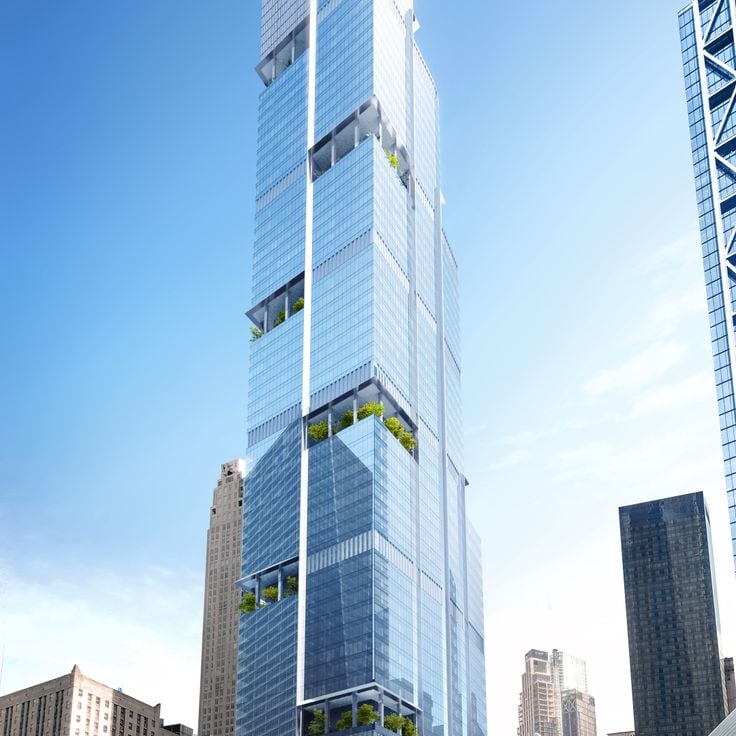
This tower is planned to complete the redevelopment of the World Trade Center site. The design starts with a broad base and tapers as it rises. The tapering form sets the building apart from the rectangular towers nearby and gives the Lower Manhattan skyline a distinct silhouette. The project is still waiting for final financing and a major tenant before construction can begin.
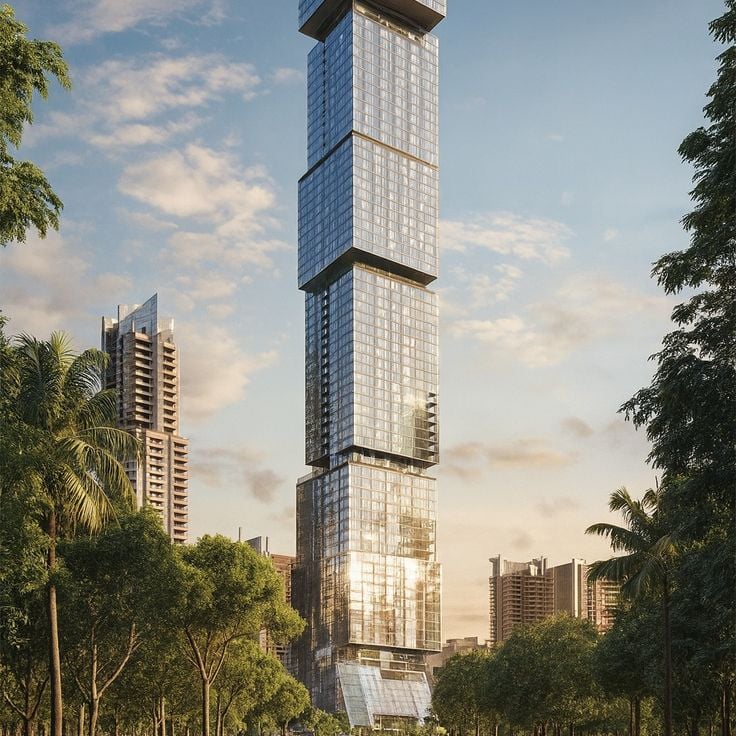
The Waldorf Astoria Miami Tower is a tapered hotel and residential tower near the waterfront, part of this collection of large-scale architectural projects around the world. This building combines luxury lodging with private residences and rises over many floors in Miami's growing skyline. The tower's facade shows clean lines and large glass panels, while the interior spaces offer restaurants, wellness areas, and lounges for residents and guests. From the upper floors, you can see the bay and the city.
This waterfront complex stands where the headquarters of a newspaper once operated. Plans call for residential towers and public areas that reshape the shoreline. The location offers direct access to the bay and connects daily life for residents with the promenade and surrounding neighborhoods.
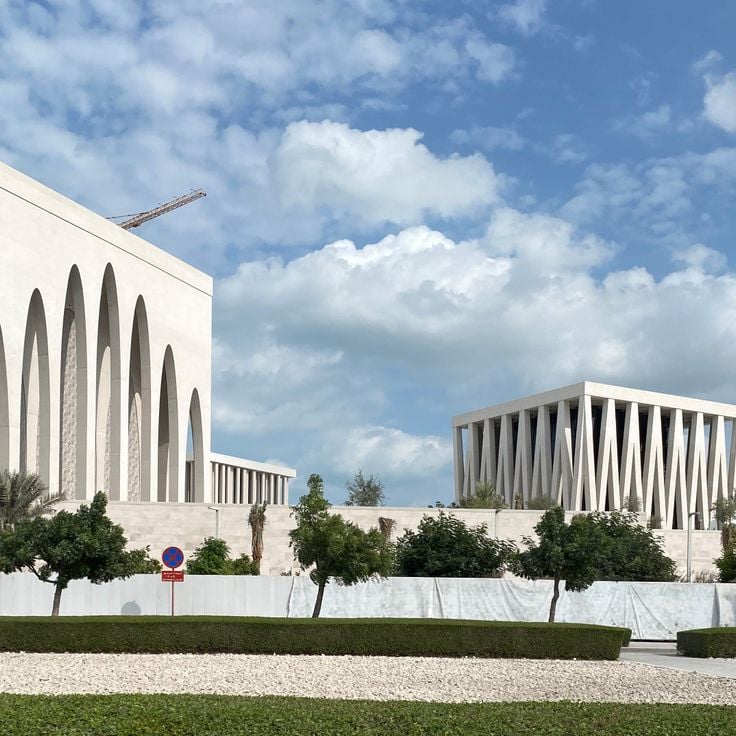
The Abrahamic Family House is a complex in Abu Dhabi that demonstrates how architecture serves as part of ambitious building projects reshaping how cities grow. This complex places a mosque, a church, and a synagogue next to each other, inviting visitors to consider the shared values of the Abrahamic faiths. People come here to find spaces for quiet reflection, conversation, and moments of meeting across traditions. The design shows how architecture can create bridges between communities and encourage dialogue in a place built for understanding.
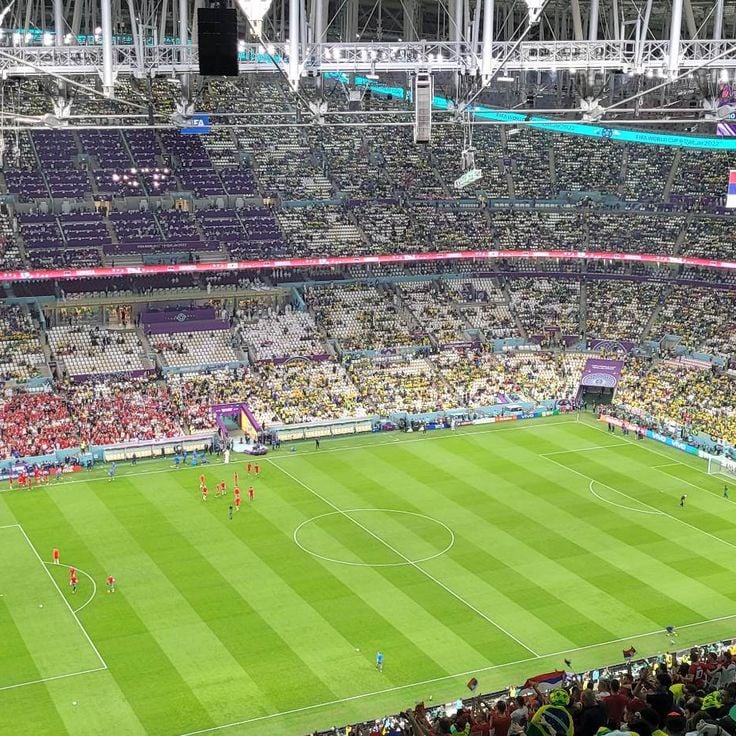
This district rises around the main stadium from the World Cup and transforms into a neighborhood with homes, shops, and shared spaces. Wide paths connect the areas, and the former sports arena now serves other purposes. The buildings take on shapes and colors drawn from the region, while the streets are designed for people walking and cycling.
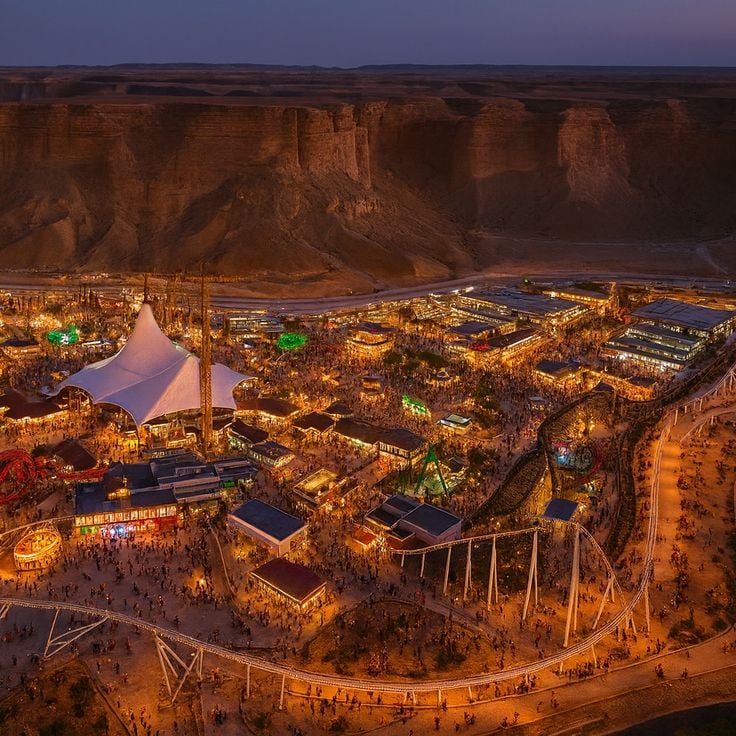
This entertainment and sports city rises about 28 miles (45 kilometers) southwest of Riyadh and is planned as the center of leisure in Saudi Arabia. The site includes theme parks, sports stadiums, racing tracks, and residential neighborhoods spread across rolling terrain. The design combines modern architecture with facilities for motorsports, extreme sports, and water-based activities. Multiple arenas and indoor venues complement the outdoor attractions. This city aims to welcome millions of visitors each year and redefine how large entertainment complexes function.
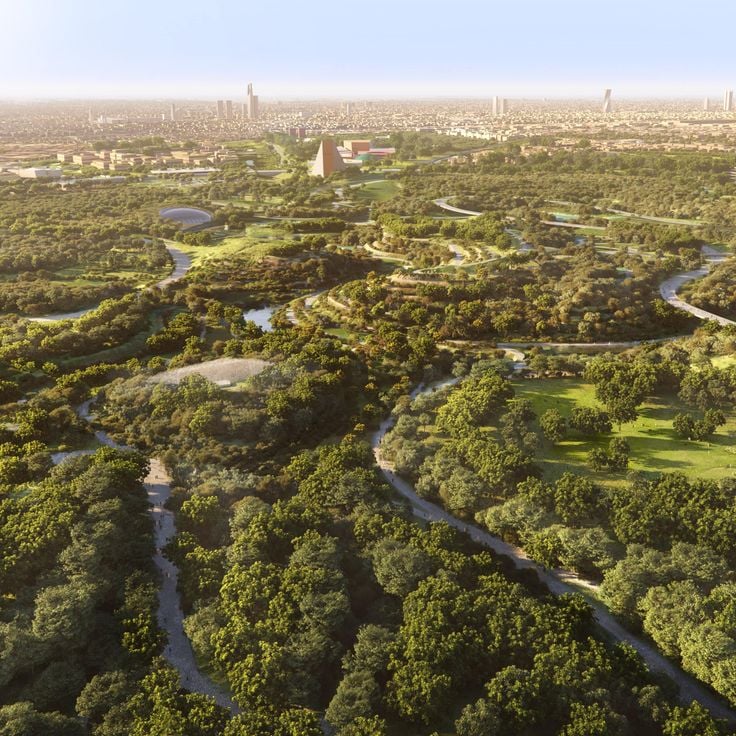
This park in northern Riyadh is being developed as a sprawling green space with gardens, cultural sites, and recreation areas. The grounds extend over several miles and are planned to become one of the largest urban parks in the world after completion. The design includes walking paths, playgrounds, sports facilities, museums, and event spaces. Water channels and artificial lakes run through the site to provide cooling in the desert city. King Salman Park is part of a strategy to make Riyadh greener and more livable, creating new leisure zones for the growing population.
This development plan covers an island complex along the Caspian Sea with residential towers, hotels, and leisure facilities. The island sits off the coast and belongs to a series of projects that expand the cityscape of Baku. The buildings stand close to the water, giving residents and visitors direct access to the shoreline. The layout combines several functions: living, lodging, and recreation in one place. Zira Island Master Plan is part of the large-scale architectural projects under construction or in planning stages around the world. Such ventures reshape coastal sections and create new districts on artificially formed land.
This island in the city's lagoon system combines landscaped gardens with pavilions and art installations to form a quiet retreat. Al Noor Island was designed as a cultural space where visitors can walk among plantings and view contemporary works. The architecture follows organic forms and blends into the tropical vegetation. Narrow paths lead through different garden areas, while open pavilions provide shade and frame views of the water.
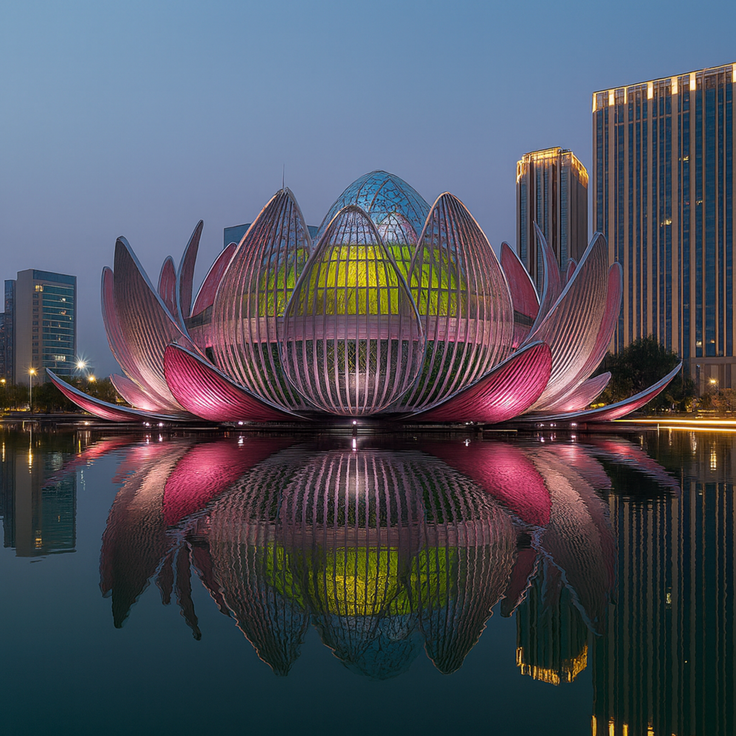
This civic building in Wujin takes the form of an opening lotus flower, with large curved petals made of metal panels layered around a central core. The structure sits beside an artificial lake, and its rounded surfaces reflect in the water, reinforcing the plant motif. Inside are offices, meeting rooms, and public spaces used by the local government. At night, colored lights illuminate the exterior, casting shifting hues across the metal surfaces. The building was completed in the early 2010s as part of a wave of expressive architectural projects across China. The surrounding area is quiet, with wide walkways and small parks leading down to the lake. Visitors often stop to photograph the building from the water's edge, where the reflection doubles the effect of the petal shapes.
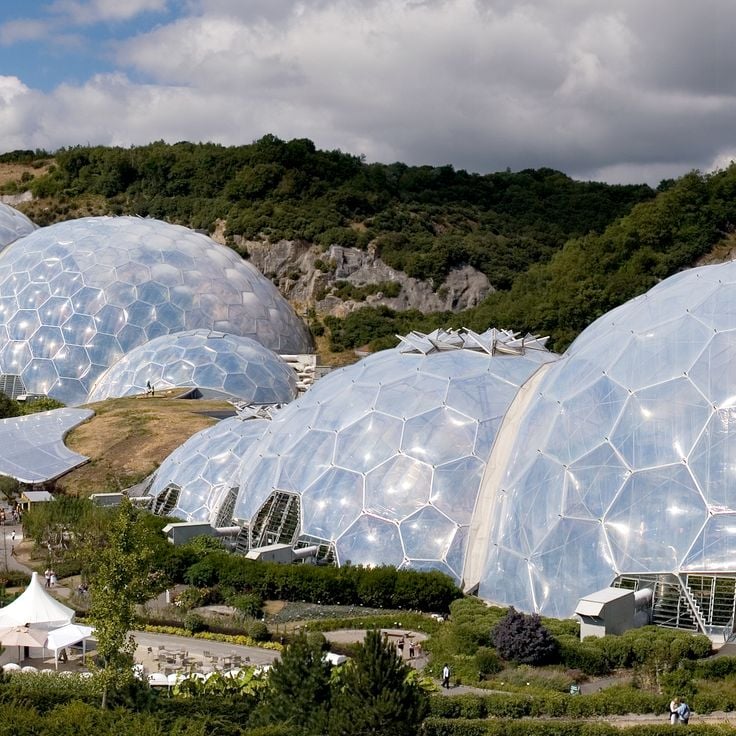
This planned environmental and education center on the coast of Morecambe follows the vision of the original Eden Project and brings its concept to northern England. The project will include gardens, exhibition areas, and learning spaces focused on nature, climate change, and sustainable development. Its location on the Irish Sea shapes the character of the center, which aims to incorporate local ecosystems and maritime themes into its programs. Eden Project North is among the large-scale architectural projects around the world that seek to redefine environmental education and community engagement for future generations.
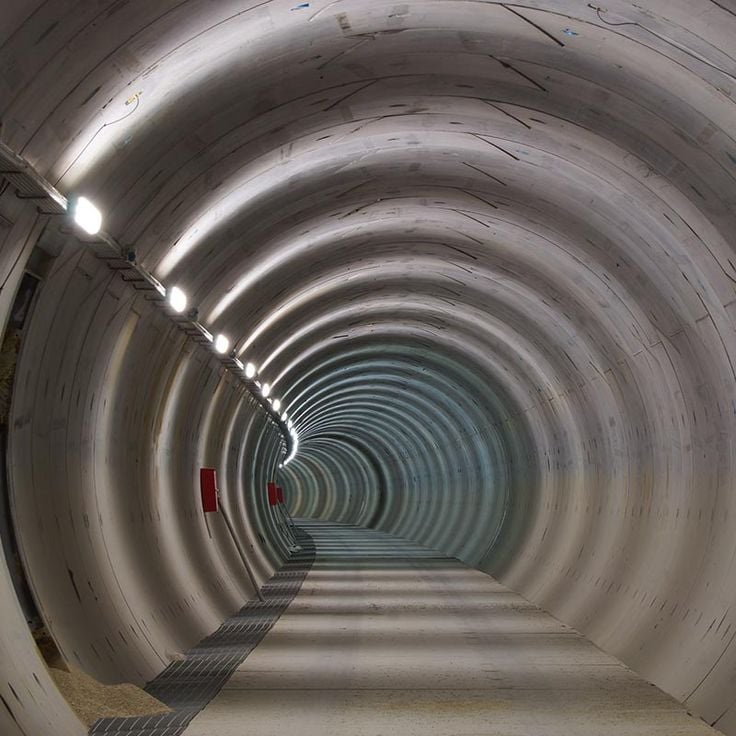
The Brenner Base Tunnel is a railway connection through the Alps currently under construction between Innsbruck and Fortezza. This tunnel will be nearly 40 miles (64 kilometers) long, making it one of the longest underground rail routes in the world. The construction site spans both sides of the border and includes several access tunnels as well as two parallel tubes for passenger and freight traffic. The tunnel runs deep beneath the Brenner Pass and connects two major transport routes in Europe.
This stadium is being built in Benslimane and will open for football matches in 2028. Moroccan authorities planned the construction as part of their preparation for international sporting events. The facility will be erected on open land outside the capital and will provide modern stands with space for tens of thousands of spectators. Architects are working to incorporate traditional Moroccan elements into the facade, while the construction will meet contemporary standards. Construction vehicles and scaffolding currently dominate the site where fans will one day cheer for their teams.
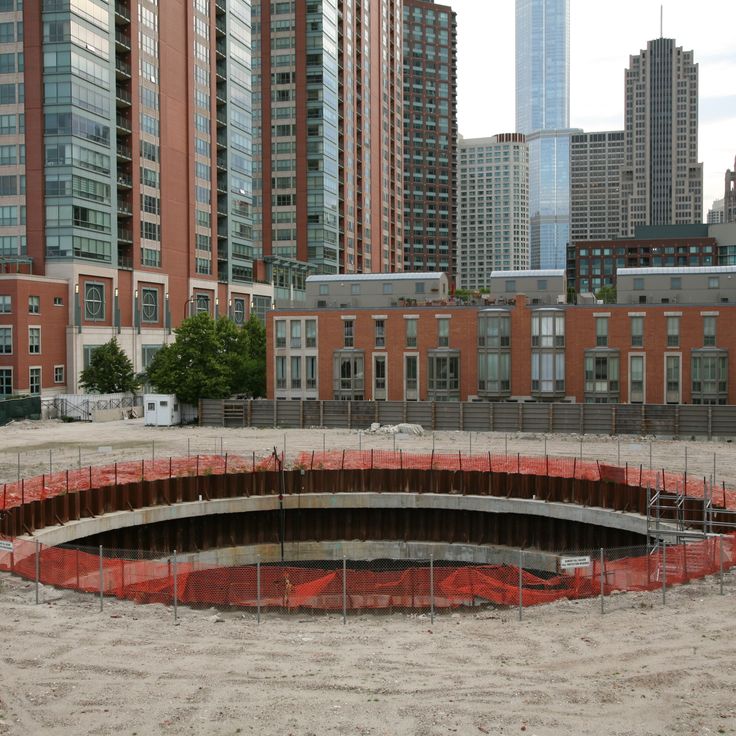
The Chicago Spire was designed as a twisting tower meant to rise in Streeterville, along the shore of Lake Michigan. Construction started with foundation work in the late 2000s, but progress stopped during the financial crisis and the project never moved beyond the early stages. The site remains empty, a reminder of a plan that did not come to life. The spiraling design aimed to create a new point on the Chicago skyline, but the structure was never built.
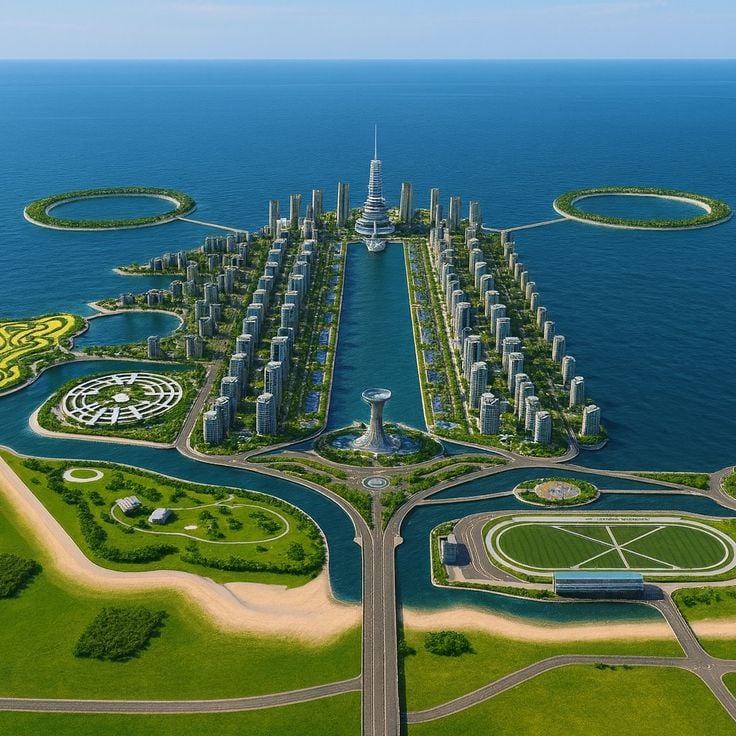
This artificial island group in the Caspian Sea represents an urban development project intended to create residential areas, commercial spaces, and leisure facilities across multiple man-made islands. The plan includes the construction of towers, hotels, schools, and public parks on land reclaimed from the sea. The Khazar Islands embody a vision for a modern city built on water, with wide boulevards, canals, and bridges connecting the individual islands. The project aims to establish a new urban landscape that offers both housing and seaside recreation for residents and visitors.
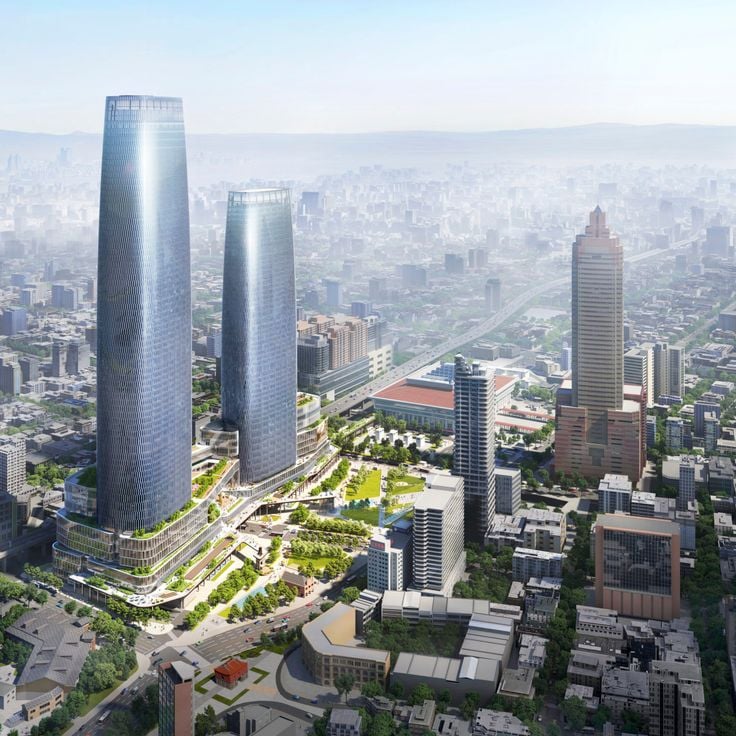
These twin office towers in Taipei are planned to rise above a large plaza, adding to the city's eastern financial district. The project follows the pattern of vertical development in Asian capitals, where new high-rises densify existing business centers. The towers are part of Taipei's efforts to create more space for corporations and services as the city continues to grow. Like other major projects set for completion by 2030, this one ties economic planning to questions of urban infrastructure and how new construction fits into an already dense urban fabric.
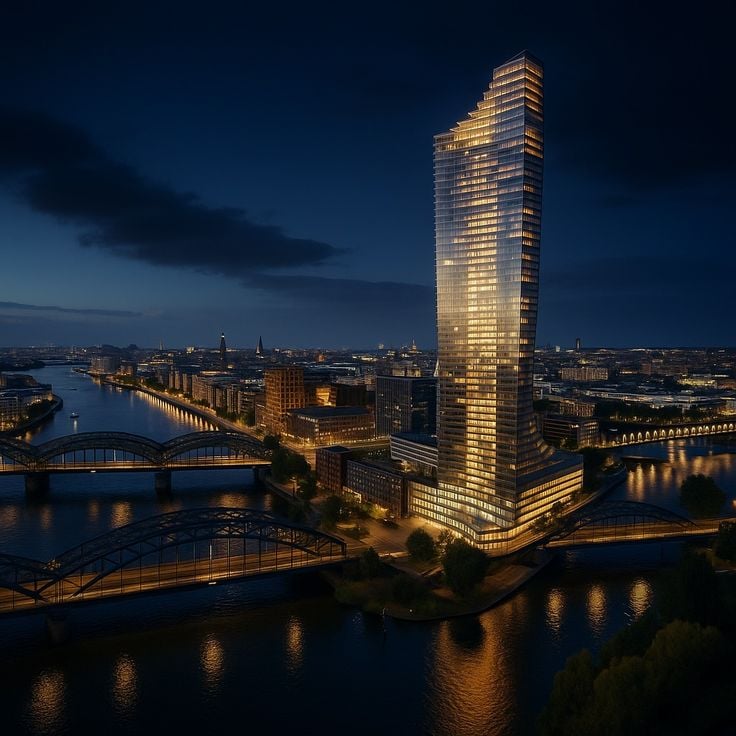
This skyscraper in HafenCity will change the skyline along the Elbe River. The Elbtower will be a mixed-use building that brings together offices, apartments, and hotels. The project shows how Hamburg thinks about height and new architecture in this former port area. The planned structure will be among the tallest buildings in northern Germany, shaping the growing quarter that develops between the old city and the waterfront.
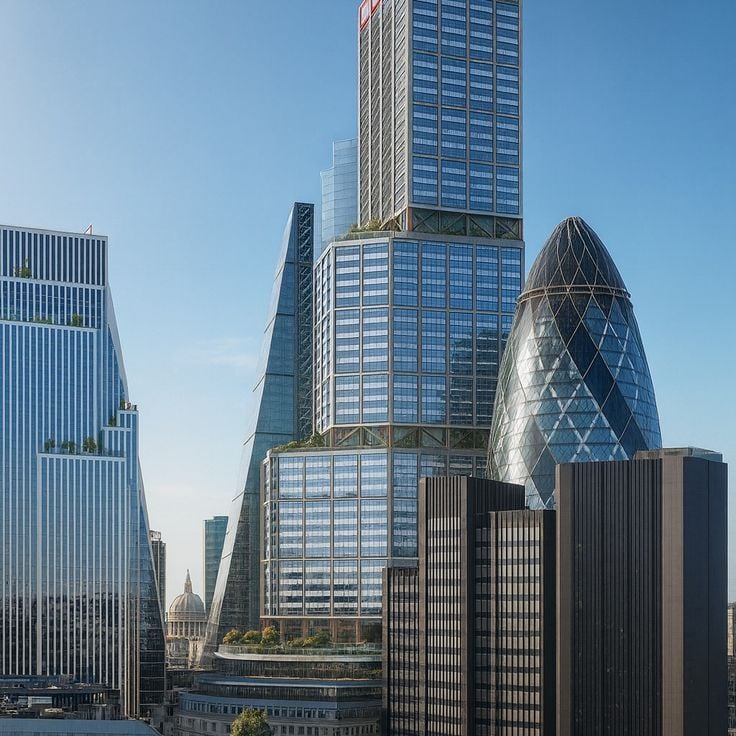
This skyscraper is planned for the City of London financial district, where it would reshape the skyline among other tall buildings. The design shows a tapering tower covered in glass, reflecting light and connecting to the towers around it. At ground level, public spaces are intended to create pathways and gathering areas for people walking through. Upper floors hold office space with wide views across the city. The project responds to the tight layout of the district, aiming to link the tower with existing train stations and streets. Construction depends on approvals, but the plan shows how architects think about fitting new towers into limited space while offering work areas and open passages for daily movement.
This skyscraper proposes to rise in the financial district of Lower Parel, mimicking the shape of a traditional Namaste gesture. The two towers lean toward each other and meet at the top. The building would house offices, hotels, and apartments, blending Indian culture with modern high-rise construction. The project shows how Mumbai responds to limited space with vertical growth while trying to incorporate local symbols into the design of tall buildings.
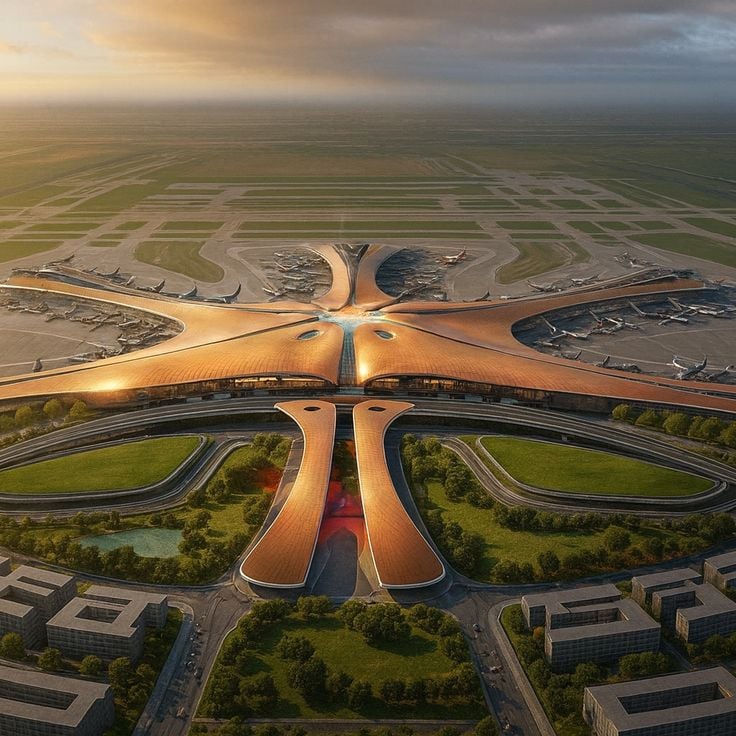
This airport sits east of Mumbai and is planned to connect one of the country's busiest routes to the capital when completed. The terminal spans multiple levels and is designed to handle a high volume of passengers, standing on land that was previously used for farming. The facility includes runways, maintenance hangars, and connections to the city through roads and rail. The main building's form takes cues from folded surfaces, with openings for daylight and air circulation. The site was chosen to relieve pressure from the existing airport and manage more traffic as the region grows. Construction involves moving land, laying foundations, and building structures that will open in stages.
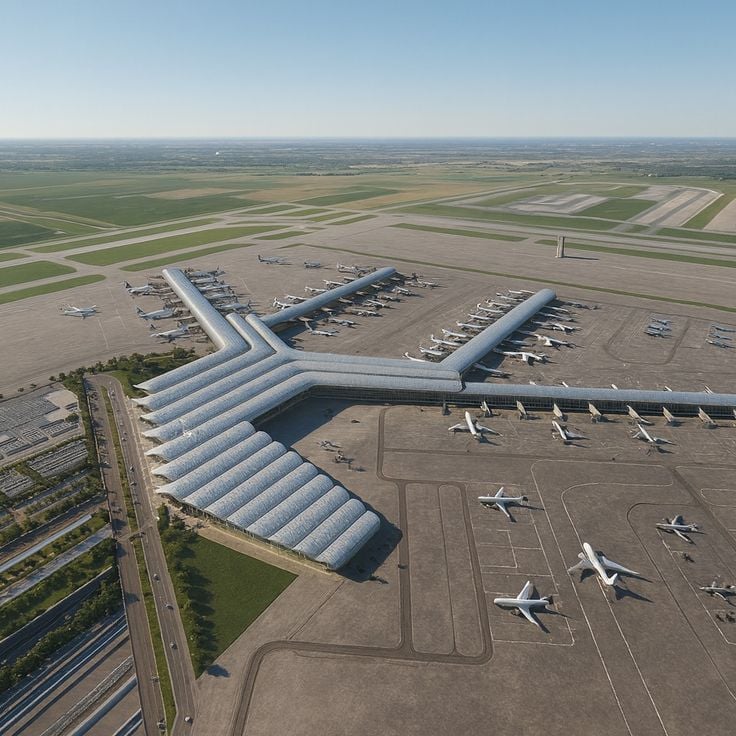
This airport takes shape between Warsaw and Łódź, bringing together connections and easing traffic across the region. The design includes terminals that handle large numbers of passengers, along with cargo zones and links to trains and roads. The site sits on flat land where fields once spread, showing an approach where transport, logistics, and commerce come together in one place. When construction finishes, it will change the way people from Poland and beyond travel and move goods.
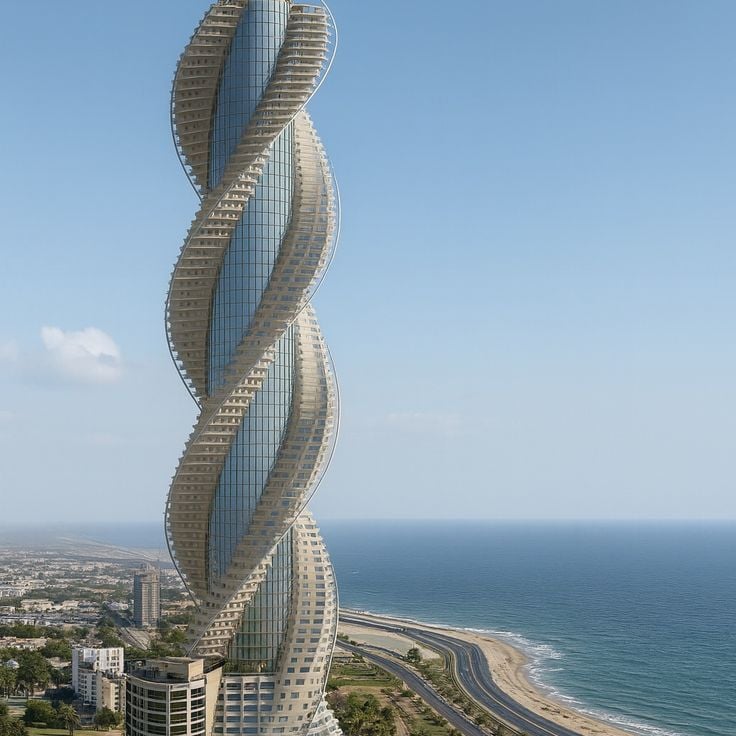
This skyscraper in coastal Jeddah, Saudi Arabia, is part of the building projects that create a new skyline along the Red Sea. The tower takes shape in a city that opens itself up and now brings modern high-rises alongside historic quarters. Diamond Tower follows the idea of combining homes, offices, and shops in one building. The site shows how Jeddah changes to attract more visitors and new residents. The facade is meant to be glass that breaks light in different ways. Around it, other towers are going up, together forming a new section of the city.
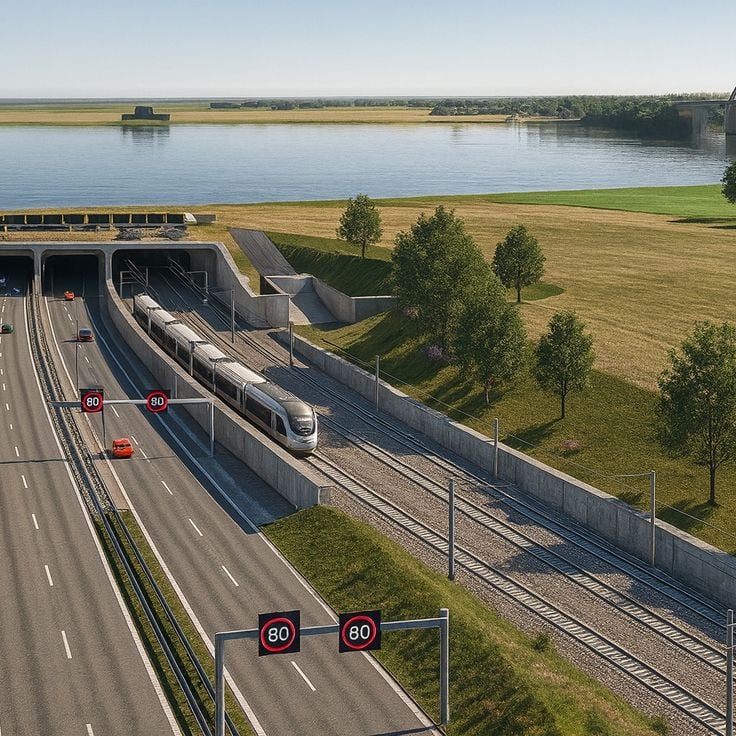
This tunnel connects Denmark with Germany beneath the Baltic Sea and shortens the journey between Copenhagen and Hamburg. It carries cars and trains through a tube that rests on the seabed. Work has begun, and sections of the link take shape on both shores. The tunnel replaces the existing ferry route and brings closer together regions that were separated by water until now.
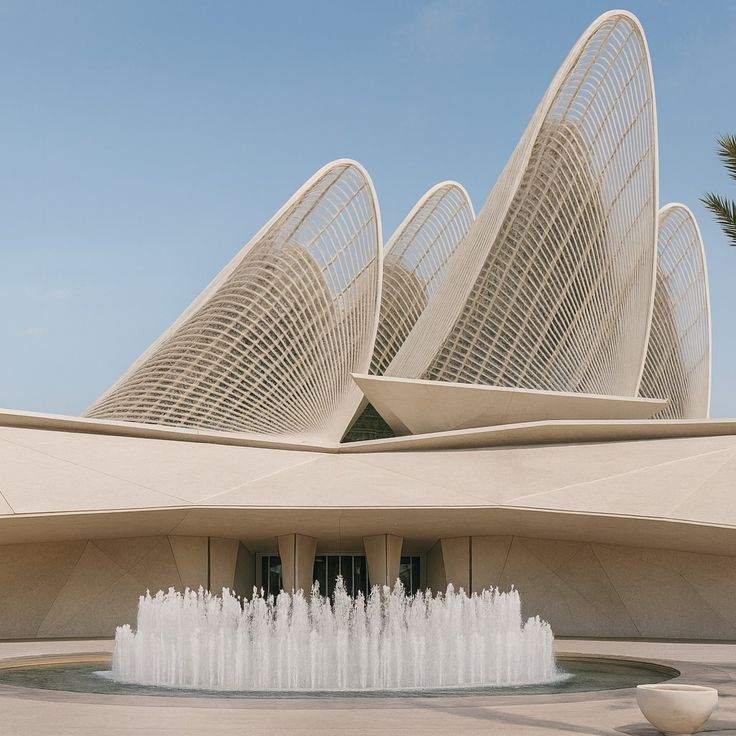
The Zayed National Museum, designed by Foster + Partners on Saadiyat Island, honors the history and culture of the United Arab Emirates through the life of Sheikh Zayed bin Sultan Al Nahyan. Its five towers, inspired by the shape of a falcon's wing, rise above a low, spreading base. The design combines climate-related considerations with symbolic forms, creating spaces for exhibitions, galleries, and research. As part of a larger cultural district on the island, this museum contributes to how Abu Dhabi presents its heritage and welcomes international visitors. The project shows how contemporary architecture can reference traditions while exploring new approaches to museum building.
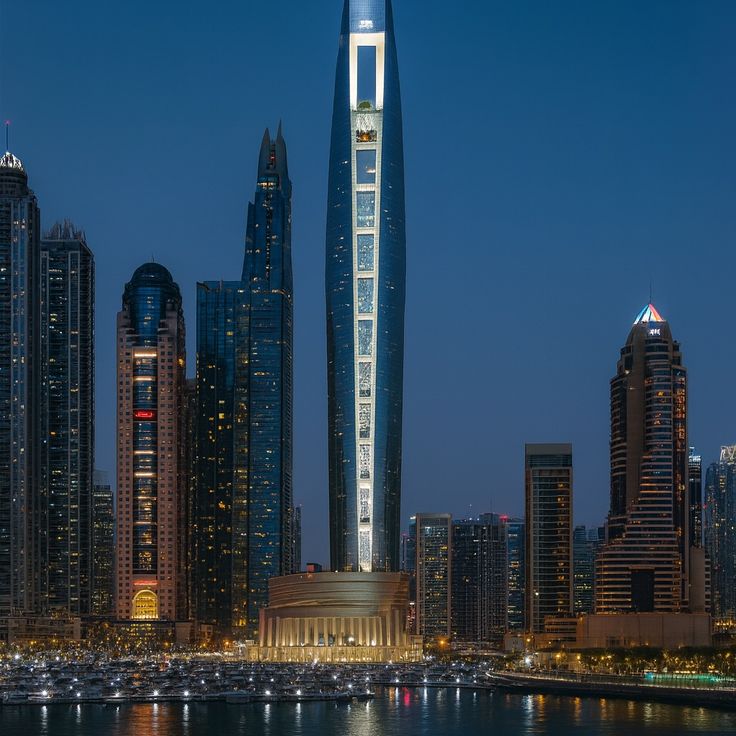
Ciel Tower is a skyscraper in Dubai and represents the ambitious building projects taking shape by 2030. The structure demonstrates how modern architecture reshapes cities and adds to their skylines. Dubai uses towers like this to define its character and attract people from around the world. Ciel Tower is part of a larger wave of projects that show how architects and city planners are rethinking urban spaces across the globe.
Akhmat Tower is a modern skyscraper in Grozny that represents the ambitious building projects transforming cities by 2030. This structure reshapes the city's skyline and demonstrates how contemporary construction changes the way urban centers look and develop. With its modern design, the tower contributes to new approaches in city planning and architectural innovation.
This planned city in the desert follows a straight line across more than a hundred miles and does away entirely with cars and conventional roads. The Line is designed to house millions of people in vertical structures powered by renewable energy. The concept relies on stacked levels that bring together living, working and leisure in close quarters, so that all essential places lie within walking distance. Green spaces and public areas run through the entire development, while the narrow footprint aims to limit intrusion into the landscape.
This mountain resort is taking shape in the Sarawat Mountains of northwestern Saudi Arabia as part of the larger Neom project, designed to welcome visitors throughout the year. Trojena Ski Village plans ski runs with artificial snowmaking, along with hiking trails, mountain biking routes, and facilities for water sports. The project includes hotels, residential areas, and event spaces at different elevations. Buildings fit into the rocky landscape, with terraces and viewing platforms. Gondolas and lifts will carry visitors between zones. In winter, skiing will be possible here, while in summer hikers and cyclists can explore the mountain terrain. The resort aims to host international sports competitions.
This artificial island in the Red Sea serves as a stopping point for yachts and visitors traveling along the Saudi Arabian coast. Sindalah Island offers a marina with berths for more than 80 vessels, several hotels and restaurants, and beaches for swimming and relaxing. The island was conceived to attract international guests and encourage tourism in the region. Architecturally, the project draws on Mediterranean and Middle Eastern design principles, with light-colored facades, open terraces, and shaded courtyards. The streets are car-free and lead through small squares where shops, cafes, and galleries are planned. The project is part of a wider urban initiative aimed at creating new destinations along the Red Sea coast.
This floating industrial city is part of Neom and focuses on clean manufacturing and new technologies. Oxagon combines port facilities with production plants designed to operate without fossil fuels. The octagonal structure sits partly on water and aims to house companies working in renewable energy, robotics, and advanced manufacturing. The concept envisions goods being made and shipped directly from the waterfront, with residential and commercial areas built into the complex.
The World Trade Center site in Lower Manhattan continues to evolve with this proposed tower designed for residential and commercial use. Five World Trade Center is planned for the footprint where the Deutsche Bank building once stood. The design calls for a slender tower that combines office space, apartments, and retail. Construction timing depends on financing and approvals. This building is part of the larger effort to complete the redevelopment of the area and bring more activity to the neighborhood. The tower will add density and mixed functions to a district still finding its rhythm after decades of change.
This tower rises in the northern part of Jeddah as part of a larger development along the Red Sea coast. Jeddah Tower will reach over 3,300 feet (1,000 meters) into the sky, making it one of the tallest structures in the world when finished. The slender shape follows organic lines and uses vertical space for offices, residences, and a hotel. The project combines technical innovation with the ambition to set new standards in high-rise construction and reshape the city's skyline.
This tower shaped like a pyramid stands at the southern edge of the city, where offices and a hotel occupy multiple floors. The triangular silhouette aims to create a new landmark in a district that has been defined by lower buildings until now. The sloping glass facades reflect the sky and surroundings, while work spaces and hotel areas fill the interior. Tour Triangle represents an attempt to combine high-rise construction with urban renewal in a location that has long remained on the periphery of attention.
The two towers of One Za'abeel rise from the district in Dubai, connected by a bridge that floats above the streets. Inside this bridge are observation platforms and restaurants where visitors look out over the city. The structure moves between vertical rise and horizontal reach, creating a space that sits high yet extends outward.
Zhuhai Tower was completed in 2017 near the border with Macau, combining office and residential floors in a single structure. The building stands in a district that has grown steadily over recent years, shaped by connections to neighboring Macau and ongoing investment in infrastructure. Its height is intended to make it visible across the waterfront, marking the development of a city that plays a growing role in the region's economic network.
Dubai Creek Tower stands in Dubai Creek Harbour as a planned addition to the city's skyline. This tall structure brings together residential, commercial, and recreational spaces in a vertical layout. The architecture draws from organic shapes and uses advanced construction methods. The design features a slender profile that rises above the surrounding area, offering views across the city. The tower forms part of a larger waterfront development along Dubai Creek, connecting different neighborhoods. Construction is underway, and the project aims to combine practical functions with a distinctive architectural statement. The building represents an effort to expand urban capacity while creating a recognizable point in the landscape.
This tower is a proposal for Tokyo that would rise nearly 5,600 feet (1,700 meters) and function as a self-contained vertical city. Sky Mile Tower would combine homes, shops, and offices in a single structure taller than any building ever completed. The plans envision thousands of people living and working inside, with elevators, utilities, and public spaces spread across hundreds of floors. This project ranks among the most ambitious architectural concepts worldwide and tests the limits of engineering. Whether and when this tower will actually be built remains uncertain, but the vision shows how cities might grow upward when ground space becomes scarce.
The W350 Project is a planned tower designed to reach 350 meters in height, combining wood with steel as its main materials. This building proposal explores how timber can be used at a large scale in tall construction, aiming to reduce reliance on concrete and metal alone. The design represents a different approach to skyscrapers, bringing natural materials into a city already filled with towers. It reflects ideas about building in ways that work better with the environment while still reaching significant heights.
This technology center near the bay is designed to bring together companies working on research and development. The building provides office space, laboratories, and areas where teams collaborate on new products and solutions. Several structures are connected by walkways and open zones where people move between departments. Shenzhen has grown rapidly over recent decades and remains a hub for industries tied to electronics, software, and innovation. The center is part of a broader effort to attract businesses focused on technology and provide space for their employees. The location near the waterfront offers some relief from the density of surrounding districts. Construction reflects a focus on efficiency and adaptability, with layouts that can shift as companies grow or change direction over time.
The Shimao Shenzhen-Hong Kong International Centre is a complex of towers located near the border crossing between Shenzhen and Hong Kong. The towers will house offices, hotels, and shops, acting as a connection between the business districts of both cities. This project is among the major construction works in Asia that reshape how cities link across borders and compete for business. It demonstrates how architects today think about creating spaces where people from different countries can work and meet.
This financial district rises on an island near Macau, linking Zhuhai to the region's international finance hub. The Hengqin International Financial Center includes several office towers and supporting infrastructure designed to create workspaces for the financial sector. The island location offers views of the sea and surrounding cityscapes. Wide streets and modern buildings shape this new business district, which connects Chinese economic interests with proximity to Macau.
This office tower in New York features terraces that spiral around the building exterior, creating planted outdoor spaces on every floor. The Spiral brings greenery into the vertical architecture of the city, connecting work areas with the natural world at each level. The design allows access to open air throughout the building height, offering a different approach to how offices relate to their surroundings and to nature within a dense urban setting.
This tower is planned to complete the redevelopment of the World Trade Center site. The design starts with a broad base and tapers as it rises. The tapering form sets the building apart from the rectangular towers nearby and gives the Lower Manhattan skyline a distinct silhouette. The project is still waiting for final financing and a major tenant before construction can begin.
The Waldorf Astoria Miami Tower is a tapered hotel and residential tower near the waterfront, part of this collection of large-scale architectural projects around the world. This building combines luxury lodging with private residences and rises over many floors in Miami's growing skyline. The tower's facade shows clean lines and large glass panels, while the interior spaces offer restaurants, wellness areas, and lounges for residents and guests. From the upper floors, you can see the bay and the city.
This waterfront complex stands where the headquarters of a newspaper once operated. Plans call for residential towers and public areas that reshape the shoreline. The location offers direct access to the bay and connects daily life for residents with the promenade and surrounding neighborhoods.
The Abrahamic Family House is a complex in Abu Dhabi that demonstrates how architecture serves as part of ambitious building projects reshaping how cities grow. This complex places a mosque, a church, and a synagogue next to each other, inviting visitors to consider the shared values of the Abrahamic faiths. People come here to find spaces for quiet reflection, conversation, and moments of meeting across traditions. The design shows how architecture can create bridges between communities and encourage dialogue in a place built for understanding.
This district rises around the main stadium from the World Cup and transforms into a neighborhood with homes, shops, and shared spaces. Wide paths connect the areas, and the former sports arena now serves other purposes. The buildings take on shapes and colors drawn from the region, while the streets are designed for people walking and cycling.
This entertainment and sports city rises about 28 miles (45 kilometers) southwest of Riyadh and is planned as the center of leisure in Saudi Arabia. The site includes theme parks, sports stadiums, racing tracks, and residential neighborhoods spread across rolling terrain. The design combines modern architecture with facilities for motorsports, extreme sports, and water-based activities. Multiple arenas and indoor venues complement the outdoor attractions. This city aims to welcome millions of visitors each year and redefine how large entertainment complexes function.
This park in northern Riyadh is being developed as a sprawling green space with gardens, cultural sites, and recreation areas. The grounds extend over several miles and are planned to become one of the largest urban parks in the world after completion. The design includes walking paths, playgrounds, sports facilities, museums, and event spaces. Water channels and artificial lakes run through the site to provide cooling in the desert city. King Salman Park is part of a strategy to make Riyadh greener and more livable, creating new leisure zones for the growing population.
This development plan covers an island complex along the Caspian Sea with residential towers, hotels, and leisure facilities. The island sits off the coast and belongs to a series of projects that expand the cityscape of Baku. The buildings stand close to the water, giving residents and visitors direct access to the shoreline. The layout combines several functions: living, lodging, and recreation in one place. Zira Island Master Plan is part of the large-scale architectural projects under construction or in planning stages around the world. Such ventures reshape coastal sections and create new districts on artificially formed land.
This island in the city's lagoon system combines landscaped gardens with pavilions and art installations to form a quiet retreat. Al Noor Island was designed as a cultural space where visitors can walk among plantings and view contemporary works. The architecture follows organic forms and blends into the tropical vegetation. Narrow paths lead through different garden areas, while open pavilions provide shade and frame views of the water.
This civic building in Wujin takes the form of an opening lotus flower, with large curved petals made of metal panels layered around a central core. The structure sits beside an artificial lake, and its rounded surfaces reflect in the water, reinforcing the plant motif. Inside are offices, meeting rooms, and public spaces used by the local government. At night, colored lights illuminate the exterior, casting shifting hues across the metal surfaces. The building was completed in the early 2010s as part of a wave of expressive architectural projects across China. The surrounding area is quiet, with wide walkways and small parks leading down to the lake. Visitors often stop to photograph the building from the water's edge, where the reflection doubles the effect of the petal shapes.
This planned environmental and education center on the coast of Morecambe follows the vision of the original Eden Project and brings its concept to northern England. The project will include gardens, exhibition areas, and learning spaces focused on nature, climate change, and sustainable development. Its location on the Irish Sea shapes the character of the center, which aims to incorporate local ecosystems and maritime themes into its programs. Eden Project North is among the large-scale architectural projects around the world that seek to redefine environmental education and community engagement for future generations.
The Brenner Base Tunnel is a railway connection through the Alps currently under construction between Innsbruck and Fortezza. This tunnel will be nearly 40 miles (64 kilometers) long, making it one of the longest underground rail routes in the world. The construction site spans both sides of the border and includes several access tunnels as well as two parallel tubes for passenger and freight traffic. The tunnel runs deep beneath the Brenner Pass and connects two major transport routes in Europe.
This stadium is being built in Benslimane and will open for football matches in 2028. Moroccan authorities planned the construction as part of their preparation for international sporting events. The facility will be erected on open land outside the capital and will provide modern stands with space for tens of thousands of spectators. Architects are working to incorporate traditional Moroccan elements into the facade, while the construction will meet contemporary standards. Construction vehicles and scaffolding currently dominate the site where fans will one day cheer for their teams.
The Chicago Spire was designed as a twisting tower meant to rise in Streeterville, along the shore of Lake Michigan. Construction started with foundation work in the late 2000s, but progress stopped during the financial crisis and the project never moved beyond the early stages. The site remains empty, a reminder of a plan that did not come to life. The spiraling design aimed to create a new point on the Chicago skyline, but the structure was never built.
This artificial island group in the Caspian Sea represents an urban development project intended to create residential areas, commercial spaces, and leisure facilities across multiple man-made islands. The plan includes the construction of towers, hotels, schools, and public parks on land reclaimed from the sea. The Khazar Islands embody a vision for a modern city built on water, with wide boulevards, canals, and bridges connecting the individual islands. The project aims to establish a new urban landscape that offers both housing and seaside recreation for residents and visitors.
These twin office towers in Taipei are planned to rise above a large plaza, adding to the city's eastern financial district. The project follows the pattern of vertical development in Asian capitals, where new high-rises densify existing business centers. The towers are part of Taipei's efforts to create more space for corporations and services as the city continues to grow. Like other major projects set for completion by 2030, this one ties economic planning to questions of urban infrastructure and how new construction fits into an already dense urban fabric.
This skyscraper in HafenCity will change the skyline along the Elbe River. The Elbtower will be a mixed-use building that brings together offices, apartments, and hotels. The project shows how Hamburg thinks about height and new architecture in this former port area. The planned structure will be among the tallest buildings in northern Germany, shaping the growing quarter that develops between the old city and the waterfront.
This skyscraper is planned for the City of London financial district, where it would reshape the skyline among other tall buildings. The design shows a tapering tower covered in glass, reflecting light and connecting to the towers around it. At ground level, public spaces are intended to create pathways and gathering areas for people walking through. Upper floors hold office space with wide views across the city. The project responds to the tight layout of the district, aiming to link the tower with existing train stations and streets. Construction depends on approvals, but the plan shows how architects think about fitting new towers into limited space while offering work areas and open passages for daily movement.
This skyscraper proposes to rise in the financial district of Lower Parel, mimicking the shape of a traditional Namaste gesture. The two towers lean toward each other and meet at the top. The building would house offices, hotels, and apartments, blending Indian culture with modern high-rise construction. The project shows how Mumbai responds to limited space with vertical growth while trying to incorporate local symbols into the design of tall buildings.
This airport sits east of Mumbai and is planned to connect one of the country's busiest routes to the capital when completed. The terminal spans multiple levels and is designed to handle a high volume of passengers, standing on land that was previously used for farming. The facility includes runways, maintenance hangars, and connections to the city through roads and rail. The main building's form takes cues from folded surfaces, with openings for daylight and air circulation. The site was chosen to relieve pressure from the existing airport and manage more traffic as the region grows. Construction involves moving land, laying foundations, and building structures that will open in stages.
This airport takes shape between Warsaw and Łódź, bringing together connections and easing traffic across the region. The design includes terminals that handle large numbers of passengers, along with cargo zones and links to trains and roads. The site sits on flat land where fields once spread, showing an approach where transport, logistics, and commerce come together in one place. When construction finishes, it will change the way people from Poland and beyond travel and move goods.
This skyscraper in coastal Jeddah, Saudi Arabia, is part of the building projects that create a new skyline along the Red Sea. The tower takes shape in a city that opens itself up and now brings modern high-rises alongside historic quarters. Diamond Tower follows the idea of combining homes, offices, and shops in one building. The site shows how Jeddah changes to attract more visitors and new residents. The facade is meant to be glass that breaks light in different ways. Around it, other towers are going up, together forming a new section of the city.
This tunnel connects Denmark with Germany beneath the Baltic Sea and shortens the journey between Copenhagen and Hamburg. It carries cars and trains through a tube that rests on the seabed. Work has begun, and sections of the link take shape on both shores. The tunnel replaces the existing ferry route and brings closer together regions that were separated by water until now.
The Zayed National Museum, designed by Foster + Partners on Saadiyat Island, honors the history and culture of the United Arab Emirates through the life of Sheikh Zayed bin Sultan Al Nahyan. Its five towers, inspired by the shape of a falcon's wing, rise above a low, spreading base. The design combines climate-related considerations with symbolic forms, creating spaces for exhibitions, galleries, and research. As part of a larger cultural district on the island, this museum contributes to how Abu Dhabi presents its heritage and welcomes international visitors. The project shows how contemporary architecture can reference traditions while exploring new approaches to museum building.
Ciel Tower is a skyscraper in Dubai and represents the ambitious building projects taking shape by 2030. The structure demonstrates how modern architecture reshapes cities and adds to their skylines. Dubai uses towers like this to define its character and attract people from around the world. Ciel Tower is part of a larger wave of projects that show how architects and city planners are rethinking urban spaces across the globe.
Akhmat Tower is a modern skyscraper in Grozny that represents the ambitious building projects transforming cities by 2030. This structure reshapes the city's skyline and demonstrates how contemporary construction changes the way urban centers look and develop. With its modern design, the tower contributes to new approaches in city planning and architectural innovation.
This planned city in the desert follows a straight line across more than a hundred miles and does away entirely with cars and conventional roads. The Line is designed to house millions of people in vertical structures powered by renewable energy. The concept relies on stacked levels that bring together living, working and leisure in close quarters, so that all essential places lie within walking distance. Green spaces and public areas run through the entire development, while the narrow footprint aims to limit intrusion into the landscape.
This mountain resort is taking shape in the Sarawat Mountains of northwestern Saudi Arabia as part of the larger Neom project, designed to welcome visitors throughout the year. Trojena Ski Village plans ski runs with artificial snowmaking, along with hiking trails, mountain biking routes, and facilities for water sports. The project includes hotels, residential areas, and event spaces at different elevations. Buildings fit into the rocky landscape, with terraces and viewing platforms. Gondolas and lifts will carry visitors between zones. In winter, skiing will be possible here, while in summer hikers and cyclists can explore the mountain terrain. The resort aims to host international sports competitions.
This artificial island in the Red Sea serves as a stopping point for yachts and visitors traveling along the Saudi Arabian coast. Sindalah Island offers a marina with berths for more than 80 vessels, several hotels and restaurants, and beaches for swimming and relaxing. The island was conceived to attract international guests and encourage tourism in the region. Architecturally, the project draws on Mediterranean and Middle Eastern design principles, with light-colored facades, open terraces, and shaded courtyards. The streets are car-free and lead through small squares where shops, cafes, and galleries are planned. The project is part of a wider urban initiative aimed at creating new destinations along the Red Sea coast.
This floating industrial city is part of Neom and focuses on clean manufacturing and new technologies. Oxagon combines port facilities with production plants designed to operate without fossil fuels. The octagonal structure sits partly on water and aims to house companies working in renewable energy, robotics, and advanced manufacturing. The concept envisions goods being made and shipped directly from the waterfront, with residential and commercial areas built into the complex.
The World Trade Center site in Lower Manhattan continues to evolve with this proposed tower designed for residential and commercial use. Five World Trade Center is planned for the footprint where the Deutsche Bank building once stood. The design calls for a slender tower that combines office space, apartments, and retail. Construction timing depends on financing and approvals. This building is part of the larger effort to complete the redevelopment of the area and bring more activity to the neighborhood. The tower will add density and mixed functions to a district still finding its rhythm after decades of change.
This tower rises in the northern part of Jeddah as part of a larger development along the Red Sea coast. Jeddah Tower will reach over 3,300 feet (1,000 meters) into the sky, making it one of the tallest structures in the world when finished. The slender shape follows organic lines and uses vertical space for offices, residences, and a hotel. The project combines technical innovation with the ambition to set new standards in high-rise construction and reshape the city's skyline.
This tower shaped like a pyramid stands at the southern edge of the city, where offices and a hotel occupy multiple floors. The triangular silhouette aims to create a new landmark in a district that has been defined by lower buildings until now. The sloping glass facades reflect the sky and surroundings, while work spaces and hotel areas fill the interior. Tour Triangle represents an attempt to combine high-rise construction with urban renewal in a location that has long remained on the periphery of attention.
The two towers of One Za'abeel rise from the district in Dubai, connected by a bridge that floats above the streets. Inside this bridge are observation platforms and restaurants where visitors look out over the city. The structure moves between vertical rise and horizontal reach, creating a space that sits high yet extends outward.
Zhuhai Tower was completed in 2017 near the border with Macau, combining office and residential floors in a single structure. The building stands in a district that has grown steadily over recent years, shaped by connections to neighboring Macau and ongoing investment in infrastructure. Its height is intended to make it visible across the waterfront, marking the development of a city that plays a growing role in the region's economic network.
Dubai Creek Tower stands in Dubai Creek Harbour as a planned addition to the city's skyline. This tall structure brings together residential, commercial, and recreational spaces in a vertical layout. The architecture draws from organic shapes and uses advanced construction methods. The design features a slender profile that rises above the surrounding area, offering views across the city. The tower forms part of a larger waterfront development along Dubai Creek, connecting different neighborhoods. Construction is underway, and the project aims to combine practical functions with a distinctive architectural statement. The building represents an effort to expand urban capacity while creating a recognizable point in the landscape.
This tower is a proposal for Tokyo that would rise nearly 5,600 feet (1,700 meters) and function as a self-contained vertical city. Sky Mile Tower would combine homes, shops, and offices in a single structure taller than any building ever completed. The plans envision thousands of people living and working inside, with elevators, utilities, and public spaces spread across hundreds of floors. This project ranks among the most ambitious architectural concepts worldwide and tests the limits of engineering. Whether and when this tower will actually be built remains uncertain, but the vision shows how cities might grow upward when ground space becomes scarce.
The W350 Project is a planned tower designed to reach 350 meters in height, combining wood with steel as its main materials. This building proposal explores how timber can be used at a large scale in tall construction, aiming to reduce reliance on concrete and metal alone. The design represents a different approach to skyscrapers, bringing natural materials into a city already filled with towers. It reflects ideas about building in ways that work better with the environment while still reaching significant heights.
This technology center near the bay is designed to bring together companies working on research and development. The building provides office space, laboratories, and areas where teams collaborate on new products and solutions. Several structures are connected by walkways and open zones where people move between departments. Shenzhen has grown rapidly over recent decades and remains a hub for industries tied to electronics, software, and innovation. The center is part of a broader effort to attract businesses focused on technology and provide space for their employees. The location near the waterfront offers some relief from the density of surrounding districts. Construction reflects a focus on efficiency and adaptability, with layouts that can shift as companies grow or change direction over time.
The Shimao Shenzhen-Hong Kong International Centre is a complex of towers located near the border crossing between Shenzhen and Hong Kong. The towers will house offices, hotels, and shops, acting as a connection between the business districts of both cities. This project is among the major construction works in Asia that reshape how cities link across borders and compete for business. It demonstrates how architects today think about creating spaces where people from different countries can work and meet.
This financial district rises on an island near Macau, linking Zhuhai to the region's international finance hub. The Hengqin International Financial Center includes several office towers and supporting infrastructure designed to create workspaces for the financial sector. The island location offers views of the sea and surrounding cityscapes. Wide streets and modern buildings shape this new business district, which connects Chinese economic interests with proximity to Macau.
This office tower in New York features terraces that spiral around the building exterior, creating planted outdoor spaces on every floor. The Spiral brings greenery into the vertical architecture of the city, connecting work areas with the natural world at each level. The design allows access to open air throughout the building height, offering a different approach to how offices relate to their surroundings and to nature within a dense urban setting.
This tower is planned to complete the redevelopment of the World Trade Center site. The design starts with a broad base and tapers as it rises. The tapering form sets the building apart from the rectangular towers nearby and gives the Lower Manhattan skyline a distinct silhouette. The project is still waiting for final financing and a major tenant before construction can begin.
The Waldorf Astoria Miami Tower is a tapered hotel and residential tower near the waterfront, part of this collection of large-scale architectural projects around the world. This building combines luxury lodging with private residences and rises over many floors in Miami's growing skyline. The tower's facade shows clean lines and large glass panels, while the interior spaces offer restaurants, wellness areas, and lounges for residents and guests. From the upper floors, you can see the bay and the city.
This waterfront complex stands where the headquarters of a newspaper once operated. Plans call for residential towers and public areas that reshape the shoreline. The location offers direct access to the bay and connects daily life for residents with the promenade and surrounding neighborhoods.
The Abrahamic Family House is a complex in Abu Dhabi that demonstrates how architecture serves as part of ambitious building projects reshaping how cities grow. This complex places a mosque, a church, and a synagogue next to each other, inviting visitors to consider the shared values of the Abrahamic faiths. People come here to find spaces for quiet reflection, conversation, and moments of meeting across traditions. The design shows how architecture can create bridges between communities and encourage dialogue in a place built for understanding.
This district rises around the main stadium from the World Cup and transforms into a neighborhood with homes, shops, and shared spaces. Wide paths connect the areas, and the former sports arena now serves other purposes. The buildings take on shapes and colors drawn from the region, while the streets are designed for people walking and cycling.
This entertainment and sports city rises about 28 miles (45 kilometers) southwest of Riyadh and is planned as the center of leisure in Saudi Arabia. The site includes theme parks, sports stadiums, racing tracks, and residential neighborhoods spread across rolling terrain. The design combines modern architecture with facilities for motorsports, extreme sports, and water-based activities. Multiple arenas and indoor venues complement the outdoor attractions. This city aims to welcome millions of visitors each year and redefine how large entertainment complexes function.
This park in northern Riyadh is being developed as a sprawling green space with gardens, cultural sites, and recreation areas. The grounds extend over several miles and are planned to become one of the largest urban parks in the world after completion. The design includes walking paths, playgrounds, sports facilities, museums, and event spaces. Water channels and artificial lakes run through the site to provide cooling in the desert city. King Salman Park is part of a strategy to make Riyadh greener and more livable, creating new leisure zones for the growing population.
This development plan covers an island complex along the Caspian Sea with residential towers, hotels, and leisure facilities. The island sits off the coast and belongs to a series of projects that expand the cityscape of Baku. The buildings stand close to the water, giving residents and visitors direct access to the shoreline. The layout combines several functions: living, lodging, and recreation in one place. Zira Island Master Plan is part of the large-scale architectural projects under construction or in planning stages around the world. Such ventures reshape coastal sections and create new districts on artificially formed land.
This island in the city's lagoon system combines landscaped gardens with pavilions and art installations to form a quiet retreat. Al Noor Island was designed as a cultural space where visitors can walk among plantings and view contemporary works. The architecture follows organic forms and blends into the tropical vegetation. Narrow paths lead through different garden areas, while open pavilions provide shade and frame views of the water.
This civic building in Wujin takes the form of an opening lotus flower, with large curved petals made of metal panels layered around a central core. The structure sits beside an artificial lake, and its rounded surfaces reflect in the water, reinforcing the plant motif. Inside are offices, meeting rooms, and public spaces used by the local government. At night, colored lights illuminate the exterior, casting shifting hues across the metal surfaces. The building was completed in the early 2010s as part of a wave of expressive architectural projects across China. The surrounding area is quiet, with wide walkways and small parks leading down to the lake. Visitors often stop to photograph the building from the water's edge, where the reflection doubles the effect of the petal shapes.
This planned environmental and education center on the coast of Morecambe follows the vision of the original Eden Project and brings its concept to northern England. The project will include gardens, exhibition areas, and learning spaces focused on nature, climate change, and sustainable development. Its location on the Irish Sea shapes the character of the center, which aims to incorporate local ecosystems and maritime themes into its programs. Eden Project North is among the large-scale architectural projects around the world that seek to redefine environmental education and community engagement for future generations.
The Brenner Base Tunnel is a railway connection through the Alps currently under construction between Innsbruck and Fortezza. This tunnel will be nearly 40 miles (64 kilometers) long, making it one of the longest underground rail routes in the world. The construction site spans both sides of the border and includes several access tunnels as well as two parallel tubes for passenger and freight traffic. The tunnel runs deep beneath the Brenner Pass and connects two major transport routes in Europe.
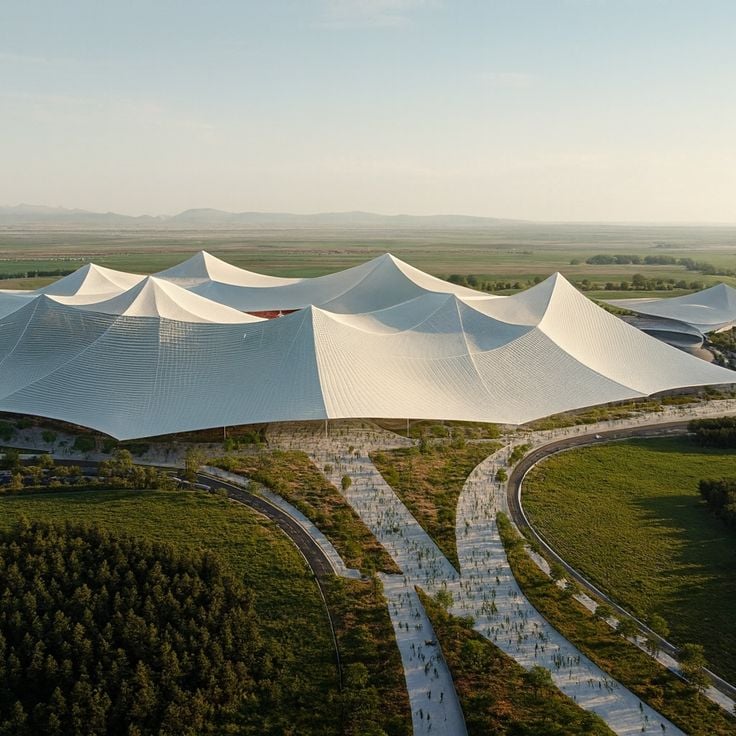
This stadium is being built in Benslimane and will open for football matches in 2028. Moroccan authorities planned the construction as part of their preparation for international sporting events. The facility will be erected on open land outside the capital and will provide modern stands with space for tens of thousands of spectators. Architects are working to incorporate traditional Moroccan elements into the facade, while the construction will meet contemporary standards. Construction vehicles and scaffolding currently dominate the site where fans will one day cheer for their teams.
The Chicago Spire was designed as a twisting tower meant to rise in Streeterville, along the shore of Lake Michigan. Construction started with foundation work in the late 2000s, but progress stopped during the financial crisis and the project never moved beyond the early stages. The site remains empty, a reminder of a plan that did not come to life. The spiraling design aimed to create a new point on the Chicago skyline, but the structure was never built.
This artificial island group in the Caspian Sea represents an urban development project intended to create residential areas, commercial spaces, and leisure facilities across multiple man-made islands. The plan includes the construction of towers, hotels, schools, and public parks on land reclaimed from the sea. The Khazar Islands embody a vision for a modern city built on water, with wide boulevards, canals, and bridges connecting the individual islands. The project aims to establish a new urban landscape that offers both housing and seaside recreation for residents and visitors.
These twin office towers in Taipei are planned to rise above a large plaza, adding to the city's eastern financial district. The project follows the pattern of vertical development in Asian capitals, where new high-rises densify existing business centers. The towers are part of Taipei's efforts to create more space for corporations and services as the city continues to grow. Like other major projects set for completion by 2030, this one ties economic planning to questions of urban infrastructure and how new construction fits into an already dense urban fabric.
This skyscraper in HafenCity will change the skyline along the Elbe River. The Elbtower will be a mixed-use building that brings together offices, apartments, and hotels. The project shows how Hamburg thinks about height and new architecture in this former port area. The planned structure will be among the tallest buildings in northern Germany, shaping the growing quarter that develops between the old city and the waterfront.
This skyscraper is planned for the City of London financial district, where it would reshape the skyline among other tall buildings. The design shows a tapering tower covered in glass, reflecting light and connecting to the towers around it. At ground level, public spaces are intended to create pathways and gathering areas for people walking through. Upper floors hold office space with wide views across the city. The project responds to the tight layout of the district, aiming to link the tower with existing train stations and streets. Construction depends on approvals, but the plan shows how architects think about fitting new towers into limited space while offering work areas and open passages for daily movement.
This skyscraper proposes to rise in the financial district of Lower Parel, mimicking the shape of a traditional Namaste gesture. The two towers lean toward each other and meet at the top. The building would house offices, hotels, and apartments, blending Indian culture with modern high-rise construction. The project shows how Mumbai responds to limited space with vertical growth while trying to incorporate local symbols into the design of tall buildings.
This airport sits east of Mumbai and is planned to connect one of the country's busiest routes to the capital when completed. The terminal spans multiple levels and is designed to handle a high volume of passengers, standing on land that was previously used for farming. The facility includes runways, maintenance hangars, and connections to the city through roads and rail. The main building's form takes cues from folded surfaces, with openings for daylight and air circulation. The site was chosen to relieve pressure from the existing airport and manage more traffic as the region grows. Construction involves moving land, laying foundations, and building structures that will open in stages.
This airport takes shape between Warsaw and Łódź, bringing together connections and easing traffic across the region. The design includes terminals that handle large numbers of passengers, along with cargo zones and links to trains and roads. The site sits on flat land where fields once spread, showing an approach where transport, logistics, and commerce come together in one place. When construction finishes, it will change the way people from Poland and beyond travel and move goods.
This skyscraper in coastal Jeddah, Saudi Arabia, is part of the building projects that create a new skyline along the Red Sea. The tower takes shape in a city that opens itself up and now brings modern high-rises alongside historic quarters. Diamond Tower follows the idea of combining homes, offices, and shops in one building. The site shows how Jeddah changes to attract more visitors and new residents. The facade is meant to be glass that breaks light in different ways. Around it, other towers are going up, together forming a new section of the city.
This tunnel connects Denmark with Germany beneath the Baltic Sea and shortens the journey between Copenhagen and Hamburg. It carries cars and trains through a tube that rests on the seabed. Work has begun, and sections of the link take shape on both shores. The tunnel replaces the existing ferry route and brings closer together regions that were separated by water until now.
The Zayed National Museum, designed by Foster + Partners on Saadiyat Island, honors the history and culture of the United Arab Emirates through the life of Sheikh Zayed bin Sultan Al Nahyan. Its five towers, inspired by the shape of a falcon's wing, rise above a low, spreading base. The design combines climate-related considerations with symbolic forms, creating spaces for exhibitions, galleries, and research. As part of a larger cultural district on the island, this museum contributes to how Abu Dhabi presents its heritage and welcomes international visitors. The project shows how contemporary architecture can reference traditions while exploring new approaches to museum building.
Ciel Tower is a skyscraper in Dubai and represents the ambitious building projects taking shape by 2030. The structure demonstrates how modern architecture reshapes cities and adds to their skylines. Dubai uses towers like this to define its character and attract people from around the world. Ciel Tower is part of a larger wave of projects that show how architects and city planners are rethinking urban spaces across the globe.
Akhmat Tower is a modern skyscraper in Grozny that represents the ambitious building projects transforming cities by 2030. This structure reshapes the city's skyline and demonstrates how contemporary construction changes the way urban centers look and develop. With its modern design, the tower contributes to new approaches in city planning and architectural innovation.