See the monuments around you in AROpen chests in the app
Around Us is built for your phone — point your camera at the streets and discover the monuments and places around you in augmented reality.Around Us is built for your phone — chests unlock when you walk, explore and capture nearby places.
The most beautiful waterfalls and cascades in the world
Waterfalls draw you in through your senses. You hear the roar of falling water, feel the mist on your skin, and watch light dance across the spray. Many of the most powerful examples are found in places that stay relatively untouched, where reaching them is half the reward. These destinations give visitors something increasingly hard to find at famous natural sites: time alone with the landscape.
This collection shows waterfalls shaped by different geographies and climates across the world. In Croatia, Plitvice Lakes displays terraces of limestone with pools that cascade from one to the next beneath tall trees. Utah's Coyote Gulch reveals hidden alcoves and pools carved by water into red sandstone over millions of years. India's Nohkalikai Falls plunges from a forested plateau down to a green pool far below, while China's Huangguoshu Waterfall has a cave you can walk behind, sheltered by the falling water itself. At the border between Vietnam and China, Ban Gioc-Detian spreads wide like a sheet of water across the terrain. Venezuela's Angel Falls drops nearly 1,000 meters (3,280 feet) from a flat-topped mountain into the valley below.
Norway's Geirangerfjord holds the Seven Sisters, seven streams that run parallel to each other and pour directly into the fjord. Iceland's Dettifoss releases a massive amount of glacial water over black volcanic rock, creating a powerful display. In South Africa, Tugela Falls descends in separate tiers down the steep cliffs of the Drakensberg range. And in the Philippines, Kawasan Falls forms a series of turquoise pools framed by tropical trees. Each location has developed its own look, shaped by the type of rock beneath it, the weather that surrounds it, and the land around it.
The most beautiful waterfalls and cascades in the world
Waterfalls draw you in through your senses. You hear the roar of falling water, feel the mist on your skin, and watch light dance across the spray. Many of the most powerful examples are found in places that stay relatively untouched, where reaching them is half the reward. These destinations give visitors something increasingly hard to find at famous natural sites: time alone with the landscape.
This collection shows waterfalls shaped by different geographies and climates across the world. In Croatia, Plitvice Lakes displays terraces of limestone with pools that cascade from one to the next beneath tall trees. Utah's Coyote Gulch reveals hidden alcoves and pools carved by water into red sandstone over millions of years. India's Nohkalikai Falls plunges from a forested plateau down to a green pool far below, while China's Huangguoshu Waterfall has a cave you can walk behind, sheltered by the falling water itself. At the border between Vietnam and China, Ban Gioc-Detian spreads wide like a sheet of water across the terrain. Venezuela's Angel Falls drops nearly 1,000 meters (3,280 feet) from a flat-topped mountain into the valley below.
Norway's Geirangerfjord holds the Seven Sisters, seven streams that run parallel to each other and pour directly into the fjord. Iceland's Dettifoss releases a massive amount of glacial water over black volcanic rock, creating a powerful display. In South Africa, Tugela Falls descends in separate tiers down the steep cliffs of the Drakensberg range. And in the Philippines, Kawasan Falls forms a series of turquoise pools framed by tropical trees. Each location has developed its own look, shaped by the type of rock beneath it, the weather that surrounds it, and the land around it.
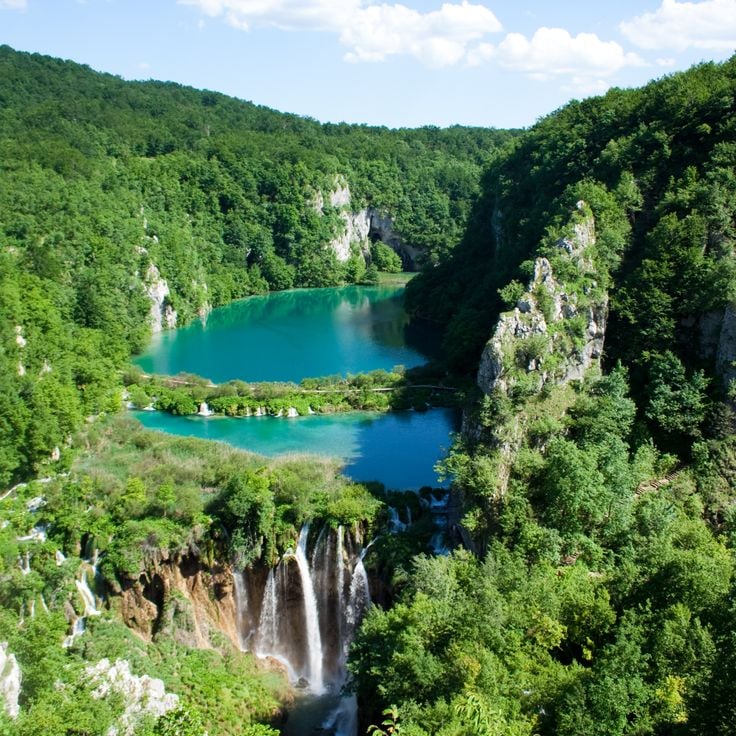
Plitvice Lakes in Croatia forms part of a national park where sixteen separate bodies of water connect through a chain of waterfalls flowing over limestone terraces. The water has built porous barriers over time that separate the lakes from one another while constantly creating new geological features. Wooden walkways run directly along the water, sometimes just inches (a few centimeters) above the surface. In spring the water flow is strongest, in autumn the beech and maple trees around the shores turn color. The upper lakes sit in a forested valley, the lower ones in a deeper gorge. The water shimmers in different shades of green depending on light and depth.
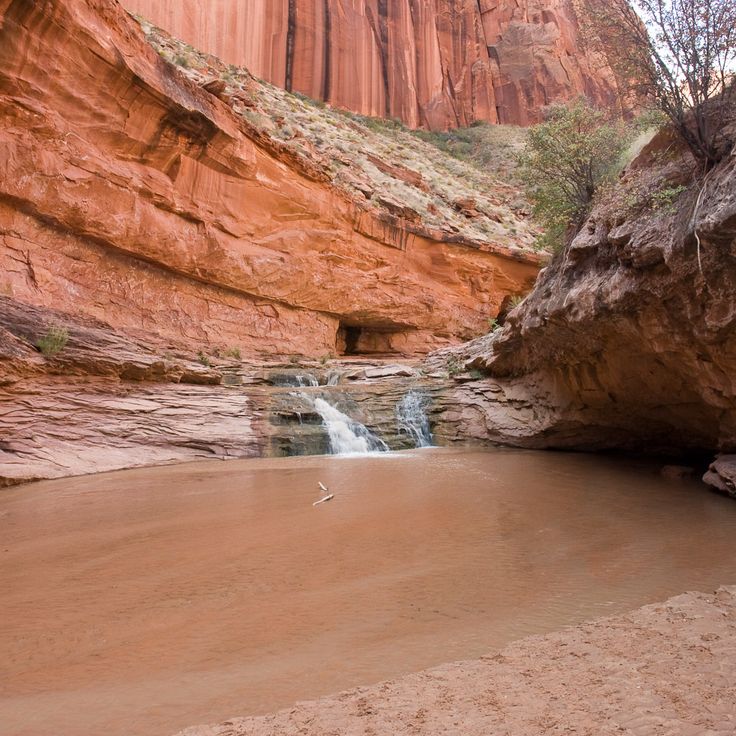
This waterfall sits deep in a canyon carved from red sandstone, where water drops over smooth rock walls into natural pools below. Coyote Gulch forms itself through narrow passages and wide chambers, surrounded by desert plants growing from cracks in the stone. The light shifts throughout the day and brings out different shades of red in the rock face. Hikers often wade through shallow water and climb over boulders to reach the hidden sections. The silence is broken only by the sound of falling water echoing off the canyon walls. This place is part of a collection of waterfalls around the world, where water and rock shape the landscape in ways that draw people in.
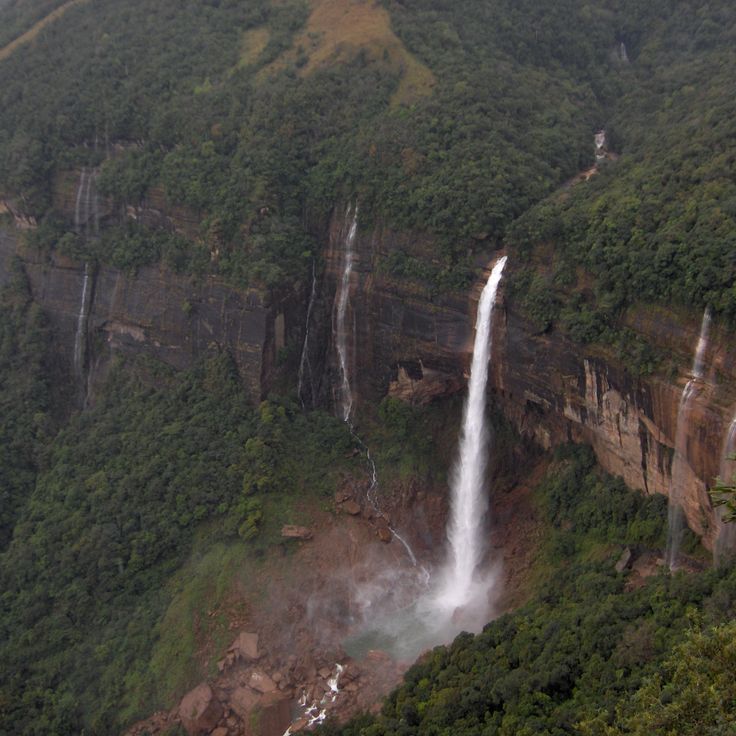
This waterfall drops 340 meters into a green pool at the base of a limestone cliff. Nohkalikai Falls sits on a forested plateau in Meghalaya, where monsoon rains turn the landscape into one of the wettest regions on earth. The water falls in a single stream, and mist rises from the bottom. The surrounding area is thickly forested, and the cliffs frame the pool below. The waterfall carries more water during the monsoon season, when the flow swells and the spray reaches farther. In drier months, the stream narrows but the drop remains visible. A viewpoint offers a look over the edge down to the pool far below. The area has a quiet quality, especially outside peak visiting times.
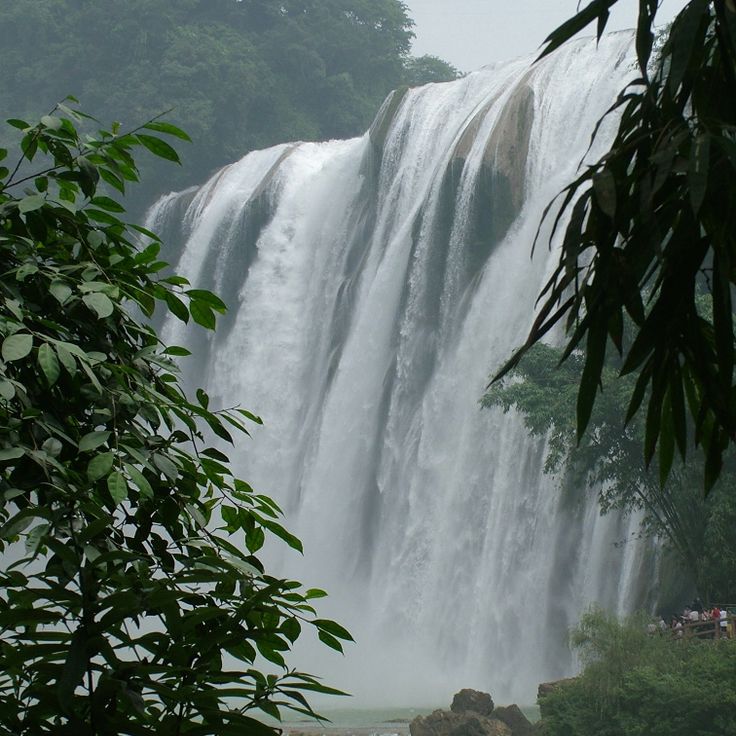
This waterfall in Guizhou impresses with its broad rock face and fine mist that sometimes forms rainbows when the sun hits it. What sets it apart is the cave behind the curtain of water, where you can see the falls from inside. The river splits into several smaller streams above before spilling over the edge. Different pathways at various levels show the waterfall from different perspectives - from the base to elevated points further away. The area is humid, the rocks are slippery, and the sound of falling water is everywhere.
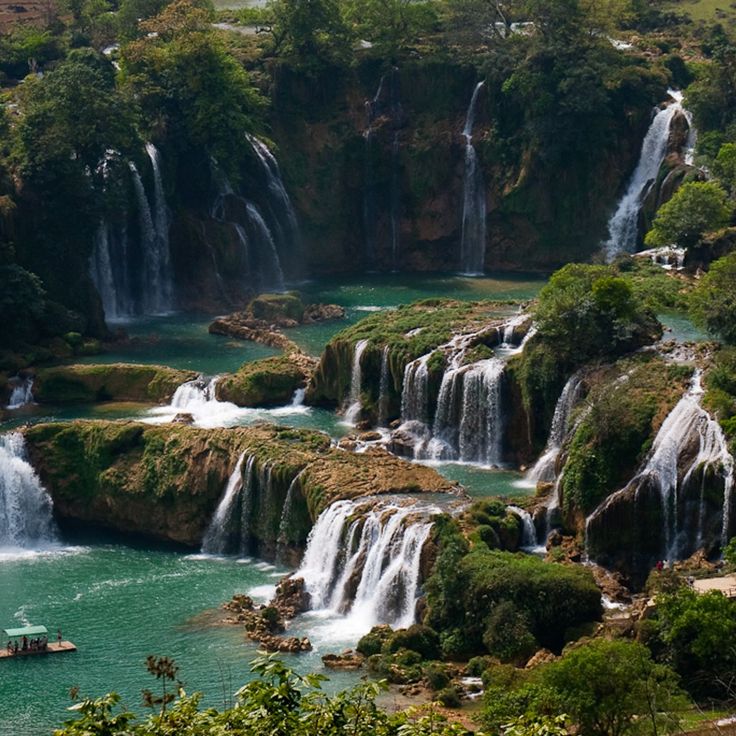
This waterfall marks the border between Vietnam and China. The water drops 30 meters and spreads across 200 meters of width. The cascade divides into several strands that flow between boulders and green vegetation. During the rainy season the river swells and the separate streams merge into one continuous wall of water. In the dry months the individual sections become more distinct and you can see the structure of the rock behind them. The surrounding valley is shaped by rice paddies and bamboo groves that reach close to the edge of the falls. The river carries gray sediment that gives the water a milky color.
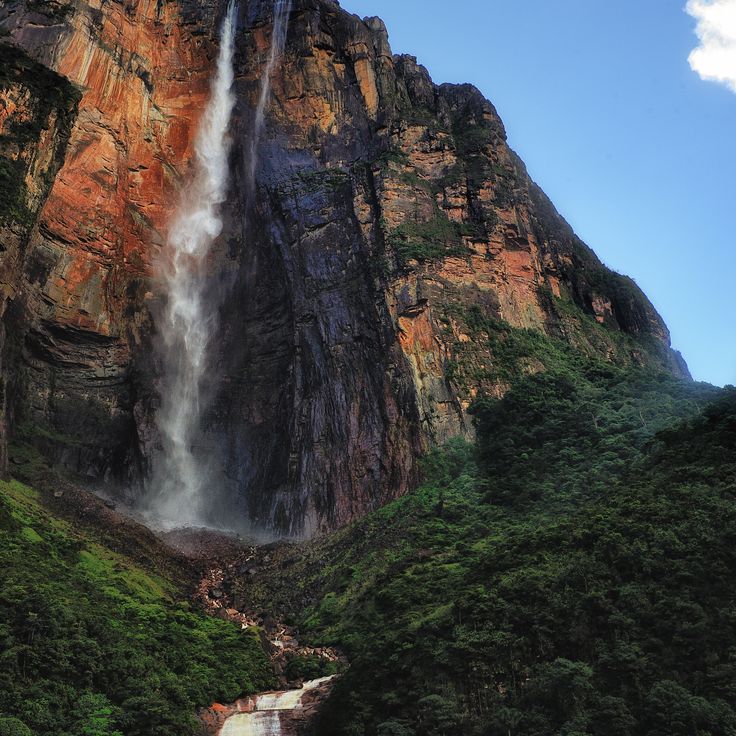
Angel Falls descends nearly one kilometer from the edge of a flat-topped mountain, making it one of the most striking natural features on the continent. The water often turns to mist before reaching the ground below. The surrounding terrain consists of dense rainforest, sheer rock walls, and isolated plateaus shaped by erosion over millions of years. Access requires river travel and hiking, as no roads reach this remote area. The water originates from small streams on the summit of Auyan-Tepui, one of Venezuela's largest table mountains.
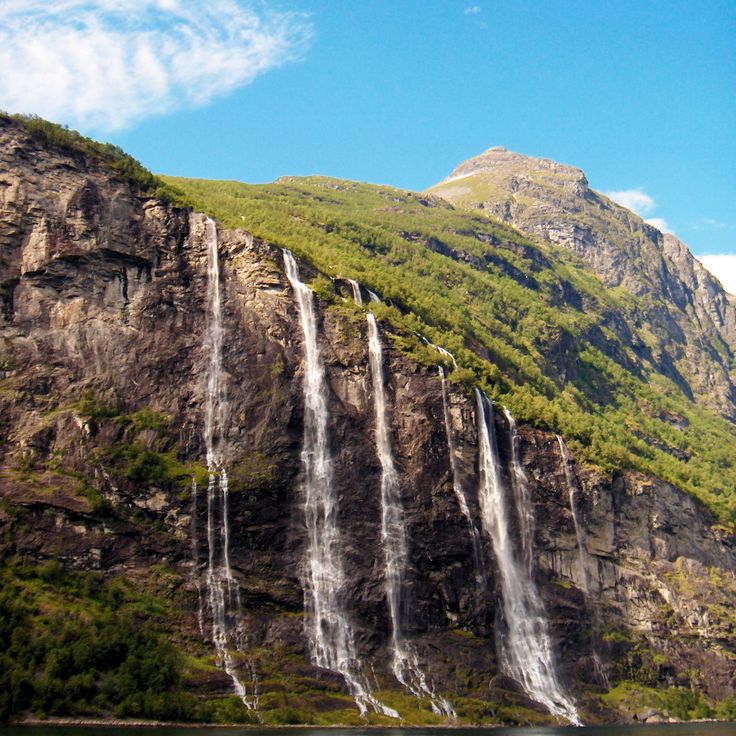
The Seven Sisters Waterfall fits into this collection of waterfalls found around the world. Located in Geirangerfjord, this site consists of seven parallel streams that drop about 250 meters down the rock face and flow directly into the fjord. In summer, melting snow from the mountains brings more water to each stream, while in winter some nearly dry up. The granite walls are covered with moss and low vegetation. Tour boats approach close enough that you can feel the spray. Across the fjord, another waterfall called the Suitor falls on the opposite side. These two form some of the most recognized sights along this narrow waterway that runs between tall mountains.
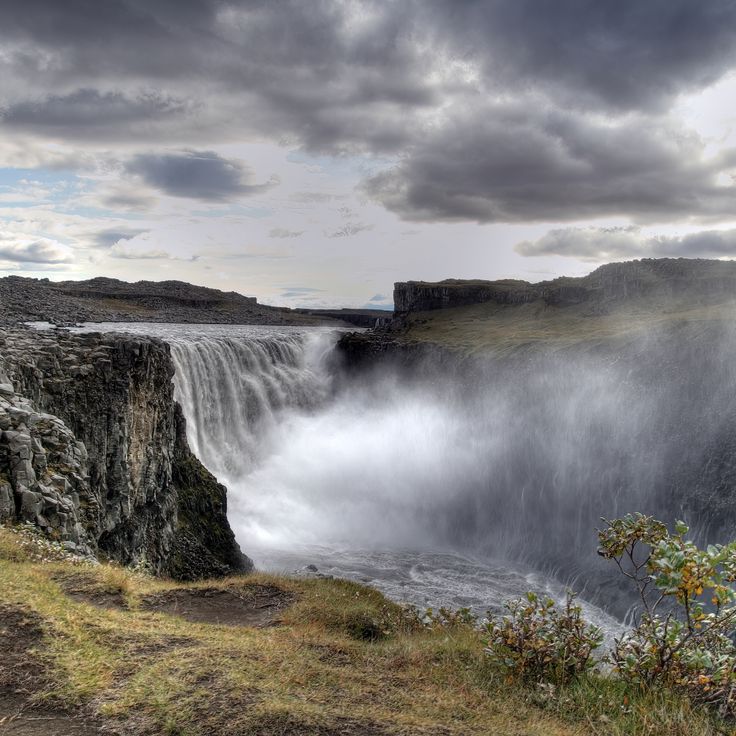
This waterfall in Vatnajökull National Park sits on Iceland's northeastern highland, where the glacial river Jökulsá á Fjöllum drops over an edge of dark basalt. The water is grey and cloudy, filled with volcanic sediment from the interior. The roar can be heard from a distance. Heavy mist rises constantly and settles damp on the surrounding rock. The ground vibrates underfoot when you approach the edge. The gorge is deeply carved and offers a clear view of the water's force. The path to the rim is short but the ground is rough and often wet. Dettifoss shows the raw energy of a land shaped by glaciers and volcanoes.
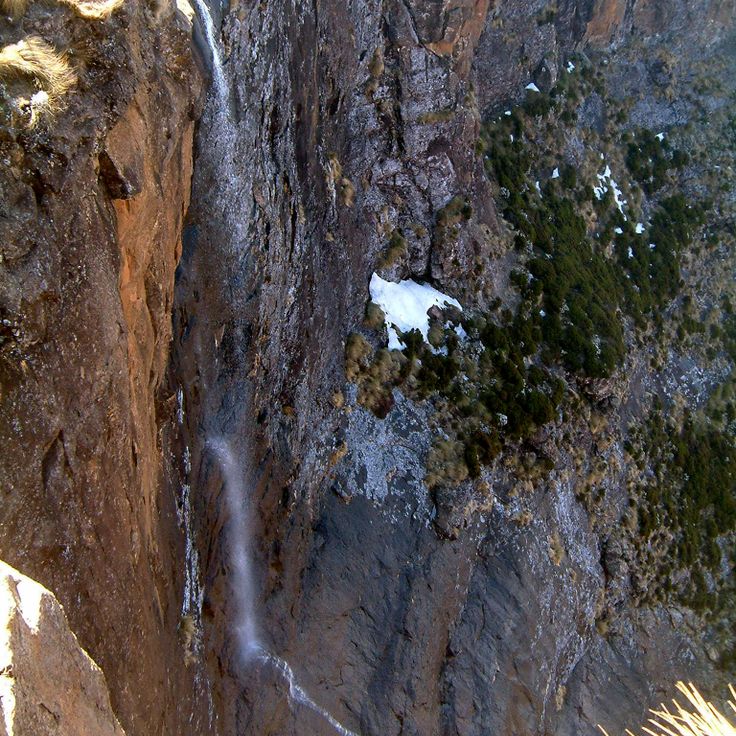
Tugela Falls in this mountainous region drops nearly 950 meters in five separate stages from the cliff face of the Amphitheatre. The water originates from the high plateau of the Drakensberg and tumbles over dark basalt rock. The flow varies greatly depending on the season - sometimes just a thin thread, and after heavy rain a wide cascade. Access requires several hours of hiking through steep trails. The surrounding landscape consists of grassland, rock formations, and occasional mist rising from the valleys. Few visitors make the effort, which keeps the area relatively quiet.
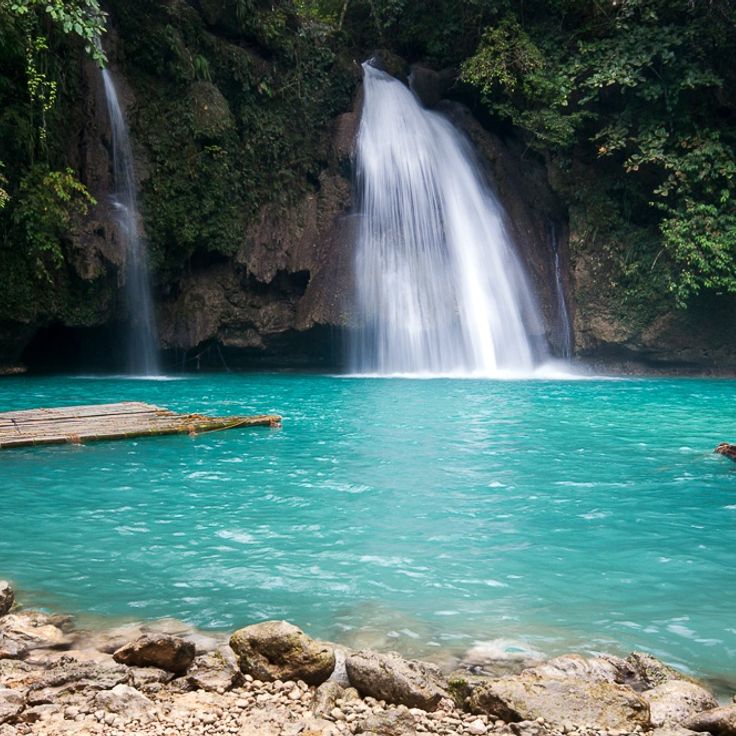
These waterfalls belong to a collection of remarkable waterfalls and cascades from around the world that draw people in through their power and setting. Kawasan Falls consists of three consecutive drops that form natural pools with turquoise water. Tropical plants and bamboo forest surround the pools where visitors swim and rest in the shade of the vegetation. The water flows over limestone formations shaped over time. The lowest tier is the largest and most visited, while the upper pools remain quieter. The path to Kawasan Falls leads through dense forest, and the sound of falling water can be heard from a distance.
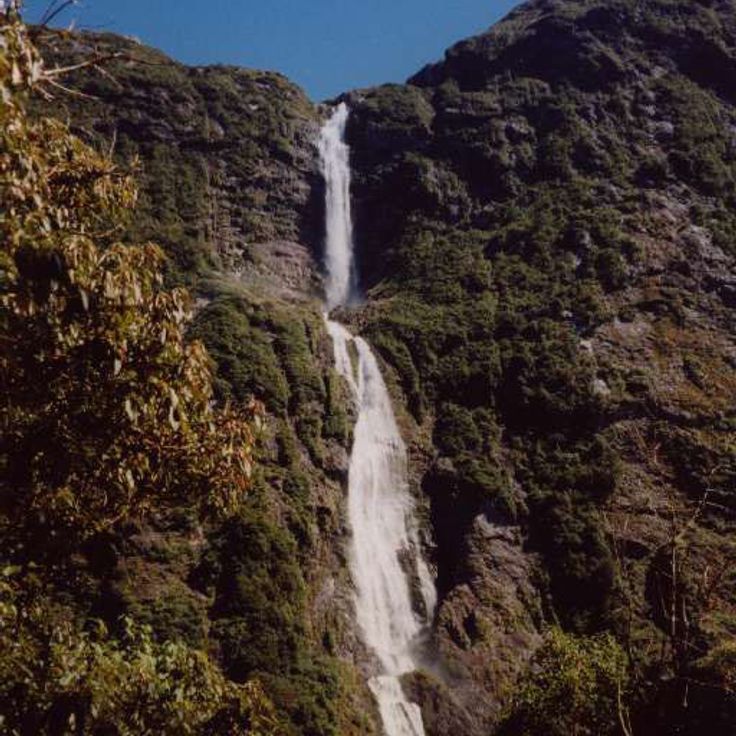
This waterfall in Fiordland is part of a collection of some of the world's most beautiful waterfalls and cascades. Sutherland Falls drops in three stages over a steep rock face, fed by a lake sitting on a high plateau above. Reaching it requires walking the Milford Track, a multiday trail through rainforest and valleys. The surroundings stay damp most of the year, often shrouded in mist, with thick vegetation growing right up to the cliff base. After heavy rain the falls swell and spray can be seen from a distance. Sutherland Falls sits well away from any paved roads in a remote mountain landscape.
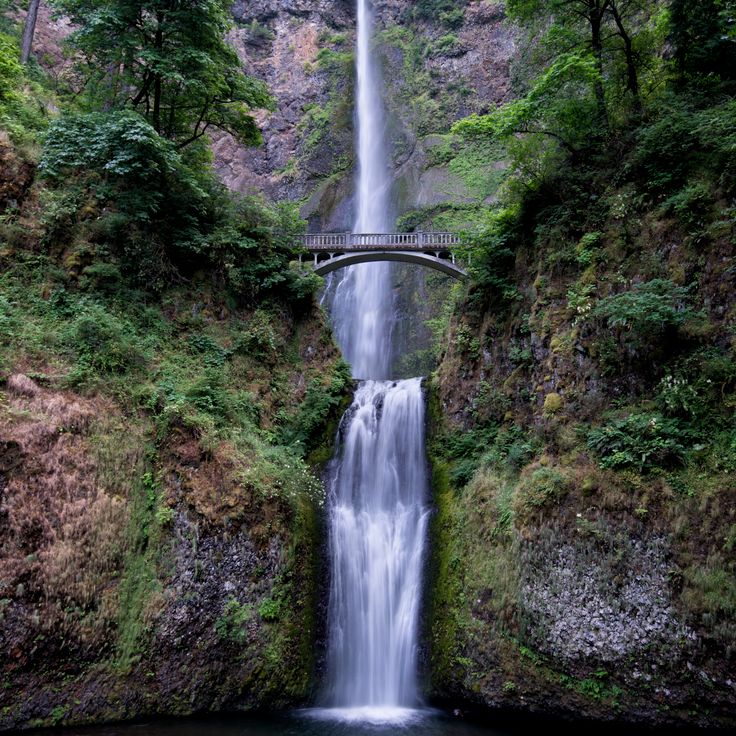
This waterfall in the collection of the world's most beautiful waterfalls sits in the northwest and drops in two stages through a gorge lined with rock and ferns. The upper cascade is visible from a stone bridge built in the 1910s that has become a popular photo spot. Water comes from springs above the gorge and flows year-round. In winter, the upper tier sometimes freezes. A short trail leads to the bridge, a longer one to the top. The base is easy to reach, which makes this one of the most visited sites in the region. Still, the place stays quiet in early morning or on rainy days.
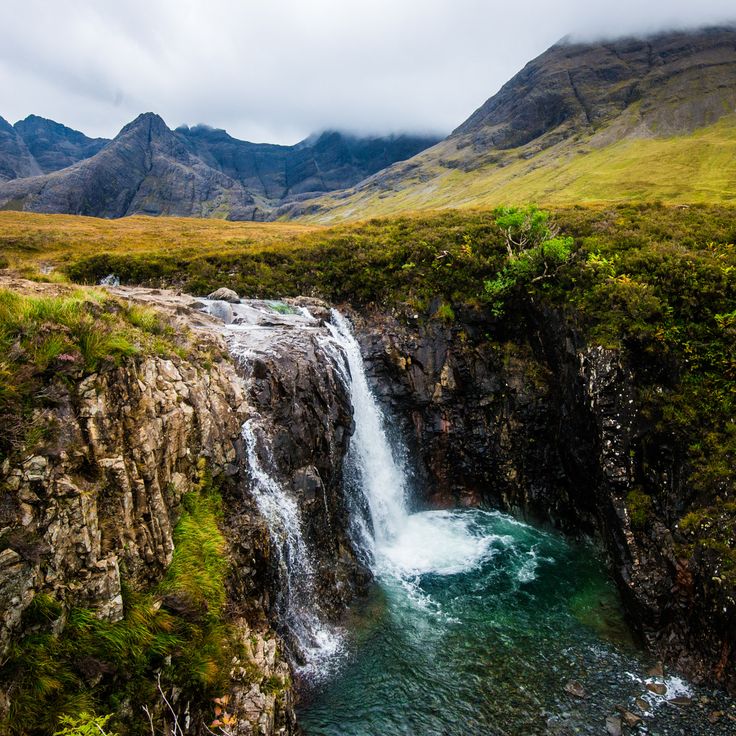
The Fairy Pools on the Isle of Skye are a chain of waterfalls and basins along the River Brittle. Clear water flows over dark rock and collects in blue pools. They sit at the base of the Black Cuillin mountains, surrounded by rough moorland and rocky slopes. On bright days the water glows in shades of turquoise, on overcast days it appears deeper and colder. Many visitors come to swim, despite the water being cold year round. The path from the car park follows the river upstream, passing several cascades and pools of different sizes. Some are shallow enough for wading, others deep enough for a full dive. The landscape is bare and windswept, typical of the Scottish Highlands. Photographers often arrive in early morning or late afternoon when the light softens and brings out the color in the water.
This waterfall drops 268 meters in a single fall, creating a constant mist at the base. The dense rainforest around it contains numerous walking tracks that wind through wet green undergrowth. The path to Wallaman Falls curves through tropical vegetation, and the sound of falling water can be heard long before the first view of the cascade. At the base, water collects in a cool pool surrounded by smooth rocks and thick plant growth. The air here feels noticeably wetter, and light breaks through the fine spray that hangs over the pool.
Wailua Falls in this collection of waterfalls and cascades from around the world shows how water descends in two tiers over a basalt cliff on the east side of Kauai. The water meets a broad pool below, surrounded by thick tropical growth. On certain days, light catches the mist in a way that reveals a rainbow. This waterfall sits along a road above, making access straightforward. The way water, light, and vegetation combine here creates moments that draw travelers in.
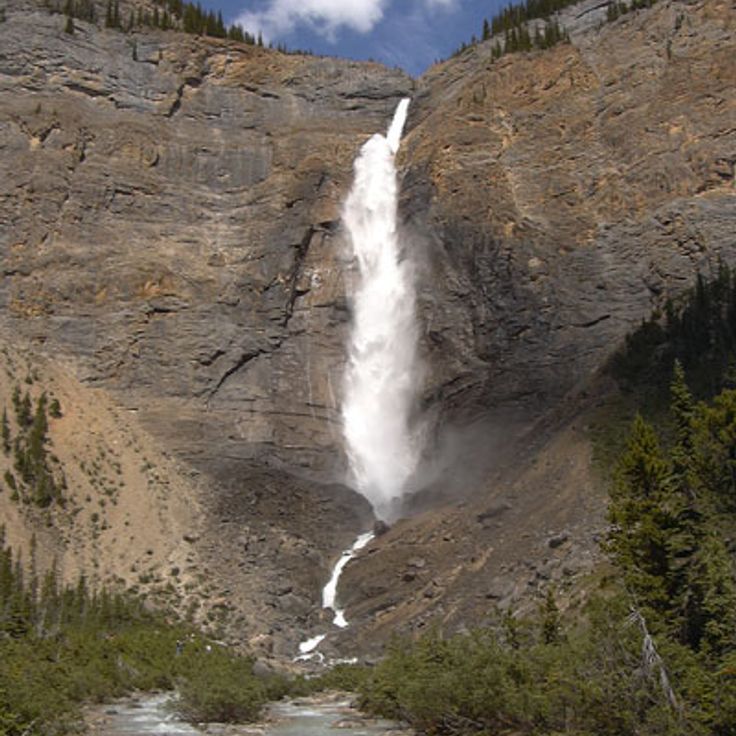
This waterfall in Yoho National Park belongs to a collection of the world's most beautiful waterfalls and drops over a steep rock wall, fed by meltwater from the Daly Glacier. The name comes from the Cree language and means something like magnificent or wonderful. The water falls in a long, narrow ribbon, especially powerful in early summer when snowmelt peaks. Mist rises high and wets the surrounding rocks. A short trail leads from the parking area to the base, where you feel the roar of the water hitting the ground.
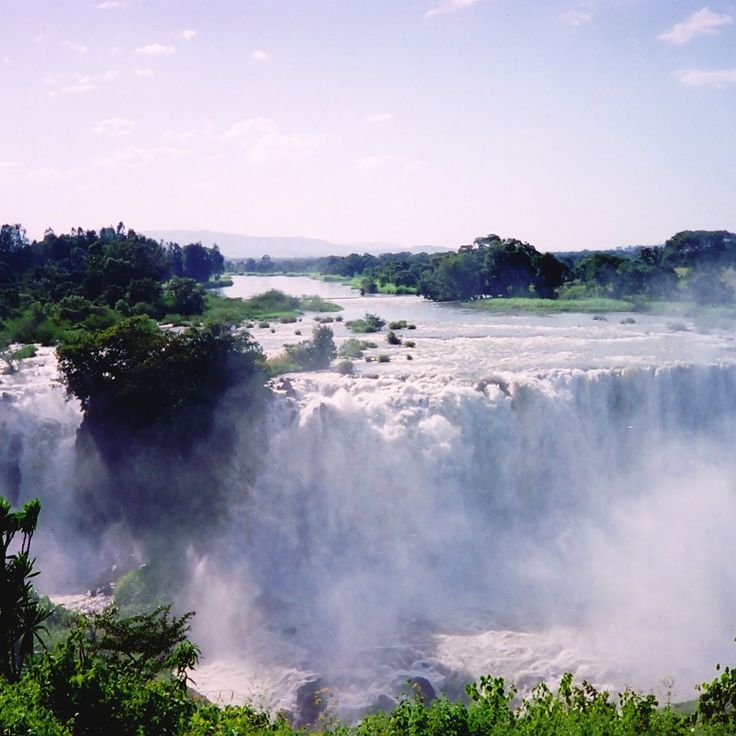
Blue Nile Falls in Tisissat belongs to this collection of waterfalls and cascades from around the world. The river drops over a wide basalt cliff on the upper course of the Blue Nile. During the rainy season the water swells and creates a thick spray that often forms rainbows. The surrounding area is green and hilly, with fields and small villages nearby. A path leads through the terrain to a viewpoint facing the main cascade. The force of the water is strongest between July and September when the river reaches its peak flow.
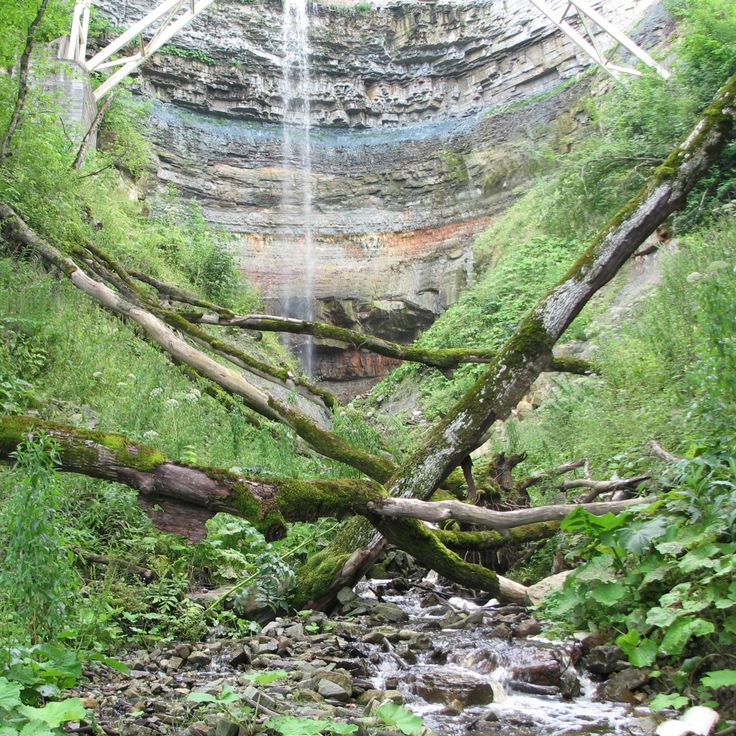
This waterfall drops about thirty meters over a limestone cliff near the Baltic coast. Valaste forms large ice columns in winter, sometimes reaching all the way down and looking like frozen curtains hanging from the rock. The water comes from a small river that winds through wooded hills before it tips over the edge. The cliff is part of a longer stretch of coastline that falls away steeply in places. In summer you can hear the rush of water from the viewing platform. The surrounding area is quiet, with pines and birches growing close to the edge. Some visitors return several times a year to watch how the scene changes with the seasons.
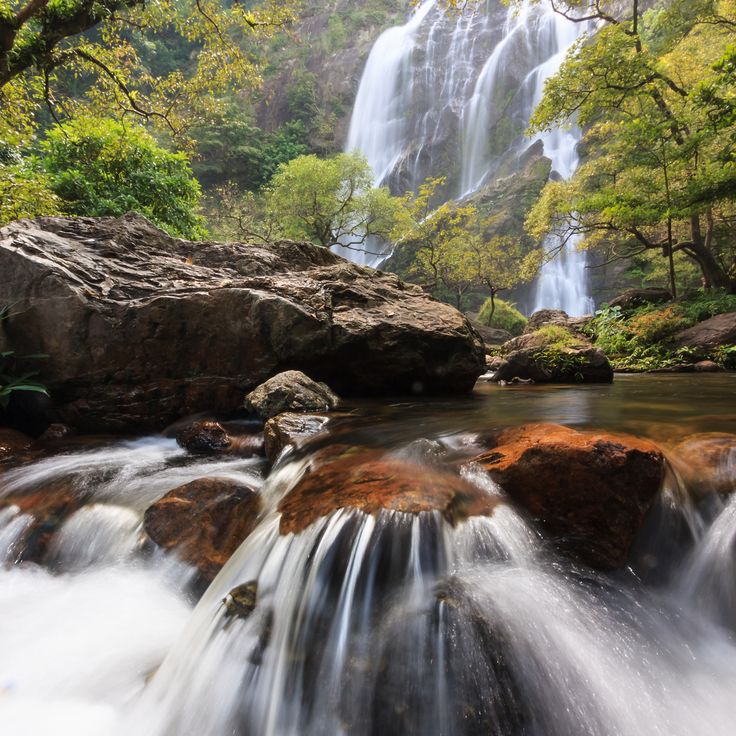
This waterfall drops about 100 meters through dense rainforest and carries water throughout the year. The pool at the base sits in the shade of tall trees, and the path leading to it follows a stream through damp greenery. The surroundings remain quiet even when visitors arrive. Khlong Lan is part of a larger protected area where forest spreads across hilly terrain.
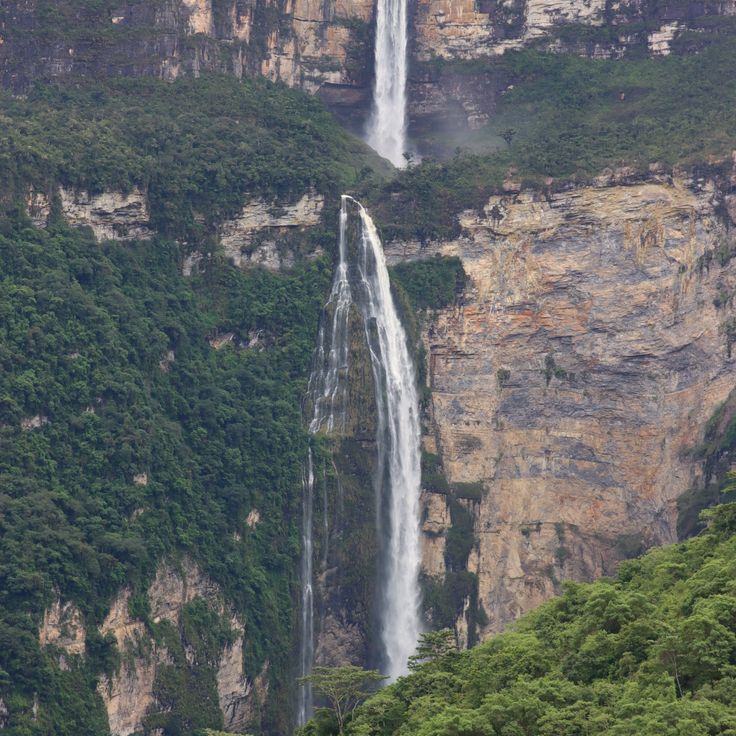
The Gocta Cataracts belong to this collection of waterfalls that draw people in. They sit in the Peruvian Andes and remained unknown to the international community for a long time, though local people have known them for generations. The water drops in two distinct tiers that together reach a height of roughly 770 meters (2,530 feet). The access path leads through cloud forest where orchids grow and hummingbirds sometimes appear. The trail can be slippery, especially after rain. The region lies far from major cities, and the surroundings have kept much of their rural character. From different viewpoints the full shape of the falls comes into view, surrounded by steep, forested slopes. The air smells of damp moss and earth.
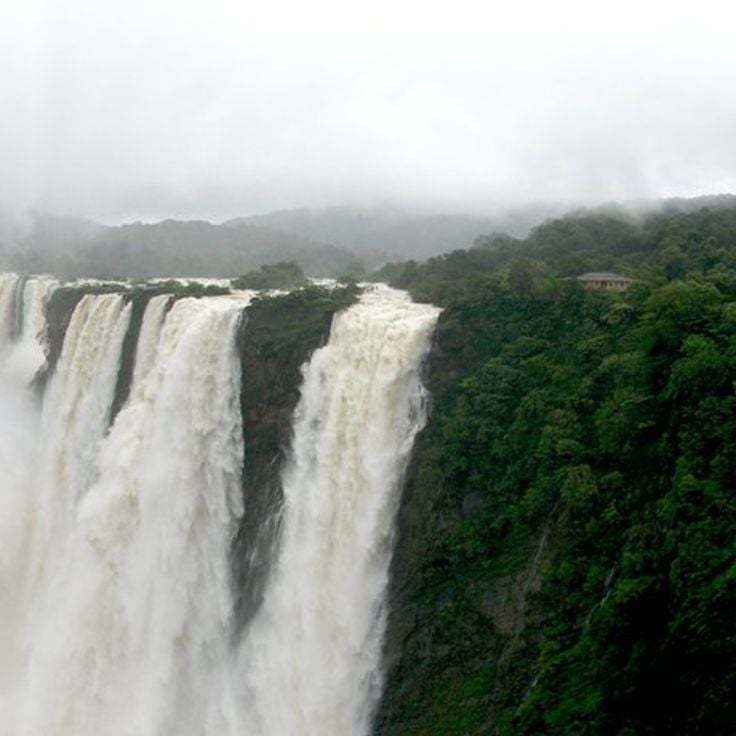
Jog Falls forms four separate streams that drop over dark rock walls into the depths below. These cascades carry names like Raja, Roarer, Rocket, and Rani. The highest section falls more than 250 meters, and during monsoon season the water volume swells so that the individual streams merge into a wide curtain. In the dry months they separate again into distinct threads. The rock is dark and glistens wet under the falling water. Mist rises from the pool at the base and hangs in the air. This site sits away from major cities, and the approach winds through forested terrain. Visitors can view the falls from several lookout points or walk down to the base where the water strikes rock and continues downstream.
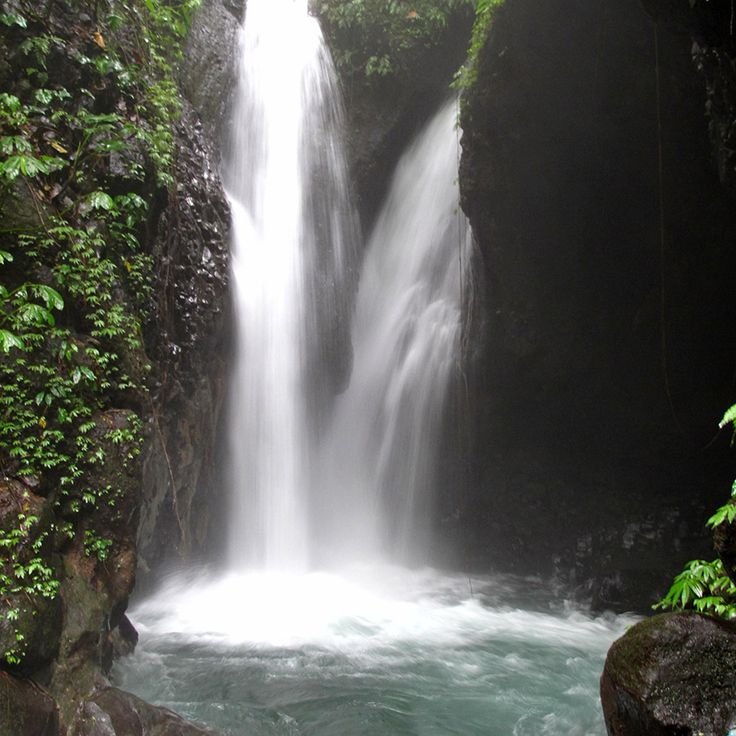
This waterfall is part of a collection of falls and cascades that draw people in. Gitgit drops 40 meters through a gorge surrounded by rice paddies and coffee groves. The water comes from forested slopes higher up and collects in a shallow basin often wrapped in mist. The path leading to it winds through dense tropical growth, where ferns and moss cover the wet stones. The surroundings stay green even during the dry months. The sound of falling water carries through the valley long before the falls come into view.
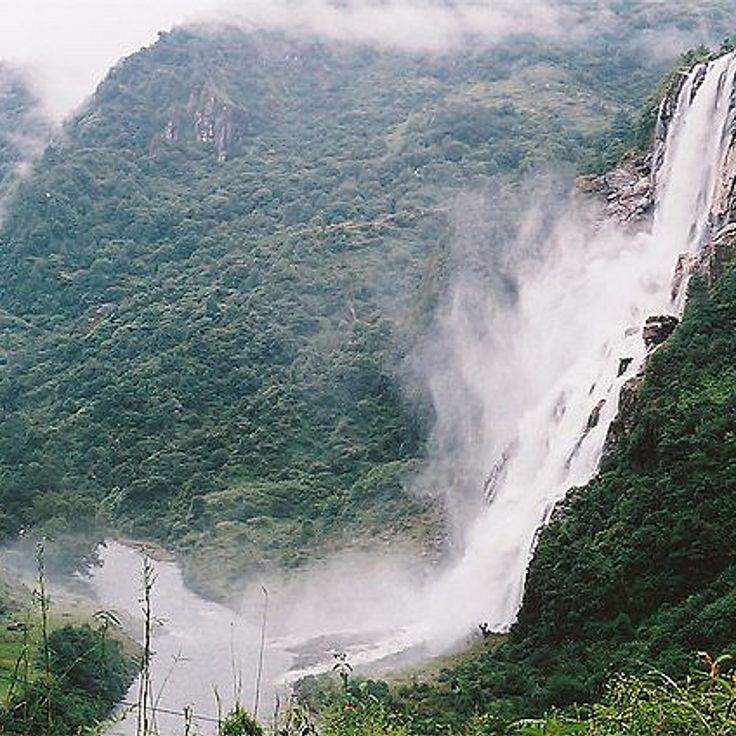
This waterfall in Arunachal Pradesh is part of a collection featuring the world's most notable waterfalls and cascades. The water drops about 100 meters over gray rock into a deep green pool. It flows from the Tawang River and hits the rocks below with a low rumble. Moisture rises from the surface and settles on the leaves around it. In the morning hours the scene is often wrapped in mist, while in the afternoon light sometimes breaks through the trees and reaches the pool. The surroundings consist of dense forest growth and the temperature is usually cooler than in open terrain.
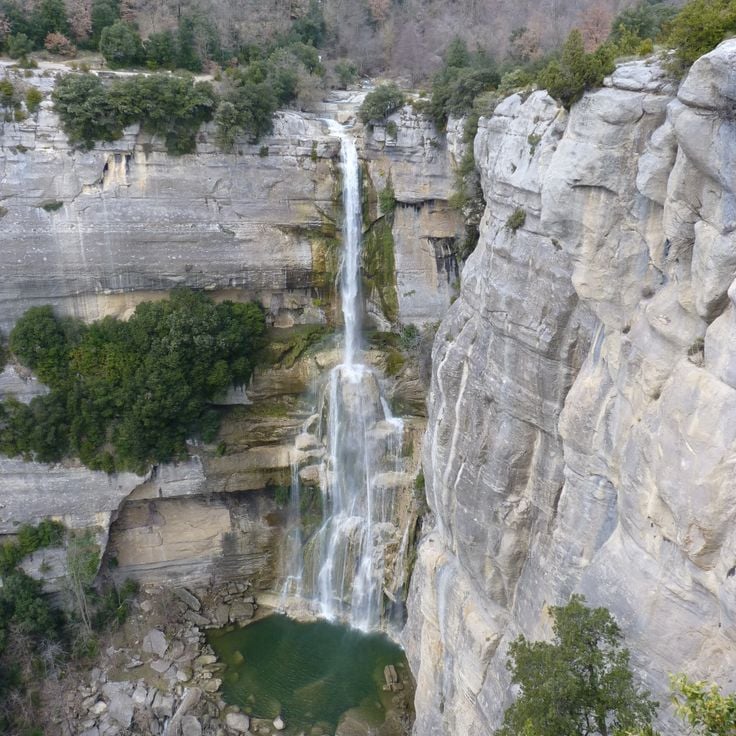
This waterfall in the Catalan highlands is part of a collection celebrating the world's most striking waterfalls. Salt de Sallent falls in two stages over 100 meters (330 feet) through a narrow gorge between smooth rock walls that stay damp most of the year. The water comes from forested slopes and has carved deep into the stone. A viewing platform gives you a clear look at both tiers, with the lower section often hidden in shadow. The path to the viewpoint winds through mountain forest, and in some places the ground can be slippery. The gorge itself is deep and narrow, shaped by water over a very long time. In warmer months the surroundings are thick with green growth, and in autumn the trees turn shades of orange and red. With its great height, Salt de Sallent ranks among the taller waterfalls in this region of Spain.
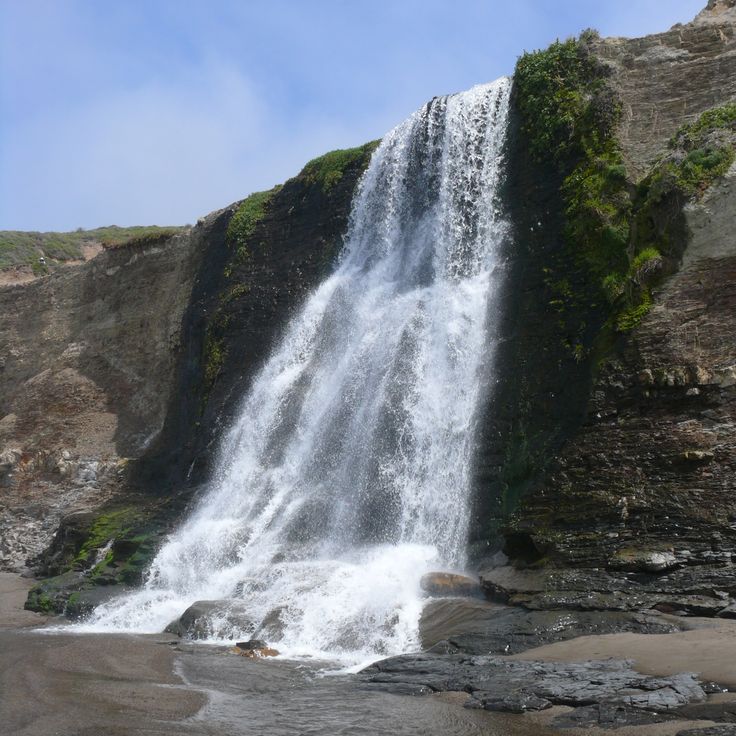
This waterfall drops about 40 feet down the cliffs and meets the Pacific Ocean directly. The trail leading there passes through coastal forest on the Point Reyes peninsula, where the contrast between fresh water and ocean surf becomes especially clear. The water forms a narrow curtain that flows stronger or barely visible depending on season and rainfall. At low tide the water collects briefly on the beach before mixing with the waves. This place belongs to a collection of waterfalls around the world where the sound of falling water, the mist that rises from below, and the way light catches the spray draw people in and create unforgettable moments.
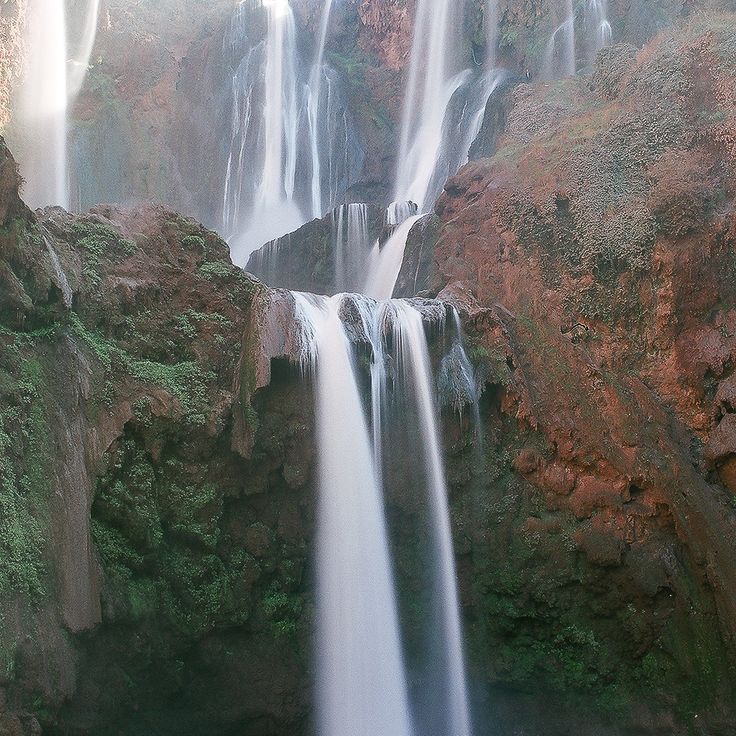
This waterfall in the Atlas Mountains belongs to a collection celebrating natural falls around the world. Here the water drops in three successive stages over limestone cliffs, creating a scene shaped by the rock and the surrounding terrain. At the base, a wide pool sits surrounded by oleander bushes and wild fig trees. When sunlight hits the spray, rainbows often appear in the mist. Berber villages dot the area, and olive groves climb the slopes. Local monkeys live in the trees around the gorge, and narrow trails run along the edge and down to the basin below.
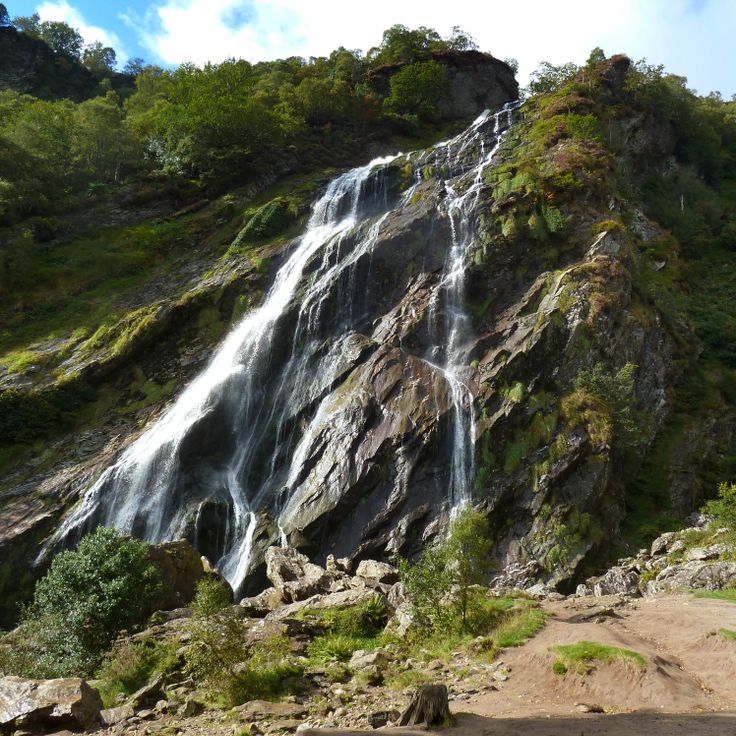
This waterfall at Powerscourt Estate drops about 120 meters down a rocky slope into a wooded valley. Beech, oak and conifer trees grow along the hillsides around the pool at the base. A path leads down to where the water hits the rocks and sends a light mist into the air. The setting feels quiet, especially on weekdays when fewer visitors arrive. Powerscourt Waterfall sits in County Wicklow, a region of low mountains and dense forest known for its hiking trails and gardens.
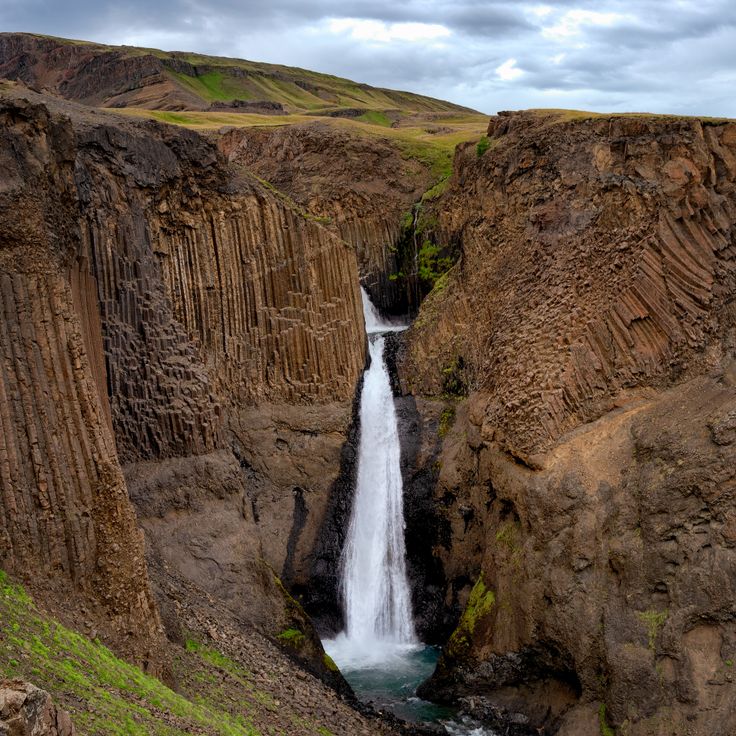
This waterfall in eastern Iceland shows a contrast common in the region. On both sides rise dark basalt columns with hexagonal cross sections. They form a natural frame of volcanic rock that cooled into shape long ago. The Fjarðará River drops about 30 meters over the edge. The water moves through narrow gaps and then hits boulders at the base of the wall. The columns appear almost artificial in their uniformity but nature shaped them. The surroundings are raw, often misty and covered in moss. You reach Litlanesfoss on a walking path that also leads to other falls. The combination of flowing water and geometric stone makes this place a strong example of Iceland's volcanic terrain.
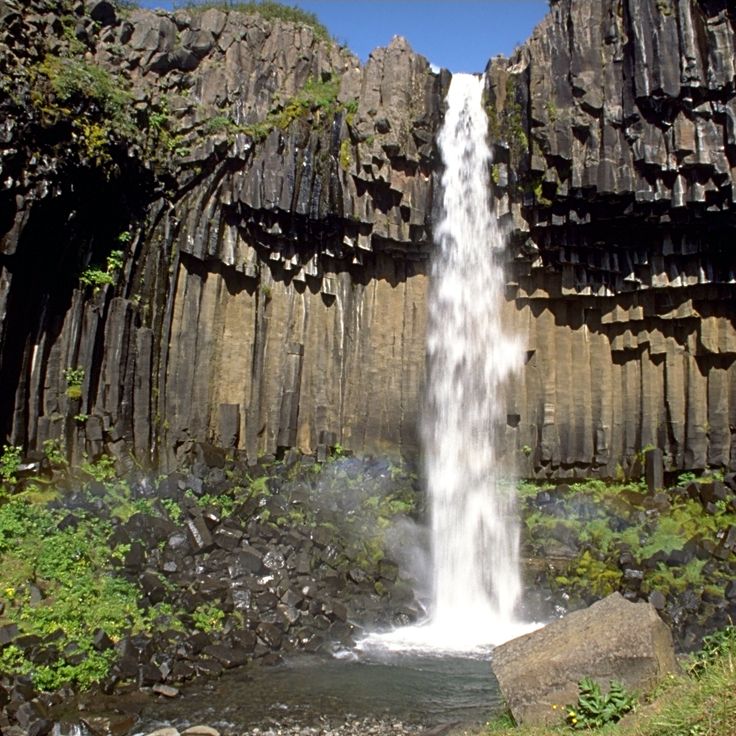
This waterfall in Vatnajökull National Park drops over hexagonal basalt columns formed from cooled lava. The black rock creates a natural wall behind the falling water. The columns resemble organ pipes and frame the cascade. A trail leads through birch woods and past smaller waterfalls. This formation shows how lava crystallizes as it cools slowly. The name means black waterfall.
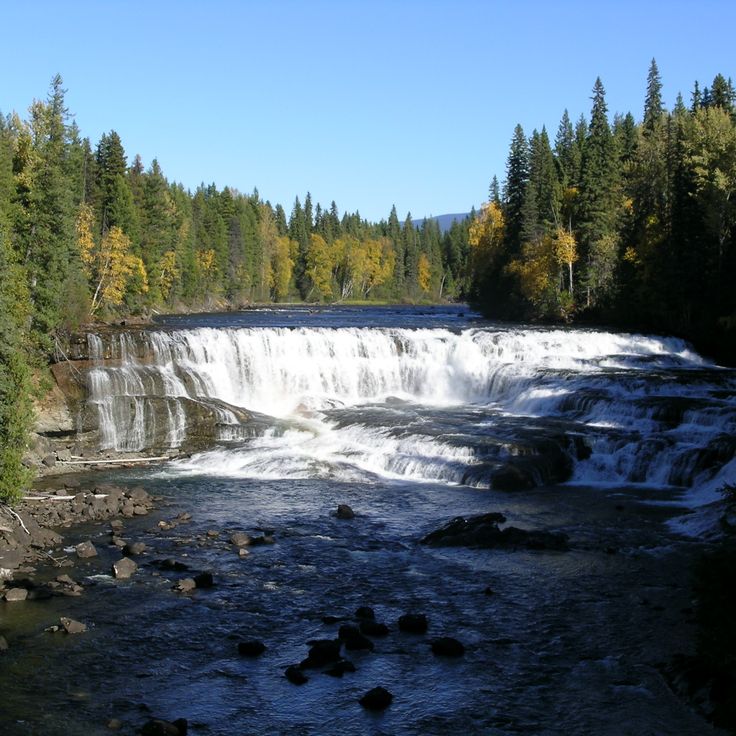
Dawson Falls in Egmont National Park flows about 60 feet over dark lava rock. The path to it winds through dense rainforest where ferns and moss cover the ground and tree trunks. Water from Mount Taranaki feeds the fall, collecting in a shallow pool at the base. The marked and maintained trails move through damp forest with thick undergrowth. On quiet days you can hear the water from a distance. The air stays cool and moist even in warmer months, and mist often hangs between the trees.
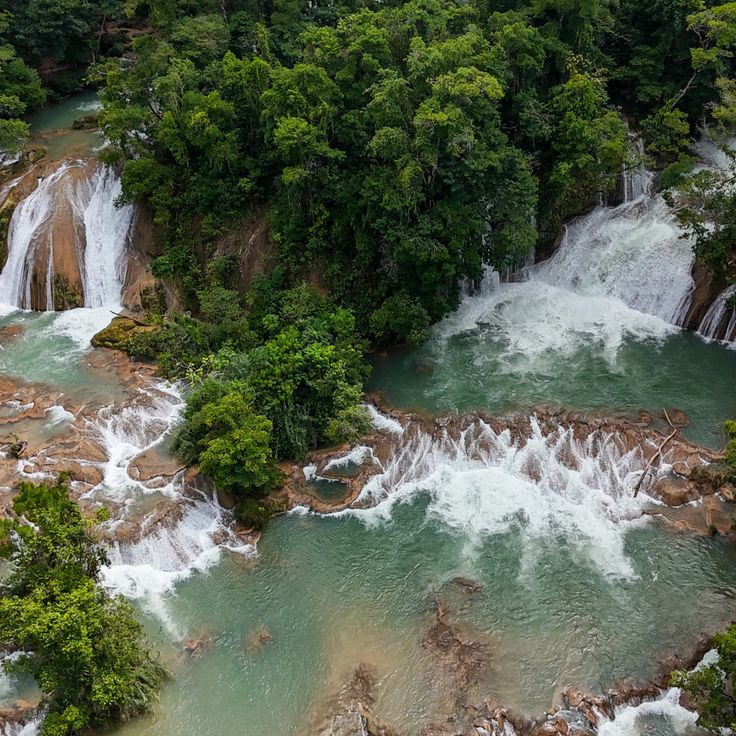
Agua Azul Waterfalls drops over a series of limestone steps in the Chiapas jungle, where mineral-rich water takes on a turquoise color. The river splits into several arms that flow parallel over shallow basins before dropping further downhill. Some sections form pools, while others send water rushing faster over smooth rock slabs. The color shifts with the light and the season, appearing more intense on dry days and becoming clouded by sediment during the rainy months. Narrow paths run along the banks, where tree roots grow over the stones and ferns hang between the cracks.
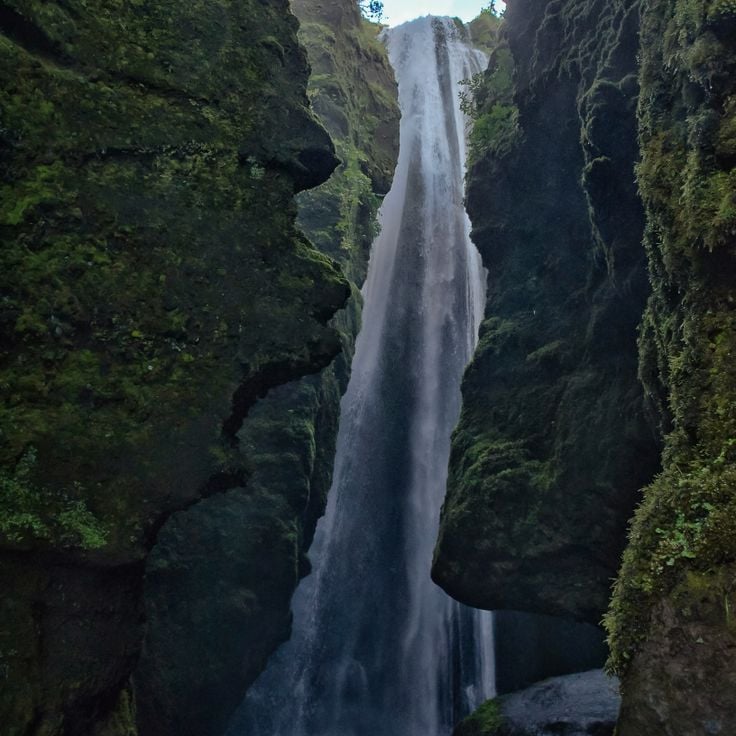
This waterfall in Iceland belongs to this collection of waterfalls and cascades around the world that draw people in. Gljúfrabúi sits hidden inside a narrow rock cleft. Water drops about 40 meters, framed by the walls of a tight canyon. To reach it, you wade through a narrow passage, sometimes with wet feet. Mist rises between the rocks, and light falls through the opening at the top. Most visitors head to Seljalandsfoss just next door, but Gljúfrabúi stays quieter. You hear the water from outside, but only when you step in do you understand the shape of the place. The walls close the space in, and the feeling is different from the open waterfalls elsewhere in the region.
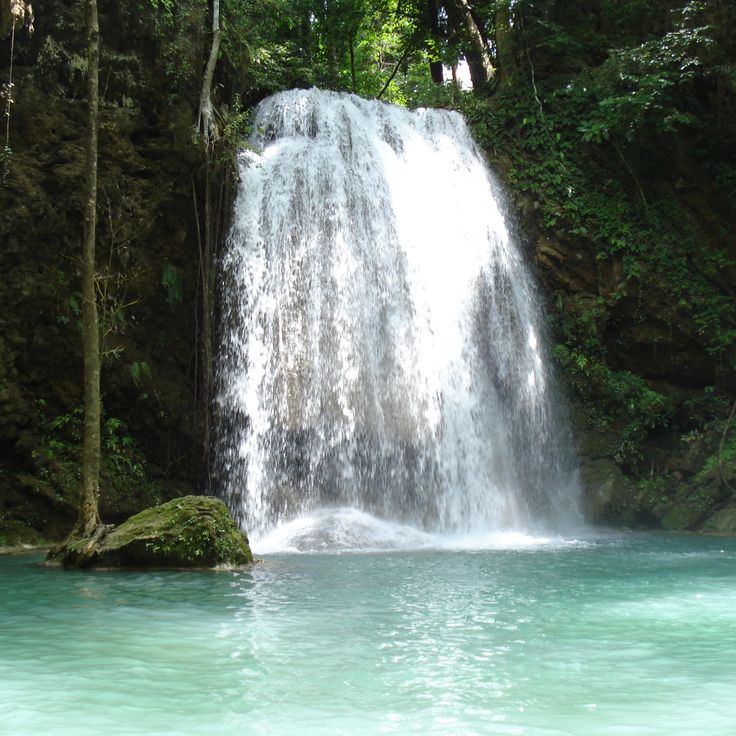
Erawan Falls belongs to this collection because it shows how water shapes stone over time and creates spaces that draw people in. This waterfall descends over seven limestone tiers through tropical forest. Each level forms a natural pool where turquoise water collects and small fish swim around the legs of visitors. The lower tiers are easy to reach and tend to attract more people, while the upper levels remain quieter and require more effort to access. The trail follows the watercourse upward through dense shade. On warm days both locals and travelers use the pools for swimming. The water stays cool and the current remains gentle enough for safe bathing. Erawan Falls sits within a national park, where monkeys occasionally appear on the paths and bamboo groves line the banks.
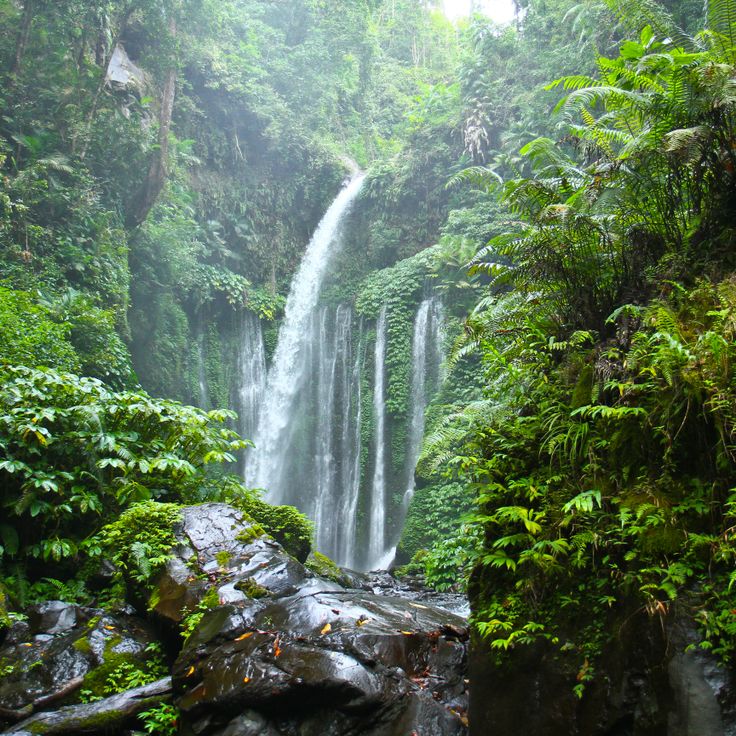
This waterfall fits into this collection as a place where flowing water creates pools and invites visitors to pause. Tiu Kelep Waterfall sits in the foothills of Mount Rinjani and drops over a rock face surrounded by thick tropical forest. The spray at the base fills the air with fine mist, and you hear it before you reach the spot. A narrow path leads through bamboo groves and crosses small streams before arriving at the rock wall where water comes down. The force of the water can be strong enough that you walk through a curtain of mist to get closer. Many visitors swim in the cool pool below, which is edged by moss-covered stones. The nearby village organizes walks to the site, usually in the early morning hours when fewer people come. Some days the water flows calmer, other days the current runs heavy. This part of the island is less accessible than other areas, which makes the place feel somewhat isolated.
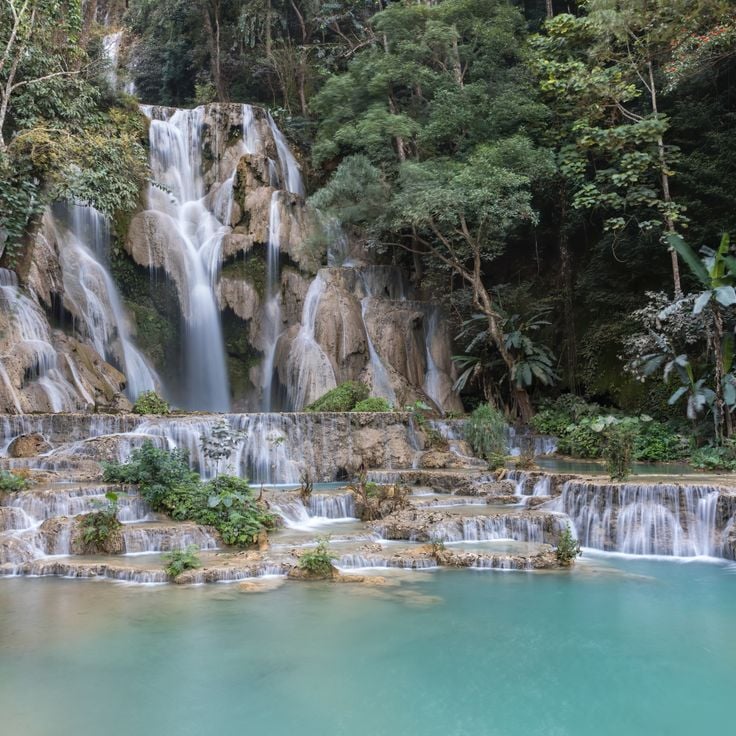
This waterfall at Kuang Si flows over a series of terraced limestone formations that create turquoise pools where visitors can swim in several spots. The main fall drops about 60 meters. The surrounding forest provides shade and keeps the air cool even on warm days. Wooden walkways and trails lead between levels, passing smaller cascades and pools. Many people spend the afternoon here, moving between pools or sitting on the flat rocks along the edges. The area is large enough that quieter sections can usually be found away from the main viewing points.
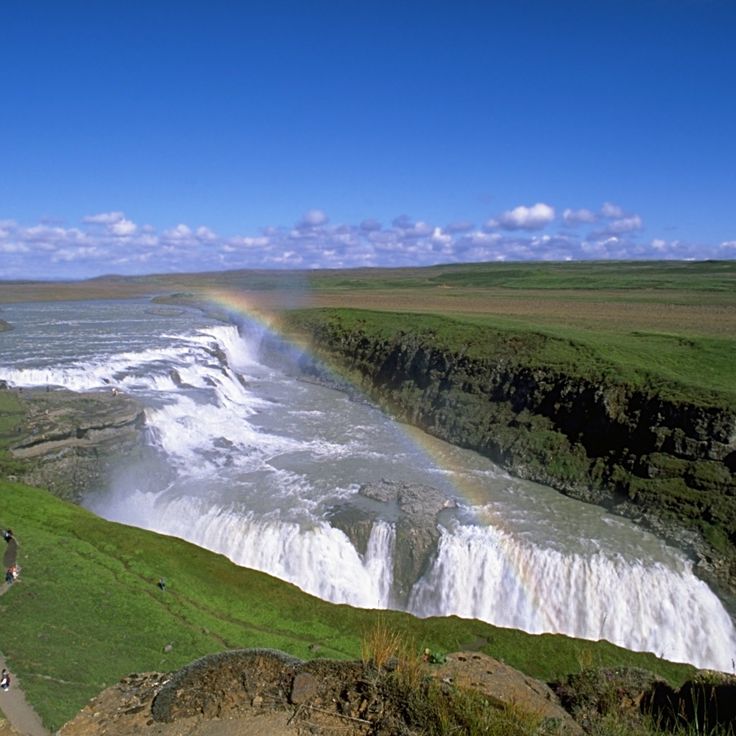
Gullfoss is part of a collection of waterfalls and cascades around the world that draw people in. This waterfall drops 32 meters in two stages into a canyon carved by the Hvítá river. In winter ice forms along the rock walls. The river carries sediment from Langjökull glacier, which turns the water gray. On sunny days rainbows appear in the spray. The upper tier falls to the south, the lower one bends east and disappears into a narrow crevice. From the edge of the canyon you can see how the water forces its way between the basalt walls.
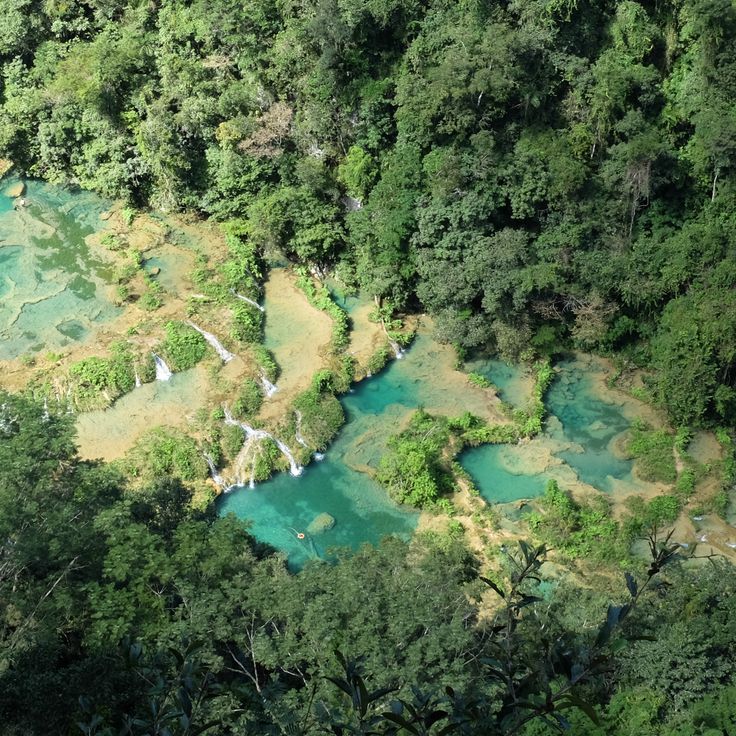
Semuc Champey is a natural limestone bridge that spans the Cahabón River. Beneath this bridge, water flows through while turquoise pools collect on the surface. The water gathers at different levels, creating a series of interconnected pools that stretch across the landscape. Dense mountain forest surrounds the site, making it remote and difficult to reach. Many of the pools are suitable for swimming, and the clear water reveals the rocky bottom. The journey to Semuc Champey takes you over unpaved roads away from the main routes.
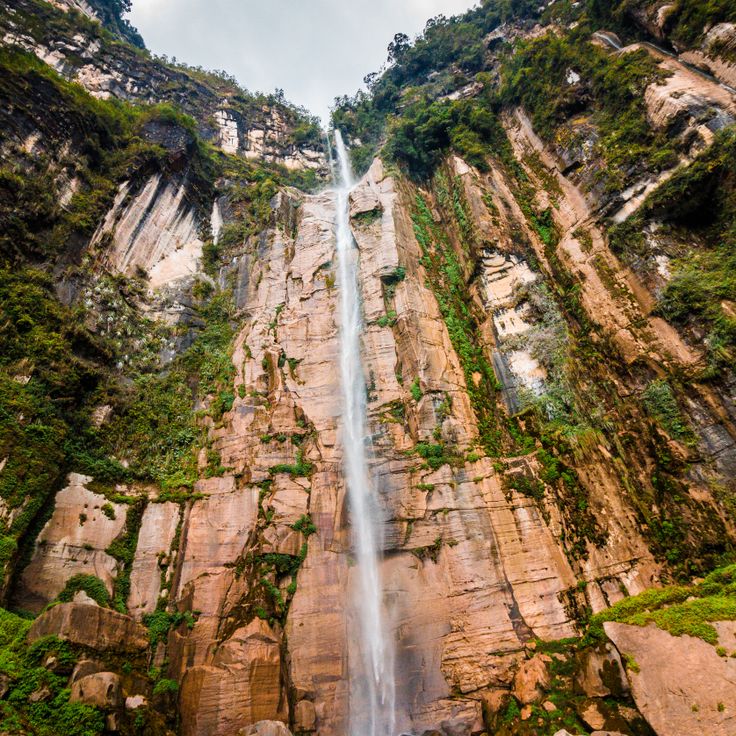
This waterfall drops 896 meters in five stages through the cloud forest of the northern Andes. Yumbilla Falls sits in a remote area where thick vegetation and moist air define the climate. Getting there requires a several hour hike along narrow trails that wind through forest and small settlements. The water falls over moss-covered rock, and fine mist often hangs among the trees. The surroundings remain quiet, with occasional bird calls and the constant sound of falling water. The best views come from different lookout points along the route, where the full height becomes visible. Most visitors come from the nearest town of Cuispes, and the infrastructure stays simple. Humidity is high, and the ground can be slick. This formation is one of the tallest uninterrupted waterfalls in Peru, though it remains less visited than other destinations in the region.
This waterfall drops about 185 meters over limestone cliffs in a canyon surrounded by wooded slopes. The water separates into several strands as it falls, turning to mist before reaching the ground. In winter, ice columns form on the wall, attracting climbers. The Provo River runs through the valley, and the road follows its course with views of the rock face. The area was used for industry in the past, and some old foundation remains stand near the base. Access follows a short path from the road.
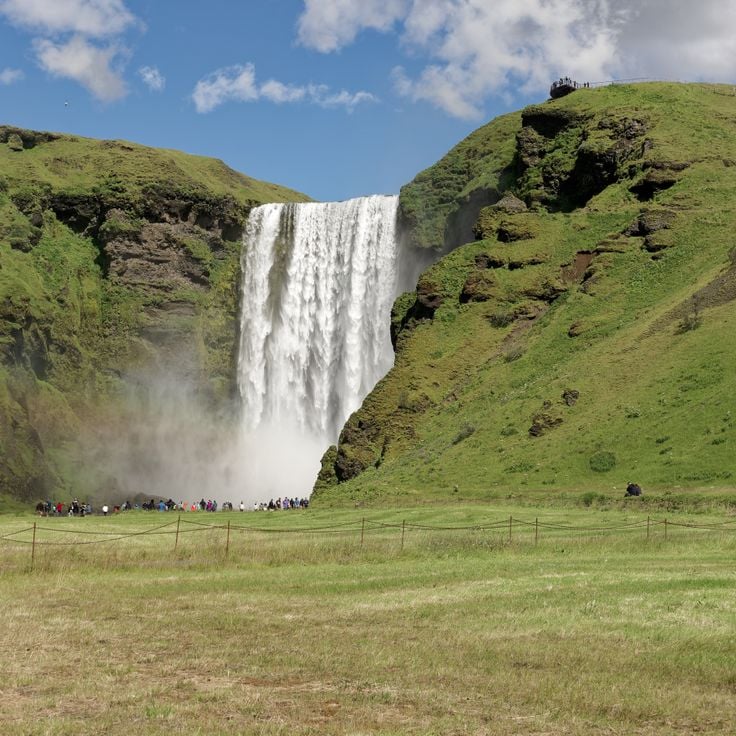
This waterfall in southern Iceland drops sixty meters over a former sea cliff that now stands inland. Skógafoss carries meltwater from two glaciers and falls with considerable force, creating a nearly constant spray that drifts over the base. Rainbows often appear when the sun is out. A staircase leads to the top of the cliff, where the river runs smooth before the edge and the view opens across a green coastal plain. The water continues downstream as a wide river after hitting the pool below. The cliff face is dark volcanic rock with patches of moss, and visitors can walk right up to the falling curtain of water, though the ground gets soaked quickly from the mist.
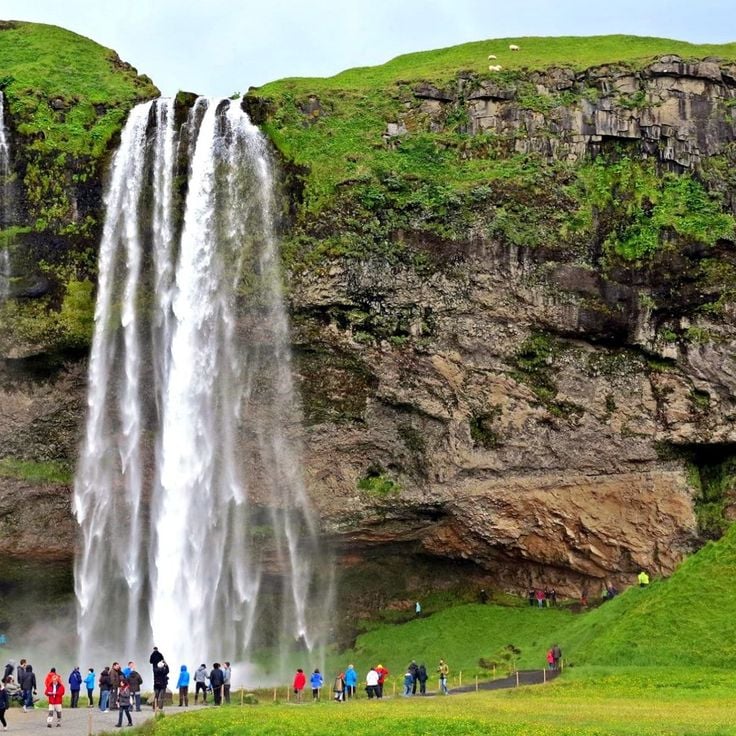
This waterfall in southern Iceland lets you do something most others don't: walk behind the falling water. A narrow path leads into a natural hollow between the rock face and the curtain of water. From there you see the landscape through the fall itself, while spray rises and everything gets wrapped in damp mist. The water comes from the Eyjafjallajökull glacier and drops about two hundred feet (sixty meters). The ground is slippery, your clothes get soaked, but the view makes it worth it. In the evening, when the sun sits low, the water glows orange and pink. Seljalandsfoss is among the waterfalls that show how Iceland gets shaped by glacial melt and volcanic rock.
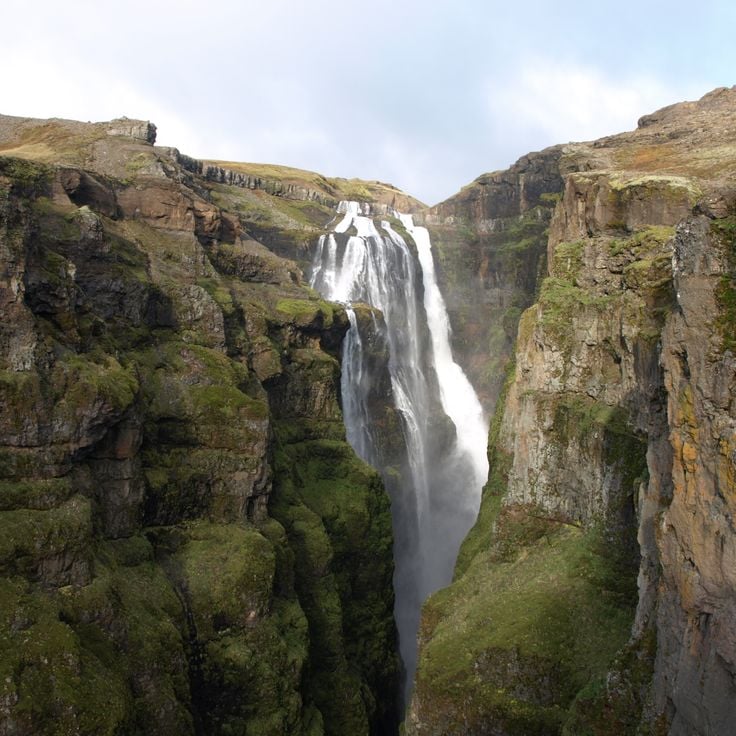
This waterfall drops nearly two hundred meters into a narrow gorge and ranks among the tallest in Iceland. The path there winds through a quiet valley where hikers wade across a shallow river and pull themselves over a stream using a fixed rope. The route follows steep rock walls, past caves and scree fields, until the gorge opens and the water falls in a long narrow ribbon. On some days mist forms and drifts across the rock face in the wind. The surroundings feel raw and still, with little vegetation except moss and scattered low shrubs. This is one of those Icelandic waterfalls that asks for some effort, but the hike itself provides much of the reward.
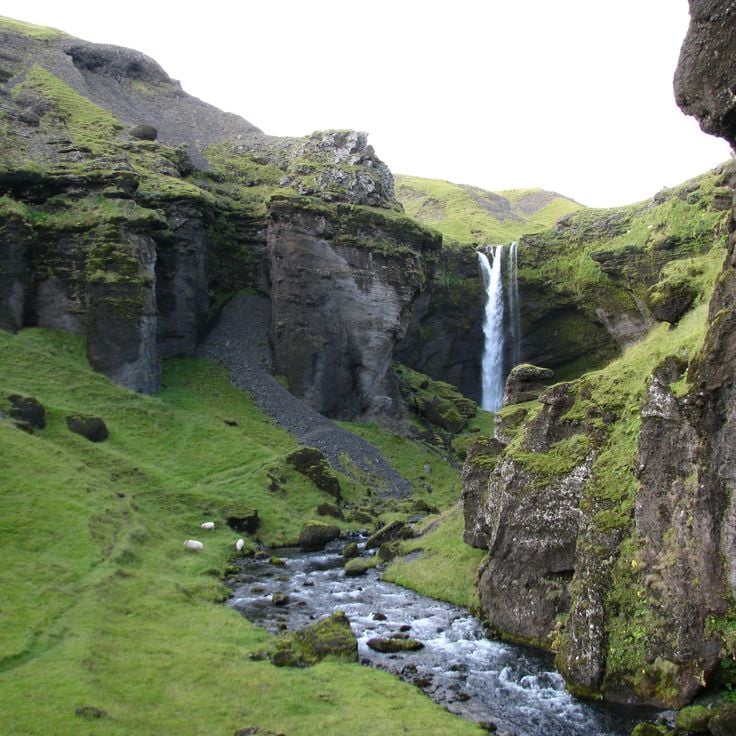
This cascade sits a short walk from the better known Skogafoss and drops between steep rock walls into a small hollow. The narrow path leads behind the curtain of water, allowing visitors to experience the place from an unusual angle. The water falls roughly one hundred feet over moss covered basalt and creates a fine mist that shifts depending on the light. The gorge is tight and gives the whole scene an enclosed feeling that is less common at the larger falls along the south coast. Kvernufoss sees fewer visitors than the main attractions in the area, which means the surroundings often stay quiet. Vegetation grows thick against the walls, and in summer the green contrasts with the dark rock and the pale water.
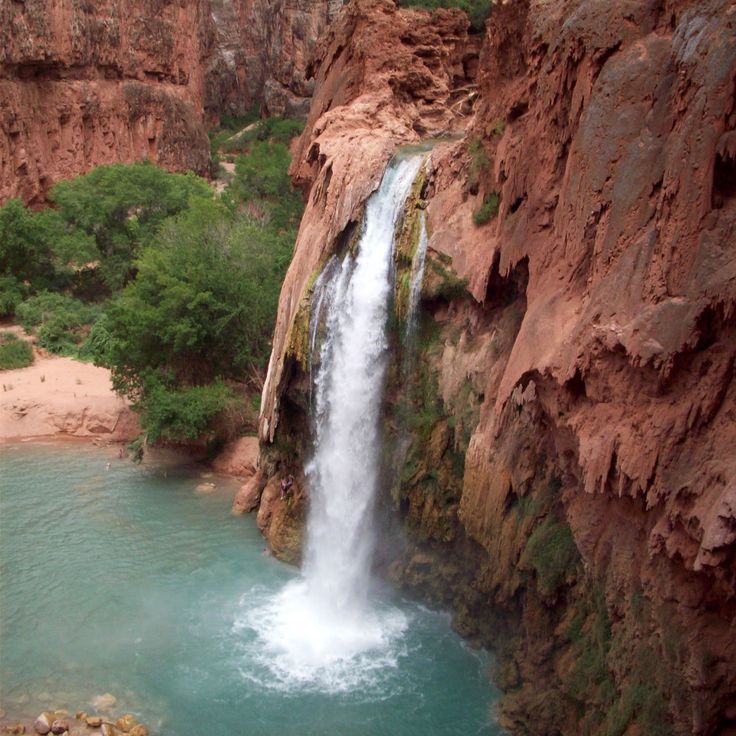
This waterfall drops between red rock walls in a remote section of the Grand Canyon. The turquoise water pools at the base of the cascade. The color comes from minerals in the rock that have dissolved into the water over time. The site sits on Havasupai land and can only be reached on foot. The hike leads through narrow canyons and dry terrain. Havasu Falls is part of a series of waterfalls along Havasu Creek, shaped by similar travertine deposits.
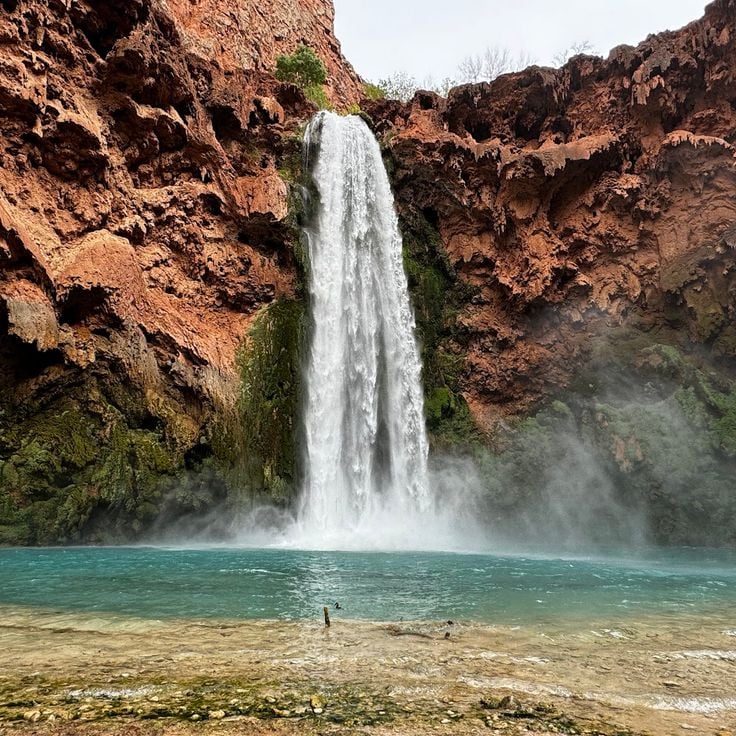
This waterfall drops 62 meters into a narrow canyon within the Havasupai territory of the Grand Canyon. The water is turquoise blue from dissolved minerals and collects in a pool between red limestone walls. The descent goes through tunnels and down iron ladders bolted directly into the rock face. Travertine formations at the base of the falls continue to grow as water flows over them, depositing layer after layer. The canyon is narrow and damp, mist hangs in the air and makes the stones slippery. Hikers must climb through caves carved out by water. The location sits away from main routes and requires a multi-day hike through desert terrain.
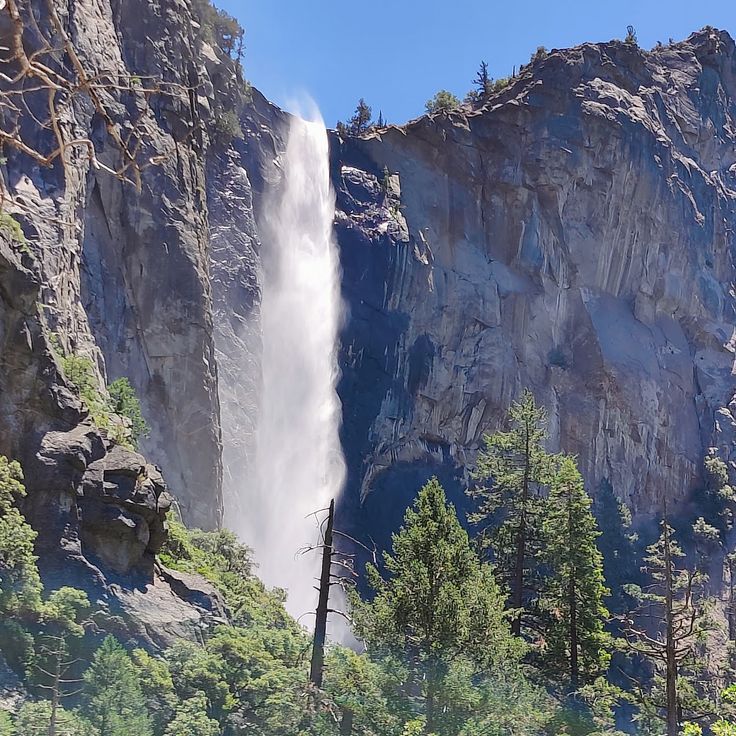
This waterfall drops over a vertical granite face and falls more than 600 feet (180 meters) to the valley floor. The water breaks into mist before it reaches the ground in Yosemite Valley. On windy days the spray blows sideways like a veil caught in a draft. In spring when snowmelt is heavy the fall runs wide and full. By late summer it sometimes dwindles to almost nothing. A short trail from the parking area leads to the base where you can walk through damp spray. This waterfall is among the first landmarks you see when entering the valley.
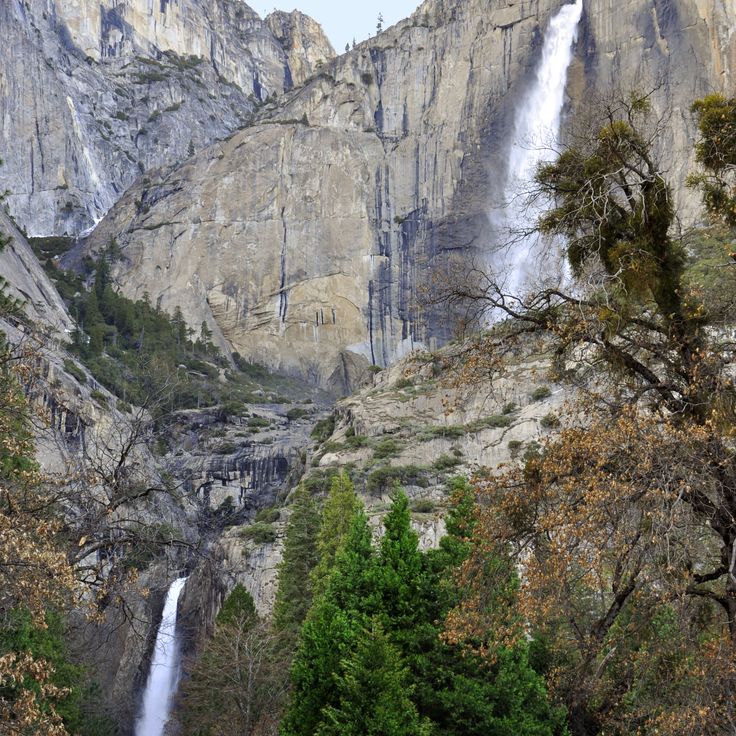
This waterfall in Yosemite National Park drops from the granite walls in three sections. In spring, snowmelt from the mountains brings large volumes of water, and the falls reach their full force. Later in the year the flow weakens, sometimes disappearing almost entirely. The pool at the base collects the water before it continues into the valley. A trail leads to the top, though most visitors stay below in the valley to watch.
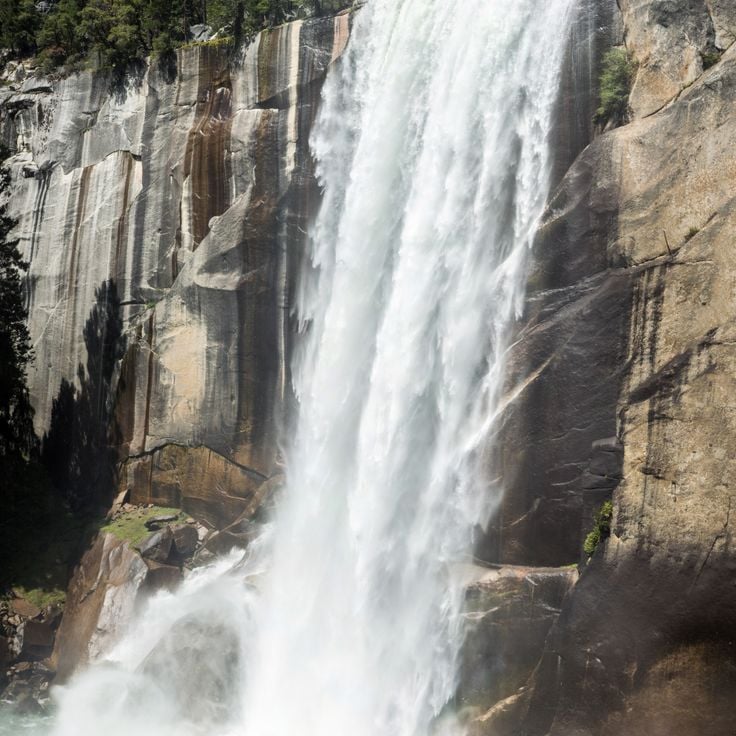
This waterfall drops over a granite wall in Yosemite Valley and hits the rocks below, sending up a fine mist. The river comes from the upper parts of the park and falls here in one unbroken plunge. A trail leads up from the valley floor, often over steep steps cut into the stone. People who come in late spring or early summer see the most water, fed by snowmelt from higher ground. In fall the cascade narrows. The trail offers views of the wall and the trees around it.
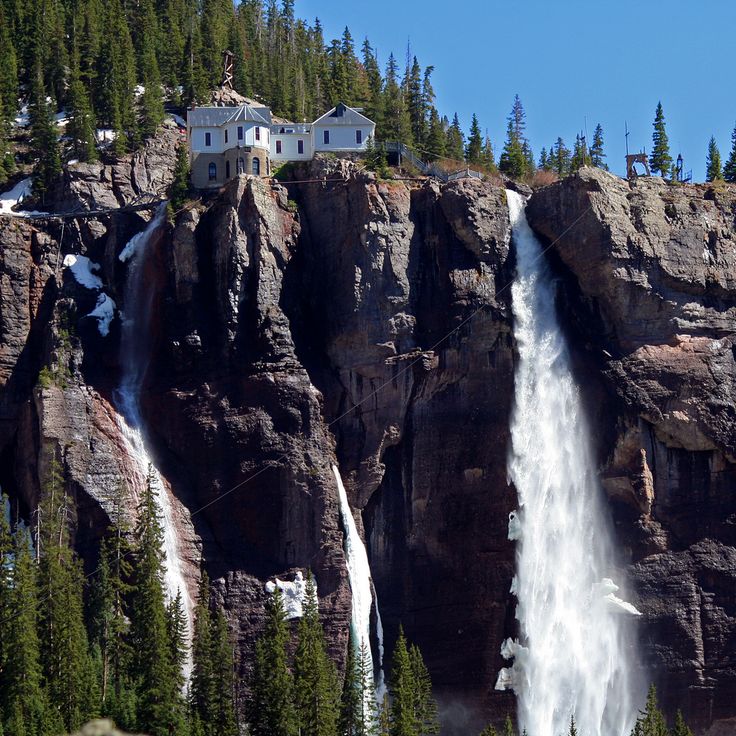
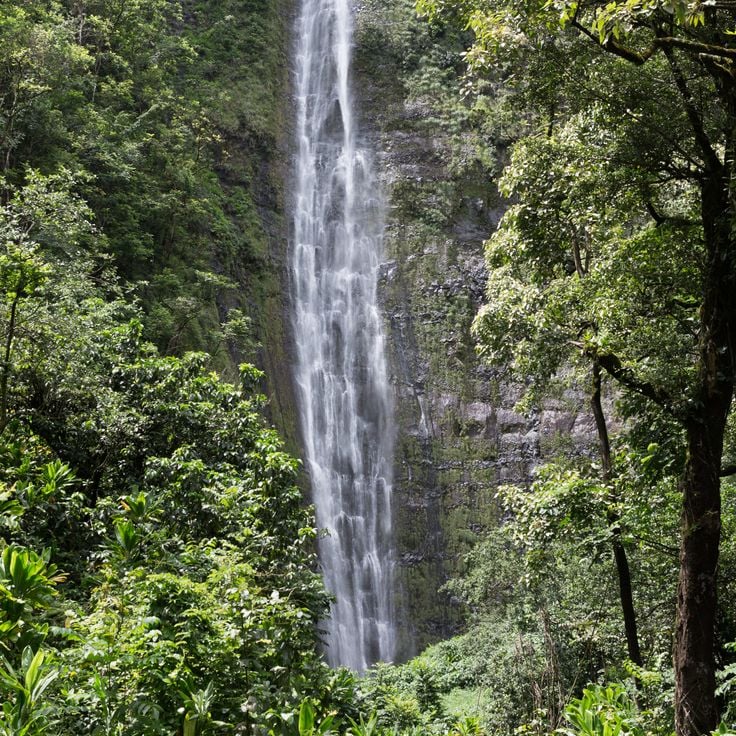
This waterfall sits at the end of the Pipiwai Trail in Haleakalā National Park on Maui. The water drops about 400 feet (120 meters) down a dark basalt wall, surrounded by thick rainforest and bamboo groves. The trail leading here passes through wet terrain with tree ferns and moss covered stones. At the base, the water collects in a shallow pool before continuing downstream. The air smells of damp leaves and earth.
This waterfall on Hawaii drops about 442 feet (135 meters) over a dark green basalt cliff covered in ferns and moss. The water falls through dense tropical growth. A short paved path leads through the rainforest to the overlook, passing bamboo groves and wild orchids. The air smells of wet earth and blossoms. Mornings often bring mist hanging between the trees, and afternoons sometimes break sunlight through the canopy to create a brief rainbow in the spray. The walk is not long, but parts can be slick from constant moisture. Nearby sits a smaller waterfall also worth visiting. The area belongs to the Hamakua Coast, where waterfalls occur frequently. Visitors rarely stay longer than an hour, but those few minutes at the overlook tend to stay in memory.
This waterfall sits about half an hour east of Seattle, where the Snoqualmie River drops off a rock ledge. The water falls roughly 270 feet into a deep pool surrounded by thick forest. A viewing platform at the top offers a direct look at the cascade and the valley below. A trail leads down to the base, where the spray becomes noticeable and the sound of falling water fills the space. The surroundings are green and damp, typical of the region west of the Cascade Mountains. A power plant next to the falls uses part of the river for electricity, though it's barely visible from the viewing points. When it rains heavily, the river swells and the waterfall becomes wider and louder. In winter, ice can cling to the rocks. The site is part of the ancestral territory of the Snoqualmie people, who have long regarded the falls as sacred.
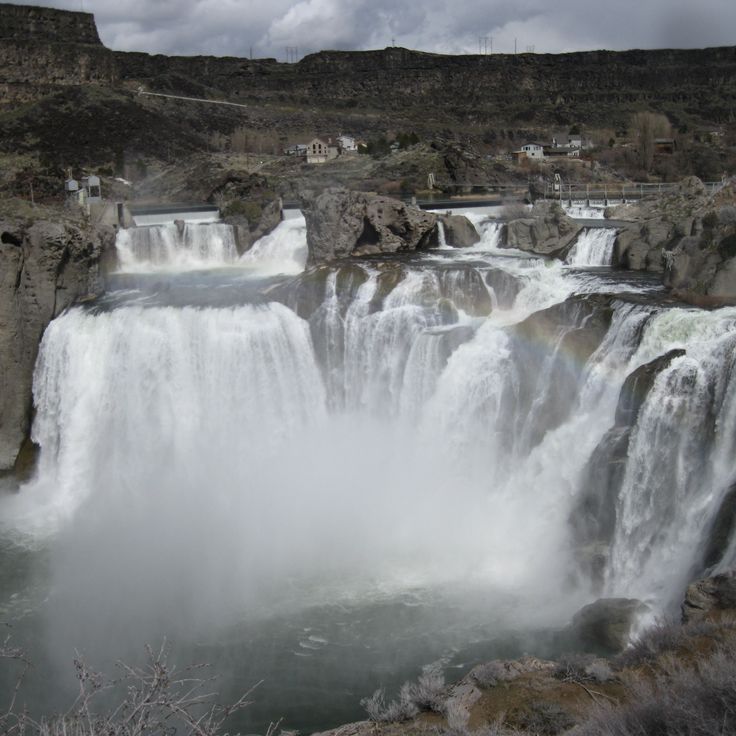
This waterfall in southern Idaho drops 65 meters into a narrow canyon carved by the Snake River. The river squeezes through black basalt cliffs before pouring over a broad ledge in a curtain of white water. It stands taller than Niagara Falls, though fewer people make the trip. In spring, when snowmelt swells the river, the volume increases and the falls show their full force. By summer, upstream diversions for agriculture reduce the flow considerably, sometimes to a trickle. A small park at the rim gives access to several viewpoints overlooking the drop and the surrounding desert landscape. The area is dry and open, with sparse vegetation except along the riverbanks where cottonwoods and willows take root. The sound of falling water echoes off the canyon walls when the river runs high.
This waterfall drops from the coastal cliffs of California straight onto the sand of a small, crescent shaped cove. The water falls about forty meters, and at high tide it flows into the sea, while at low tide it forms a small pool on the beach. The cove is enclosed by steep, vegetated slopes, and access to the beach is closed off. You can see the falls from a short trail in the state park that runs above the water and offers an open view downward. The scene feels secluded even though the park sits along a busy coastal highway. Sometimes the water takes on a green or turquoise color, especially when the sun hits it at a favorable angle. On foggy days, the lower part of the waterfall disappears into the mist. Many visitors come in the late afternoon, when the light softens and the Pacific lies calm. The place feels quiet and almost untouched, largely because no one can walk directly down to the water.
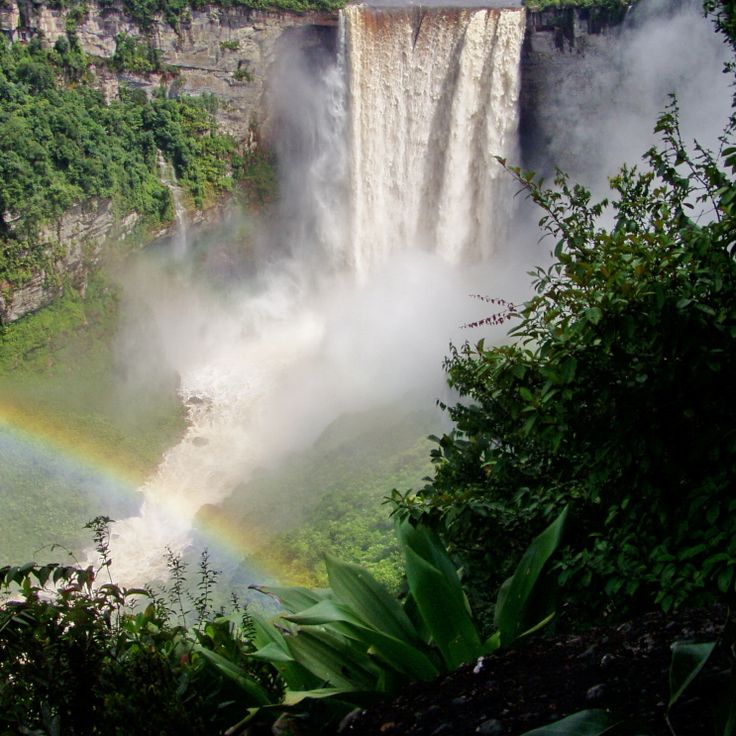
This waterfall sits in the Potaro-Siparuni region, deep in the rainforest and far from any town. The water drops over a sandstone ledge about 740 feet (226 meters) into a foaming pool below. The surrounding forest is thick and difficult to reach. Most visitors arrive by small plane because roads are scarce. Low shrubs grow at the cliff edge, and birds sometimes circle through the mist. The river is wide and brown, and the sound carries a long way. Humidity hangs in the air constantly.
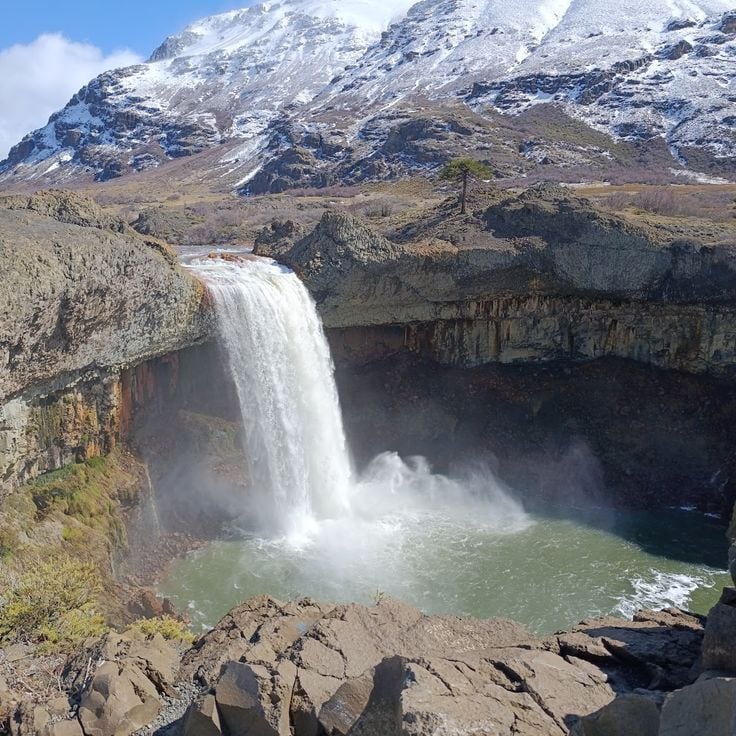
This waterfall sits in Neuquén Province in western Argentina, where volcanic landscapes shape the surrounding terrain. The Río Agrio drops over a ledge of dark basalt, falling more than thirty meters into a narrow gorge below. The name refers to the slightly acidic taste of the water, which carries sulfur compounds from the rock upstream. The river changes color depending on the light, shifting between gray and turquoise. Access follows a gravel road across a sparse plateau dotted with low scrub and occasional rock formations. Nearby hot springs and geysers belong to the same volcanic system. The air carries a faint smell of sulfur. Few visitors make the trip, and the sound of falling water often fills the silence.
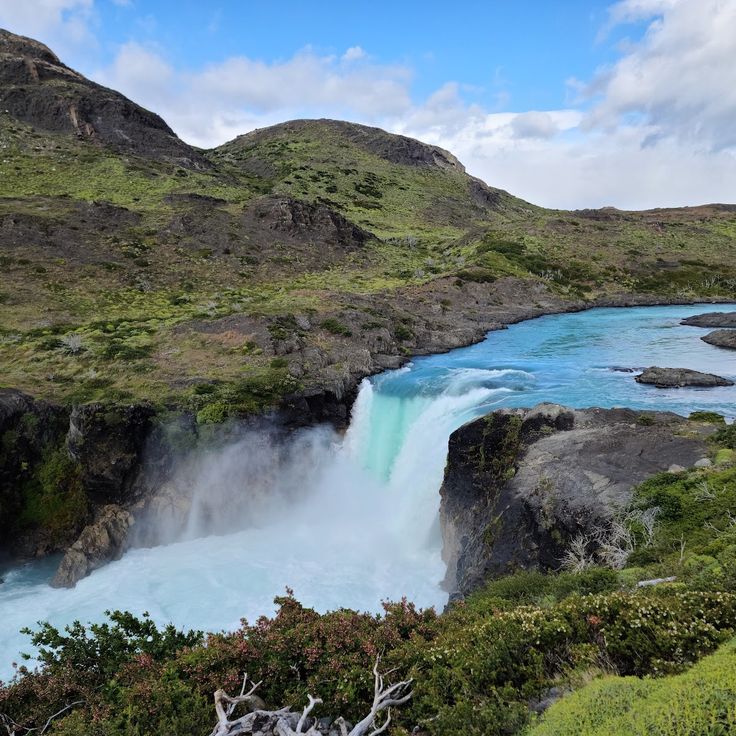
This viewpoint sits at the edge of Salto Grande, where the turquoise waters of Lake Pehoé rush through a narrow gap in the rock and drop into the lower Lake Nordenskjöld. The water crashes with force, sending spray high into the air when the wind picks up. From here you also see the grey peaks of the Cuernos del Paine rising behind the cascade. The spot is one of the most visited points in the park, especially in the late afternoon when sunlight strikes the rocks and the horns beyond.
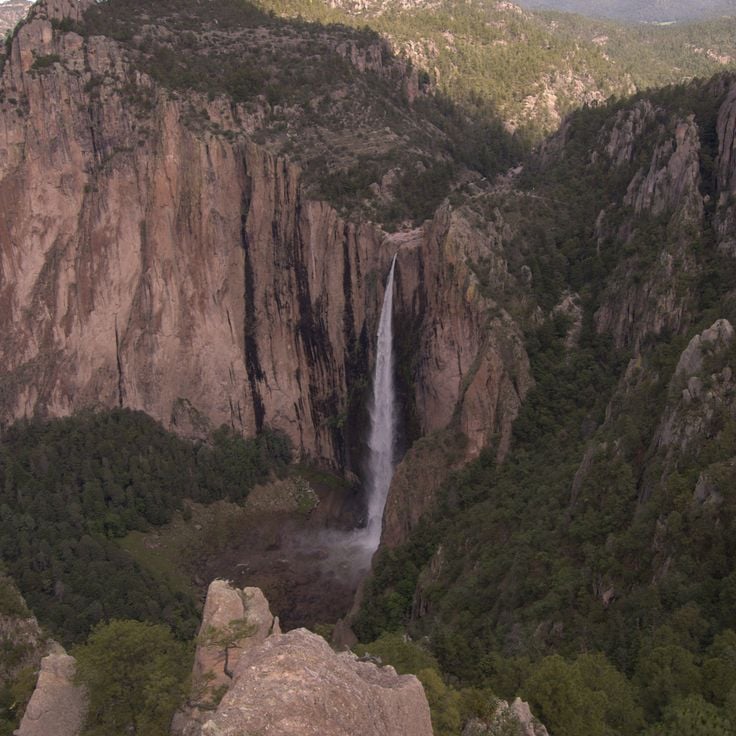
The 807 foot (246 meter) waterfall drops from a ledge in the canyon and lands in a pool surrounded by pine forest. This waterfall sits in a remote part of the Sierra Madre Occidental, where the climate runs cool and the air grows thinner. Trails lead to the upper rim and down to the base, where mist gathers. The best months fall between July and September, when the river swells from summer rains and the water shoots over the edge with force.
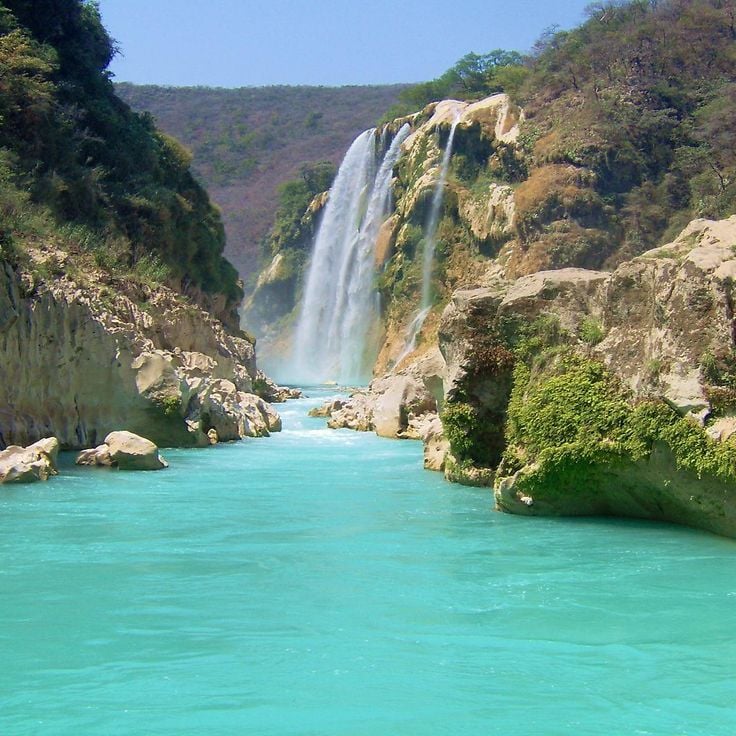
This waterfall wall in the Huasteca Potosina drops nearly 105 meters over an arc of turquoise limestone. The water pours into a river section where the quiet water of the Tampaon meets the current of the Santa María. You reach Cascada de Tamul by canoe or boat, because the rocks do not allow a footpath directly from the shore. The walls are covered with tropical greenery that extends to the edge of the cliff. Mist rises from the impact and settles on the stone surface. Locals sometimes steer their boats close to the curtain until the spray hits the water. Caves open in the rock face behind the fall, but most are barely accessible from the river. During the rainy season the water flow swells and the color of the basin shifts from turquoise to dull green. In the dry season the volume becomes less, but the cascade keeps its shape. The place sits far from larger towns, and the drive passes through small villages that rely on farming and fishing.
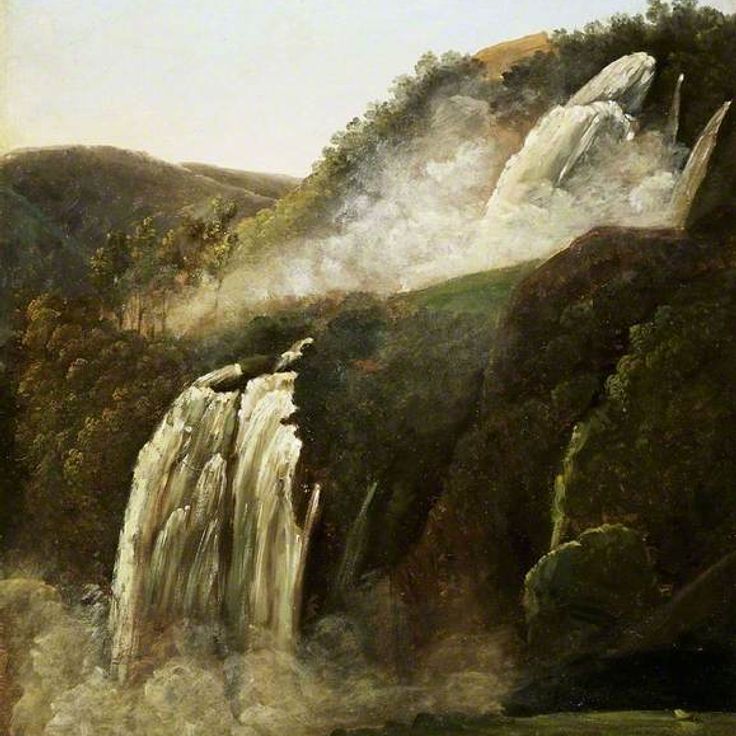
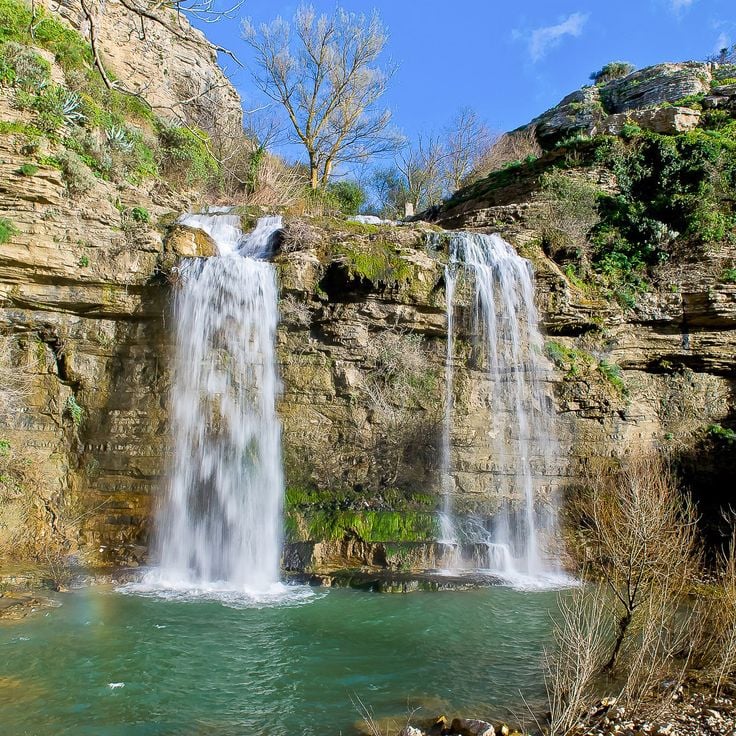
This stepped fall in Umbria was created over two thousand years ago by Roman engineers who diverted the Velino River into the Nera. The water now drops through three main sections, with artificial gates controlling the flow. Dense spray surrounds the lower pools while narrow paths allow visitors to reach different levels. On certain days the gates open and the discharge increases, showing the full force of the drop. The surrounding area grows thick with greenery that thrives on the constant moisture.
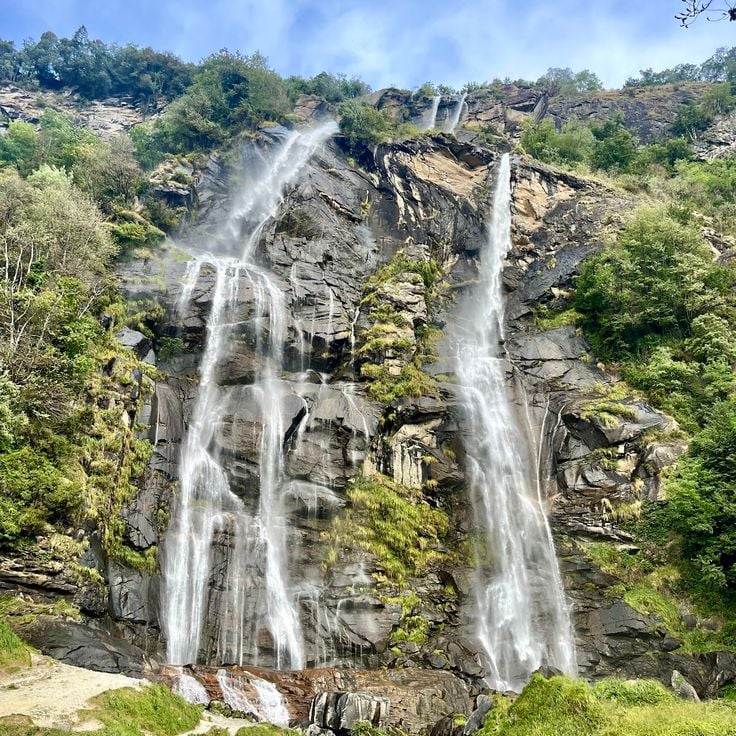
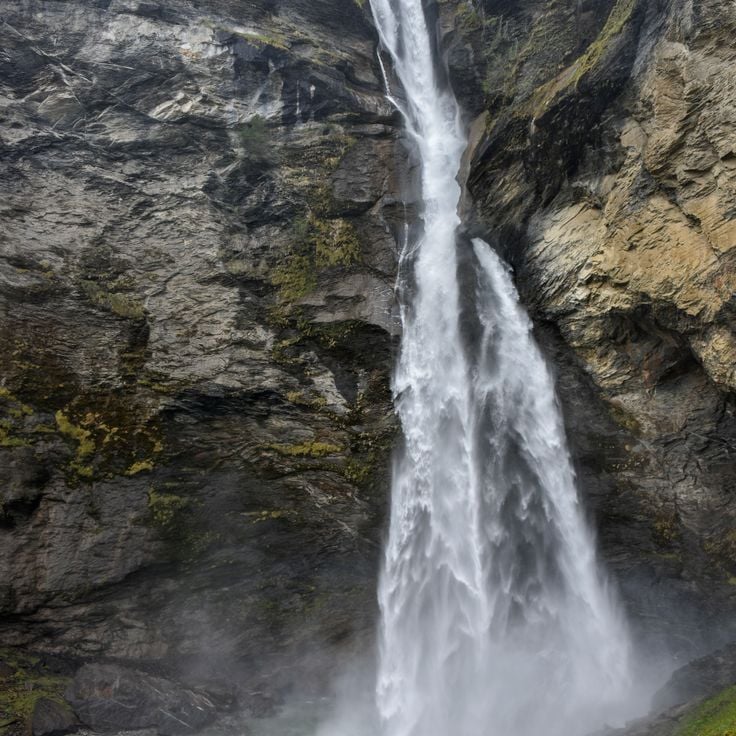
The Acquafraggia waterfalls drop in stages down a steep rock face, surrounded by thick mountain forest. A walking path leads close to the individual cascades, where water rushes over moss covered stones. The air feels cool and damp, especially after rainfall when the flow increases. The path climbs gradually and offers different viewpoints of the falling water. Leonardo da Vinci mentioned these falls in his notebooks when he traveled through the region. The setting remains calm even though the falls are visible from the valley below.
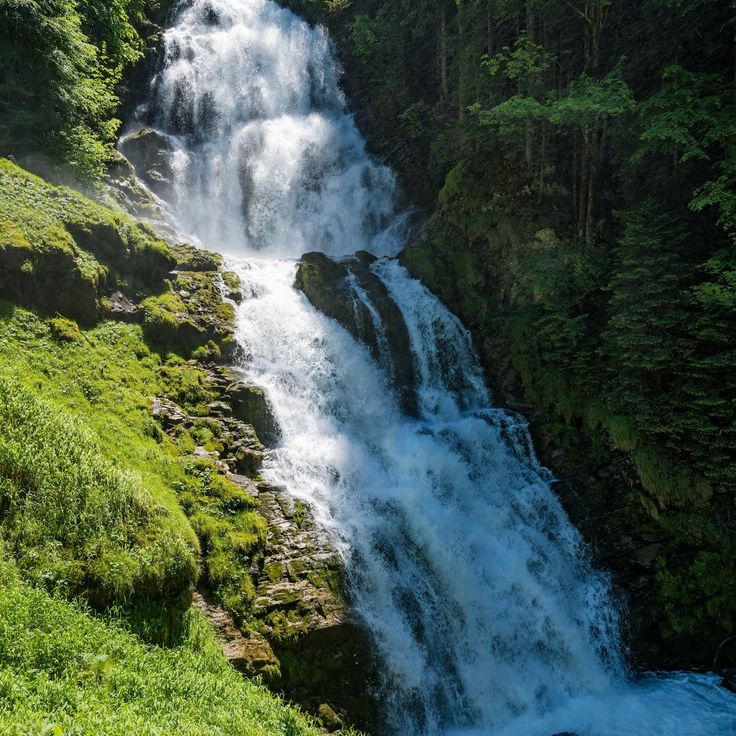
The Cascata delle Due Rocche is a waterfall in the Italian Alps that drops over mossy rock faces and squeezes between two prominent stone formations. Water collects in a small pool at the base, surrounded by thick greenery and damp stone. The trail here involves narrow paths and requires some sure footing, but the seclusion keeps the place quiet. In summer the air stays cool, and spray settles on your skin. This waterfall belongs to those places you find more by chance or recommendation than by signage.
The Reichenbach Falls are a series of five cascades in the Bernese Oberlands, where milky glacier water drops over rock ledges into the valley below. This waterfall became famous worldwide through Sherlock Holmes, who fought his final battle here in one story. A funicular takes visitors to a platform above the large middle section, from where you can see the main drop and the narrow valley. In early summer the falls swell with snowmelt and create a thick mist that drifts out to the railway station. The path along the gorge can be slippery from the spray. The landscape around it is alpine and steep, with pine forests on the lower slopes and bare rock higher up.
This waterfall drops in several stages through forested terrain above Lake Brienz. The water falls over a series of rock ledges connected by dense greenery. A historic hotel from the 1870s sits right beside it, offering views of the falling water. A funicular from the same era climbs from the lakeshore to the base of the falls. The setting remains relatively quiet, especially outside peak season. Walking paths wind along the different levels of the cascade, and wooden bridges cross the stream at several points. The sound of falling water accompanies every step through the thick forest cover.
This waterfall drops nearly 300 meters over a vertical rock face in the Lauterbrunnen Valley. The water breaks into fine mist before it reaches the ground. On windy days the spray drifts across the meadows and trails nearby. The height makes the stream look thin, especially in late summer when the flow is low. In spring, when snow melts, the volume increases. You can walk close to the base and hear the impact. A path leads behind the rock where you can look out through an opening at the falling water. The surrounding landscape is made up of green slopes and scattered farmhouses. The mist keeps the air cool and damp even on warm days.
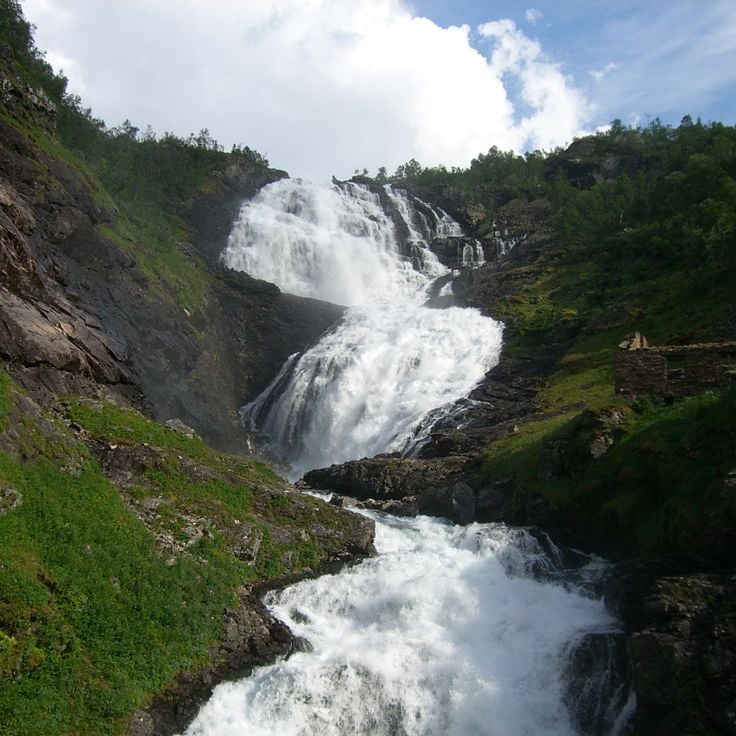
This waterfall drops 225 meters along the rail line between Flåm and Myrdal and counts among the known stops on Norway's mountain railway. The Flåm Railway pauses here for about five minutes so travelers can step off and watch the spectacle. The water comes from the Hardangerjøkulen glacier and falls over several stages between steep rock walls. In summer a music performance with dancers is sometimes staged on a ledge beside the waterfall. The viewing platform sits right next to the tracks. Spray often reaches visitors, especially when meltwater runs high. The surroundings consist of bare rock, moss and scattered birch trees. The sound of falling water usually drowns out conversation.
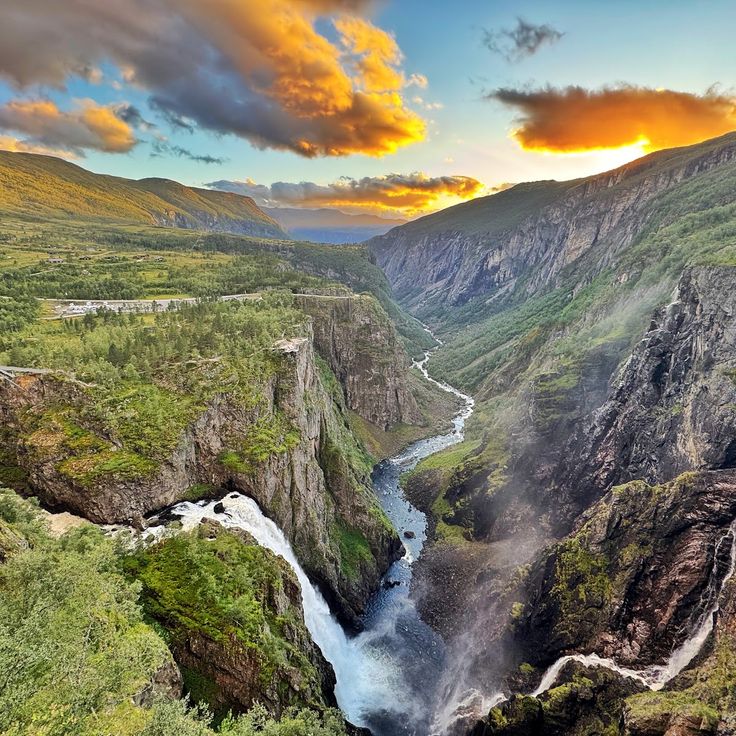
This waterfall drops 182 meters into a narrow gorge in the Måbødalen valley, east of Eidfjord. The water of the Bjoreio river falls over a rock ledge framed by bare mountain slopes. A visitor center and several viewing platforms allow a view into the valley where the river has carved its way through volcanic stone. The landscape here is rough and shaped by the ice age, with steep slopes and narrow watercourses. In summer the fall carries more water than in winter, when parts of the source are frozen. The gorge itself is lined with vegetation while the upper areas remain mostly barren.
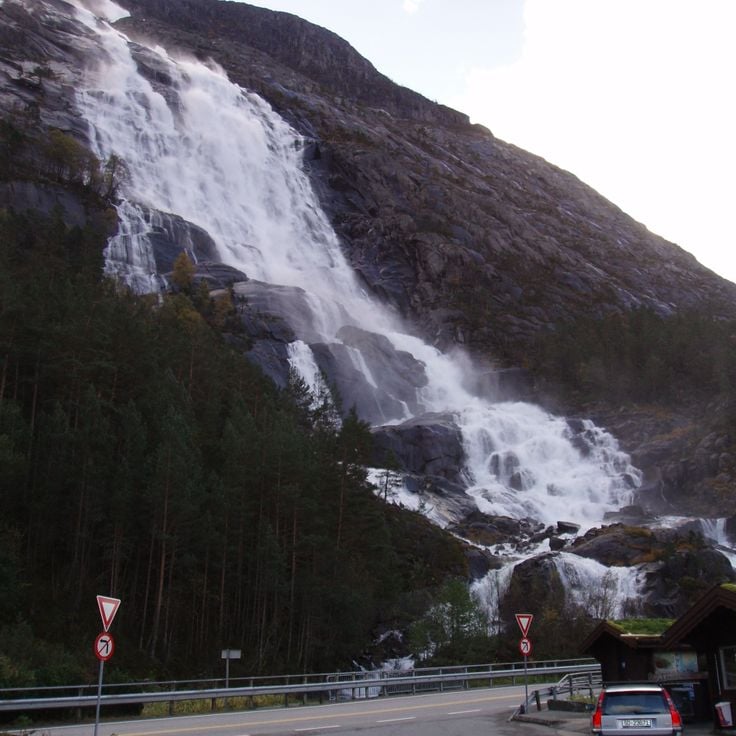
This waterfall drops nearly 2,000 feet straight down into the Akrafjord, in one of the quieter sections of Norway's fjord country. Langfossen comes off the mountain Skarsfjellet and tumbles over bare rock in several cascades, with the road running along the fjord passing right at its base. Most visitors see it from the car or from a small parking area because the slope is too steep for much hiking. In spring the flow is heaviest, fed by snowmelt from the plateau. In winter parts of the lower section sometimes freeze, but the upper portion keeps moving.
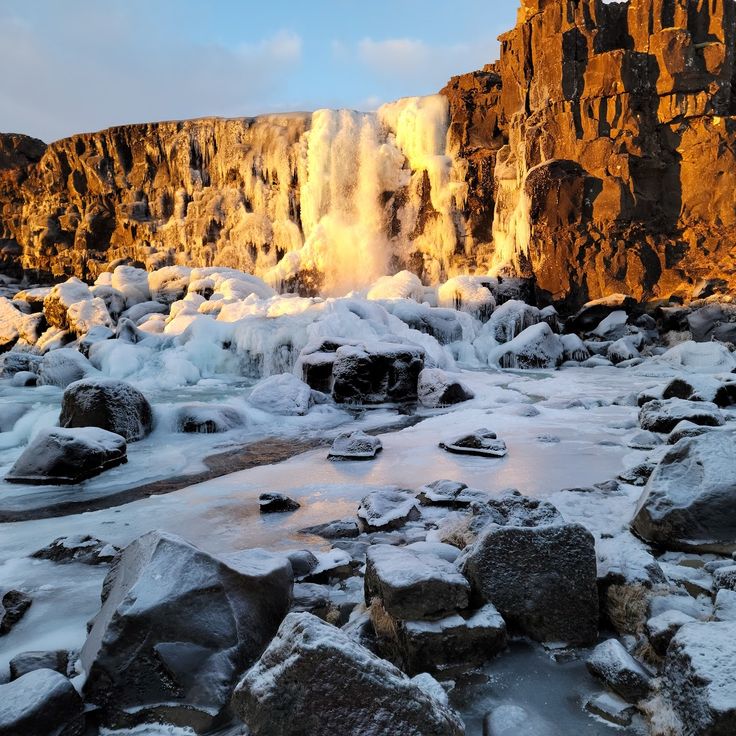
This waterfall sits in the middle of Thingvellir National Park, a place shaped by tectonic shifts and Iceland's early history. The water comes from the Öxará river and drops over dark lava cliffs into a narrow gorge. In winter parts of the falls freeze and hang like curtains of ice on the rock. In summer the flow is stronger and the water lands in a clear pool at the base. The walk to reach it is short, the ground made of old volcanic stone, sometimes slick. The surrounding land is open, with moss covering the rocks and little vegetation. You can hear the water before you see it. Some say the river was redirected centuries ago to flow closer to the Althing, where the assembly once gathered. The waterfall fits into the rough landscape, marked by fissures and cracks that run through the valley.
Plitvice Lakes in Croatia forms part of a national park where sixteen separate bodies of water connect through a chain of waterfalls flowing over limestone terraces. The water has built porous barriers over time that separate the lakes from one another while constantly creating new geological features. Wooden walkways run directly along the water, sometimes just inches (a few centimeters) above the surface. In spring the water flow is strongest, in autumn the beech and maple trees around the shores turn color. The upper lakes sit in a forested valley, the lower ones in a deeper gorge. The water shimmers in different shades of green depending on light and depth.
This waterfall sits deep in a canyon carved from red sandstone, where water drops over smooth rock walls into natural pools below. Coyote Gulch forms itself through narrow passages and wide chambers, surrounded by desert plants growing from cracks in the stone. The light shifts throughout the day and brings out different shades of red in the rock face. Hikers often wade through shallow water and climb over boulders to reach the hidden sections. The silence is broken only by the sound of falling water echoing off the canyon walls. This place is part of a collection of waterfalls around the world, where water and rock shape the landscape in ways that draw people in.
This waterfall drops 340 meters into a green pool at the base of a limestone cliff. Nohkalikai Falls sits on a forested plateau in Meghalaya, where monsoon rains turn the landscape into one of the wettest regions on earth. The water falls in a single stream, and mist rises from the bottom. The surrounding area is thickly forested, and the cliffs frame the pool below. The waterfall carries more water during the monsoon season, when the flow swells and the spray reaches farther. In drier months, the stream narrows but the drop remains visible. A viewpoint offers a look over the edge down to the pool far below. The area has a quiet quality, especially outside peak visiting times.
This waterfall in Guizhou impresses with its broad rock face and fine mist that sometimes forms rainbows when the sun hits it. What sets it apart is the cave behind the curtain of water, where you can see the falls from inside. The river splits into several smaller streams above before spilling over the edge. Different pathways at various levels show the waterfall from different perspectives - from the base to elevated points further away. The area is humid, the rocks are slippery, and the sound of falling water is everywhere.
This waterfall marks the border between Vietnam and China. The water drops 30 meters and spreads across 200 meters of width. The cascade divides into several strands that flow between boulders and green vegetation. During the rainy season the river swells and the separate streams merge into one continuous wall of water. In the dry months the individual sections become more distinct and you can see the structure of the rock behind them. The surrounding valley is shaped by rice paddies and bamboo groves that reach close to the edge of the falls. The river carries gray sediment that gives the water a milky color.
Angel Falls descends nearly one kilometer from the edge of a flat-topped mountain, making it one of the most striking natural features on the continent. The water often turns to mist before reaching the ground below. The surrounding terrain consists of dense rainforest, sheer rock walls, and isolated plateaus shaped by erosion over millions of years. Access requires river travel and hiking, as no roads reach this remote area. The water originates from small streams on the summit of Auyan-Tepui, one of Venezuela's largest table mountains.
The Seven Sisters Waterfall fits into this collection of waterfalls found around the world. Located in Geirangerfjord, this site consists of seven parallel streams that drop about 250 meters down the rock face and flow directly into the fjord. In summer, melting snow from the mountains brings more water to each stream, while in winter some nearly dry up. The granite walls are covered with moss and low vegetation. Tour boats approach close enough that you can feel the spray. Across the fjord, another waterfall called the Suitor falls on the opposite side. These two form some of the most recognized sights along this narrow waterway that runs between tall mountains.
This waterfall in Vatnajökull National Park sits on Iceland's northeastern highland, where the glacial river Jökulsá á Fjöllum drops over an edge of dark basalt. The water is grey and cloudy, filled with volcanic sediment from the interior. The roar can be heard from a distance. Heavy mist rises constantly and settles damp on the surrounding rock. The ground vibrates underfoot when you approach the edge. The gorge is deeply carved and offers a clear view of the water's force. The path to the rim is short but the ground is rough and often wet. Dettifoss shows the raw energy of a land shaped by glaciers and volcanoes.
Tugela Falls in this mountainous region drops nearly 950 meters in five separate stages from the cliff face of the Amphitheatre. The water originates from the high plateau of the Drakensberg and tumbles over dark basalt rock. The flow varies greatly depending on the season - sometimes just a thin thread, and after heavy rain a wide cascade. Access requires several hours of hiking through steep trails. The surrounding landscape consists of grassland, rock formations, and occasional mist rising from the valleys. Few visitors make the effort, which keeps the area relatively quiet.
These waterfalls belong to a collection of remarkable waterfalls and cascades from around the world that draw people in through their power and setting. Kawasan Falls consists of three consecutive drops that form natural pools with turquoise water. Tropical plants and bamboo forest surround the pools where visitors swim and rest in the shade of the vegetation. The water flows over limestone formations shaped over time. The lowest tier is the largest and most visited, while the upper pools remain quieter. The path to Kawasan Falls leads through dense forest, and the sound of falling water can be heard from a distance.
This waterfall in Fiordland is part of a collection of some of the world's most beautiful waterfalls and cascades. Sutherland Falls drops in three stages over a steep rock face, fed by a lake sitting on a high plateau above. Reaching it requires walking the Milford Track, a multiday trail through rainforest and valleys. The surroundings stay damp most of the year, often shrouded in mist, with thick vegetation growing right up to the cliff base. After heavy rain the falls swell and spray can be seen from a distance. Sutherland Falls sits well away from any paved roads in a remote mountain landscape.
This waterfall in the collection of the world's most beautiful waterfalls sits in the northwest and drops in two stages through a gorge lined with rock and ferns. The upper cascade is visible from a stone bridge built in the 1910s that has become a popular photo spot. Water comes from springs above the gorge and flows year-round. In winter, the upper tier sometimes freezes. A short trail leads to the bridge, a longer one to the top. The base is easy to reach, which makes this one of the most visited sites in the region. Still, the place stays quiet in early morning or on rainy days.
The Fairy Pools on the Isle of Skye are a chain of waterfalls and basins along the River Brittle. Clear water flows over dark rock and collects in blue pools. They sit at the base of the Black Cuillin mountains, surrounded by rough moorland and rocky slopes. On bright days the water glows in shades of turquoise, on overcast days it appears deeper and colder. Many visitors come to swim, despite the water being cold year round. The path from the car park follows the river upstream, passing several cascades and pools of different sizes. Some are shallow enough for wading, others deep enough for a full dive. The landscape is bare and windswept, typical of the Scottish Highlands. Photographers often arrive in early morning or late afternoon when the light softens and brings out the color in the water.
This waterfall drops 268 meters in a single fall, creating a constant mist at the base. The dense rainforest around it contains numerous walking tracks that wind through wet green undergrowth. The path to Wallaman Falls curves through tropical vegetation, and the sound of falling water can be heard long before the first view of the cascade. At the base, water collects in a cool pool surrounded by smooth rocks and thick plant growth. The air here feels noticeably wetter, and light breaks through the fine spray that hangs over the pool.
Wailua Falls in this collection of waterfalls and cascades from around the world shows how water descends in two tiers over a basalt cliff on the east side of Kauai. The water meets a broad pool below, surrounded by thick tropical growth. On certain days, light catches the mist in a way that reveals a rainbow. This waterfall sits along a road above, making access straightforward. The way water, light, and vegetation combine here creates moments that draw travelers in.
This waterfall in Yoho National Park belongs to a collection of the world's most beautiful waterfalls and drops over a steep rock wall, fed by meltwater from the Daly Glacier. The name comes from the Cree language and means something like magnificent or wonderful. The water falls in a long, narrow ribbon, especially powerful in early summer when snowmelt peaks. Mist rises high and wets the surrounding rocks. A short trail leads from the parking area to the base, where you feel the roar of the water hitting the ground.
Blue Nile Falls in Tisissat belongs to this collection of waterfalls and cascades from around the world. The river drops over a wide basalt cliff on the upper course of the Blue Nile. During the rainy season the water swells and creates a thick spray that often forms rainbows. The surrounding area is green and hilly, with fields and small villages nearby. A path leads through the terrain to a viewpoint facing the main cascade. The force of the water is strongest between July and September when the river reaches its peak flow.
This waterfall drops about thirty meters over a limestone cliff near the Baltic coast. Valaste forms large ice columns in winter, sometimes reaching all the way down and looking like frozen curtains hanging from the rock. The water comes from a small river that winds through wooded hills before it tips over the edge. The cliff is part of a longer stretch of coastline that falls away steeply in places. In summer you can hear the rush of water from the viewing platform. The surrounding area is quiet, with pines and birches growing close to the edge. Some visitors return several times a year to watch how the scene changes with the seasons.
This waterfall drops about 100 meters through dense rainforest and carries water throughout the year. The pool at the base sits in the shade of tall trees, and the path leading to it follows a stream through damp greenery. The surroundings remain quiet even when visitors arrive. Khlong Lan is part of a larger protected area where forest spreads across hilly terrain.
The Gocta Cataracts belong to this collection of waterfalls that draw people in. They sit in the Peruvian Andes and remained unknown to the international community for a long time, though local people have known them for generations. The water drops in two distinct tiers that together reach a height of roughly 770 meters (2,530 feet). The access path leads through cloud forest where orchids grow and hummingbirds sometimes appear. The trail can be slippery, especially after rain. The region lies far from major cities, and the surroundings have kept much of their rural character. From different viewpoints the full shape of the falls comes into view, surrounded by steep, forested slopes. The air smells of damp moss and earth.
Jog Falls forms four separate streams that drop over dark rock walls into the depths below. These cascades carry names like Raja, Roarer, Rocket, and Rani. The highest section falls more than 250 meters, and during monsoon season the water volume swells so that the individual streams merge into a wide curtain. In the dry months they separate again into distinct threads. The rock is dark and glistens wet under the falling water. Mist rises from the pool at the base and hangs in the air. This site sits away from major cities, and the approach winds through forested terrain. Visitors can view the falls from several lookout points or walk down to the base where the water strikes rock and continues downstream.
This waterfall is part of a collection of falls and cascades that draw people in. Gitgit drops 40 meters through a gorge surrounded by rice paddies and coffee groves. The water comes from forested slopes higher up and collects in a shallow basin often wrapped in mist. The path leading to it winds through dense tropical growth, where ferns and moss cover the wet stones. The surroundings stay green even during the dry months. The sound of falling water carries through the valley long before the falls come into view.
This waterfall in Arunachal Pradesh is part of a collection featuring the world's most notable waterfalls and cascades. The water drops about 100 meters over gray rock into a deep green pool. It flows from the Tawang River and hits the rocks below with a low rumble. Moisture rises from the surface and settles on the leaves around it. In the morning hours the scene is often wrapped in mist, while in the afternoon light sometimes breaks through the trees and reaches the pool. The surroundings consist of dense forest growth and the temperature is usually cooler than in open terrain.
This waterfall in the Catalan highlands is part of a collection celebrating the world's most striking waterfalls. Salt de Sallent falls in two stages over 100 meters (330 feet) through a narrow gorge between smooth rock walls that stay damp most of the year. The water comes from forested slopes and has carved deep into the stone. A viewing platform gives you a clear look at both tiers, with the lower section often hidden in shadow. The path to the viewpoint winds through mountain forest, and in some places the ground can be slippery. The gorge itself is deep and narrow, shaped by water over a very long time. In warmer months the surroundings are thick with green growth, and in autumn the trees turn shades of orange and red. With its great height, Salt de Sallent ranks among the taller waterfalls in this region of Spain.
This waterfall drops about 40 feet down the cliffs and meets the Pacific Ocean directly. The trail leading there passes through coastal forest on the Point Reyes peninsula, where the contrast between fresh water and ocean surf becomes especially clear. The water forms a narrow curtain that flows stronger or barely visible depending on season and rainfall. At low tide the water collects briefly on the beach before mixing with the waves. This place belongs to a collection of waterfalls around the world where the sound of falling water, the mist that rises from below, and the way light catches the spray draw people in and create unforgettable moments.
This waterfall in the Atlas Mountains belongs to a collection celebrating natural falls around the world. Here the water drops in three successive stages over limestone cliffs, creating a scene shaped by the rock and the surrounding terrain. At the base, a wide pool sits surrounded by oleander bushes and wild fig trees. When sunlight hits the spray, rainbows often appear in the mist. Berber villages dot the area, and olive groves climb the slopes. Local monkeys live in the trees around the gorge, and narrow trails run along the edge and down to the basin below.
This waterfall at Powerscourt Estate drops about 120 meters down a rocky slope into a wooded valley. Beech, oak and conifer trees grow along the hillsides around the pool at the base. A path leads down to where the water hits the rocks and sends a light mist into the air. The setting feels quiet, especially on weekdays when fewer visitors arrive. Powerscourt Waterfall sits in County Wicklow, a region of low mountains and dense forest known for its hiking trails and gardens.
This waterfall in eastern Iceland shows a contrast common in the region. On both sides rise dark basalt columns with hexagonal cross sections. They form a natural frame of volcanic rock that cooled into shape long ago. The Fjarðará River drops about 30 meters over the edge. The water moves through narrow gaps and then hits boulders at the base of the wall. The columns appear almost artificial in their uniformity but nature shaped them. The surroundings are raw, often misty and covered in moss. You reach Litlanesfoss on a walking path that also leads to other falls. The combination of flowing water and geometric stone makes this place a strong example of Iceland's volcanic terrain.
This waterfall in Vatnajökull National Park drops over hexagonal basalt columns formed from cooled lava. The black rock creates a natural wall behind the falling water. The columns resemble organ pipes and frame the cascade. A trail leads through birch woods and past smaller waterfalls. This formation shows how lava crystallizes as it cools slowly. The name means black waterfall.
Dawson Falls in Egmont National Park flows about 60 feet over dark lava rock. The path to it winds through dense rainforest where ferns and moss cover the ground and tree trunks. Water from Mount Taranaki feeds the fall, collecting in a shallow pool at the base. The marked and maintained trails move through damp forest with thick undergrowth. On quiet days you can hear the water from a distance. The air stays cool and moist even in warmer months, and mist often hangs between the trees.
Agua Azul Waterfalls drops over a series of limestone steps in the Chiapas jungle, where mineral-rich water takes on a turquoise color. The river splits into several arms that flow parallel over shallow basins before dropping further downhill. Some sections form pools, while others send water rushing faster over smooth rock slabs. The color shifts with the light and the season, appearing more intense on dry days and becoming clouded by sediment during the rainy months. Narrow paths run along the banks, where tree roots grow over the stones and ferns hang between the cracks.
This waterfall in Iceland belongs to this collection of waterfalls and cascades around the world that draw people in. Gljúfrabúi sits hidden inside a narrow rock cleft. Water drops about 40 meters, framed by the walls of a tight canyon. To reach it, you wade through a narrow passage, sometimes with wet feet. Mist rises between the rocks, and light falls through the opening at the top. Most visitors head to Seljalandsfoss just next door, but Gljúfrabúi stays quieter. You hear the water from outside, but only when you step in do you understand the shape of the place. The walls close the space in, and the feeling is different from the open waterfalls elsewhere in the region.
Erawan Falls belongs to this collection because it shows how water shapes stone over time and creates spaces that draw people in. This waterfall descends over seven limestone tiers through tropical forest. Each level forms a natural pool where turquoise water collects and small fish swim around the legs of visitors. The lower tiers are easy to reach and tend to attract more people, while the upper levels remain quieter and require more effort to access. The trail follows the watercourse upward through dense shade. On warm days both locals and travelers use the pools for swimming. The water stays cool and the current remains gentle enough for safe bathing. Erawan Falls sits within a national park, where monkeys occasionally appear on the paths and bamboo groves line the banks.
This waterfall fits into this collection as a place where flowing water creates pools and invites visitors to pause. Tiu Kelep Waterfall sits in the foothills of Mount Rinjani and drops over a rock face surrounded by thick tropical forest. The spray at the base fills the air with fine mist, and you hear it before you reach the spot. A narrow path leads through bamboo groves and crosses small streams before arriving at the rock wall where water comes down. The force of the water can be strong enough that you walk through a curtain of mist to get closer. Many visitors swim in the cool pool below, which is edged by moss-covered stones. The nearby village organizes walks to the site, usually in the early morning hours when fewer people come. Some days the water flows calmer, other days the current runs heavy. This part of the island is less accessible than other areas, which makes the place feel somewhat isolated.
This waterfall at Kuang Si flows over a series of terraced limestone formations that create turquoise pools where visitors can swim in several spots. The main fall drops about 60 meters. The surrounding forest provides shade and keeps the air cool even on warm days. Wooden walkways and trails lead between levels, passing smaller cascades and pools. Many people spend the afternoon here, moving between pools or sitting on the flat rocks along the edges. The area is large enough that quieter sections can usually be found away from the main viewing points.
Gullfoss is part of a collection of waterfalls and cascades around the world that draw people in. This waterfall drops 32 meters in two stages into a canyon carved by the Hvítá river. In winter ice forms along the rock walls. The river carries sediment from Langjökull glacier, which turns the water gray. On sunny days rainbows appear in the spray. The upper tier falls to the south, the lower one bends east and disappears into a narrow crevice. From the edge of the canyon you can see how the water forces its way between the basalt walls.
Semuc Champey is a natural limestone bridge that spans the Cahabón River. Beneath this bridge, water flows through while turquoise pools collect on the surface. The water gathers at different levels, creating a series of interconnected pools that stretch across the landscape. Dense mountain forest surrounds the site, making it remote and difficult to reach. Many of the pools are suitable for swimming, and the clear water reveals the rocky bottom. The journey to Semuc Champey takes you over unpaved roads away from the main routes.
This waterfall drops 896 meters in five stages through the cloud forest of the northern Andes. Yumbilla Falls sits in a remote area where thick vegetation and moist air define the climate. Getting there requires a several hour hike along narrow trails that wind through forest and small settlements. The water falls over moss-covered rock, and fine mist often hangs among the trees. The surroundings remain quiet, with occasional bird calls and the constant sound of falling water. The best views come from different lookout points along the route, where the full height becomes visible. Most visitors come from the nearest town of Cuispes, and the infrastructure stays simple. Humidity is high, and the ground can be slick. This formation is one of the tallest uninterrupted waterfalls in Peru, though it remains less visited than other destinations in the region.
This waterfall drops about 185 meters over limestone cliffs in a canyon surrounded by wooded slopes. The water separates into several strands as it falls, turning to mist before reaching the ground. In winter, ice columns form on the wall, attracting climbers. The Provo River runs through the valley, and the road follows its course with views of the rock face. The area was used for industry in the past, and some old foundation remains stand near the base. Access follows a short path from the road.
This waterfall in southern Iceland drops sixty meters over a former sea cliff that now stands inland. Skógafoss carries meltwater from two glaciers and falls with considerable force, creating a nearly constant spray that drifts over the base. Rainbows often appear when the sun is out. A staircase leads to the top of the cliff, where the river runs smooth before the edge and the view opens across a green coastal plain. The water continues downstream as a wide river after hitting the pool below. The cliff face is dark volcanic rock with patches of moss, and visitors can walk right up to the falling curtain of water, though the ground gets soaked quickly from the mist.
This waterfall in southern Iceland lets you do something most others don't: walk behind the falling water. A narrow path leads into a natural hollow between the rock face and the curtain of water. From there you see the landscape through the fall itself, while spray rises and everything gets wrapped in damp mist. The water comes from the Eyjafjallajökull glacier and drops about two hundred feet (sixty meters). The ground is slippery, your clothes get soaked, but the view makes it worth it. In the evening, when the sun sits low, the water glows orange and pink. Seljalandsfoss is among the waterfalls that show how Iceland gets shaped by glacial melt and volcanic rock.
This waterfall drops nearly two hundred meters into a narrow gorge and ranks among the tallest in Iceland. The path there winds through a quiet valley where hikers wade across a shallow river and pull themselves over a stream using a fixed rope. The route follows steep rock walls, past caves and scree fields, until the gorge opens and the water falls in a long narrow ribbon. On some days mist forms and drifts across the rock face in the wind. The surroundings feel raw and still, with little vegetation except moss and scattered low shrubs. This is one of those Icelandic waterfalls that asks for some effort, but the hike itself provides much of the reward.
This cascade sits a short walk from the better known Skogafoss and drops between steep rock walls into a small hollow. The narrow path leads behind the curtain of water, allowing visitors to experience the place from an unusual angle. The water falls roughly one hundred feet over moss covered basalt and creates a fine mist that shifts depending on the light. The gorge is tight and gives the whole scene an enclosed feeling that is less common at the larger falls along the south coast. Kvernufoss sees fewer visitors than the main attractions in the area, which means the surroundings often stay quiet. Vegetation grows thick against the walls, and in summer the green contrasts with the dark rock and the pale water.
This waterfall drops between red rock walls in a remote section of the Grand Canyon. The turquoise water pools at the base of the cascade. The color comes from minerals in the rock that have dissolved into the water over time. The site sits on Havasupai land and can only be reached on foot. The hike leads through narrow canyons and dry terrain. Havasu Falls is part of a series of waterfalls along Havasu Creek, shaped by similar travertine deposits.
This waterfall drops 62 meters into a narrow canyon within the Havasupai territory of the Grand Canyon. The water is turquoise blue from dissolved minerals and collects in a pool between red limestone walls. The descent goes through tunnels and down iron ladders bolted directly into the rock face. Travertine formations at the base of the falls continue to grow as water flows over them, depositing layer after layer. The canyon is narrow and damp, mist hangs in the air and makes the stones slippery. Hikers must climb through caves carved out by water. The location sits away from main routes and requires a multi-day hike through desert terrain.
This waterfall drops over a vertical granite face and falls more than 600 feet (180 meters) to the valley floor. The water breaks into mist before it reaches the ground in Yosemite Valley. On windy days the spray blows sideways like a veil caught in a draft. In spring when snowmelt is heavy the fall runs wide and full. By late summer it sometimes dwindles to almost nothing. A short trail from the parking area leads to the base where you can walk through damp spray. This waterfall is among the first landmarks you see when entering the valley.
This waterfall in Yosemite National Park drops from the granite walls in three sections. In spring, snowmelt from the mountains brings large volumes of water, and the falls reach their full force. Later in the year the flow weakens, sometimes disappearing almost entirely. The pool at the base collects the water before it continues into the valley. A trail leads to the top, though most visitors stay below in the valley to watch.
This waterfall drops over a granite wall in Yosemite Valley and hits the rocks below, sending up a fine mist. The river comes from the upper parts of the park and falls here in one unbroken plunge. A trail leads up from the valley floor, often over steep steps cut into the stone. People who come in late spring or early summer see the most water, fed by snowmelt from higher ground. In fall the cascade narrows. The trail offers views of the wall and the trees around it.
This waterfall sits at the end of the Pipiwai Trail in Haleakalā National Park on Maui. The water drops about 400 feet (120 meters) down a dark basalt wall, surrounded by thick rainforest and bamboo groves. The trail leading here passes through wet terrain with tree ferns and moss covered stones. At the base, the water collects in a shallow pool before continuing downstream. The air smells of damp leaves and earth.
This waterfall on Hawaii drops about 442 feet (135 meters) over a dark green basalt cliff covered in ferns and moss. The water falls through dense tropical growth. A short paved path leads through the rainforest to the overlook, passing bamboo groves and wild orchids. The air smells of wet earth and blossoms. Mornings often bring mist hanging between the trees, and afternoons sometimes break sunlight through the canopy to create a brief rainbow in the spray. The walk is not long, but parts can be slick from constant moisture. Nearby sits a smaller waterfall also worth visiting. The area belongs to the Hamakua Coast, where waterfalls occur frequently. Visitors rarely stay longer than an hour, but those few minutes at the overlook tend to stay in memory.
This waterfall sits about half an hour east of Seattle, where the Snoqualmie River drops off a rock ledge. The water falls roughly 270 feet into a deep pool surrounded by thick forest. A viewing platform at the top offers a direct look at the cascade and the valley below. A trail leads down to the base, where the spray becomes noticeable and the sound of falling water fills the space. The surroundings are green and damp, typical of the region west of the Cascade Mountains. A power plant next to the falls uses part of the river for electricity, though it's barely visible from the viewing points. When it rains heavily, the river swells and the waterfall becomes wider and louder. In winter, ice can cling to the rocks. The site is part of the ancestral territory of the Snoqualmie people, who have long regarded the falls as sacred.
This waterfall in southern Idaho drops 65 meters into a narrow canyon carved by the Snake River. The river squeezes through black basalt cliffs before pouring over a broad ledge in a curtain of white water. It stands taller than Niagara Falls, though fewer people make the trip. In spring, when snowmelt swells the river, the volume increases and the falls show their full force. By summer, upstream diversions for agriculture reduce the flow considerably, sometimes to a trickle. A small park at the rim gives access to several viewpoints overlooking the drop and the surrounding desert landscape. The area is dry and open, with sparse vegetation except along the riverbanks where cottonwoods and willows take root. The sound of falling water echoes off the canyon walls when the river runs high.
This waterfall drops from the coastal cliffs of California straight onto the sand of a small, crescent shaped cove. The water falls about forty meters, and at high tide it flows into the sea, while at low tide it forms a small pool on the beach. The cove is enclosed by steep, vegetated slopes, and access to the beach is closed off. You can see the falls from a short trail in the state park that runs above the water and offers an open view downward. The scene feels secluded even though the park sits along a busy coastal highway. Sometimes the water takes on a green or turquoise color, especially when the sun hits it at a favorable angle. On foggy days, the lower part of the waterfall disappears into the mist. Many visitors come in the late afternoon, when the light softens and the Pacific lies calm. The place feels quiet and almost untouched, largely because no one can walk directly down to the water.
This waterfall sits in the Potaro-Siparuni region, deep in the rainforest and far from any town. The water drops over a sandstone ledge about 740 feet (226 meters) into a foaming pool below. The surrounding forest is thick and difficult to reach. Most visitors arrive by small plane because roads are scarce. Low shrubs grow at the cliff edge, and birds sometimes circle through the mist. The river is wide and brown, and the sound carries a long way. Humidity hangs in the air constantly.
This waterfall sits in Neuquén Province in western Argentina, where volcanic landscapes shape the surrounding terrain. The Río Agrio drops over a ledge of dark basalt, falling more than thirty meters into a narrow gorge below. The name refers to the slightly acidic taste of the water, which carries sulfur compounds from the rock upstream. The river changes color depending on the light, shifting between gray and turquoise. Access follows a gravel road across a sparse plateau dotted with low scrub and occasional rock formations. Nearby hot springs and geysers belong to the same volcanic system. The air carries a faint smell of sulfur. Few visitors make the trip, and the sound of falling water often fills the silence.
This viewpoint sits at the edge of Salto Grande, where the turquoise waters of Lake Pehoé rush through a narrow gap in the rock and drop into the lower Lake Nordenskjöld. The water crashes with force, sending spray high into the air when the wind picks up. From here you also see the grey peaks of the Cuernos del Paine rising behind the cascade. The spot is one of the most visited points in the park, especially in the late afternoon when sunlight strikes the rocks and the horns beyond.
The 807 foot (246 meter) waterfall drops from a ledge in the canyon and lands in a pool surrounded by pine forest. This waterfall sits in a remote part of the Sierra Madre Occidental, where the climate runs cool and the air grows thinner. Trails lead to the upper rim and down to the base, where mist gathers. The best months fall between July and September, when the river swells from summer rains and the water shoots over the edge with force.
This waterfall wall in the Huasteca Potosina drops nearly 105 meters over an arc of turquoise limestone. The water pours into a river section where the quiet water of the Tampaon meets the current of the Santa María. You reach Cascada de Tamul by canoe or boat, because the rocks do not allow a footpath directly from the shore. The walls are covered with tropical greenery that extends to the edge of the cliff. Mist rises from the impact and settles on the stone surface. Locals sometimes steer their boats close to the curtain until the spray hits the water. Caves open in the rock face behind the fall, but most are barely accessible from the river. During the rainy season the water flow swells and the color of the basin shifts from turquoise to dull green. In the dry season the volume becomes less, but the cascade keeps its shape. The place sits far from larger towns, and the drive passes through small villages that rely on farming and fishing.
This stepped fall in Umbria was created over two thousand years ago by Roman engineers who diverted the Velino River into the Nera. The water now drops through three main sections, with artificial gates controlling the flow. Dense spray surrounds the lower pools while narrow paths allow visitors to reach different levels. On certain days the gates open and the discharge increases, showing the full force of the drop. The surrounding area grows thick with greenery that thrives on the constant moisture.
The Acquafraggia waterfalls drop in stages down a steep rock face, surrounded by thick mountain forest. A walking path leads close to the individual cascades, where water rushes over moss covered stones. The air feels cool and damp, especially after rainfall when the flow increases. The path climbs gradually and offers different viewpoints of the falling water. Leonardo da Vinci mentioned these falls in his notebooks when he traveled through the region. The setting remains calm even though the falls are visible from the valley below.
The Cascata delle Due Rocche is a waterfall in the Italian Alps that drops over mossy rock faces and squeezes between two prominent stone formations. Water collects in a small pool at the base, surrounded by thick greenery and damp stone. The trail here involves narrow paths and requires some sure footing, but the seclusion keeps the place quiet. In summer the air stays cool, and spray settles on your skin. This waterfall belongs to those places you find more by chance or recommendation than by signage.
The Reichenbach Falls are a series of five cascades in the Bernese Oberlands, where milky glacier water drops over rock ledges into the valley below. This waterfall became famous worldwide through Sherlock Holmes, who fought his final battle here in one story. A funicular takes visitors to a platform above the large middle section, from where you can see the main drop and the narrow valley. In early summer the falls swell with snowmelt and create a thick mist that drifts out to the railway station. The path along the gorge can be slippery from the spray. The landscape around it is alpine and steep, with pine forests on the lower slopes and bare rock higher up.
This waterfall drops in several stages through forested terrain above Lake Brienz. The water falls over a series of rock ledges connected by dense greenery. A historic hotel from the 1870s sits right beside it, offering views of the falling water. A funicular from the same era climbs from the lakeshore to the base of the falls. The setting remains relatively quiet, especially outside peak season. Walking paths wind along the different levels of the cascade, and wooden bridges cross the stream at several points. The sound of falling water accompanies every step through the thick forest cover.
This waterfall drops nearly 300 meters over a vertical rock face in the Lauterbrunnen Valley. The water breaks into fine mist before it reaches the ground. On windy days the spray drifts across the meadows and trails nearby. The height makes the stream look thin, especially in late summer when the flow is low. In spring, when snow melts, the volume increases. You can walk close to the base and hear the impact. A path leads behind the rock where you can look out through an opening at the falling water. The surrounding landscape is made up of green slopes and scattered farmhouses. The mist keeps the air cool and damp even on warm days.
This waterfall drops 225 meters along the rail line between Flåm and Myrdal and counts among the known stops on Norway's mountain railway. The Flåm Railway pauses here for about five minutes so travelers can step off and watch the spectacle. The water comes from the Hardangerjøkulen glacier and falls over several stages between steep rock walls. In summer a music performance with dancers is sometimes staged on a ledge beside the waterfall. The viewing platform sits right next to the tracks. Spray often reaches visitors, especially when meltwater runs high. The surroundings consist of bare rock, moss and scattered birch trees. The sound of falling water usually drowns out conversation.
This waterfall drops 182 meters into a narrow gorge in the Måbødalen valley, east of Eidfjord. The water of the Bjoreio river falls over a rock ledge framed by bare mountain slopes. A visitor center and several viewing platforms allow a view into the valley where the river has carved its way through volcanic stone. The landscape here is rough and shaped by the ice age, with steep slopes and narrow watercourses. In summer the fall carries more water than in winter, when parts of the source are frozen. The gorge itself is lined with vegetation while the upper areas remain mostly barren.
This waterfall drops nearly 2,000 feet straight down into the Akrafjord, in one of the quieter sections of Norway's fjord country. Langfossen comes off the mountain Skarsfjellet and tumbles over bare rock in several cascades, with the road running along the fjord passing right at its base. Most visitors see it from the car or from a small parking area because the slope is too steep for much hiking. In spring the flow is heaviest, fed by snowmelt from the plateau. In winter parts of the lower section sometimes freeze, but the upper portion keeps moving.
This waterfall sits in the middle of Thingvellir National Park, a place shaped by tectonic shifts and Iceland's early history. The water comes from the Öxará river and drops over dark lava cliffs into a narrow gorge. In winter parts of the falls freeze and hang like curtains of ice on the rock. In summer the flow is stronger and the water lands in a clear pool at the base. The walk to reach it is short, the ground made of old volcanic stone, sometimes slick. The surrounding land is open, with moss covering the rocks and little vegetation. You can hear the water before you see it. Some say the river was redirected centuries ago to flow closer to the Althing, where the assembly once gathered. The waterfall fits into the rough landscape, marked by fissures and cracks that run through the valley.
Plitvice Lakes in Croatia forms part of a national park where sixteen separate bodies of water connect through a chain of waterfalls flowing over limestone terraces. The water has built porous barriers over time that separate the lakes from one another while constantly creating new geological features. Wooden walkways run directly along the water, sometimes just inches (a few centimeters) above the surface. In spring the water flow is strongest, in autumn the beech and maple trees around the shores turn color. The upper lakes sit in a forested valley, the lower ones in a deeper gorge. The water shimmers in different shades of green depending on light and depth.
This waterfall sits deep in a canyon carved from red sandstone, where water drops over smooth rock walls into natural pools below. Coyote Gulch forms itself through narrow passages and wide chambers, surrounded by desert plants growing from cracks in the stone. The light shifts throughout the day and brings out different shades of red in the rock face. Hikers often wade through shallow water and climb over boulders to reach the hidden sections. The silence is broken only by the sound of falling water echoing off the canyon walls. This place is part of a collection of waterfalls around the world, where water and rock shape the landscape in ways that draw people in.
This waterfall drops 340 meters into a green pool at the base of a limestone cliff. Nohkalikai Falls sits on a forested plateau in Meghalaya, where monsoon rains turn the landscape into one of the wettest regions on earth. The water falls in a single stream, and mist rises from the bottom. The surrounding area is thickly forested, and the cliffs frame the pool below. The waterfall carries more water during the monsoon season, when the flow swells and the spray reaches farther. In drier months, the stream narrows but the drop remains visible. A viewpoint offers a look over the edge down to the pool far below. The area has a quiet quality, especially outside peak visiting times.
This waterfall in Guizhou impresses with its broad rock face and fine mist that sometimes forms rainbows when the sun hits it. What sets it apart is the cave behind the curtain of water, where you can see the falls from inside. The river splits into several smaller streams above before spilling over the edge. Different pathways at various levels show the waterfall from different perspectives - from the base to elevated points further away. The area is humid, the rocks are slippery, and the sound of falling water is everywhere.
This waterfall marks the border between Vietnam and China. The water drops 30 meters and spreads across 200 meters of width. The cascade divides into several strands that flow between boulders and green vegetation. During the rainy season the river swells and the separate streams merge into one continuous wall of water. In the dry months the individual sections become more distinct and you can see the structure of the rock behind them. The surrounding valley is shaped by rice paddies and bamboo groves that reach close to the edge of the falls. The river carries gray sediment that gives the water a milky color.
Angel Falls descends nearly one kilometer from the edge of a flat-topped mountain, making it one of the most striking natural features on the continent. The water often turns to mist before reaching the ground below. The surrounding terrain consists of dense rainforest, sheer rock walls, and isolated plateaus shaped by erosion over millions of years. Access requires river travel and hiking, as no roads reach this remote area. The water originates from small streams on the summit of Auyan-Tepui, one of Venezuela's largest table mountains.
The Seven Sisters Waterfall fits into this collection of waterfalls found around the world. Located in Geirangerfjord, this site consists of seven parallel streams that drop about 250 meters down the rock face and flow directly into the fjord. In summer, melting snow from the mountains brings more water to each stream, while in winter some nearly dry up. The granite walls are covered with moss and low vegetation. Tour boats approach close enough that you can feel the spray. Across the fjord, another waterfall called the Suitor falls on the opposite side. These two form some of the most recognized sights along this narrow waterway that runs between tall mountains.
This waterfall in Vatnajökull National Park sits on Iceland's northeastern highland, where the glacial river Jökulsá á Fjöllum drops over an edge of dark basalt. The water is grey and cloudy, filled with volcanic sediment from the interior. The roar can be heard from a distance. Heavy mist rises constantly and settles damp on the surrounding rock. The ground vibrates underfoot when you approach the edge. The gorge is deeply carved and offers a clear view of the water's force. The path to the rim is short but the ground is rough and often wet. Dettifoss shows the raw energy of a land shaped by glaciers and volcanoes.
Tugela Falls in this mountainous region drops nearly 950 meters in five separate stages from the cliff face of the Amphitheatre. The water originates from the high plateau of the Drakensberg and tumbles over dark basalt rock. The flow varies greatly depending on the season - sometimes just a thin thread, and after heavy rain a wide cascade. Access requires several hours of hiking through steep trails. The surrounding landscape consists of grassland, rock formations, and occasional mist rising from the valleys. Few visitors make the effort, which keeps the area relatively quiet.
These waterfalls belong to a collection of remarkable waterfalls and cascades from around the world that draw people in through their power and setting. Kawasan Falls consists of three consecutive drops that form natural pools with turquoise water. Tropical plants and bamboo forest surround the pools where visitors swim and rest in the shade of the vegetation. The water flows over limestone formations shaped over time. The lowest tier is the largest and most visited, while the upper pools remain quieter. The path to Kawasan Falls leads through dense forest, and the sound of falling water can be heard from a distance.
This waterfall in Fiordland is part of a collection of some of the world's most beautiful waterfalls and cascades. Sutherland Falls drops in three stages over a steep rock face, fed by a lake sitting on a high plateau above. Reaching it requires walking the Milford Track, a multiday trail through rainforest and valleys. The surroundings stay damp most of the year, often shrouded in mist, with thick vegetation growing right up to the cliff base. After heavy rain the falls swell and spray can be seen from a distance. Sutherland Falls sits well away from any paved roads in a remote mountain landscape.
This waterfall in the collection of the world's most beautiful waterfalls sits in the northwest and drops in two stages through a gorge lined with rock and ferns. The upper cascade is visible from a stone bridge built in the 1910s that has become a popular photo spot. Water comes from springs above the gorge and flows year-round. In winter, the upper tier sometimes freezes. A short trail leads to the bridge, a longer one to the top. The base is easy to reach, which makes this one of the most visited sites in the region. Still, the place stays quiet in early morning or on rainy days.
The Fairy Pools on the Isle of Skye are a chain of waterfalls and basins along the River Brittle. Clear water flows over dark rock and collects in blue pools. They sit at the base of the Black Cuillin mountains, surrounded by rough moorland and rocky slopes. On bright days the water glows in shades of turquoise, on overcast days it appears deeper and colder. Many visitors come to swim, despite the water being cold year round. The path from the car park follows the river upstream, passing several cascades and pools of different sizes. Some are shallow enough for wading, others deep enough for a full dive. The landscape is bare and windswept, typical of the Scottish Highlands. Photographers often arrive in early morning or late afternoon when the light softens and brings out the color in the water.
This waterfall drops 268 meters in a single fall, creating a constant mist at the base. The dense rainforest around it contains numerous walking tracks that wind through wet green undergrowth. The path to Wallaman Falls curves through tropical vegetation, and the sound of falling water can be heard long before the first view of the cascade. At the base, water collects in a cool pool surrounded by smooth rocks and thick plant growth. The air here feels noticeably wetter, and light breaks through the fine spray that hangs over the pool.
Wailua Falls in this collection of waterfalls and cascades from around the world shows how water descends in two tiers over a basalt cliff on the east side of Kauai. The water meets a broad pool below, surrounded by thick tropical growth. On certain days, light catches the mist in a way that reveals a rainbow. This waterfall sits along a road above, making access straightforward. The way water, light, and vegetation combine here creates moments that draw travelers in.
This waterfall in Yoho National Park belongs to a collection of the world's most beautiful waterfalls and drops over a steep rock wall, fed by meltwater from the Daly Glacier. The name comes from the Cree language and means something like magnificent or wonderful. The water falls in a long, narrow ribbon, especially powerful in early summer when snowmelt peaks. Mist rises high and wets the surrounding rocks. A short trail leads from the parking area to the base, where you feel the roar of the water hitting the ground.
Blue Nile Falls in Tisissat belongs to this collection of waterfalls and cascades from around the world. The river drops over a wide basalt cliff on the upper course of the Blue Nile. During the rainy season the water swells and creates a thick spray that often forms rainbows. The surrounding area is green and hilly, with fields and small villages nearby. A path leads through the terrain to a viewpoint facing the main cascade. The force of the water is strongest between July and September when the river reaches its peak flow.
This waterfall drops about thirty meters over a limestone cliff near the Baltic coast. Valaste forms large ice columns in winter, sometimes reaching all the way down and looking like frozen curtains hanging from the rock. The water comes from a small river that winds through wooded hills before it tips over the edge. The cliff is part of a longer stretch of coastline that falls away steeply in places. In summer you can hear the rush of water from the viewing platform. The surrounding area is quiet, with pines and birches growing close to the edge. Some visitors return several times a year to watch how the scene changes with the seasons.
This waterfall drops about 100 meters through dense rainforest and carries water throughout the year. The pool at the base sits in the shade of tall trees, and the path leading to it follows a stream through damp greenery. The surroundings remain quiet even when visitors arrive. Khlong Lan is part of a larger protected area where forest spreads across hilly terrain.
The Gocta Cataracts belong to this collection of waterfalls that draw people in. They sit in the Peruvian Andes and remained unknown to the international community for a long time, though local people have known them for generations. The water drops in two distinct tiers that together reach a height of roughly 770 meters (2,530 feet). The access path leads through cloud forest where orchids grow and hummingbirds sometimes appear. The trail can be slippery, especially after rain. The region lies far from major cities, and the surroundings have kept much of their rural character. From different viewpoints the full shape of the falls comes into view, surrounded by steep, forested slopes. The air smells of damp moss and earth.
Jog Falls forms four separate streams that drop over dark rock walls into the depths below. These cascades carry names like Raja, Roarer, Rocket, and Rani. The highest section falls more than 250 meters, and during monsoon season the water volume swells so that the individual streams merge into a wide curtain. In the dry months they separate again into distinct threads. The rock is dark and glistens wet under the falling water. Mist rises from the pool at the base and hangs in the air. This site sits away from major cities, and the approach winds through forested terrain. Visitors can view the falls from several lookout points or walk down to the base where the water strikes rock and continues downstream.
This waterfall is part of a collection of falls and cascades that draw people in. Gitgit drops 40 meters through a gorge surrounded by rice paddies and coffee groves. The water comes from forested slopes higher up and collects in a shallow basin often wrapped in mist. The path leading to it winds through dense tropical growth, where ferns and moss cover the wet stones. The surroundings stay green even during the dry months. The sound of falling water carries through the valley long before the falls come into view.
This waterfall in Arunachal Pradesh is part of a collection featuring the world's most notable waterfalls and cascades. The water drops about 100 meters over gray rock into a deep green pool. It flows from the Tawang River and hits the rocks below with a low rumble. Moisture rises from the surface and settles on the leaves around it. In the morning hours the scene is often wrapped in mist, while in the afternoon light sometimes breaks through the trees and reaches the pool. The surroundings consist of dense forest growth and the temperature is usually cooler than in open terrain.
This waterfall in the Catalan highlands is part of a collection celebrating the world's most striking waterfalls. Salt de Sallent falls in two stages over 100 meters (330 feet) through a narrow gorge between smooth rock walls that stay damp most of the year. The water comes from forested slopes and has carved deep into the stone. A viewing platform gives you a clear look at both tiers, with the lower section often hidden in shadow. The path to the viewpoint winds through mountain forest, and in some places the ground can be slippery. The gorge itself is deep and narrow, shaped by water over a very long time. In warmer months the surroundings are thick with green growth, and in autumn the trees turn shades of orange and red. With its great height, Salt de Sallent ranks among the taller waterfalls in this region of Spain.
This waterfall drops about 40 feet down the cliffs and meets the Pacific Ocean directly. The trail leading there passes through coastal forest on the Point Reyes peninsula, where the contrast between fresh water and ocean surf becomes especially clear. The water forms a narrow curtain that flows stronger or barely visible depending on season and rainfall. At low tide the water collects briefly on the beach before mixing with the waves. This place belongs to a collection of waterfalls around the world where the sound of falling water, the mist that rises from below, and the way light catches the spray draw people in and create unforgettable moments.
This waterfall in the Atlas Mountains belongs to a collection celebrating natural falls around the world. Here the water drops in three successive stages over limestone cliffs, creating a scene shaped by the rock and the surrounding terrain. At the base, a wide pool sits surrounded by oleander bushes and wild fig trees. When sunlight hits the spray, rainbows often appear in the mist. Berber villages dot the area, and olive groves climb the slopes. Local monkeys live in the trees around the gorge, and narrow trails run along the edge and down to the basin below.
This waterfall at Powerscourt Estate drops about 120 meters down a rocky slope into a wooded valley. Beech, oak and conifer trees grow along the hillsides around the pool at the base. A path leads down to where the water hits the rocks and sends a light mist into the air. The setting feels quiet, especially on weekdays when fewer visitors arrive. Powerscourt Waterfall sits in County Wicklow, a region of low mountains and dense forest known for its hiking trails and gardens.
This waterfall in eastern Iceland shows a contrast common in the region. On both sides rise dark basalt columns with hexagonal cross sections. They form a natural frame of volcanic rock that cooled into shape long ago. The Fjarðará River drops about 30 meters over the edge. The water moves through narrow gaps and then hits boulders at the base of the wall. The columns appear almost artificial in their uniformity but nature shaped them. The surroundings are raw, often misty and covered in moss. You reach Litlanesfoss on a walking path that also leads to other falls. The combination of flowing water and geometric stone makes this place a strong example of Iceland's volcanic terrain.
This waterfall in Vatnajökull National Park drops over hexagonal basalt columns formed from cooled lava. The black rock creates a natural wall behind the falling water. The columns resemble organ pipes and frame the cascade. A trail leads through birch woods and past smaller waterfalls. This formation shows how lava crystallizes as it cools slowly. The name means black waterfall.
Dawson Falls in Egmont National Park flows about 60 feet over dark lava rock. The path to it winds through dense rainforest where ferns and moss cover the ground and tree trunks. Water from Mount Taranaki feeds the fall, collecting in a shallow pool at the base. The marked and maintained trails move through damp forest with thick undergrowth. On quiet days you can hear the water from a distance. The air stays cool and moist even in warmer months, and mist often hangs between the trees.
Agua Azul Waterfalls drops over a series of limestone steps in the Chiapas jungle, where mineral-rich water takes on a turquoise color. The river splits into several arms that flow parallel over shallow basins before dropping further downhill. Some sections form pools, while others send water rushing faster over smooth rock slabs. The color shifts with the light and the season, appearing more intense on dry days and becoming clouded by sediment during the rainy months. Narrow paths run along the banks, where tree roots grow over the stones and ferns hang between the cracks.
This waterfall in Iceland belongs to this collection of waterfalls and cascades around the world that draw people in. Gljúfrabúi sits hidden inside a narrow rock cleft. Water drops about 40 meters, framed by the walls of a tight canyon. To reach it, you wade through a narrow passage, sometimes with wet feet. Mist rises between the rocks, and light falls through the opening at the top. Most visitors head to Seljalandsfoss just next door, but Gljúfrabúi stays quieter. You hear the water from outside, but only when you step in do you understand the shape of the place. The walls close the space in, and the feeling is different from the open waterfalls elsewhere in the region.
Erawan Falls belongs to this collection because it shows how water shapes stone over time and creates spaces that draw people in. This waterfall descends over seven limestone tiers through tropical forest. Each level forms a natural pool where turquoise water collects and small fish swim around the legs of visitors. The lower tiers are easy to reach and tend to attract more people, while the upper levels remain quieter and require more effort to access. The trail follows the watercourse upward through dense shade. On warm days both locals and travelers use the pools for swimming. The water stays cool and the current remains gentle enough for safe bathing. Erawan Falls sits within a national park, where monkeys occasionally appear on the paths and bamboo groves line the banks.
This waterfall fits into this collection as a place where flowing water creates pools and invites visitors to pause. Tiu Kelep Waterfall sits in the foothills of Mount Rinjani and drops over a rock face surrounded by thick tropical forest. The spray at the base fills the air with fine mist, and you hear it before you reach the spot. A narrow path leads through bamboo groves and crosses small streams before arriving at the rock wall where water comes down. The force of the water can be strong enough that you walk through a curtain of mist to get closer. Many visitors swim in the cool pool below, which is edged by moss-covered stones. The nearby village organizes walks to the site, usually in the early morning hours when fewer people come. Some days the water flows calmer, other days the current runs heavy. This part of the island is less accessible than other areas, which makes the place feel somewhat isolated.
This waterfall at Kuang Si flows over a series of terraced limestone formations that create turquoise pools where visitors can swim in several spots. The main fall drops about 60 meters. The surrounding forest provides shade and keeps the air cool even on warm days. Wooden walkways and trails lead between levels, passing smaller cascades and pools. Many people spend the afternoon here, moving between pools or sitting on the flat rocks along the edges. The area is large enough that quieter sections can usually be found away from the main viewing points.
Gullfoss is part of a collection of waterfalls and cascades around the world that draw people in. This waterfall drops 32 meters in two stages into a canyon carved by the Hvítá river. In winter ice forms along the rock walls. The river carries sediment from Langjökull glacier, which turns the water gray. On sunny days rainbows appear in the spray. The upper tier falls to the south, the lower one bends east and disappears into a narrow crevice. From the edge of the canyon you can see how the water forces its way between the basalt walls.
Semuc Champey is a natural limestone bridge that spans the Cahabón River. Beneath this bridge, water flows through while turquoise pools collect on the surface. The water gathers at different levels, creating a series of interconnected pools that stretch across the landscape. Dense mountain forest surrounds the site, making it remote and difficult to reach. Many of the pools are suitable for swimming, and the clear water reveals the rocky bottom. The journey to Semuc Champey takes you over unpaved roads away from the main routes.
This waterfall drops 896 meters in five stages through the cloud forest of the northern Andes. Yumbilla Falls sits in a remote area where thick vegetation and moist air define the climate. Getting there requires a several hour hike along narrow trails that wind through forest and small settlements. The water falls over moss-covered rock, and fine mist often hangs among the trees. The surroundings remain quiet, with occasional bird calls and the constant sound of falling water. The best views come from different lookout points along the route, where the full height becomes visible. Most visitors come from the nearest town of Cuispes, and the infrastructure stays simple. Humidity is high, and the ground can be slick. This formation is one of the tallest uninterrupted waterfalls in Peru, though it remains less visited than other destinations in the region.
This waterfall drops about 185 meters over limestone cliffs in a canyon surrounded by wooded slopes. The water separates into several strands as it falls, turning to mist before reaching the ground. In winter, ice columns form on the wall, attracting climbers. The Provo River runs through the valley, and the road follows its course with views of the rock face. The area was used for industry in the past, and some old foundation remains stand near the base. Access follows a short path from the road.
This waterfall in southern Iceland drops sixty meters over a former sea cliff that now stands inland. Skógafoss carries meltwater from two glaciers and falls with considerable force, creating a nearly constant spray that drifts over the base. Rainbows often appear when the sun is out. A staircase leads to the top of the cliff, where the river runs smooth before the edge and the view opens across a green coastal plain. The water continues downstream as a wide river after hitting the pool below. The cliff face is dark volcanic rock with patches of moss, and visitors can walk right up to the falling curtain of water, though the ground gets soaked quickly from the mist.
This waterfall in southern Iceland lets you do something most others don't: walk behind the falling water. A narrow path leads into a natural hollow between the rock face and the curtain of water. From there you see the landscape through the fall itself, while spray rises and everything gets wrapped in damp mist. The water comes from the Eyjafjallajökull glacier and drops about two hundred feet (sixty meters). The ground is slippery, your clothes get soaked, but the view makes it worth it. In the evening, when the sun sits low, the water glows orange and pink. Seljalandsfoss is among the waterfalls that show how Iceland gets shaped by glacial melt and volcanic rock.
This waterfall drops nearly two hundred meters into a narrow gorge and ranks among the tallest in Iceland. The path there winds through a quiet valley where hikers wade across a shallow river and pull themselves over a stream using a fixed rope. The route follows steep rock walls, past caves and scree fields, until the gorge opens and the water falls in a long narrow ribbon. On some days mist forms and drifts across the rock face in the wind. The surroundings feel raw and still, with little vegetation except moss and scattered low shrubs. This is one of those Icelandic waterfalls that asks for some effort, but the hike itself provides much of the reward.
This cascade sits a short walk from the better known Skogafoss and drops between steep rock walls into a small hollow. The narrow path leads behind the curtain of water, allowing visitors to experience the place from an unusual angle. The water falls roughly one hundred feet over moss covered basalt and creates a fine mist that shifts depending on the light. The gorge is tight and gives the whole scene an enclosed feeling that is less common at the larger falls along the south coast. Kvernufoss sees fewer visitors than the main attractions in the area, which means the surroundings often stay quiet. Vegetation grows thick against the walls, and in summer the green contrasts with the dark rock and the pale water.
This waterfall drops between red rock walls in a remote section of the Grand Canyon. The turquoise water pools at the base of the cascade. The color comes from minerals in the rock that have dissolved into the water over time. The site sits on Havasupai land and can only be reached on foot. The hike leads through narrow canyons and dry terrain. Havasu Falls is part of a series of waterfalls along Havasu Creek, shaped by similar travertine deposits.
This waterfall drops 62 meters into a narrow canyon within the Havasupai territory of the Grand Canyon. The water is turquoise blue from dissolved minerals and collects in a pool between red limestone walls. The descent goes through tunnels and down iron ladders bolted directly into the rock face. Travertine formations at the base of the falls continue to grow as water flows over them, depositing layer after layer. The canyon is narrow and damp, mist hangs in the air and makes the stones slippery. Hikers must climb through caves carved out by water. The location sits away from main routes and requires a multi-day hike through desert terrain.
This waterfall drops over a vertical granite face and falls more than 600 feet (180 meters) to the valley floor. The water breaks into mist before it reaches the ground in Yosemite Valley. On windy days the spray blows sideways like a veil caught in a draft. In spring when snowmelt is heavy the fall runs wide and full. By late summer it sometimes dwindles to almost nothing. A short trail from the parking area leads to the base where you can walk through damp spray. This waterfall is among the first landmarks you see when entering the valley.
This waterfall in Yosemite National Park drops from the granite walls in three sections. In spring, snowmelt from the mountains brings large volumes of water, and the falls reach their full force. Later in the year the flow weakens, sometimes disappearing almost entirely. The pool at the base collects the water before it continues into the valley. A trail leads to the top, though most visitors stay below in the valley to watch.
This waterfall drops over a granite wall in Yosemite Valley and hits the rocks below, sending up a fine mist. The river comes from the upper parts of the park and falls here in one unbroken plunge. A trail leads up from the valley floor, often over steep steps cut into the stone. People who come in late spring or early summer see the most water, fed by snowmelt from higher ground. In fall the cascade narrows. The trail offers views of the wall and the trees around it.
This waterfall sits at the end of the Pipiwai Trail in Haleakalā National Park on Maui. The water drops about 400 feet (120 meters) down a dark basalt wall, surrounded by thick rainforest and bamboo groves. The trail leading here passes through wet terrain with tree ferns and moss covered stones. At the base, the water collects in a shallow pool before continuing downstream. The air smells of damp leaves and earth.
This waterfall on Hawaii drops about 442 feet (135 meters) over a dark green basalt cliff covered in ferns and moss. The water falls through dense tropical growth. A short paved path leads through the rainforest to the overlook, passing bamboo groves and wild orchids. The air smells of wet earth and blossoms. Mornings often bring mist hanging between the trees, and afternoons sometimes break sunlight through the canopy to create a brief rainbow in the spray. The walk is not long, but parts can be slick from constant moisture. Nearby sits a smaller waterfall also worth visiting. The area belongs to the Hamakua Coast, where waterfalls occur frequently. Visitors rarely stay longer than an hour, but those few minutes at the overlook tend to stay in memory.
This waterfall sits about half an hour east of Seattle, where the Snoqualmie River drops off a rock ledge. The water falls roughly 270 feet into a deep pool surrounded by thick forest. A viewing platform at the top offers a direct look at the cascade and the valley below. A trail leads down to the base, where the spray becomes noticeable and the sound of falling water fills the space. The surroundings are green and damp, typical of the region west of the Cascade Mountains. A power plant next to the falls uses part of the river for electricity, though it's barely visible from the viewing points. When it rains heavily, the river swells and the waterfall becomes wider and louder. In winter, ice can cling to the rocks. The site is part of the ancestral territory of the Snoqualmie people, who have long regarded the falls as sacred.
This waterfall in southern Idaho drops 65 meters into a narrow canyon carved by the Snake River. The river squeezes through black basalt cliffs before pouring over a broad ledge in a curtain of white water. It stands taller than Niagara Falls, though fewer people make the trip. In spring, when snowmelt swells the river, the volume increases and the falls show their full force. By summer, upstream diversions for agriculture reduce the flow considerably, sometimes to a trickle. A small park at the rim gives access to several viewpoints overlooking the drop and the surrounding desert landscape. The area is dry and open, with sparse vegetation except along the riverbanks where cottonwoods and willows take root. The sound of falling water echoes off the canyon walls when the river runs high.
This waterfall drops from the coastal cliffs of California straight onto the sand of a small, crescent shaped cove. The water falls about forty meters, and at high tide it flows into the sea, while at low tide it forms a small pool on the beach. The cove is enclosed by steep, vegetated slopes, and access to the beach is closed off. You can see the falls from a short trail in the state park that runs above the water and offers an open view downward. The scene feels secluded even though the park sits along a busy coastal highway. Sometimes the water takes on a green or turquoise color, especially when the sun hits it at a favorable angle. On foggy days, the lower part of the waterfall disappears into the mist. Many visitors come in the late afternoon, when the light softens and the Pacific lies calm. The place feels quiet and almost untouched, largely because no one can walk directly down to the water.
This waterfall sits in the Potaro-Siparuni region, deep in the rainforest and far from any town. The water drops over a sandstone ledge about 740 feet (226 meters) into a foaming pool below. The surrounding forest is thick and difficult to reach. Most visitors arrive by small plane because roads are scarce. Low shrubs grow at the cliff edge, and birds sometimes circle through the mist. The river is wide and brown, and the sound carries a long way. Humidity hangs in the air constantly.
This waterfall sits in Neuquén Province in western Argentina, where volcanic landscapes shape the surrounding terrain. The Río Agrio drops over a ledge of dark basalt, falling more than thirty meters into a narrow gorge below. The name refers to the slightly acidic taste of the water, which carries sulfur compounds from the rock upstream. The river changes color depending on the light, shifting between gray and turquoise. Access follows a gravel road across a sparse plateau dotted with low scrub and occasional rock formations. Nearby hot springs and geysers belong to the same volcanic system. The air carries a faint smell of sulfur. Few visitors make the trip, and the sound of falling water often fills the silence.
This viewpoint sits at the edge of Salto Grande, where the turquoise waters of Lake Pehoé rush through a narrow gap in the rock and drop into the lower Lake Nordenskjöld. The water crashes with force, sending spray high into the air when the wind picks up. From here you also see the grey peaks of the Cuernos del Paine rising behind the cascade. The spot is one of the most visited points in the park, especially in the late afternoon when sunlight strikes the rocks and the horns beyond.
The 807 foot (246 meter) waterfall drops from a ledge in the canyon and lands in a pool surrounded by pine forest. This waterfall sits in a remote part of the Sierra Madre Occidental, where the climate runs cool and the air grows thinner. Trails lead to the upper rim and down to the base, where mist gathers. The best months fall between July and September, when the river swells from summer rains and the water shoots over the edge with force.
This waterfall wall in the Huasteca Potosina drops nearly 105 meters over an arc of turquoise limestone. The water pours into a river section where the quiet water of the Tampaon meets the current of the Santa María. You reach Cascada de Tamul by canoe or boat, because the rocks do not allow a footpath directly from the shore. The walls are covered with tropical greenery that extends to the edge of the cliff. Mist rises from the impact and settles on the stone surface. Locals sometimes steer their boats close to the curtain until the spray hits the water. Caves open in the rock face behind the fall, but most are barely accessible from the river. During the rainy season the water flow swells and the color of the basin shifts from turquoise to dull green. In the dry season the volume becomes less, but the cascade keeps its shape. The place sits far from larger towns, and the drive passes through small villages that rely on farming and fishing.
This stepped fall in Umbria was created over two thousand years ago by Roman engineers who diverted the Velino River into the Nera. The water now drops through three main sections, with artificial gates controlling the flow. Dense spray surrounds the lower pools while narrow paths allow visitors to reach different levels. On certain days the gates open and the discharge increases, showing the full force of the drop. The surrounding area grows thick with greenery that thrives on the constant moisture.
The Acquafraggia waterfalls drop in stages down a steep rock face, surrounded by thick mountain forest. A walking path leads close to the individual cascades, where water rushes over moss covered stones. The air feels cool and damp, especially after rainfall when the flow increases. The path climbs gradually and offers different viewpoints of the falling water. Leonardo da Vinci mentioned these falls in his notebooks when he traveled through the region. The setting remains calm even though the falls are visible from the valley below.
The Cascata delle Due Rocche is a waterfall in the Italian Alps that drops over mossy rock faces and squeezes between two prominent stone formations. Water collects in a small pool at the base, surrounded by thick greenery and damp stone. The trail here involves narrow paths and requires some sure footing, but the seclusion keeps the place quiet. In summer the air stays cool, and spray settles on your skin. This waterfall belongs to those places you find more by chance or recommendation than by signage.
The Reichenbach Falls are a series of five cascades in the Bernese Oberlands, where milky glacier water drops over rock ledges into the valley below. This waterfall became famous worldwide through Sherlock Holmes, who fought his final battle here in one story. A funicular takes visitors to a platform above the large middle section, from where you can see the main drop and the narrow valley. In early summer the falls swell with snowmelt and create a thick mist that drifts out to the railway station. The path along the gorge can be slippery from the spray. The landscape around it is alpine and steep, with pine forests on the lower slopes and bare rock higher up.
This waterfall drops in several stages through forested terrain above Lake Brienz. The water falls over a series of rock ledges connected by dense greenery. A historic hotel from the 1870s sits right beside it, offering views of the falling water. A funicular from the same era climbs from the lakeshore to the base of the falls. The setting remains relatively quiet, especially outside peak season. Walking paths wind along the different levels of the cascade, and wooden bridges cross the stream at several points. The sound of falling water accompanies every step through the thick forest cover.
This waterfall drops nearly 300 meters over a vertical rock face in the Lauterbrunnen Valley. The water breaks into fine mist before it reaches the ground. On windy days the spray drifts across the meadows and trails nearby. The height makes the stream look thin, especially in late summer when the flow is low. In spring, when snow melts, the volume increases. You can walk close to the base and hear the impact. A path leads behind the rock where you can look out through an opening at the falling water. The surrounding landscape is made up of green slopes and scattered farmhouses. The mist keeps the air cool and damp even on warm days.
This waterfall drops 225 meters along the rail line between Flåm and Myrdal and counts among the known stops on Norway's mountain railway. The Flåm Railway pauses here for about five minutes so travelers can step off and watch the spectacle. The water comes from the Hardangerjøkulen glacier and falls over several stages between steep rock walls. In summer a music performance with dancers is sometimes staged on a ledge beside the waterfall. The viewing platform sits right next to the tracks. Spray often reaches visitors, especially when meltwater runs high. The surroundings consist of bare rock, moss and scattered birch trees. The sound of falling water usually drowns out conversation.
This waterfall drops 182 meters into a narrow gorge in the Måbødalen valley, east of Eidfjord. The water of the Bjoreio river falls over a rock ledge framed by bare mountain slopes. A visitor center and several viewing platforms allow a view into the valley where the river has carved its way through volcanic stone. The landscape here is rough and shaped by the ice age, with steep slopes and narrow watercourses. In summer the fall carries more water than in winter, when parts of the source are frozen. The gorge itself is lined with vegetation while the upper areas remain mostly barren.
This waterfall drops nearly 2,000 feet straight down into the Akrafjord, in one of the quieter sections of Norway's fjord country. Langfossen comes off the mountain Skarsfjellet and tumbles over bare rock in several cascades, with the road running along the fjord passing right at its base. Most visitors see it from the car or from a small parking area because the slope is too steep for much hiking. In spring the flow is heaviest, fed by snowmelt from the plateau. In winter parts of the lower section sometimes freeze, but the upper portion keeps moving.
This waterfall sits in the middle of Thingvellir National Park, a place shaped by tectonic shifts and Iceland's early history. The water comes from the Öxará river and drops over dark lava cliffs into a narrow gorge. In winter parts of the falls freeze and hang like curtains of ice on the rock. In summer the flow is stronger and the water lands in a clear pool at the base. The walk to reach it is short, the ground made of old volcanic stone, sometimes slick. The surrounding land is open, with moss covering the rocks and little vegetation. You can hear the water before you see it. Some say the river was redirected centuries ago to flow closer to the Althing, where the assembly once gathered. The waterfall fits into the rough landscape, marked by fissures and cracks that run through the valley.